Botox brands in Korea: Botulax vs Nabota vs Allergan comparison 2026
A comprehensive guide comparing Korean Botox brands Botulax and Nabota against Allergan. Includes 2026 price data, efficacy rates, and safety profiles.
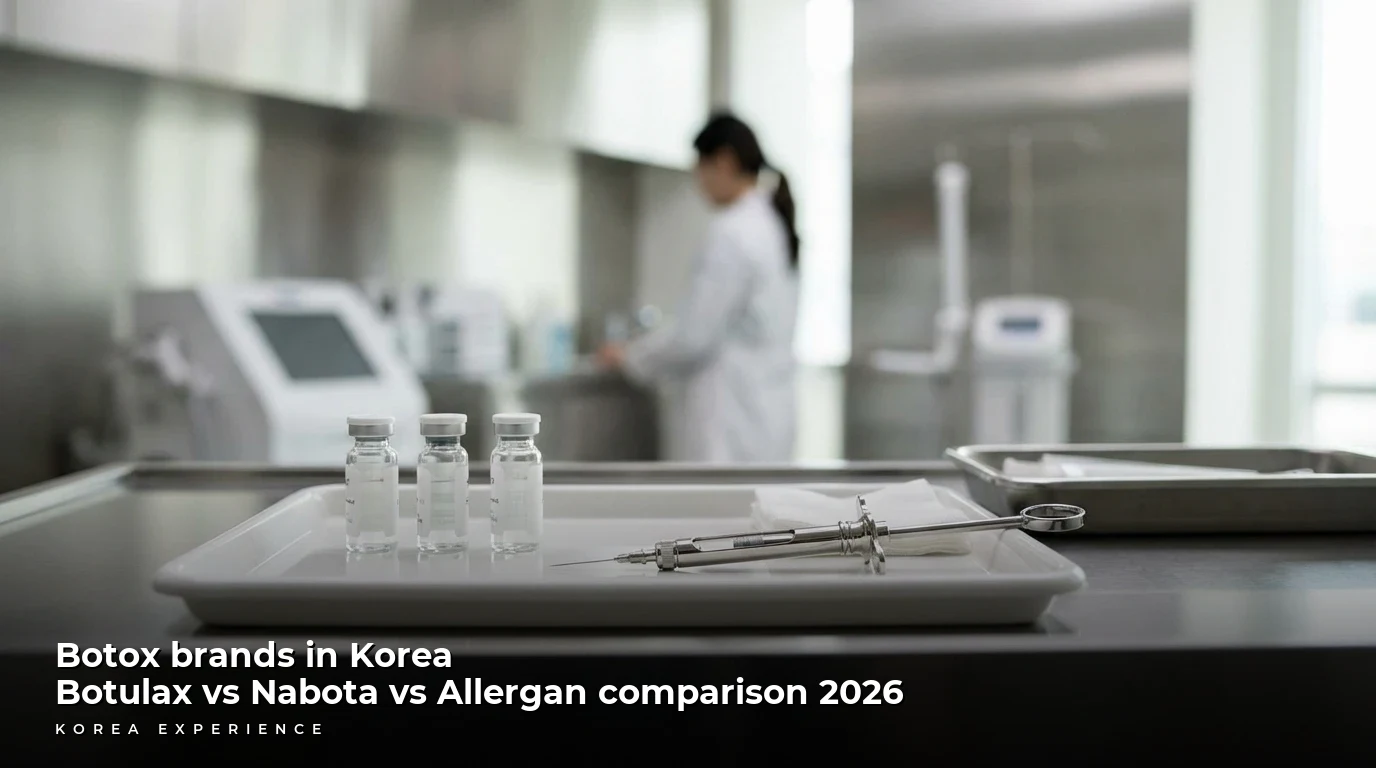
When planning a trip to Seoul for aesthetic treatments, the most common question travelers ask is whether to stick with the globally recognized Allergan or switch to a domestic Korean brand like Botulax or Nabota. The choice largely depends on your budget, your history with toxin treatments, and your specific aesthetic goals.
The short answer: Nabota is the premium Korean option (FDA-approved) offering results 98% similar to Allergan at half the price, while Botulax is the budget-friendly standard for body contouring, and Allergan remains the "gold standard" for those concerned about long-term resistance or diffusion.
Key Takeaways
- 1Nabota (Daewoong) is FDA-approved and chemically nearly identical to Allergan but costs ~50% less.
- 2Botulax (Hugel) is the most common 'budget' brand in Korea, ideal for first-timers or large muscle groups like calves.
- 3Allergan costs 3-4x more in Korea compared to domestic brands but offers the lowest risk of protein resistance.
- 4Prices in Gangnam for Korean Botox start as low as ₩20,000 ($15 USD) per area in 2026.
The Korean Botox Landscape in 2026
South Korea has firmly established itself as the plastic surgery capital of the world, with the domestic toxin market valued at over ₩200 billion ($150 million USD) annually. Unlike in the West, where "Botox" (the brand name by Allergan) holds a monopoly on the conversation, Korea has a thriving domestic pharmaceutical industry that produces high-quality botulinum toxin type A at a fraction of the import cost.
The primary reason for the dramatic price difference is not a lack of quality, but rather the fierce competition among domestic manufacturers and the sheer volume of procedures performed. In the Gangnam district alone, there are over 500 dermatology and plastic surgery clinics within a 5-kilometer radius. This density forces competitive pricing, making treatments accessible to a wider demographic.
In 2026, the market is dominated by three main players: the imported giant Allergan, the premium domestic brand Nabota, and the mass-market favorite Botulax. Understanding the nuance between these three can save you hundreds of dollars while ensuring safety.
For a broader look at the full spectrum of treatments available, check out our guide on anti-aging treatments in Korea.
📊 Market Distribution 2026
Allergan: The Global Gold Standard
Allergan (now under AbbVie) is the original manufacturer of Botox. It was the first botulinum toxin to receive FDA approval for cosmetic use in 2002 (and therapeutic use in 1989). Because of its long history, it has the most extensive clinical data supporting its safety and efficacy.
Why choose Allergan in Korea?
Despite being significantly more expensive than local brands, Allergan retains a loyal following in Korea. The primary selling point is precision. Allergan is known for having a lower "diffusion rate" compared to some older generic formulations. This means the toxin stays exactly where it is injected, reducing the risk of side effects like eyelid drooping (ptosis) when treating sensitive areas like the forehead or crow's feet.
Furthermore, Allergan has a rigorously standardized manufacturing process that ensures consistent potency in every vial. For patients who have been using Botox for 10+ years, sticking to the brand their body is accustomed to is often recommended to avoid developing antibodies.
📋 Allergan Quick Stats
The Cost Factor
In the United States, a unit of Botox Cosmetic can cost $12–$15. In Korea, you pay by the "area" or the vial. A typical forehead treatment with Allergan in a high-end Gangnam clinic costs between ₩150,000 and ₩300,000 ($115–$230 USD). While this is cheaper than the US, it is still 300% to 400% more expensive than Korean brands.
Nabota: The Premium Korean Contender
Manufactured by Daewoong Pharmaceutical, Nabota is often marketed as the "high-end" Korean toxin. It gained massive international attention when it received US FDA approval in February 2019 (marketed as "Jeuveau" in the US). This approval was a watershed moment for K-Beauty, proving that Korean pharmaceuticals could meet the stringent safety and purity standards of the American market.
The Purity Advantage
Nabota claims a high purity rate (98.7%), which makes it very similar to Allergan in terms of molecular weight and structure. Many dermatologists in Seoul recommend Nabota as the perfect middle ground: it offers the safety assurance of FDA approval but at a domestic price point.
I recommend Nabota to international patients who are nervous about trying 'generic' brands. Because it is sold in the US as Jeuveau, patients feel a sense of familiarity. The clinical results regarding onset time (3-4 days) are indistinguishable from Allergan in my practice.
Efficacy and Duration
Clinical studies have shown that Nabota's effects last roughly 3 to 4 months, which is on par with industry standards. The protein load is low, reducing the risk of resistance, although it is not zero.
For travelers looking to visit top-tier facilities, our guide to the best Korean skin clinics in Gangnam offers curated recommendations where Nabota is standard.
Botulax: The "People's Botox"
Botulax, manufactured by Hugel, is arguably the most widely recognized Korean brand domestically. It is often referred to as the generic standard. If you walk into a factory-style clinic in Hongdae or Myeongdong and ask for the "standard event price," you will likely be receiving Botulax (or a similar competitor like Liztox).
The Budget King
Botulax is extremely affordable. It is not uncommon to find promotional prices as low as ₩25,000 ($19 USD) for one area (e.g., forehead or glabella) and roughly ₩69,000 ($52 USD) for masseter (jaw) reduction.
Is it safe?
Yes. Botulax is approved by the KFDA (Korea Food & Drug Administration) and is exported to over 25 countries. However, purely anecdotal evidence from some clinicians suggests that Botulax may have a slightly wider diffusion radius than Allergan. This makes it excellent for large muscle groups (like the trapezius for "shoulder Botox" or calves for slimming) where you want the toxin to spread evenly through the muscle. It may be slightly less precise for very intricate micro-botox around the eyes, though thousands of successful procedures are performed daily.
Pro Tip: Body Botox
If you are getting Trapezius (shoulder) or Calf Botox, you need a high volume of units (100u to 200u). Using Allergan for this would cost $800+. Using Botulax will cost roughly $150-$200. Since these are large muscles, the precision of Allergan is less critical, making Botulax the smart financial choice.
Detailed Comparison: The "Vs" Breakdown
To help you decide, we have broken down the technical and practical differences between the three major contenders.
Brand Comparison Matrix 2026
| Feature | Allergan | Nabota | Botulax |
|---|---|---|---|
| Origin | USA/Ireland | Korea | Korea |
| FDA Approved | Yes (2002) | Yes (2019) | No (KFDA only) |
| Purity Claim | 99.9% | 98.7% | Standard |
| Avg Duration | 4-6 Months | 3-4 Months | 3-4 Months |
| Price Tier | $$$ | $$ | $ |
The Issue of Resistance (Antibodies)
A major topic in 2026 is toxin resistance. If you use Botox too frequently or in high doses, your body may develop antibodies to the complexing proteins surrounding the active toxin, rendering the treatment ineffective.
- Allergan: Has a controlled protein load, low resistance risk.
- Korean Brands: Older formulations had higher protein loads. However, newer versions (like Coretox, another Korean brand often called "The Korean Xeomin") have removed these complexing proteins to minimize resistance. If you are a long-term user (10+ years), ask for Coretox or Xeomin rather than standard Botulax.
Cost Analysis: Korea vs. The World
The primary driver for medical tourism in Korea is the cost-to-quality ratio. Below is a realistic price comparison for 2026. Note that "One Area" usually refers to the forehead, frown lines, or crow's feet. Jaw (Masseter) usually counts as a larger area or comes with a surcharge.
💵 Price Comparison per Area (2026)
Premium, low diffusion risk
Standard Korean pricing
When you compare this to the US or Europe, where a single area can cost $250 to $400 USD (approx. ₩330,000 - ₩530,000), the savings are astronomical. Even with a plane ticket, getting a full face and body treatment in Seoul can offset the travel costs.
Additionally, international visitors are eligible for a Tax Refund on cosmetic procedures. This ranges from 7% to 8% of the total cost. Most major clinics have a tax refund kiosk on-site or provide the receipts necessary to claim at Incheon Airport.
The Clinic Experience: What to Expect
Understanding the process is crucial for a smooth experience. Korean clinics operate differently from Western medical offices. They are highly efficient, often processing hundreds of patients a day.
Factory vs. Boutique
- Factory Clinics: (e.g., Muse, Toxnfill, PPEUM) focus on volume. You might not see the doctor until the injection moment. Consultation is done with a "manager." Prices are rock bottom. Great for simple top-ups.
- Boutique Clinics: You consult directly with the dermatologist. Prices are 30-50% higher, but the service is personalized.
For help navigating the appointment system, read our guide on booking medical consultations in Korea.
📖 The Botox Procedure Steps
Step 1: Consultation
Meet with a consultant to discuss areas and choose your brand/dosage.
Step 2: Numbing
Apply anesthetic cream for 20-30 minutes.
Step 3: Design & Injection
The doctor marks the injection points and injects. Takes 2-5 minutes.
Step 4: Aftercare
Apply antibiotic cream/patch. You can leave immediately.
Safety and Regulation
Is Korean Botox safe? The short answer is yes. The KFDA (Korea Food & Drug Administration) has extremely strict standards, similar to the FDA and EMA. Brands like Hugel (Botulax) and Daewoong (Nabota) are massive, publicly traded pharmaceutical conglomerates, not shady back-alley labs.
However, the risk often lies in the injector, not the product.
- Verify the Vial: Reputable clinics will always open the box in front of you. Check that the bottle is new and the brand matches what you paid for.
- Check Dilution: Toxin comes as a powder and is diluted with saline. Unethical clinics might over-dilute (water down) the product to maximize profits. If the price seems "too good to be true" (e.g., ₩10,000), be wary.
Medical Disclaimer
Botox is a medical procedure. Risks include bruising, asymmetry, and in rare cases, ptosis (drooping eyelids). Pregnant or breastfeeding women should strictly avoid these treatments. The information in this article is for educational purposes and does not constitute medical advice. Always consult with a licensed professional.
Emergency Numbers in Korea:
- Medical Emergency: 119
- Medical Consultation (English): 1339
How to Choose the Right Brand for You
Making the final decision involves weighing your priorities.
Choose Botulax if:
- You are on a budget.
- You are treating large body areas (Calves, Trapezius, Thighs).
- You are young (20s) and getting preventative baby botox.
- You have never had Botox before and want to try it at a low entry cost.
Choose Nabota if:
- You want FDA-approved reassurance without the Allergan price tag.
- You live in the US and want to continue with a similar strain (Jeuveau) back home.
- You want high purity for facial muscles (forehead, crows feet).
Choose Allergan if:
- Price is not an issue.
- You have been using Allergan for years and don't want to switch.
- You are treating very specific, high-risk areas (like near the eyes) and want the lowest diffusion risk possible.
- You are older (50+) with deeper static wrinkles requiring precise targeting.
For those with sensitive skin concerns alongside their anti-aging needs, we recommend cross-referencing with our list of best dermatology clinics in Seoul for foreigners.
Pros and Cons Summary
Korean vs. Imported Brands
- ✓Korean brands are 50-70% cheaper
- ✓Nabota is FDA approved (same safety tier as Allergan)
- ✓Clinics are highly experienced due to high volume
- ✓Tax refunds available for tourists
- ✗Slightly higher diffusion risk in budget brands
- ✗Shorter duration (3 months) reported by some users
- ✗Language barrier in some local clinics
Frequently Asked Questions
❓ Common Questions About Korean Botox
Have more questions?Contact us →
Final Thoughts
The "Botox Wars" in Korea ultimately benefit the consumer. Whether you choose the reliable prestige of Allergan, the FDA-approved balance of Nabota, or the incredible value of Botulax, the standard of care in top Korean clinics is generally higher than the global average due to the sheer volume of cases doctors handle.
For a first-time visitor, Nabota represents the "sweet spot" of value and verified safety. However, do not be afraid to use Botulax for body contouring—it is the secret weapon of K-Pop idols for slim calves and elegant shoulder lines.
Ready to book your trip? Don't forget to check our guide to the best Korean skin clinics in Gangnam to find a reputable provider.
About the Author
Korea Experience Team
Written by the Korea Experience editorial team - experts in Korean medical tourism, travel, and culture with years of research and firsthand experience.
⚠️ Medical Disclaimer
The information provided on this website is for general informational purposes only and does not constitute medical advice. Always consult with qualified healthcare professionals before making any medical decisions.
Explore more in Medical Tourism
World-class medical procedures at competitive prices. From plastic surgery and dermatology to dental care and health checkups — your complete guide to medical tourism in Korea.
Browse All Medical Tourism ArticlesContinue Reading
Explore more articles you might find interesting
A detailed guide comparing FUE and FUT hair transplants in Seoul, including 2026 price data, recovery timelines, and success rates for medical tourists.
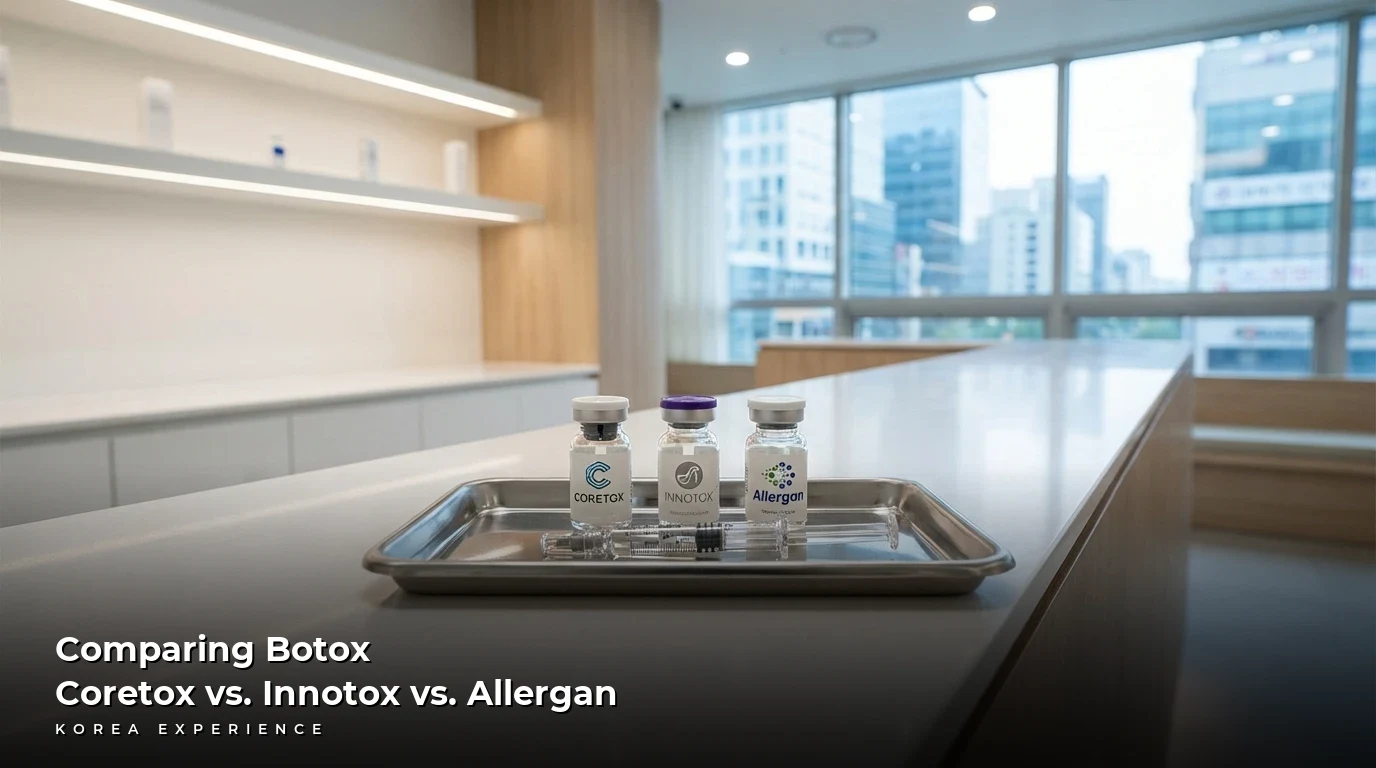
Confused by $20 Botox? We compare Allergan vs Coretox vs Innotox prices (₩25k-₩350k) and safety data to help you save 80% in Seoul.
The ultimate guide to Korean soju brands, comparing taste profiles, alcohol percentages, and prices for travelers in 2026.
Are Korean medical tourism packages a safe bet or a costly scam? We analyze price differences, hidden fees, and safety data for 2026 travelers.
Comprehensive 2026 guide to plastic surgery costs in Korea. Compare prices for rhinoplasty, blepharoplasty, and facelifts in Seoul vs. global rates.
Comparing prices (₩30k vs ₩200k), safety protocols, and service quality to help you choose between clinics and hospitals for Botox in Seoul.