Breast augmentation teardrop vs round implants in Korea 2026
A comprehensive guide comparing teardrop vs round implants in Korean plastic surgery, analyzing costs, 2026 trends, and the rise of Motiva Ergonomix.
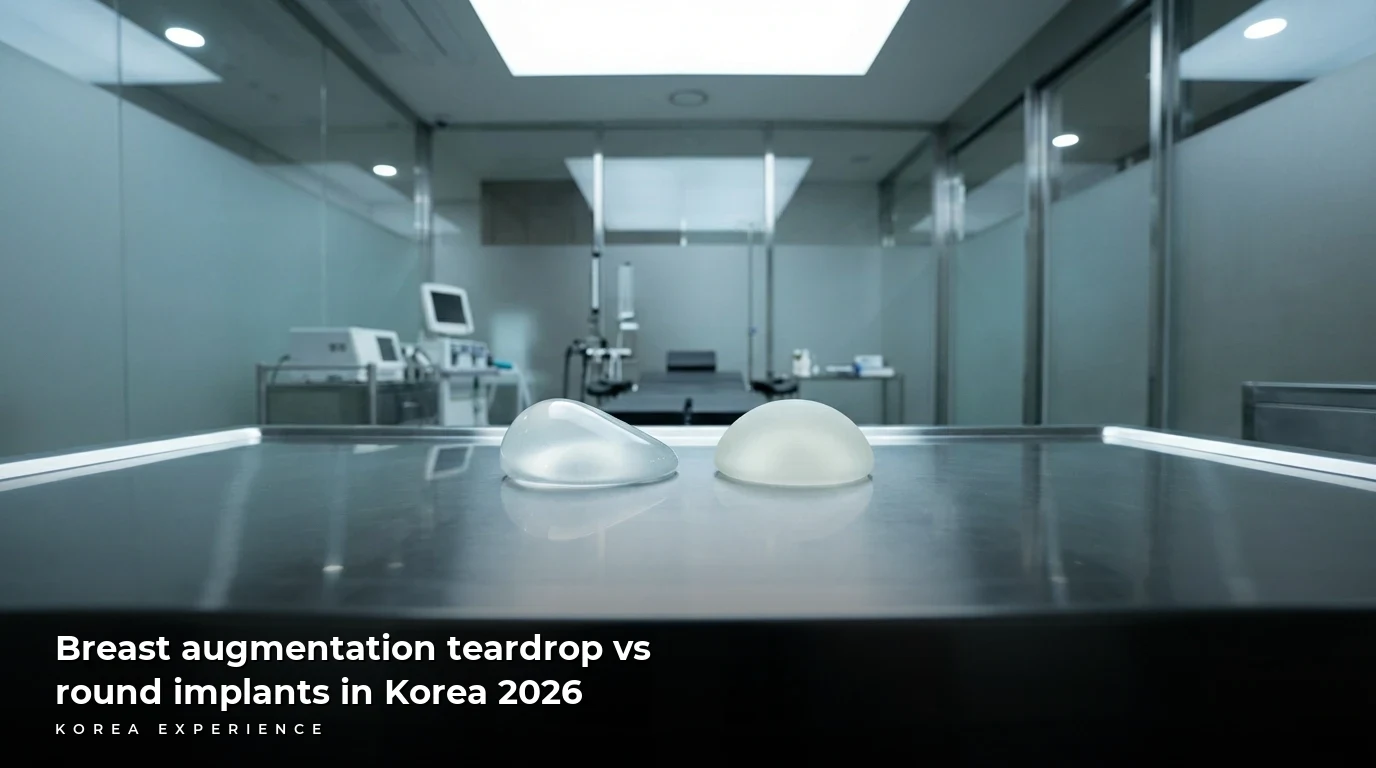
When patients consider breast augmentation in South Korea, the primary decision beyond choosing a surgeon is selecting the implant shape: teardrop (anatomical) or round. While round implants provide fullness in the upper pole for a lifted look, teardrop implants are designed to mimic the natural slope of the breast, offering a more subtle enhancement. However, the landscape of Korean plastic surgery in 2026 has evolved significantly with the dominance of "hybrid" implants like Motiva Ergonomix, which change shape based on gravity, effectively bridging the gap between the two traditional categories.
The short answer: Round implants are best for patients seeking upper-breast fullness and a "lifted" look, while teardrop implants suit those wanting a natural slope. However, in 2026, most top Korean clinics recommend Motiva Ergonomix (a round implant that behaves like a teardrop) to combine safety with natural aesthetics.
Key Takeaways
- 1Round implants create more cleavage and upper fullness, costing approx. $5,000-$7,000 USD
- 2Teardrop implants offer natural slopes but carry rotation risks; strictly textured surfaces are less common in 2026
- 3Motiva Ergonomix is the #1 choice in Korea, behaving as round lying down and teardrop standing up
- 4Recovery time in Seoul averages 3-5 days for desk work and 3 weeks for exercise
Understanding the Core Differences
The debate between teardrop and round implants is fundamentally about the distribution of the silicone gel and the resulting silhouette. In the highly competitive medical tourism district of Gangnam, where over 500 plastic surgery clinics operate within a 10-square-kilometer radius, the technology has shifted rapidly.
The Round Implant Profile
Round implants are symmetrical spheres. Because they are uniform, it does not matter if they rotate inside the breast pocket—the shape remains the same. This makes them a safer choice regarding long-term complications related to rotation.
- Visual Effect: They provide significant fullness in the "upper pole" (the area above the nipple), creating a pushed-up, youthful appearance.
- Best Candidates: Women with existing breast tissue who want more volume, or those desiring a "fake look" with prominent cleavage.
- Prevalence: Historically account for about 70-80% of surgeries globally due to lower costs and easier insertion.
The Teardrop (Anatomical) Implant Profile
Teardrop implants are shaped like a pear—thinner at the top and fuller at the bottom. To maintain this specific orientation, they must have a textured surface (like velcro) that adheres to the breast tissue to prevent the implant from flipping upside down or sideways.
- Visual Effect: They mimic the natural slope of a virgin breast, avoiding the "ball-like" appearance.
- Best Candidates: Women with very little natural breast tissue (A cup or smaller), prominent rib cages, or those undergoing reconstruction after mastectomy.
- Risk: If a teardrop implant rotates (a complication occurring in roughly 2-5% of cases historically), the breast shape becomes distorted, requiring revision surgery.
The Texture Controversy
In recent years, highly textured implants (often used for teardrops) have faced scrutiny regarding BIA-ALCL, a rare lymphoma. Consequently, many Korean clinics have moved away from "macro-textured" teardrop implants in favor of "nano-textured" or smooth round implants that achieve a similar look through surgical placement techniques.
The "Third Option": Why Korea Prefers Motiva Ergonomix
If you visit a clinic in Apgujeong or Sinsa-dong in 2026, you will likely be introduced to Motiva Ergonomix. This is technically a round implant, but it uses a highly elastic gel and a specialized shell that allows gravity to dictate its shape.
When the patient lies down, the implant remains round (like a natural breast spreads). When the patient stands up, the gel sinks to the bottom, creating a teardrop shape. This dynamic movement has made it the market leader in South Korea, capturing over 60% of the premium breast augmentation market as of late 2025.
📊 Implant Market Share in Korea (2026)
Detailed Pros and Cons Comparison
To help you decide before booking your flight to Incheon, here is a detailed breakdown of the two traditional shapes. Note that the "Round" category here includes the modern Ergonomix style unless specified otherwise.
Round vs Teardrop Analysis
- ✓Round: No risk of shape distortion if the implant rotates
- ✓Round: Provides better cleavage and upper breast fullness
- ✓Teardrop: Most natural profile for very thin patients
- ✓Teardrop: Matches the natural breast slope precisely
- ✗Round: Can look artificial on very thin patients if placed over the muscle
- ✗Round: Less projection at the bottom compared to max-projection teardrops
- ✗Teardrop: Higher risk of rotation requiring revision surgery
- ✗Teardrop: Usually firmer to touch to maintain shape
The Procedure: What to Expect in Seoul
Undergoing surgery in Korea is known for its efficiency ("palli-palli" culture) combined with high-tech precision. The entire process, from consultation to the initial recovery phase, is streamlined for international patients.
1. The Consultation (Day 1)
Upon arrival, usually at a clinic in Gangnam-gu or Seocho-gu, you will undergo a 3D body scan. Most top-tier clinics use the Vectra XT 3D imaging system, which simulates exactly how a 300cc round vs. a 300cc teardrop implant will look on your specific torso.
- Duration: 1 hour.
- Tests: Blood work, EKG, and sometimes a mammogram are done on-site.
2. The Surgery (Day 2)
Surgeries are typically performed under general anesthesia.
- Incision Sites: The most common incision in Korea is the inframammary fold (under the breast) or transaxillary (armpit). The armpit incision is favored by 60% of Asian patients to avoid visible scarring on the breast, utilizing endoscopic technology for precise pocket creation.
- Duration: 1 to 2 hours.
- Recovery Room: 4 to 6 hours before discharge (most are day surgeries).
3. Recovery and Aftercare (Days 3-14)
Korean clinics offer extensive aftercare packages included in the surgery cost. This often includes:
- Deswelling Treatments: RF (Radio Frequency) therapy or LED light therapy.
- Hyperbaric Oxygen Chamber: 30-minute sessions to speed up healing.
- Stitch Removal: Typically occurs 7 to 10 days post-op for armpit incisions.
📖 The Seoul Surgery Journey
Step 1: Consultation & 3D Design
Meet the surgeon, choose implant size/type, and undergo medical checks.
Step 2: Surgery Day
Arrive fasting (NPO) for 8 hours. Surgery takes 90 mins. Discharge same day.
Step 3: Deswelling Care
Visit clinic every 2-3 days for dressing changes and deswelling laser treatment.
Step 4: Stitch Removal
Usually day 7-10. Final check by surgeon before flying home.
For those planning their logistics, choosing the right accommodation is vital. You don't want to be navigating the subway immediately after surgery. Check our guide on Airbnb vs recovery hotels for medical tourists to make the best choice.
Cost Comparison: Teardrop vs. Round vs. Hybrid
Pricing in Korea is generally 30-50% lower than in the United States, but higher than in Thailand. The variation in price depends largely on the implant brand and the complexity of the case (e.g., if a breast lift is also needed).
In 2026, the exchange rate fluctuates, but roughly ₩1,400 = 1 USD. The prices below are estimates for the surgery package, often including anesthesia, interpreter services, and airport pickup for premium packages.
💵 Implant Price Comparison (Seoul 2026)
The gold standard in Korea. Soft, natural movement, nano-texture.
Classic smooth round implants. Reliable and cost-effective.
Pro Tip: Tax Refunds
International patients are eligible for a VAT refund (approx. 7-8% of the surgery cost) upon leaving Korea. Ensure your clinic is a registered medical institution for foreign patients to issue the tax refund receipt. This can save you $500-$800 USD.
Sizing Trends in Korea: The "Bagel" vs. Natural Look
A distinct feature of the Korean market is the preference for "natural fullness." Unlike the trends often seen in Miami or Los Angeles, where 450cc+ implants are common, the average implant size in Korea ranges between 275cc and 325cc.
The "Full C" Goal
Most patients in Korea aim for a "Full C" cup. This size fits the generally petite frames of Asian women and ensures the implant edges are not palpable (felt through the skin).
- Projection: High-profile implants are preferred over wide-base implants to project the breast forward rather than widening the chest, which keeps the silhouette slim.
- Softness: Korean patients prioritize the tactile feel (softness) over just the visual size. This is why brands like Motiva, which are softer than traditional saline or cohesive gel teardrops, are preferred.
For more on real patient experiences and visual examples, read our article on before and after Korean plastic surgery reviews.
Safety and Risks: Teardrop Rotation
One of the most critical discussions you must have with your surgeon regarding teardrop implants is rotation. Because teardrop implants are asymmetrical, if they rotate 90 or 180 degrees inside the pocket, the breast will look deformed.
Risk Data:
- Rotation occurs in approximately 1-2% of primary augmentations with anatomical implants.
- Revision surgery is the only way to correct a rotated teardrop implant.
- To prevent this, surgeons create a "tight pocket," which can sometimes result in a firmer feeling breast compared to round implants which can be placed in a slightly looser pocket for more movement.
"In 2026, we rarely perform traditional textured teardrop surgeries unless it is for reconstruction. The risk of rotation and the long-term concerns with macro-texturing mean that 9 out of 10 patients choose Ergonomix. It gives the teardrop look without the rotation risk."
Choosing the Right Clinic
Seoul has thousands of clinics, but not all specialize in breast augmentation (Mammoplasty). While many clinics are famous for eyes and noses, breast surgery requires a different set of surgical skills and equipment (specifically high-definition endoscopes).
Key Criteria for Selection:
- CCTV Availability: Under Korean law, operating rooms must have CCTV. Ensure your clinic offers you the right to view the footage to confirm the surgeon you hired performed the surgery (preventing "ghost surgery").
- Anesthesiologist On-Site: Breast surgery requires general anesthesia. A dedicated anesthesiologist must be present throughout the entire procedure, not just at the start.
- Emergency Systems: Look for clinics with dantrolene kits (for malignant hyperthermia) and UPS (Uninterruptible Power Supply) systems.
Clinic Types Comparison
| Feature | Factory Clinic | Boutique Clinic | University Hospital |
|---|---|---|---|
| Price | $ | $$ | $$$ |
| Surgeon Access | Limited | High | Medium |
| Personalization | Low | High | Medium |
| Wait Time | Long | Short | Very Long |
To learn more about costs and recovery environments, check our detailed guide on breast augmentation in Korea costs and clinics.
Preparing for Your Trip
Once you have decided between teardrop and round (or the hybrid route), preparation is key.
1 Month Before
- Stop smoking. Nicotine constricts blood vessels and significantly increases the risk of capsular contracture and skin necrosis.
- Book your flight to arrive at least 1 day before the consultation.
1 Week Before
- Stop taking aspirin, Vitamin E, and herbal supplements that thin the blood.
- Arrange your post-op diet. You will need high-protein, low-sodium foods to reduce swelling. See our list of best Korean healing foods for surgery recovery.
What to Pack
- Button-up shirts or zip-up hoodies (you cannot raise your arms over your head easily for 3-5 days).
- Slip-on shoes.
- Compression stockings for the flight home.
📋 Travel Logistics
FAQ: Common Questions About Implants in Korea
❓ Frequently Asked Questions
Have more questions?Contact us →
Final Verdict: Which Should You Choose?
In the context of the 2026 Korean medical tourism market, the strict binary choice between "Teardrop vs. Round" has largely been replaced by "Ergonomix vs. The Rest."
The technological advancements in round implants—making them behave like teardrops without the rotation risks—have shifted the market. Unless you have a specific reconstructive need that strictly requires an anatomical implant, a modern, micro-textured or smooth round implant (specifically the Motiva Ergonomix) offers the best balance of safety, natural aesthetics, and tactile softness.
However, the "lifted" look of a classic round implant remains a valid and popular aesthetic choice for those who prefer fullness over a subtle slope. The decision should ultimately be made during your 3D simulation consultation in Seoul, where you can see the potential results on your own body.
Medical Disclaimer
The information provided in this article is for educational purposes only and does not constitute medical advice. Surgical results vary by individual. Always consult with a board-certified plastic surgeon for a personalized assessment. Emergency numbers in Korea: Medical Emergency 119, Medical Consultation for Foreigners 1339.
While you are in Seoul for your procedure, you might want to look into other non-invasive treatments to maximize your trip. Many patients combine breast surgery with skin treatments. Check out our guide to anti-aging treatments in Korea for ideas that can be done during your recovery period.
Gangnam Medical District(강남 의료 특구)
The Future of Breast Aesthetics
As we move through 2026, the trend in Korea is shifting toward "invisible surgery"—results that look so natural that even a partner might not immediately realize surgery was performed. Whether you choose the structural precision of a teardrop or the volume of a round implant, the expertise of Korean surgeons lies in their ability to customize the pocket and placement to suit your specific anatomy.
Prioritize safety, verifying the board certification of your surgeon (look for the logo of the Korean Society of Plastic and Reconstructive Surgeons), and allow yourself ample recovery time to enjoy the beauty of Seoul.
About the Author
Korea Experience Team
Written by the Korea Experience editorial team - experts in Korean medical tourism, travel, and culture with years of research and firsthand experience.
⚠️ Medical Disclaimer
The information provided on this website is for general informational purposes only and does not constitute medical advice. Always consult with qualified healthcare professionals before making any medical decisions.
Explore more in Medical Tourism
World-class medical procedures at competitive prices. From plastic surgery and dermatology to dental care and health checkups — your complete guide to medical tourism in Korea.
Browse All Medical Tourism ArticlesContinue Reading
Explore more articles you might find interesting
Explore 2026 male plastic surgery trends in Korea for jawline definition and gynecomastia. Discover top clinics, costs, and recovery insights for international patients interested in medical tourism.
Comprehensive 2026 guide to plastic surgery costs in Korea. Compare prices for rhinoplasty, blepharoplasty, and facelifts in Seoul vs. global rates.
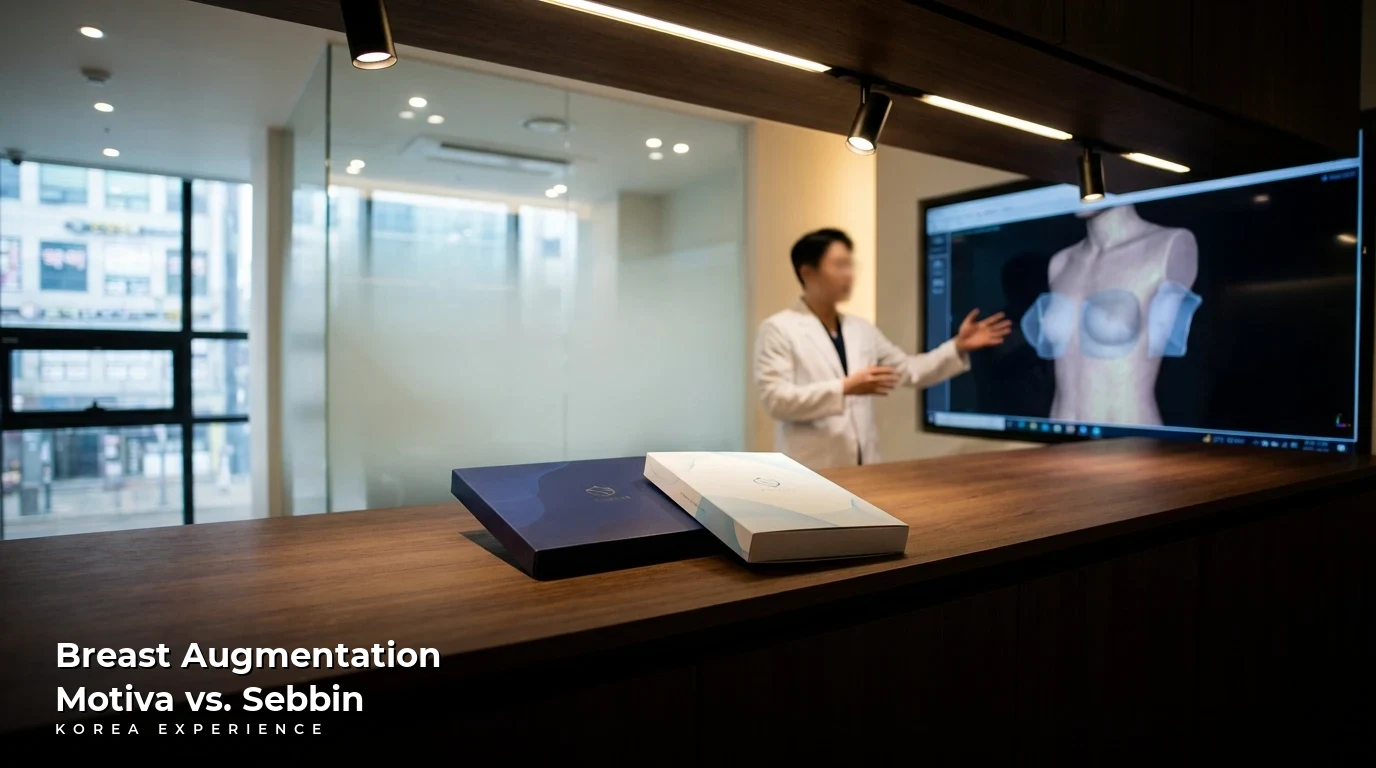
Compare Motiva Ergonomix at $7,200 against Sebbin Integrity at $5,400 in Seoul. Learn why the 2026 VAT refund end costs you 10 percent more.
Comprehensive guide to mental health resources for medical tourists in Korea. Find English-speaking counselors, recovery centers, and costs in 2026.
A comprehensive guide to FFS, VFS, and top surgery in Seoul for 2026. Includes costs, recovery times, and clinic recommendations for international patients.
A comprehensive guide to anesthesia types in Korean medical tourism, costs, safety protocols, and what to expect during surgery. Average read time 15 mins.