Finding apartments real estate apps in English in Korea
A complete guide to navigating the Korean housing market using real estate apps, translation hacks, and expat-friendly services for 2026.
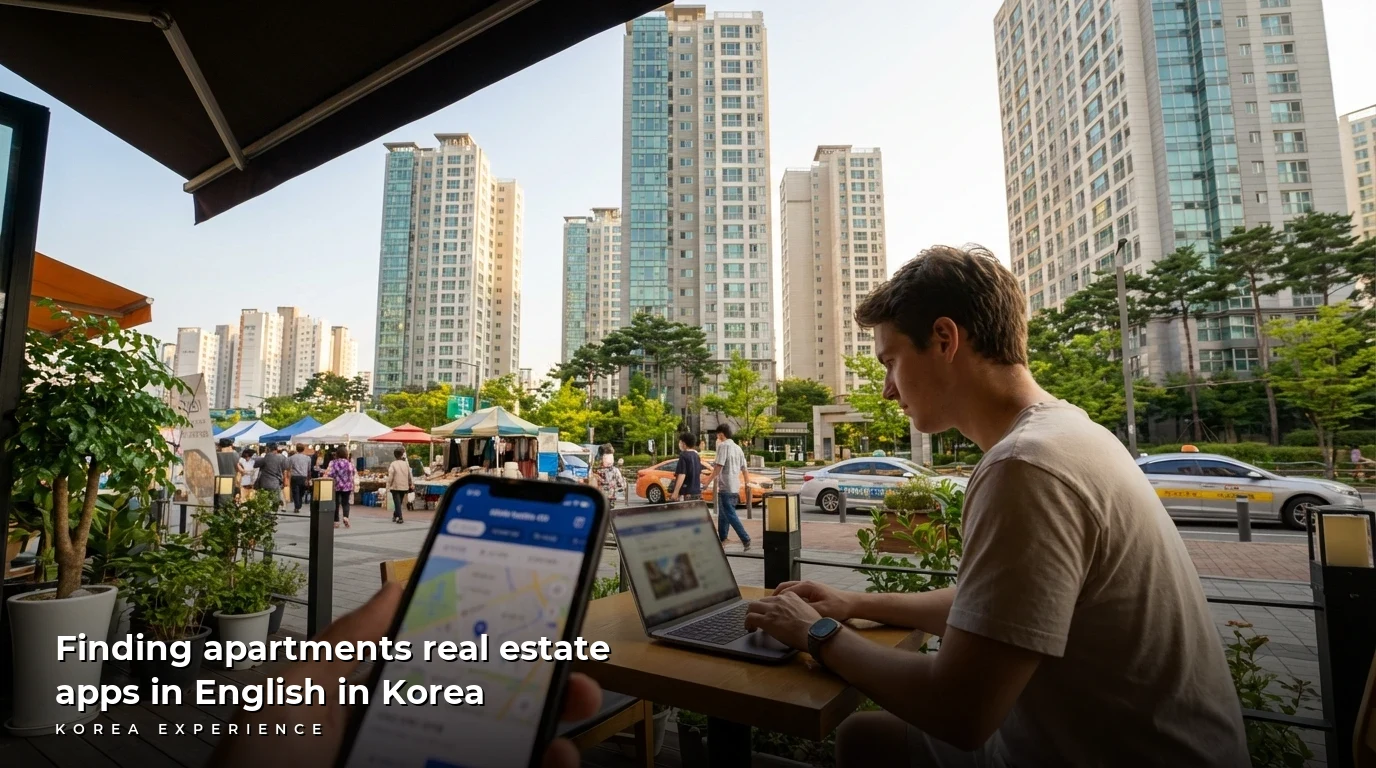
Finding an apartment in South Korea can feel like navigating a labyrinth without a map, especially when the language barrier stands between you and your dream home. While Korea is one of the most digitally advanced nations in the world, the real estate market remains stubbornly local, with the vast majority of digital platforms operating exclusively in Korean. However, for the international traveler or expat planning to call Seoul, Busan, or Daegu home in 2026, the landscape is manageable if you know which digital tools to leverage.
Learn more in our comprehensive guide to How to invest in Korean real estate as a foreigner legal ....
The hunt for "finding apartments real estate apps in English" often leads to a mix of frustration and discovery. The reality is that a dedicated, fully English-language app with the inventory depth of local giants does not truly exist. Instead, successful expats utilize a hybrid strategy: leveraging the massive databases of local Korean apps through translation technology, while supplementing their search with specialized English-speaking agency platforms. With the average studio apartment in Seoul now renting for approximately ₩750,000 ($560 USD) per month plus maintenance fees, knowing where to look can save you significant time and money.
Related reading: Dealing with yellow dust and air quality best apps and masks.
Key Takeaways
- 1Major apps like Zigbang and Dabang have no English UI but offer 90% of listings
- 2Average deposits (Key Money) range from 5M to ₩10M ($3,700-$7,500 USD)
- 3Use screen translation tools to navigate local apps effectively
Understanding the Korean Housing Market
Before downloading apps, it is critical to understand the unique rental systems in Korea, as every app categorizes listings based on these financial models. The market is not merely about "renting"; it is a choice between Wolse (monthly rent) and Jeonse (lump-sum deposit).
You might also enjoy our article about Finding an apartment in Korea complete guide for foreigners.
The Concept of Pyeong
Korea uses a unique measurement unit called "Pyeong." One pyeong equals roughly 3.3 square meters or 35.5 square feet. A standard studio (officetel) is usually 6 to 8 pyeong.
In 2026, the Wolse system remains the most accessible for foreigners. This typically involves a deposit (Key Money) ranging from 5 million to ₩20 million ($3,750 to $15,000 USD) and a monthly rent. Conversely, Jeonse requires a massive deposit—often 50% to 70% of the property's market value—but zero monthly rent. With current interest rates stabilizing, Jeonse deposits for a standard two-bedroom apartment in Seoul average around ₩300 million ($225,000 USD).
Rental System Comparison: Wolse vs. Jeonse
| Feature | Wolse (Monthly Rent) | Jeonse (Key Money) |
|---|---|---|
| Monthly Payment | High (500k-1.5m ₩) | Zero (Maintenance only) |
| Deposit Requirement | Low (5m-20m ₩) | Very High (100m+ ₩) |
| Utility/Maintenance | Paid separately | Paid separately |
| Risk Level | Low financial exposure | High (risk of non-return) |
The "Big Three" Korean Real Estate Apps
To access the widest range of inventory, you must engage with the "Big Three" domestic apps. While they lack English interfaces, they control over 85% of the market share. Navigating these helps you understand true market prices, even if you eventually hire an English-speaking agent to close the deal.
1. Zigbang (직방)
Zigbang is the market leader, boasting over 12 million downloads. It is renowned for its "VR Home Tour" feature, allowing you to view properties in 3D—a crucial feature if you are currently outside Korea. Zigbang lists approximately 40,000 new properties weekly across the peninsula.
2. Dabang (다방)
Dabang is the primary competitor to Zigbang and is often favored by university students and young professionals. Its "Score" system rates properties based on price, location, and amenities, which helps verify if a listing is competitively priced. In 2026, Dabang introduced an AI-driven filter that helps estimate commute times to specific subway stations with 95% accuracy.
3. Peter Pan (피터팬의 좋은방구하기)
Originally a web community, Peter Pan is unique because it allows direct landlord-to-tenant transactions, potentially saving you the statutory real estate agent fee. In Seoul, agent fees differ by transaction value but generally capped at 0.4% to 0.5% of the transaction amount. For a lease valued at ₩100 million, saving the fee keeps ₩400,000 ($300 USD) in your pocket.
Using Local Korean Apps
- ✓Access to 90% of the market inventory
- ✓Accurate, real-time pricing data
- ✓Advanced filters for subway distance and build year
- ✗100% Korean interface requires translation
- ✗High volume of 'bait' listings (heo-wi-mae-mul)
- ✗Agents often speak limited English
How to Use Korean Apps Without Knowing Korean
Since "Finding Apartments Real Estate Apps In English" often leads to dead ends, the most effective "hack" is using technology to bridge the gap. Modern smartphones in 2026 have integrated AI translation that makes using Zigbang or Dabang seamless.
📖 Navigating Zigbang/Dabang with Translation Tools
Step 1: Enable Screen Translation
On Android, use Google Lens overlay or 'Circle to Search'. On iOS, take a screenshot and use the Translate feature in Photos.
Step 2: Select 'One-Room' or 'Officetel'
Look for the icon labeled '원룸' (One-room) or '오피스텔' (Officetel). These are the most common housing types for expats.
Step 3: Filter by Deposit (Bo-jeung-geum)
Set your max deposit. Input '1000' for ₩10 million (listings usually drop the last 4 zeros).
Step 4: Check the 'Gwanlibi' (Maintenance Fee)
Look for '관리비'. This is separate from rent. Ensure it's within your budget.
Watch Out for 'Heo-wi-mae-mul' (Fake Listings)
A persistent issue in Korean real estate apps is "bait and switch" listings. If a Gangnam apartment listed for ₩500,000 ($375 USD) looks like a palace, it is fake. The average rent for a modern studio in Gangnam is closer to ₩1.1 million ($825 USD). If the price seems too good to be true, it absolutely is.
Specialized English Services & Platforms
For those who prefer to avoid the translation gymnastics, several platforms cater specifically to the foreign community. While these are not always "apps" in the traditional sense, they function as the primary digital gateways for finding apartments real estate apps in English.
1. Craigslist Seoul & Facebook Groups
Surprisingly, Craigslist remains a formidable resource for the expat community, particularly for short-term sublets. However, the UI is dated, and scam risks are higher. Facebook groups like "Housing in Seoul" serve as community-vetted marketplaces. Listings here typically range from ₩450,000 to ₩1.5 million per month.
2. Ziptoss (ZipToss)
Ziptoss is one of the few real estate brokerages that heavily integrated technology and offered services in English. While their app presence fluctuates, their agents are known to handle the entire process in English, catering to the specific visa requirements of foreigners.
3. Airbnb (Long-term Stays)
For arrivals under 3 months, Airbnb is the safest "app" choice. While expensive—often 30% to 50% higher than market rent—it bypasses the need for the large deposits (Key Money) and the Alien Registration Card (ARC) requirement.
💵 Monthly Cost Comparison (Seoul)
Low deposit, English service, 3-month min
Breakdown of Housing Types
When searching on these apps, you will encounter three main terms. Understanding these distinctions is vital for your budget and lifestyle.
Officetels (오피스텔)
These are dual-purpose buildings used for both residential and commercial purposes. They are the most popular choice for single expats.
- Pros: typically near subway stations (within 500 meters), built-in appliances, security guards, elevators.
- Cons: Higher maintenance fees (average ₩150,000/month), smaller actual floor space (usually 6-9 pyeong).
Villas (빌라)
Low-rise brick buildings (usually 4-5 stories) found in residential neighborhoods.
- Pros: Lower rent (10-20% cheaper than officetels), larger floor space for the money, lower maintenance fees (often ₩50,000).
- Cons: Often no elevator, no security guard, garbage disposal can be complicated, older insulation.
Apartments (아파트)
In Korea, "Apartment" specifically refers to high-rise complexes. These are family-oriented and expensive.
- Cost: Generally requires huge Jeonse deposits or high rent (₩2 million+ monthly).
- Amenities: Gyms, parks, underground parking, community centers.
📊 Seoul Rental Market 2026
The Rental Process: From Search to Move-in
Once you have identified a property through an app or agency, the speed of the Korean market will surprise you. Properties viewed in the morning are often contracted by the afternoon. The entire process from viewing to moving in typically takes 2 to 4 weeks.
Apartment Hunting Timeline
Digital Scouting
Use apps to identify neighborhoods and price averages. Don't contact yet.
Agent Visits
Visit a 'Budongsan' (Real Estate Office) in your target area. Show them the app screenshots.
Contract Signing
Pay 10% of the deposit to secure the unit. Review the Registry.
Balance Payment
Pay remaining deposit and first month's rent on move-in day.
The Role of the Budongsan (Real Estate Agent)
You generally cannot rent an apartment in Korea directly through an app without an agent finalizing the deal. The app is the lead generator; the Budongsan is the closer.
- Tip: Visit the physical real estate offices in the neighborhood you like. They often have "pocket listings" that never make it to the apps.
- Fee: The statutory maximum fee for residential properties under ₩50 million is 0.6% (max ₩250,000). For transactions between 50 million and ₩200 million, it is 0.5% (max ₩800,000).
"Many foreigners forget that they need an Alien Registration Card (ARC) to sign a standard housing contract. If you haven't received your ARC yet, you can use your passport, but some landlords may ask for the full rent upfront for the contract duration as security. Always clarify your visa status before viewing."
Essential Vocabulary for App Navigation
Even with translation tools, recognizing these five keywords will speed up your search significantly.
- Bo-jeung-geum (보증금): Deposit / Key Money.
- Wol-se (월세): Monthly Rent.
- Gwan-li-bi (관리비): Maintenance Fee (Ask what is included: water, internet, TV?).
- Pul-op-shun (풀옵션): Full Option (Includes fridge, washer, AC, sometimes bed/desk).
- Pyeong (평): Unit of size (3.3 sq meters).
📋 Listing Essentials
Safety Checks and Red Flags
The Korean real estate market is generally safe, but rental scams involving deposit theft do happen. In 2025, the government cracked down heavily on "Jeonse Fraud," but caution is still required.
- Certified Copy of Register (Deung-gi-bu-deung-bon): Before signing anything, the agent must show you this document. It proves who the real owner is and if there are any heavy mortgages on the property. If the debt on the building is more than 70% of its value, walk away.
- Identity Verification: Ensure the name on the bank account where you send the deposit matches the name on the Title Deed exactly. Never send money to an agent's personal account.
- Move-in Report (Jeon-ip-sin-go): As soon as you move in, you must register your new address at the local community center (Dong-sami-so) or Immigration office. This gives you legal protection over your deposit.
Critical Warning
Never sign a contract where the landlord refuses to let you do the 'Move-in Report' (Jeon-ip-sin-go). They may offer a discount on rent for this, but it means you have ZERO legal claim to your deposit if the building goes bankrupt.
Conclusion
While finding apartments real estate apps in English remains a challenge in Korea, the combination of local apps like Zigbang, translation technology, and on-the-ground legwork creates a viable path to housing. By understanding the data—such as the ₩10 million standard deposit and the 0.5% agency fee cap—you can negotiate with confidence.
Remember that the perfect apartment hunt in Korea is a sprint, not a marathon. Use the apps to scout, but trust the local Budongsan to finalize the deal. Whether you choose a high-rise in Gangnam or a cozy villa in Hongdae, your Korean home is just a few translated clicks away.
❓ Frequently Asked Questions
Have more questions?Contact us →
About the Author
Korea Experience Team
Written by the Korea Experience editorial team - experts in Korean medical tourism, travel, and culture with years of research and firsthand experience.
Explore more in Living in Korea
Everything expats and long-term visitors need to know — from visa requirements and housing to banking, healthcare, and daily life tips.
Browse All Living in Korea ArticlesContinue Reading
Explore more articles you might find interesting

Complete guide to investing in KOSPI and KOSDAQ as an expat. Learn about brokerages, taxes, and English apps for foreigners in Korea.
A detailed guide to renting in South Korea, covering Jeonse vs Wolse, deposits, finding English-speaking agents, and navigating contracts safely.
The complete 2026 guide to emergency medical care in Seoul. Find the best international hospitals, ER costs, and English-speaking services for travelers.
Navigating Seoul's international school landscape for your child's education can be complex. This 2026 guide simplifies choices for expat families.
Master the art of negotiating housing in Korea. Learn how to adjust deposits, lower monthly payments, and navigate real estate contracts like a local.
A complete guide to finding English-speaking therapy in Seoul. Covers costs, insurance, top clinics, and mental health resources for expats in 2026.