Finding English speaking doctors in Seoul the complete guide
Discover the best English-speaking clinics in Seoul. From major university hospitals to local care, get costs, locations, and expert tips for 2026.
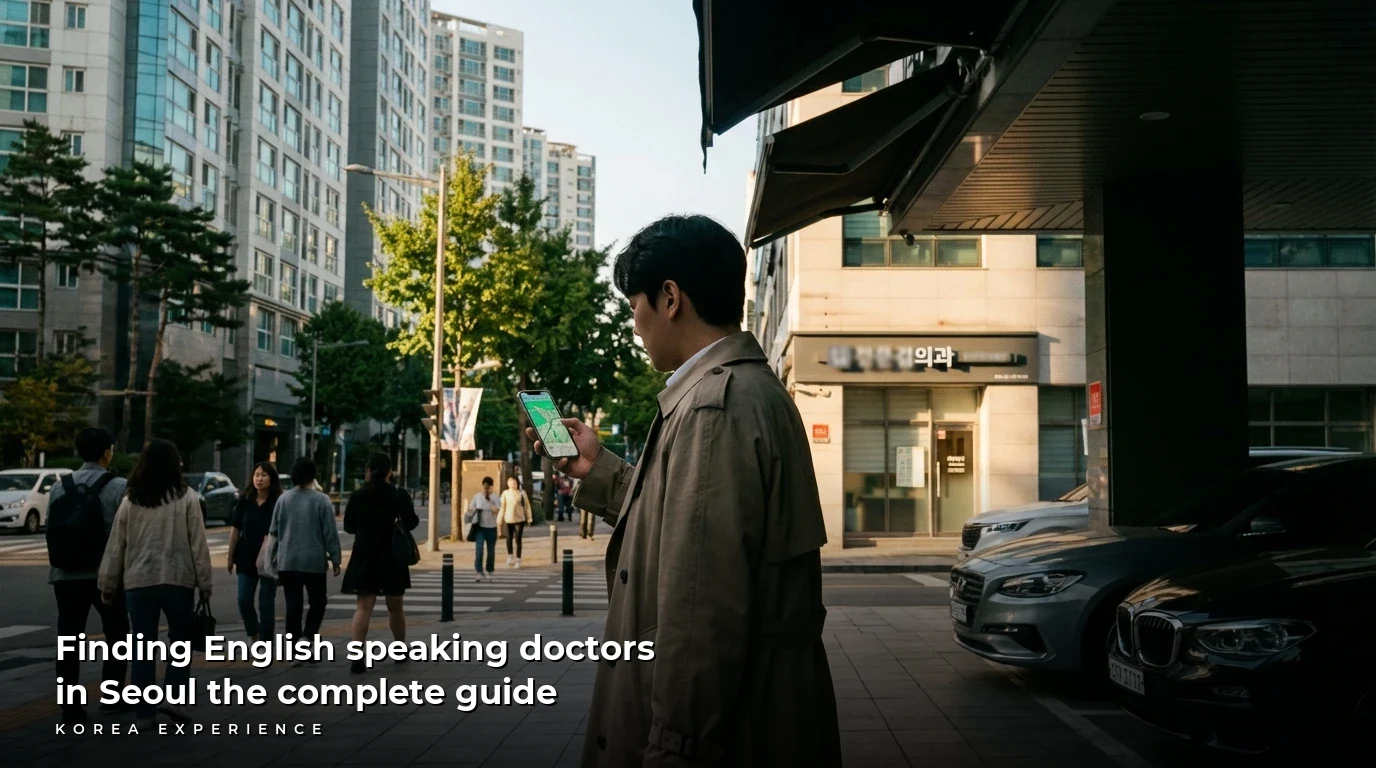
Navigating a healthcare system in a foreign language can be one of the most daunting aspects of living abroad or traveling. Fortunately, Seoul boasts a world-class medical infrastructure that is efficient, technologically advanced, and increasingly accessible to international patients. Whether you are dealing with a sudden flu, need a routine check-up, or require specialized care, finding an English-speaking doctor in Seoul is easier than you might think—provided you know where to look.
In 2026, the landscape of medical care for foreigners in Korea has evolved significantly. With over 30 major general hospitals operating dedicated International Healthcare Centers (IHCs) in the capital area alone, the barrier to entry has lowered. However, understanding the difference between a primary clinic, a specialized hospital, and a tertiary university hospital is vital for saving time and money.
You might also enjoy our article about Finding apartments real estate apps in English in Korea.
Key Takeaways
- 1International Healthcare Centers (IHC) at major hospitals offer guaranteed English service but charge a premium (approx. $50-100 consult fee).
- 2Local neighborhood clinics are significantly cheaper ($15-30 without insurance) but English fluency varies by doctor.
- 3You do not need a referral for family medicine, dentistry, or ophthalmology, but you do for tertiary university hospitals to use National Insurance.
The Structure of Korean Healthcare
Before rushing to the nearest hospital, it is essential to understand the tiered system of Korean healthcare. The efficiency here is staggering; the average wait time for a scheduled appointment at a primary clinic is often less than 15 minutes.
You might also enjoy our article about Mental health support for expats English speaking therapy....
Korea classifies medical institutions into three tiers. Primary care includes local neighborhood clinics (called "Uiwon"). Secondary care covers medium-sized hospitals with specialists. Tertiary care refers to large university hospitals (like Severance or Samsung).
You might also enjoy our article about Finding an apartment in Korea complete guide for foreigners.
If you have Korean National Health Insurance (NHIS), you typically need a referral letter from a primary doctor to visit a tertiary hospital and receive full insurance benefits. Without this letter, you will pay 100% of the medical costs out-of-pocket, which can range from ₩150,000 to ₩250,000 ($110-$185 USD) for an initial consultation alone.
Related reading: Finding community top expat clubs and networking events i....
Many expats make the mistake of running to the ER or a university hospital for a bad cold. This is the most expensive route. For minor ailments, look for a local Otolaryngology (ENT) clinic. They are everywhere, often have doctors who studied abroad, and cost a fraction of the price—usually under ₩20,000 ($15) including simple procedures.
Top International Healthcare Centers in Seoul
For those prioritizing communication and streamlined service over cost, the International Healthcare Centers (IHC) at Seoul's "Big 5" hospitals are the gold standard. These centers are designed specifically for foreigners. The staff coordinates appointments, handles insurance claims, and ensures you are escorted to the right department.
1. Severance Hospital (Yonsei University Health System)
Located in Sinchon, this is perhaps the most famous hospital among the expat community. Founded by missionaries, it has a long history of treating international patients. Their International Health Care Center serves over 60,000 foreign outpatients annually.
Severance Hospital International Health Care Center(Yonsei Severance Byeongwon)
Consultation fees at Severance generally start around ₩65,000 ($48 USD) for general practitioners within the international clinic, while seeing a specialist can push costs upwards of ₩85,000 ($63 USD) before tests.
2. Asan Medical Center (AMC)
Located in the eastern part of Seoul near the Olympic Park, Asan is frequently ranked as Korea's top hospital. While slightly further from the central expat hubs like Itaewon, their facilities are state-of-the-art. The campus is massive, spanning over 85,000 square meters.
Asan Medical Center International Clinic(Seoul Asan Byeongwon)
3. Samsung Medical Center (SMC)
Located in the affluent Gangnam district, SMC offers a highly modernized experience. The entire process is digital-first, reducing administrative wait times significantly. It is approximately 15 minutes by taxi from Gangnam Station.
📋 Major Hospital Quick Stats
Local English-Speaking Clinics: The Budget-Friendly Option
While university hospitals are excellent, they are not always necessary. Seoul has neighborhoods with high densities of foreign residents, such as Itaewon, Hannam-dong, and Hongdae, where local private clinics cater to English speakers.
Visiting a local clinic (often identified by "Clinic" or "Uiwon" on signs) is much faster. You can usually walk in without an appointment. The cost difference is substantial; a standard consultation for a cold or minor injury at a local clinic is regulated by the government and typically costs between ₩15,000 and ₩25,000 ($11-$19 USD) if you do not have insurance, and roughly ₩5,000 ($3.75 USD) if you do.
Pro Tip: Using Naver Maps
Search for "Internal Medicine" or "ENT" in Naver Maps, then check the "Review" section. Look for reviews written in English or photos of hours posted in English. This is a strong indicator the staff can communicate with you.
Recommended Local Clinics
Itaewon International Clinic Located in the heart of Itaewon, this clinic is a staple for the expat community. Dr. Kim is known for his fluency in English and understanding of Western medical practices.
- Average Cost: ₩30,000 ($22 USD) for consultation.
- Wait Time: Walk-ins accepted, usually 20-40 minutes.
Soyoung Medical Clinic (Hannam-dong) Situated near the UN Village, this clinic sees many diplomats and their families. They specialize in pediatrics and internal medicine.
University Hospital vs. Local Clinic
- ✓Guaranteed English support
- ✓All specialists in one building
- ✓Direct billing with foreign insurance
- ✗Higher consultation fees ($50+)
- ✗Longer wait times
- ✗Referral letter needed for NHIS coverage
Specialized Care: Dentists, Dermatologists, and OBGYN
Korea is a global hub for dermatology and dentistry. Competition is fierce, which keeps quality high and prices competitive compared to the US or Europe.
Dental Care
English-speaking dentists are common in Gangnam and Itaewon. A standard cleaning (scaling) costs about ₩60,000 ($45 USD) without insurance, or roughly ₩15,000 ($11 USD) with insurance once a year.
- UPenn Barun Dental: Doctors trained at the University of Pennsylvania.
- Hus-hu Dental Clinic: Popular in Gangnam for orthodontics.
Dermatology
For skin concerns, "Skin Clinics" are on almost every corner in Gangnam.
- Mole removal: Roughly ₩10,000 ($7.50 USD) per mole.
- Acne treatment: Basic extrusion and care packages start at ₩70,000 ($52 USD).
📊 Medical Tourism Stats 2025
The Step-by-Step Guide to Visiting a Doctor
If you have never visited a Korean hospital, the flow might feel different from what you are used to. It is incredibly fast-paced.
📖 How to Visit a Doctor in Korea
Step 1: Arrival & Registration
Take a number ticket at the front desk. Present your ARC (Alien Registration Card) or Passport. If you have insurance, they will see it in the system automatically.
Step 2: The Consultation
You will wait outside the doctor's office. Your name will appear on a screen. Consultations are quick—usually 5 to 10 minutes. Be concise with your symptoms.
Step 3: Payment
Go back to the main desk to pay. You pay for the consultation and any treatments immediately. Korea is largely cashless; credit cards are accepted everywhere.
Step 4: Pharmacy
You will receive a paper prescription. Take this to any nearby pharmacy (Yakguk), usually located on the ground floor or next door.
Understanding Costs and Insurance
Cost transparency is a major benefit of the Korean system. Unlike in some Western countries where you receive a bill months later, in Korea, you pay immediately upon exit.
If you are working in Korea, you are likely enrolled in the National Health Insurance Service (NHIS). This covers roughly 50% to 80% of medical costs. If you are a traveler, you will pay 100% of the "National Health Insurance Price," which is still regulated and reasonable.
However, International Clinics at big hospitals may charge a "International Surcharge" which is not regulated in the same way.
💵 Medical Cost Comparison (Estimates)
University hospital consult fee
Standard clinic visit copay
Insurance Warning
If you visit a tertiary hospital (like Seoul National or Asan) without a referral letter from a local clinic, the NHIS will NOT cover your visit, even if you are a subscriber. You will be treated as a private patient. This rule does not apply to Dental, Emergency, or Rehabilitation departments.
Pharmacies (Yakguk) in Seoul
You are never more than a few hundred meters from a pharmacy in Seoul. Look for the "Yak" sign (약) or a red cross (though red crosses are also used for churches, so look for the hangul character).
Pharmacists in university districts and tourist areas often speak decent English. Korean pharmacists have the authority to prescribe stronger medication than over-the-counter options in the US, but for antibiotics or strong painkillers, you strictly need a doctor's prescription.
📋 Pharmacy Facts
Emergency Services
In a true emergency, do not hesitate. The Korean emergency number is 119. They have interpretation services available.
If you call 119:
- Ambulance transport is free of charge, even for tourists.
- You will be taken to the nearest hospital with capacity, not necessarily the one you choose.
- Emergency Room (ER) fees are separate from treatment fees. The base ER fee at a large hospital is roughly 60,000 - ₩80,000 ($45-$60 USD).
Emergency Process Timeline
Dial for Ambulance
State 'English Please' and your location.
Ambulance Ride
Paramedics will assess vitals. Transport is free.
Hospital Arrival
You are assessed by urgency, not arrival time.
Doctor Review
Tests and treatment administered.
Mental Health Services
Finding English-speaking mental health support can be challenging but is improving. The stigma around mental health in Korea is decreasing, leading to more clinics opening.
- Seoul Counseling Center: Offers therapy in English with licensed professionals.
- Adaptable Human Solutions: Another reputable center in Mapo-gu.
- Cost: Therapy is expensive and often not covered by NHIS unless it is strictly psychiatric (medication-based). Expect to pay ₩100,000 to ₩200,000 ($75-$150 USD) per session for English counseling.
Healthcare Options Summary
| Feature | Intl. Clinic | Local Clinic | Pharmacy |
|---|---|---|---|
| English Fluency | Native/Fluent | Variable | Basic |
| Wait Time | High (booked) | Low (15 min) | None |
| Cost (No Ins.) | $$$ ($80+) | $ ($20) | ¢ ($5) |
| Best For | Complex Issues | Flu/Stomach | Headache |
Useful Apps for Finding Doctors
Technology makes finding care significantly easier in 2026.
- Naver Map: The absolute essential. Search "English Speaking Hospital."
- Mooda (or similar specialized apps): For mental health tracking.
- Emergency Ready App: Launched by the government, this app helps you find the nearest ER and pharmacy, and it supports English.
Telemedicine is an Option
Since the regulatory changes in 2024/2025, telemedicine apps have gained traction. Apps like 'DoctorNow' allow you to consult via video. While English support is still rolling out, some doctors on these platforms are fluent.
Conclusion
Getting sick in Seoul doesn't have to be a nightmare. The city offers a unique "dual track" system: the premium, ultra-comfortable International Clinics for those who want peace of mind, and the highly efficient, affordable local clinics for those who want quick treatment.
For most travelers and expats, a combination of both works best. Use local clinics for your seasonal allergies or sprained ankles, and reserve the university hospitals for serious investigations. With affordable prices—often 80% cheaper than US equivalents—and high-quality care, you are in safe hands.
❓ Frequently Asked Questions
Have more questions?Contact us →
About the Author
Korea Experience Team
Written by the Korea Experience editorial team - experts in Korean medical tourism, travel, and culture with years of research and firsthand experience.
Explore more in Living in Korea
Everything expats and long-term visitors need to know — from visa requirements and housing to banking, healthcare, and daily life tips.
Browse All Living in Korea ArticlesContinue Reading
Explore more articles you might find interesting
The complete 2026 guide to emergency medical care in Seoul. Find the best international hospitals, ER costs, and English-speaking services for travelers.
A complete guide to finding English-speaking therapy in Seoul. Covers costs, insurance, top clinics, and mental health resources for expats in 2026.

Complete guide to pet ownership in Korea covering English-speaking vets, luxury pet hotels, costs, and regulations for expats living in Seoul.

Discover the best apps and offline meetups for language exchange in Korea. Learn about costs, locations, safety tips, and how to make local friends.
Discover Seoul's underground malls where trendy fashion costs just 10,000 KRW. Our 2026 guide covers 5 top locations, shopping hacks, and essential locker tips.
Comprehensive guide to vaginal rejuvenation in Seoul 2026. Compare costs (saving 30-50%), English-speaking clinics, laser treatments, and surgical options.