Living in Korea

Invest in Korean Real Estate as a Foreigner in 2026

A comprehensive guide for foreigners looking to invest in Korean real estate in 2026, covering legal steps, property types, financing, and key market insights.

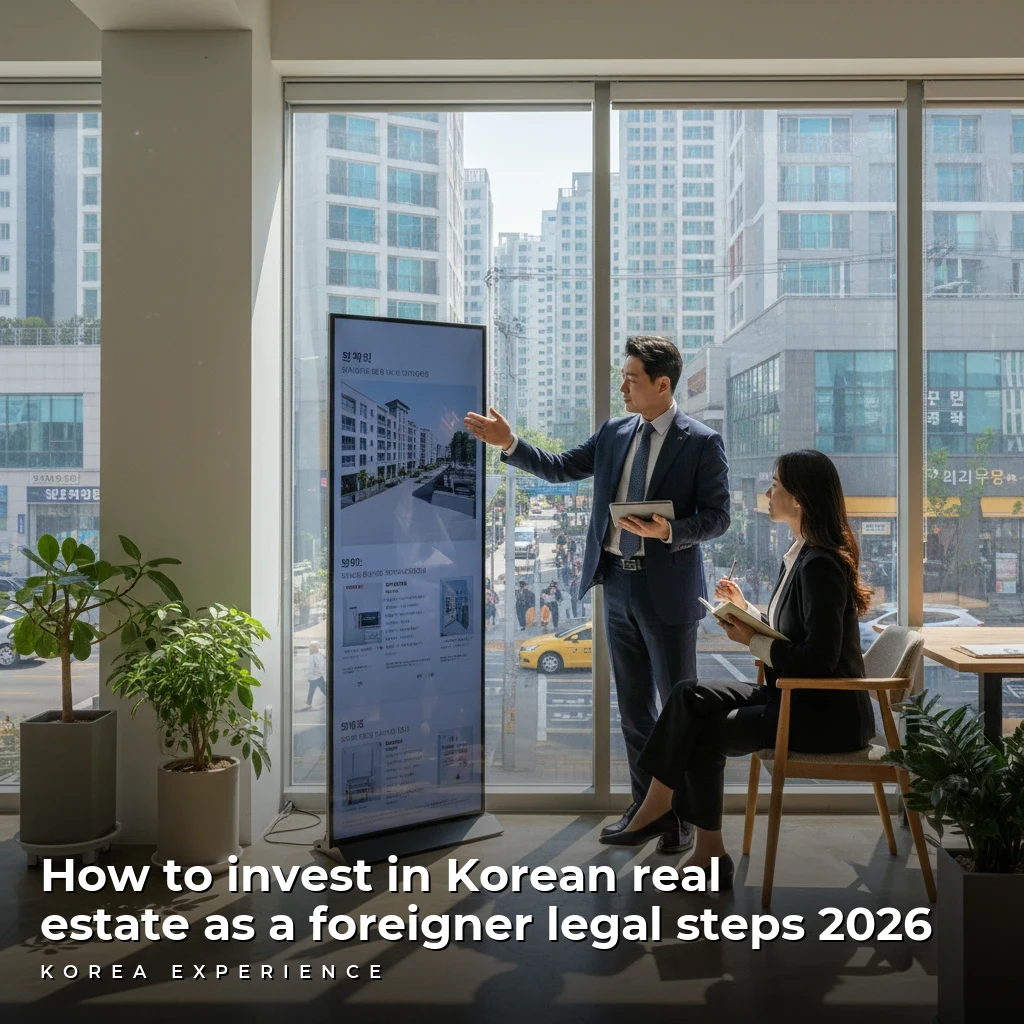
How to Invest in Korean Real Estate as a Foreigner Legal Steps 2026

South Korea, a vibrant hub of innovation, culture, and economic dynamism, continues to attract international attention. For many expatriates, long-term residents, and investors, the prospect of owning a piece of this dynamic country's real estate market is increasingly appealing. However, navigating the intricacies of investing in Korean real estate as a foreigner can seem daunting. With distinct legal frameworks, market trends, and cultural nuances, understanding the process is paramount to a successful investment. This comprehensive guide, updated for 2026, aims to demystify the journey, providing you with the essential legal steps, practical insights, and expert advice needed to make an informed decision. Whether you're considering a residential property in a bustling city like Seoul, a commercial venture, or even land, this article will equip you with the knowledge to confidently approach the Korean real estate market.

Korea’s legal framework is generally welcoming to foreign investors, making it relatively straightforward to invest in Korean real estate as a foreigner. Unlike some countries that impose strict restrictions, Korea allows foreigners to acquire and own most types of land and buildings without significant hurdles, provided certain reporting and registration procedures are followed.

Understanding Foreigner Classification and Visa Impact

Your visa status in Korea does not typically restrict your ability to purchase real estate, but it can influence your practical experience, especially regarding financing.

  • Non-residents: Foreigners who do not hold a valid visa allowing long-term stay in Korea can still purchase property, but the process may be more complex, particularly for financing. They typically need to report their acquisition to the local district office within 60 days of the contract signing.
  • Long-term Residents (e.g., F-2, F-4, F-5 visas): These visa holders often find the process smoother, especially when dealing with local banks for potential loans, though foreign loan eligibility is still very restrictive. Holders of a permanent residency (F-5 visa) or a spouse of a Korean national (F-6 visa) typically have the most streamlined experience.
  • Investment Visas (D-8): While a D-8 visa is for foreign direct investment in a Korean company, it does not directly grant real estate ownership for personal use, but it can facilitate the purchase of commercial properties related to the business.

Key Regulations and Reporting Requirements

The primary legislation governing foreign land acquisition is the Foreigner's Land Acquisition Act.

  • Pre-Acquisition Approval (Rare): Generally, foreigners do not need pre-approval to purchase property. However, in specific designated areas such as military facilities protection zones, cultural heritage protection zones, or ecological preservation areas, prior approval from relevant authorities might be required. These instances are rare for typical residential or commercial purchases in major cities.
  • Post-Acquisition Reporting: This is the most crucial step. All foreigners must report their acquisition of real estate to the district office (Si/Gun/Gu Office) where the property is located within 60 days of the contract signing date. Failure to do so can result in substantial fines. This report includes details of the property, the acquisition date, and the purchaser's identity.
  • Land Register (Deunggi-bu Deungbon): After purchase, ownership must be registered with the local Land Registry Office. This is typically handled by a certified judicial scrivener (beopmusa), who will ensure all documentation is correct and officially record the transfer of ownership.

Free Economic Zones (FEZs) and Special Investment Benefits

South Korea has designated several Free Economic Zones (FEZs) in areas like Incheon, Busan-Jinhae, and Gwangyang Bay. These zones offer incentives to attract foreign investment, which can sometimes include streamlined administrative procedures for real estate acquisition, tax breaks, or other benefits. While primarily aimed at large-scale corporate investments, individuals considering properties within these zones should research any specific advantages. For instance, the Jeju Special Self-Governing Province previously offered a residency-by-investment scheme for real estate, but this has been largely discontinued as of 2018 for new applicants. Always verify current regulations for any special economic zones.

Types of Real Estate Investment Opportunities for Foreigners

The Korean real estate market offers a diverse range of property types, each with its own characteristics and potential for investment. Understanding these options is key to making a choice that aligns with your financial goals and lifestyle preferences.

Residential Properties

Residential properties are the most common entry point for foreign investors.

  • Apartments (Apatu): The most popular housing type in Korea, especially in urban areas. Apartments typically come in large complexes with shared amenities like parking, gyms, and security. Prices vary significantly based on location, age, and size. High-demand areas like Gangnam in Seoul can command very high prices, while newer developments in satellite cities or established areas in Busan or Incheon might offer more accessible entry points.
    • Example: A well-located apartment in a desirable Seoul district such as Gangnam or Yongsan can range from KRW 1.5 billion to KRWG 5 billion or more for a mid-sized unit (85-135 sqm). In contrast, a similar-sized apartment in Busan's Haeundae district might range from KRW 500 million to KRW 1.5 billion.
  • Officetels: A hybrid of an office and a hotel room, officetels are typically studio or one-bedroom units found in commercial districts. They are popular for singles or young couples due to their smaller size, often competitive prices, and prime locations with good access to public transport. They can be used for residential or office purposes and offer good rental yield potential.
  • Villas/Townhouses: In Korea, "villa" often refers to a multi-unit building smaller than an apartment complex, usually with 3-5 floors. They offer more privacy than apartments but fewer shared amenities. Townhouses are less common but exist, particularly in suburban areas.
  • Single-Family Homes (Dan독 주택): Traditional detached houses are less common in major urban centers due to high land costs but can be found in suburbs or rural areas. These offer greater space and privacy but often require more maintenance.

Comparison Table: Residential Property Types

FeatureApartment (Apatu)OfficetelVilla/Townhouse
Type of BuildingLarge complex, many unitsMid-rise, mixed-use (office/residence)Smaller multi-unit building / Detached
SizeMedium to Large (59-200+ sqm)Small (20-60 sqm)Small to Medium (50-150 sqm)
LocationUrban/Suburban, often residential zonesCommercial/Business DistrictsResidential areas, often quieter
AmenitiesHigh (gym, security, parking, community)Moderate (security, basic parking)Low (limited shared amenities)
Price PointHigh to Very HighModerateModerate to High
Rental YieldModerate (high value appreciation potential)Good (popular for singles/young professionals)Moderate
Ideal ForFamilies, long-term residents, appreciationSingles, young professionals, rental incomePrivacy-seekers, smaller families

Commercial Properties

Investing in commercial properties can offer higher rental yields but often comes with greater capital requirements and market volatility.

  • Retail Spaces (Sang-ga): Shops and storefronts in commercial areas, shopping malls, or underground arcades. Renting out to businesses can provide stable income. Location is paramount for retail success.
  • Office Spaces: Units in office buildings, particularly in central business districts like Gangnam, Jongno, or Yeouido in Seoul. Demand is driven by corporate activity.
  • Industrial Properties: Warehouses, factories, or logistics centers, often located in industrial parks outside major cities. These are typically for larger institutional investors but can be considered by high-net-worth individuals.

Land

Purchasing land in Korea, especially for development purposes, can be a complex but potentially rewarding long-term investment. Regulations regarding land use (zoning laws) are strict and vary by region. Foreigners can purchase land, but extensive due diligence is required to understand permitted uses, development potential, and future infrastructure plans.

The Step-by-Step Property Acquisition Process in Korea

Acquiring real estate in Korea involves several distinct stages, each requiring careful attention to detail. Partnering with experienced professionals is highly recommended.

  • Define Your Goals: Determine your budget, property type, desired location, and investment objectives (e.g., rental income, capital appreciation, personal residence).
  • Market Analysis: Research current market trends, average prices in target areas, and rental yields. Websites like Naver Real Estate and Zigbang (though primarily in Korean) can offer a glimpse, but professional guidance is better.
  • Engage a Licensed Real Estate Agent (Gong-in Junggae-sa): This is crucial. A good agent will have access to listings, understand local market dynamics, and, ideally, speak English. They will act as an intermediary, negotiating on your behalf and ensuring compliance with local customs. Look for agents specializing in foreign clients.

2. Property Viewing and Due Diligence

  • Visit Properties: Physically inspect potential properties to assess their condition, surroundings, and amenities.
  • Title Search (Deunggi-bu Deungbon Confirmation): Your agent or judicial scrivener will obtain the property's official register. This document details the property's ownership history, any existing mortgages or liens, and land usage restrictions. It is essential for verifying legal ownership and identifying any encumbrances.
  • Building Register (Gun-chukmul Daejang): For buildings, this register provides details like floor area, construction date, and any illegal modifications.
  • Zoning Confirmation (Toji Iyong Gyehoek Hwak-inwon): This document clarifies how the land can be used (e.g., residential, commercial, industrial) and any development restrictions.
  • Financial Check: Understand maintenance fees (gwanli-bi), property taxes, and potential rental income if applicable.

3. Negotiating and Signing the Contract

  • Offer and Negotiation: Your agent will help you make an offer and negotiate the price and terms with the seller.
  • Sales Contract (Maemae Gye 계약): Once terms are agreed upon, a formal sales contract is drafted. This document is legally binding and will specify the property details, purchase price, payment schedule, and conditions of sale. It should be written in both Korean and English if possible, or at least have a certified translation.
  • Deposit Payment: Typically, a deposit of 10% of the purchase price is paid upon signing the contract. This deposit is usually non-refundable if the buyer defaults.
  • Intermediate Payment (Optional): Sometimes, an intermediate payment (jungdo-geum) is made between the deposit and the final payment, typically 1-2 months after the contract signing. This further secures the transaction.

4. Final Payment and Ownership Transfer

  • Balance Payment: The remaining balance of the purchase price is paid on a mutually agreed-upon date. This usually coincides with the transfer of property title.
  • Legal Scrivener (Beopmusa): A licensed judicial scrivener is essential for this stage. They handle the official registration of ownership transfer at the Land Registry Office. They will also calculate and pay the acquisition tax (chwideuk-se) on your behalf.
  • Required Documents: You will need your passport, Alien Registration Card (ARC) if you have one, and proof of funds. If you are not physically present, you may need to provide a power of attorney.
  • Property Handover: Once the final payment is made and registration is initiated, the property is officially yours. Keys are typically exchanged on this day.

5. Post-Acquisition Reporting

  • Foreigner's Land Acquisition Report: As mentioned, you must report your acquisition to the local district office (Si/Gun/Gu Office) within 60 days of the contract signing. Your real estate agent or judicial scrivener can assist with this.
  • Tax Registration: Ensure you are registered for ongoing property taxes.

Financing and Taxation of Korean Real Estate

Financing and understanding the tax implications are critical components of any real estate investment.

Financing Options for Foreigners

Securing a mortgage in Korea as a foreigner can be challenging compared to local citizens.

  • Korean Banks: While possible, traditional mortgages from Korean banks for foreigners are highly restricted. Banks primarily prefer applicants with stable, long-term income derived from employment in Korea, excellent credit history within Korea, and often require a significant down payment (50% or more). Some banks may offer specific products for F-5 (Permanent Resident) or F-6 (Spouse of Korean National) visa holders.
  • Foreign Banks: International banks with branches in Korea (e.g., Citibank Korea, HSBC) might offer more lenient terms but often require existing relationships or higher collateral.
  • Cash Purchase: Many foreign investors opt to purchase properties in cash due to the difficulties in obtaining local financing. This simplifies the transaction significantly.
  • Overseas Financing: If you have access to financing in your home country, using those funds to purchase property in Korea can be a viable alternative. However, be mindful of currency exchange rates and transfer fees.

Key Taxes Associated with Real Estate in Korea

Understanding the tax structure is vital for budgeting and calculating your return on investment.

Comparison Table: Key Real Estate Taxes

Tax TypeDescriptionRate (Approx. 2026, highly variable)PayerFrequency
Acquisition TaxPaid upon acquisition of real estate. Includes registration and education taxes.1.1% to 4.6% of purchase price (residential depends on value/size, commercial typically 4.6%)BuyerOnce (at purchase)
Stamp TaxA small tax on the sales contract.Nominal, varies with transaction value (e.g., ₩75,000 for ₩100M-₩1B)Buyer/SellerOnce (at contract)
Property TaxAnnual tax based on the publicly assessed value of the property.0.1% to 0.4% (residential) / 0.25% (commercial)OwnerAnnually
Comprehensive Real Estate TaxAdditional tax on owners of high-value properties, calculated on aggregate holdings.0.5% to 5.0% (for properties exceeding certain thresholds)OwnerAnnually
Capital Gains TaxTax on profit from selling a property. Rate depends on holding period, residency, and other factors.6% to 45% (short-term holding periods incur higher rates, and non-residents face specific withholding taxes).SellerAt sale
Income Tax (Rental)Tax on rental income generated from the property.Progressive rates, depends on total incomeOwnerAnnually
  • Acquisition Tax (Chwideuk-se): This is paid when you register the property under your name. The rate varies depending on the property type, size, and value, generally ranging from 1.1% to 4.6%. For residential properties, smaller values have lower rates, while commercial properties typically incur a flat 4.6% (including local education and special rural development taxes).
  • Property Tax (Jae-san-se): An annual tax levied on the publicly assessed value of the property. Rates are progressive for residential properties and generally fixed for commercial properties.
  • Comprehensive Real Estate Tax (Jong-hap Budongsan-se): An additional tax imposed on individuals who own high-value real estate that exceeds a certain threshold. This tax aims to curb real estate speculation and is calculated on the aggregate value of all properties owned by an individual. Thresholds and rates are adjusted periodically.
  • Capital Gains Tax (Yangdo Sosuk-se): This tax is imposed on the profit made from selling a property. The rate depends on the holding period (short-term gains are taxed much higher) and whether the seller is a resident or non-resident. Non-residents may face a flat 20% withholding tax on the sales proceeds or 10% of the sales price, whichever is lower, potentially subject to a tax treaty refund.
  • Rental Income Tax: If you rent out your property, the income generated is subject to income tax. Foreigners are generally taxed on their Korean-sourced income.
  • Inheritance and Gift Tax: These taxes are applicable if you inherit or gift real estate in Korea, with rates that can be significant.

It is imperative to consult with a qualified Korean tax accountant (semu-sa) who specializes in foreign investment before making any major decisions. Tax laws are complex and subject to change.

The Korean real estate market is dynamic and influenced by economic policies, demographic shifts, and infrastructure development. Staying informed is crucial.

Key Investment Locations

  • Seoul: The capital city remains the most sought-after and expensive market.
    • Gangnam-gu: Synonymous with luxury and high prices, strong appreciation potential.
    • Yongsan-gu: Home to the new National Museum of Korea and a rapidly developing international district, significant long-term growth potential.
    • Mapo-gu/Seongdong-gu: Popular with younger generations, offering a blend of trendy urban living and good transportation links.
  • Busan: Korea's second-largest city offers a coastal lifestyle and a strong economy.
    • Haeundae-gu: Famous for its beach and resorts, high-end residential and tourist-oriented properties.
    • Centum City: A business and cultural hub with modern apartments and commercial spaces.
  • Incheon: Home to Incheon International Airport and several Free Economic Zones, offering a mix of residential, commercial, and industrial opportunities.
  • Gyeonggi Province: Surrounding Seoul, cities like Bundang, Suwon, and Goyang offer more affordable alternatives with good connectivity to the capital.

Comparison Table: Investment Locations

LocationAverage Price (Apartment, mid-size)Key AdvantagesPrimary Investment Appeal
Seoul (Gangnam)KRW 2.5 Billion - 5 Billion+Prestige, highest appreciation, strong demandCapital appreciation, luxury living
Seoul (Yongsan)KRW 1.8 Billion - 3 Billion+Central location, ongoing redevelopment, international feelLong-term growth, strategic location
Busan (Haeundae)KRW 500 Million - 1.5 BillionCoastal living, tourism, relatively lower pricesLifestyle, tourism rental, moderate appreciation
IncheonKRW 400 Million - 900 MillionAirport proximity, FEZ benefits, good infrastructureAffordability, potential growth, commercial

Prices are estimates for 2026 and subject to market fluctuations.

  • Government Policies: Korean government policies frequently target the real estate market to stabilize prices and curb speculation. Be aware of potential changes in loan regulations, property taxes, or capital gains tax.
  • Interest Rates: Global and domestic interest rate trends significantly impact mortgage availability and market liquidity.
  • Demographics: The aging population and declining birth rates are long-term factors. However, urban centers continue to attract young professionals and families.
  • Infrastructure Development: New subway lines, high-speed rail extensions (like GTX), and urban regeneration projects can significantly boost property values in surrounding areas.
  • Sustainability: Growing interest in eco-friendly and smart homes. New developments often incorporate advanced technology and sustainable features.

Leveraging Local Expertise

  • Real Estate Agents: As mentioned, a licensed agent is indispensable. Seek recommendations and ensure they have experience with foreign clients.
  • Judicial Scriveners (Beopmusa): Essential for legal checks and registration.
  • Tax Accountants (Semu-sa): Crucial for understanding and complying with Korean tax laws.
  • Legal Counsel (Byeonhosa): For complex transactions or disputes, a lawyer specializing in real estate law is advised.

Potential Challenges and Mitigation Strategies

While investing in Korean real estate is generally open to foreigners, certain challenges can arise. Proactive planning can help mitigate these risks.

1. Language Barrier

  • Challenge: Most official documents, property listings, and direct negotiations will be in Korean.
  • Mitigation: Hire a bilingual real estate agent, judicial scrivener, or legal counsel. For critical documents, always obtain certified translations. Learn basic Korean real estate terminology.
  • Challenge: Korean real estate laws, while clear, can be intricate, especially regarding tax codes and zoning.
  • Mitigation: Rely heavily on professional advice from licensed judicial scriveners and tax accountants. Ensure all reporting requirements (e.g., foreigner's land acquisition report) are met strictly within deadlines.

3. Financing Restrictions

  • Challenge: Obtaining a mortgage from Korean banks as a foreigner can be difficult, requiring a significant down payment or strong local credit.
  • Mitigation: Plan for a cash purchase if possible. Explore options with international banks. If you are a long-term resident with a stable income and good credit history in Korea, discuss your options directly with local banks, but prepare for strict eligibility criteria.

4. Market Fluctuations and Speculation

  • Challenge: The Korean real estate market can be sensitive to government policies and economic shifts, leading to periods of rapid price changes.
  • Mitigation: Conduct thorough market research. Focus on long-term investment goals rather than short-term speculation. Diversify your portfolio if possible. Choose properties in fundamentally strong locations with consistent demand.

5. Exit Strategy and Resale

  • Challenge: Reselling a property might involve capital gains tax and potentially a longer selling period, especially for unique properties.
  • Mitigation: Consider the liquidity of the property type and location when purchasing. Understand capital gains tax implications for different holding periods. Work with an experienced agent who can effectively market the property to both local and international buyers.

Frequently Asked Questions (FAQ) about Investing in Korean Real Estate

Q1: Can a non-resident foreigner buy property in Korea without a visa?

A1: Yes, a non-resident foreigner can legally purchase real estate in Korea. However, obtaining financing from Korean banks will be significantly more challenging, often making a cash purchase the primary option. You will still need to report the acquisition to the local district office within 60 days of contract signing.

Q2: Are there any restrictions on the type of property a foreigner can buy?

A2: Generally, foreigners can buy most types of land and buildings, including residential apartments, officetels, commercial spaces, and land. Restrictions are rare and usually apply only to specific, highly sensitive areas like military facilities protection zones or certain ecological preservation zones, which are uncommon for typical investment purposes.

Q3: What is the average real estate agent commission in Korea?

A3: Real estate agent commissions in Korea are regulated by law and vary based on the transaction value. For sales, the commission rate typically ranges from 0.4% to 0.9% of the transaction price, plus a 10% value-added tax (VAT) on the commission itself. For example, for properties over KRW 900 million, the maximum commission rate is 0.9%. This is usually paid by both the buyer and the seller.

Q4: How long does the entire property acquisition process usually take?

A4: The typical timeframe from signing the sales contract to final registration and property handover can range from 1 to 3 months. This depends on factors like payment schedules, loan processing time (if applicable), and the efficiency of document processing by various authorities.

Q5: What is the most important piece of advice for a foreigner looking to invest in Korean real estate?

A5: The most important advice is to engage a team of reputable and experienced local professionals. This includes a licensed real estate agent who understands foreign client needs, a skilled judicial scrivener for legal registration, and a specialized tax accountant. Their expertise will ensure legal compliance, financial optimization, and a smoother overall experience, mitigating risks associated with language barriers and complex regulations.

Conclusion: Your Path to Investing in Korean Real Estate

Investing in Korean real estate as a foreigner in 2026 presents a compelling opportunity for those looking to diversify their portfolio or establish a foothold in this dynamic East Asian nation. While the process involves navigating specific legal steps, tax implications, and market nuances, it is entirely achievable with careful planning and the right professional guidance.

Key takeaways for your successful investment journey include:

  • Understand the Legal Framework: Be aware of the post-acquisition reporting requirements and ensure all documentation is handled correctly.
  • Choose Wisely: Research property types and locations that align with your investment goals, whether it's the bustling energy of Seoul, the coastal charm of Busan, or the strategic advantages of Incheon.
  • Plan Your Financing: Be prepared for potential challenges in securing local mortgages and explore all funding options, including cash purchases or overseas financing.
  • Master the Taxes: Crucially, consult with a Korean tax accountant to understand all applicable acquisition, property, capital gains, and rental income taxes.
  • Leverage Local Expertise: Your real estate agent, judicial scrivener, and tax accountant are your most valuable allies in navigating the market effectively and compliantly.

The Korean real estate market, with its blend of modern infrastructure, vibrant culture, and robust economy, offers significant potential. By approaching your investment with diligence, patience, and professional support, you can confidently secure your piece of this exciting landscape. For more information on living and investing in Korea, be sure to check out our other guides on topics such as long-term visa applications and the cost of living in major Korean cities.

About the Author

Korea Experience Team

Written by the Korea Experience editorial team - experts in Korean medical tourism, travel, and culture with years of research and firsthand experience.

⚠️ Medical Disclaimer

The information provided on this website is for general informational purposes only and does not constitute medical advice. Always consult with qualified healthcare professionals before making any medical decisions.

Continue Reading

Explore more articles you might find interesting