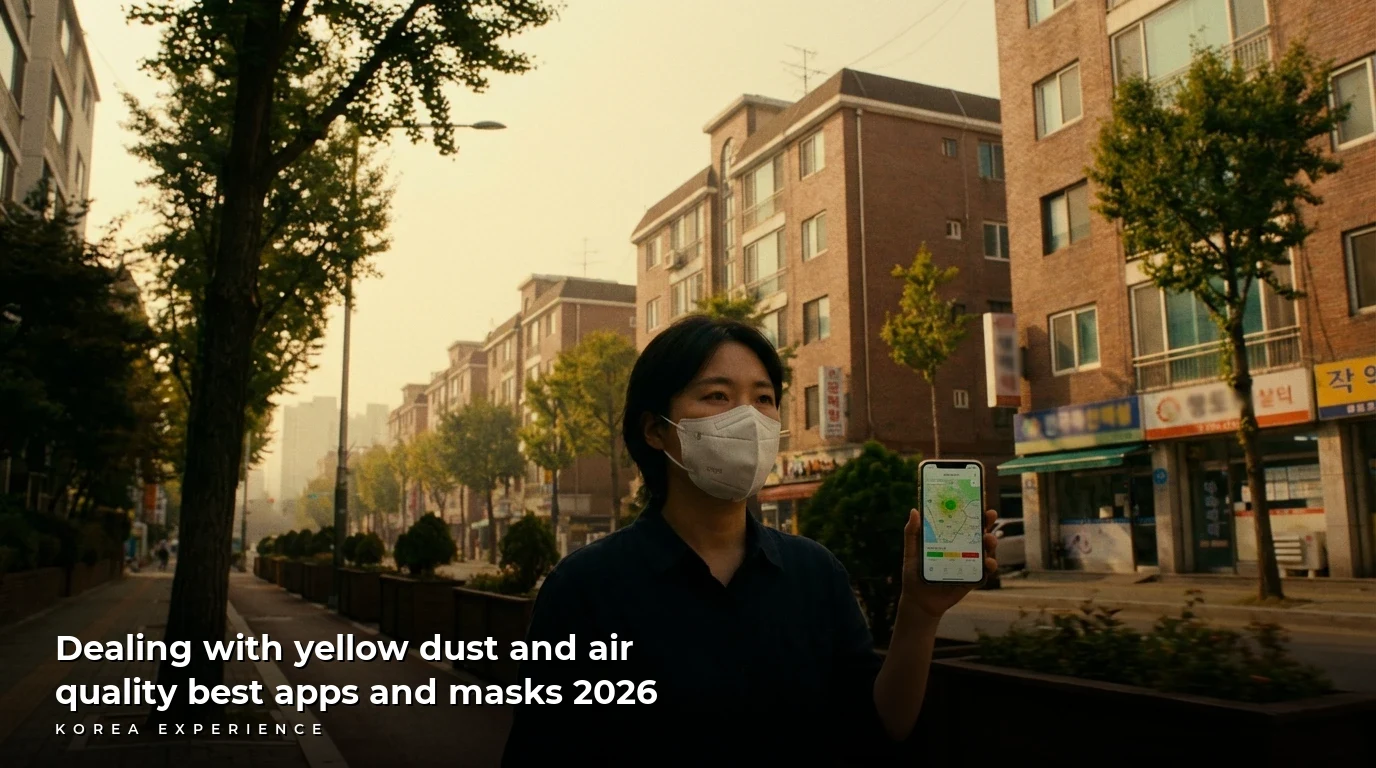
Navigating Yellow Dust & Air Quality in Korea: Apps & Masks 2026
Expert guide for expats and travelers in Korea. Learn about yellow dust, air quality apps, top masks, and essential tips for staying healthy in 2026.
Introduction: Breathing Easy in the Land of Morning Calm
Korea, renowned for its vibrant culture, stunning landscapes, and technological innovation, attracts millions of international travelers and expats each year. However, alongside the myriad attractions, newcomers and seasoned residents alike must grapple with a significant environmental challenge: air quality, particularly the seasonal phenomenon of Yellow Dust and the persistent issue of fine dust. As we look towards 2026, understanding and effectively managing these environmental factors is crucial for maintaining your health and enjoying your time in the country.
This comprehensive guide is designed specifically for international audiences, offering practical, up-to-date information on how to deal with Yellow Dust and air pollution. We will delve into what causes these issues, their potential health impacts, and most importantly, equip you with the best apps for monitoring air quality and the most effective masks available in Korea in 2026. From understanding air quality metrics to insider tips on maintaining a healthy lifestyle, this post will empower you to breathe a little easier during your Korean experience.
Understanding Korea's Air Quality Challenges: Yellow Dust and Fine Dust
Before diving into solutions, it's essential to grasp the nature of Korea's air quality issues. These aren't just minor inconveniences; they are significant environmental factors that can impact daily life and long-term health.
What is Yellow Dust (Hwangsa)?
Yellow Dust, known in Korea as "Hwangsa," is a seasonal meteorological phenomenon primarily occurring in spring (typically March to May), though it can sometimes appear in late winter or early summer. It originates from deserts in Mongolia and northern China, carried across the Korean Peninsula by prevailing westerly winds. This dust consists of sand, soil, and various pollutants picked up during its long journey. When Yellow Dust levels are high, the sky often takes on a hazy, yellowish hue, and everything outdoors can be coated with a fine layer of dust. While primarily a natural phenomenon, the dust often mixes with industrial pollutants during its travel, exacerbating its impact.
What is Fine Dust (Mise Meonji) and Ultrafine Dust (Chomise Meonji)?
Beyond seasonal Yellow Dust, Korea faces a more persistent challenge from fine dust, or "Mise Meonji," and ultrafine dust, "Chomise Meonji." These terms refer to microscopic particulate matter in the air, classified by their diameter:
- PM10 (Particulate Matter 10 micrometers): Fine dust, with particles 10 micrometers or less in diameter. These are small enough to be inhaled and can cause respiratory problems.
- PM2.5 (Particulate Matter 2.5 micrometers): Ultrafine dust, with particles 2.5 micrometers or less. These are particularly dangerous because their tiny size allows them to penetrate deep into the lungs and even enter the bloodstream, posing significant health risks.
Sources of fine dust are diverse, including industrial emissions, vehicle exhaust, construction sites, and even local cooking and heating. While Yellow Dust is a distinct phenomenon, it often contributes to already elevated fine dust levels.
Health Impacts and Vulnerable Groups
Exposure to high levels of Yellow Dust and fine dust can lead to a range of health issues, from mild irritation to serious chronic conditions. Common symptoms include:
- Respiratory: Coughing, sore throat, shortness of breath, aggravated asthma, bronchitis.
- Ocular: Eye irritation, redness, dry eyes.
- Dermatological: Skin irritation, rashes.
- Systemic: Headaches, fatigue, impaired cognitive function.
Vulnerable groups are at higher risk, including:
- Children: Their respiratory systems are still developing.
- Elderly individuals: Often have pre-existing health conditions.
- Individuals with pre-existing respiratory or cardiovascular diseases: Such as asthma, COPD, heart disease.
- Pregnant women: Can impact fetal development.
Understanding these risks underscores the importance of taking proactive measures to protect yourself and your loved ones.
Essential Air Quality Monitoring Apps for 2026
In 2026, staying informed about real-time air quality is easier than ever, thanks to advanced mobile applications. These apps provide crucial data, allowing you to make informed decisions about your daily activities. Here are some of the best air quality apps popular in Korea:
AirVisual (IQAir): Global Standard
AirVisual by IQAir remains a top choice for its comprehensive global coverage and detailed analytics. It provides real-time and forecast air quality data for locations worldwide, including a robust network of sensors across Korea.
- Key Features: Real-time AQI (Air Quality Index) for PM2.5, PM10, ozone, carbon monoxide, sulfur dioxide, and nitrogen dioxide. 7-day forecasts, historical data, personalized recommendations, and a global ranking of cities.
- Pros: Highly accurate, user-friendly interface, excellent for international comparisons, often integrates data from both government and private sensors.
- Cons: Some advanced features might require a premium subscription.
- Availability: iOS, Android.
- Price: Free with in-app purchases for premium features.
AQI Korea: Korean-Focused Insights
AQI Korea is an excellent choice for those who prefer an app specifically tailored to the Korean context. It pulls data primarily from official Korean government monitoring stations, providing reliable local information.
- Key Features: Real-time PM2.5 and PM10 levels, localized maps showing station data, simple color-coded system (Good, Moderate, Unhealthy for Sensitive Groups, Unhealthy, Very Unhealthy, Hazardous). Offers daily forecasts and historical trends.
- Pros: Direct access to government data, simple and straightforward interface, highly relevant for daily life in Korea.
- Cons: Less global data, may lack some of the deeper analytical features of AirVisual.
- Availability: iOS, Android.
- Price: Free.
Naver Weather / KakaoTalk: Integrated Solutions
For those already deeply integrated into Korean digital life, Naver Weather and KakaoTalk offer convenient air quality information directly within their widely used platforms.
- Naver Weather: The national portal giant's weather app provides detailed air quality data alongside temperature, humidity, and precipitation. It sources data from the Ministry of Environment.
- Pros: All-in-one weather and air quality, familiar interface for Naver users.
- Cons: Primarily focuses on Korean locations, may not offer as much analytical depth as dedicated apps.
- KakaoTalk: Korea's ubiquitous messaging app integrates a basic air quality checker. You can simply search for "air quality" or "fine dust" within the app or use the "Weather" tab in Kakao's search function.
- Pros: Extremely convenient if you're already using KakaoTalk, quick glance at current conditions.
- Cons: Very basic information, not designed for detailed monitoring or historical data.
- Availability: Both are pre-installed or readily available on iOS and Android.
- Price: Free.
Plum Air: User-Friendly Design
Plum Air (sometimes stylized as Plume Air Report) is another global contender that offers a beautiful and intuitive interface with a focus on ease of understanding.
- Key Features: Real-time air quality readings, personalized advice based on your profile (e.g., active runner, parent), "breathing weather" forecasts, and a clean, visual design.
- Pros: Excellent for quickly gauging the situation, actionable health advice, aesthetically pleasing.
- Cons: Might not have as many monitoring stations in Korea as AirVisual, and some advanced features might be behind a paywall.
- Availability: iOS, Android.
- Price: Free with optional premium features.
Comparison Table: Top Air Quality Apps (2026)
| App Name | Key Features | Accuracy (Korea) | Pros | Cons | Price |
|---|---|---|---|---|---|
| AirVisual | Real-time AQI, 7-day forecasts, global data | High | Comprehensive, global, detailed analysis | Some premium features paid | Free / Paid |
| AQI Korea | Real-time PM2.5/PM10, local maps, official data | High | Korean-focused, simple, direct government data | Less global scope, basic analytics | Free |
| Naver Weather | Integrated weather & AQI, forecasts | Medium-High | Convenient, familiar for Naver users, all-in-one | Less detailed AQ data than dedicated apps | Free |
| KakaoTalk | Basic real-time AQI, quick glance | Medium | Utterly convenient for daily users | Very basic, no historical or forecast data | Free |
| Plum Air | Real-time, "breathing weather," personalized | Medium-High | User-friendly, beautiful UI, actionable advice | Potentially fewer Korea-specific sensors | Free / Paid |
Recommendation: For the most comprehensive and reliable data, we recommend using a combination of AirVisual for detailed global insights and AQI Korea for direct, localized Korean government data. Integrating these with quick checks on Naver Weather or KakaoTalk provides a well-rounded approach.
Choosing the Right Mask: Your First Line of Defense
When air quality is poor, a high-quality mask is your most important tool for personal protection. However, not all masks are created equal. Understanding the different types and ratings is crucial.
Understanding KF Ratings: Your Guide to Korean-Certified Masks
In Korea, masks designed to filter particulate matter are often certified with a "KF" (Korean Filter) rating. This rating indicates the mask's filtration efficiency for particles of 0.4 micrometers.
- KF80: Filters out 80% or more of particulate matter. Offers basic protection but is generally not recommended for high levels of fine dust or Yellow Dust.
- KF94: Filters out 94% or more of particulate matter. This is the most commonly recommended rating for everyday protection against fine dust, ultrafine dust, and Yellow Dust. It offers excellent protection while still allowing for relatively comfortable breathing.
- KF99: Filters out 99% or more of particulate matter. Provides the highest level of protection among KF-rated masks. However, the increased filtration often comes with higher breathing resistance, making it less comfortable for extended wear or physical activity.
For most situations with moderate to high fine dust or Yellow Dust, a KF94 mask strikes the best balance between protection and breathability.
Surgical vs. N95/KN95 vs. KF Masks
It's important to differentiate between various mask types:
- Surgical Masks: Primarily designed to prevent large droplets from spreading outward (e.g., from a coughing person) and offer minimal protection from inhaling fine particulate matter. They do not seal tightly to the face and have low filtration efficiency for microscopic particles. Not recommended for Yellow Dust or fine dust protection.
- N95/KN95 Masks: These are respirator masks certified by standards in the US (N95) or China (KN95). They filter at least 95% of airborne particles. While effective, ensuring a proper fit and seal is critical. N95 and KN95 masks offer comparable protection to KF94 masks when fitted correctly.
- KF Masks (KF94, KF99): Korea's certified masks specifically designed for air pollution. They are generally equivalent in protective capabilities to N95/KN95 masks, focusing on particulate filtration and fit for Asian facial structures.
Key Features to Look For in a Mask
When choosing a mask, consider these features:
- KF Rating: Aim for KF94 for general use, KF99 for severe conditions or vulnerable individuals.
- Fit and Seal: The mask must form a tight seal around your nose and mouth to prevent unfiltered air from entering. Look for adjustable nose clips and ear loops.
- Comfort: Especially for extended wear, choose a mask that doesn't cause excessive pressure or irritation. Ergonomic designs and softer materials can make a difference.
- Breathability: While higher filtration means more resistance, some masks are designed with better ventilation systems or materials that minimize breathing difficulty.
- Individual Packaging: Masks often come individually wrapped, which is more hygienic and preserves their filtration capabilities until use.
Comparison Table: Mask Types and KF Ratings (2026)
| Mask Type | Protection Level (PM2.5) | Comfort Level | Price Range (KRW) | Best Use Case |
|---|---|---|---|---|
| Surgical Mask | Low (Droplet Barrier) | High | 200-500 | Basic infection control, not for fine dust protection |
| KF80 | Moderate (80%+) | High | 500-1,000 | Light pollution days, short outdoor exposure |
| KF94 | High (94%+) | Medium-High | 1,000-2,500 | Most fine dust & Yellow Dust conditions, everyday wear |
| KF99 | Very High (99%+) | Medium-Low | 2,000-4,000 | Severe pollution, highly sensitive individuals |
| N95/KN95 | High (95%+) | Medium | 1,500-3,500 | Alternative to KF94, when Korean brands are unavailable |
Top Recommended Masks and Where to Buy Them in Korea (2026)
Korea has a robust market for air filtration masks, with many excellent domestic and international brands. By 2026, the technology and availability have only improved.
Popular Korean Brands
Korean brands are generally very reliable, designed with local air quality conditions and facial structures in mind.
- Kleannara (크린나라): A household name, Kleannara offers a range of KF94 masks known for their ergonomic fit and consistent quality. Often available in various sizes.
- Yuhan-Kimberly (유한킴벌리) - Kleenex and Dettol lines: A joint venture with Kimberly-Clark, their masks under brands like Kleenex or Dettol are widely trusted and easily found. They emphasize comfort and breathability.
- Welkeeps (웰킵스): Famous for being one of the largest mask manufacturers, Welkeeps KF94 masks are highly popular for their consistent quality, good fit, and affordability.
- Dr.P.R. (닥터피알): Often praised for comfortable ear loops and a good facial seal, Dr.P.R. offers quality KF94 options.
- NEO Pharm (네오팜): Known for Derma B and other skincare brands, NEO Pharm also produces high-quality KF94 masks that are often gentle on the skin.
International Brands
While Korean brands dominate, you can also find international options.
- 3M Aura: The 3M Aura 9320+ (FFP2, equivalent to N95/KF94) is highly regarded globally for its excellent fit, comfort, and filtration. It's often available in larger pharmacies or online.
- Kimberly-Clark: While often associated with the Yuhan-Kimberly joint venture, some specific Kimberly-Clark N95 products might be imported and available.
Where to Purchase Masks in Korea (2026)
Purchasing masks in Korea is incredibly convenient.
- Pharmacies (약국, yakguk): Your best bet for guaranteed genuine and good quality KF-rated masks. Pharmacists can also offer advice. Prices are generally competitive.
- Convenience Stores (편의점, pyeoneuijeom): Chains like GS25, CU, 7-Eleven, and E-mart24 always stock KF94 masks, especially during Yellow Dust season. While slightly more expensive than bulk online, they are perfect for immediate needs.
- Supermarkets (마트, mateu): Large supermarkets like E-mart, Lotte Mart, and Homeplus have dedicated sections for health and hygiene products, including multi-packs of KF94 masks.
- Online Marketplaces: For bulk purchases or specific brands, online retailers are often the cheapest option.
- Coupang (쿠팡): Korea's largest e-commerce platform, known for its "Rocket Delivery." You can find virtually any KF94 brand here, often with multi-pack discounts.
- Gmarket (지마켓) / Auction (옥션): Other major online shopping sites with a vast selection of sellers.
- Naver Shopping (네이버 쇼핑): Aggregates products from various online stores, making price comparison easy.
- Olive Young / LOHB's / Lalavla (Health & Beauty Stores): These popular beauty and health chains also stock a good variety of KF94 masks, often featuring popular brands and sometimes offering promotions.
Average Pricing and Bulk Buying Tips
- Single Mask: Expect to pay between 1,000 KRW to 2,500 KRW for a single KF94 mask at convenience stores or small shops.
- Multi-Packs: Online or at large supermarkets, you can often find packs of 10-50 masks, bringing the price down to 700-1,500 KRW per mask. For example, a pack of 50 Welkeeps KF94 masks might cost around 40,000-60,000 KRW.
- Bulk Buying Tip: If you're an expat or staying long-term, consider buying KF94 masks in bulk online (e.g., a pack of 50 or 100) at the start of spring or winter. This is the most cost-effective way to ensure you're always prepared. Look for "KF94 대량" (large quantity) on Coupang or Gmarket.
Beyond Masks: Comprehensive Strategies for Cleaner Living
While masks are essential for outdoor protection, a holistic approach to managing air quality includes modifying your indoor environment and daily habits.
Indoor Air Quality Management
Your home should be a sanctuary from pollution.
- Air Purifiers: A high-quality air purifier with HEPA (High-Efficiency Particulate Air) and activated carbon filters is a must-have in Korea. Place it in your most frequently used room (bedroom or living room) and keep it running, especially during high pollution days. Look for models with a high CADR (Clean Air Delivery Rate) suitable for your room size. Popular brands include Coway, LG PuriCare, Samsung, Winix, and Xiaomi. Prices range from 200,000 KRW to over 1,000,000 KRW depending on features and coverage area.
- Limited Ventilation: On high pollution days, keep windows and doors closed. While some ventilation is good, opening windows when the outdoor AQI is poor will bring more pollutants inside.
- Indoor Plants: Some studies suggest certain indoor plants (e.g., Peace Lily, Spider Plant, Snake Plant) can help filter common indoor air toxins, though their impact on fine dust is minimal compared to a purifier.
- Vacuuming and Cleaning: Regularly vacuum with a HEPA-filter vacuum cleaner and damp-wipe surfaces to remove settled dust.
Personal Hygiene and Dietary Tips
Maintaining good personal hygiene and supporting your body's natural defenses can help mitigate the effects of pollution.
- Wash Up: Upon returning home, wash your hands, face, and consider showering to remove any accumulated dust from your skin and hair.
- Rinse Nasal Passages: Using a saline nasal rinse can help clear out inhaled particles and soothe nasal passages.
- Hydration: Drink plenty of water. Staying well-hydrated helps your body's mucous membranes function effectively, trapping pollutants.
- Dietary Support: Incorporate foods rich in antioxidants and Omega-3 fatty acids, such as fruits (berries, oranges), vegetables (spinach, broccoli), nuts, and fatty fish (salmon). These can help reduce inflammation and support respiratory health. Some Koreans also swear by Korean pears, bellflower root (doraji), and green tea for respiratory health.
When to Adjust Outdoor Activities
Monitoring air quality apps allows you to make informed decisions about your schedule.
- Check Before You Go: Always check the AQI before heading outdoors.
- Reschedule/Relocate: On days with "Unhealthy" (나쁨) or "Very Unhealthy" (매우 나쁨) levels, consider rescheduling outdoor exercise or moving it indoors (e.g., gym, indoor sports).
- Minimize Exposure: If outdoor activity is unavoidable, keep it brief, wear a KF94 or KF99 mask, and choose times when pollution levels are typically lower (e.g., late morning to early afternoon, after rain).
- Protect Children: Be especially vigilant with children. Schools and daycare centers often have guidelines for outdoor play based on air quality, but it's good for parents to monitor independently. Many apartment complexes have indoor playgrounds ("kids cafes") for this reason.
Car Air Filters and In-Vehicle Solutions
If you drive in Korea, your car's air quality is also important.
- Cabin Air Filter: Ensure your car's cabin air filter is regularly checked and replaced, especially if you drive frequently. Many service centers recommend replacement every 15,000 km or annually. Consider upgrading to a "PM2.5 filter" or an "anti-bacterial filter" if available for your vehicle.
- Recirculation Mode: On high pollution days, use your car's air recirculation mode rather than drawing in outside air.
- Portable Car Air Purifier: Small, portable air purifiers designed for cars are also available and can provide an extra layer of protection.
Comparison Table: Air Purifier Features (2026)
| Feature | Description | Importance for Fine Dust | Common Brands/Models (Example) |
|---|---|---|---|
| CADR (m³/h) | Clean Air Delivery Rate; indicates how quickly the purifier cleans a room | High | Higher CADR = faster cleaning; ranges from 150-800+ |
| Filter Type | HEPA: Traps particulates; Activated Carbon: Absorbs odors/gases | High (Both) | Most modern purifiers use multi-layer filters including these |
| Coverage Area | Max room size (m²) purifier is effective for | High | Match to your room size (e.g., 30m², 50m², 80m²) |
| Smart Features | Wi-Fi control, app integration, auto mode, air quality display sensors | Medium-High | LG PuriCare, Coway Airmega, Samsung Cube, Winix Zero |
| Noise Level | Measured in dB; lower is better, especially for bedrooms | Medium | Typically 25-55 dB; look for models with "sleep mode" |
| Price Range | Varies widely based on brand, CADR, and features | N/A | 200,000 KRW - 1,000,000+ KRW |
Government Initiatives and Public Resources
The Korean government is actively working to combat air pollution and provide resources to the public.
- Long-Term Policies: Korea has implemented various policies aimed at reducing emissions from power plants, vehicles, and industrial sources. These include stricter emission standards, promoting electric vehicles, and investing in renewable energy.
- Public Advisories: The Ministry of Environment issues real-time air quality advisories and forecasts. These are widely publicized through news channels, government websites, and integrated into popular apps like Naver and Kakao. Alerts often recommend reducing outdoor activities, wearing masks, and limiting driving.
- Emergency Measures: On days with extremely high fine dust levels, the government can implement emergency reduction measures, which may include restricting public transportation use, reducing operations at public facilities, and recommending companies adjust working hours.
- Resources for Expats: While not always explicitly geared toward expats, the information provided by government agencies is universally applicable. Many official websites (e.g., Korea Meteorological Administration, Ministry of Environment) offer English language versions of their key information or provide visual cues (like color-coded maps) that are easy to understand. Local government offices or expat support centers may also offer guidance.
FAQ Section: Your Quick Answers
Q1: Is Yellow Dust seasonal?
Yes, Yellow Dust (Hwangsa) is primarily a seasonal phenomenon, occurring most frequently during the spring months (March to May). However, it can occasionally appear in late winter or early summer, and its severity can vary year to year.
Q2: Can I get sick from fine dust?
Yes, exposure to fine dust (Mise Meonji) and ultrafine dust (Chomise Meonji) can lead to various health issues. Short-term effects include respiratory irritation, coughing, and sore throat. Long-term exposure is linked to more serious conditions like asthma, bronchitis, heart disease, and other chronic respiratory and cardiovascular problems. Vulnerable groups are at higher risk.
Q3: Are all KF94 masks the same?
While all KF94 masks are certified to filter 94% or more of particulate matter, there can be differences in fit, comfort, breathability, and material quality between brands. It's recommended to try a few different brands to find one that fits your face well and is comfortable for extended wear. Ensure you purchase from reputable sellers to avoid counterfeit products.
Q4: Should I wear a mask indoors?
Generally, no, if your indoor air quality is good. However, if you do not have an air purifier, live in a very old building, or are particularly sensitive and the outdoor air quality is extremely poor, you might consider wearing a mask indoors or at least in common areas. The primary goal is to ensure your indoor environment is clean through closed windows and air purification.
Q5: What's the best way to clean my home after a Yellow Dust storm?
After a Yellow Dust storm, it's best to wait until outdoor air quality improves significantly before ventilating. Once the AQI is good, briefly open windows to air out your home. Then, use a damp cloth to wipe down all surfaces, as dry dusting can recirculate particles. Vacuum thoroughly with a HEPA-filter vacuum cleaner, and consider cleaning or replacing your air purifier's filters.
Conclusion: Breathing Easier, Living Better in Korea
Dealing with Yellow Dust and poor air quality is an undeniable part of the experience of living in or visiting Korea. However, by staying informed and taking proactive steps, you can significantly mitigate the risks and continue to enjoy everything this incredible country has to offer.
Remember these key takeaways:
- Stay Informed: Regularly check air quality using reliable apps like AirVisual or AQI Korea.
- Mask Up: Always carry a KF94 mask, and wear it when outdoor air quality is "Unhealthy" or worse.
- Optimize Your Indoors: Invest in a good air purifier and maintain it properly.
- Prioritize Health: Stay hydrated, eat well, and adjust outdoor activities as needed.
- Be Prepared: Purchase masks in bulk and keep them readily accessible.
With the right tools, knowledge, and habits, you can navigate Korea's air quality challenges with confidence in 2026 and beyond. Your health is paramount, and being prepared ensures you can fully immerse yourself in the vibrant culture and dynamic lifestyle that makes Korea so special. For more tips on living in Korea, from finding housing to navigating public transport, be sure to explore our other guides!
About the Author
Korea Experience Team
Written by the Korea Experience editorial team - experts in Korean medical tourism, travel, and culture with years of research and firsthand experience.
⚠️ Medical Disclaimer
The information provided on this website is for general informational purposes only and does not constitute medical advice. Always consult with qualified healthcare professionals before making any medical decisions.
Continue Reading
Explore more articles you might find interesting

Navigate the essential process of opening a bank account in Korea with our comprehensive guide, ensuring financial stability and ease for expats and long-term visitors.
Unlock authentic Korean flavors in your kitchen by stocking up on essential pantry items. Our 2026 guide makes learning to cook Korean food at home easy.
Navigating Korea's NHIS as a foreigner? This 2026 guide covers eligibility, enrollment, costs, and benefits to help you stay healthy and compliant.