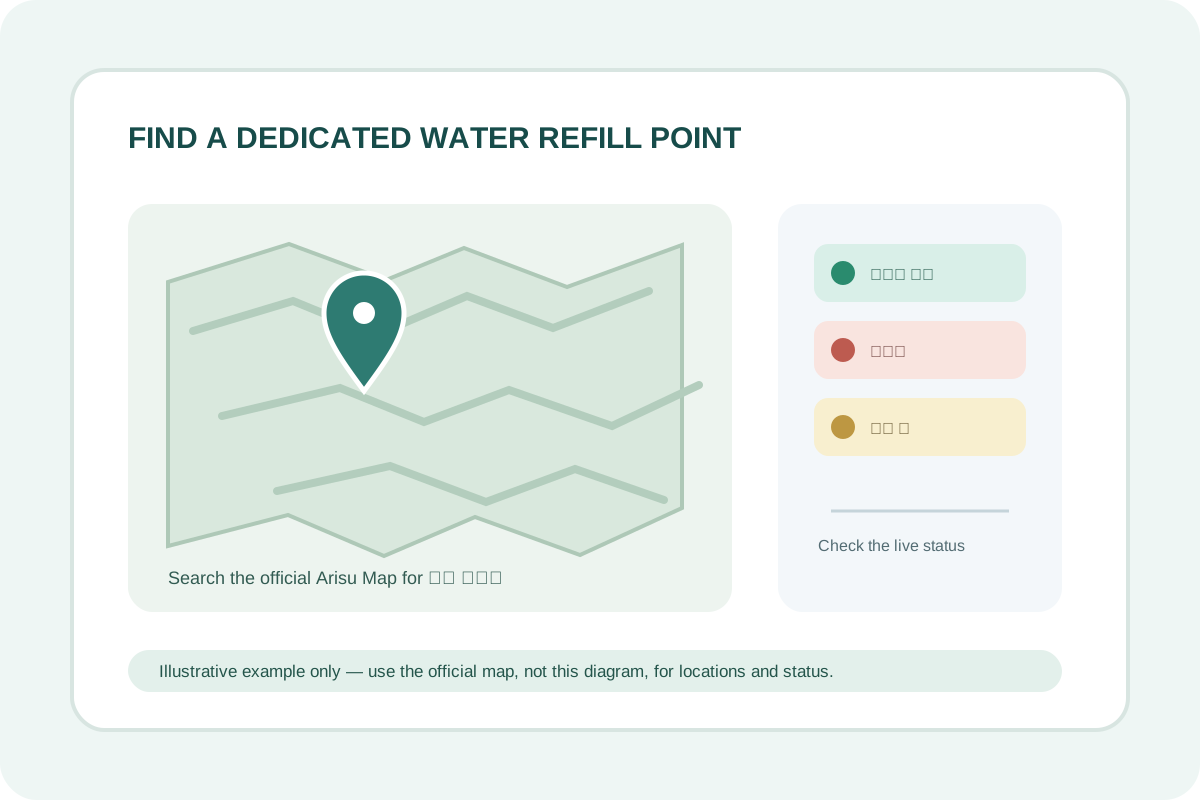
For a walk or park visit in Seoul, look for the city’s dedicated Arisu outdoor drinking-water fountains. The Seoul Arisu Map lists fountain locations and water-information layers. Search the exact Korean label 야외 음수대 (outdoor drinking-water fountain) and check the map before you leave. This guide is about marked drinking fountains; it does not make a claim about the plumbing or water at an individual hotel or building.
Find a fountain on the official map
- Open the Seoul Arisu Map.
- Choose 야외 음수대 from the neighborhood Arisu information menu. The map interface is primarily in Korean; the label means “outdoor drinking-water fountain.”
- Move the map to your park or walking route and inspect nearby fountain markers. The map legend also includes water-condition labels such as 마시기 적합 (suitable for drinking), 부적합 (unsuitable), and 점검 중 (under inspection). If the map or on-site sign shows a problem or inspection, choose another point.
- Follow the fountain’s own sign and use a clean bottle or cup. Check the map again if you are planning a long walk; a pin is a location lead, not a promise that the tap is flowing when you arrive.
The Arisu Map is the official location source: Seoul Water’s fountain-location page sends visitors to the map. Its English Arisu guide says Seoul’s tap water is Arisu and identifies fountains in public agencies and major parks, including Hangang and World Cup parks. Use the location map for the specific fountain rather than assuming every park entrance has one.
Check seasonal operation and the fountain itself
Outdoor fountains can be taken out of service in cold weather. In its 12 March 2026 notice, Seoul said outdoor fountains that had been paused for winter freeze prevention were scheduled to reopen on 15 March after inspection. That is a dated example, not a yearly opening calendar; check the current map and any on-site closure notice before making a fountain your only water plan.
The same city notice says Seoul planned four regular water-quality inspections per year for outdoor fountains and to display results at the fountain. At the point itself, use the dedicated drinking-water spout, read its current sign, and do not drink from a decorative or play fountain. If the fixture is damaged, dirty, or marked out of service, use another fountain or buy water nearby.
Pack for the route
- Bring a clean refillable bottle, but keep a backup water option for long outings.
- Save the map link while you have a connection; the location map is an online service.
- Check nearby public toilets and transit access as well when planning a longer stop. Our Seoul restroom guide explains how to check facilities at stations and parks.
Sources checked 17 November 2026. Fountain locations and operation can change; the live map and signs at the fountain are the current references.