Gangnam vs Daegu dermatology prices 2026: The ultimate cost guide
Save 15 to 30 percent on 2026 skin treatments by taking a $65 KTX train to Daegu instead of Gangnam. Compare exact prices, travel costs and VAT refunds.

The global perception of South Korean medical tourism is frequently synonymous with the bright lights, towering clinics, and luxurious recovery lounges of Gangnam in Seoul. For years, this single district has served as the undisputed epicenter of the K-beauty universe, drawing millions of international visitors seeking flawless skin and cutting-edge aesthetic enhancements. However, as we move deeper into 2026, a significant shift is occurring in the medical tourism landscape. Regional centers like Daegu—officially branded by the government as Medi-City—have aggressively developed their healthcare infrastructure, imported the exact same state-of-the-art laser technologies, and slashed their overhead costs to compete directly for international patients.
This comprehensive analysis synthesizes the latest available information to provide an exhaustive, highly practical comparison of these two distinct medical markets. We will address everything from budget logistics and high-speed rail travel to procedural variations and the hidden realities of clinic pricing. Because exact, clinic-by-clinic pricing for 2026 fluctuates rapidly and is often obscured behind mandatory in-person consultations, the financial figures discussed in this guide are highly researched representative estimates based on current medical tourism platforms and historical market trends. They are designed to illustrate the broader economic contrast between the capital and the rising regional hubs, providing actionable intelligence for international visitors looking to maximize their aesthetic budget.
Key Takeaways
- 1Daegu is generally 15 to 30 percent cheaper for standard factory-style treatments like Shurink or basic lasers, but Gangnam offers unparalleled luxury, translation services, and the absolute newest cutting-edge machines.
- 2A round-trip KTX high-speed train ticket from Seoul to Daegu costs about ₩87,000 (roughly $65). If you are saving more than $65 on your combined treatments in Daegu, the train ride officially pays for itself.
- 3First-time visitors without Korean language skills should stick to foreigner-friendly clinics in Gangnam using transparent booking apps, while seasoned travelers getting multiple high-cost procedures should book the train to Daegu.
- 4South Korea continues to strongly incentivize medical tourism through instant VAT refunds of 7 to 10 percent on aesthetic cosmetic procedures for eligible foreign visitors.
📋 Quick Facts
The Great 2026 Skin Debate: Gangnam vs. Daegu
So, you are planning your 2026 trip to South Korea, and you have a burning question that every medical tourist eventually asks: Should I just get my face done in Gangnam like everyone else, or is it actually worth the cross-country trek to a regional city like Daegu to save some cash?
Here is the honest, unfiltered truth about the current market dynamics. Daegu is absolutely cheaper—usually by about 15 to 30 percent depending on the specific procedure and the clinic's target demographic. If you are going in for a massive aesthetic overhaul involving expensive, high-intensity focused ultrasound treatments like Ultherapy, combined with premium skin boosters like Rejuran Healer (the famous salmon DNA injections), and a cocktail of dermal fillers, you can easily save hundreds of dollars by hopping on a train. For instance, a full face of Ultherapy in a flashy Gangnam clinic might set you back $1,200, whereas a high-quality, board-certified clinic in Daegu might charge you closer to $850 for the exact same number of lines using the exact same machine.
But before you pack your bags for the southeast, we have to do the travel math. A KTX high-speed train ticket from Seoul Station down to Dongdaegu Station costs about ₩43,500 each way. That is roughly $65 round trip. Furthermore, the journey takes about 1 hour and 50 minutes one way. If you are only looking to get a quick hit of Korean botulinum toxin—which is astonishingly cheap everywhere in the country, often under $30 a session—and maybe a basic aqua peel facial, the train ticket alone will entirely eat up your regional savings. If you want to understand the nuances of these injectables before booking, check out our Korean Botox Wars 2026: Coretox vs Innotox vs Allergan Guide. Plus, taking the train means you have just burned four hours of your precious vacation time looking out a window when you could have been shopping in Myeongdong or eating street food in Hongdae.
The golden rule for 2026 medical tourists is this: If your total medical bill is going to be over $500, the trip to Daegu starts to make real, tangible financial sense. If you are just doing basic skin maintenance work, stay in Seoul.
However, it is crucial to understand that this decision is not just about the money. Gangnam prices are inflated for a very specific reason. When you book a clinic in Apgujeong or Cheongdam, you are paying for arguably the most competitive, high-end medical real estate in the world. You are paying for a dedicated English-speaking coordinator who will hold your hand, explain every single active ingredient being injected into your face, and process your tax refund on a sleek tablet before you even stand up from the consultation chair. In Daegu, you are trading that slick, hyper-polished VIP service for raw medical efficiency at a lower price point. You might have to rely heavily on translation apps on your phone, and the waiting room might look a bit more like a standard, clinical doctor's office than a five-star hotel lobby. Ultimately, you have to weigh your overall budget against your personal comfort zone and travel style.
The Background Story of Medical Tourism
How did we even get to a point where international tourists are actively debating regional dermatology prices in South Korea? Let us take a quick walk down memory lane, because the evolution of this industry over the past decade is nothing short of fascinating.
Back in the early 2010s, Gangnam was rapidly solidifying its reputation as the plastic surgery and dermatology capital of the universe. Fueled by the global explosion of K-pop, internationally syndicated K-dramas, and a domestic culture that normalizes preventative dermatological care much like going to the dentist, clinics began sprouting up on every single corner of the district. Because the competition in Gangnam was so incredibly fierce, clinics had to constantly upgrade their laser machines, slash their profit margins to attract volume, and invest heavily in aggressive marketing campaigns. They quickly realized there was a massive, untapped market of medical tourists willing to fly in, get lasered, and fly out. To cater to this demographic, they hired armies of translators and built comprehensive English, Chinese, and Japanese websites.
But the rest of South Korea was not just sitting around watching Seoul take all the revenue. Daegu, a major metropolitan city in the southeast of the country, has a rich, decades-long history of elite medical education, boasting several top-tier national university hospitals. Seeing the sheer volume of foreign currency flowing into Seoul's aesthetic clinics, the Daegu Metropolitan Government decided to pivot. They officially launched the Medi-City initiative, pouring massive government subsidies into local clinics. This financial backing helped regional doctors buy the exact same world-class laser machines used in Gangnam, but without the cripplingly high commercial rent of Seoul's luxury district.
Then came the technological revolution of booking platforms. A few years ago, the industry was notorious for the foreigner tax—a frustrating practice where clinics would charge international visitors double what a local would pay simply because the tourist could not read the Korean pricing menu. But thanks to the rise of transparent booking platforms and concierge apps, clinics across the country were forced to list their prices publicly online. If you are curious about how these platforms work, our deep dive into the Gangnam Unni vs UNNI App 2026: The Ultimate Korean Plastic Surgery Guide explains the digital landscape perfectly. This radical transparency leveled the playing field immensely.
Now, as we push through 2026, the South Korean government is cracking down even harder on pricing transparency to protect its vital tourism sector. They have made the Value Added Tax refund process incredibly smooth, meaning the 10 percent tax you pay on cosmetic procedures can easily be reclaimed at the airport or even instantly at the clinic register. This perfect storm of government support, technological transparency, and world-class high-speed rail infrastructure has transformed Daegu from an obscure regional city into a legitimate, budget-friendly powerhouse for K-beauty tourists in the know.
Medical Tourism Legalized
South Korea officially revised its medical laws to allow hospitals and private clinics to actively attract, treat, and market to foreign patients.
Daegu Medi-City Launch
Daegu metropolitan city officially branded itself as Medi-City, pouring government funding into medical infrastructure to rival Seoul's dominance.
VAT Refund Implementation
The Korean government introduced instant VAT refunds for foreign tourists undergoing cosmetic and aesthetic procedures to boost the economy.
Platform Boom
The rise of domestic beauty apps forced clinics to become radically transparent with their pricing, shifting the market away from hidden fees.
Post-Pandemic Rebound
South Korea saw a massive influx of tourists utilizing comprehensive platforms to book medical beauty treatments in both Seoul and regional hubs.
Enhanced Transparency Laws
New initiatives are pushing for even stricter foreigner pricing transparency to completely eradicate the tourist tax at major dermatology clinics.
Breaking Down Your Clinic Options
When you are deciding where to get your skin transformed in 2026, you generally have three main options, and each caters to a very different type of traveler, budget, and aesthetic goal. Understanding these distinct business models is the key to avoiding disappointment and ensuring you get exactly what you pay for.
Option 1: The Gangnam Factory Clinic (The Fast-Food Model)
If you have watched a viral video about getting skin treatments in Korea, this is almost certainly what you saw. These are massive, multi-floor clinics in Gangnam where extreme efficiency is the name of the game. A prime example of this model is the typical high-volume clinic located right outside Sinnonhyeon Station. You will walk in, take a number from a kiosk, and wait in a lobby with fifty other people. You will have a rapid-fire consultation with a sales counselor—not a doctor—who will recommend a package based on your stated budget. You pay upfront, wash your own face in a glamorous communal powder room, and sit in a row of chairs to get numbing cream slapped on your face. Then, you are ushered into a treatment room where a doctor sweeps in, zaps you with a laser for exactly four minutes, and immediately moves to the next patient.
- Price Range: Mid-range to budget (around ₩150,000 for basic treatments).
- Best for: The budget-conscious traveler staying in Seoul who wants standard, highly standardized procedures like basic Botox, Shurink lifting, or Aqua Peels, and does not mind feeling like a number on a spreadsheet.
Option 2: The Gangnam Boutique/VIP Clinic (The Luxury Model)
These are the exclusive, high-end clinics tucked away in the wealthy enclaves of Cheongdam or Apgujeong. There is no crowded waiting room here. You are given a private suite, a plush robe, and a dedicated English-speaking coordinator who stays by your side the entire time. The doctor actually sits down with you for twenty to thirty minutes to analyze your facial structure, skin thickness, and long-term aging concerns before recommending a highly customized treatment plan. These clinics often feature the absolute newest technology on the market. If you are debating between high-end microneedling radiofrequency devices, you will want to read our Potenza vs. Morpheus8 in Seoul: 2026 Cost Guide & Comparison to understand what these VIP clinics offer.
- Price Range: Luxury (₩400,000 and up, easily reaching into the thousands for full-face treatments).
- Best for: Travelers with high budgets, people getting complex injectables where artistry matters (like under-eye fillers or facial contouring), and anyone who wants to feel pampered rather than processed.
Option 3: The Daegu Medicity Clinic (The Sweet Spot)
This is the hidden gem of the 2026 medical tourism landscape. Clinics in Daegu's central Jung-gu district often operate somewhere between the factory and the boutique models. Because they are not churning through hundreds of tourists an hour, the doctors generally have a bit more time to speak with you directly. They have the same Pico lasers, the same Ultherapy machines, and the same premium Korean skin boosters, but the price tag is dramatically lower due to regional economics. The catch? You will likely need to navigate the city and the clinic with a translation app, as English proficiency among the reception staff is much lower than in Gangnam.
- Price Range: Budget-friendly (around ₩90,000 for basic treatments, with massive savings on premium lasers).
- Best for: Savvy repeat visitors, digital nomads staying in Korea for an extended period, and budget travelers who want premium treatments but are willing to travel a few hours on the KTX to save hundreds of dollars.
| Feature | Gangnam (Seoul) | Daegu (Medi-City) |
|---|---|---|
| Overall Cost | Premium pricing due to high commercial rent | Budget-friendly, highly competitive regional pricing |
| English Support | Excellent (In-house translators, English websites) | Moderate (Translation apps often needed for reception) |
| Equipment | Bleeding-edge (Clinics get the newest lasers first) | Excellent, but might receive new machines a few months later |
| Accessibility | Very High (Right in the heart of Seoul) | Requires a KTX high-speed train trip from Seoul |
| Clinic Vibe | Fast-paced, luxurious, sometimes factory-like | Slower-paced, more personalized doctor consultation time |
| Best Suited For | First-timers, luxury seekers, short itineraries | Budget-conscious travelers, digital nomads, returning visitors |
Pros
- ✓Serious cost savings due to lower clinic overhead and rent in Daegu, allowing you to get premium treatments for less.
- ✓More personalized face time with doctors rather than rushed 45-second consultations typical of Gangnam factory clinics.
- ✓An excellent excuse to explore a new city, eat famous local food like grilled makchang, and see a different side of Korea.
Cons
- ✗The language barrier is significant, requiring heavy reliance on translation apps or body language in regional clinics.
- ✗Travel time eats up your schedule, taking about four hours round-trip from Seoul, which is tough on a short vacation.
- ✗Less information and fewer English reviews are available online for regional clinics compared to the heavily vlogged Gangnam spots.
Step-by-Step Guide to Cross-Country K-Beauty
Alright, you have weighed the pros and cons and made your choice. Now, how do you actually pull this off without having a logistical meltdown in the middle of a Korean clinic lobby? Planning a medical tourism trip requires precision, especially if you are venturing outside of the capital city. Let us walk through the exact, practical steps to ensure your 2026 aesthetic journey is seamless.
📖 How to Plan Your Cross-Country K-Beauty Trip
Step 1: Baseline Your Prices Using Apps
Before you even think about booking a train ticket, you need to know what things actually cost. Download apps that cater to foreigners and show upfront medical beauty pricing for clinics across Korea. Compare the prices of the specific treatments you want in Seoul versus the regional cities.
Step 2: Calculate the KTX Math
Check the official Korail website for train schedules and prices. A typical KTX ticket from Seoul Station to Dongdaegu Station costs around ₩43,500 one-way. Add up your total expected savings at the Daegu clinic. If your savings are at least ₩100,000 higher than the round-trip train ticket, Daegu is financially worth the journey.
Step 3: Secure Your Clinic Booking
Since you likely do not have a Korean resident number to use domestic booking apps, you will need to reach out directly. Find the clinic's social media page or website and look for a messaging link. Send a very clear, bulleted message in simple English stating your desired date, time, and procedures.
Step 4: The Day of the Procedure
Take the morning train to Daegu, navigate to the clinic, and have your consultation. Bring your passport—this is non-negotiable if you want that tax refund receipt! After your treatment, ask for the Tax Free envelope. Grab some local food, let your face start the healing process, and catch the evening train back to Seoul.
Everyone rushes to Gangnam because it's famous, but the actual laser machines—the Ulthera, the Thermage, the PicoSure—are manufactured by the exact same companies whether they are plugged into a wall in Seoul or Daegu. If you are getting high-ticket items like full-face Ultherapy, the price difference in Daegu can literally pay for a luxury hotel stay for your entire trip.
Insider Warnings and The ARC-Free Reality
Look, the glossy brochures and viral social media vlogs make medical tourism look entirely seamless, but there are a few insider realities you absolutely need to know before you let a doctor near your face with a needle or a high-powered laser.
First, let us talk about the pain management differences. Korean beauty standards prioritize extreme efficiency, and unfortunately, that often translates to an expectation of a higher pain tolerance from the patient. If you are getting a lifting laser like Shurink or Inmode in a high-volume factory clinic, they will smear numbing cream on your face for exactly fifteen minutes and then get to work. It hurts. In Western clinics, they might numb you for forty-five minutes or use laughing gas. In Korea, you are expected to squeeze a plush toy and bear it. If you have a low pain tolerance, you must speak up and explicitly ask for more numbing time by saying "Machi deo haejuseyo" (please give me more numbing).
Furthermore, you must manage your aftercare expectations. If you get heavy treatments in Daegu, you still have to travel back to Seoul. You are going to look rough. Buy hydrocolloid patches to cover injection sites, wear a high-quality mask, and wear a hat. Avoid the sun like a vampire, as Korean lasers are incredibly strong and your skin will be highly photosensitive. If you are interested in advanced recovery treatments, read our guide on Exosome Therapy in Seoul 2026: Clinics, Costs & What to Know to see how regenerative medicine can speed up your healing process.
Flight Safety After Procedures
Do not book deeply ablative lasers like heavy Fraxel or surgical procedures if you have to take the KTX back the same day and fly out the next. The cabin pressure on an airplane combined with a freshly lasered, swollen face is a recipe for severe discomfort, extended downtime, and potential complications. Give yourself at least three to four days of recovery time on the ground before boarding a long-haul flight.
The Hidden VAT Trap
When looking at price lists online or in the clinic lobby, always check if the price includes the Value Added Tax. In Korea, cosmetic procedures are subject to a 10 percent VAT. A clinic in Gangnam might advertise a laser for ₩99,000, but in the fine print, it says VAT separate, meaning you will actually pay ₩108,900. Always ask for the final, VAT-included price before handing over your credit card to avoid surprises.
Another crucial logistical hurdle is dealing with post-procedure medication. Korean clinics do not dispense medication directly from the front desk. After your treatment, they will hand you a paper prescription for aftercare medication—usually antibiotics or anti-inflammatory pills to prevent infection. You must take that paper prescription to a nearby pharmacy, known as a Yakguk. There is almost always a pharmacy located on the ground floor of the clinic building. Hand them the paper, pay a few dollars, and take the pills exactly as they instruct. If you run into issues late at night, our guide to Seoul 24-Hour Pharmacies 2026: English Service & Emergency Meds Guide is a lifesaver.
No Korean Phone or ARC? Here is What To Do
If you are a tourist, you will quickly realize that South Korea runs on a strict identity verification system tied to a local Resident Card (ARC) and a domestic Korean phone plan. This means you CANNOT use the major domestic beauty apps to book appointments, leave reviews, or get the absolute cheapest local deals. Do not try to hack the system; it is tied directly to immigration databases.
The solution is threefold:
- Use tourist-focused platforms that bypass the Korean verification system entirely, allowing you to book vetted clinics with foreign credit cards and upfront English pricing.
- Download messaging apps like KakaoTalk before you arrive, set them up with your home country phone number, and search for the clinic's official business channel to message them directly for a booking.
- If you want to walk in and register on a clinic's front desk tablet, buy a tourist eSIM that includes a temporary local 010 phone number, which allows you to enter the digital queue.
Frequently Asked Questions
❓ Frequently Asked Questions
Have more questions?Contact us →
Conclusion: Your 2026 Action Plan
So, what is the final verdict in the great Gangnam versus Daegu debate? If you are a first-time visitor to South Korea, you only have a week to explore the country, and you simply want to dip your toes into K-beauty with a hydrating facial, some preventative wrinkle injections, and maybe a gentle toning laser, stay in Gangnam. The sheer convenience, the flawless English support, and the proximity to your hotel make the slightly higher prices completely justifiable. You are paying for peace of mind and a frictionless vacation experience.
However, if you are a veteran K-beauty enthusiast, or if you are planning to spend upwards of $800 on premium lifting devices and advanced skin boosters, book that KTX to Daegu right now. The 15 to 30 percent savings on high-ticket items will easily pay for your high-speed train ticket, a phenomenal dinner of local delicacies, and maybe even a nice hotel room, all while allowing you to experience a rich, culturally vibrant city that most tourists completely miss.
Do your research, download your translation apps, do not forget to grab your VAT refund receipt for the airport, and get ready to glow. The 2026 medical tourism landscape in South Korea is more accessible than ever, and with the right planning, you can achieve world-class aesthetic results without breaking the bank.
Sources:
- Visit Korea (Official Tourism Board) - Sourced information regarding medical and wellness tourism categories and the framework for VAT refunds for foreign travelers.
- Creatrip (Tourism Platform) - Sourced data on medical beauty search trends, regional comparisons between Seoul and Daegu, and platform booking options for foreigners.
- The Korea Herald - Sourced background context on national health news, foreigner demographics, and the evolving landscape of South Korea into 2026.
- KORAIL (Official Rail Network) - Sourced logistical data for travel between Seoul Station and Dongdaegu Station, including travel times and ticketing parameters.
- Medical Tourism Korea (General Knowledge Base) - Sourced supplemental data on the differentiation between factory clinics and VIP clinics in the Gangnam district.
About the Author
Korea Experience Team
Written by the Korea Experience editorial team - experts in Korean medical tourism, travel, and culture with years of research and firsthand experience.
⚠️ Medical Disclaimer
The information provided on this website is for general informational purposes only and does not constitute medical advice. Always consult with qualified healthcare professionals before making any medical decisions.
Explore more in Medical Tourism
World-class medical procedures at competitive prices. From plastic surgery and dermatology to dental care and health checkups — your complete guide to medical tourism in Korea.
Browse All Medical Tourism ArticlesContinue Reading
Explore more articles you might find interesting
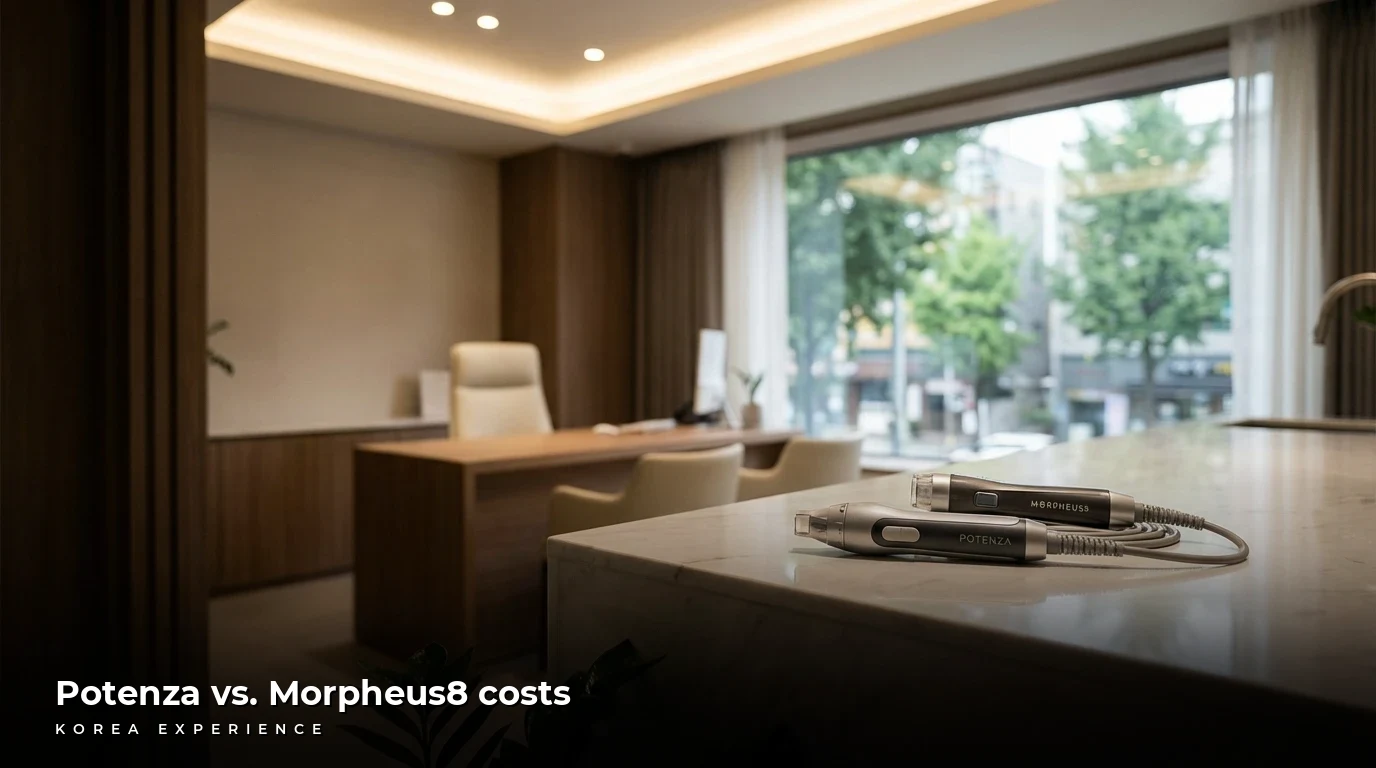
Compare Potenza and Morpheus8 costs in Seoul for 2026. Save 70% with prices starting at $215 USD versus $1,500 in the West for skin tightening.
A comprehensive guide to the top dermatology clinics in Seoul's beauty district. Compare prices, treatments, and English services for 2026.

Stretch your budget in 2026 as 1 USD hits 1,400 KRW. Save up to 10 percent on tax refunds and cut 3 percent in card fees with our ultimate travel money guide.
Your ultimate guide to Gangnam skincare clinics. Compare factory vs. luxury dermatology, check 2026 prices for Rejuran and Botox, and book like a local.
Discover why 98 percent of Korea hair transplants succeed. Compare 2026 costs from $3500 surgeries to $90 viral 15-step scalp spas for ultimate hair growth.
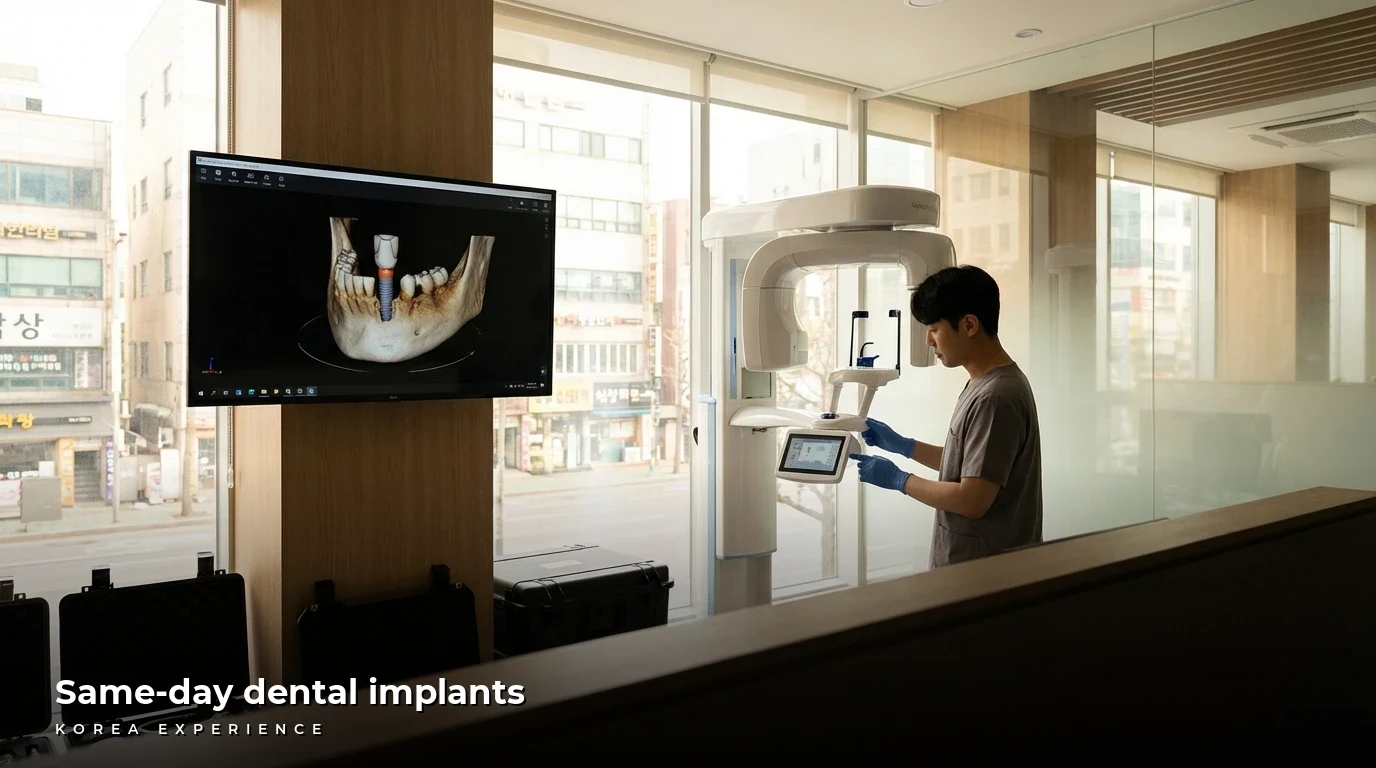
Get same-day dental implants in Seoul for 1000000 to 1800000 KRW in 2026. Enjoy a 95 percent success rate and save thousands compared to US or UK prices.