Hanok Recovery Guide 2026: Korea Medical Tourism Secret
Discover why 57% of 2025 medical tourists chose dermatology and how recovering in a luxury Hanok for $250 a night is the ultimate 2026 healing hack.
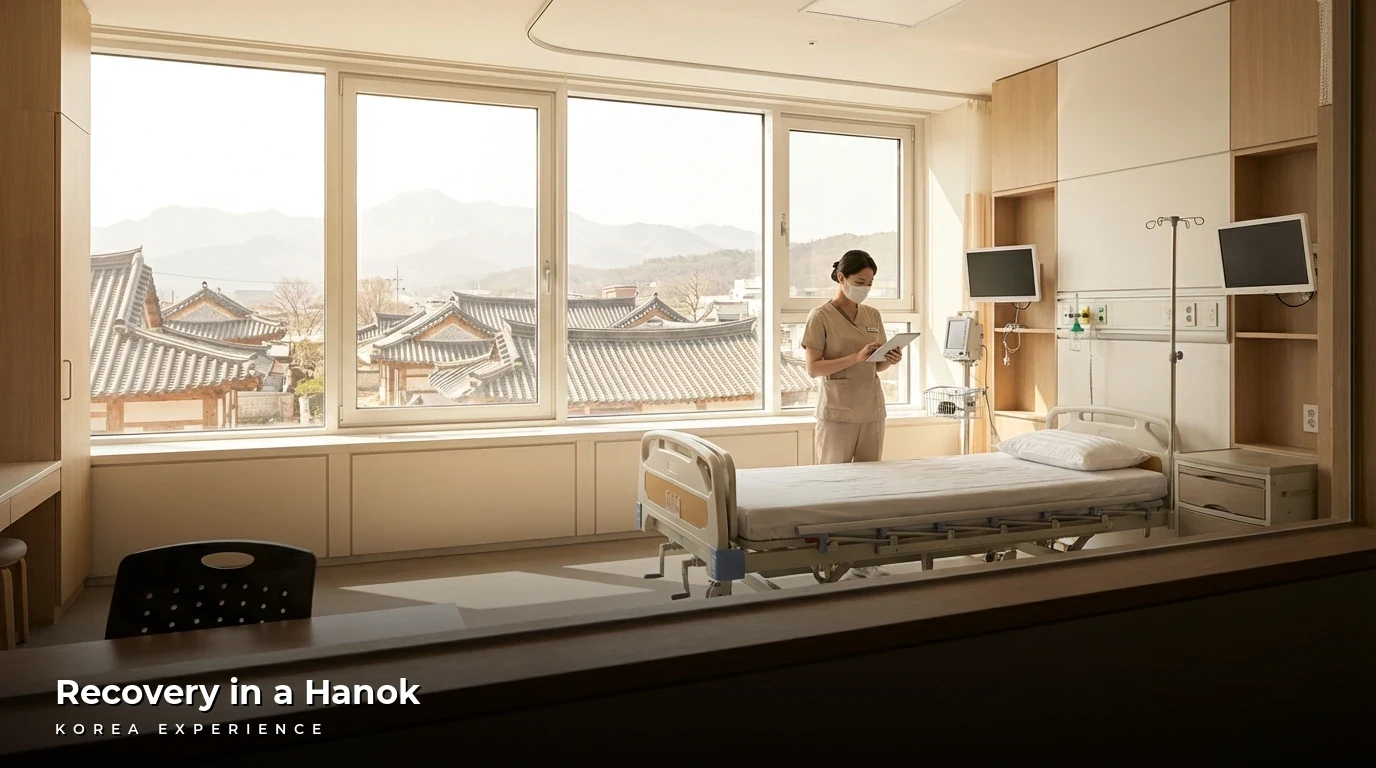
So, you are flying to Seoul, the undisputed plastic surgery and aesthetic capital of the world, and you are trying to figure out where to crash after your procedure. You have probably looked at a dozen modern, clinical business hotels right in the heart of Gangnam. But here is the thing: if you really want to heal quickly, holistically, and peacefully, recovering in a traditional Korean Hanok is the absolute best-kept secret in the medical tourism game.
Key Takeaways
- 1Recovering in a Hanok is an incredible holistic way to heal, best suited for non-invasive procedures, dermatology, and facial surgeries where mobility is not restricted.
- 2South Korea medical tourism market exploded to 2.08 trillion won in 2025, with over 57% of patients coming strictly for dermatology and lunchtime procedures.
- 3Book a luxury Hanok in Bukchon with traditional Ondol heated floors, download the Shuttle app for food delivery without a Korean ID, and stock up on pumpkin porridge.
📋 Quick Facts
Why a Hanok is the Ultimate Recovery Hack
Look, if you are getting a massive, mobility-restricting surgery—like a major leg procedure, a Brazilian Butt Lift, or extensive body contouring—do not book a Hanok. These are ancient, beautiful houses with raised thresholds, low furniture, and sometimes floor seating. You need a modern hospital bed for that kind of recovery. But if you are among the vast majority of tourists coming for facial procedures, Rhinoplasty in Korea 2026: Costs, Safety & Recovery Guide, double eyelid surgery, or the massively popular lunchtime dermatology lasers, a Hanok is going to elevate your recovery from a miserable hotel stay into a serene wellness retreat.
Why? Two words: Ondol heating. If you have not experienced it yet, prepare to have your mind blown. Unlike western heating that blows dry, recycled air into a room (which is an absolute nightmare if you have a dry, healing nose from rhinoplasty), Ondol is a radiant underfloor heating system. The heat rises gently from the floorboards, soaking directly into your muscles and joints. Historically, Koreans have used Ondol floors for women recovering from childbirth and for the elderly because the radiant heat significantly improves blood circulation, which actively flushes out swelling and bruising from your body.
Plus, there is the mental aspect. Post-surgery, you hit a phase called the ugly duckling stage. You are swollen, you might have bandages, and you feel incredibly vulnerable. Walking through a bustling Gangnam hotel lobby filled with business people is the last thing you want to do. A Hanok, especially ones nestled in the quiet, historic alleys of Bukchon, gives you a private, walled courtyard. You can step outside into the fresh air, look up at the beautiful curved tile roofs, and sip your tea without a single person staring at you. It is peaceful, it is private, and honestly, it just feels like healing.
Medical Tourism Legalized
The South Korean government revised the Medical Service Act, officially allowing clinics to attract foreign patients.
Overseas Expansion Act
South Korea enacted a law to support the overseas expansion of its healthcare system and protect international patients.
Pre-Pandemic Peak
South Korea attracted over 497,000 foreign medical tourists, reaching an all-time high before global borders closed.
The Million Patient Milestone
Foreign patient visits surged by 93.2%, crossing the 1.17 million mark and cementing Korea as Asia top medical hub.
The Won-Low Dermatology Boom
Spending hit a historic 2.08 trillion won, driven by favorable exchange rates and a massive shift toward premium dermatological wellness.
The Rise of Wellness Tourism
A major shift away from invasive surgeries toward holistic recovery programs, including Hanok-style spas and aesthetic lunchtime procedures.
The Medical Tourism Boom and Wellness Shift
To really understand why recovering in a Hanok is becoming such a massive trend in 2026, we have to talk about how insane the Korean medical tourism boom has gotten. Make history interesting, right? So let us go back a bit. In 2009, the South Korean government officially changed the laws to allow clinics to market to foreign patients. Fast forward through the pandemic, and the rebound has been nothing short of explosive. In 2024, South Korea absolutely shattered records, welcoming 1.17 million foreign patients and pulling in over $1 billion in revenue.
But the real story is what these patients are doing. We used to associate Korean medical tourism purely with intense, transformative bone-shaving surgeries. But as we moved into 2025 and 2026, the data showed a massive paradigm shift. According to an incredible market analysis based on Korea Tourism Organization data, total spending hit 2.08 trillion won in 2025 (a ridiculous 65.3% jump from the year before). And the driving force? Dermatology and wellness. Over 57.35% of that spending went toward premium skincare, injectables, and non-invasive lasers. If you are curious about how these costs break down across different cities, check out our Gangnam vs Daegu dermatology prices 2026: The ultimate cost guide.
Because patients are no longer bound to a bed with drainage tubes, the entire concept of recovery has morphed into wellness tourism. People are not just looking for medical care; they want a holistic retreat. Enter the Hanok. Originally built for nobles during the Joseon Dynasty, these homes were designed to exist in perfect harmony with nature. The layout encourages airflow in the summer and traps the brilliant Ondol heat in the winter.
Fun historical fact: The health benefits of the Ondol system have been documented for centuries. There is literally a royal record from King Sejong 12th year (during the 1400s) where the King ordered a sick official to stay on an Ondol floor to ward off illness. Today, we know the science backs up the King. The traditional baked stones and red clay (and sometimes pure jade) used in these floors emit far-infrared radiation, which penetrates the skin and promotes cellular repair. So, by combining 21st-century cutting-edge dermatology with a 15th-century healing architecture, medical tourists have essentially bio-hacked the ultimate recovery vacation.
| Feature | Luxury Hanok | Gangnam Business Hotel | High-End Hotel |
|---|---|---|---|
| Cost | $250 - $900+ per night | $60 - $150 per night | $500 - $900+ per night |
| Processing Time | Book months in advance | Easy to book last minute | Usually available |
| Duration | Ideal for 3-7 day holistic recoveries | Great for long 10-14 day stays | Ideal for short pampered stays |
| Requirements | Must be mobile enough to handle steps | Minimal requirements highly accessible | Minimal requirements highly accessible |
| Best For | Facial procedures skin treatments wellness | Budget travelers clinic-hopping | Luxury seekers wanting direct subway access |
Breaking Down Your Accommodation Options
Alright, let us get practical. You know you want to come to Seoul, but where exactly are you putting your bags down? You essentially have three main paths to choose from, and deciding between them really comes down to your budget, your aesthetic, and exactly how many times you need to see your doctor.
Option A: The Luxury Bukchon Hanok ($300 - $900+) If you have the budget and want a Michelin-star level of pampering, you are looking at properties like Chiwoonjung or Rakkojae. These are not just houses; they are cultural institutions. Chiwoonjung, which goes for anywhere from $300 to over $900 a night, was actually the former residence of a South Korean president. It sits high on a hill, giving you exclusive views of the beautiful tiled rooftops of the village. The bathrooms have been lavishly renovated with massive wooden soaking tubs. Rakkojae is equally stunning—it is 130 years old, features natural jade Ondol floors, and even has a traditional yellow-mud sauna heated by firewood in the courtyard. Best for: Patients who want total holistic wellness, have minor aesthetic treatments, and want to treat their recovery like a luxury spa retreat.
Option B: The Modernized Eunpyeong Hanok ($150 - $300) Bukchon is famous, but it is right in the middle of the city. If you want true isolation, you look slightly further out to the Eunpyeong Hanok Village. This area is relatively newer, meaning the Hanoks here often blend hyper-modern luxury with traditional architecture. A place like IRIRU Luxury Hanok Stay is massive (over 900 square feet) and actually features modern hot tubs and spa facilities right inside the property. Best for: Families or groups traveling together, people who want intense privacy away from the tourist crowds, and digital nomads recovering slowly over two weeks.
Option C: The Gangnam Business Hotel ($60 - $120) I have to be honest and include the standard baseline. Places like the Dormy Inn, Ocloud, or Toyoko Inn in Gangnam are where 80% of medical tourists end up. Why? Convenience. You are paying $60 to $150 a night, and you are literally a three-minute walk from your surgeon front door. The Dormy Inn even has a Japanese-style hot spring spa. But the rooms are tiny. Like, cannot open your suitcase fully tiny. The air is dry, and you are staring at a brick wall out your window. Best for: Budget travelers, people getting heavy surgeries who cannot manage stairs, or patients who plan on visiting five different clinics in three days for heavy clinic hopping.
Pros
- ✓Ondol Heating Magic: Traditional underfloor heating radiates heat directly into your body, improving blood circulation and actively speeding up your post-surgery recovery.
- ✓Ultimate Privacy and Serenity: Instead of noisy hotel corridors, a Hanok gives you a private courtyard, thick walls, and the profound quiet you need when feeling vulnerable.
- ✓Cultural Immersion Without Effort: You do not need to play tourist. You are soaking in centuries of Korean history and enjoying the aesthetics without ever leaving your bed.
Cons
- ✗Mobility Challenges: Hanoks are old. They have raised thresholds and step-ups. If you just had major body contouring or knee surgery, getting up and down will be pure agony.
- ✗Location and Distance: Most authentic Hanoks are located north of the river. You will be taking 40-minute taxi rides to Gangnam for your check-ups.
- ✗Food Delivery Quirks: Finding a hidden Hanok down a narrow alleyway can sometimes confuse delivery drivers, making late-night cravings a bit of a scavenger hunt.
The Complete How-To Guide for Hanok Healing
Let us walk through exactly how you are going to execute this Hanok recovery plan, step-by-step, like a local. If you are feeling overwhelmed by the logistics, you might want to read The Ultimate 2026 Guide to Finding a Licensed Medical Coordinator to have a professional handle these bookings for you.
📖 How to Plan the Ultimate Hanok Recovery Stay
Step 1: Match Your Procedure to Your Property
Not all surgeries are Hanok-friendly. If you are getting a massive body contouring procedure, stick to a western-style bed in Gangnam. But if you are getting double eyelid surgery, rhinoplasty, injectables, or laser treatments, a Hanok is perfect. Look for properties in Bukchon or Eunpyeong that specifically mention modern bathrooms.
Step 2: Book Your Sanctuary Early
Luxury Hanoks with private courtyards are incredibly popular, not just with medical tourists, but with locals doing staycations. Properties book out months in advance. Lock in your dates the moment your surgery is confirmed.
Step 3: Set Up Your Tech Survival Kit
Before you board your flight, download the holy trinity of Korean survival apps: Kakao T for taxis, Papago for flawless translation, and Shuttle Delivery for food. You will not want to walk to restaurants when you have bandages on your face.
Step 4: Master the Art of De-Swelling
Once you arrive, your main job is to heal. Use the ice packs your clinic gives you for the first 3 days to constrict blood vessels, then switch to warm compresses. Sleep elevated. And most importantly, get your hands on Hobakjuk pumpkin porridge.
Most international patients think they need a sterile, clinical hotel right next to their Gangnam surgeon. But for facial procedures and dermatology, the stress of the city actually slows healing. I always move my high-end clients to a Bukchon Hanok after day three. The underfloor Ondol heating naturally boosts circulation, and the absolute silence of the courtyards does wonders for their mental health during the ugly duckling phase of recovery.
Insider Secrets for a Seamless Recovery
Alright, lean in, because this is the stuff that saves you time, money, and sanity. The secret local knowledge.
Let us talk about the magic elixir of Korean plastic surgery: Hobakjuk (Pumpkin Porridge) and Pumpkin Juice. If you walk out of a Korean clinic, there is a 99% chance the nurse will hand you a few silver pouches of pumpkin juice. Why? Because pumpkin (specifically kabocha squash) is absolutely loaded with potassium and pectin. When you have surgery, your body holds onto water and sodium, making you massively bloated. The potassium in pumpkin triggers a natural diuretic effect, literally flushing the excess water and waste out of your system. It is the fastest, safest way to de-swell. You can buy pouches of it at any pharmacy—check out our Seoul 24-Hour Pharmacies 2026: English Service & Emergency Meds Guide to find one near you—or you can buy fresh Hobakjuk from convenience stores or porridge shops. It is slightly sweet, incredibly soothing, and a total lifesaver.
No Korean Phone or ARC? Here is What To Do
This is the single biggest headache for foreigners in Korea: ordering food. Apps like Yogiyo and Coupang Eats often require a Korean phone number linked to an Alien Registration Card (ARC) for identity verification. If you are recovering and cannot go out, you need food brought to you.
The Solution: Download the Shuttle Delivery app right now. It was built specifically for expats, tourists, and the US military bases. The entire app is in English, it requires absolutely no ARC or Korean ID, and you can pay with your standard Visa, Mastercard, or PayPal. If you want traditional Korean BBQ, spicy Tteokbokki, or a western burger delivered right to your Hanok courtyard, Shuttle is your best friend. Alternatively, the massive local app Baemin finally updated its policies in May 2024 to accept foreign cards, though you will still have to navigate the Korean menus using a translation app.
Finally, the most counter-intuitive secret to healing: get out of bed. Walking is scientifically proven to reduce edema (swelling) by getting your lymphatic system moving. You will see dozens of people in Gangnam walking around in bucket hats, sunglasses, and surgical masks. But in Gangnam, you are dodging traffic and scooters. In Bukchon, you can literally walk out of your Hanok and take a slow, beautiful stroll along the stone walls of Gyeongbokgung Palace. It heals your body, and honestly, it heals your soul.
Just a quick warning: Do NOT underestimate the dry air in Korea, especially in winter. While Ondol heating is amazing for your body, it does not dry out the air as badly as forced-air heaters, but you still need moisture. Ask your Hanok host for a humidifier. Dry nasal passages after a rhinoplasty are an absolute nightmare.
❓ Frequently Asked Questions
Have more questions?Contact us →
Conclusion: Your Action Plan
Recovering in a foreign country can be intimidating, but it does not have to be a sterile, clinical experience. By choosing to heal in a Hanok, you are turning a stressful medical procedure into an unforgettable cultural and wellness retreat.
So here is your first 24-hour action plan: The moment you land, get your Kakao T taxi straight to your Bukchon or Eunpyeong Hanok. Drop your bags, let the Ondol floors warm your jet-lagged bones, and fire up the Shuttle app to order some comforting Korean food directly to your courtyard. Stock your mini-fridge with pumpkin juice, prop up your pillows, and just breathe. You are in the safest, most advanced medical destination in the world, surrounded by centuries of history. Trust the process, take a gentle walk by the palaces tomorrow, and get ready to head home looking and feeling completely rejuvenated. You have got this!
Sources
- Korea Health Industry Development Institute (KHIDI) - Medical tourism statistics, 1.17 million patients in 2024, origin countries.
- Kculture / Digital Journal - 2025 spending hit 2.08 trillion won, 57% dermatology dominance.
- Trip.com / Rakkojae - Rakkojae hotel rates, features, and distances to Bukchon attractions.
- Korea Tourism Organization (KTO) - Shuttle delivery app features for foreigners, no ARC required.
- My Korean Kitchen - Hobakjuk pumpkin porridge recipe, history, and medical de-swelling benefits.
About the Author
Korea Experience Team
Written by the Korea Experience editorial team - experts in Korean medical tourism, travel, and culture with years of research and firsthand experience.
⚠️ Medical Disclaimer
The information provided on this website is for general informational purposes only and does not constitute medical advice. Always consult with qualified healthcare professionals before making any medical decisions.
Explore more in Medical Tourism
World-class medical procedures at competitive prices. From plastic surgery and dermatology to dental care and health checkups — your complete guide to medical tourism in Korea.
Browse All Medical Tourism ArticlesContinue Reading
Explore more articles you might find interesting
Discover why 98 percent of Korea hair transplants succeed. Compare 2026 costs from $3500 surgeries to $90 viral 15-step scalp spas for ultimate hair growth.
Get same-day dental implants in Seoul for 1000000 to 1800000 KRW in 2026. Enjoy a 95 percent success rate and save thousands compared to US or UK prices.
Compare SNU Gangnam and Severance Seoul Station for your 2026 health check-up. Discover why comprehensive packages starting at $640 USD save you thousands.

Save 15 to 30 percent on 2026 skin treatments by taking a $65 KTX train to Daegu instead of Gangnam. Compare exact prices, travel costs and VAT refunds.
Discover Korea's 2026 stem cell medical tourism boom. Learn how new laws unlock anti-aging and joint treatments at 50% lower costs than the US, from $8,000.
Save 40-70% on Korean plastic surgery using the UNNI app. We reveal 2026 VAT refund updates and how to filter for CCTV safety in 1,800 verified clinics.