Korean Cults 2026: How to Spot Recruiters in Hongdae & Sinchon
Avoid 4-6 hour scams and $50+ losses. Learn to spot 2026 Korean cult recruiters in Hongdae using our guide on red flags, tactics, and safety tips.
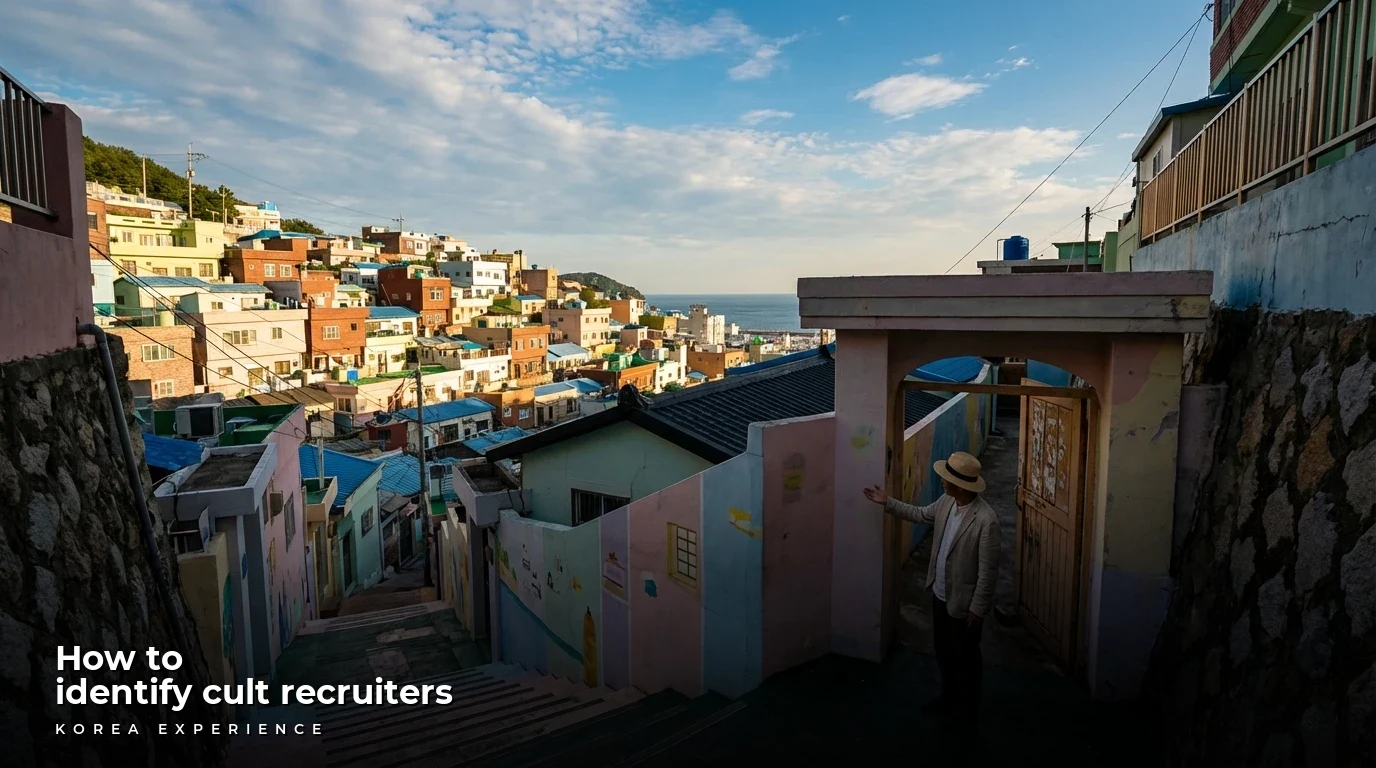
So you're walking through Hongdae, minding your own business, when two overly friendly "students" compliment your outfit and ask for a moment of your time—stop right there. You are likely being targeted by a cult recruiter, a surprisingly common annoyance in Korea that can cost you hours of your time and hundreds of dollars if you don't know the red flags.
While Korea is statistically very safe, as detailed in our 2026 Solo Travel Safety Index, these psychological scams are the one major pitfall for tourists. The short answer to "How do I identify a cult recruiter in Korea?" is actually shockingly simple: If two strangers approach you on the street and speak to you in English (or surprisingly good Korean if you look local), they are almost certainly cult recruiters.
In Korean culture, people generally mind their own business. A regular university student is not going to stop you in the middle of Hongdae to ask for your opinion on "Asian Peace" or "Traditional Culture." They just aren't.
Key Takeaways
- 1The 'Pair' Rule: If two strangers (usually a man and woman, or two women) approach you with a compliment or survey, 99% of the time it is a cult.
- 2The Cost: Engaging can waste 4 to 6 hours of your vacation and cost you $50+ USD in forced 'donations' for ceremonial food.
- 3The Strategy: Be rude. Ignore them completely, do not make eye contact, and keep walking. Politeness is their weapon against you.
📋 Quick Facts
The "Student" Scam: Why It Happens
You might be wondering, "Why are there so many cults in such a modern, high-tech country?" It is a mix of history and modern social pressure. Korea has a long history of "New Religions" that popped up over the last century, often blending Christianity, Buddhism, and indigenous Shamanism. While many are harmless, a few grew into massive, high-control groups that operate more like corporations than churches.
The big players you will run into on the street are usually from groups like Daesun Jinrihoe, Shincheonji, or the World Mission Society Church of God (often called the "God the Mother" group). These groups put immense pressure on their members to recruit. Members often believe that if they don't bring in new "fruits" (recruits), they are failing God. This desperation is why they are out there on a Tuesday afternoon in the freezing cold trying to talk to you.
Shincheonji Founded
Lee Man-hee founds the group, which later becomes infamous for aggressive recruitment.
Do You Know Dao?
The classic 'Do you know the Way/Dao?' catchphrase becomes the #1 street tactic.
The Smartphone Shift
Recruiters switch from 'Dao' to asking for directions or help with university surveys to seem less suspicious.
COVID-19 Outbreak
Shincheonji is linked to a massive COVID super-spreader event; public sentiment turns hostile, forcing them underground.
The God the Mother iPads
A surge in pairs (often older women) using iPads to show videos about 'God the Mother' near universities.
AI & Personal Color
The latest tactic involves fake 'Free Personal Color Analysis' or 'AI Profile' offers to lure Gen Z tourists.
The Three Main Cult Flavors
It helps to know the "flavor" of the scam so you can spot it coming a mile away. While you might be prepared with your Namane or Wowpass to pay for legitimate goods, these groups are looking for cash "donations."
Option A: The Ancestor Ceremony (Daesun Jinrihoe)
This is the classic "tourist trap" cult scam. They will tell you that you have a "dark cloud" over you or that your ancestors are suffering. To fix it, you need to perform a traditional Korean ceremony. They will drag you to a house or a "ceremony room" (not a real temple), put you in a Hanbok (traditional clothes), and make you bow dozens of times. Then comes the bill: they will demand money to pay for the "ceremony food." It is a straight-up cash grab. If you hear "ancestors," "aura," or "ceremony," run.
Option B: The Bible Study Trap (Shincheonji)
These guys are playing the long game. They target exchange students and lonely expats. They won't mention religion at first. Instead, they will approach you about a "Language Exchange," an "MBTI Workshop," or a "Soccer Club." They act like your new best friends. Then, eventually, they invite you to a "Bible study" or a "Philosophy seminar." Before you know it, you're in a high-control group that isolates you from your real friends.
Option C: The iPad Ladies (God the Mother)
You will see them near universities. Usually two women, looking very ordinary, holding an iPad. They will stop you and ask, "Have you heard of God the Mother?" They will try to show you a video presentation right there on the street about Passover and disasters. They use fear—telling you that disasters are coming and you need their protection.
| Feature | Daesun Jinrihoe | Shincheonji | God the Mother |
|---|---|---|---|
| The Hook | You have a bright/special energy or aura. | Language Exchange, MBTI Survey, or Personal Color Analysis. | Have you heard of God the Mother? (Using an iPad). |
| The Goal | Immediate money (offering) & performing a ritual. | Long-term indoctrination (Bible study disguised as hobby groups). | Baptism and joining their specific church services. |
| Processing Time | Fast (One afternoon/evening). | Slow (Months of friendship building). | Medium (Immediate baptism pressure). |
| Location | Streets (Hongdae, Sinchon) -> Ceremony Room. | Cafes, University Campuses, Online Apps. | Streets, Malls, University Campuses. |
| 2026 Changes | Using Traditional Cultural Experience as a lure. | Using AI Art Exhibitions or Wellness Workshops. | Focusing on Passover and Disasters. |
The 2026 Evolution: Personal Color & AI
The sneakiest new trend for 2026 involves hijacking popular trends. Since "Personal Color Analysis" is trending in Korea, recruiters now approach young women offering "free" or "student project" color analysis. It is a bait-and-switch. You go for the color analysis, and suddenly it turns into a personality test that leads to a Bible study or a spiritual ceremony.
Real Personal Color Analysis takes an hour, requires drapes and special lighting, and costs money. Nobody does it for free on the side of the road. If it's free, you are the product. You might even encounter these recruiters near popular outdoor spots; check our Cherry Blossom Forecast to see where crowds (and recruiters) gather during spring.
Pros
- ✓Saving Your Vacation Time: Avoid spending 4 hours in a basement bowing to a table of pears.
- ✓Keeping Your Money: Avoid the pressure to pay for 'ancestor' upkeep.
- ✓Mental Peace: Avoid psychological manipulation about your family being cursed.
Cons
- ✗The Sunk Cost Trap: Once you answer one question, it is harder to walk away.
- ✗Data Harvesting: Surveys are often just ways to get your KakaoTalk ID.
- ✗Missing Out: You could be missing the sunset at Namsan Tower while stuck in an interrogation.
High-Risk Locations in Seoul
While they can be anywhere, two specific locations are notorious hotbeds for recruitment activity.
Hongdae Exit 9 / Kakao Friends Store Area
- Address: Yanghwa-ro, Mapo-gu, Seoul (Outside Exit 9)
- Hours: Recruiters active usually 11:00 - 22:00
- Insider Tip: Walk fast, look purposeful, and don't stop near the red "sculpture" mirror unless you want to be pitched a cult.
Sinchon U-PLEX Red Pipe
- Address: 18-63 Changcheon-dong, Seodaemun-gu, Seoul
- Insider Tip: This is prime hunting ground for recruiters targeting Yonsei and Ewha exchange students.
📖 How to Identify and Escape a Cult Recruiter in 30 Seconds
Step 1: Spot the Pair
Look for two people standing together, usually holding a clipboard, a folder, or nothing at all. They aren't on their phones; they are scanning the crowd.
Step 2: The Approach
They will cut across the sidewalk to intercept you. They won't just say 'excuse me'; they will plant themselves in front of you to stop your momentum.
Step 3: The Hook
They will pivot immediately to 'We are art students' or 'Can you help us with an MBTI survey?' or 'Do you know about your personal color?'
Step 4: The Shut Down
Do not engage. Do the 'X' sign with your arms (crossing them in front of your chest) which is the universal sign for 'No/Stop' in Korea, and keep walking.
What to Do If You Get Caught
If you realize halfway through that you are being scammed, just leave. Stand up and walk out. If they demand money, say you have zero money on you. If they block you, make a scene—scream "Police!" or "112!" They are terrified of law enforcement and will usually let you go to avoid a scene.
Many tourists worry, "If I get into trouble with these people, can I call the police if I don't have a Korean phone number or an Alien Registration Card (ARC)?" YES. You absolutely can. You do not need a SIM card to dial 112. It will connect to the nearest cell tower. However, having a working phone is always safer; check our Incheon Airport Survival Guide for tips on getting a SIM immediately upon arrival.
The biggest mistake foreigners make is thinking they can 'outsmart' the recruiters or just listen for a minute to be nice. These people are trained sales professionals. Their product is a cult. You wouldn't stop to listen to a scammer trying to sell you a fake watch, so don't stop for these guys. The moment they ask 'Are you a student?' or 'Do you have time?', your answer is silence and walking away. Trust me, you aren't being rude; you're being street smart.
No Korean Phone/ARC? Here's What To Do
If you get cornered or feel threatened and you don't have a SIM card to call for help:
- Download the "Emergency Ready App" (Baro Emergency Reporting App) beforehand. It allows you to report emergencies to 112/119 via picture or text using Wi-Fi.
- Run into a Convenience Store (GS25, CU, 7-Eleven). These are safe havens. The clerks are trained to help, and most have emergency buttons.
- Spot a "Tourist Police" Officer. In Hongdae and Myeongdong, look for officers in dark blue jackets with "TOURIST POLICE" on the back. They speak English and deal with these cults daily.
FAQ
❓ Frequently Asked Questions
Have more questions?Contact us →
Conclusion
So, here is the deal. Korea is incredibly safe. You can leave your laptop on a cafe table and nobody will touch it. But these cult recruiters are the one "scam" you need to watch out for.
Your plan for your first 24 hours:
- Spot the pairs. Make a game of it. "Oh, look, there's a cult team."
- Practice your "No." Be firm. Be rude if you have to.
- Protect your data. Never, ever give your phone number or Kakao ID to a stranger on the street, no matter how cute or nice they seem.
Don't let this scare you off exploring! Hongdae and Sinchon are amazing. Just keep your headphones on, your eyes open, and your "stranger danger" radar active. You've got this!
Sources
- Creatrip - Breakdown of specific cult approach methods like "Do you have religious knowledge?" and fake surveys.
- Korea JoongAng Daily - Detailed accounts of foreign students being targeted by modern tactics like iPad surveys.
- The Guardian - Information on Shincheonji's "leaf and fruit" recruitment tactics and university targeting.
- Backpack and Work - First-person account of the Daesun Jinrihoe ancestor ceremony scam.
- Visit Korea - Information on the 112 Emergency Ready App for tourists.
About the Author
Korea Experience Team
Written by the Korea Experience editorial team - experts in Korean medical tourism, travel, and culture with years of research and firsthand experience.
Explore more in Travel & Tourism
From Seoul's neon-lit streets to Jeju's volcanic landscapes — discover the best of Korea with insider travel tips, itineraries, and seasonal guides.
Browse All Travel & Tourism ArticlesContinue Reading
Explore more articles you might find interesting
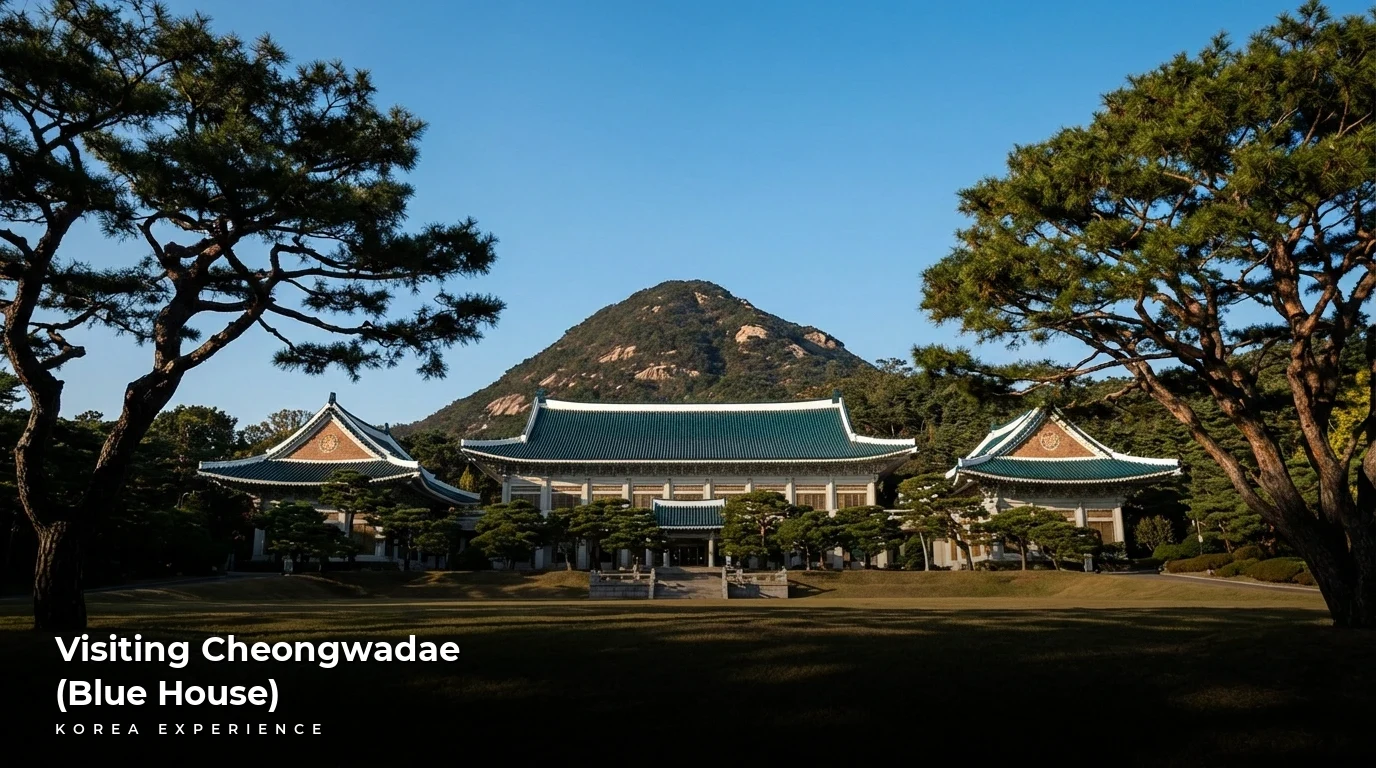
As of late 2025, the President returned to the Blue House. Tours are suspended. Here is how to visit the museum and film set instead.
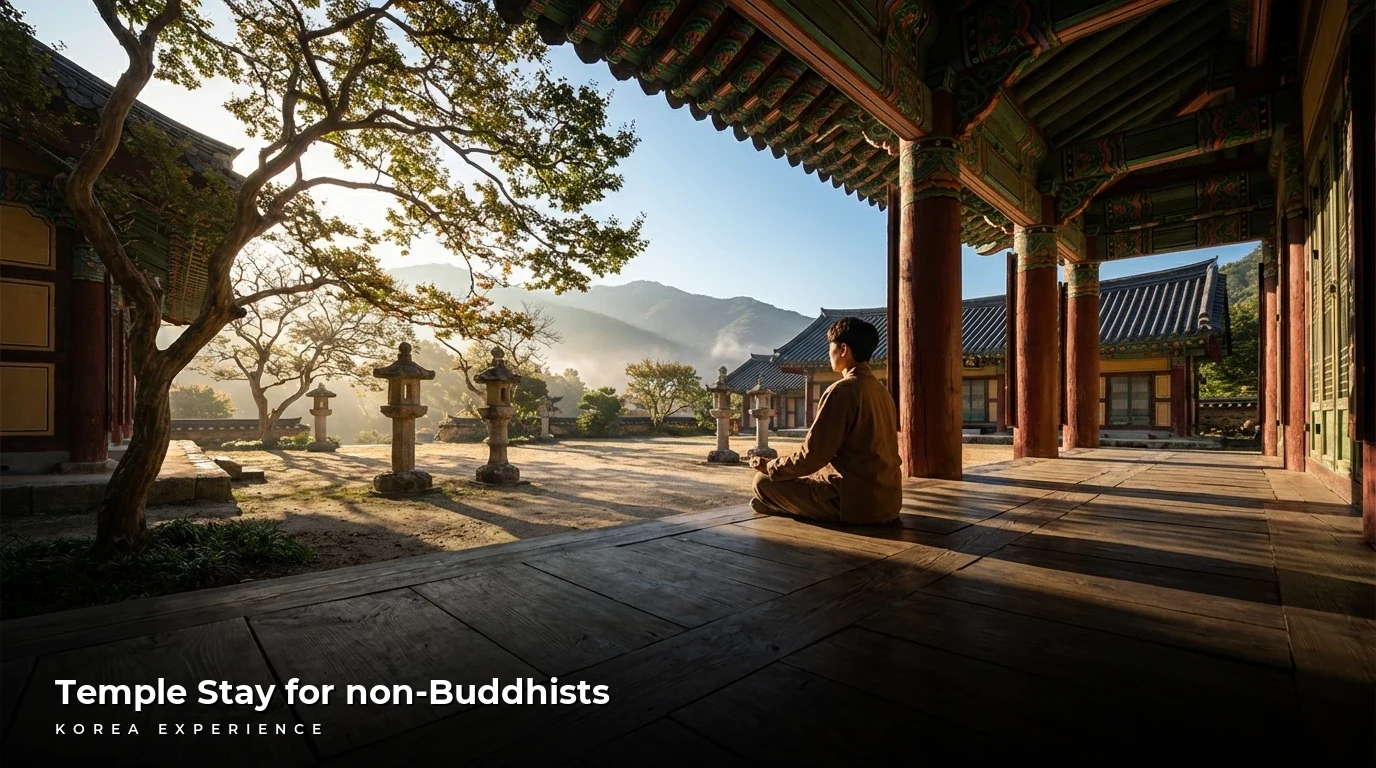
Discover how to book a Korean temple stay in 2026 without being Buddhist. Experience 1,700 years of history and vegan meals for just 70,000 KRW per night.
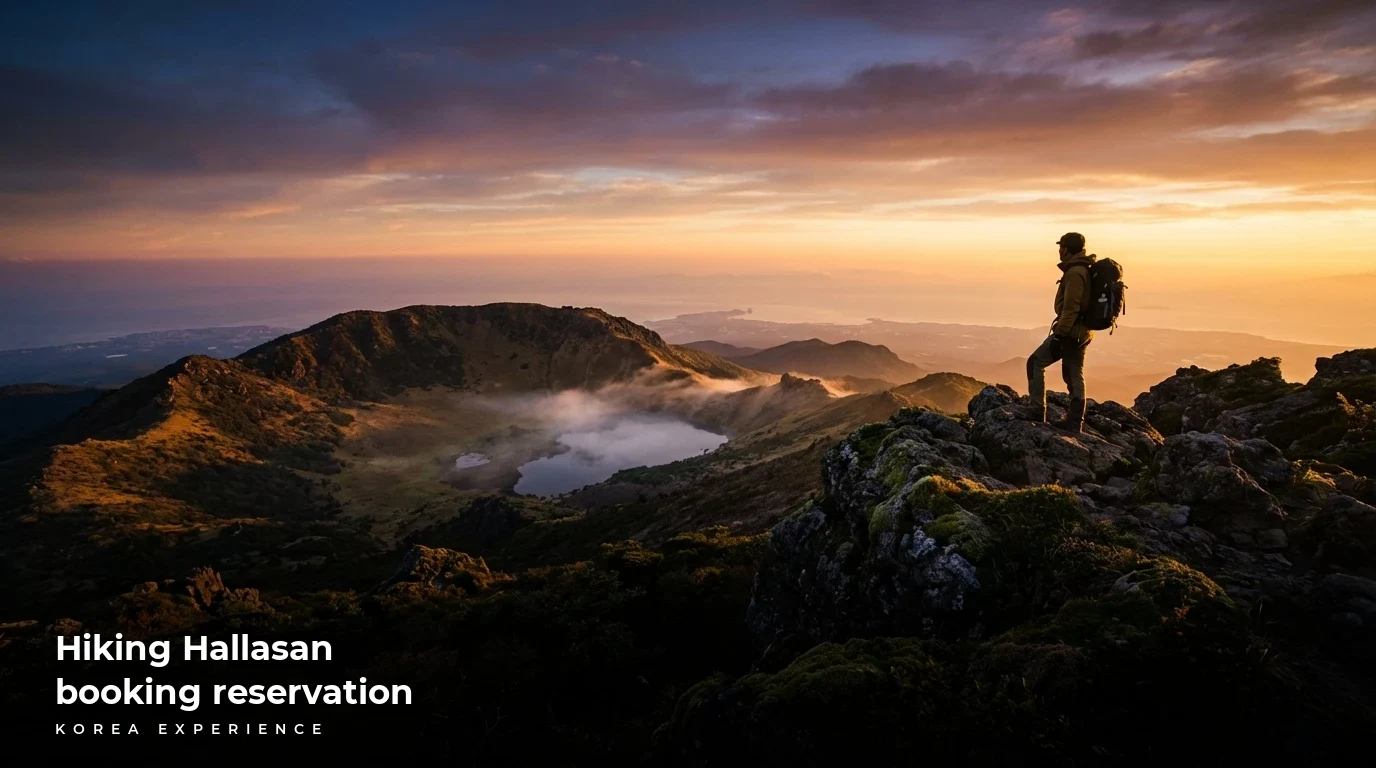
Secure your 2026 Hallasan hike with this guide to the 1,500 daily slots, free reservation system, and how to book without a Korean number.
Rent Seoul's Ddaereungi bikes for just ₩1,000 ($0.75) without an ARC or local number. Here is the 2026 foreigner hack for riding along the Han River.
Compare KakaoMetro vs. Seoul Subway apps for 2026. Learn about the 1,550 KRW base fare, Climate Card savings, and why Google Maps fails in Korea.
The short answer is that South Korea remains one of the safest places on the planet for solo travelers in 2026.