Korean anti aging retinol vs peptides: A 2026 skincare guide
We analyze the Korean anti aging retinol vs peptides debate, comparing efficacy, prices (₩25,000+), and top K-Beauty brands for your 2026 skincare routine.
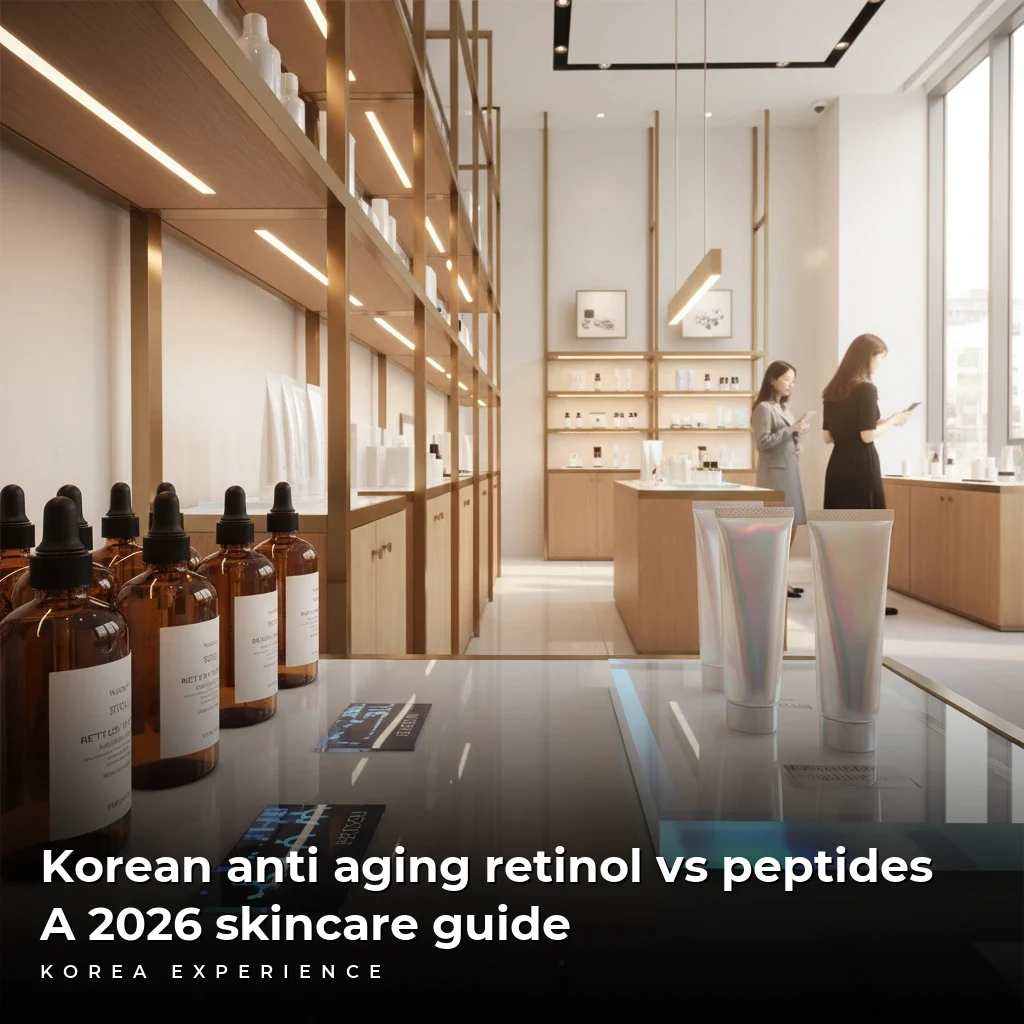
When deciding between Korean anti-aging retinol vs peptides, the choice ultimately depends on your skin's tolerance and specific aging concerns: Retinol is the powerhouse for resurfacing texture and deep wrinkles, while peptides are the gentle builders of skin density and barrier health.
The short answer: If your skin is resilient and you want to reverse deep lines, choose a Korean low-percentage retinol (0.1%-0.3%); if you have sensitive skin or want to plump and firm the skin barrier without irritation, choose copper or multi-peptide serums.
In the Western beauty market, high-strength retinol often reigns supreme. However, the Korean skincare philosophy prioritizes barrier health above all else. Consequently, K-Beauty formulations treat these ingredients differently. Korean retinols are typically encapsulated for slow release to minimize irritation, while Korean peptide formulas are often advanced "cocktails" mixed with fermented ingredients or Hanbang (traditional herbal medicine) extracts to maximize hydration alongside anti-aging benefits.
Key Takeaways
- 1Korean retinols typically range from 0.01% to 0.5%, significantly lower than Western 1.0% standards, focusing on daily tolerance.
- 2Copper Peptides and EGF (Epidermal Growth Factor) are the dominant anti-aging peptide trends in Seoul for 2026.
- 3Retinol requires a strict 2-4 week adaptation period (retinization), while peptides can be used twice daily immediately.
- 4Price point: High-quality Korean peptide serums average ₩35,000 ($26), while stabilized retinol creams average ₩45,000 ($33).
The Science: How They Work Differently
To understand the Korean anti-aging retinol vs peptides debate, you must first understand the mechanism of action for each. While both aim to make the skin look younger, they take completely different physiological routes to get there.
Retinol: The Resurfacing Architect
Retinol is a derivative of Vitamin A. When applied to the skin, it converts into retinoic acid. It works by accelerating cellular turnover. In 2026, the average cellular turnover rate for an adult is about 28 to 45 days. Retinol speeds this up, forcing old cells to shed and new cells to surface. It also stimulates the fibroblasts to produce more collagen.
However, this potency comes at a cost. The rapid turnover can compromise the skin barrier, leading to redness, peeling, and sensitivity—a condition known as "retinization." This is why Korean formulators are so cautious with percentages.
Peptides: The Messengers
Peptides are short chains of amino acids, which are the building blocks of proteins like collagen and elastin. Unlike retinol, peptides do not force cell turnover. Instead, they act as messengers. When applied topically, they signal your skin cells that collagen has been lost and needs to be replaced.
Because they work via signaling rather than resurfacing, peptides are non-irritating. They are hydrating and barrier-supportive. In the context of the "Glass Skin" trend, peptides are often preferred because they maintain the hydration levels necessary for that signature glow, whereas retinol can initially dry out the skin.
Retinol vs. Peptides: The Breakdown
| Feature | Retinol (Vitamin A) | Peptides |
|---|---|---|
| Primary Action | Cell turnover & resurfacing | Cell signaling & barrier repair |
| Irritation Risk | Moderate to High | Very Low |
| Time to Results | 8-12 weeks | 4-8 weeks (for hydration/plumping) |
| Sun Sensitivity | High (Night use only) | None (Day & Night) |
| Best For | Deep wrinkles, acne, texture | Sagging, sensitivity, thin skin |
The K-Beauty Approach to Retinol
If you are accustomed to Western products like Paulas Choice (1%) or The Ordinary (1%), you might find Korean retinol "weak." This is a misconception. K-Beauty prioritizes consistency over intensity. The logic is that a 0.1% retinol used every night without irritation yields better long-term results than a 1.0% retinol used once a week because it burns your face.
In 2026, the trend in Korea is Retinal (Retinaldehyde). This is a form of Vitamin A that is one conversion step closer to retinoic acid than Retinol, making it faster-acting, yet Korean labs formulate it with liposome technology to buffer the side effects.
Top Korean Retinol Innovations
Currently, at Olive Young, you will see products marketing "Retinol-Cica" blends. This combines the anti-aging power of retinol with Centella Asiatica (Cica), Korea's favorite soothing ingredient. This allows even those with rosacea or hypersensitive skin to participate in anti-aging routines.
📊 Market Shift 2026
When shopping in Seoul, expect to pay between ₩30,000 and ₩60,000 ($22 - $45 USD) for a high-quality retinol serum. The volume is usually smaller (20ml to 30ml) because a little goes a long way.
For those dealing with acne alongside aging, retinol is generally the superior choice over peptides because it unclogs pores. If this is your concern, you might want to read our specific breakdown in our COSRX skincare guide.
The K-Beauty Approach to Peptides
Peptides are arguably more aligned with the traditional Korean philosophy of "nourishing" the skin. In 2026, Copper Tripeptide-1 is the star ingredient. It is distinctively blue in color and is famous for its wound-healing properties.
Another massive trend in Korea is EGF (Epidermal Growth Factor). While technically a polypeptide, it is often categorized here. EGF won a Nobel Prize for its discovery and is extensively used in Korean clinics and post-procedure skincare to speed up recovery.
The "Botox-Like" Peptides
You will often see Korean marketing reference "Botox-like" effects. They are usually referring to Acetyl Hexapeptide-8 (Argireline). This peptide works by inhibiting the neurotransmitters that cause muscle movement, theoretically softening expression lines. While it is not a literal replacement for injections, Korean serums use high concentrations of this to target smile lines and crow's feet.
Pro Tip: The Peptide Cocktail
Look for products labeled "Multi-Peptide" or "Polypeptide." Korean brands rarely use just one peptide. A high-quality serum will list 5 to 7 different types (e.g., Copper Tripeptide, Palmitoyl Pentapeptide, Oligopeptide) to target different layers of the skin simultaneously.
Shopping for Anti-Aging in Seoul: Brands & Prices
If you are visiting Korea, buying these products locally can save you 20% to 40% compared to import prices online. The best place to start is Olive Young, specifically the larger flagship stores where they have English-speaking staff and designated "Derma-Cosmetic" sections.
Top Korean Retinol Picks
- IOPE Retinol Expert 0.1%: The "OG" of Korean retinol. IOPE was one of the first major conglomerates (AmorePacific) to stabilize retinol effectively.
- Price: Approx. ₩80,000 ($60 USD).
- Texture: Rich cream.
- Innisfree Retinol Cica Repair Ampoule: Extremely gentle, watery texture. Designed for Gen Z and Millennials starting anti-aging.
- Price: Approx. ₩35,000 ($26 USD).
- Texture: Watery serum.
- COSRX The Retinol 0.1 Cream: A budget-friendly entry point that has gained global fame.
- Price: Approx. ₩25,000 ($19 USD).
Top Korean Peptide Picks
- Mary & May 6 Peptide Complex Serum: Clean beauty brand, very affordable, and high concentration.
- Price: Approx. ₩18,000 ($13 USD).
- Dr. Pepti Peptide Volume Master Essence: A bubbling formula that oxygenates the skin. It’s a cult classic.
- Price: Approx. ₩55,000 ($41 USD).
- d'Alba White Truffle First Spray Serum: Contains peptides and truffle extract. You will see flight attendants buying this in bulk at Incheon Airport.
- Price: Approx. ₩29,000 ($22 USD).
💵 Seoul Retail Price Comparison (2026)
Clinical grade, high stability
Clean formula, great value
Where to Buy
While Olive Young is ubiquitous, for high-end anti-aging (like Sulwhasoo or IOPE), you might prefer department stores or Duty-Free shops.
Olive Young Myeongdong Flagship(올리브영 명동 플래그십)
How to Layer: Can You Use Both?
A common question in the Korean anti aging retinol vs peptides debate is: "Do I have to choose?" The answer is no, but you must be careful with timing.
Korean skincare routines often involve layering (the famous 10-step routine). Peptides are generally water-loving and stable, while retinol is oil-loving and unstable.
The Golden Rule: Use Peptides in the morning (AM) and Retinol in the evening (PM).
If you want to use them in the same routine (PM), apply the peptide serum first (as it is usually lighter and water-based), wait 5 to 10 minutes for absorption, and then apply the retinol cream. However, never mix retinol with Copper Peptides specifically. Copper peptides can oxidize Vitamin C and may cause instability in retinol formulations. If your peptide serum is clear/white, it is likely safe. If it is blue (Copper), keep them separate.
📖 The 'Sandwich Method' for Retinol Beginners
Step 1: Cleanse & Hydrate
Wash face and apply a hydrating toner. Do NOT use exfoliating acids.
Step 2: Layer 1: Moisturizer
Apply a thin layer of light moisturizer or peptide serum (non-copper).
Step 3: Layer 2: Retinol
Apply a pea-sized amount of retinol product.
Step 4: Layer 3: Seal
Apply a thicker barrier cream (Ceramide-based) to lock it all in.
For a deeper dive into structuring your regimen, check out our complete guide to the Korean skincare routine.
Clinic Alternatives: The "Instant" Fixes
Sometimes, topical skincare isn't enough. In Korea, "Skin Boosters" are the bridge between facials and plastic surgery. If you are debating Retinol vs Peptides because you want faster results, you might consider the clinical versions available in Gangnam.
Rejuran Healer (Salmon DNA): This is essentially injectable polynucleotides (similar concept to peptides in terms of repair). It is incredibly popular in 2026 for thickening the skin barrier and reducing fine lines. It is painful but effective.
- Cost: Approx. ₩300,000 - ₩400,000 per 2cc syringe.
- Downtime: 3-4 days of bumpy skin ("embossing").
Ultherapy/Thermage: These are energy-based devices that stimulate collagen (like super-charged retinol).
- Cost: ₩1,000,000+ depending on shots.
If you are interested in treatments, read our detailed report on best Korean skin clinics in Gangnam.
"Foreign patients often ask for strong retinol prescriptions. I usually steer them toward Rejuran or peptide-rich post-care. Asian skin, and even Caucasian skin exposed to Seoul's urban pollution, needs barrier repair first. Strong retinol on a damaged barrier just accelerates aging through inflammation."
Pros and Cons: The Verdict
To summarize the Korean anti aging retinol vs peptides decision, let's look at the direct trade-offs.
Retinol vs Peptides Analysis
- ✓Retinol: Proven to reverse deep wrinkles
- ✓Retinol: Helps with acne and texture
- ✓Peptides: No downtime or irritation
- ✓Peptides: Safe for pregnancy/breastfeeding
- ✗Retinol: Causes 'Purging' and dryness
- ✗Retinol: Makes skin sensitive to UV light
- ✗Peptides: Results are subtle and take longer
- ✗Peptides: More expensive per active ingredient
Important Considerations for Travelers
If you are traveling to Korea, keep in mind that the water typically is "soft," which is great for skin, but the air quality (fine dust) can be harsh.
- Don't start retinol the week you arrive. Your skin is already stressed from the flight and climate change. Start with peptides to fortify your barrier.
- Sunscreen is non-negotiable. If you use retinol in Korea, you must use a high SPF, as UV levels can be high. Check our recommendations for best Korean sunscreens.
- Buy in bulk at Duty-Free. If you find a peptide serum you love, buy the "duo" sets at the airport. You often get a "Buy 3 Get 1 Free" deal unavailable in the city.
Frequently Asked Questions
❓ Common Questions about Korean Anti-Aging
Have more questions?Contact us →
Final Thoughts
The battle of Korean anti aging retinol vs peptides isn't really a battle—it's a partnership. In the Western mindset, we look for the "strongest" product. In the Korean mindset, we look for the "smartest" routine.
For 2026, the smartest routine likely involves a high-quality, multi-peptide serum for your morning hydration and barrier support, followed by a low-percentage, encapsulated retinal cream for your evening repair. By balancing the aggressive nature of Vitamin A with the nurturing nature of amino acids, you achieve the ultimate K-Beauty goal: skin that isn't just wrinkle-free, but resilient, translucent, and healthy.
If you are looking to revamp your entire vanity, don't forget to check out our list of 10 beauty products we keep re-buying for more inspiration.
About the Author
Korea Experience Team
Written by the Korea Experience editorial team - experts in Korean medical tourism, travel, and culture with years of research and firsthand experience.
Explore more in Shopping & K-Beauty
From Olive Young hauls to Myeongdong shopping tips — discover the best K-Beauty products, fashion trends, and shopping destinations in Korea.
Browse All Shopping & K-Beauty ArticlesContinue Reading
Explore more articles you might find interesting
Discover the top 10 vegan K-beauty brands for 2026. From Klairs to Melixir, find cruelty-free skincare in Seoul with prices starting at $15 USD.
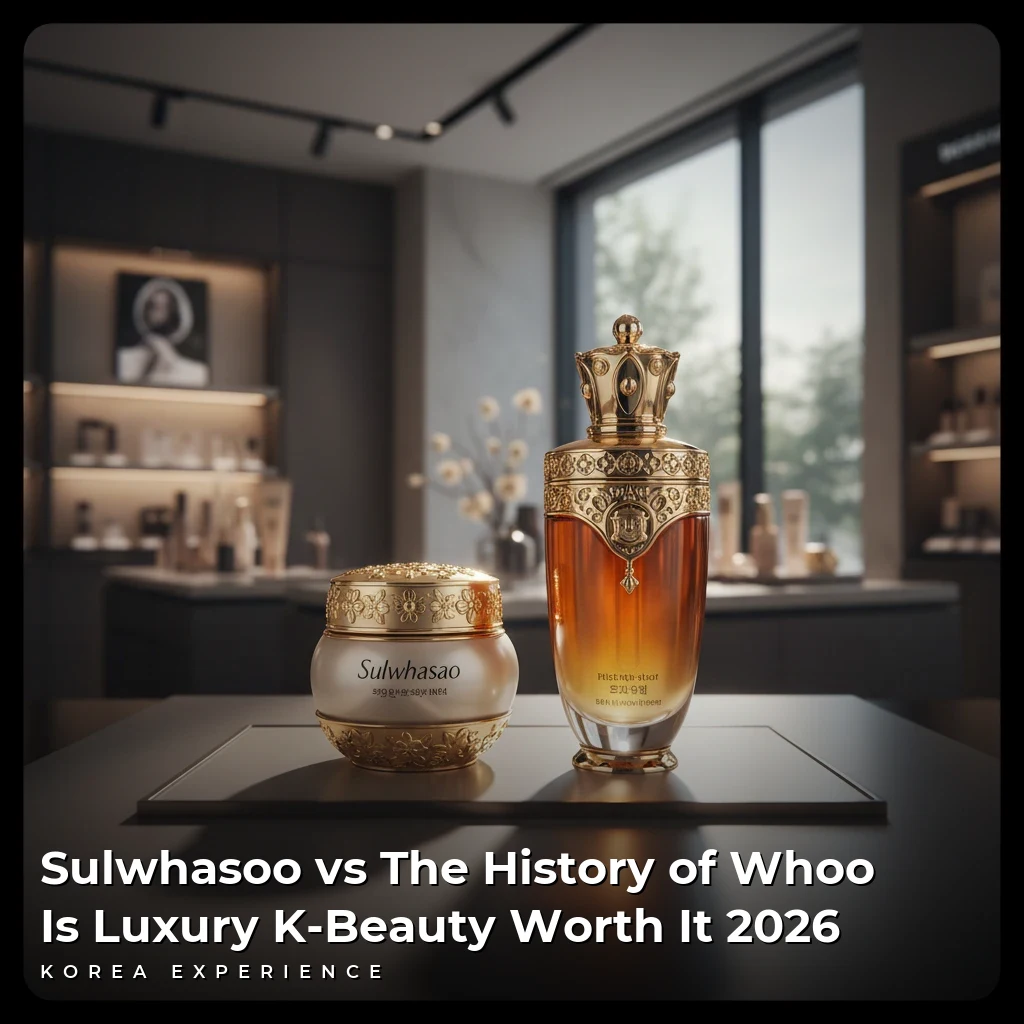
We analyze if Korean luxury skincare giants Sulwhasoo and History of Whoo are worth the $200+ price tags in 2026, comparing ingredients and results.
Discover the best K-beauty products for 2026. From viral sunscreens ($15) to barrier creams, here is the ultimate shopping guide with prices and skin type
Discover the top K-beauty products for men in 2026. From Dashu hair wax to Be Ready BB cream, here is the ultimate shopping guide with prices and tips.
Deciding between Laneige and Sulwhasoo? We compare prices (₩32,000 vs ₩140,000), ingredients, and results to help you choose the best K-beauty brand.
Discover the best K-Beauty sheet masks for 2026. A complete guide to top brands like Mediheal and Abib, essential ingredients, and prices starting at ₩1,000.