Korean body care from head to toe: the complete guide 2026
Discover the secrets of Korean body care, from 15-step scalp spas to traditional milk scrubs. Learn routine steps, costs, and best products for 2026.
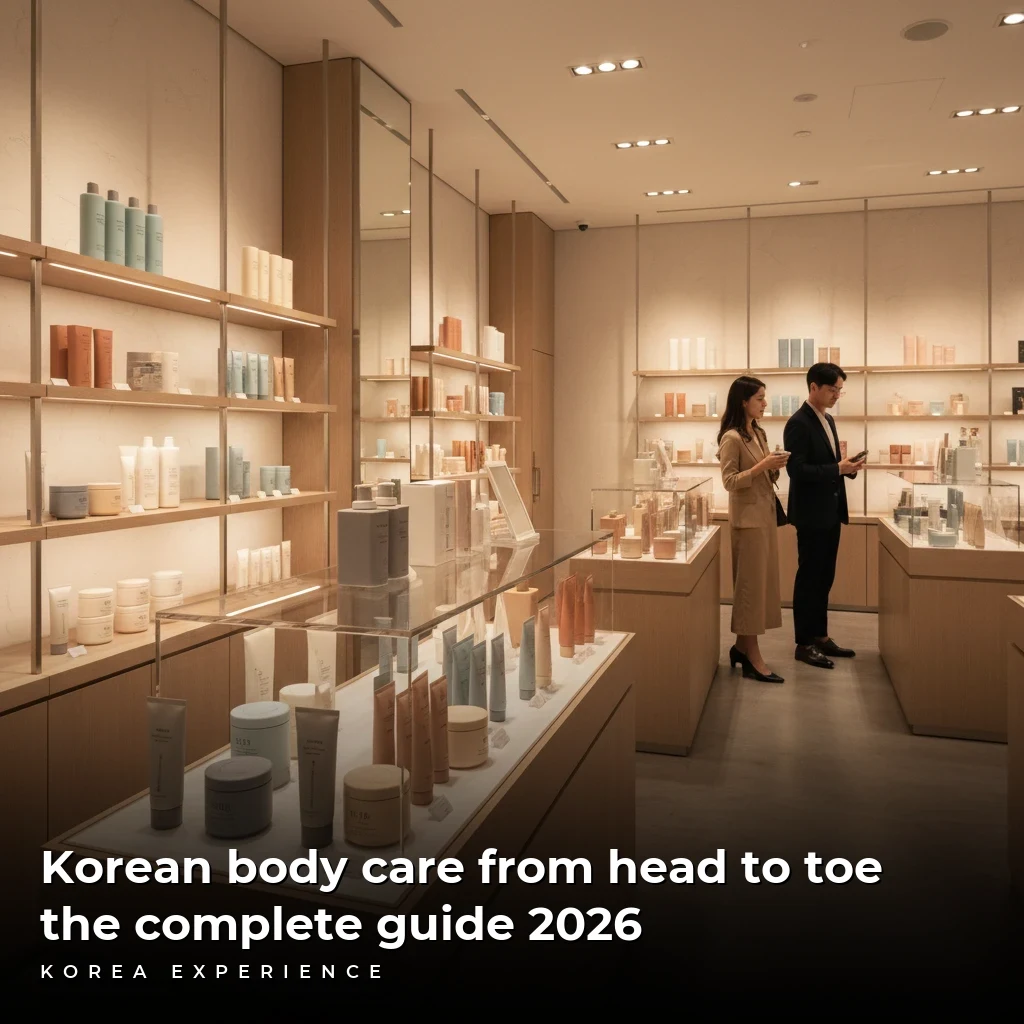
Korean body care is a holistic, multi-step discipline that treats the skin on the body with the same reverence as the face, utilizing a combination of rigorous exfoliation (seshin), specialized hydration layers, and advanced dermatological treatments to achieve a "glass skin" effect from head to toe. While K-Beauty for the face focuses on glow and pores, body care in Korea prioritizes texture refinement, circulation, and barrier repair, often involving professional treatments like scalp scaling and body botox alongside daily home rituals.
The short answer: Korean body care centers on the "Seshin" culture of vigorous exfoliation followed by deep hydration, with modern trends incorporating 10-step scalp facials and body-specific acids (AHA/BHA), typically costing between ₩25,000 for basic scrubs to ₩150,000 for luxury spa treatments.
Key Takeaways
- 1Traditional 'Seshin' (body scrubbing) is the foundation of Korean body care, usually costing ₩25,000 at local bathhouses.
- 2Scalp scaling is now a mainstream treatment, essential for hair health, with sessions lasting 60-90 minutes.
- 3Body hydration follows facial skincare rules, utilizing essences, chemically exfoliating washes, and ceramide-rich creams.
- 4Inner beauty supplements (collagen and glutathione) are considered the final step of the routine.
The Philosophy: Why Korean Body Care is Different
In many Western cultures, body care often stops at a quick shower and perhaps a layer of lotion if the air is dry. In Korea, the approach is fundamentally different. It is rooted in the communal bathhouse culture (jjimjilbang) where cleansing is a social and health-focused activity that can last for 3 to 4 hours.
The philosophy is simple: the skin on your body is an extension of the skin on your face. Therefore, it ages, accumulates damage, and requires active ingredients just like your visage. In 2026, we are seeing a massive surge in "skinification" of body products. This means ingredients previously reserved for high-end facial serums—like Niacinamide, Retinol, and Hyaluronic Acid—are now standard in body washes and lotions found at Olive Young.
📊 K-Beauty Body Market
Part 1: The Head Spa (Scalp Care)
The journey to total body care begins at the very top. In Korea, hair care is synonymous with scalp care. The logic is that you cannot have healthy hair without a healthy foundation. "Head Spas" or Scalp Clinics have exploded in popularity, moving from medical treatments for hair loss to relaxation rituals for the younger generation.
The Scalp Scaling Process
A typical scalp treatment in Seoul is not just a wash; it is a diagnostic procedure. It almost always begins with a microscopic analysis of your scalp, showing you (often in horrifying high definition) the sebum buildup, dead skin, and density of your hair follicles.
📖 The Korean Head Spa Experience
Step 1: Diagnosis
A trichologist uses a macro-lens camera to photograph your scalp, identifying oil levels and inflammation.
Step 2: Scaling
A menthol-based chemical exfoliant is applied to dissolve stubborn sebum between follicles.
Step 3: Steam Mist
You sit under a warm steam cap for 15-20 minutes to open pores and soften debris.
Step 4: Acupressure Wash
A vigorous massage-based shampooing technique that stimulates blood flow.
Step 5: Ampoule Infusion
Nutrients are sprayed onto the scalp via an air-gun for deep penetration.
Costs and Recommendations
If you are visiting Seoul in 2026, you can find these treatments ranging from budget-friendly franchise options to luxury private spas.
- Budget (Franchise): ₩50,000 – ₩70,000 ($38 – $53 USD). Brands like ECO JARDIN or franchised dermatology clinics.
- Premium (Gangnam/Cheongdam): ₩120,000 – ₩200,000 ($90 – $150 USD). These often include shoulder massages and private rooms.
Booking Tip
Popular head spas in Hongdae and Gangnam require reservations at least 2 weeks in advance via Naver or KakaoTalk, as they have gone viral on social media.
If you want to replicate this at home, look for "Scalp Scalers" (sea salt scrubs in a tube) at Olive Young. A popular schedule is to use a scaler once a week instead of shampoo.
Part 2: The Seshin Ritual (Body Scrub)
Perhaps the most famous aspect of Korean body care is the Seshin (scrub). This is usually performed in a mokyoktang (public bath) or jjimjilbang (sauna). It involves soaking in hot water until the skin is soft, followed by a vigorous scrubbing by a professional using a viscose rayon mitt (the infamous "Italy Towel").
The Science of the Italy Towel
The towel is not actually from Italy, but the fabric texture was originally imported from there in the 1960s. The viscose rayon shrinks when wet, creating a rough, crepe-like texture that rolls dead skin off in grey noodles (affectionately called ddae).
True Seshin isn't just about exfoliation; it's about lymphatic drainage. The 'ajumma' (auntie) scrubs towards the heart to boost circulation. Never try to scrub dry skin—you must soak for at least 20 minutes in 40°C+ water first.
Step-by-Step Professional Seshin
When you pay for a scrub at a sauna, the process is efficient and thorough.
- The Soak: You must sit in the hot tub (approx. 42°C) for 20 to 30 minutes. If you try to get scrubbed too early, it will hurt and damage the skin.
- The Scrub: You lie on a vinyl table. The specialist scrubs every inch of your body. They are professionals; nudity is their uniform, so there is no need for modesty.
- The Rinse & Massage: After the dead skin is rinsed away, they often apply a layer of oil or milk (yes, real milk) to soothe the raw skin.
- The Cost: A basic scrub is usually ₩25,000 ($19). A scrub with an oil massage and hair wash is around ₩50,000 - ₩80,000 ($38 - $60).
💵 Bathhouse Service Menu
Scrub plus moisturizing massage & cucumber face mask (50 mins)
Full body exfoliation only (20 mins)
For those who want to understand the broader context of Korean beauty routines, our complete guide to Korean skincare routine explains how exfoliation fits into the larger picture of skin health.
Part 3: Body Skincare Products (The "Skinification" of Body)
Once the dead skin is removed, the fresh skin underneath is highly absorbent. This is where the modern K-Beauty product market shines. In 2026, the trend is specific problem-solving. You don't just buy "lotion"; you buy "body serum for keratosis pilaris" or "whitening cream for elbows."
1. The Acne Fighters (Backne and Chestne)
"Backne" (back acne) is a common concern treated aggressively in Korea. Body washes containing Salicylic Acid (BHA) and Tea Tree extract are staples.
- Key Ingredients: BHA (0.5% - 2%), Heartleaf, Centella Asiatica (Cica).
- Popular Format: Mist sprays. Because it is hard to reach your back with lotion, "Body Acne Mists" are incredibly popular. You spray them upside down after a shower.
- Price Point: ₩15,000 - ₩25,000 for a 150ml bottle.
2. The Barrier Builders
Because Koreans scrub so vigorously, repairing the moisture barrier is critical. This is different from just adding oil. It requires ceramides, cholesterol, and fatty acids.
- The "Illiyoon" Phenomenon: If you visit any Korean household, you will likely find a bottle of Illiyoon Ceramide Ato Concentrate Cream. It uses encapsulated ceramides that burst upon application.
- Texture: Koreans generally dislike sticky (kkeun-jeok) finishes. The technology focuses on "deep moisture, matte finish."
Body Moisturizer Types
| Feature | Body Lotion | Body Oil | Body Serum |
|---|---|---|---|
| Texture | Light/Creamy | Heavy/Slick | Watery/Gel |
| Best For | Daily Maint. | Extreme Dryness | Acne/Pigmentation |
| Absorption | Fast (2 min) | Slow (10 min) | Instant (30 sec) |
3. Tone-Up Creams for the Body
"Tone-up" is a category unique to East Asia. These are lotions with a slight pigment (usually titanium dioxide) that instantly brightens the skin and blurs imperfections. While originally for the face, body tone-up creams for legs and arms are massive sellers, especially in summer. They give the appearance of wearing pantyhose without the fabric.
For protection during the day, don't forget to check our best Korean sunscreen guide, as many facial sunscreens are now sold in larger 150ml tubes specifically for body application.
Part 4: Hands and Feet (The Extremities)
Korean body care creates a polished look right down to the fingertips and toes.
Nail Care and Art
Korean nail art is world-renowned for its intricacy and "syrup" gradients. However, the care aspect is equally important.
- Cuticle Oil Pens: Sold at every convenience store for ₩5,000. Constant hydration of the nail bed is a habit for many.
- The "Baby Foot" Peels: While not a daily routine, foot peeling masks are a seasonal ritual (usually spring) to shed the winter calluses. You wear plastic booties filled with fruit acids for 60 minutes, and 4 days later, your feet shed like a snake.
📋 Salon Nail Costs 2026
Hand Creams as Perfume
In Seoul, pulling out a tube of designer hand cream is a subtle flex. Brands like Tamburins (owned by Gentle Monster) and Nonfiction have turned hand cream into a fashion accessory. The scents are complex—sandalwood, vetiver, basil—rather than the traditional floral or fruity scents.
- Price: A luxury hand cream costs between ₩25,000 and ₩40,000.
- Function: They are formulated to absorb instantly so you can type on your phone or keyboard without leaving greasy prints.
If you are interested in niche brands, our article on best under-the-radar K-beauty brands highlights several companies that specialize in aromatic body care.
Part 5: Clinical Body Treatments (Dermatology)
For travelers looking for more drastic results, Korean dermatology clinics offer extensive body menus. This is referred to as "Body Contouring" or "Body Skin Management."
Body Botox
Botox in Korea isn't just for forehead wrinkles.
- Trapezius Botox (The "Shoulder" Shot): Highly popular for brides or before summer. It relaxes the shoulder muscles to create a longer, leaner neck and a 90-degree shoulder line (reminiscent of Jennie from Blackpink).
- Cost: Approx. ₩150,000 - ₩300,000 depending on units used (usually 100u+).
- Calf Botox: Used to smooth out the muscular "bulge" in the calves for a straighter leg line.
Body Lasers and Peels
- Aladdin Peel (FCR Peel): This is a hardcore exfoliation treatment for back acne scars (post-inflammatory hyperpigmentation). It utilizes spicules (microscopic needles from coral calcium) that are rubbed into the back.
- Sensation: It feels like rubbing fiberglass on your skin.
- Downtime: You will peel aggressively for 5-7 days.
- Result: Brand new baby skin.
- Cost: ₩100,000 - ₩150,000 per session.
Downtime Warning
Do not schedule an Aladdin Peel or aggressive laser treatment within 7 days of a beach vacation. Your skin will be shedding and highly sensitive to sunlight.
For a deeper dive into injectable treatments, consult our guide on anti-aging treatments in Korea.
Part 6: Inner Beauty (Supplements)
Korean body care believes that "output depends on input." The Inner Beauty market is vast, occupying entire aisles in drugstores like Olive Young and Lohbs.
Collagen Jellies vs. Powders
Collagen is consumed religiously. Low-molecular-weight fish collagen is the standard because it absorbs better than animal collagen.
- Trend 2026: "Glutathione Films." These are small melting strips you place on the roof of your mouth. They are taken for skin brightening and liver health (often marketed as a hangover cure that also makes you glow).
- Diet Supplements: "Catechin" (Green Tea Extract) and "Garcinia" supplements are often taken after meals to block carb absorption.
You can often find these supplements in single-serve packets at convenience stores. Check out our list of best Korean convenience store food to see what other healthy treasures you can find alongside your snacks.
Part 7: Shopping Guide - Where to Buy
If you are in Korea, here is your tactical map for buying body care supplies.
1. Olive Young (The Goliath)
Olive Young is ubiquitous. For body care, head to the back of the store.
- Must-buys: Illiyoon Ceramide Ato Lotion, Dr.G Clear Soothing Body Mist, Aromatica Rosemary Root Enhancer.
- Sale Dates: The "Olive Young Big Bang Sale" happens in early March, June, September, and December. Discounts hit 50-70%.
2. Traditional Markets (Namdaemun/Gwangjang)
This is where you buy the hardware.
- Must-buys: Italy Towels (buy the "Songwol" brand—look for the glove logo). They cost about ₩1,000 each here, compared to ₩3,000 online.
- Tools: Shampoo brushes, pumice stones, and exfoliating back straps.
3. Chicor (The Upscale Choice)
Run by Shinsegae Department Store, Chicor carries premium niche brands like Huxley and Tamburins. It is less crowded than Olive Young and offers a better testing environment with sinks to wash your hands.
Olive Young Myeongdong Flagship(올리브영 명동 플래그십)
Pros and Cons of the Korean Method
Is the Korean body care routine right for everyone? It requires time and consistency.
Korean Body Care Routine
- ✓Drastic improvement in skin texture and softness
- ✓Preventative approach minimizes aging signs on body
- ✓Highly affordable compared to Western spa treatments
- ✓Holistic focus includes stress relief (baths/massage)
- ✗Time-consuming (requires 20-30 mins extra per shower)
- ✗Seshin scrubbing can be too harsh for sensitive skin
- ✗Multi-step routines can be expensive to maintain
- ✗Many products contain fragrance (check labels)
Conclusion
Korean body care is more than just hygiene; it is a ritual of self-respect. From the vigorous exfoliation of the Seshin to the gentle patting of ceramic-infused lotions, the goal is to maintain the body's condition with the same diligence we apply to our faces. Whether you adopt the full 10-step routine or simply incorporate a weekly scalp scrub and a better body moisturizer, the Korean approach offers practical, effective ways to elevate your physical well-being.
As you plan your trip to Korea in 2026, consider booking a head spa or visiting a local bathhouse not just as a tourist activity, but as a lesson in how to care for yourself from head to toe.
❓ Frequently Asked Questions
Have more questions?Contact us →
About the Author
Korea Experience Team
Written by the Korea Experience editorial team - experts in Korean medical tourism, travel, and culture with years of research and firsthand experience.
Explore more in Shopping & K-Beauty
From Olive Young hauls to Myeongdong shopping tips — discover the best K-Beauty products, fashion trends, and shopping destinations in Korea.
Browse All Shopping & K-Beauty ArticlesContinue Reading
Explore more articles you might find interesting

Find the best English books in Seoul. From Kyobo Gwanghwamun's massive collection to hidden gems in Itaewon, here is your 2026 guide with prices and maps.
A definitive guide to the K-Beauty retail landscape in 2026. We compare Olive Young dominance with the legacy of Lalavla and new luxury rivals like Chicor.
Master the 2-step K-Beauty ritual for glass skin. Learn why 92% of Korean women double cleanse, best products for 2026, and how to shop at Olive Young.
Your ultimate guide to Gangnam skincare clinics. Compare factory vs. luxury dermatology, check 2026 prices for Rejuran and Botox, and book like a local.
Master Korean shopping with our 2026 size conversion charts. From women's '55' sizes to millimeter shoe measurements, get the perfect fit every time.
We analyze the Korean anti aging retinol vs peptides debate, comparing efficacy, prices (₩25,000+), and top K-Beauty brands for your 2026 skincare routine.