Korean Barbecue Ordering Guide: Cuts, Portions, and Grills
Master Korean barbecue with this clear guide to meat cuts, portion rules, grilling mechanics, and shared side dishes.
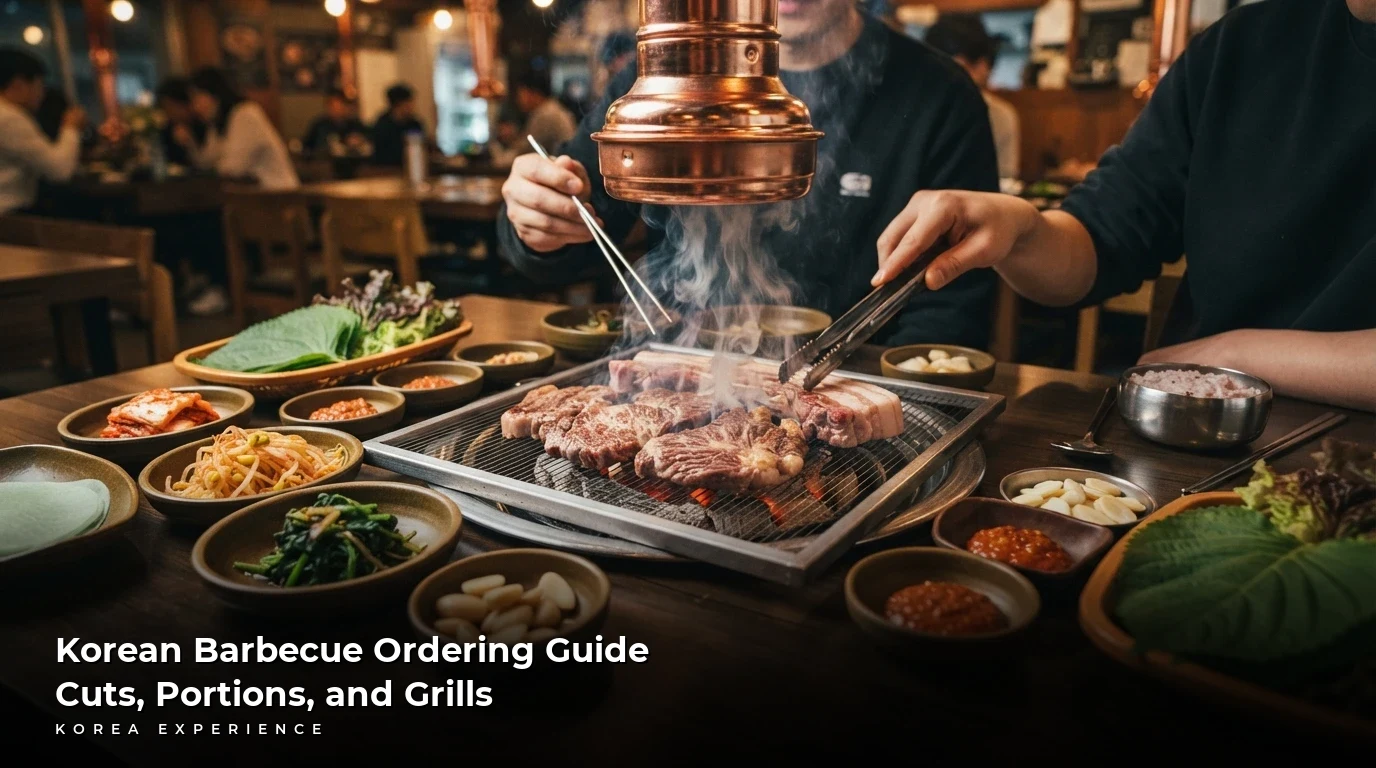
Navigating a Korean barbecue (K-BBQ) menu can feel overwhelming with its unique terminology, portion rules, and table mechanics. Whether you are choosing between pork belly or marbled beef short ribs, understanding how portions and sequencing work ensures a smooth dining experience.
1. Choosing Your Cuts: Pork and Beef
Korean barbecue menus generally divide options into pork and beef cuts, each offering distinct textures and flavor profiles.
Pork Cuts
- Samgyeopsal (삼겹살): Thick-cut pork belly. This is the most popular and iconic cut for casual K-BBQ, offering a balance of rich fat and lean meat.
- Moksal (목살): Pork neck or shoulder. It is leaner than pork belly with a meaty texture, requiring careful cooking to avoid toughness.
- Hangjeongsal (항정살): A rare, marbled, tender, and generally pricier pork jowl or neck cut.
- Dwaejigeopddaegi (돼지껍데기): Pork rind. Often ordered as an after-meal addition for its chewy texture, it is typically dipped in roasted soybean powder.
Beef Cuts
- Galbi (갈비): Beef short ribs, served either saenggalbi (fresh and unmarinated) or yangnyeomgalbi (pre-marinated in a sweet-savory soy glaze).
- Bulgogi (불고기): Thinly sliced, sweet-marinated beef. It is sometimes cooked via a specialized pan insert rather than a direct open grill.
- Chadolbaegi (차돌박이): Paper-thin sliced beef brisket (or wagyu brisket). Unmarinated, it cooks in seconds and has a nutty, fatty flavor profile.
- Hanwoo (한우): Premium native Korean cattle beef, heavily marbled and positioned at a higher price point.
2. Portions, Ordering Rules, and Pricing Structure
Ordering at a K-BBQ restaurant follows specific local customs that differ from standard Western dining formats.
- Portion Minimums (Il-in-bun, 1인분): Menus are priced per portion (serving unit) rather than per total individual meal. Most establishments enforce a minimum order requirement of 2 portions to start. This is particularly strictly enforced during peak evening hours (such as between 6:00 PM and 8:00 PM) or per specific meat type.
- Grams and Sizing: Menus often list weight per portion (e.g., 100g, 150g, or 200g). This unit specifies the sales measure rather than guaranteeing a single portion equals one full meal for an individual diner.
- Ordering Sequence: Local guidance recommends working in rounds. Start with unmarinated, lean, or thin meats (like chadolbaegi or fresh pork belly), move to thick unmarinated cuts, and finish with sweet, heavily marinated cuts (like galbi) to prevent sugars from burning early on the grill. Rice, stews (jjigae), or noodles are typically ordered midway or toward the end of the meal.
- Pricing Baseline: Casual pork BBQ in city-center locations like Seoul generally averages roughly 15,000 KRW to 25,000 KRW per portion, though prices vary significantly by neighborhood, venue type, and whether beef or pork is selected.
3. Grills and Table Mechanics
Tables at K-BBQ venues feature built-in gas or charcoal burners fitted with metal, stone, or specialized grates.
Grilling Responsibility: Dining formats vary by location. At casual neighborhood pork belly spots, guests frequently grill their own food using provided kitchen scissors and tongs. However, staff frequently step in to manage or cut meat at upscale venues, beef houses, or whenever guests look uncertain.
4. Shared Side Dishes (Banchan)
A spread of small complementary side dishes (banchan)—such as kimchi, pickled radish, seasoned bean sprouts, and scallion salad—arrives automatically upon ordering.
- Refills: Side dishes are generally free and refillable upon request (such as asking for more kimchi). Travelers are advised to verify if specialty items carry extra charges, though basic refills are standard practice.
- Consumption Style: Banchan is meant to complement and cut through the richness of grilled meats. Diners often incorporate them directly into a vegetable wrap (ssam) alongside garlic and ssamjang.
Sources
About the Author
Korea Experience Team
Written by the Korea Experience editorial team - experts in Korean medical tourism, travel, and culture with years of research and firsthand experience.
Explore more in Food & Dining
Korean BBQ, street food, Michelin restaurants, and regional specialties — your ultimate guide to eating well in Korea.
Browse All Food & Dining ArticlesContinue Reading
Explore more articles you might find interesting
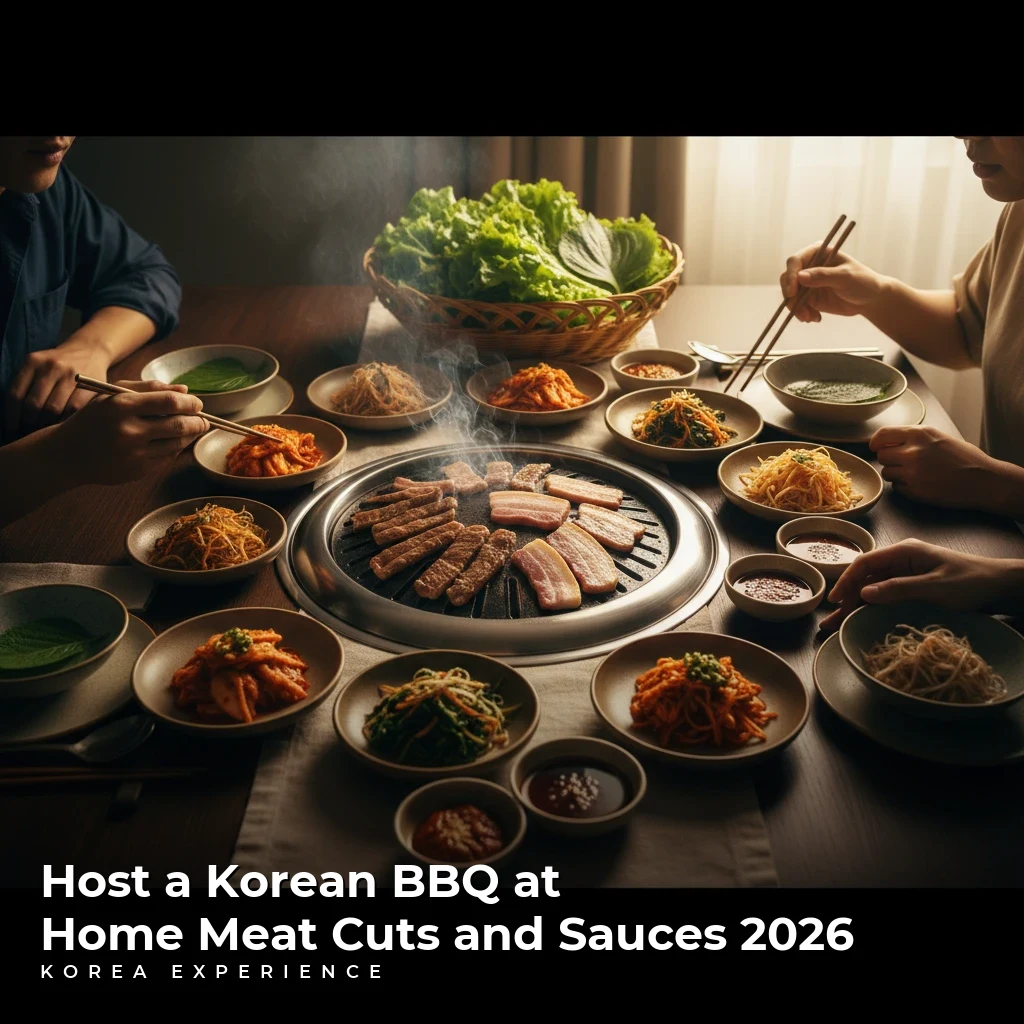
Master the art of hosting a Korean BBQ at home in 2026 with our guide to essential meat cuts, authentic dipping sauces, and expert grilling tips.
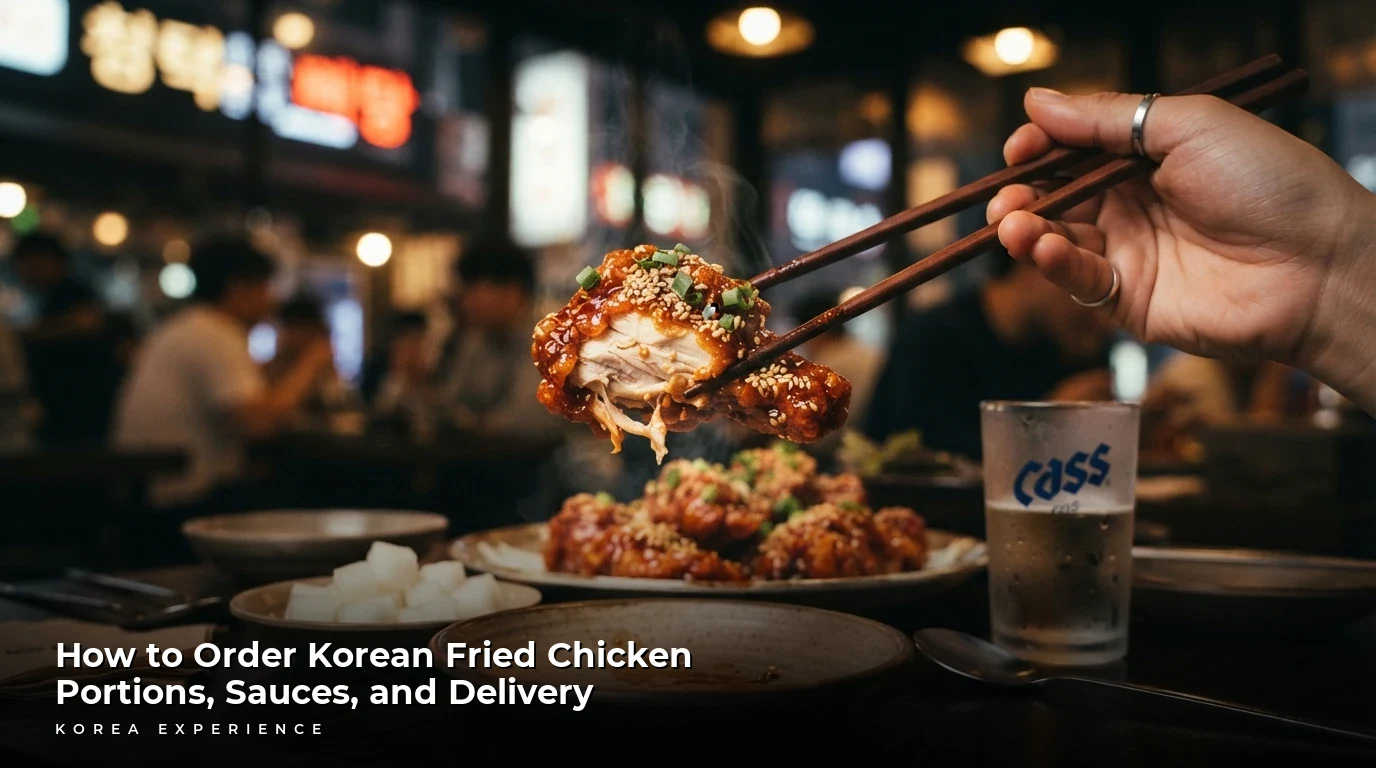
Master ordering Korean fried chicken with our guide to portions, whole chicken counters, classic sauces, essential sides, and delivery terms.
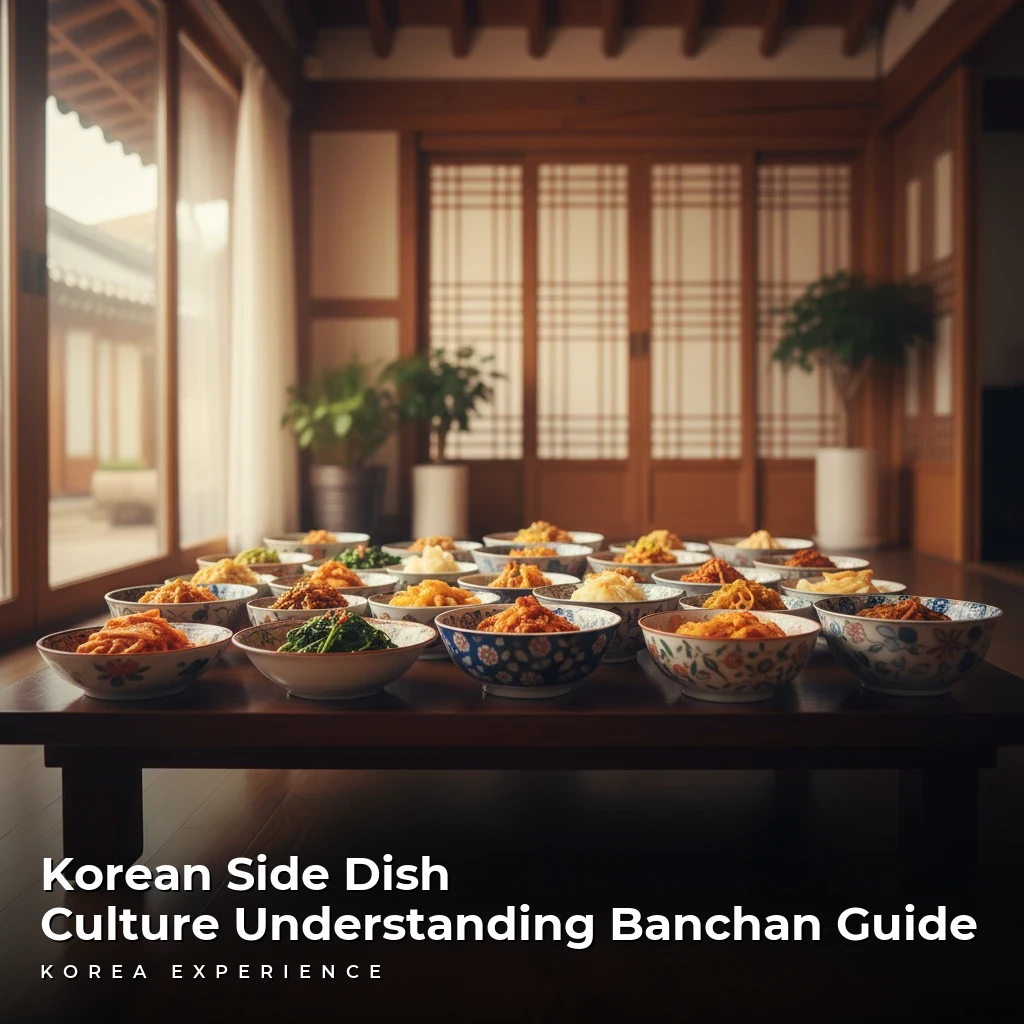
Master the intricate world of Korean side dishes with our comprehensive guide to banchan varieties, dining etiquette, and the best places to buy them in Seoul.
Master Korean bakery café customs with this practical guide covering table-claiming, the 1 drink per person rule, ordering, and tray returns.
Master Korean dining rules and learn why lifting your rice bowl is a cultural taboo. Essential guide for travelers in 2026.
Master Korean drinking etiquette pouring and toasting rules. Learn the essential customs, from the two-hand pour to the senior turn.