Gwangjang Market Complete Food Guide Best Stalls 2026
Discover the ultimate Gwangjang Market food guide featuring top stalls, prices, operating hours, and local tips for Seoul's oldest traditional market.
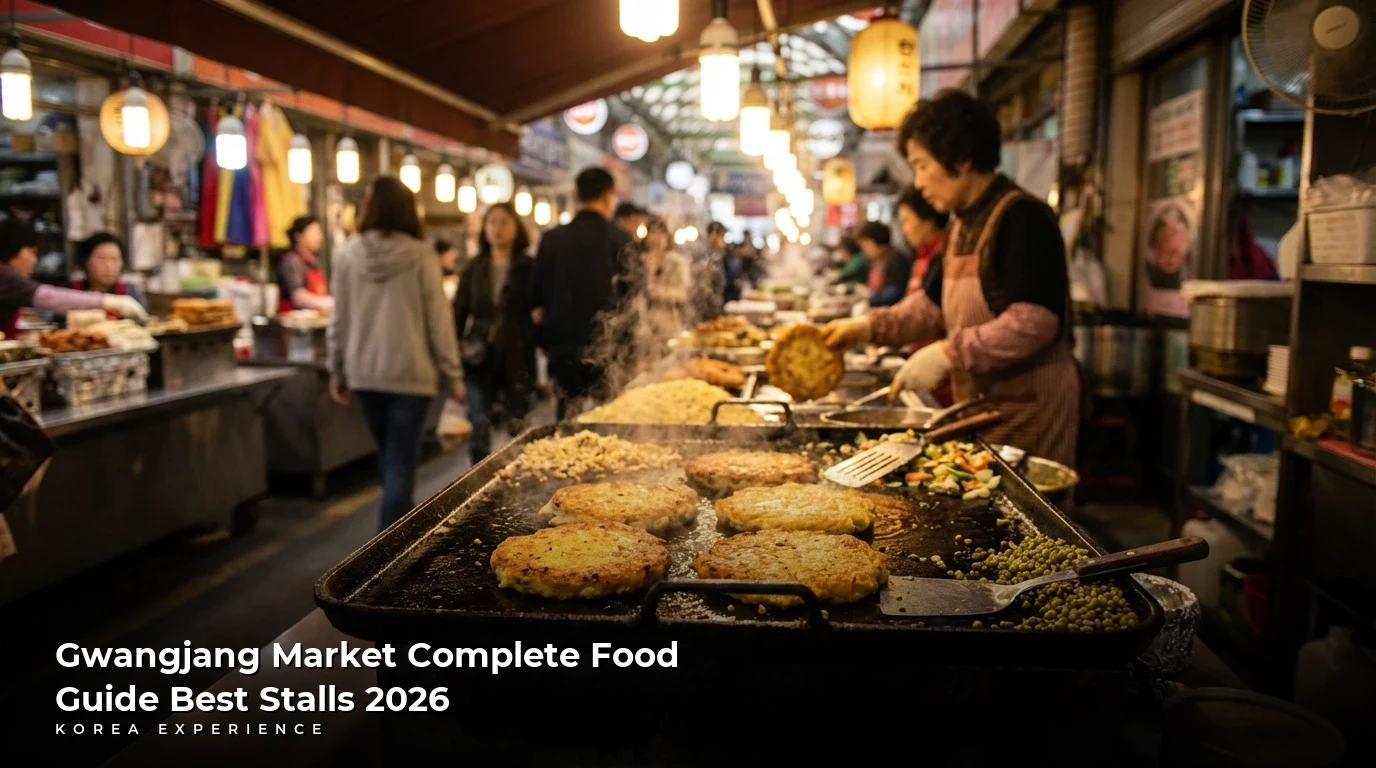
Gwangjang Market is not just a market; it is the beating culinary heart of Seoul. Established in 1905, making it over 120 years old, this sprawling complex is the nation's first permanent traditional market. While it sells textiles and vintage clothing, 90% of international visitors flock here for one reason: the "Meokjagolmok" (Food Alley).
Learn more in our comprehensive guide to Exploring Korea Traditional Market Street Food Tours.
You might also enjoy our article about Seoul food markets guide 2026 gwangjang to noryangjin.
For more details, check out our guide on The 2026 Seoul Street Food Showdown.
You might also enjoy our article about Best food apps for English speakers TableCheck vs CatchTable.
Navigating this sensory overload of steaming pots, sizzling griddles, and shouting vendors can be intimidating. With over 5,000 independent shops and stalls crammed into 42,000 square meters, knowing exactly where to go and what to eat is essential. This guide focuses on the specific stalls, updated 2026 prices, and insider etiquette you need to navigate Seoul’s most famous street food hub like a local.
Key Takeaways
- 1Bring cash; 70% of stalls still prefer physical currency over cards
- 2Best time to visit is 11:30 AM for lunch or 6:30 PM for dinner vibes
- 3Must-eats: Bindaetteok, Michelin-rated Yukhoe, and Twisted Donuts
The Essentials: Planning Your Visit
Before diving into the food, you need to understand the logistics. Gwangjang Market is located in Jongno-gu, the historical center of Seoul. The market is centrally located, sitting exactly 1.8 kilometers east of Gyeongbokgung Palace, making it a perfect lunch stop after a morning of sightseeing.
📋 Market Logistics
While the general market hours are 9:00 AM to 6:00 PM, the food stalls operate on a different schedule. Most food vendors open by 9:00 AM, but the atmosphere truly comes alive after sunset. However, arrive too late (after 9:30 PM), and you risk the most popular stalls running out of ingredients.
Many tourists make the mistake of entering from the North Gate. For immediate access to the food alley, use the East Gate near Exit 8 of Jongno 5-ga station. You will be in the center of the action within 45 seconds of walking.
The Holy Trinity of Gwangjang: Must-Eat Dishes
If you only eat three things at Gwangjang Market, they must be Bindaetteok, Yukhoe, and Mayak Gimbap. These three dishes represent 60% of the food sales within the central corridor.
1. Bindaetteok (Mung Bean Pancake)
Bindaetteok is the undisputed king of Gwangjang Market. These are thick, savory pancakes made from ground mung beans, mixed with bean sprouts, kimchi, and green onions, then deep-fried in generous amounts of oil until golden brown.
As you walk through the central intersection, you will hear the grinding of traditional stone mills turning mung beans into batter. A standard pancake is roughly 20 centimeters in diameter and serves two people as a snack.
Sunhee-ne Bindaetteok(Sunhee-ne Bindaetteok)
Cost Analysis: As of early 2026, the price for one Bindaetteok has stabilized at ₩5,000 (approx. $3.80 USD). The meatball version (Wanjajeon) usually costs the same or slightly more. This makes it one of the most caloric-dense value meals in Seoul.
2. Yukhoe (Beef Tartare)
For the adventurous gourmet, "Yukhoe" is non-negotiable. This is raw beef, seasoned with sesame oil, soy sauce, sugar, and pear, topped with a raw egg yolk. Unlike Western steak tartare, the Korean version focuses heavily on the nutty aroma of sesame oil. Gwangjang Market has a dedicated "Yukhoe Alley" containing roughly 10 restaurants specializing in this dish.
Michelin Recognition
Buchon Yukhoe has held a Michelin Bib Gourmand distinction consecutively since 2017. While the line often stretches 30-50 meters (expect a 45-minute wait on weekends), the quality and hygiene standards are world-class.
The Live Octopus Twist: For a texture contrast, order "Yukhoe Tangtangi." This is beef tartare topped with chopped live octopus (sannakji) that is still wriggling. The suction cups remain active for about 30 minutes after preparation.
💵 Yukhoe Price Comparison (2026)
Beef + Live Octopus combo
3. Mayak Gimbap (Narcotic Rice Rolls)
Despite the name, there are no illegal substances here. "Mayak" means drug/narcotic, implying these bite-sized seaweed rice rolls are addictive. Unlike standard Gimbap, these are mini-rolls filled only with carrot, pickled radish, and spinach. The secret lies in the dipping sauce—a mixture of soy sauce and spicy mustard (hot mustard).
Portion and Price: A standard serving contains 6 to 8 mini rolls and costs ₩4,000 ($3.00 USD). You will find these sold at almost every stall, but look for the vendors who brush the sesame oil on right before serving.
📖 How to Eat Mayak Gimbap Like a Pro
Step 1: Spear the Roll
Use the provided toothpick to spear a single mini roll through the center.
Step 2: Dip Generously
Dip the roll into the mustard-soy sauce. Ensure the open end soaks up the liquid.
Step 3: One Bite
Eat the entire mini roll in one bite to get the balance of sesame oil and spicy mustard.
The Netflix Effect: Cho Yonsoon's Kalguksu
Since appearing on Netflix's "Street Food: Asia" in 2019, Stall #70, run by Cho Yonsoon, has become a pilgrimage site. She serves Kalguksu (knife-cut noodles) and Mandu (dumplings).
The noodles are hand-cut on the spot. The broth is anchovy-based, deep, and savory. Despite the fame, the quality remains consistent, though the waiting dynamics have changed.
📊 Gohyang Kalguksu Stats
The Verdict: Is it worth the wait? Yes, if you value the story and the atmosphere. However, purely culinary-speaking, there are 5 other stalls within 20 meters serving comparable noodles for the same price of ₩7,000 ($5.30 USD) with zero wait time.
Alternate Option
If the line at Stall #70 is too long, head to Stall #41. Their Kimchi Mandu (dumplings) are widely considered by locals to be spicier and more flavorful, and you can usually sit down immediately.
Beyond the Basics: Unusual & Authentic Eats
Once you have covered the basics, explore the dishes that older Korean locals are actually eating. These dishes offer a deeper dive into Korean gastronomy.
Soondae (Blood Sausage)
At Gwangjang, the Soondae is "Grandma style"—massive, thick sausages stuffed with glass noodles and pig's blood, steamed to perfection. A serving costs roughly ₩8,000. Unlike the factory-made versions sold at convenience stores, these are handmade and have a rich, earthy flavor.
Kkwabaegi (Twisted Donuts)
Located at the entrance of the market (North Gate), Gwangjang Kkwabaegi creates lines that block traffic. These donuts are made with glutinous rice flour, dusted with sugar and cinnamon.
- Price: ₩1,000 ($0.75 USD) per donut.
- Wait Time: 20-30 minutes.
- Throughput: They sell over 2,000 donuts on a typical Saturday.
Ideal Gwangjang Food Course
Appetizer
Share one Bindaetteok at Sunhee-ne
Noodles
Kalguksu or Mandu Guk at a stall
Raw Experience
Small plate of Yukhoe or Sannakji
Sweet Finish
Grab a Kkwabaegi on your way out
Practical Guide: Navigating the Chaos
Gwangjang Market can be physically demanding. The aisles are narrow (often less than 1.5 meters wide between diners), and it is loud. Here is how to survive and thrive.
Seating Etiquette
Most seating consists of heated benches attached directly to the stall. You will be sitting shoulder-to-shoulder with strangers.
- Space: You have about 40-50cm of personal space. Keep your elbows in.
- Bags: Do not put bags on the empty seat next to you. Hold them on your lap or hang them on hooks under the counter if available.
- Speed: This is "eat and run." It is considered rude to linger for more than 15 minutes after finishing your meal if there is a line behind you.
Payment Methods
While Korea is a credit-card-heavy society, traditional markets are the exception.
- Cash: Essential. Carry ₩10,000 and ₩1,000 bills.
- Bank Transfer: Locals use direct bank transfers via mobile apps, but this is inaccessible to most tourists.
- Credit Cards: Accepted at larger restaurants (like Buchon Yukhoe) but rarely at the open-air stalls.
Payment Acceptance by Venue Type
| Venue Type | Cash | Credit Card | T-Money Card |
|---|---|---|---|
| Open-air Stall (Noodles/Gimbap) | ✅ | ❌ | ❌ |
| Bindaetteok Restaurant | ✅ | ✅ | ❌ |
| Yukhoe Specialist | ✅ | ✅ | ❌ |
| Juice/Coffee Stand | ✅ | Varies | ❌ |
Budget Analysis: What Will It Cost?
Seoul has become more expensive in recent years, but Gwangjang Market remains a value destination. However, prices have risen approximately 15-20% between 2023 and 2026 due to ingredient inflation.
A solo traveler can leave completely full for under ₩20,000 ($15 USD). A couple sharing dishes can experience a feast for ₩35,000 ($26 USD).
💵 Sample Budget for Two People
1 Bindaetteok, 1 Gimbap, 2 Donuts
Critical Review: Pros and Cons
Is Gwangjang Market a "tourist trap"? To some extent, yes. The prices in the central hub are about 10-15% higher than neighborhood markets in residential areas. However, the accessibility and variety justify the premium.
Gwangjang Market Experience
- ✓Incredible energy and atmosphere unique to Seoul
- ✓English menus available at 80% of stalls
- ✓Food hygiene is generally well-monitored
- ✗Extremely crowded on weekends (shoulder-to-shoulder)
- ✗Can be intimidating for introverts
- ✗No public trash cans (you must return trash to vendor)
Sanitation Note
There are very few public restrooms, and they are often not up to Western standards of cleanliness. It is highly recommended to use the restroom at the subway station (Jongno 5-ga) before entering the market.
Alternative Markets
If the crowds at Gwangjang are too overwhelming (density often exceeds 4 people per square meter on Saturdays), consider these alternatives.
Tongin Market: Located west of Gyeongbokgung. Famous for the "Dosirak" (Lunchbox) Cafe where you pay with vintage coins. It is quieter, smaller, and closes earlier (4 PM).
Namdaemun Market: Larger overall but the food is more spread out. Famous for Galchi Jorim (Braised Cutlassfish) Alley.
Mangwon Market: The hipster favorite. Located near Hongdae. Much younger crowd, cheaper prices, and trendy fusion snacks (like marshmallows with ice cream).
Frequently Asked Questions
❓ Gwangjang Market FAQ
Have more questions?Contact us →
Gwangjang Market is a rite of passage for any traveler in Korea. It serves as a living museum where the exhibits are edible and the history is still being written, one sizzling pancake at a time. Arrive hungry, bring cash, and don't be afraid to squeeze onto a bench—it's part of the charm.
About the Author
Korea Experience Team
Written by the Korea Experience editorial team - experts in Korean medical tourism, travel, and culture with years of research and firsthand experience.
Explore more in Food & Dining
Korean BBQ, street food, Michelin restaurants, and regional specialties — your ultimate guide to eating well in Korea.
Browse All Food & Dining ArticlesContinue Reading
Explore more articles you might find interesting
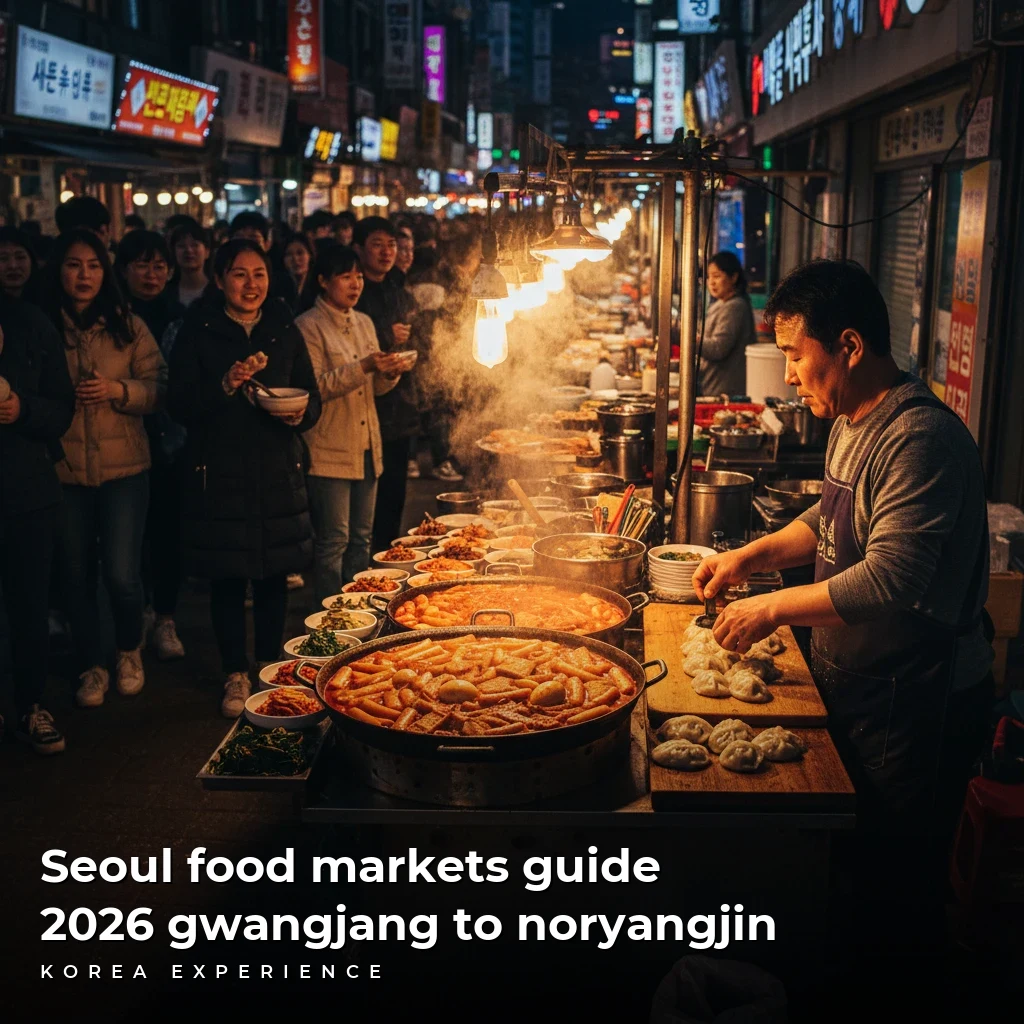
The ultimate 2026 guide to Seoul traditional markets. Discover prices, hidden stalls, and expert tips for Gwangjang, Noryangjin, and local favorites.
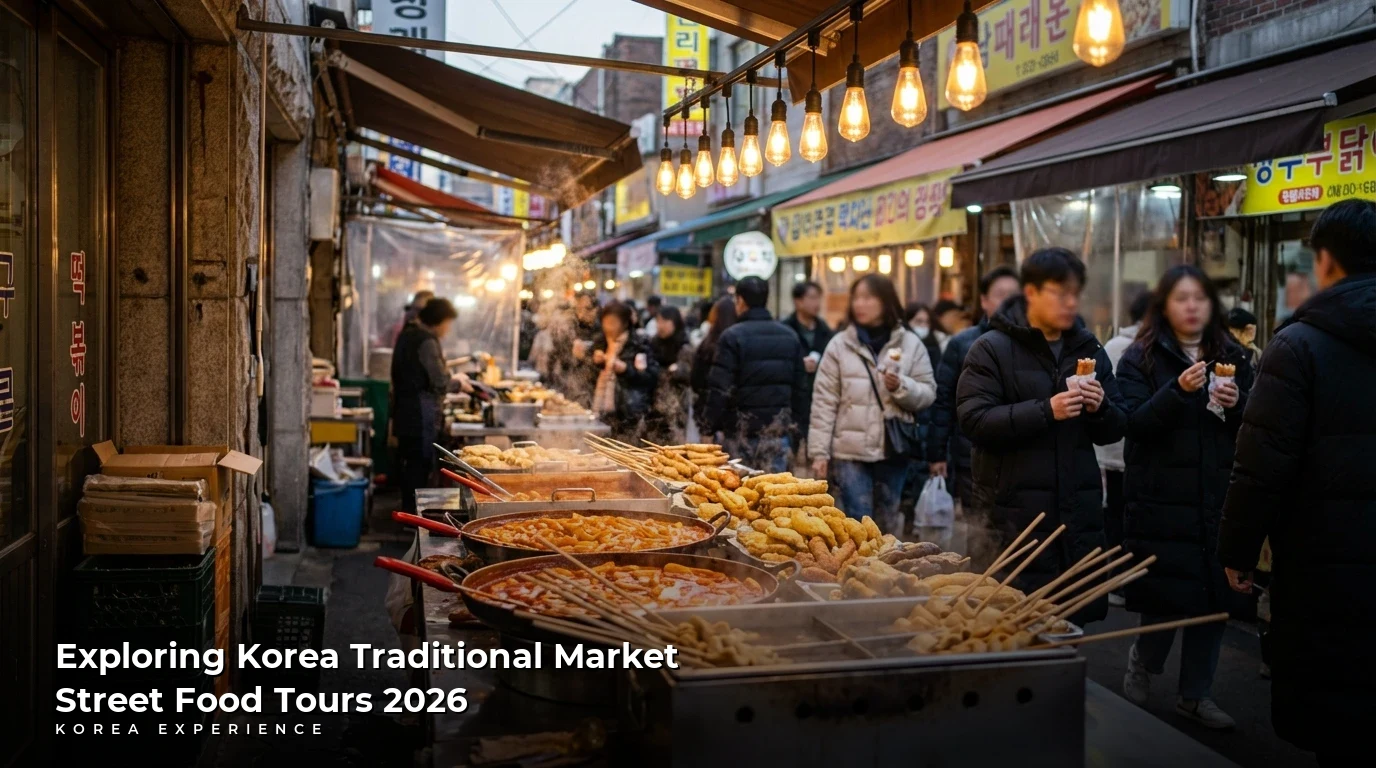
The ultimate guide to Korean street food markets in 2026. Discover prices, best tours, hidden stalls, and essential etiquette for travelers.
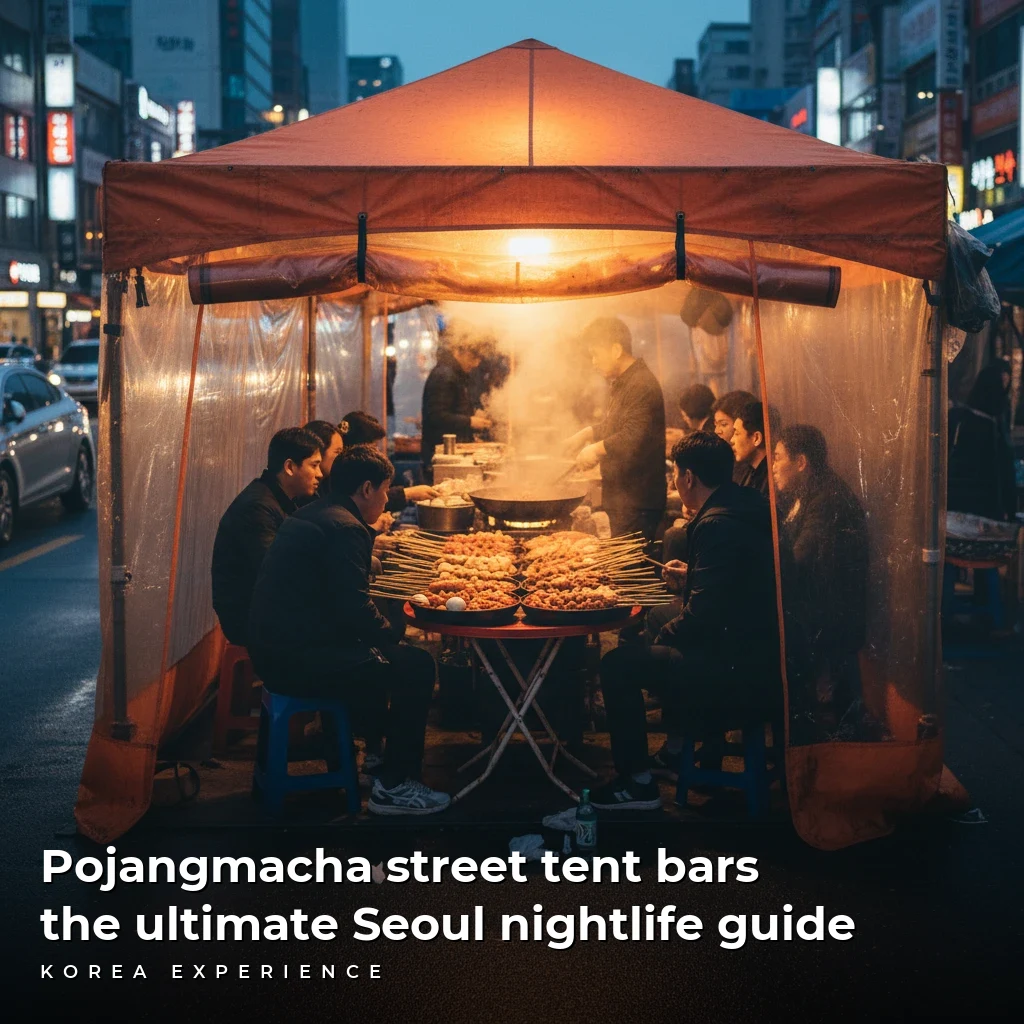
Discover the authentic charm of Korea's pojangmacha. A complete guide to tent bar locations, menu prices, etiquette, and tips for 2026.
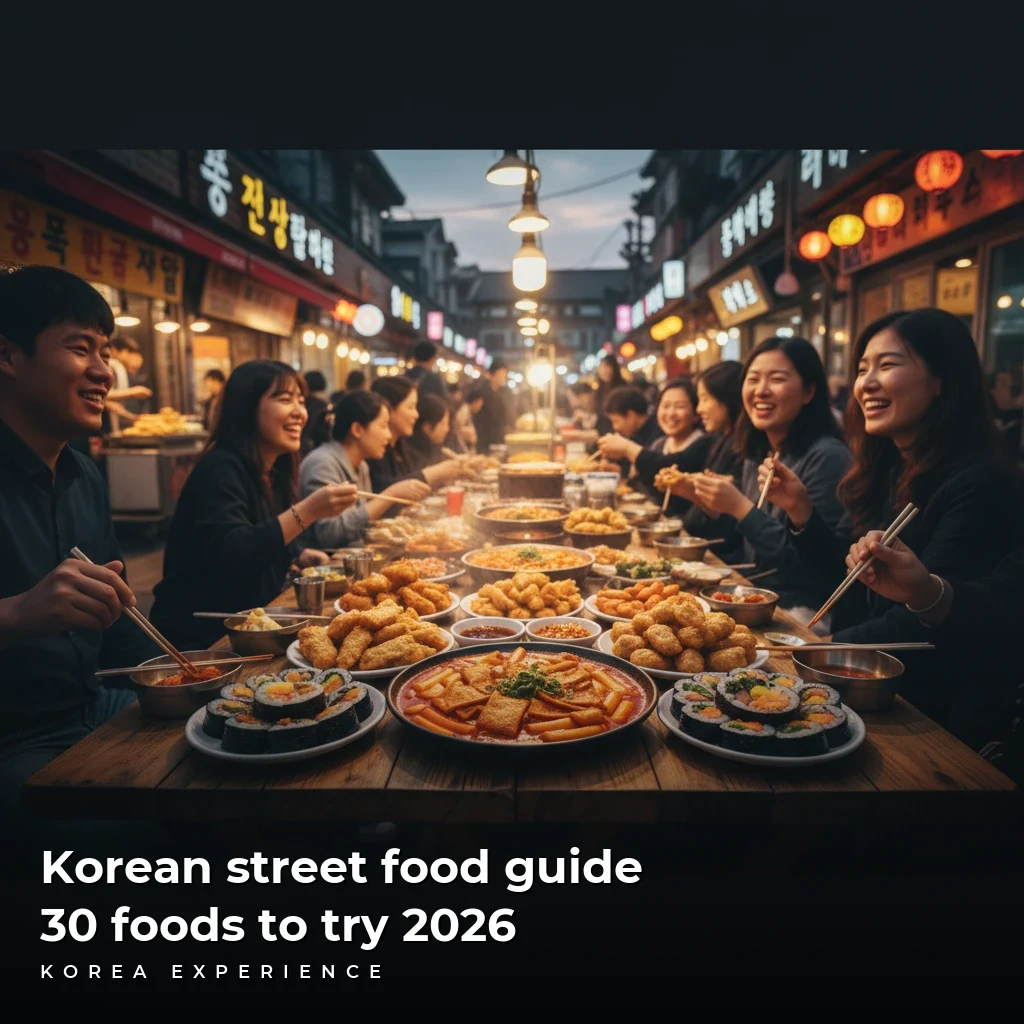
Discover the ultimate list of 30 must-try Korean street foods for 2026, from classic spicy rice cakes to trendy fusion snacks, with prices and local tips.
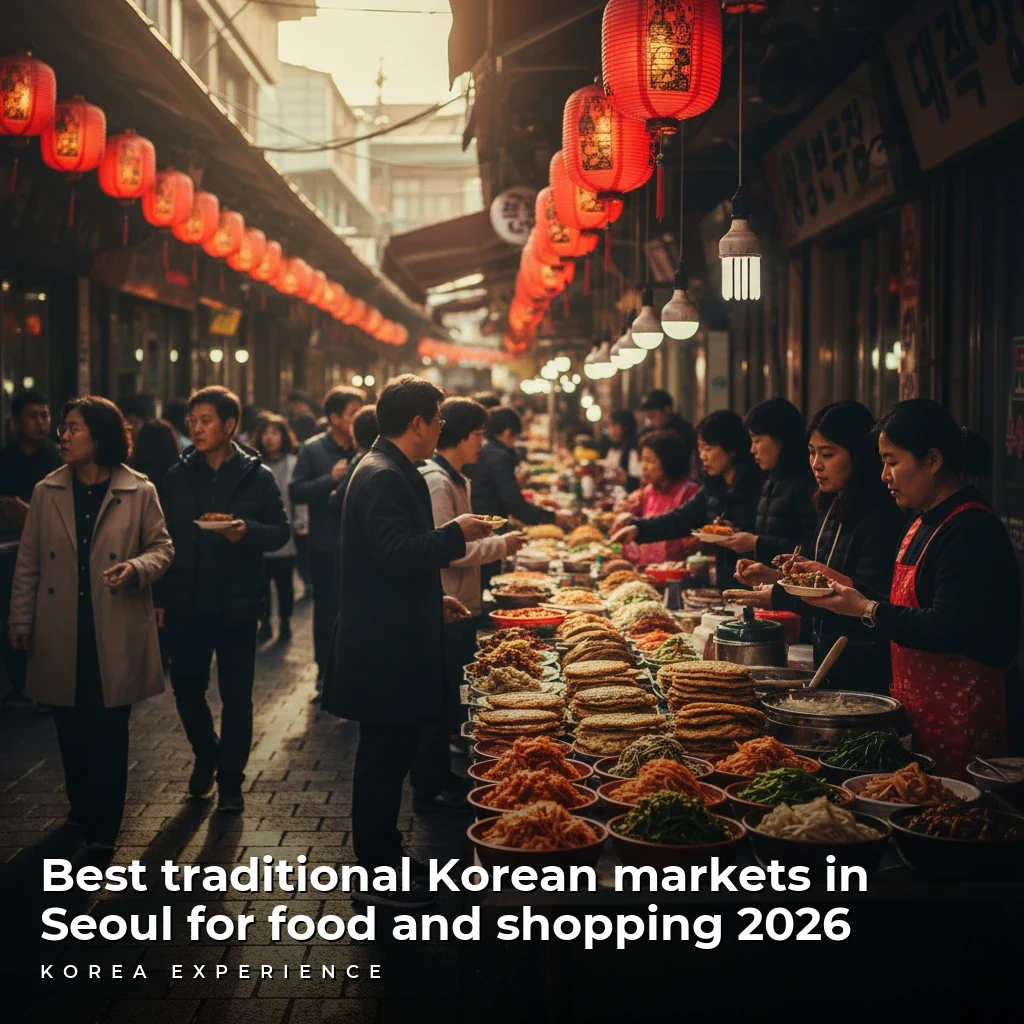
Discover Seoul's top 8 traditional markets. From Gwangjang's ₩5,000 noodles to Namdaemun's 10,000+ shops, get the ultimate 2026 shopping guide.
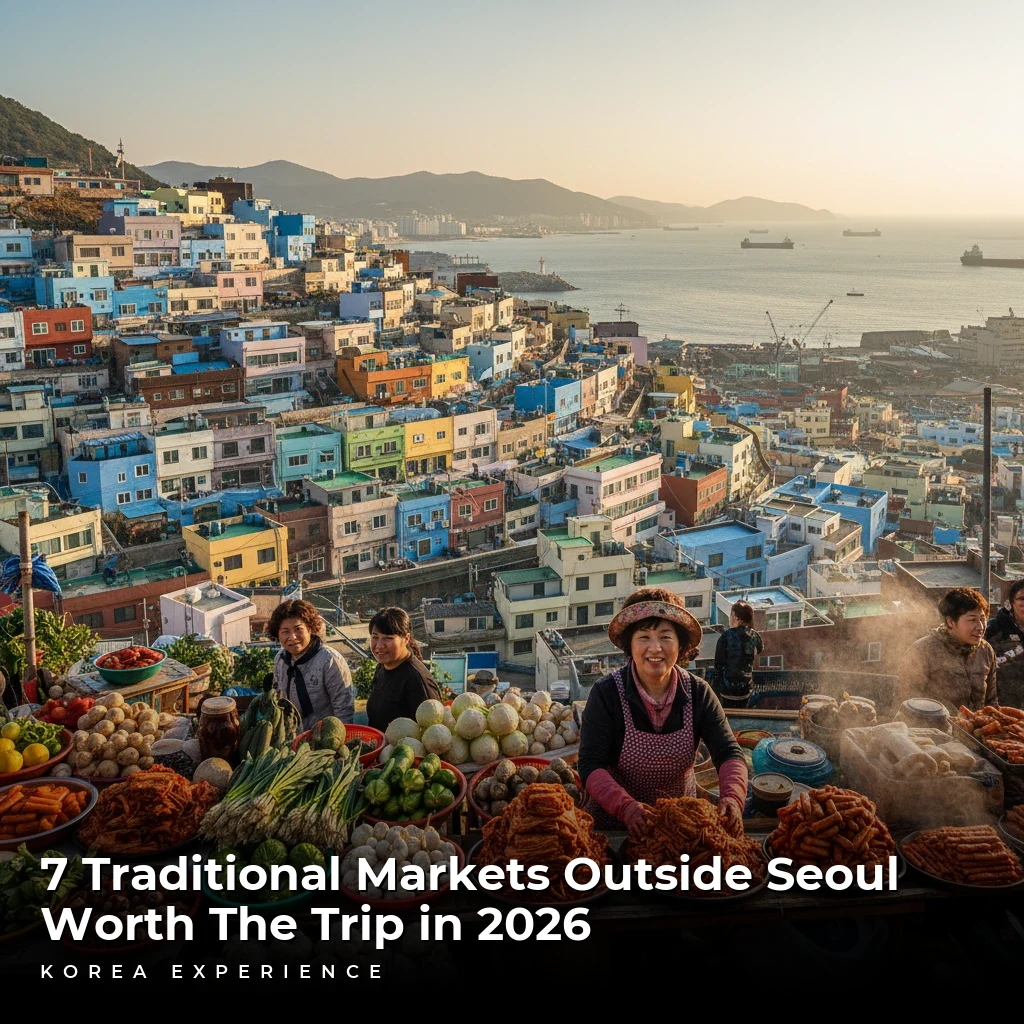
Discover Korea's best markets beyond Seoul. Explore Busan, Jeju, and Daegu with specific food prices, transport tips, and 2026 travel data.