Navigating Korean Restaurant Menus with Allergies
A practical guide to navigating Korean restaurant menus with food allergies, addressing hidden ingredients, cross-contact, and translation strategies.
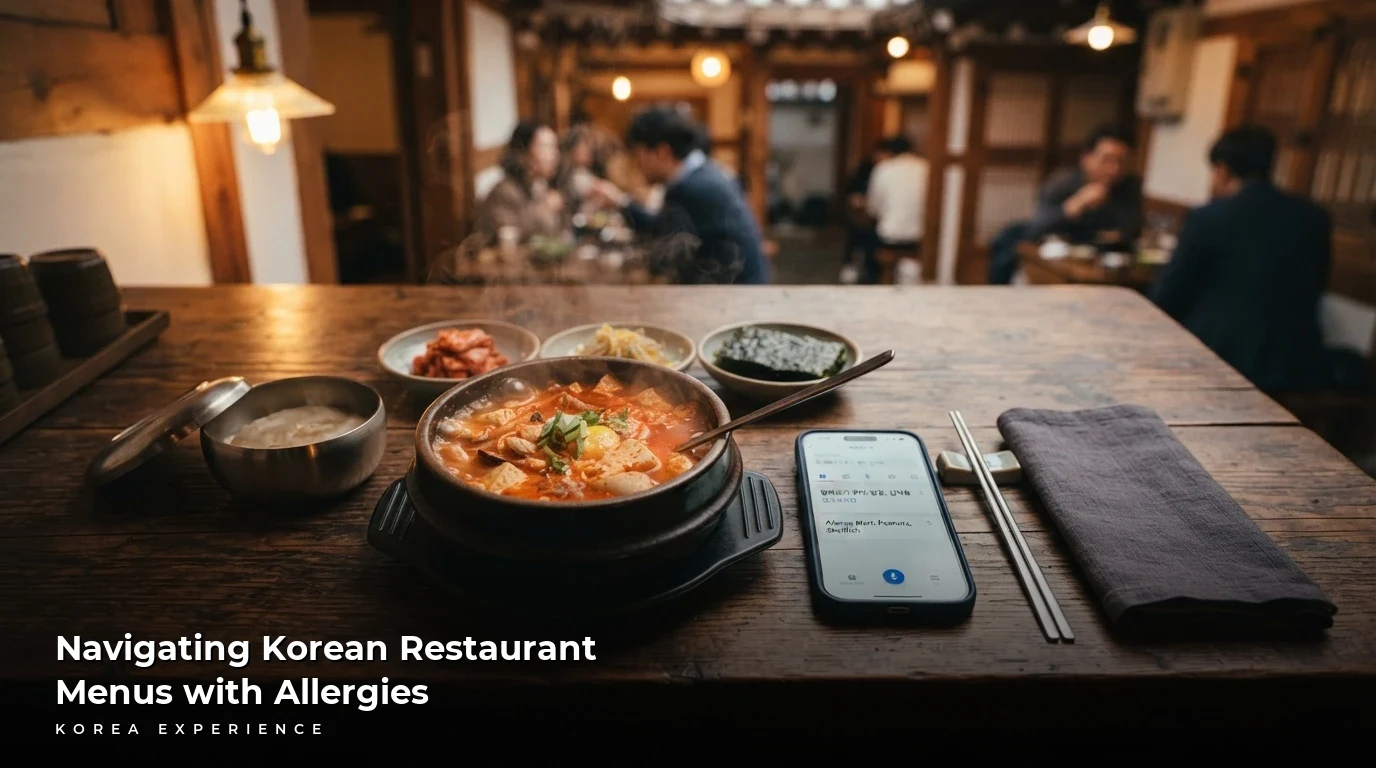
Navigating restaurant menus in South Korea with a food allergy requires careful preparation. While South Korea’s Ministry of Food and Drug Safety (MFDS) mandates clear allergen labeling on packaged food products in a distinct text box near the ingredients list, these legal labeling requirements do not automatically extend to standard sit-down restaurant menus. Consequently, ingredient transparency at independent eateries and traditional restaurants is rarely enforced by law. Understanding how traditional ingredients are utilized, recognizing cross-contact risks, and preparing proper written communication are essential steps for eating safely.
Hidden Allergens in Traditional Korean Cuisine
Many major traditional Korean flavor bases contain hidden allergens that are rarely reflected in a dish's visible name or general menu description. Travelers with specific dietary restrictions must look beyond the primary protein or vegetable.
- Seafood and Fermented Bases: Jeotgal (salted fermented seafood, such as anchovy or shrimp paste) is used extensively as a foundational umami base in kimchi, soups, and various stews.
- Soy and Wheat: Ganjang (soy sauce), doenjang (fermented soybean paste), and gochujang (chili paste) are ubiquitous across Korean cooking and frequently incorporate wheat and soy derivatives.
- Sesame: Sesame oil and sesame seed garnishes are standard finishing touches across almost all side dishes (banchan).
Recipes vary significantly by establishment, and verbal assurances from staff that a dish is "meat-free" do not rule out fish- or anchovy-based broths (yuksu). Independent eateries and traditional markets rarely maintain dedicated allergen-free preparation zones.
Kitchen Cross-Contact Risks
Shared cooking environments pose severe cross-contact risks in typical Korean kitchens. Because restaurant spaces can be compact and optimized for rapid service, standard kitchen equipment handles multiple ingredients interchangeably.
- Frying Oils: Deep fryers routinely use common oil for multiple protein or vegetable types, meaning allergen proteins easily transfer between batches.
- Communal Grills: Tabletop or kitchen grills are shared across various orders, creating high exposure risks for common allergens.
- Side Dishes (Banchan): Banchan are frequently served communally or handled adjacently in cramped prep areas, heightening the chance of cross-contact before dishes ever reach the table.
Small-scale restaurants, street vendors, and general markets generally do not maintain specialized isolation protocols or allergen-free equipment. Global hotel chains and major corporate restaurant franchises are typically more structured when handling direct ingredient inquiries.
Communication Strategies: Written Allergy Cards
Relying purely on conversational translation apps or verbal requests at the table is often insufficient. General restaurant staff may lack formal training on food allergies, frequently mistaking a medical condition for a casual dietary preference.
To overcome this communication barrier, travel safety recommendations advise preparing a concise, pre-reviewed written allergy card in Korean (알레르기 카드). This card should explicitly specify your medical allergens and request that staff check broths, sauces, marinades, and shared cooking utensils before food preparation begins. While a written card significantly reduces miscommunication, it cannot transform an active commercial kitchen into an allergen-free environment.
Emergency Protocols
If you experience a severe allergic reaction or anaphylaxis while in South Korea, call 119 immediately to reach emergency medical services and request an ambulance. Travelers with diagnosed, severe clinical allergies should follow medical guidelines by carrying prescribed epinephrine auto-injectors (such as an EpiPen) directly on their person at all times.
Note: Response times and the availability of English-language dispatch via 119 can fluctuate based on your precise location. Medical self-management must strictly follow individual clinical action plans.
Sources
About the Author
Korea Experience Team
Written by the Korea Experience editorial team - experts in Korean medical tourism, travel, and culture with years of research and firsthand experience.
Explore more in Food & Dining
Korean BBQ, street food, Michelin restaurants, and regional specialties — your ultimate guide to eating well in Korea.
Browse All Food & Dining ArticlesContinue Reading
Explore more articles you might find interesting
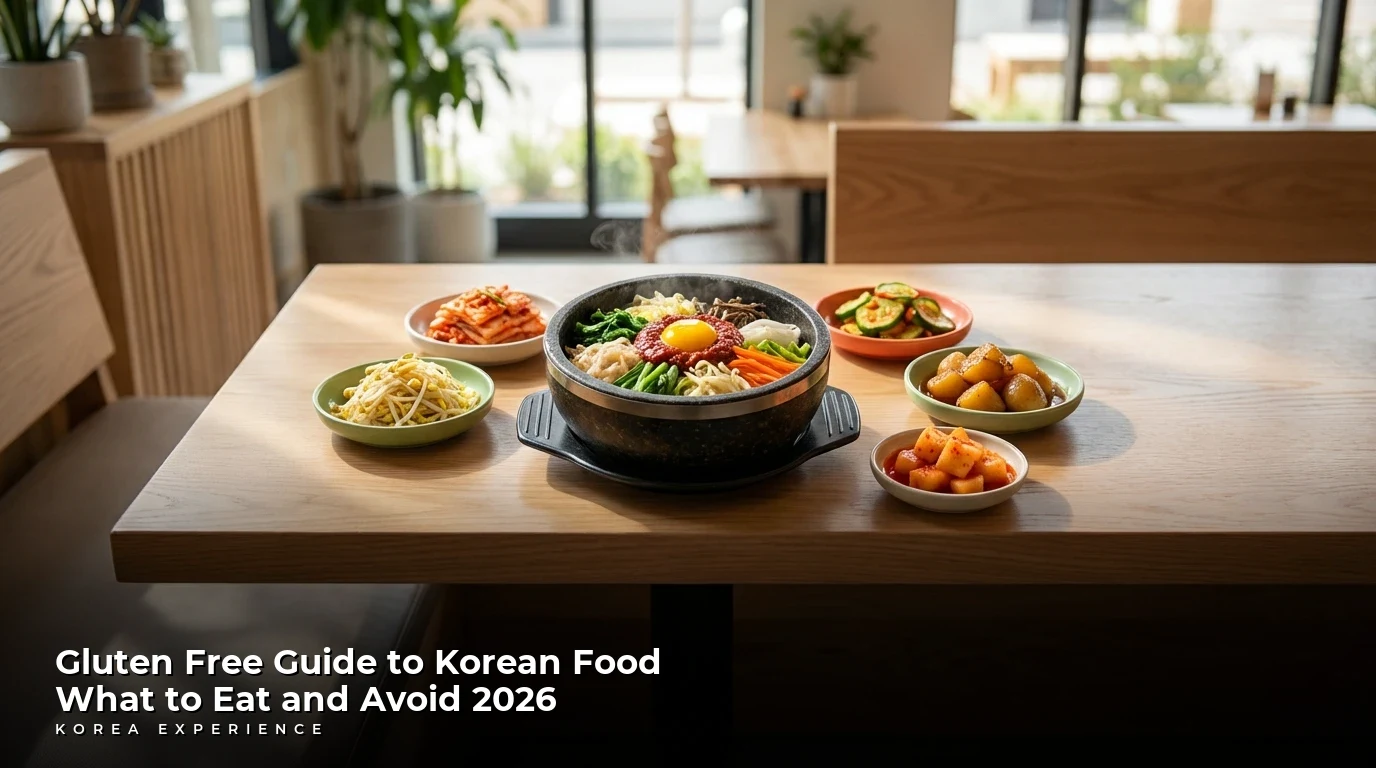
The ultimate 2026 guide for navigating South Korea with celiac disease. Discover safe dishes, restaurant recommendations, and essential travel tips.
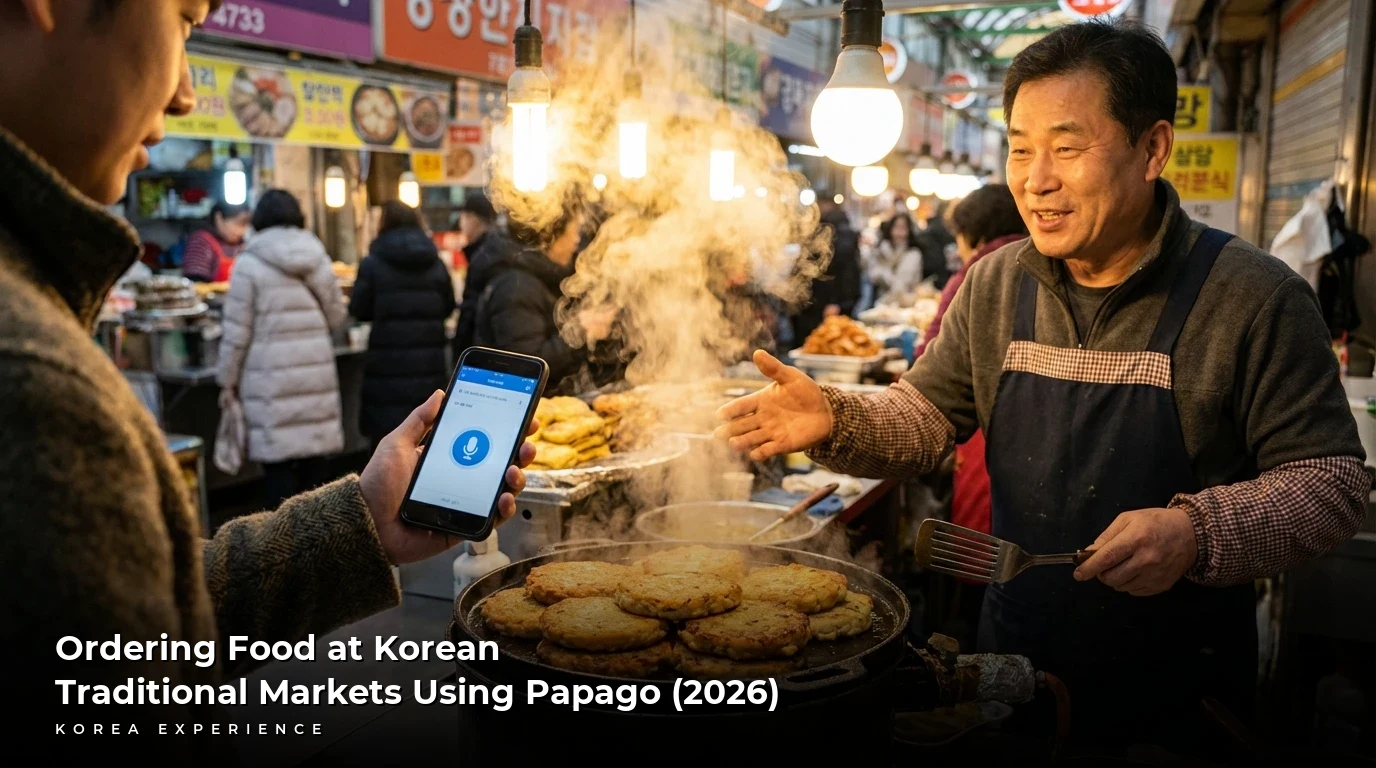
So, you want to dive into the sizzling world of Gwangjang or Namdaemun without the lost in translation panic?
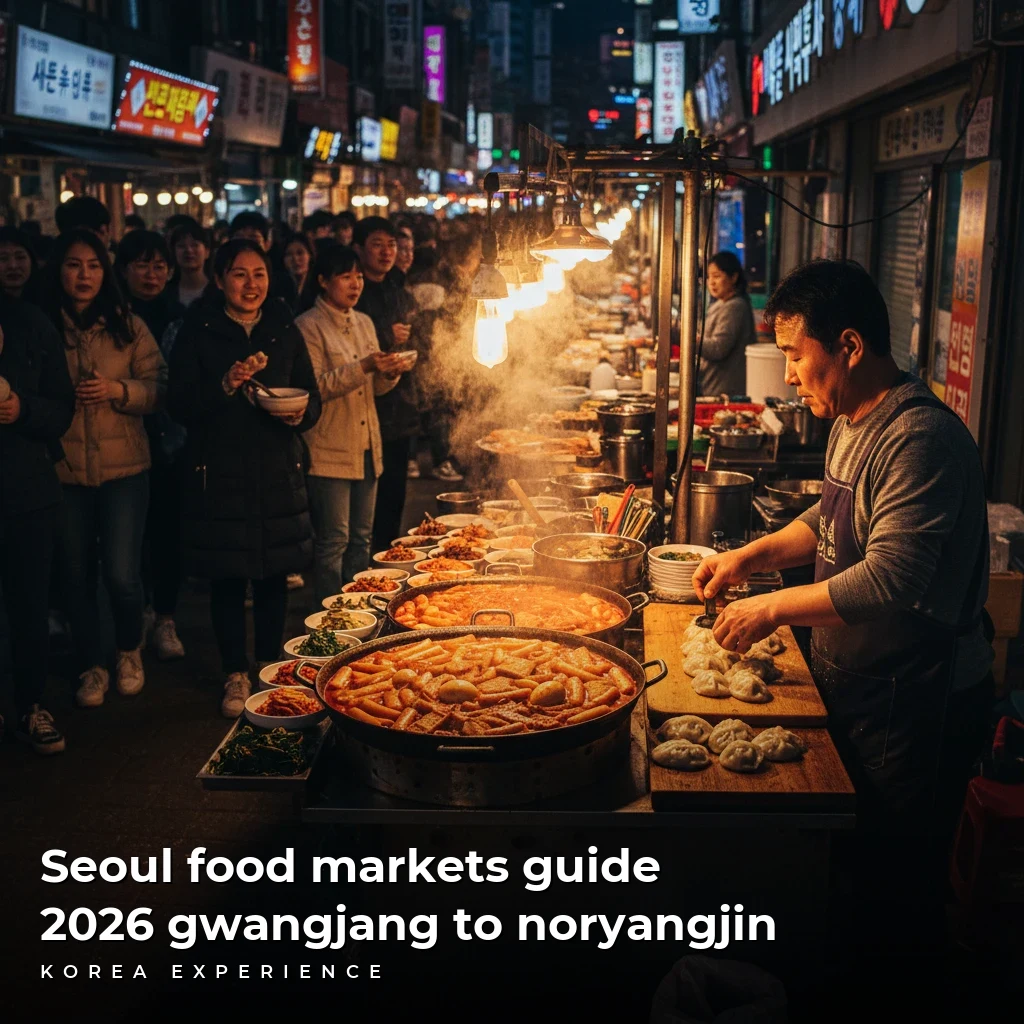
The ultimate 2026 guide to Seoul traditional markets. Discover prices, hidden stalls, and expert tips for Gwangjang, Noryangjin, and local favorites.
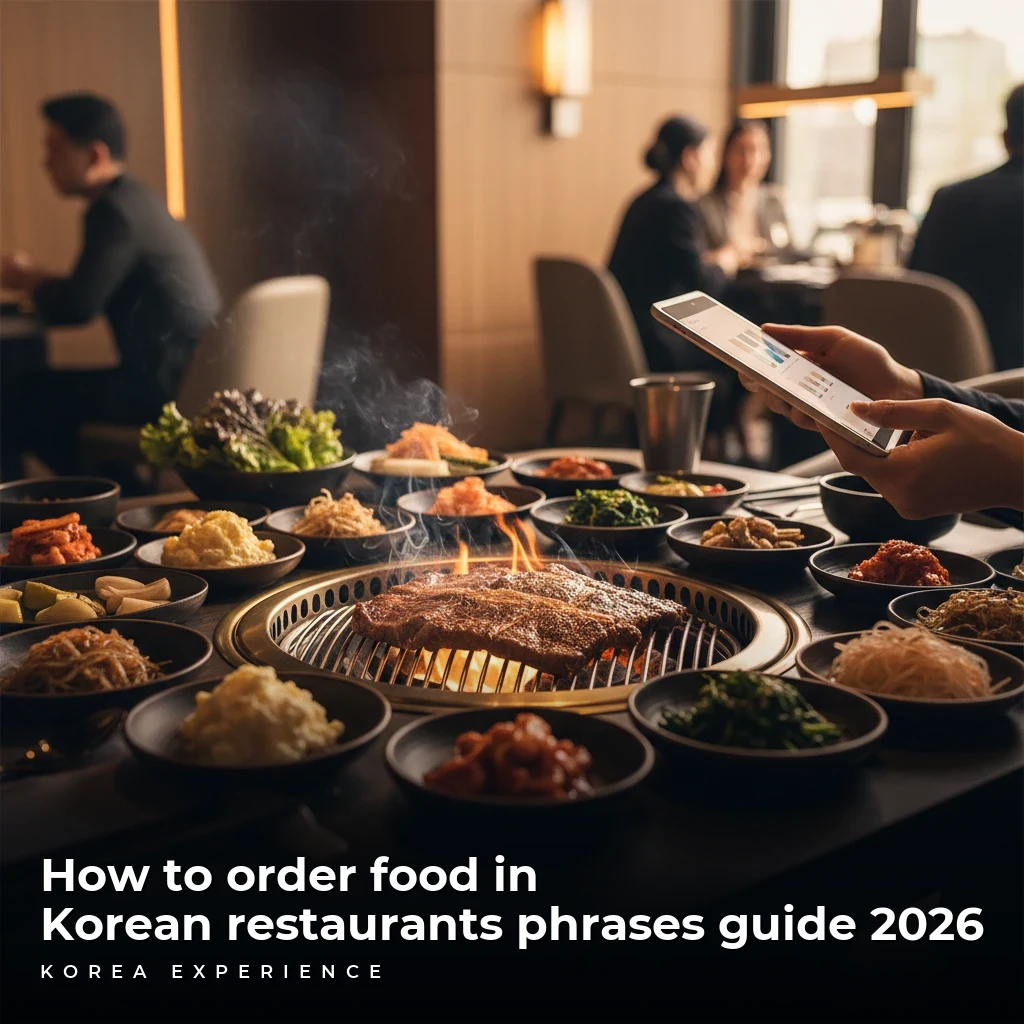
Master the art of dining in Seoul with our essential 2026 guide to Korean restaurant phrases, etiquette, and digital ordering systems.
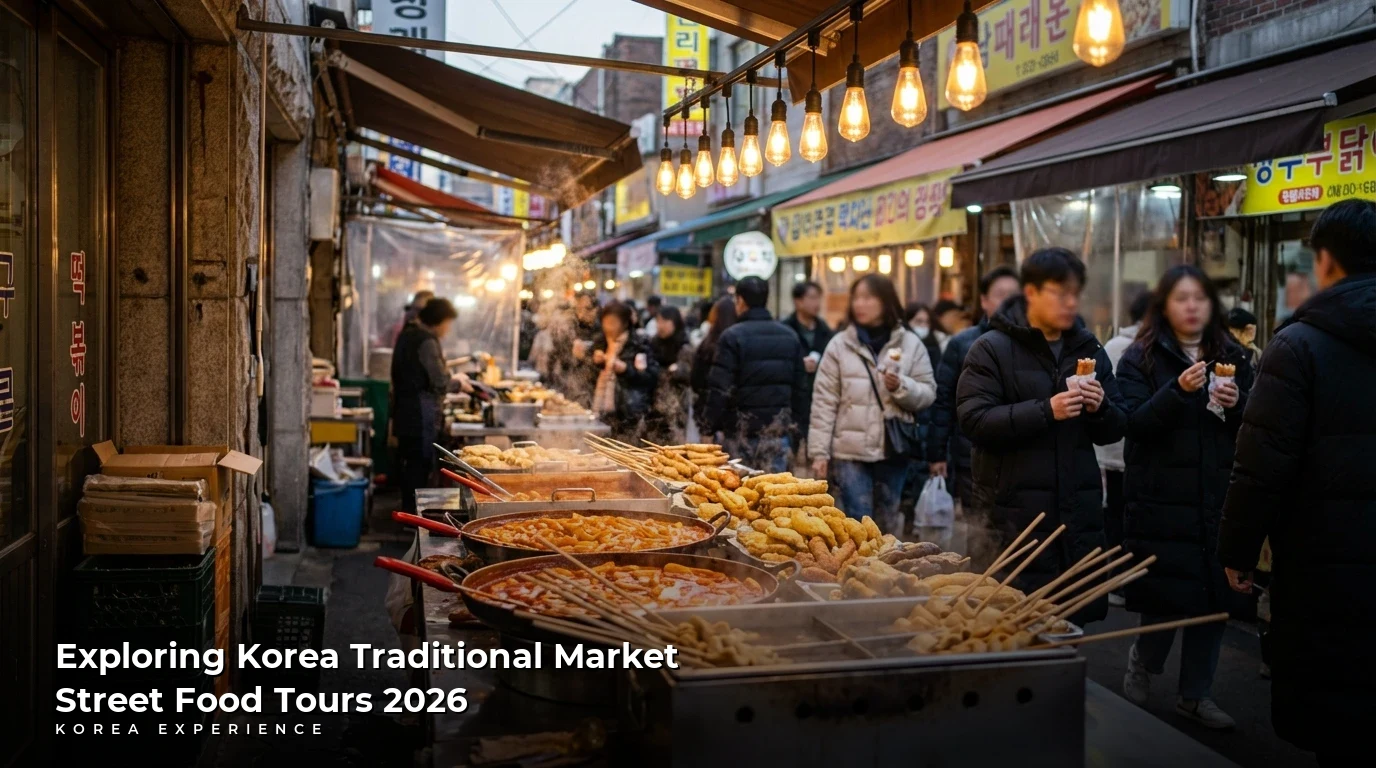
The ultimate guide to Korean street food markets in 2026. Discover prices, best tours, hidden stalls, and essential etiquette for travelers.
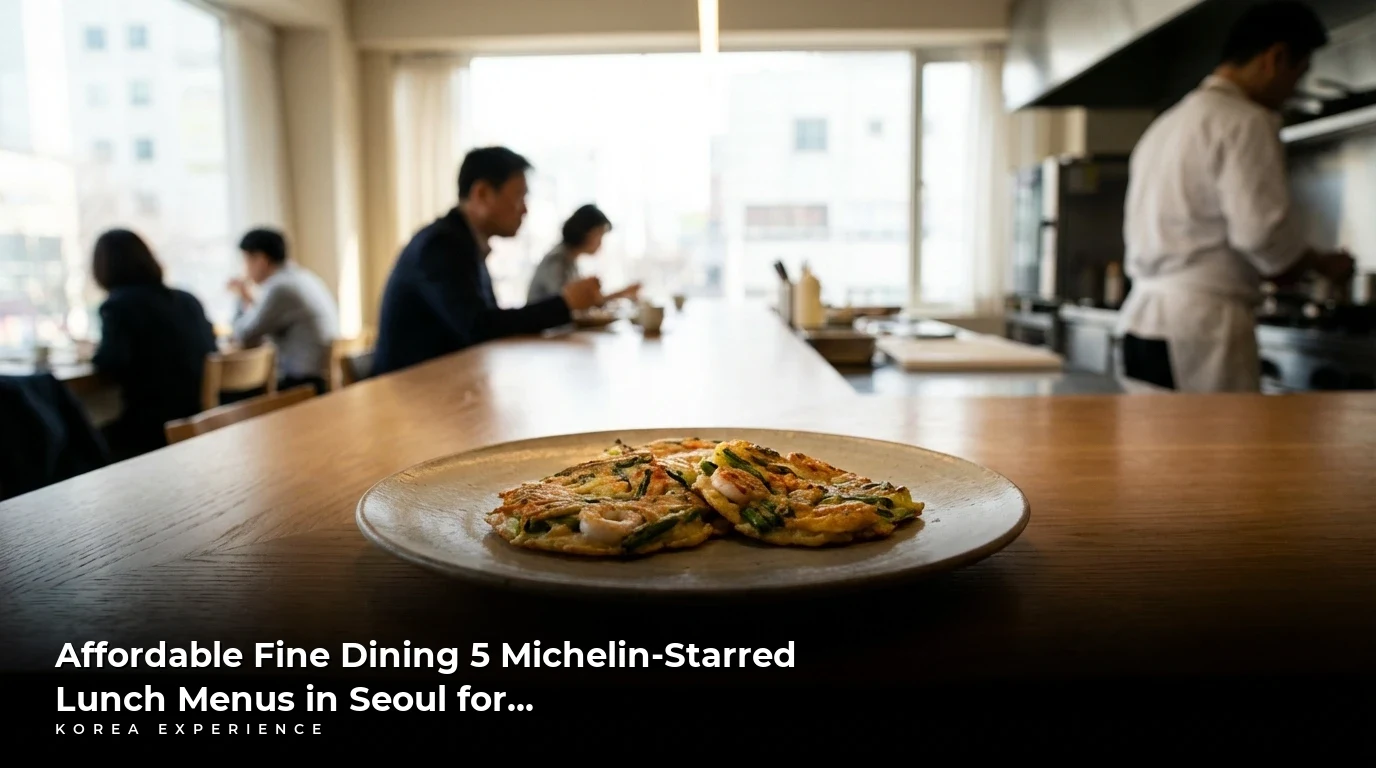
Discover the hidden value of Seoul's culinary scene with our guide to 5 Michelin-starred and recognized lunch experiences for under $50 USD.