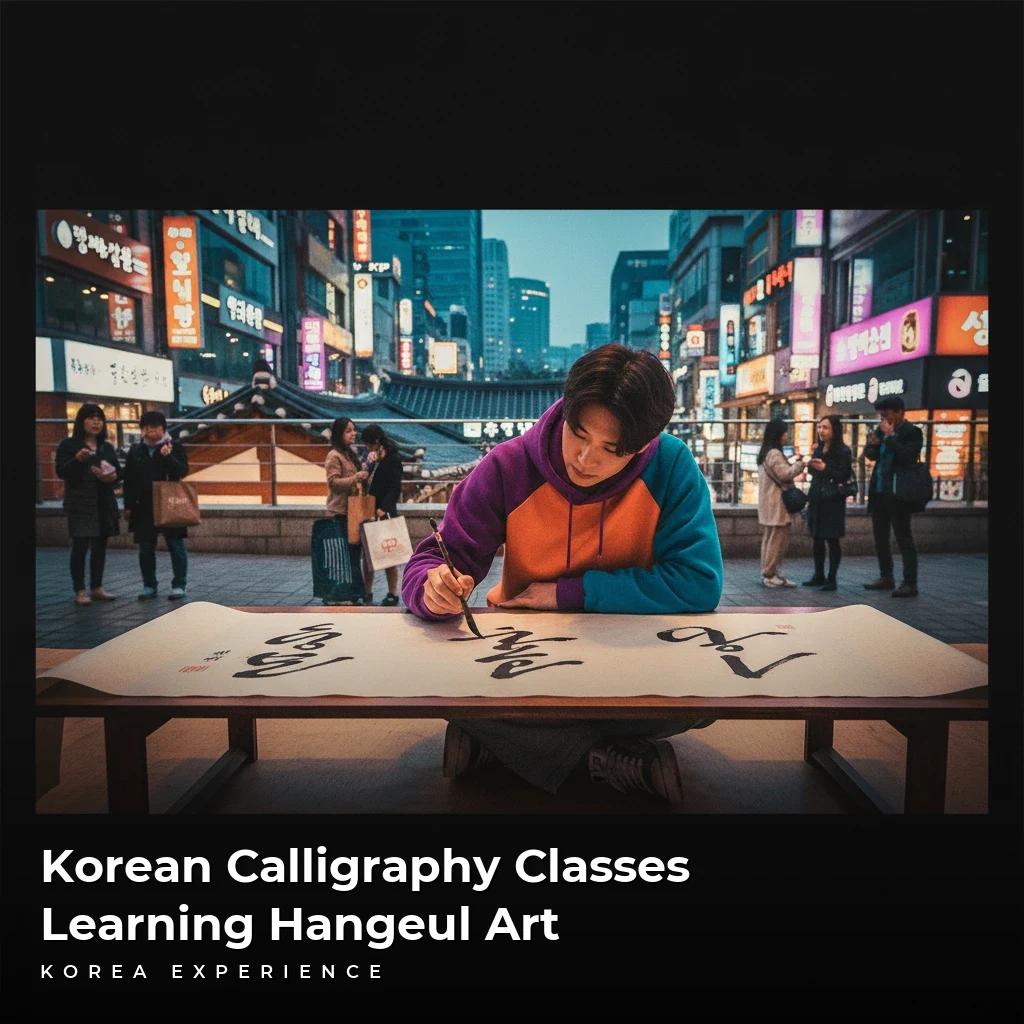
Korean Calligraphy Classes Master Hangeul Art
Dive into Korean calligraphy classes to master Hangeul art. Discover where to learn, what to expect, and tips for beginners. Uncover Korea's artistic heritage.
Embarking on a journey to learn Korean calligraphy classes learning Hangeul art offers an unparalleled opportunity to connect with Korea's rich cultural heritage. For international travelers and expats living in Korea, discovering an activity that transcends language barriers while offering deep cultural immersion is a true treasure. Many visitors arrive in Korea eager to explore its vibrant pop culture, delicious cuisine, and stunning landscapes, but often overlook the profound beauty and meditative practice of traditional Korean arts.
Perhaps you've admired the graceful strokes of Hangeul characters on traditional artworks, historical documents, or even modern design, and wondered about the skill and philosophy behind them. You might be an art enthusiast seeking a unique creative outlet, a language learner looking for a deeper connection to the script, or simply someone searching for a mindful activity during your stay. The challenge, however, often lies in knowing where to begin, what to expect from a class, and how to find reputable instructors who cater to an international audience.
This comprehensive guide is designed to illuminate the path to mastering Hangeul art through Korean calligraphy classes. We will delve into the historical and philosophical underpinnings of this beautiful art form, explain why it's a perfect activity for expats and travelers, guide you on finding the best classes across Korea (with a focus on Seoul), and provide practical tips to enhance your learning experience. By the end of this post, you'll be equipped with all the information you need to begin your artistic journey, creating your own pieces of Hangeul art and forging an unforgettable connection with Korean culture.
The Allure of Korean Calligraphy (Seoye): More Than Just Writing
Korean calligraphy, known as Seoye (pronounced "seo-yeh"), is far more than mere handwriting. It is a revered art form that embodies philosophy, spirituality, and aesthetic beauty, transforming written characters into expressive visual masterpieces. Rooted in centuries of tradition, Seoye reflects the discipline, balance, and harmony that are central to Korean culture.
A Legacy of Art and Philosophy
The history of Seoye in Korea dates back to ancient times, influenced by Chinese calligraphy but developing its own distinct characteristics, particularly with the advent of Hangeul. Historically, calligraphy was considered one of the highest forms of art, practiced by scholars, aristocrats, and even kings. Masters spent years, often decades, perfecting their strokes, each character a testament to their concentration, inner peace, and intellectual depth.
The philosophy embedded in Seoye emphasizes not just the final product, but the process itself. It's about cultivating mindfulness, patience, and control. Every stroke, every nuance of ink and brush, is intentional, reflecting the calligrapher's state of mind. It’s a meditative practice that encourages self-reflection and a deeper appreciation for form and emptiness, much like other East Asian contemplative arts. Learning Seoye isn't just about drawing characters; it's about understanding and experiencing a profound cultural lineage.
Hangeul's Unique Beauty for Calligraphy
While many East Asian calligraphy traditions initially focused on Chinese characters (Hanja), the invention of Hangeul in the 15th century by King Sejong the Great revolutionized Korean written culture and, subsequently, Korean calligraphy. Hangeul, with its scientific and systematic design, offers a unique aesthetic appeal for calligraphers. Its circular, linear, and angular components provide a vast playground for artistic expression, allowing for both precise symmetry and fluid improvisation.
The simplicity and logical structure of Hangeul make it surprisingly accessible for beginners, even those without prior experience in East Asian scripts. Unlike the thousands of complex Hanja characters, Hangeul's relatively small alphabet of consonants and vowels, which are then grouped into syllabic blocks, allows learners to quickly grasp the fundamental shapes and begin forming words. This accessibility, combined with its inherent beauty, makes Hangeul calligraphy a particularly rewarding pursuit for international learners. It's a bridge to understanding the language itself, making Korean calligraphy classes learning Hangeul art a holistic cultural experience.
The Tools of the Trade: Four Treasures of the Study (Munbangsau)
Central to the practice of Seoye are the "Four Treasures of the Study," known as Munbangsau (pronounced "moon-bahng-sa-woo"). These essential tools are cherished not just for their function but also for their symbolic value and the craftsmanship involved in their creation. Understanding and appreciating these tools is the first step in understanding the art form itself.
- Brush (붓, But): The most crucial tool, the brush is often made from animal hair (such as wolf, goat, or rabbit) and comes in various sizes and stiffnesses. The way a calligrapher holds and manipulates the brush dictates the thickness, fluidity, and texture of the strokes. Learning to control the brush is the core of calligraphy.
- Ink Stick (먹, Meok): Traditionally made from soot and glue, the ink stick is ground on an inkstone with a small amount of water to produce liquid ink. The process of grinding ink is itself a meditative and preparatory step, allowing the calligrapher to achieve the perfect consistency and deepen their focus.
- Inkstone (벼루, Byeoru): A stone surface, often beautifully carved, used for grinding the ink stick and holding the prepared ink. The quality of the inkstone can affect the smoothness and consistency of the ink.
- Paper (종이, Jong-i): Hanji (한지), traditional Korean paper made from the bark of mulberry trees, is highly valued for its durability, absorbency, and unique texture. It allows the ink to spread beautifully, producing nuanced shades and sharp lines. While Hanji is ideal, beginners may start with simpler rice paper or even practice paper.
Beyond these four, a felt mat (깔개, Kkalgae) is often used under the paper to provide a stable, cushioned surface, and a paperweight (문진, Munjin) keeps the paper in place. Approaching these tools with respect and understanding their roles is integral to truly embracing the art of Seoye.
Why Learn Korean Calligraphy? Benefits for Travelers & Expats
Engaging in Korean calligraphy classes learning Hangeul art offers a myriad of benefits that extend far beyond simply learning a new skill. For international residents and visitors to Korea, it presents a unique pathway to deeper cultural immersion, personal growth, and creating lasting memories.
Deepening Cultural Immersion
There's no better way to understand a culture than to engage with its traditional arts. Calligraphy, as a cornerstone of Korean heritage, provides an intimate window into the aesthetic values, historical context, and philosophical underpinnings of the nation. By practicing Seoye, you're not just observing culture; you're actively participating in it, connecting with centuries of artistic tradition. This direct engagement fosters a more profound appreciation and understanding of Korea that goes beyond typical tourist experiences. You'll gain insights into the rhythm, balance, and harmony that define much of Korean design and thought.
A Unique Souvenir and Skill
Imagine returning home with not just a mass-produced souvenir, but a piece of art you created yourself – a beautifully written Hangeul phrase, your name, or a meaningful quote, meticulously crafted with your own hands. This isn't just a memento; it's a testament to your personal journey and a tangible representation of your time in Korea. Beyond the physical artwork, you'll acquire a unique skill that you can continue to develop, offering a creative outlet and a fascinating talking point. This skill can open doors to further artistic exploration or even serve as a meditative practice long after you're back home.
Mindful Practice and Stress Relief
In today's fast-paced world, finding moments of calm and concentration can be a challenge. Calligraphy offers a powerful antidote to stress and distraction. The meticulous nature of the practice – from grinding the ink to carefully controlling the brush – demands complete focus, drawing you into the present moment. It's a form of active meditation that encourages patience, discipline, and a quiet sense of achievement with each stroke. Many practitioners find the repetitive and focused movements deeply relaxing and therapeutic, providing a much-needed break from the digital world and the hustle and bustle of city life in Korea.
Connecting with Locals
Participating in a calligraphy class, whether at a cultural center or a private studio, often means learning alongside Korean locals. This provides invaluable opportunities for genuine interaction and cultural exchange. You can share experiences, ask questions, and practice your Korean language skills (if you're learning!) in a relaxed and supportive environment. Instructors, often masters with years of experience, are usually eager to share their knowledge and stories, offering personal insights into Korean life and traditions that you wouldn't find in a guidebook. These interactions can lead to lasting friendships and a richer, more authentic experience of Korea.
Finding Your Perfect Korean Calligraphy Class in Korea
With the growing interest in K-culture, options for Korean calligraphy classes learning Hangeul art are becoming more accessible for international audiences. From short-term cultural experiences to more in-depth academic courses, there's a perfect class for every interest level and time commitment.
Cultural Centers and Tourist Programs
These are often the most accessible and popular choices for short-term visitors or those looking for a quick introduction to calligraphy. They typically offer one-off workshops or short courses designed to give participants a taste of the art form without a long-term commitment.
- Pros: Tourist-friendly, often English-speaking instructors, relatively low cost or sometimes free, easy to book, convenient locations (especially in Seoul).
- Cons: Less in-depth instruction, focus on basic strokes and simple phrases, may not delve into the philosophy as deeply.
- Examples:
- Bukchon Hanok Village Traditional Culture Center (Seoul): Offers various traditional Korean craft experiences, including calligraphy. Set in a beautiful Hanok (traditional Korean house), it provides an authentic atmosphere. Prices typically range from 10,000-30,000 KRW for a 1-2 hour session, often including materials. Booking usually through their website or on-site.
- K-Style Hub (Seoul): Located in Jung-gu, this comprehensive tourism center sometimes hosts free or low-cost cultural experience programs, including introductory calligraphy. Check their official website for current schedules and booking information. These are excellent for a casual introduction.
- Local Cultural Centers (e.g., in Gangnam, Jongno, Myeongdong): Many district-level cultural centers offer programs for residents. While some might be Korean-only, increasingly, they have English-friendly staff or instructors for specific classes. Enrollment usually requires registration at the center or online.
Private Studios and Art Academies
For those seeking a more serious and sustained engagement with Seoye, private studios and dedicated art academies offer more in-depth instruction, smaller class sizes, and often one-on-one guidance from experienced calligraphers.
- Pros: Comprehensive curriculum, personalized feedback, opportunity for advanced learning, dedicated instructors, deeper dive into technique and philosophy.
- Cons: Higher cost, potentially longer commitment (e.g., weekly classes for months), may require more effort to find English-speaking instructors outside major tourist areas.
- Examples:
- Seoye Academies in Jongno or Insadong (Seoul): These districts are known for their traditional arts and crafts. Many private academies (search for "서예 학원" or "Korean calligraphy studio") exist. While some might not explicitly advertise in English, direct inquiry or a local friend's help can often connect you with an instructor willing to teach in English or with basic English phrases. Expect prices to start from 50,000-100,000 KRW per session, or monthly fees around 150,000-300,000 KRW depending on frequency and duration.
- Specific Studios: Names like "Jinsol Seoye" or "Hangeul Seoye Won" (these are illustrative names, actual studios vary) can be found via online searches or by asking at art supply stores in Insadong. It's crucial to contact them directly for foreign-language availability.
University Language Programs
Some universities with strong Korean language or cultural studies departments may offer calligraphy as an elective or a special cultural workshop within their language programs. These are generally geared towards long-term students.
- Pros: Integrated into a broader cultural learning experience, often high-quality instruction, academic environment.
- Cons: Requires enrollment in a university program, less flexible for short-term visitors, not solely focused on calligraphy.
- Examples: Seoul National University, Ewha Womans University, Yonsei University – check their international programs or Korean language institute websites for cultural activity schedules.
Online Options
While this guide focuses on in-person experiences, it's worth noting that some online platforms or individual instructors offer virtual Korean calligraphy classes. These can be a great starting point for those not yet in Korea or for continuing practice after your trip. However, for the full immersive experience and hands-on guidance, in-person classes are highly recommended.
What to Expect in a Korean Calligraphy Class
Attending a Korean calligraphy class learning Hangeul art is an enriching experience, regardless of your artistic background. While specific curricula vary, here’s a general overview of what you can expect, particularly as a beginner.
Beginner-Friendly Curriculum
Most introductory classes are designed with absolute beginners in mind. You won't need any prior experience with calligraphy or even strong Korean language skills (though a few basic phrases are always helpful and appreciated). The focus will be on building foundational skills step-by-step.
Typically, a beginner class will cover:
- Introduction to the Tools: You'll learn the proper names and functions of the Munbangsau (brush, ink stick, inkstone, paper) and how to care for them.
- Ink Preparation: The meditative process of grinding the ink stick on the inkstone will be demonstrated, teaching you how to achieve the correct ink consistency.
- Basic Brush Holding: Mastering the proper grip and posture is crucial for control. Your instructor will guide you on how to hold the brush comfortably and effectively.
- Fundamental Strokes: You'll start with simple lines – straight, curved, thick, thin – to practice brush control and pressure.
- Hangeul Vowel and Consonant Practice: Once you have some basic control, you'll move on to practicing individual Hangeul vowels and consonants, focusing on their correct form and stroke order.
- Forming Syllable Blocks: Hangeul characters are grouped into syllabic blocks. You'll learn how to combine vowels and consonants to create complete syllables and eventually simple words like "사랑" (sarang, love) or your own name.
Hands-On Practice with a Master (Seoyeonseonsaeng)
The heart of any calligraphy class is the direct guidance from a Seoyeonseonsaeng (calligraphy teacher or master). These instructors bring years, often decades, of experience and deep cultural knowledge to the classroom.
- Demonstrations: The teacher will demonstrate each stroke and character, showcasing the ideal form, pressure, and rhythm. Observing their precise movements is a key learning method.
- Personalized Feedback: As you practice, the instructor will circulate, offering individual correction and feedback on your posture, brush holding, stroke quality, and character formation. Don't be shy about asking for help – they are there to guide you.
- Encouragement: Korean calligraphy emphasizes patience and persistence. Expect encouraging words rather than harsh criticism, fostering a supportive learning environment.
Learning Basic Strokes and Character Structure
The beauty of Hangeul calligraphy lies in its structured yet fluid nature. You'll learn that each character is composed of fundamental strokes, and understanding their order and direction is paramount. For example, a vertical stroke might begin with a slight downward press, continue smoothly, and end with a gentle lift. A horizontal stroke might involve a similar "head and tail" technique. You'll practice:
- Vertical Strokes: Long and short, with varying pressure.
- Horizontal Strokes: Even and consistent.
- Circles and Angles: Key components of Hangeul's unique shapes.
- Balance and Spacing: How to arrange components within a syllable block to achieve aesthetic balance.
Understanding the Spirit of Seoye
Beyond the technical skills, a good calligraphy class will also touch upon the "spirit" of Seoye. This involves understanding:
- Mindfulness: The importance of focus, calm, and intention during practice.
- Patience: Recognizing that mastery comes with time and consistent effort.
- Self-Expression: How each calligrapher's unique touch and energy can be conveyed through their strokes, even within traditional forms.
- Cultural Context: The historical and philosophical significance of the phrases and poems you might eventually write.
By the end of even an introductory session, you'll likely feel a sense of accomplishment and a deeper connection to this elegant art form.
Specific Class Examples & Locations (Seoul Focused)
Seoul, as Korea's cultural heart, offers the most diverse range of Korean calligraphy classes learning Hangeul art options for international visitors and expats. Here are a few prominent examples and types of locations to consider.
Bukchon Hanok Village Traditional Culture Center
- Location: Gye-dong, Jongno-gu, Seoul. Easily accessible by subway (Anguk Station, Line 3).
- Experience: This center is renowned for offering a variety of traditional Korean craft experiences in a beautifully preserved Hanok (traditional Korean house) setting. Their calligraphy program is typically an introductory, hands-on session perfect for tourists.
- What to Expect: A friendly instructor (often with basic English proficiency) will guide you through the basics of brush holding, ink preparation, and writing simple Hangeul characters or short phrases. You'll often leave with your completed artwork as a souvenir.
- Price Range: Approximately 10,000 - 30,000 KRW per person for a 1-2 hour session, including materials.
- Booking: It's highly recommended to check their official website or call in advance for current schedules and to make a reservation, especially for groups.
K-Style Hub
- Location: Cheonggyecheon-ro, Jung-gu, Seoul. Near Jonggak and Euljiro 1-ga Stations.
- Experience: Operated by the Korea Tourism Organization, K-Style Hub is a comprehensive center promoting Korean culture. They often host free or low-cost cultural experience programs, including occasional calligraphy workshops, aimed at international visitors.
- What to Expect: These are typically very beginner-friendly, short taster sessions (e.g., 30 minutes to 1 hour) that provide a quick introduction to Hangeul calligraphy. They might focus on writing your name or a simple Korean greeting.
- Price Range: Often free or symbolic cost (e.g., 5,000 KRW).
- Booking: Check their official website for the "Experiences" section to see the latest schedule and booking requirements. Spots can fill up quickly.
Private Studios (e.g., in Insadong or Jongno)
- Location: Insadong and Jongno districts are cultural hubs in Seoul, home to many art supply shops, galleries, and private studios. Specific addresses will vary.
- Experience: For a more in-depth and continuous learning experience, private calligraphy studios offer personalized instruction. These are ideal for expats or long-term visitors who want to seriously develop their skills.
- What to Expect: Smaller class sizes, often one-on-one or small group lessons. Instructors (some may have English proficiency, others might require basic Korean or a translation app) will provide detailed feedback and guide you through a structured curriculum. You might learn about various calligraphic styles, delve into classic texts, and work on larger projects.
- Price Range: Can range from 50,000 KRW to 100,000 KRW per session, or monthly packages starting around 150,000-300,000 KRW for weekly classes. Materials might be included or purchased separately.
- Booking: Direct contact with studios is necessary. Searching online for "서예 학원 서울" (Seoye Hagwon Seoul) and then contacting them via email or phone is the best approach. Asking at art supply stores in Insadong can also yield recommendations.
University Cultural Programs
- Location: Various university campuses across Seoul (e.g., Seoul National University, Ewha Womans University, Yonsei University).
- Experience: While not standalone calligraphy schools, many university language institutes or international student offices offer cultural immersion programs that include calligraphy as an elective or special workshop. These are usually part of a larger language learning package.
- What to Expect: High-quality instruction within an academic setting. These programs tend to be more structured and might involve a slightly longer commitment (e.g., a few weeks or a semester).
- Price Range: Typically included in tuition fees for a language program, or a moderate fee for an elective workshop.
- Booking: Check the international student services or language institute websites of specific universities for their cultural program offerings.
Comparison Table: Class Types
| Feature | Cultural Centers / Tourist Programs | Private Studios / Art Academies | University Programs |
|---|---|---|---|
| Target Audience | Tourists, casual learners | Serious learners, expats, long-term residents | Language students, academics, long-term learners |
| Duration | 1-2 hours (single session) | Flexible (single, monthly, multi-month) | Semester-long, multi-week intensive, or electives |
| Depth of Learning | Introductory, basic strokes | Comprehensive, advanced techniques, philosophy | Structured, academic, often integrated with language |
| Cost (Estimate) | 10,000 - 30,000 KRW/session | 50,000 - 100,000 KRW/session or monthly fees | Included in tuition, or 30,000 - 50,000 KRW/class |
| English Support | Often good, tourist-focused | Varies (inquire directly) | Generally good within international programs |
| Commitment | Low | Moderate to High | High |
Practical Tips for Aspiring Calligraphers
Taking Korean calligraphy classes learning Hangeul art is an incredibly rewarding experience, but a few practical tips can help ensure you get the most out of your lessons.
Booking in Advance
Especially for popular cultural centers or private studios that cater to international visitors, it's wise to book your class well in advance. This is particularly true during peak tourist seasons (spring and autumn) or around major holidays. Many centers allow online booking or email inquiries. For private studios, a direct phone call or email might be necessary. Confirm your reservation and any payment requirements beforehand.
Dress Comfortably
Calligraphy is a seated activity that requires focus and a relaxed posture. Wear comfortable clothing that allows for ease of movement, especially in your arms and shoulders. Loose-fitting sleeves are preferable to tight ones. While ink is generally washable from clothes, it's always a good idea to wear something you wouldn't mind getting a small splatter on, just in case!
Embrace Patience and Practice
Calligraphy is an art form that demands patience. You won't become a master overnight, and that's perfectly fine. The beauty of the practice lies in the journey, the incremental improvements, and the mindful engagement with each stroke. Don't be discouraged if your first attempts don't look like your instructor's perfect examples. Embrace the learning process, enjoy the act of creating, and remember that consistent practice is key. Even just 15-20 minutes of daily practice can make a significant difference.
Don't Be Afraid to Ask Questions
Your instructor is a valuable resource. If you don't understand a technique, a specific character, or a philosophical concept, don't hesitate to ask questions. Most Korean teachers are incredibly dedicated and appreciate students who show genuine interest. If there's a language barrier, try using simple English, pointing, or even a translation app to bridge the gap. Learning is an interactive process!
Bringing Your Own Supplies (Optional)
For introductory classes, all necessary supplies (brush, ink, paper, inkstone) are typically provided. However, if you plan to continue practicing beyond your class, you might consider purchasing your own set of Munbangsau. Insadong in Seoul is famous for its traditional art supply shops, where you can find high-quality brushes, Hanji paper, ink sticks, and inkstones. Having your own set allows you to practice at home and develop a personal connection with your tools. Your instructor can also offer advice on where to buy good quality supplies.
Comparison Table: Estimated Costs for Beginner Calligraphy Supplies
| Item | Description | Estimated Cost (KRW) |
|---|---|---|
| Beginner Brush | Standard size, mixed hair, good for general practice | 10,000 - 30,000 |
| Ink Stick | Basic quality, good for grinding on inkstone | 5,000 - 15,000 |
| Inkstone | Small to medium size, natural or composite stone | 20,000 - 50,000 |
| Practice Paper | Stack of rice paper or basic Hanji for daily practice | 5,000 - 10,000 (per pack) |
| Felt Mat | To protect table and provide cushion | 10,000 - 20,000 |
| Paperweight | Simple design, to hold paper steady | 5,000 - 15,000 |
| Total (Basic Set) | 55,000 - 140,000 |
Note: Prices are approximate and can vary based on quality, brand, and vendor. High-end traditional art supplies can be significantly more expensive.
Frequently Asked Questions (FAQ) About Korean Calligraphy Classes
Q1: Do I need to know Korean to take a class?
A1: No, not necessarily. Many cultural centers and tourist-oriented programs in major cities like Seoul offer classes specifically designed for international visitors with English-speaking instructors or at least staff who can assist with translation. For private studios, it's best to inquire directly about English proficiency. Even without a common language, the visual nature of calligraphy and the instructor's demonstrations can often convey much of the instruction effectively. Learning a few basic Korean phrases like "안녕하세요" (hello) and "감사합니다" (thank you) will always be appreciated!
Q2: How long does it take to learn basic calligraphy?
A2: You can learn the absolute basics – how to hold the brush, prepare ink, and write simple Hangeul vowels and consonants – in a single 1-2 hour introductory class. To develop foundational control and begin writing simple words or short phrases competently, a few sessions (e.g., 4-8 hours) would be beneficial. True mastery, like any art form, takes years of dedicated practice. The goal for most beginners is to enjoy the process and gain an appreciation for the art, rather than immediate perfection.
Q3: Is Korean calligraphy difficult for beginners?
A3: While it requires patience and focus, Korean calligraphy is quite accessible for beginners, especially with Hangeul. The logical structure of Hangeul characters makes them easier to learn than, for example, complex Chinese characters. The initial challenge lies in mastering brush control – learning to vary pressure, speed, and direction to create aesthetically pleasing strokes. However, good instructors break down the process into manageable steps, making it an enjoyable and rewarding learning curve.
Q4: What supplies do I need to buy if I want to practice at home?
A4: For home practice, you'll need the "Four Treasures of the Study" (Munbangsau): a brush (붓, But), an ink stick (먹, Meok), an inkstone (벼루, Byeoru), and paper (종이, Jong-i, ideally Hanji or rice paper). Additionally, a felt mat (깔개, Kkalgae) to place under your paper and a paperweight (문진, Munjin) are highly recommended. You can find these supplies at art stores, especially in cultural districts like Insadong in Seoul, or online. Your instructor can also guide you on specific recommendations for beginner-friendly supplies.
Q5: Can children participate in calligraphy classes?
A5: Yes, many introductory calligraphy classes are suitable for children, especially those aged 7 and above, who have developed fine motor skills and can maintain focus for a period. It's a wonderful way to introduce them to Korean culture and a mindful artistic activity. Some cultural centers or private studios may even offer specific programs tailored for younger learners. Always check with the specific class provider regarding age restrictions and suitability for children.
Conclusion: Your Hangeul Art Journey Awaits
Engaging in Korean calligraphy classes learning Hangeul art is an extraordinary way to deepen your connection with Korea. It’s an activity that transcends mere sightseeing, offering a unique blend of cultural immersion, mindful practice, and artistic expression. Whether you're a short-term traveler seeking a memorable experience or an expat looking for a long-term hobby, the world of Seoye welcomes you.
Throughout this guide, we've explored the profound beauty and philosophical depth of Korean calligraphy, highlighting Hangeul's unique suitability for this art form. We’ve shown you the myriad benefits, from stress relief and cultural understanding to acquiring a distinctive skill and creating personalized souvenirs. We’ve also navigated the diverse landscape of classes available in Korea, particularly Seoul, from beginner-friendly cultural centers to in-depth private studios, and provided essential tips to make your learning journey smooth and enjoyable.
Your actionable takeaways from this post should be:
- Identify Your Goal: Are you looking for a quick, fun introduction or a serious long-term study?
- Research Specific Locations: Use the examples provided (Bukchon Hanok Village, K-Style Hub, Insadong studios) as starting points and contact them directly.
- Book in Advance: Especially for popular or English-friendly classes.
- Embrace the Process: Patience and practice are key to enjoying and progressing in calligraphy.
- Don't Be Afraid to Engage: Ask questions, connect with your instructor and fellow students.
Embark on this beautiful artistic journey. Pick up that brush, prepare your ink, and let the graceful strokes of Hangeul guide your hand. You'll not only learn an ancient art but also gain a deeper appreciation for the elegance and spirit of Korea. Your own unique piece of Hangeul art awaits!
(For those interested in other traditional Korean crafts, consider exploring classes in Hanji paper art, traditional Korean pottery, or Hanbok making – opportunities for further cultural immersion are abundant!)
About the Author
Korea Experience Team
Written by the Korea Experience editorial team - experts in Korean medical tourism, travel, and culture with years of research and firsthand experience.
⚠️ Medical Disclaimer
The information provided on this website is for general informational purposes only and does not constitute medical advice. Always consult with qualified healthcare professionals before making any medical decisions.
Continue Reading
Explore more articles you might find interesting
Discover the tranquil world of Korean tea ceremonies in Seoul. This guide explores the history, etiquette, and best places to experience this ancient tradition.
Discover the vibrant world of K-Pop Random Play Dance in Seoul. Learn where to find events, how to participate, and essential tips for an unforgettable experience.
Discover Yutnori and Jegichagi, two cherished traditional Korean games. Learn their rules, history, and where to experience these cultural treasures in Korea.