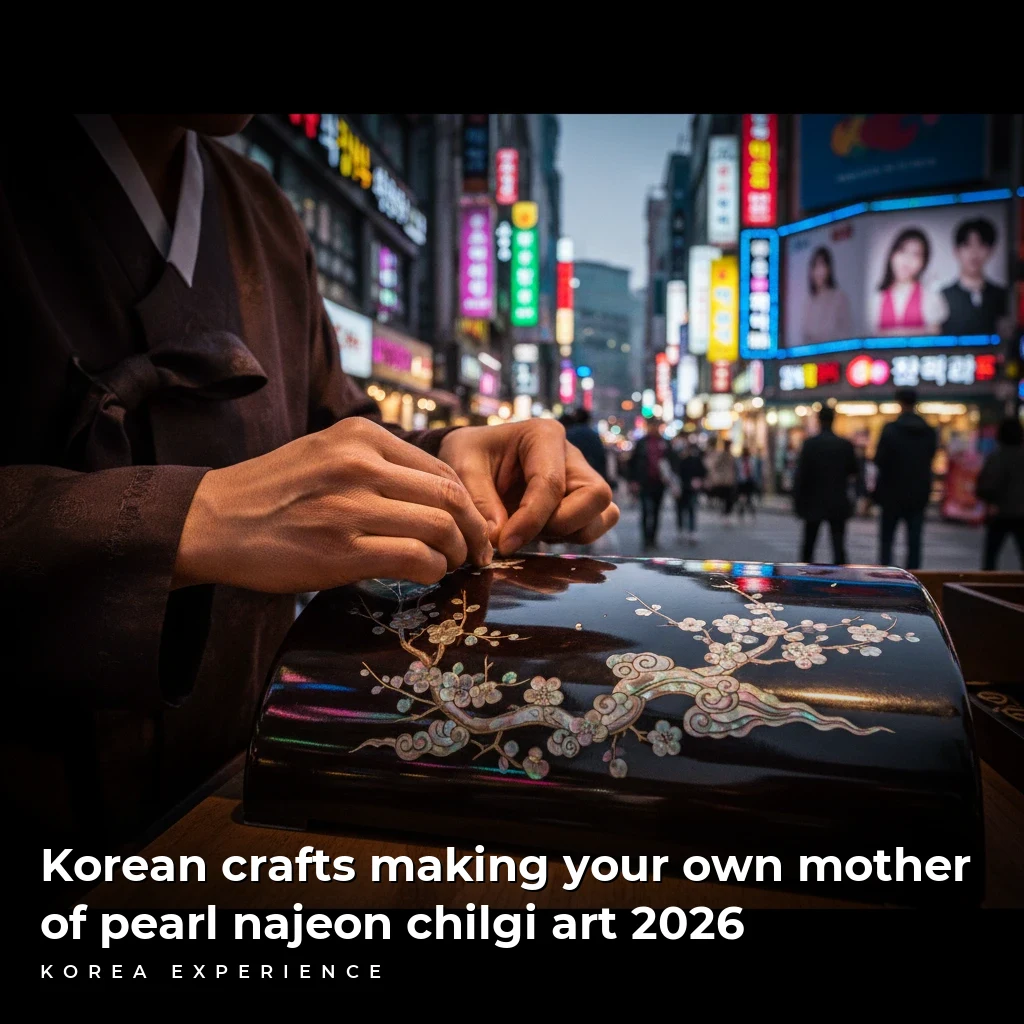
Korean Crafts: Make Your Own Najeon-chilgi Art 2026
Discover Najeon-chilgi, Korea's stunning mother-of-pearl art. Learn its history, find workshops in 2026, and create your own exquisite masterpiece.
Crafting Brilliance: Your Guide to Making Mother-of-Pearl Najeon-chilgi Art in Korea 2026
Are you planning an unforgettable trip to South Korea in 2026? Beyond the bustling cityscapes, the vibrant K-Pop scene, and the delectable street food, lies a treasure trove of traditional Korean culture waiting to be explored. For the international traveler or expat seeking an authentic, hands-on experience, few activities offer the depth and beauty of creating your own Najeon-chilgi (Korean mother-of-pearl lacquerware). This exquisite craft, steeped in centuries of history, transforms iridescent shells into breathtaking works of art, and 2026 is the perfect year to immerse yourself in its delicate splendor.
Imagine crafting a unique souvenir, not just purchased, but personally brought to life by your own hands – a piece that embodies the artistry and spirit of Korea. This comprehensive guide will take you on a journey through the world of Najeon-chilgi, from its historical roots to practical tips for participating in a workshop during your 2026 visit. You'll learn about the intricate process, discover ideal locations for workshops, understand what to expect, and ultimately, gain the confidence to create your own magnificent piece of Korean mother-of-pearl art. Prepare to unlock a deeper connection with Korean heritage through this truly special craft.
The Enduring Legacy of Najeon-chilgi: Korea's Mother-of-Pearl Artistry
Najeon-chilgi is more than just a craft; it's a testament to Korean aesthetic philosophy, resilience, and meticulous skill. The term "Najeon-chilgi" combines "Najeon," referring to the mother-of-pearl inlay, and "Chilgi," which means lacquerware. This traditional art form involves meticulously cutting thin pieces of iridescent abalone or conch shells and inlaying them onto a wooden or paper base, which is then coated with layers of natural lacquer (ott-chil). The result is a shimmering surface that changes with the light, revealing intricate patterns and stories.
A Glimpse into History
The origins of Najeon-chilgi in Korea can be traced back over a thousand years, with evidence found in relics from the Unified Silla Dynasty (668-935 CE). However, it was during the Goryeo Dynasty (918-1392 CE) that the art form truly blossomed, reaching an unparalleled level of sophistication. Goryeo Najeon-chilgi was highly prized, even by emperors of China, known for its intricate designs, often featuring delicate patterns of chrysanthemums, peonies, and cranes.
During the Joseon Dynasty (1392-1897 CE), Najeon-chilgi evolved, becoming more accessible to the common people, though still retaining its status as a luxurious item. Artisans developed diverse styles, from intricate patterns adorning royal furniture and Buddhist ritual items to more functional everyday objects like sewing boxes, stationery cases, and small chests. Each piece was a labor of love, requiring immense patience and mastery.
The Significance of Mother-of-Pearl
Mother-of-pearl, or "najeon," holds a special place in Korean culture. Its natural luminescence and durability made it an ideal material for decorative art. Beyond its beauty, the shells were also believed to bring good fortune and protect against evil spirits. The painstaking process of harvesting, preparing, and inlaying the shells speaks to a deep respect for natural materials and a dedication to craftsmanship that continues to inspire artists today.
Deciphering the Art: Understanding the Najeon-chilgi Making Process
While a full traditional Najeon-chilgi piece can take months or even years to complete, a workshop experience offers a simplified, yet incredibly rewarding, introduction to its core techniques. Understanding the basic steps enhances your appreciation for this art form and prepares you for your own crafting adventure.
From Shell to Shimmer: The Core Stages
-
Preparation of the Base: The journey begins with a base object, typically made of wood or pressed paper. For workshops, these are pre-made items like small jewelry boxes, coasters, mirror cases, or even phone grips. The base is often pre-lacquered with a base coat, providing a smooth, dark canvas for the mother-of-pearl.
-
Shell Selection and Cutting (Najeon-gyeong): This is where the magic of "najeon" truly begins. Thin sheets of polished mother-of-pearl are used. Traditionally, artisans would meticulously cut these sheets into desired shapes using specialized saws and knives. In workshops, pre-cut shell pieces in various shapes (squares, circles, intricate floral motifs, geometric patterns) are often provided, allowing participants to focus on design and inlay. Some advanced workshops might offer the chance to try basic cutting.
-
Design Layout: This is your creative moment! You arrange the selected mother-of-pearl pieces onto your chosen base according to your desired design. This could be a traditional pattern, a modern interpretation, or a completely original creation. Adhesives are used to temporarily fix the pieces in place.
-
Inlaying and Securing (Najeon-bakgi): Once the design is set, a stronger adhesive or a thin layer of lacquer is applied to permanently secure the mother-of-pearl pieces to the base. This step requires precision, ensuring each piece is perfectly aligned and firmly attached.
-
Lacquer Application (Chilgi): After the inlay is secure, the entire surface, including the mother-of-pearl, is coated with layers of lacquer. In traditional Najeon-chilgi, natural lacquer, or "ott-chil," derived from the lacquer tree, is used. This is a complex, time-consuming process involving multiple layers, each requiring thorough drying and polishing. Workshops often use a faster-drying, less toxic lacquer or resin to allow for completion within a few hours. This step smooths the surface, protects the mother-of-pearl, and adds a beautiful sheen.
-
Polishing and Finishing: The final stage involves meticulous polishing to bring out the vibrant iridescence of the mother-of-pearl and the deep luster of the lacquer. This step reveals the true beauty of the finished piece.
Navigating 2026: Where to Experience Najeon-chilgi Workshops in Korea
As interest in traditional Korean crafts grows, more opportunities for hands-on experiences are emerging, particularly in accessible tourist areas. For your 2026 trip, consider these locations and types of venues for Najeon-chilgi workshops.
Seoul: The Heart of Korean Culture and Craft
Seoul offers the widest array of options, from dedicated craft studios to cultural centers.
-
Insadong and Bukchon Hanok Village: These historic districts are cultural hubs, brimming with traditional tea houses, art galleries, and craft shops. You'll find several smaller studios here that offer Najeon-chilgi workshops. They often cater specifically to international visitors, with English-speaking instructors.
- Example Studio Type: "Crafted Heritage Studio" or "Insadong Najeon Art" (fictional names, but indicative of what you might find).
- Location: Centrally located within Insadong or near Anguk Station in Bukchon.
- Expected Price Range (2026 Estimate): 50,000 - 120,000 KRW per person, depending on the size and complexity of the item.
- Duration: 1.5 - 3 hours.
-
Seoul Global Cultural Center (Myeongdong): This center is an excellent resource for various Korean cultural experiences, often including Najeon-chilgi. They offer regular, affordable programs designed for foreigners.
- Location: Myeongdong, Jung-gu, Seoul (check official website for exact address and current program schedule for 2026).
- Expected Price Range (2026 Estimate): 10,000 - 30,000 KRW (subsidized rates common for cultural centers).
- Duration: 1 - 2 hours. Booking well in advance is highly recommended due to popularity.
-
Private Artisan Studios: For a more in-depth or personalized experience, search for independent Najeon-chilgi artists who offer workshops. These are often found slightly off the main tourist routes but provide an unparalleled opportunity to learn directly from a master.
- Example: Studios near Hongdae or Yeonnam-dong, known for their artistic communities, might house such artisans.
- Expected Price Range (2026 Estimate): 80,000 - 200,000+ KRW for more elaborate projects or private lessons.
- Duration: 2 - 4 hours, potentially multi-day courses.
Beyond Seoul: Regional Craft Experiences
While Seoul is a prime location, other cities and regions also boast Najeon-chilgi heritage.
-
Tongyeong (Gyeongsangnam-do Province): Known as the historical capital of Najeon-chilgi, Tongyeong is home to some of Korea's most renowned Najeon-chilgi masters. If you're looking for a deeper dive into the traditional techniques, a visit here could be incredibly rewarding.
- Location: Tongyeong, Gyeongsangnam-do. Accessible by bus or KTX to nearby cities and then local transport.
- Opportunities: Look for specialized Najeon-chilgi museums or heritage centers that occasionally offer workshops. These might be less frequent and require booking far in advance.
- Expected Price Range (2026 Estimate): Varies widely, potentially higher for specialized experiences.
-
Jeonju Hanok Village: Famous for its traditional Korean houses and food, Jeonju also has a thriving traditional craft scene. You might find smaller workshops here, often focusing on simpler, quicker projects suitable for tourists.
- Location: Jeonju, Jeollabuk-do Province.
- Opportunities: Inquire at local cultural centers or craft shops within the Hanok Village.
- Expected Price Range (2026 Estimate): 40,000 - 90,000 KRW.
Comparison of Workshop Types (2026 Estimate)
| Workshop Type | Location Focus | Project Complexity | Price Range (KRW) | Ideal For |
|---|---|---|---|---|
| Cultural Centers | Seoul (Myeongdong, Jongno) | Beginner-friendly, small items | 10,000 - 30,000 | Budget travelers, quick introduction, families |
| Tourist District Studios | Insadong, Bukchon Hanok Village | Beginner to intermediate, various items | 50,000 - 120,000 | Travelers seeking a hands-on souvenir, general public |
| Private Artisan Workshops | Artisanal districts, regional centers | Intermediate to advanced, personalized | 80,000 - 200,000+ | Art enthusiasts, in-depth learning, unique gifts |
Your Crafting Journey: What to Expect at a Najeon-chilgi Workshop
Attending a Najeon-chilgi workshop is an enriching experience that combines cultural immersion with creative expression. Here's a typical rundown of what you can anticipate.
The Workshop Environment
Most workshops are held in cozy, well-lit studios. The atmosphere is usually calm and focused, with gentle background music or the quiet hum of concentration. You'll be seated at a clean workstation, equipped with all the necessary materials. Instructors are often passionate artisans eager to share their knowledge.
Step-by-Step Workshop Flow
- Introduction and History: The session typically begins with a brief introduction to Najeon-chilgi, its history, and the significance of mother-of-pearl. This sets the stage and helps you appreciate the art form.
- Choosing Your Item: You'll usually select the base item you wish to decorate. Common choices include small jewelry boxes, coasters, mirror cases, cardholders, pen cases, or even smartphone grips. The price often varies depending on the item's size and complexity.
- Design Inspiration: The instructor will show you various design examples, from traditional patterns to modern motifs. They will also guide you on how to arrange the mother-of-pearl pieces effectively. You'll be encouraged to get creative and develop your own unique pattern.
- Selecting Mother-of-Pearl Pieces: You'll be presented with an array of pre-cut mother-of-pearl pieces in different shapes, sizes, and sometimes even colors (though natural iridescence is key). You'll select the pieces that fit your design vision.
- The Inlay Process: Using tweezers and a special adhesive, you'll meticulously place each mother-of-pearl piece onto your chosen item. This requires patience and a steady hand. The instructor will be on hand to offer guidance and assistance.
- Lacquer Application (Simplified): Once all your mother-of-pearl pieces are firmly in place and the adhesive has set, the item will be coated with a protective layer. In beginner workshops, this might be a clear resin or a fast-drying lacquer. Some studios may have the instructor apply this final layer, or you might apply it yourself under supervision.
- Drying Time: Depending on the lacquer/resin used, your piece might need a few hours or even a full day to dry completely. Some workshops allow you to take the piece home immediately if a quick-drying material is used, while others might offer to ship it to your accommodation or have it ready for pickup the next day. Clarify this when booking.
- Finishing Touches: If your piece requires additional drying or professional polishing, the studio will handle it. When you receive your finished art, it will be gleaming, with the mother-of-pearl shimmering beautifully.
Typical Workshop Project Items
| Project Item | Average Size (approx.) | Complexity Level | Typical Price Range (KRW, 2026) | Notes |
|---|---|---|---|---|
| Coaster | 10x10 cm | Beginner | 30,000 - 60,000 | Quick, affordable, great for practicing. |
| Mirror Case | 7x7 cm | Beginner | 40,000 - 70,000 | Portable, popular for gifts. |
| Jewelry Box | 12x8x5 cm | Beginner/Intermediate | 60,000 - 100,000 | Iconic Najeon-chilgi item, versatile design. |
| Pen Case/Cardholder | 16x3 cm / 10x6 cm | Intermediate | 50,000 - 90,000 | Practical, elegant for daily use. |
| Smartphone Grip | 4-5 cm diameter | Beginner | 30,000 - 50,000 | Modern twist, popular souvenir. |
Crafting Your Vision: Choosing Your Najeon-chilgi Project and Design
The beauty of making your own Najeon-chilgi art lies in the personal touch. From the item you choose to the pattern you create, every decision reflects your unique style and connection to this craft.
Selecting Your Perfect Canvas
Consider your skill level, the time you have, and your budget. If you're new to crafting or have limited time, a simpler item like a coaster or a small mirror case is ideal. These allow you to grasp the basic techniques without feeling rushed. For those with more time and a desire for a challenge, a jewelry box or a more complex stationery item offers a larger canvas for intricate designs.
Embracing Design Motifs
Korean Najeon-chilgi often features recurring motifs, each carrying symbolic meaning. You can draw inspiration from these traditional patterns or create something entirely new.
| Design Motif | Common Interpretation | When to Choose |
|---|---|---|
| Cranes | Longevity, purity, nobility, good fortune | For gifts to elders, wishes for a long and healthy life |
| Peonies | Wealth, honor, prosperity, beauty | For celebratory gifts, personal tokens of luxury |
| Plum Blossoms | Resilience, nobility, endurance, purity (blooming in winter) | For someone overcoming challenges, a symbol of strength |
| Chrysanthemums | Longevity, autumn, wisdom, abundance | For those who appreciate subtle beauty, fall visits |
| Butterflies | Joy, happiness, beauty, transformation | For a lively, cheerful design, often paired with flowers |
| Geometric Patterns | Order, balance, modernity (often found in newer designs) | For a contemporary aesthetic, sleek and minimalist |
| Nature (general) | Harmony with nature, tranquility, balance | For a serene, timeless piece. |
Don't be afraid to combine elements or create abstract patterns. The goal is to make something that resonates with you. Many workshops provide templates, but also encourage freehand design, allowing you to trace your own drawings onto the base.
Insider Tips for a Successful Najeon-chilgi Making Experience
To make the most of your Najeon-chilgi workshop in 2026, keep these practical tips in mind.
- Book in Advance: Especially for popular cultural centers or highly-rated studios in tourist areas like Insadong or Bukchon, workshops can fill up quickly. Booking a few weeks or even months ahead (especially during peak tourist seasons) is highly recommended to secure your spot and preferred time. Websites like Klook, Trazy, or the official studio websites are good places to start.
- Check English Availability: While many workshops in Seoul cater to international visitors, it's always wise to confirm if English-speaking instructors or clear English instructions are provided.
- Dress Comfortably: You'll be sitting and focusing for an hour or more. Wear comfortable clothes that you don't mind potentially getting a tiny bit of glue or lacquer on, although most studios provide aprons.
- Patience is Key: Najeon-chilgi is an art form that demands patience and precision. Don't rush your design or the inlay process. Enjoy the meditative aspect of carefully placing each shell piece.
- Embrace Imperfection: For a beginner, aiming for absolute perfection might lead to frustration. Appreciate the handmade quality of your piece, including any slight imperfections, which make it truly unique and a testament to your effort.
- Ask Questions: Don't hesitate to ask your instructor about the history, techniques, or even about traditional Korean culture. They are usually enthusiastic to share their knowledge.
- Consider Drying Time: As mentioned, some lacquers need significant drying time. If you're on a tight travel schedule, inquire about quick-drying options or shipping services. Some studios might even have a service to send your finished piece to your home country, though this would incur additional costs.
- Photography: Most studios allow photography, but always ask for permission, especially if you're photographing other participants or the instructor up close. Capture the process to remember your unique experience!
- Group vs. Solo: Consider if you want a social group experience or a more focused solo session. Group workshops are great for meeting fellow travelers, while private lessons offer more personalized attention.
Bringing Your Najeon-chilgi Home: Care and Appreciation
Once your beautiful Najeon-chilgi art is complete, it's not just a souvenir; it's a piece of Korean heritage. Proper care will ensure its longevity and continued beauty.
Protecting Your Masterpiece
- Avoid Direct Sunlight: Prolonged exposure to direct sunlight can fade the lacquer and potentially damage the mother-of-pearl.
- Keep Away from Extreme Temperatures and Humidity: Fluctuations can cause the wood or lacquer to crack. Keep your piece in a stable environment.
- Gentle Cleaning: Dust with a soft, dry cloth. If cleaning is necessary, lightly dampen a cloth with water (no harsh chemicals or abrasive cleaners) and gently wipe. Dry immediately.
- Handle with Care: While durable, mother-of-pearl inlay can chip if dropped or hit against hard surfaces. Treat your piece as the delicate artwork it is.
Appreciating the Craft
Each time you look at your handmade Najeon-chilgi, remember the skilled artisans who perfected this craft over centuries and the moment you spent connecting with Korean tradition. It's a story, a memory, and a tangible link to your experience in Korea in 2026. This unique piece will undoubtedly be a conversation starter and a cherished memento, far more meaningful than any mass-produced item.
Frequently Asked Questions About Najeon-chilgi Workshops
Q1: Do I need any prior art experience to join a Najeon-chilgi workshop? A1: Absolutely not! Most workshops catering to international travelers are designed for beginners with no prior art or craft experience. Instructors provide clear guidance, and many workshops use pre-cut mother-of-pearl pieces to simplify the process.
Q2: How long does a typical Najeon-chilgi workshop take? A2: Beginner workshops usually last between 1.5 to 3 hours, depending on the complexity of the item you choose and the depth of instruction. More advanced or private sessions can be longer.
Q3: Can children participate in Najeon-chilgi workshops? A3: Yes, many studios are family-friendly. However, the craft requires patience and fine motor skills, so it's generally recommended for children aged 7 or older. Always check with the specific studio regarding their age policies.
Q4: Will my Najeon-chilgi art be ready to take home immediately after the workshop? A4: This varies by studio and the type of lacquer/resin used. Some use quick-drying materials that allow you to take your piece home the same day. Others, especially those using traditional lacquer or requiring more extensive finishing, might require you to pick it up the next day or offer shipping options. It's crucial to confirm this when booking your workshop.
Q5: What is the average cost of a Najeon-chilgi workshop in Korea in 2026? A5: Prices can range significantly. For a basic project at a cultural center, expect to pay around 10,000 - 30,000 KRW. Tourist-oriented studios might charge 50,000 - 120,000 KRW for small to medium-sized items. Private or specialized workshops can be 80,000 KRW or more, depending on the item, duration, and level of instruction. Always check the specific studio's pricing for 2026.
Conclusion: Embrace Your Inner Artisan in 2026
Your journey to Korea in 2026 presents a unique opportunity to delve beyond the surface and connect with its rich cultural tapestry. Participating in a Korean crafts making your own mother-of-pearl Najeon-chilgi art workshop is not just an activity; it's an immersive experience that leaves you with a tangible piece of history and a deeper understanding of Korean artistry.
From the shimmering beauty of the mother-of-pearl to the patient application of lacquer, each step in creating Najeon-chilgi is a reflection of Korea's enduring dedication to craftsmanship. By choosing to spend a few hours immersed in this ancient art, you're not only crafting a beautiful souvenir but also making a personal connection to a thousand-year-old tradition.
So, as you finalize your 2026 travel plans, be sure to carve out time for this extraordinary experience. Book your workshop, prepare to be inspired, and get ready to bring home a truly one-of-a-kind masterpiece – a gleaming reminder of your unforgettable adventure in the land of morning calm.
(For those interested in exploring further traditional Korean crafts, consider looking into workshops for Hanji (traditional Korean paper) making, traditional pottery, or even Korean traditional painting classes in different regions of Korea during your 2026 visit!)
About the Author
Korea Experience Team
Written by the Korea Experience editorial team - experts in Korean medical tourism, travel, and culture with years of research and firsthand experience.
⚠️ Medical Disclaimer
The information provided on this website is for general informational purposes only and does not constitute medical advice. Always consult with qualified healthcare professionals before making any medical decisions.
Continue Reading
Explore more articles you might find interesting
So, you want to stop standing out like a tourist and start navigating Seoul like you've lived here for a decade? The secret isn't just about where you eat, but how you handle the invisible social gears—like knowing why you should never tip or how to 'read the room' using nunchi.
Unlock access to rare K-pop, K-drama, and K-beauty limited-edition merchandise in Korea without needing a fan club membership. Discover top spots and strategies for collectors.
Discover Seoul's thriving English stand-up comedy scene. Find venues, show types, and tips for an unforgettable night out in Korea.