Korean Cleansing Oil Double Cleanse Method guide 2026
Master the 2-step K-Beauty ritual for glass skin. Learn why 92% of Korean women double cleanse, best products for 2026, and how to shop at Olive Young.
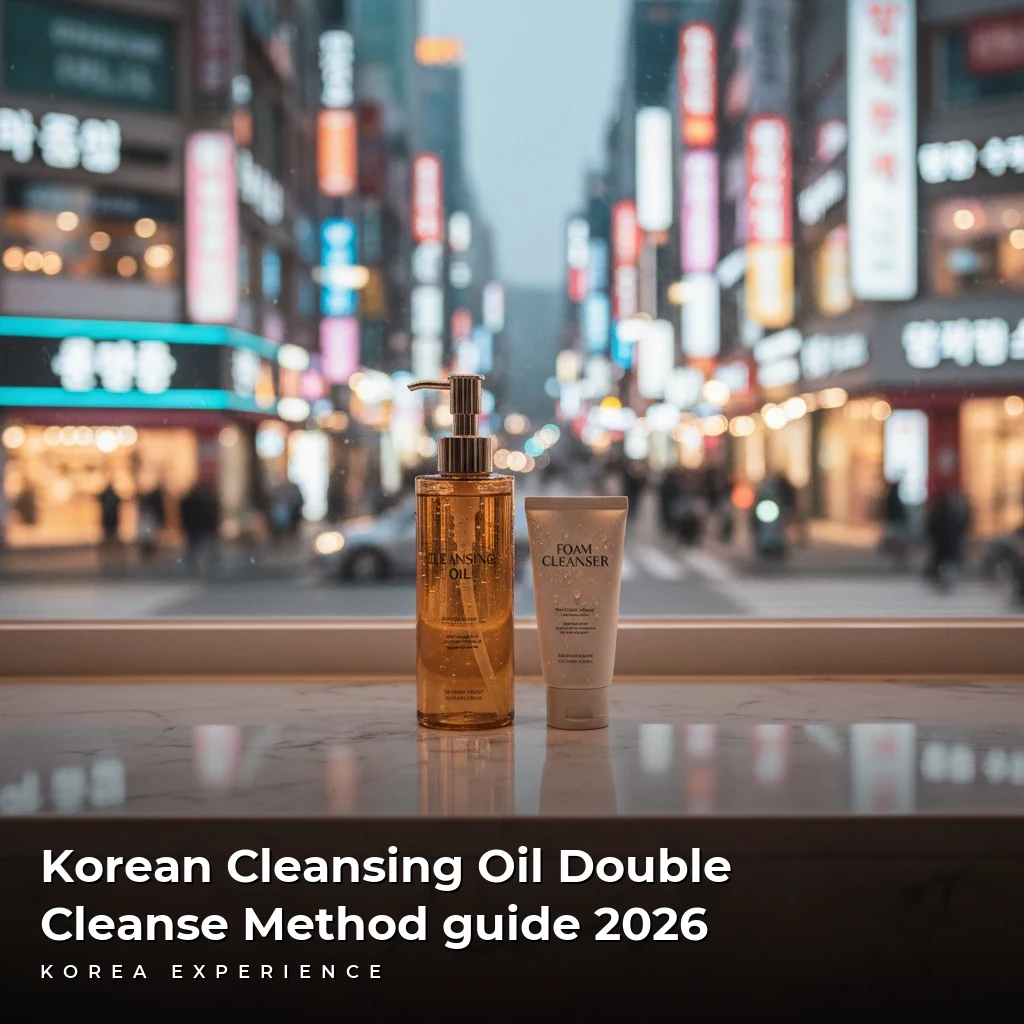
The Korean double cleanse method is a two-step skincare ritual that involves using an oil-based cleanser followed by a water-based cleanser to thoroughly remove impurities, sunscreen, and makeup without stripping the skin's natural moisture barrier. This foundational pillar of K-Beauty is the primary reason behind the "glass skin" phenomenon, ensuring that pores are free of sebum plugs and canvas-ready for subsequent skincare steps like toners and essences.
The short answer: The double cleanse consists of using a lipophilic (oil-based) cleanser on dry skin to dissolve makeup, SPF, and excess sebum, followed by a hydrophilic (water-based) foam or gel cleanser to remove sweat and dirt. It is essential for anyone wearing sunscreen or makeup.
Key Takeaways
- 1Apply cleansing oil to dry skin with dry hands; water prevents the oil from grabbing impurities.
- 2Emulsification (adding water to turn the oil milky) is the most critical step to prevent clogged pores.
- 3Double cleansing is suitable for all skin types, including oily and acne-prone skin, if the right ingredients are chosen.
Understanding the Double Cleanse Philosophy
In Western skincare, the focus has historically been on "squeaky clean" skin, often achieved through harsh scrubs or astringents that strip the skin barrier. In contrast, the Korean philosophy views cleansing as the most critical step of the routine, but it must be gentle. The logic is rooted in basic chemistry: "like dissolves like."
Water-based cleansers (foams, gels) are excellent at removing water-based impurities like sweat, dirt, and dust. However, they struggle to break down oil-based impurities. These include:
- Sebum: The natural oil your skin produces.
- Sunscreen: Modern SPF formulas are designed to be water-resistant and adhere strongly to the skin.
- Makeup: Foundations and concealers are often oil or silicone-based.
- Pollution: Fine dust particles (a common concern in Seoul) are often lipophilic and stick to the skin's oils.
By using an oil cleanser first, you dissolve these stubborn layers. Following up with a water-based cleanser ensures any oily residue is washed away, leaving the skin perfectly clean and pH-balanced.
📊 Cleansing Statistics
The Science of Emulsification: Why It Matters
The magic of a Korean cleansing oil lies in emulsification. Unlike pure kitchen oils (like coconut or olive oil) which sit on top of the skin and are difficult to wash off, formulated cleansing oils contain emulsifiers.
When you mix the oil with a small amount of water, these emulsifiers allow the oil and water to mix, turning the substance into a milky white fluid. This change in texture signals that the oil has bound to the water, allowing it to be rinsed away completely without leaving a greasy film.
If you skip the emulsification step, or if you use a pure carrier oil without emulsifiers, you risk trapping dirt within the pores, leading to the exact breakouts you are trying to avoid.
Common Mistake
Never apply cleansing oil to a wet face. Water creates a barrier that prevents the oil from binding to the makeup and sebum in your pores. Always start with a completely dry face and dry hands.
Step-by-Step Guide to the Perfect Double Cleanse
Mastering the technique is just as important as buying the right product. Many travelers visiting Korea buy high-end products but fail to see results because of incorrect application. Here is the definitive guide used by Seoul estheticians.
📖 The 60-Second Oil Cleanse Method
Step 1: Prep
Wash and dry your hands thoroughly. Ensure your face is completely dry.
Step 2: Apply
Dispense 2-3 pumps of oil into your palm. Gently smooth it over your face.
Step 3: Massage
Massage in circular motions for 60 seconds. Focus on the nose and chin where sebaceous filaments collect.
Step 4: Emulsify
Wet your hands with lukewarm water and massage your face again. The oil should turn milky white.
Step 5: Rinse
Rinse thoroughly with lukewarm water until the water runs clear.
Step 6: Second Cleanse
Immediately follow with your water-based foam or gel cleanser.
For those interested in building a full regimen around this step, check out our complete guide to the Korean 10-step skincare routine.
Choosing the Right Oil for Your Skin Type
A common myth is that people with oily skin should avoid oil cleansers. In reality, oily skin often benefits the most from oil cleansing because the applied oil dissolves the excess sebum produced by the skin (remember: oil dissolves oil). However, the type of oil matters.
1. Oily and Acne-Prone Skin
Look for lightweight oils with high linoleic acid content. These are non-comedogenic and won't clog pores.
- Key Ingredients: Jojoba oil (biomimetic to human sebum), Grapeseed oil, Heartleaf extract.
- Avoid: Coconut oil, Mineral oil (if sensitive), Cocoa butter.
- Top 2026 Pick: Formulas containing LHA (Lipohydroxy Acid) for gentle exfoliation.
2. Dry and Dehydrated Skin
You need heavier, nourishing oils that deposit moisture while cleansing.
- Key Ingredients: Olive oil, Avocado oil, Argan oil, Ceramides.
- Benefit: These oils reinforce the lipid barrier, preventing that "tight" feeling after washing.
3. Sensitive Skin
Fragrance-free is non-negotiable here. Look for simple ingredient lists.
- Key Ingredients: Calendula, Centella Asiatica (Cica), Mugwort.
- Tip: Cleansing balms (solid oils that melt) are often gentler and less messy for sensitive skin types.
Cleanser Texture Comparison
| Feature | Cleansing Oil | Cleansing Balm | Cleansing Milk |
|---|---|---|---|
| Texture | Liquid | Sherbet-like solid | Creamy lotion |
| Mess Factor | High (can drip) | Low (travel friendly) | Low |
| Makeup Removal | Excellent | Excellent | Moderate |
| Best For | All types | Dry/Travelers | Extremely sensitive |
Top Korean Cleansing Oils in 2026
The market in Korea moves fast. While classics like Sulwhasoo remain popular, indie brands often dominate the charts at Olive Young. In 2026, the trend has shifted heavily towards "Clean Beauty" and "Vegan" formulations.
The Budget vs. Luxury Debate
Is a ₩60,000 ($45 USD) cleanser really better than a ₩20,000 ($15 USD) one? Generally, luxury brands offer more elegant textures and signature herbal scents (Hanbang), but budget options perform the cleansing function just as well.
💵 Market Price Comparison (2026)
Hanbang herbal ingredients, premium ginseng scent, hydrating finish.
Olive Young #1 bestseller, 99.9% natural ingredients, effective.
If you are looking for products that target specific skin concerns, read our review of best under-the-radar K-beauty brands.
Where to Buy: A Seoul Shopping Guide
Buying skincare in Korea is an experience in itself. The price difference between buying locally versus importing to the US or Europe can be substantial—often 30-50% cheaper in Seoul.
Olive Young
This is the Sephora of Korea, but more ubiquitous. You will find an Olive Young on almost every block in major districts.
- Strategy: Look for "1+1" (Buy One Get One Free) deals, which are very common for cleansing oils.
- Tourists: Bring your passport for immediate tax refunds at the register on purchases between ₩30,000 and ₩500,000.
Olive Young Gangnam Flagship(Olive Young Gangnam)
Chicor
Owned by Shinsegae Department Store, Chicor carries more high-end and Western brands alongside premium Korean niche brands. It is less crowded than Olive Young and offers a more luxurious shopping environment.
Duty-Free Shops (Lotte, Shilla)
If you are buying luxury brands like Sulwhasoo or History of Whoo, Duty-Free is your best bet.
- Pro Tip: Order online via the Lotte or Shilla Duty-Free apps 2-3 days before your flight for the best discounts, then pick up at the airport gate.
For a broader look at where to shop, check out our guide to accommodation near shopping districts.
Addressing the "Purging" Myth
Many travelers start a new Korean skincare routine and experience a breakout, assuming the product is bad. This might be "purging."
When you start using a cleansing oil, deeply embedded sebum plugs are loosened and brought to the surface. This can temporarily result in small whiteheads. This phase usually lasts 2-4 weeks. However, if you experience red, itchy, or inflamed bumps, that is likely an allergic reaction or irritation, and you should stop immediately.
Many foreigners complain that cleansing oils break them out. In 90% of cases I see at my clinic, it is not the oil itself, but the failure to rinse it off completely. You must emulsify until the water is white, and rinse at least 15 times with water. Residue is the enemy.
The "Grit" Method (Fiddy Snails Method)
A viral trend that originated in the Asian beauty community is the method for removing "grits" (sebaceous filaments). This is an advanced version of the double cleanse, usually done once a week.
- Apply BHA: Apply a BHA (salicylic acid) liquid to clean, dry skin. Wait 20 minutes. The acid loosens the glue holding the sebum in the pore.
- Clay Mask: Apply a clay mask over the BHA (without rinsing). Wait until it dries. This pulls the oil to the surface.
- Oil Cleanse: Rinse off the clay, dry your face, and apply cleansing oil. Massage for 10-15 minutes.
- Result: You may feel tiny grains of hardened oil (grits) coming out of your pores.
Warning: Do not do this more than once a week, or you risk damaging your moisture barrier. If you have sensitive skin, skip the clay mask step.
Sustainability and Refills in 2026
Korea has implemented strict recycling laws, and the beauty industry is adapting. In 2026, most major brands like Innisfree and Aromatica offer refill pouches for their cleansing oils.
- Cost Savings: Refills are usually 20-30% cheaper than the bottle.
- Eco-Friendly: Reduces plastic waste by up to 60%.
- Shopping Tip: Look for the "Refill Station" corners in major Olive Young branches or the Amore Pacific flagship store in Seongsu.
📋 Sustainability Facts
Pairing with Water-Based Cleansers
The double cleanse is a partnership. Your second cleanser (water-based) should be gentle. High pH cleansers (alkaline) strip the skin and can lead to bacteria growth. Korean cleansers are famous for being "low pH" (5.5 - 6.0), which matches the skin's natural acidity.
- Foam Cleansers: Create a rich lather. Good for oily/combo skin.
- Gel Cleansers: Less lather, more hydration. Good for dry/sensitive skin.
- Powder Cleansers: Enzyme-based powders that foam with water. Excellent for travel and mild exfoliation.
For recommendations on products that pair well with oils, see our review of beauty empties and repurchases.
Troubleshooting: Why Is It Not Working?
If you have tried the double cleanse and feel your skin is getting worse, consider these factors:
- Water Temperature: Cold water solidifies oil, making it stick to your face. Hot water inflames the skin. Lukewarm is the only way.
- Mineral Oil Sensitivity: Some affordable oils use mineral oil base. While safe for most, some people are reactive to it. Switch to a plant-based oil.
- Rushing: If you massage for 10 seconds, the oil hasn't had time to break down the SPF polymers. Give it the full 60 seconds.
Skin Improvement Timeline
Clean Feel
Skin feels softer and makeup is fully removed.
Purging
Possible minor whiteheads as deep impurities surface.
Clarity
Blackheads reduce, pores appear smaller, texture smooths.
Travel Tips for Cleansing Oils
Traveling with oil can be risky due to leakage.
- Locking Pumps: Most Korean oils come with a plastic clip that locks the pump. Do not throw this away! Keep it for your return flight.
- Balm Alternatives: If you are worried about spills, buy a cleansing balm (solid) for the flight. Banila Co. Clean It Zero is the classic choice found at Incheon Airport.
- Decanting: Do not decant oil into cheap silicone travel bottles; some oils can degrade the silicone. Use hard plastic (PET) bottles.
Before you travel, make sure you know exactly what to buy by checking our shopping guide for beauty products.
The Role of Cleansing Tools
While fingers are the best tool, the Korean beauty market is flooded with gadgets.
- Silicone Scrubbers: Can help with emulsification but use gently.
- Pore Brushes: Generally falling out of favor in 2026 as they can harbor bacteria and be too harsh. The trend is moving back to hand application.
- Muslin Cloths: Rarely used in Korea. The splash-and-rinse method is preferred to reduce physical friction on the skin.
Seasonal Adjustments
Korea has four distinct seasons, varying from humid, hot summers to freezing, dry winters. Your cleansing routine might need tweaking.
- Summer (Hot/Humid): Switch to a lighter, grapeseed-based oil to combat heavy sweat and sebum production.
- Winter (Cold/Dry): Switch to a richer, olive or macadamia nut-based oil to prevent moisture loss during cleansing.
If you are visiting in the colder months, protecting your skin barrier is crucial. Read more in our guide to face masks for dry skin.
Men's Skincare: Double Cleansing for Him
Korean men are the world's top consumers of male skincare. The double cleanse is not gender-specific. Men typically produce more sebum and have larger pores than women, making the oil cleanse arguably even more important for them.
- Shaving: Oil cleansing softens the beard hair and skin before shaving, reducing razor burn.
- Sunscreen: Men wearing daily SPF (which they should) need oil to remove it just as much as women do.
Final Thoughts: Is It Worth the Extra Step?
Adding an extra step to a tired evening routine can feel burdensome. However, the cost of not double cleansing is often clogged pores, dull texture, and reduced effectiveness of the expensive serums you apply afterward.
Think of the oil cleanser not just as a makeup remover, but as a pore treatment. By maintaining clear pores, you minimize the need for harsh extraction facials or heavy concealers later. In the context of the long-term "glass skin" journey, the 3 minutes spent double cleansing are the highest ROI (Return on Investment) minutes of your day.
Double Cleansing Method
- ✓Thoroughly removes waterproof SPF
- ✓Reduces blackheads over time
- ✓Maintains skin barrier integrity
- ✓Increases absorption of serums
- ✗Takes extra time
- ✗Finding the right oil requires trial and error
- ✗Can be messy at the sink
Frequently Asked Questions
❓ Common Questions About Oil Cleansing
Have more questions?Contact us →
Double cleansing is more than a trend; it is the cornerstone of Korean hygiene and self-care. Whether you are shopping in Myeongdong or browsing online from home, incorporating this step is the single most effective change you can make for healthier skin in 2026.
About the Author
Korea Experience Team
Written by the Korea Experience editorial team - experts in Korean medical tourism, travel, and culture with years of research and firsthand experience.
Explore more in Shopping & K-Beauty
From Olive Young hauls to Myeongdong shopping tips — discover the best K-Beauty products, fashion trends, and shopping destinations in Korea.
Browse All Shopping & K-Beauty ArticlesContinue Reading
Explore more articles you might find interesting
Master the foundation of K-Beauty with our 2026 guide to double cleansing. Learn the oil-and-water technique that removes 99% of impurities for glass skin.
Master the 2026 Korean spatula makeup trend for glass skin. Learn the 90-degree technique, best tools under ₩20,000, and Olive Young shopping tips.
Save up to 20% on your 2026 Korea trip with Wowpass instant discounts. Learn how to get 5% cashback on a 100,000 KRW Olive Young haul and skip transit fees.
The ultimate 2026 Olive Young shopping guide. Top 25+ must-buy products, sale dates, and how to get an immediate 6-7% tax refund on purchases over ₩30,000.
Discover the top Korean makeup trends of 2026, from Protein Skin to AI color analysis. Learn prices, top brands, and where to shop in Seoul for under $50.
Don't risk your skin. Learn how to identify counterfeit Korean skincare with our 2026 guide, covering price analysis, packaging clues, and trusted retailers.