Korean Clothing Sizes Conversion Chart: A Foreigner's Guide
Master Korean shopping with our 2026 size conversion charts. From women's '55' sizes to millimeter shoe measurements, get the perfect fit every time.
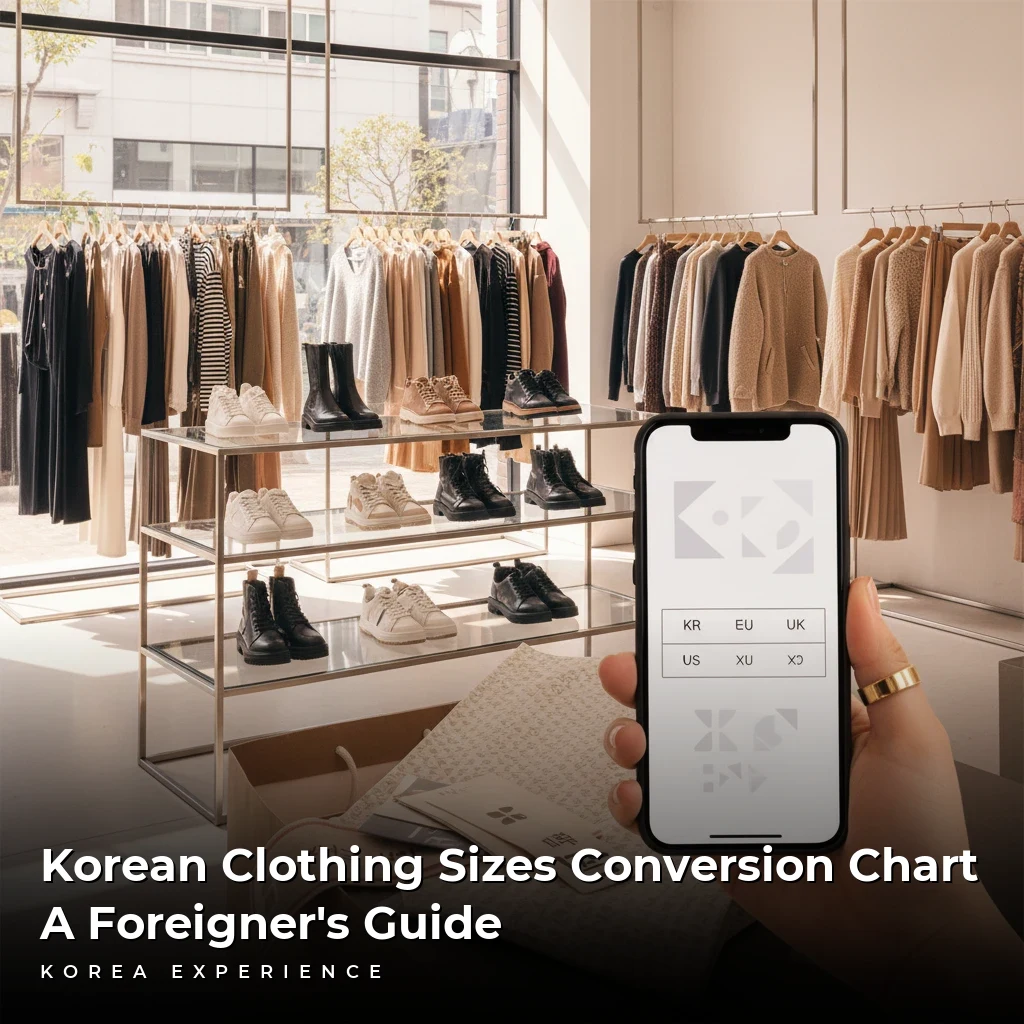
You have just arrived in Seoul, ready to raid the trendy boutiques of Hongdae or the underground shopping malls of Gangnam, only to find that the tag on that perfect dress says "55" instead of Small, or the sneakers are listed as "240." Shopping for clothes in Korea is a highlight for many travelers, but the unique sizing system can be a major hurdle. If you don't understand how the local measurements work, you risk buying clothes that are too tight in the shoulders, too short in the sleeves, or shoes that pinch your toes.
The short answer: Korean clothing sizes typically use a unique numerical system (44, 55, 66 for women; 95, 100, 105 for men) or the "Free Size" designation. Shoe sizes are always measured in millimeters (mm). Generally, Korean sizes run 1-2 sizes smaller than US or European standards.
Key Takeaways
- 1Korean sizes run small: A US Medium is often a Korean Large or 100/66
- 2Shoe sizes use millimeters: Measure your foot length directly for accuracy (e.g., 240mm = US Women's 7)
- 3Free Size does not mean one-size-fits-all; it usually fits a US 2-6 (XS/S)
- 4Men's cuts are slimmer, particularly in the shoulders and thighs
Understanding the Korean sizing logic
Before diving into the specific charts, it is crucial to understand the philosophy behind Korean sizing. Unlike the vanity sizing often found in North America, where a "Small" has gradually become larger over the decades, Korean sizing has remained relatively static and true to the average local body type.
The Korean fashion industry caters primarily to a slimmer, more petite demographic compared to Western standards. The "Asian Fit" is a real industry term; it typically means narrower shoulders, shorter sleeves, shorter hem lengths, and a tighter fit around the chest and hips.
📋 Sizing Quick Guide
If you are shopping in major districts like Myeongdong or browsing local brands online, you will encounter three main systems:
- The Numerical System: 44, 55, 66 (Women) / 95, 100, 105 (Men).
- The Letter System: S, M, L (but scaled down).
- The Waist Inch System: 26, 28, 30 (mostly for jeans).
Women's clothing size conversion
The most confusing aspect for female travelers is the traditional numbering system. You will often see numbers like 44, 55, and 66. This system originally derived from the chest measurement in inches (a legacy system), but it has now evolved into a standardized label.
Tops, dresses, and coats
A "55" is considered the standard average size in Korea. If a store carries only one size (Free Size), it is usually modeled after a size 55.
Women's Tops & Dresses Conversion
| Korea | US Size | UK Size | EU Size | General Fit |
|---|---|---|---|---|
| 44 | 0-2 | 4-6 | 32-34 | |
| 55 | 4-6 | 8-10 | 36-38 | |
| 66 | 8-10 | 12-14 | 38-40 | |
| 77 | 10-12 | 14-16 | 42 | |
| 88 | 12-14 | 16-18 | 44 | |
| 99 | 16+ | 20+ | 46+ |
Sleeve Length Warning
Even if the chest width fits, tall women (over 170cm or 5'7") often find Korean long sleeves to be too short. Korean fashion trends in 2026 often favor "cropped" aesthetics, which can exacerbate this issue.
Women's pants and jeans
Korean pants sizing typically uses waist inches (25, 26, 27, etc.), which is similar to Western brands like Levi's. However, the hip-to-waist ratio is different. Korean pants tend to have a straighter cut with less room for curvy hips or thighs.
- Size 25-26: Equivalent to US 0-2 (XS)
- Size 27-28: Equivalent to US 4 (S)
- Size 29-30: Equivalent to US 6-8 (M)
- Size 31-32: Equivalent to US 10 (L)
If you are planning a shopping spree near shopping districts, knowing your measurements in centimeters is vital. For the best areas to stay near these boutiques, check out our guide on best areas to stay near shopping districts.
Men's clothing size conversion
Men's fashion in Korea is world-renowned for its sharp tailoring and clean lines. However, the "slim fit" is the default setting here. If you are used to a "Relaxed Fit" in the US, you will likely need to size up two steps in Korea.
Men's tops and jackets
The numbering system for men (95, 100, 105) refers to the chest circumference in centimeters.
💵 Men's Size Comparison
Fits chest 90-95cm. Often tight in shoulders.
Fits chest 95-100cm. The most common size.
"Many Western men have broader shoulders and thicker arms than the typical Korean fit allows. If you wear a US Medium, always start by trying on a Korean 105 (XL). It is not about weight; it is about bone structure and shoulder width."
Men's pants and trousers
Men's trousers are fairly standard, using inch measurements (30, 32, 34). However, the thigh circumference is the bottleneck. Korean men's thighs are generally slimmer. If you have athletic thighs from squats or running, "Regular Fit" pants in Korea might look like leggings on you.
The truth about "Free Size" (One Size)
One of the most bewildering concepts for visitors is "Free Size" (프리사이즈). In Western retail, "One Size Fits All" usually implies a loose, baggy garment like a poncho. In Korea, "Free Size" means "One Size Fits the Average Korean."
What are the dimensions of Free Size?
- Target Height: 160cm - 165cm (5'3" - 5'5")
- Target Weight: 45kg - 55kg (100lbs - 120lbs)
- Equivalent Size: US 2-6 (XS to Small Medium)
If you are outside of this range, Free Size items might be uncomfortably tight or simply not fit. This is particularly common in the trendy stalls of GoTo Mall (Gangnam Terminal Underground Shopping Center) or the street vendors in Hongdae.
📊 Free Size Reality
Shoe size conversion: The millimeter system
The Korean shoe sizing system is arguably the most logical in the world. It is simply the length of your foot in millimeters. There is no arbitrary "Size 8" or "Size 40" to memorize. If your foot is 240mm long, your size is 240.
How to measure your Korean shoe size
- Place a piece of paper on the floor against a wall.
- Stand on the paper with your heel touching the wall.
- Mark the tip of your longest toe.
- Measure from the edge of the paper to the mark in millimeters.
- Round up to the nearest 5mm (e.g., if you measure 243mm, you are a 245).
📖 Quick Shoe Conversion
Step 1: Women's US 6
230mm
Step 2: Women's US 7
240mm
Step 3: Women's US 8
250mm
Step 4: Men's US 9
270mm
Step 5: Men's US 10
280mm
Pro Tip: If you have wide feet, add 5mm to your length measurement. Korean shoes tend to be narrow (Width B for women, D for men).
Baby and children's clothing sizes
Korean children's clothing is categorized by height in centimeters, which makes it incredibly easy to shop if you know how tall your child is. Weight is a secondary factor.
- Size 90: Height 85-95cm (Approx 12-24 months)
- Size 100: Height 95-105cm (Approx 3-4 years)
- Size 110: Height 105-115cm (Approx 4-5 years)
- Size 120: Height 115-125cm (Approx 5-6 years)
- Size 130: Height 125-135cm (Approx 7-8 years)
Unlike the adult market, kids' clothes in Korea are often designed with a looser, boxier fit, which is the current style trend in 2026. This makes shopping for gifts much safer.
Plus size shopping in Korea
Historically, finding sizes larger than a US 8 (Women) or US Large (Men) in Korea was a struggle. However, the landscape has shifted significantly by 2026. While street stalls in Ewha Woman's University area still mostly stock "Free Size," many brands have expanded their ranges.
Shopping for Plus Sizes in Korea
- ✓Dedicated boutiques like Romistory and 09Women exist
- ✓H&M, Zara, and Uniqlo in Korea carry larger sizes (up to XXL)
- ✓Itaewon offers specialized Big & Tall stores for men
- ✗Department stores rarely stock above size 77 (US 10/12)
- ✗Street fashion markets are almost exclusively 'Free Size'
- ✗The fit may still be tight in the arms even in larger sizes
For those looking to explore the local markets despite the sizing challenges, the food and atmosphere are worth it alone. Check out our guide to Busan night markets for a mix of shopping and dining.
Decoding online size charts (Hangul Guide)
If you are using Korean shopping apps like Zigzag, Musinsa, or Ably, you will need to read the size charts in Korean. Google Translate works, but knowing these key terms will save you time.
Key Vocabulary
- 총장 (Chong-jang): Total Length
- 어깨너비 (Eokkae-neobi): Shoulder Width
- 가슴단면 (Gaseum-danmyeon): Chest Width (measured flat across)
- 소매길이 (Somae-giri): Sleeve Length
- 허리단면 (Heori-danmyeon): Waist Width (flat)
- 허벅지단면 (Heobeokji-danmyeon): Thigh Width (flat)
Important Note on "Danmyeon" (단면): Most Korean online charts measure the flat width (단면), not the circumference (둘레).
- If the chart says "Chest: 50cm," the circumference is roughly 100cm.
- Always double the flat measurement to compare with your body circumference.
Underwear and bra sizing
Korean bra sizing uses the same logic as the Japanese system. It consists of the underbust measurement in centimeters followed by the cup letter.
- The Band: Measure your underbust snuggly in cm (e.g., 75, 80, 85).
- The Cup: Korean cups run small. A Korean 'C' cup is often equivalent to a US 'B' cup.
- Padding: Korean bras are famous (or infamous) for their heavy padding. "Wang-ppong" (King Padding) is a common feature designed to create cleavage.
If you usually wear a US 34B, you would likely be a 75C in Korea.
Brand-specific sizing guides
Not all brands fit the same. Here is a breakdown of popular retailers you will encounter in 2026.
SPA Brands (Spao, Top Ten, 8Seconds)
These are Korea's answer to Uniqlo. They are affordable, trendy, and ubiquitous.
- Sizing: Very standard Korean fit. Runs small.
- Quality: Good for basics.
- Best for: Slim builds.
Global Brands (Uniqlo, Zara, H&M)
- Uniqlo Korea: The sizing is not the same as Uniqlo US. An 'L' in Uniqlo Korea is smaller than an 'L' in Uniqlo US. It follows the Asian sizing chart.
- Zara/H&M: These tend to carry their international sizing, but stock of larger sizes (L/XL) is often lower in Korean branches because they sell slower.
Streetwear (Thisisneverthat, Ader Error)
Korean streetwear brands often favor the "Oversized" look.
- Sizing: An "M" in these brands might actually be huge, fitting like a US XL.
- Strategy: Check the specific item measurements. The style is meant to drown the figure slightly.
For a deeper dive into the luxury and trend-setting side of Korean retail, read about accommodation near traditional markets to stay close to the action.
Where to buy shoes if you have large feet
If your shoe size is above 250mm (Women's US 8) or 280mm (Men's US 10), shopping in standard boutiques will be frustrating. Most cute shoe stores in underground malls cap their inventory at 250mm.
ABC Mart Grand Stage(ABC 마트)
Other options include:
- Itaewon: Historically the foreigner district, shops here cater to larger bodies and feet.
- Brand Flagship Stores: The Nike or Adidas flagships in Gangnam or Hongdae carry full size runs.
- Department Stores: Shinsegae and Lotte Department Stores carry luxury brands with international size ranges.
Alteration culture in Korea
If you find something you love but the fit isn't quite right (e.g., the pants are too long), do not put it back! Korea has an incredible, fast, and affordable alteration culture.
- Suson (수선): This means alteration.
- Cost: Hemming pants usually costs between ₩3,000 and ₩5,000 ($2-$4 USD).
- Time: Simple jobs take 30-60 minutes. You can drop them off, grab a coffee, and come back.
- Location: Look for "수선" signs in dry cleaners or small booths in underground shopping malls. Even major department stores have alteration desks.
This is especially useful for hanbok rentals or purchases, where the length must be perfect. Speaking of which, if you're interested in traditional clothing, don't miss our guide on Hanbok rental.
The Alteration Process
Pinning
Try it on; the tailor pins the length.
Payment
Pay upfront (cash is preferred).
Wait
Grab a coffee for 30-60 mins.
Pickup
Collect your perfectly fitted item.
Shopping etiquette and tips
- Remove Shoes: When trying on clothes in fitting rooms, you must take off your shoes before entering the curtained area.
- Face Covers: Many stores provide a white tissue-like "face cover" (face hood) in the fitting room. You must wear this over your head when trying on tops to prevent makeup from staining the clothes.
- Asking for Help:
- "Igeo ibeo-bwado doeyo?" (Can I try this on?)
- "Saizeu isseoyo?" (Do you have sizes?)
- "Keun geo isseoyo?" (Do you have a bigger one?)
Conclusion
Navigating Korean clothing sizes requires a bit of math and a lot of patience, but the reward is access to one of the most dynamic fashion markets in the world. Remember the golden rule: Ignore the tag and trust the fit. Do not get discouraged if you are a "Large" in Seoul when you are a "Small" back home—it is just a number, not a judgment.
Equip yourself with your measurements in centimeters, download a conversion app, and embrace the experience. Whether you are hunting for K-Pop style streetwear or elegant office attire, Seoul has something for everyone—as long as you know how to find your fit.
❓ Frequently Asked Questions
Have more questions?Contact us →
About the Author
Korea Experience Team
Written by the Korea Experience editorial team - experts in Korean medical tourism, travel, and culture with years of research and firsthand experience.
Explore more in Shopping & K-Beauty
From Olive Young hauls to Myeongdong shopping tips — discover the best K-Beauty products, fashion trends, and shopping destinations in Korea.
Browse All Shopping & K-Beauty ArticlesContinue Reading
Explore more articles you might find interesting
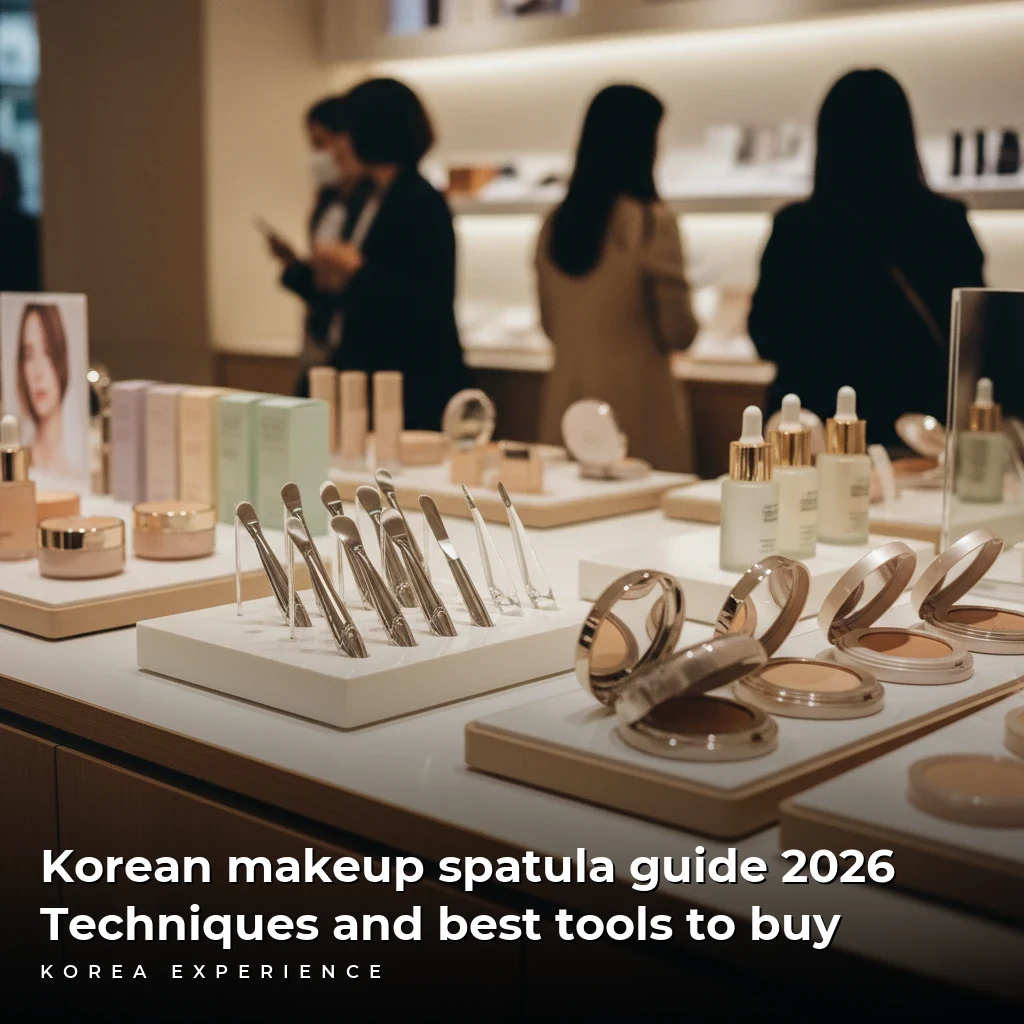
Master the 2026 Korean spatula makeup trend for glass skin. Learn the 90-degree technique, best tools under ₩20,000, and Olive Young shopping tips.

Master the 2026 Olive Young Big Bang Sale with our guide. Save up to 70% using the global app, immediate tax refunds, and hidden coupons.
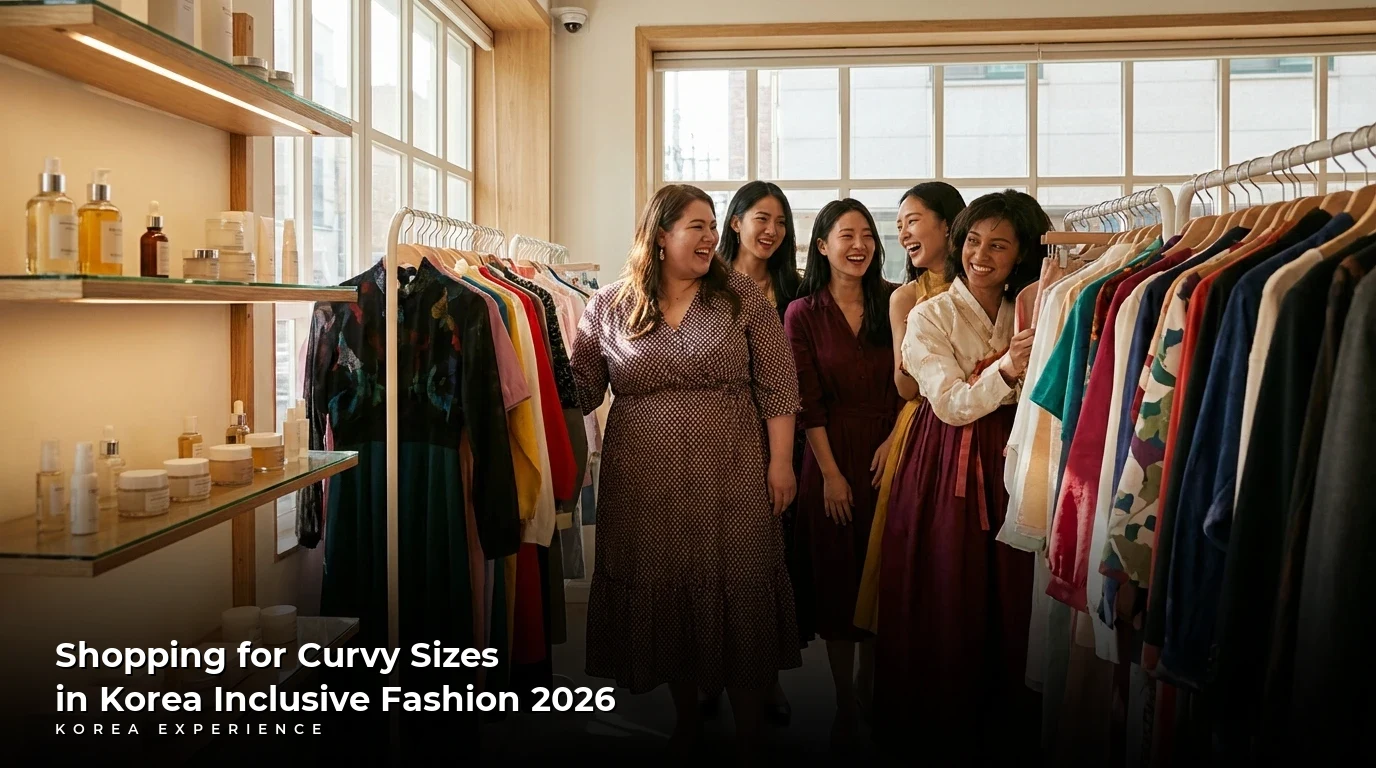
Uncover where to find inclusive fashion in Korea for curvy sizes in 2026. This guide offers insights on sizing, top stores, and tips for successful shopping.
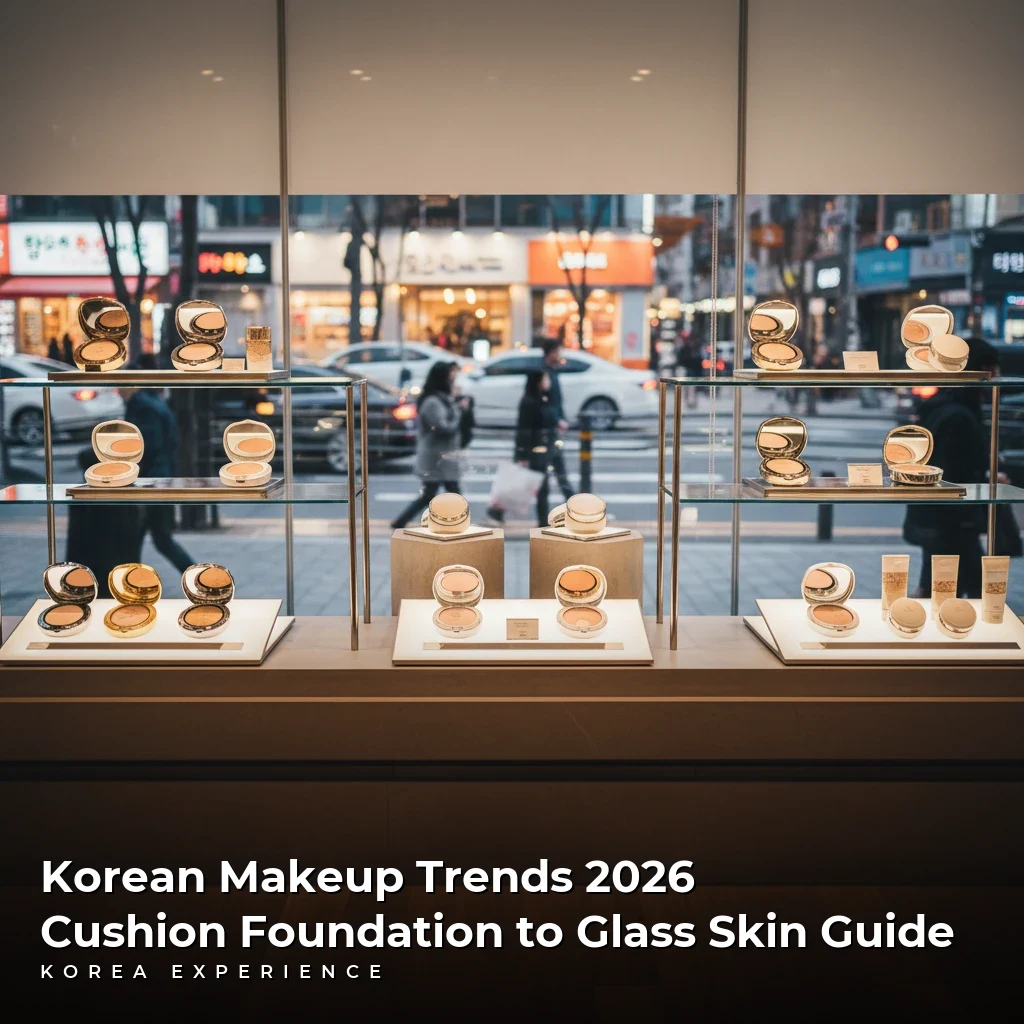
Master the 2026 glass skin look with our guide to Korean cushion foundations. Discover top brands, application tips, and shopping spots in Seoul.
Find your perfect match among the top 15 Korean cushion foundations for 2026, with pricing from ₩25,000 and shade guides for global skin tones.
Master the 2-step K-Beauty ritual for glass skin. Learn why 92% of Korean women double cleanse, best products for 2026, and how to shop at Olive Young.