Korean counterfeit products how to spot fakes guide 2026
A comprehensive guide to spotting fake luxury goods, cosmetics, and streetwear in Korea. Learn the difference between Super Fakes and authentic items.
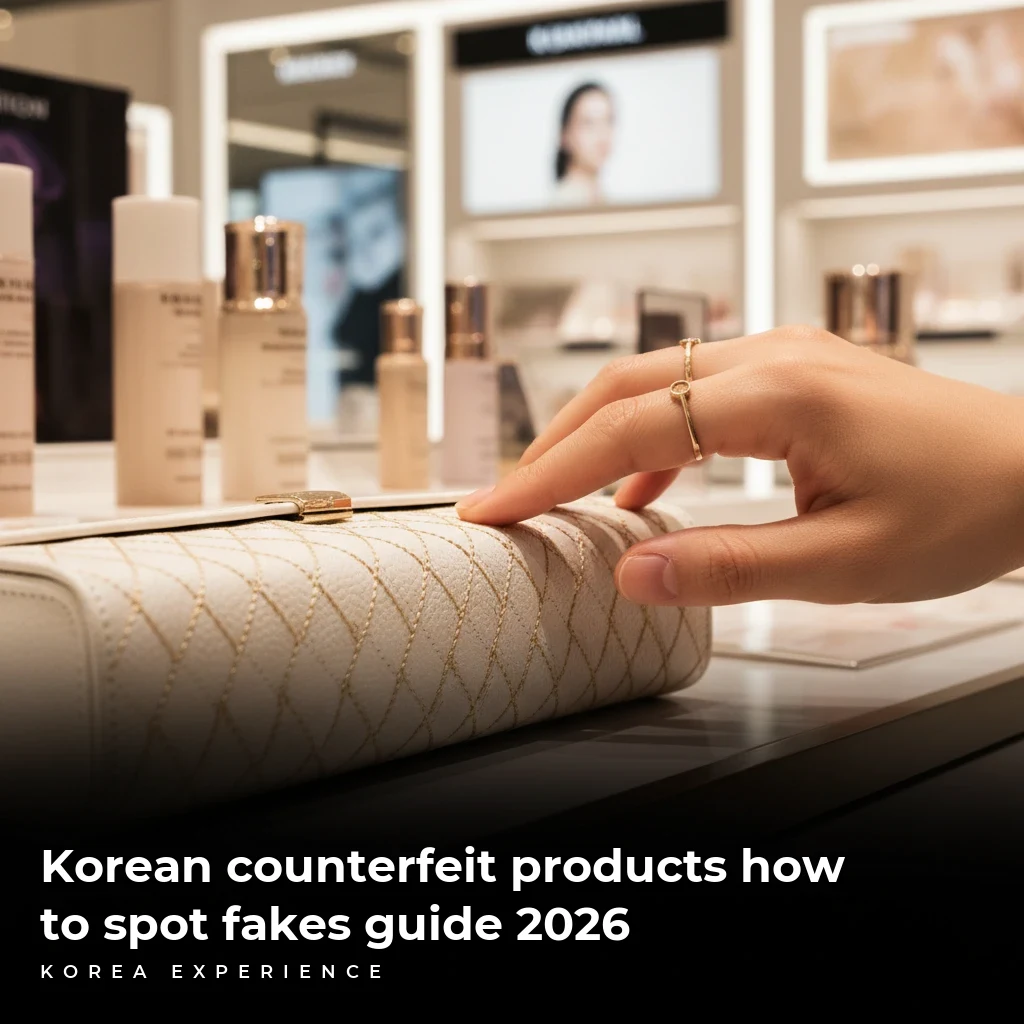
Walking through the bustling streets of Dongdaemun at 11:00 PM or navigating the crowded alleys of Namdaemun Market, you will inevitably encounter rows of goods that look suspiciously familiar. From handbags bearing the iconic "LV" monogram to sneakers that resemble the latest limited-edition Nike drops, Korea—specifically Seoul—has a complex relationship with counterfeit goods. For international travelers, the temptation can be high, but the risk of getting scammed, buying dangerous cosmetic ingredients, or facing customs issues upon returning home is higher. You might be wondering how to distinguish the "Super Fakes" (high-quality replicas) from the obvious knockoffs, or more importantly, how to ensure the expensive K-Beauty cream you just bought isn't a harmful duplicate.
The short answer: Authentic Korean products and luxury goods are best verified by checking specific details like stitching symmetry, hardware weight, and holographic safety seals (especially on K-Beauty and K-Pop merch). If the price is more than 30% below the retail market value found in major department stores like Shinsegae or Lotte, it is almost certainly a fake. To guarantee authenticity, stick to official flagship stores, duty-free shops, and major olive Young branches, avoiding street stalls for anything you intend to put on your skin.
Key Takeaways
- 1Prices more than 30-40% below official retail are the biggest red flag for counterfeits in Korea.
- 2The 'Yellow Tent' market in Dongdaemun is the epicenter of counterfeit fashion, operating strictly from 9 PM to 2 AM.
- 3Fake K-Beauty products often contain harmful levels of mercury or bacteria; always check for the HiddenTag app verification.
- 4Customs officers in the EU and US can confiscate counterfeit goods and issue fines ranging from $500 to $10,000.
- 5High-grade 'Mirror' replicas can cost upwards of $300 USD, making price alone an unreliable indicator for super fakes.
The Landscape of Counterfeits in Korea
Korea has undergone a massive transformation regarding intellectual property rights over the last two decades. While the government has cracked down significantly on the open sale of counterfeits in mainstream areas like Gangnam and Apgujeong, the underground market remains vibrant. In 2025 alone, Korean customs seized over $450 million worth of counterfeit goods intended for both domestic sale and export.
For the traveler, this presents a dualism. On one hand, you have the ultra-modern, high-end department stores. On the other, you have the "open secret" markets. Understanding this landscape is crucial. The market is generally divided into three tiers:
- Low-Tier (B-Grade): Obvious fakes found in subway underground malls or street carts. Poor stitching, plastic-smelling leather, and misspelled logos (e.g., "Chanell"). These typically cost between ₩10,000 and ₩50,000 ($7–$38 USD).
- Mid-Tier (A-Grade): Better materials, often real leather, but hardware and internal tagging are incorrect. These are common in tourist-heavy areas like Namdaemun. Prices range from ₩50,000 to ₩150,000 ($38–$115 USD).
- High-Tier (Super Fakes/Mirror/SA-Grade): These are often sold in the back rooms of office buildings in Dongdaemun or through private WeChat/KakaoTalk connections. They use imported leather and high-quality hardware. To the untrained eye, they are identical to the original. These can cost anywhere from ₩200,000 to ₩600,000 ($150–$450 USD) or more.
Legal Warning
Buying counterfeit goods for personal use is generally not criminalized for the buyer within Korea, but selling them is a serious crime. However, bringing these items back to your home country (especially France, Italy, and the US) can result in confiscation and heavy fines upon arrival.
How to Spot Fake Luxury Handbags and Wallets
When shopping in areas like the Dongdaemun Design Plaza (DDP) surroundings or looking at second-hand luxury shops in varying districts, you need a keen eye. The "Super Fake" industry has evolved to the point where they are replicating serial numbers and authenticity cards.
1. The Stitching Test
Luxury brands like Hermès, Chanel, and Louis Vuitton pride themselves on perfection.
- Authentic: Stitching is slightly angled (especially for Hermès), consistent in length, and never frayed. The thread color will perfectly match or intentionally contrast the leather according to the specific model year.
- Fake: Machine stitching often looks "too straight" or "too perfect" in a mechanical way, or conversely, has messy, loose threads at the corners. If you count the stitches between diamond patterns on a quilted bag and they differ from one diamond to the next, it is a replica.
2. Hardware and Engravings
This is often the giveaway for mid-tier fakes.
- Weight: Authentic hardware (brass, palladium, gold-plated) is heavy. Fakes use hollow metals or plastic coated in metallic paint. If the chain strap feels surprisingly light, put it back.
- Engraving: Authentic engravings are crisp and deep. Fakes often look laser-etched on the surface, appearing shallow or blurry. Check the zippers; high-end brands usually use specific manufacturers like Riri or Lampo, or their own branded hardware. A generic "YKK" zipper on a $5,000 bag is a major red flag (though some vintage legitimate models might have them, modern ones rarely do).
3. Leather Quality and Smell
- Smell: Real leather smells like rich, earthy skin. Fakes often smell strongly of glue, plastic, or chemicals. This "fufu" smell is distinct and hard to mask.
- Texture: Run your hand over the grain. Authentic pebbled leather should feel irregular and natural. Synthetic prints look like a repeating pattern.
📋 Luxury Bag Authenticity Specs
If you are looking to do legitimate shopping, it is best to stick to established malls. For a guide to one of the best spots, read our article on the Coex Mall complete shopping and dining guide.
Spotting Fake Streetwear and Sneakers
Korea is a massive hub for sneaker culture, but it is also a hub for sneaker replicas. With brands like Nike, Supreme, and Stüssy being incredibly popular, the market is flooded with unauthorized duplicates.
1. The Tag and Box Label
The size tag inside the shoe is the most difficult thing for counterfeiters to replicate perfectly because the fonts and spacing are proprietary to the manufacturer.
- The Check: Look at the UPC/EAN code. The numbers should be bold and properly spaced. On fakes, the ink often bleeds slightly, or the "US," "UK," and "EUR" text is not aligned perfectly with the size numbers below them.
- The Box: Authentic boxes have specific cardboard thickness and a distinct shade of orange/red/black. Fakes often come in boxes that are easily crushed or have a shiny, glossy finish rather than a matte one.
2. The Shape and Silhouette
- Heel Tab: On Nike Dunks or Jordans, the "hourglass" shape of the heel is a key indicator. Authentic pairs curve in at the Achilles and out at the base. Fakes often look like straight tubes or rectangles from the back.
- Toe Box: The toe box on a real Air Jordan 1 should have a gradual slope. Fakes often look "boxy" or bulky at the front.
3. Verification Apps
In 2026, relying on your eyes isn't enough. Use technology.
- Legit Check App: You upload photos of the tag, stitching, and box, and experts verify it.
- CheckCheck: Another popular service widely used by Korean resellers.
📖 How to Field Check Sneakers in Seoul
Step 1: Smell Test
Open the box. If it smells like harsh chemical glue, walk away. Authentic shoes have a distinct 'new shoe' factory smell.
Step 2: Squeeze the Sole
Press the midsole. Authentic foam has a quick rebound. Cheap fakes feel rock hard or overly squishy like a sponge.
Step 3: Check the Insole
Remove the insole if possible. The stitching underneath should be neat tape-stitching, not messy glue globs.
Step 4: Blacklight Test
If you have a UV torch, shine it on the midsole. Fakes often have 'invisible' stamps or guidelines that glow under UV light.
The Danger of K-Beauty Counterfeits
While a fake bag hurts your pride, fake cosmetics can hurt your health. Counterfeit skincare and makeup are rampant in tourist-heavy, non-official retailers. These products have been found to contain mercury, arsenic, rat droppings, and high levels of bacteria because they are mixed in unsanitary underground labs.
Where You Find Them
You will rarely find fakes at Olive Young, Chicor, or Duty-Free shops. The danger zones are:
- Street stalls in Myeongdong or Hongdae selling "bundles" at 70% off.
- Small, non-chain "general cosmetic" shops in underground subway stations.
- Unauthorized third-party sellers on open market platforms (though platforms are fighting this).
How to Verify K-Beauty
- Texture and Scent: If you know the product (e.g., the ginseng smell of Sulwhasoo), a fake will smell like perfume or nothing at all. The consistency will be watery or separated.
- The HiddenTag App: Many premium Korean brands (Clio, 3CE, some Amorepacific lines) use a holographic sticker on the packaging. You can scan this with the HiddenTag app. If it doesn't scan, or takes you to a generic website instead of the official verification page, it is fake.
- Print Quality: Look for blurry text on the back of the bottle. Korean packaging is incredibly precise. If the Korean characters (Hangul) look smudged or the font weight varies, it is a counterfeit.
- Expiration Dates: Authentic Korean products list the manufacturing date (제조) and expiration date (까지) clearly. Fakes often print these crookedly or use a date format that doesn't match the brand's standard.
If you are looking to build a routine with guaranteed authentic products, check out our complete guide to Korean skincare routine.
Health Warning
Counterfeit eye makeup and lip products are particularly dangerous. There have been documented cases of eye infections and severe allergic reactions from fake Korean cosmetics sold at street stalls. Saving ₩10,000 is not worth corneal damage.
K-Pop Merchandise: Real vs. Fake
With the global explosion of K-Pop, the counterfeit market for lightsticks, photocards, and albums is massive.
The KOMCA Sticker
The Korea Music Copyright Association (KOMCA) sticker is the gold standard for authenticity.
- Shiny/Holographic: It must be holographic.
- Rotation: When you rotate the sticker, you should see the "KOMCA" logo and a musical note move.
- Music Note Color:
- Gold (c): Usually indicates a legitimate standard product.
- Silver (c): Often found on promotional or non-sale items (not necessarily fake, but check context).
- Fakes: Often have a printed, non-holographic sticker, or a sticker that looks dull and doesn't change when tilted.
For collectors interested in the nuances of this market, our guide on collecting K-pop photocards offers deep dives into verifying rare cards.
The "Yellow Tent" Market (Dongdaemun)
If you are curious about where these goods come from, there is one place that is practically a landmark for counterfeits: the Dongdaemun "Yellow Tent" Market (Saebit Market).
- Location: Located outside Dongdaemun History & Culture Park Station (Exits 2, 3, & 4).
- Hours: Opens strictly at 9:00 PM and runs until about 2:00 AM or 3:00 AM.
- Atmosphere: Hundreds of yellow vendor tents set up in the middle of the street.
- What they sell: Everything from fake Rolexes to Supreme hoodies and Goyard bags.
Saebit Market (Yellow Tent Market)(새빛시장)
Is it safe to visit? Yes, it is physically safe. It is a popular tourist curiosity. Police patrols are frequent, but they often focus on crowd control rather than busting individual tourists. However, buying here supports an illegal industry. If you visit, be aware that returns are impossible.
Online Shopping: Coupang, Gmarket, and Naver
Living in or visiting Korea means using local e-commerce. However, these platforms operate like Amazon—anyone can sell on them.
- Verified Sellers: Look for "Official Store" badges.
- Price Logic: If a specialized Dyson Airwrap is listed for ₩200,000 when the retail is ₩600,000, it is a fake shipping from China.
- Reviews: Korean consumers are brutal in reviews. If a listing has no photo reviews or a low rating (below 4.0), avoid it.
Buying Luxury/Beauty Online in Korea
- ✓Convenience of delivery
- ✓Often slightly cheaper (5-10%)
- ✓Wider stock availability
- ✗High risk of fakes on open markets
- ✗Difficult to verify before purchase
- ✗Return shipping can be hassling
Price Comparison: Real vs. Fake
To give you a realistic idea of the market in 2026, here is a comparison of typical prices found in Seoul.
💵 Authentic vs. Counterfeit Pricing (2026 Estimates)
Dept Store Price
Dept Store / Duty Free
Official Retail (if lucky)
Hidden Market A-Grade
Street Stall / Sketchy Online
Street Vendor
Bargaining and Cultural Context
In traditional markets where fakes are sold, bargaining is the norm. The vendor might quote you ₩150,000 for a fake Gucci wallet. A local or experienced expat knows that the "real" price for that quality is likely ₩60,000.
If you are interested in the art of negotiation in Korea (which applies to legitimate goods in markets too), read our guide on bargaining culture where and how to negotiate.
Expert Tips for Travelers
"If you are looking for vintage luxury rather than fakes, head to the shops near Gugus or the vintage stores in Apgujeong. The Japanese pre-loved market standards have influenced Korea, so the authenticity checks at these brick-and-mortar vintage shops are generally very rigorous. Never buy 'vintage' from a street stall—it is just a distressed fake."
What Happens if You Get Caught?
Many travelers ask, "Can I bring this fake bag back to the USA or Europe?"
- USA: Customs and Border Protection (CBP) allows travelers to bring into the US one counterfeit item of each type (one bag, one watch) for personal use. However, if you bring 10 bags, they will assume you are a reseller, confiscate the goods, and fine you heavily.
- Europe (France/Italy): These countries are the homes of the luxury brands being copied. They have zero tolerance. French customs can fine you up to double the value of the authentic item. That means if you are caught with a fake Hermès Birkin worth $10,000 authentic, you could theoretically be fined $20,000, even if you paid $100 for it.
- Japan: Extremely strict. Do not attempt to take fakes into Japan.
📊 Counterfeit Seizures
Comparison of Shopping Venues
Where should you shop to ensure safety?
Shopping Venue Risk Assessment
| Venue Type | Authenticity Risk | Price | Refund Policy |
|---|---|---|---|
| Department Store (Shinsegae/Lotte) | Zero Risk | Retail (High) | Excellent |
| Olive Young (Chain) | Zero Risk | Retail/Promo | Good |
| Myeongdong Street Stall | High Risk | Cheap | None |
| Underground Subway Mall | Medium Risk | Cheap | Exchange Only (Usually) |
| Coupang (Rocket Delivery) | Low Risk | Competitive | Great |
Conclusion
Korea is a shopper's paradise, but the glitter of neon lights can sometimes hide the dull reality of counterfeit goods. While the "Yellow Tent" markets offer a fascinating glimpse into the shadow economy of fashion, the smartest money is spent on the incredible, authentic domestic brands Korea has to offer. Rather than buying a fake supreme hoodie, why not explore authentic Korean streetwear brands like Thisisneverthat or Ader Error? Instead of a fake Chanel cream, invest in high-science Korean skincare from IOPE or Sulwhasoo.
By knowing how to spot the fakes—checking the stitching, smelling the leather, and using verification apps—you ensure that your souvenirs from Korea are genuine treasures, not cheap regrets.
❓ Frequently Asked Questions
Have more questions?Contact us →
About the Author
Korea Experience Team
Written by the Korea Experience editorial team - experts in Korean medical tourism, travel, and culture with years of research and firsthand experience.
Explore more in Shopping & K-Beauty
From Olive Young hauls to Myeongdong shopping tips — discover the best K-Beauty products, fashion trends, and shopping destinations in Korea.
Browse All Shopping & K-Beauty ArticlesContinue Reading
Explore more articles you might find interesting
Don't risk your skin. Learn how to identify counterfeit Korean skincare with our 2026 guide, covering price analysis, packaging clues, and trusted retailers.
Master the art of spotting fake K-Pop lightsticks, find the best shops in Seoul, and ensure your concert experience is authentic with this expert guide.
Send K-Beauty and souvenirs home safely. Compare EMS vs. Surface rates, learn 2026 customs limits for US/EU, and save up to 40% on shipping fees.
Confused by K-beauty steps? We break down the 15% concentration difference and texture variations between toners and essences for your 2026 routine.
Comprehensive 2026 review of Korean snail mucin efficacy. We analyze hydration stats (+40%), pricing (from ₩12,000), and top brands like COSRX and Mizon.
We break down the critical differences between K-Beauty essences and serums, including 2026 trends, price comparisons, and proper layering steps.