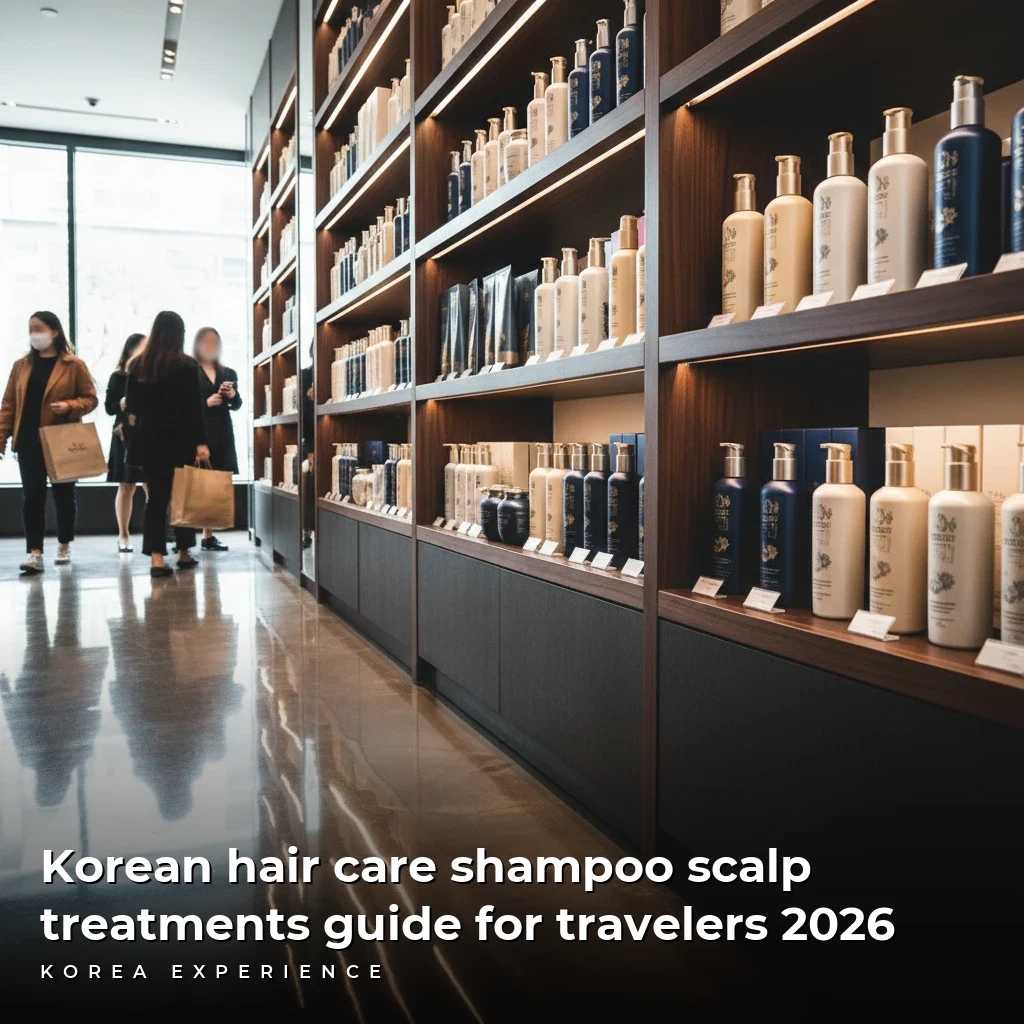
Unlocking Healthy Hair Secrets: Korean Scalp Treatments
Discover the best Korean hair care shampoos and advanced scalp treatments. This guide reveals K-beauty secrets for luscious locks, product recommendations, and where to shop in Korea.
Are you captivated by the silky, lustrous hair often seen in Korean dramas and K-pop videos? The secret isn't just good genes; it's a meticulously crafted approach to hair and scalp health, deeply embedded in the Korean beauty philosophy. For international travelers and expats in Korea, delving into the world of Korean hair care shampoo scalp treatments is a journey that promises transformation, not just for your hair, but for your overall self-care routine.
Many of us face common hair woes: dryness, oiliness, thinning, sensitivity, or just a general lack of vitality. Western hair care often focuses on the hair strands themselves, but the Korean approach is fundamentally different. It prioritizes the scalp, treating it as the fertile ground from which healthy hair grows. Just as a gardener nurtures the soil for a bountiful harvest, Korean hair care emphasizes a healthy, balanced scalp environment as the cornerstone of beautiful, resilient hair.
This comprehensive guide will unravel the mysteries of Korean hair care. We’ll explore the underlying philosophy, demystify popular ingredients, break down the array of specialized products, introduce you to leading brands, and provide practical advice on where to purchase these treasures in Korea. You’ll also learn about professional scalp treatments, equipping you with all the insider knowledge needed to achieve your healthiest, most radiant hair yet. Get ready to transform your hair care routine with the wisdom of K-beauty!
The Philosophy Behind Korean Hair Care: Beyond Just Shampoo
The foundation of Korean hair care shampoo scalp treatments lies in a holistic and preventative approach, echoing the principles of traditional Korean medicine, often referred to as "hanbang" (traditional Korean herbal medicine). Unlike the Western emphasis on quick fixes or styling, K-beauty for hair is about long-term scalp health and nourishment.
The Scalp as Skin: A Core Principle
In Korea, the scalp is treated with the same reverence and attention as facial skin. It's understood that just like your face, your scalp has pores, oil glands, and can suffer from dryness, oiliness, sensitivity, and aging. A compromised scalp environment – whether due to product buildup, pollution, stress, or inadequate cleansing – can lead to a host of problems including dandruff, hair loss, itchiness, and lackluster strands. Therefore, cleansing, exfoliating, moisturizing, and treating the scalp are paramount. This involves a multi-step routine, much like the famous K-beauty skincare regimen, often encompassing pre-shampoo treatments, specialized shampoos, conditioners, scalp masks, tonics, and essences.
Hanbang Wisdom and Natural Ingredients
A significant aspect of Korean hair care, particularly for scalp treatments, is the integration of hanbang ingredients. These are natural herbs and botanical extracts, often used for centuries in traditional medicine for their healing and nourishing properties. Ingredients like ginseng, rehmannia root, camellia oil, licorice, and green tea are not merely trendy additives; they are carefully selected for their ability to promote blood circulation, strengthen hair follicles, soothe irritation, and provide antioxidant benefits. The aim is to create a harmonious balance within the scalp, encouraging optimal hair growth and vitality naturally.
Prevention is Key: Addressing Issues Before They Start
Korean hair care is inherently preventative. Instead of waiting for severe hair loss or chronic dandruff to develop, the focus is on maintaining a healthy scalp balance daily. This means regular gentle cleansing, targeted treatments to address minor imbalances, and consistent nourishment. This proactive approach ensures that hair remains strong, vibrant, and resilient against environmental stressors and styling damage. For those interested in deeper dive, this preventative philosophy extends to other aspects of K-beauty, like the popular Korean skincare routines for radiant complexion, demonstrating a consistent approach across the board.
Understanding Your Scalp Type: The Foundation of Healthy Hair
Just as you wouldn't use a moisturizer for oily skin on a dry complexion, identifying your scalp type is the crucial first step in selecting effective Korean hair care shampoo scalp treatments. Misdiagnosing your scalp can exacerbate problems, leading to frustration and wasted product.
Oily Scalp
Characteristics: Hair often feels greasy within a day of washing, prone to product buildup, sometimes accompanied by an itchy scalp or mild dandruff. Needs: Products that gently cleanse excess sebum without stripping the scalp, often containing ingredients like salicylic acid, tea tree oil, or green tea extract to regulate oil production and prevent pore clogging. Lightweight formulas are essential to avoid weighing down hair.
Dry Scalp
Characteristics: Itchiness, flakiness (often white, powdery flakes), tightness, and sometimes irritation. The hair itself may also be dry and brittle. Needs: Hydrating and soothing ingredients such as hyaluronic acid, ceramides, centella asiatica (Cica), aloe vera, and various botanical oils (e.g., argan, camellia). Shampoos should be sulfate-free and formulated to restore the scalp's moisture barrier.
Sensitive Scalp
Characteristics: Redness, stinging, burning, or discomfort after using certain products or due to environmental factors. Can be exacerbated by stress. Needs: Extremely gentle, hypoallergenic, fragrance-free, and mild formulas. Ingredients like madecassoside, chamomile, calendula, or panthenol are often included for their calming and anti-inflammatory properties. Avoiding harsh sulfates and parabens is critical.
Combination Scalp
Characteristics: Often an oily scalp with dry ends, or localized areas of oiliness/dryness. Can be tricky to manage. Needs: A balanced approach. You might use a clarifying shampoo for the scalp and a hydrating conditioner for the ends. Some brands offer specific "combination scalp" lines that aim to balance both issues simultaneously, often through ingredients that regulate sebum while providing light hydration.
Normal Scalp
Characteristics: Balanced oil production, no significant dryness, itchiness, or excessive oiliness. Hair feels clean and healthy for a few days after washing. Needs: Maintenance! Gentle cleansing, light conditioning, and protection from environmental damage. You have the flexibility to experiment with products that enhance shine, volume, or target specific styling needs without worrying about scalp irritation.
Tip for Self-Diagnosis: Pay attention to how your scalp feels an hour after washing, and then again after 24 hours. Does it feel tight and itchy? Oily and heavy? Or perfectly comfortable? This observation, combined with examining any flakes (oily and yellow means dandruff, dry and white means dry scalp), can help you pinpoint your type. If you're unsure, many K-beauty stores and salons in Korea offer scalp analysis services.
Key Ingredients in Korean Hair Care: Nature Meets Science
The efficacy of Korean hair care shampoo scalp treatments stems from a potent blend of traditional wisdom and cutting-edge dermatological science. Here’s a look at some star ingredients you’ll frequently encounter:
Hanbang (Traditional Korean Herbal Medicine) Ingredients
- Ginseng: A powerhouse ingredient, ginseng is revered for its ability to stimulate blood circulation in the scalp, promoting hair growth and preventing hair loss. It strengthens hair follicles and provides antioxidant protection. You'll often find it in anti-hair loss lines like Ryo or Daeng Gi Meo Ri.
- Rehmannia Root: Known for its nourishing and revitalizing properties, rehmannia root is believed to help fortify hair and restore its natural color and shine, often used in conjunction with ginseng for synergistic effects.
- Camellia Oil (Dongbaek Oil): A deeply moisturizing oil rich in essential fatty acids and antioxidants. It nourishes the scalp, adds shine to hair, and helps prevent breakage. Often featured in hydrating and damage repair lines.
- Licorice Root: A soothing anti-inflammatory ingredient that helps calm irritated scalps, reduce redness, and alleviate itchiness. Beneficial for sensitive or easily irritated scalps.
- Green Tea Extract: A potent antioxidant that helps protect the scalp and hair from environmental damage. It also has anti-inflammatory and sebum-regulating properties, making it great for oily or sensitive scalps.
Modern Dermatological & Scientific Ingredients
- Salicylic Acid (BHA): An exfoliating acid that penetrates oil to dissolve dead skin cells, clear clogged pores, and reduce excess sebum on the scalp. Essential for oily or dandruff-prone scalps.
- Tea Tree Oil: Known for its antiseptic, anti-inflammatory, and antimicrobial properties. It helps to control dandruff, soothe an itchy scalp, and balance oil production.
- Centella Asiatica (Cica): A popular K-beauty ingredient celebrated for its healing, soothing, and anti-inflammatory benefits. It's excellent for sensitive or irritated scalps, helping to repair the skin barrier.
- Hyaluronic Acid: A powerful humectant that draws and holds moisture, providing intense hydration to a dry scalp and hair.
- Ceramides: Lipids that are naturally part of the skin's barrier. When applied to the scalp, ceramides help to strengthen the moisture barrier, reducing dryness and sensitivity.
- Peptides: Chains of amino acids that can signal cells to produce more collagen or support hair growth. Often found in anti-hair loss or strengthening treatments.
- Probiotics/Prebiotics: Ingredients that help balance the scalp's microbiome, fostering a healthy environment for hair growth and reducing issues like dandruff and irritation.
This combination of ancient wisdom and modern science is what makes Korean hair care shampoo scalp treatments so uniquely effective and sought after by international audiences.
Decoding Korean Hair Care Product Categories
The comprehensive nature of Korean hair care shampoo scalp treatments means there's a specific product for every step and every concern. Understanding these categories is key to building an effective routine.
1. Pre-Shampoo Treatments / Scalp Scalers (스캘프 스케일러)
- Purpose: These are exfoliating treatments designed to deep cleanse the scalp before shampooing. They remove dead skin cells, excess sebum, product buildup, and environmental impurities that regular shampoo might miss.
- Ingredients: Often contain salicylic acid, AHAs, sea salt, clay, or botanical extracts (e.g., tea tree) for exfoliation and purification.
- Usage: Typically applied to a wet scalp, massaged in, left for a few minutes, then rinsed thoroughly before shampooing. Used 1-2 times a week.
- Example Brands: Dr. Forhair Folligen Scalp Pack, Lador Tea Tree Scalp Clinic Hair Pack.
2. Shampoos (샴푸)
- Purpose: The primary cleansing step, but unlike many Western shampoos, Korean shampoos are often formulated to treat specific scalp concerns while cleansing gently.
- Types:
- Clarifying/Anti-Dandruff: For oily or flaky scalps (e.g., Ryo Hair Loss Care Shampoo for Oily Scalp).
- Hydrating/Moisturizing: For dry or sensitive scalps (e.g., Aekyung Kerasys Scalp Care Balancing Shampoo).
- Hair Loss Care: Formulated with active ingredients like ginseng, caffeine, or peptides to strengthen follicles and reduce shedding (e.g., Daeng Gi Meo Ri Ki Gold Premium Shampoo).
- Damage Repair: Focus on repairing damaged strands (e.g., Mise en Scène Perfect Serum Original Shampoo).
- Usage: Lathered and massaged into the scalp and hair, then rinsed. Often double-cleansing (shampoo twice) is recommended for thorough cleaning.
3. Conditioners (컨디셔너)
- Purpose: To smooth the hair cuticle, detangle, add shine, and provide light hydration to the hair strands.
- Usage: Applied from mid-lengths to ends, avoiding the scalp, after shampooing. Left on for 1-3 minutes, then rinsed.
4. Hair Treatments / Masks (헤어 트리트먼트 / 마스크)
- Purpose: More intensive than conditioners, these provide deep nourishment, repair damage, improve elasticity, and add shine. Some are also formulated to benefit the scalp.
- Ingredients: Often richer in proteins, amino acids, natural oils, and humectants.
- Usage: Applied after shampooing (and sometimes after a scalp scaler), typically to hair from mid-lengths to ends, but some targeted scalp masks are available. Left on for 5-20 minutes, sometimes with heat or a hair cap, then rinsed. Used 1-3 times a week.
- Example Brands: Lador Hydro LPP Treatment, innisfree Camellia Essential Hair Treatment.
5. Scalp Tonics / Serums / Essences (스캘프 토닉 / 세럼 / 에센스)
- Purpose: Leave-on treatments applied directly to the scalp to deliver targeted active ingredients. They can soothe, stimulate growth, control oil, or provide hydration.
- Ingredients: Often contain ginseng, peptides, biotin, tea tree, centella asiatica, or salicylic acid.
- Usage: Applied to a clean, towel-dried scalp (or dry scalp) and massaged in. Do not rinse. Used daily or as directed.
- Example Brands: Ryo Hair Loss Care Scalp & Hair Tonic, The Face Shop Dr. Belmeur Cica Peptite Ampoule.
6. Hair Essences / Oils (헤어 에센스 / 오일)
- Purpose: Leave-on products for the hair strands (not primarily the scalp) to provide shine, frizz control, heat protection, and moisture.
- Usage: Applied to damp or dry hair, typically after washing and before styling.
- Example Brands: Mise en Scène Perfect Serum Original.
Here’s a comparison table to help differentiate some key products:
| Feature | Scalp Scaler | Shampoo | Hair Treatment / Mask | Scalp Tonic / Serum |
|---|---|---|---|---|
| Primary Focus | Deep cleanse, exfoliate scalp | Cleanse hair and scalp | Deep condition, repair hair | Target scalp concerns, leave-on |
| Application Area | Scalp | Hair and scalp | Hair (mid-lengths to ends) | Scalp |
| Rinse Required? | Yes, before shampooing | Yes | Yes | No |
| Frequency | 1-2 times/week | Daily or every other day | 1-3 times/week | Daily |
| Key Ingredients | Salicylic acid, sea salt, clay, tea tree | Surfactants, specific treatment ingredients | Proteins, oils, humectants | Ginseng, peptides, Cica, tea tree |
| Benefit | Removes buildup, refreshes scalp | Cleanses, addresses specific scalp issues | Nourishes, repairs, adds shine | Soothes, stimulates growth, balances scalp |
Top Korean Hair Care Brands and Must-Try Products
Navigating the vast world of Korean hair care shampoo scalp treatments can be overwhelming. Here are some of the most reputable brands and their standout products, widely available across Korea.
1. Ryo (려) - Amorepacific
- Focus: Hanbang-based hair loss prevention and scalp care. Ryo is arguably one of the most recognizable hanbang hair care brands.
- Must-Try Product: Ryo Hair Loss Care Shampoo (various types: Oily, Dry, Sensitive, Damaged Hair). This line is incredibly popular for its effectiveness in reducing hair fall. The Oily Scalp version is excellent for controlling sebum, while the Dry Scalp version offers hydration without heaviness.
- Insider Tip: Look for their Hair Loss Care Scalp & Hair Tonic which is a leave-on spray to further boost scalp health and reduce shedding.
- Availability: Olive Young, Lalavla, Chicor, most supermarkets.
2. Dr. Forhair
- Focus: Clinic-grade scalp and hair solutions, backed by scientific research. Very popular for targeted hair loss concerns and severe scalp issues.
- Must-Try Product: Dr. Forhair Folligen Scalp Pack. A pre-shampoo treatment designed to exfoliate and deeply cleanse the scalp, removing impurities and buildup that can hinder hair growth. Their Folligen Original Shampoo is also a bestseller for hair loss.
- Insider Tip: If you're serious about tackling hair loss, consider their Folligen Bio-3 line which includes a Shampoo, Treatment, and Tonic for a comprehensive approach.
- Availability: Olive Young, Lalavla, Chicor, some department stores.
3. Lador
- Focus: Professional salon-quality products for home use, with an emphasis on hair repair and shine.
- Must-Try Product: Lador Hydro LPP Treatment. A protein-rich treatment that deeply nourishes and repairs damaged hair, leaving it soft and silky. Many consider it a dupe for high-end salon treatments. Their Keratin LPP Shampoo is also popular.
- Insider Tip: Lador also makes effective scalp-specific products like the Tea Tree Scalp Clinic Hair Pack for refreshing and soothing irritated scalps.
- Availability: Olive Young, Lalavla, Chicor, online K-beauty retailers.
4. Daeng Gi Meo Ri (댕기머리) - Doori Cosmetics
- Focus: Another prominent hanbang brand, known for its high concentration of traditional herbal extracts, often recognizable by its distinct herbal scent.
- Must-Try Product: Daeng Gi Meo Ri Ki Gold Premium Shampoo. A rich, nourishing shampoo packed with over 30 herbal ingredients to prevent hair loss, strengthen hair, and improve scalp health.
- Insider Tip: While the scent is unique, its effectiveness for strengthening hair and improving scalp circulation is highly praised.
- Availability: Supermarkets, some Olive Young/Lalavla stores, online.
5. Aekyung Kerasys
- Focus: Comprehensive hair care for various hair types and concerns, often more budget-friendly while delivering solid performance.
- Must-Try Product: Kerasys Scalp Care line (Balancing, Deep Cleansing, Sensitive). These shampoos and conditioners are formulated to address different scalp needs, offering effective and gentle solutions.
- Availability: Most supermarkets, Olive Young, Lalavla.
6. CP-1 (Ceramide Protein 1)
- Focus: Intensive protein and ceramide-based treatments for severely damaged hair.
- Must-Try Product: CP-1 Premium Hair Treatment. This single-use ampoule is famous for its instant hair transforming effects, making even the most brittle hair feel soft and smooth. While primarily for hair, a healthy hair strand reduces irritation to the scalp.
- Availability: Olive Young, Lalavla, Chicor.
Here’s a quick comparison of some popular brands for different needs:
| Brand | Primary Focus | Key Ingredients | Popular Product | Price Range |
|---|---|---|---|---|
| Ryo | Hair Loss Care, Hanbang Scalp Health | Ginseng, Rehmannia Root, Pine | Hair Loss Care Shampoo | Mid-Range |
| Dr. Forhair | Clinic-Grade Scalp Treatments, Hair Loss | Salicylic Acid, Biotin, Peptides | Folligen Scalp Pack / Shampoo | Mid-High Range |
| Lador | Professional Hair Repair, Damage Care | Keratin, Collagen, Tea Tree | Hydro LPP Treatment | Mid-Range |
| Daeng Gi Meo Ri | Traditional Hanbang, Intensive Hair Loss Care | Multiple Hanbang Herbs | Ki Gold Premium Shampoo | Mid-High Range |
| Kerasys | Everyday Hair & Scalp Care, Affordable | Natural Extracts, Ceramide | Scalp Care Balancing Shampoo | Budget-Mid |
Where to Shop for Korean Hair Care in Korea
Finding the best Korean hair care shampoo scalp treatments is part of the fun of exploring K-beauty. Korea offers a plethora of options, from bustling street shops to luxury department stores.
1. Health & Beauty Stores (H&B Stores)
These are your go-to for most popular K-beauty hair care brands. They offer a wide selection, frequent sales, and staff who can often assist (though English proficiency varies).
- Olive Young (올리브영): The undisputed king of H&B stores in Korea. You'll find a massive selection of Ryo, Dr. Forhair, Lador, Kerasys, CP-1, and countless other brands. They have extensive scalp care sections. Prices are competitive, and sales are frequent.
- Locations: Ubiquitous, especially in popular areas like Myeongdong, Hongdae, Gangnam, and subway stations. The flagship store in Myeongdong is a multi-story beauty wonderland.
- Insider Tip: Look for "1+1" (buy one get one free) or "50% off" deals, which are very common. They also offer tax refunds for tourists.
- Lalavla (랄라블라) & Chicor (시코르): Similar to Olive Young but with slightly different brand selections and aesthetics. Lalavla (formerly Watsons Korea) focuses more on mainstream brands, while Chicor (operated by Shinsegae Department Store) offers a curated selection of both mainstream and more premium K-beauty brands, often with more luxurious store interiors and experiential elements.
- Locations: Major shopping districts and department stores.
- Insider Tip: Chicor often has beauty counters where you can try products or even get a mini-consultation.
2. Department Stores
For higher-end or luxury Korean hair care brands, or if you prefer a more refined shopping experience.
- Lotte Department Store, Shinsegae Department Store, Hyundai Department Store: These stores carry premium K-beauty brands that might not be found in H&B stores. Brands like Amorepacific's "Aestura" or "Sulwhasoo" (which also has some scalp/hair lines) might be available here.
- Locations: Major city centers (e.g., Myeongdong, Gangnam, Jamsil, Busan Centum City).
- Insider Tip: Staff here are generally well-trained and many speak English, offering personalized recommendations. Look out for gift sets, especially around holidays.
3. Supermarkets (e.g., E-Mart, Lotte Mart, Homeplus)
Great for everyday, budget-friendly Korean hair care shampoos and conditioners, especially from brands like Aekyung Kerasys, LG Household & Health Care (e.g., Elastine, ReEn), and some Ryo lines.
- Locations: Found throughout residential and commercial areas.
- Insider Tip: Excellent for bulk purchases or stocking up on daily essentials at lower prices.
4. Duty-Free Shops
If you're flying out of Korea, duty-free shops at Incheon International Airport (Terminal 1 & 2) and in major city centers (e.g., Lotte Duty Free Myeongdong, Shinsegae Duty Free Myeongdong) are great for purchasing larger sizes or sets of popular brands tax-free.
- Locations: Airports and major shopping districts.
- Insider Tip: Pre-order online for additional discounts and convenient pickup at the airport.
5. Online Retailers (for residents or long-term expats)
- Coupang (쿠팡), Gmarket (지마켓), SSG.COM: These are massive online marketplaces in Korea offering competitive prices and fast delivery.
- Insider Tip: Requires a Korean phone number and bank account for registration and payment, so more suitable for residents. They often have the widest selection and best deals.
When shopping, remember to:
- Check for expiration dates: K-beauty products generally have a shorter shelf life due to natural ingredients.
- Read reviews: Use apps like "Hwahae" (화해) or "Glowpick" to read user reviews and ingredient lists (though these are primarily in Korean).
- Ask for samples: Many stores will gladly provide samples with a purchase.
Experiencing Professional Korean Scalp Treatments
While at-home Korean hair care shampoo scalp treatments are highly effective, a professional scalp treatment in Korea offers an unparalleled experience, combining deep cleansing, nourishment, and relaxation. These are often considered preventative health treatments, not just beauty indulgences.
Types of Professional Scalp Treatments
-
Hair Loss Clinics / Scalp Clinics (탈모 클리닉 / 두피 클리닉):
- Focus: Highly specialized treatments for severe hair loss, thinning, or chronic scalp conditions (e.g., seborrheic dermatitis). These clinics often employ dermatologists or trained trichologists.
- Process: Starts with a detailed scalp analysis using magnifying cameras to assess follicle health, sebum levels, and any inflammation. Treatment typically involves deep cleansing, specialized serums (often with microneedling or specific devices for penetration), massages, and sometimes light therapy.
- Cost: Significantly higher, ranging from ₩100,000 to ₩300,000+ per session, and often recommended in packages of multiple sessions.
- Locations: Found in major districts like Gangnam, Apgujeong, and Cheongdam-dong. Look for "Dr. Forhair" clinics (they have their own clinics) or standalone clinics like "Talmo.com" (a well-known hair loss clinic).
- Insider Tip: Requires multiple sessions for visible results. Language barriers might exist, so consider booking clinics that advertise English services.
-
Hair Salons with Scalp Care Programs (미용실 두피 케어):
- Focus: Many high-end and even mid-range hair salons in Korea offer dedicated scalp care menus alongside their hair styling services. These are less clinical than specialized clinics but provide a more thorough treatment than at home.
- Process: Often includes scalp scaling, a specialized shampoo, conditioning, a scalp mask, and a relaxing head and shoulder massage. They use professional-grade products and steaming to enhance absorption.
- Cost: Ranging from ₩50,000 to ₩150,000 per session, depending on the salon's prestige and the treatment's intensity.
- Locations: Widely available across all major neighborhoods. Popular salon chains like Juno Hair or Park Jun Beauty Lab often have such services.
- Insider Tip: This is a great way to experience a professional treatment without the commitment of a clinic. Ask your stylist for their recommendation based on your scalp type.
-
Spas & Esthetic Centers (스파 & 에스테틱):
- Focus: More on relaxation and overall wellness, often integrating scalp treatments as part of a broader body or facial treatment.
- Process: Similar to salon treatments but with an emphasis on aromatherapy, ambiance, and a more luxurious, extended massage.
- Cost: Often starting from ₩80,000 to ₩200,000+.
- Locations: Luxury hotels, high-end shopping areas, and dedicated spa complexes.
- Insider Tip: Perfect for a pampering session. Search for "Korean head spa" for options that focus solely on the scalp and head massage.
What to Expect During a Professional Scalp Treatment:
- Consultation: A therapist will usually ask about your scalp concerns and hair history.
- Scalp Analysis: Often with a micro-camera to show you the condition of your scalp (this can be eye-opening!).
- Pre-treatment: Application of a scalp scaler or detoxifying mask.
- Steaming/Massaging: To open pores and relax the scalp, enhancing product absorption. A skilled head massage is a hallmark of Korean scalp treatments.
- Shampoo & Conditioning: Using specialized products tailored to your needs.
- Targeted Treatment: Application of serums, ampoules, or masks.
- Post-treatment: Sometimes light therapy or a final tonic.
- Post-analysis: Comparing your scalp's condition before and after, providing product recommendations for home care.
Booking a professional scalp treatment can be a highly rejuvenating experience, providing deeper cleansing and targeted care that's hard to replicate at home. It's a true embodiment of the holistic approach of Korean hair care shampoo scalp treatments.
Frequently Asked Questions about Korean Hair Care
1. How often should I use a scalp scaler in my routine?
Generally, a scalp scaler is recommended 1-2 times a week. If you have a very oily scalp or use a lot of styling products, you might use it twice. For dry or sensitive scalps, once a week or every other week is sufficient to avoid over-exfoliation. Always follow the product's specific instructions.
2. Are Korean hair products suitable for all hair types?
Yes, Korean hair care emphasizes treating the scalp first, which benefits all hair types. Within the vast range of K-beauty hair products, you'll find specialized lines for oily, dry, sensitive, damaged, fine, and thick hair. The key is to identify your scalp and hair concerns accurately and choose products formulated to address them.
3. What's the main difference between a hair treatment and a conditioner?
A conditioner primarily works on the surface of the hair, smoothing the cuticle, detangling, and providing light moisture for daily use. A hair treatment or mask is more intensive, designed to penetrate deeper into the hair shaft to repair damage, provide deep nourishment, strengthen, and improve elasticity. Treatments are typically used less frequently (1-3 times a week) and left on for a longer period.
4. Can I find these Korean hair care products outside of Korea?
Yes, many popular Korean hair care brands like Ryo, Lador, Dr. Forhair, and Kerasys are increasingly available internationally. You can find them in Asian supermarkets, online K-beauty retailers (like YesStyle, Stylevana, iHerb), and even some mainstream beauty stores in various countries. However, the selection and prices are often best when purchased directly in Korea.
5. How do I know which product is right for my scalp type if I can't read Korean?
Look for product descriptions and packaging in English, which many international brands provide. Pay attention to keywords:
- Oily: "Sebum control," "refreshing," "clarifying," "anti-dandruff (for oily flakes)."
- Dry: "Moisturizing," "hydrating," "nourishing," "soothing," "deep moisture."
- Sensitive: "Mild," "hypoallergenic," "soothing," "fragrance-free," "Cica."
- Hair Loss: "Hair loss care," "anti-hair loss," "scalp strengthening," "folligen." Additionally, online reviews and K-beauty blogs in English are excellent resources for product recommendations based on scalp type. Many K-beauty stores also have staff who can help, especially in tourist areas like Myeongdong.
Conclusion: Embrace the Korean Hair Care Revolution
The world of Korean hair care shampoo scalp treatments is a revelation for anyone seeking truly healthy, vibrant hair. It's a journey that shifts focus from merely styling to deeply nurturing, recognizing the scalp as the vital root of all hair health. By embracing this holistic philosophy, incorporating potent hanbang ingredients, and utilizing a targeted multi-step routine, you can unlock the full potential of your hair.
Whether you're battling dryness, oiliness, hair loss, or simply aspire to a more lustrous mane, Korea offers a comprehensive solution. From the accessible shelves of Olive Young to the indulgent experience of a professional scalp clinic, the tools and expertise are readily available. We encourage you to:
- Understand your scalp type: This is your critical first step.
- Explore diverse product categories: Don't limit yourself to just shampoo and conditioner.
- Experiment with key ingredients: Discover the power of ginseng, camellia oil, salicylic acid, and more.
- Visit local K-beauty stores: Experience the vast selection and grab some fantastic deals.
- Consider a professional treatment: For a truly immersive and effective scalp reset.
By integrating these Korean hair care secrets into your routine, you're not just buying products; you're investing in a long-term commitment to the health and beauty of your hair. So, go ahead – explore, experiment, and prepare to be amazed by the transformation! Your healthiest, most radiant hair awaits you in Korea.
About the Author
Korea Experience Team
Written by the Korea Experience editorial team - experts in Korean medical tourism, travel, and culture with years of research and firsthand experience.
Explore more in Shopping & K-Beauty
From Olive Young hauls to Myeongdong shopping tips — discover the best K-Beauty products, fashion trends, and shopping destinations in Korea.
Browse All Shopping & K-Beauty ArticlesContinue Reading
Explore more articles you might find interesting
Exploring if high-end Korean skincare like Sulwhasoo and The History of Whoo offers true value for international travelers and expats in 2026.
Discover why Tamburins and Granhand are defining the future of Korean fragrance. Learn about their unique aesthetics, signature scents, and where to shop in Seoul.
Unlock the secrets to finding stunning Korean home decor and modern Hanok style items. Discover where to buy authentic pieces to transform your space.
Discover the vibrant world of Korean eyewear fashion, from stylish glasses and trendy sunglasses to diverse contact lenses. Your guide to shopping smart in Korea.
Discover the best Korean home fragrances and candles to infuse your space with the unique scents of Seoul in 2026. Explore brands, tips, and where to buy.
Discover the best Korean eye creams, ingredients, and application techniques for radiant under-eyes. Your comprehensive guide to K-beauty under-eye care.