Korean Home Decor Buying Guide: Modern Hanok Style Shops 2026
Discover where to buy modern Hanok decor in Seoul. From handmade Soban tables ($150) to minimalist ceramics, find the best artisan shops and shipping tips.
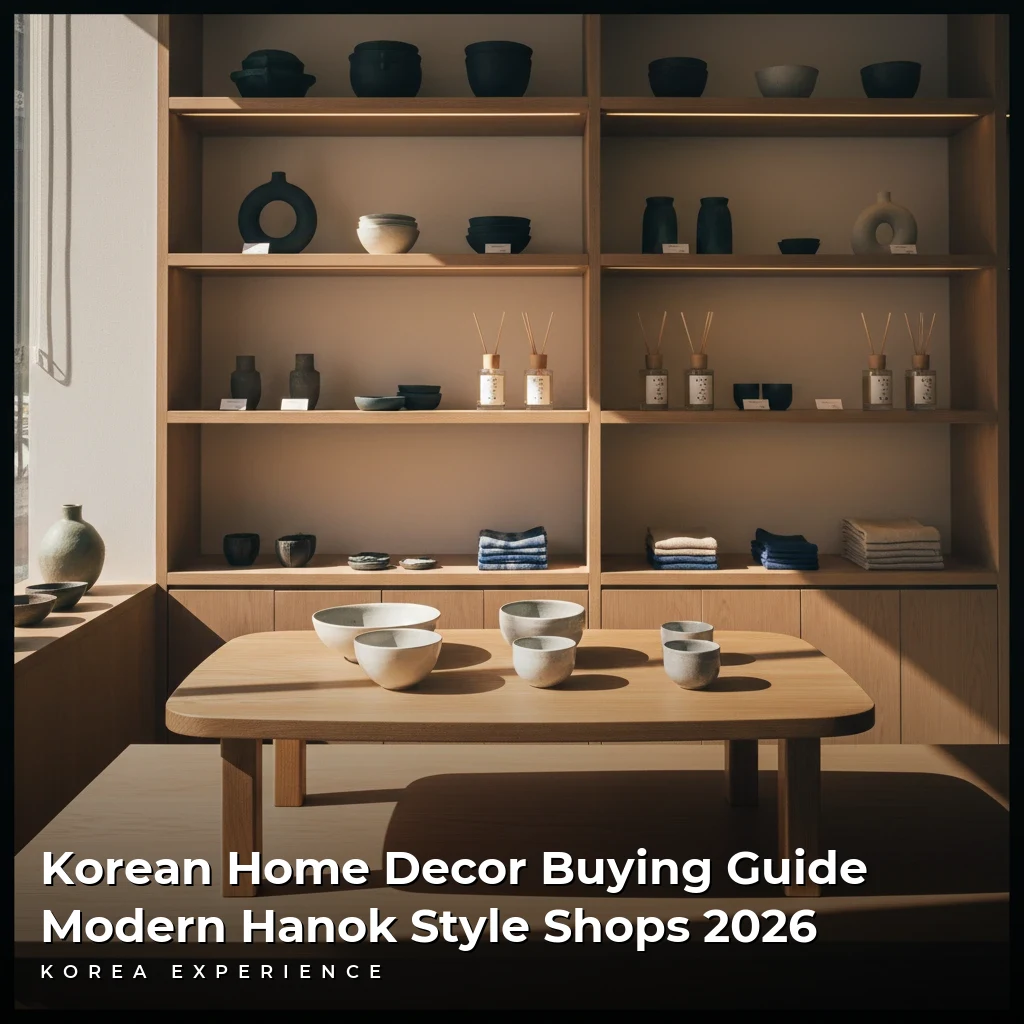
Finding authentic Korean home decor that blends traditional aesthetics with modern functionality can be challenging for international visitors. You might see beautiful Soban tables in cafes or minimalist ceramics in K-Dramas, but finding where to purchase them—and how to get them home—is a different story.
The short answer: To buy Modern Hanok style decor, head to the quiet side streets of Anguk-dong and Bukchon for high-end artisan crafts, visit the KCDF Gallery in Insadong for certified quality goods, or shop at JAJU (often called the "Korean Muji") for affordable mass-market items. Expect to pay between ₩150,000 ($110 USD) for a small wooden table and roughly ₩50,000 ($35 USD) for quality ceramic-ware.
Key Takeaways
- 1Samcheong-dong and Anguk are the prime districts for high-end, artisan decor shops
- 2JAJU is the best budget-friendly chain for modern Korean minimalist homeware
- 3EMS shipping rates for furniture average ₩20,000 per kg to North America
- 4Authentic Soban tables range from 150,000 to ₩800,000 depending on wood type
Defining Modern Hanok Style: The Aesthetic of Emptiness
Before diving into specific shops, it is crucial to understand what you are looking for. Modern Hanok style is not just about old furniture; it is about Yeobaek-ui Mi (the beauty of empty space). It prioritizes natural materials like light pine wood, rough ceramics, hemp fabrics, and Hanji (mulberry paper).
Unlike Western decor, which often focuses on filling space, Korean traditional design focuses on low-profile furniture to maintain an open visual field. In 2026, the trend has shifted towards "Newtro" (New + Retro), where traditional shapes—like the Moon Jar—are reimagined with modern matte textures or slightly altered silhouettes to fit contemporary apartments.
📊 Market Growth
Where to Buy: The Best Districts in Seoul
Seoul is massive, covering over 605 square kilometers, so targeting the right neighborhood is essential to save time. Do not waste time in Myeongdong for home decor; that is a hub for cosmetics and street food. For decor, you need to go where the artisans are.
1. Insadong & Anguk: The Traditional Hub
While the main street of Insadong can feel touristy, the side alleys and the area toward Anguk Station are goldmines for authentic goods. The crown jewel here is the KCDF Gallery (Korea Craft & Design Foundation). Unlike souvenir stalls selling plastic trinkets, this government-supported venue sells high-quality works from certified masters.
KCDF Gallery Shop(KCDF 갤러리 숍)
Pro Tip: Tax Refunds
Many higher-end shops in Insadong and Gangnam offer immediate tax refunds for purchases over ₩30,000. Always carry your physical passport when shopping for high-value decor items.
2. Samcheong-dong: The Boutique Artisan Experience
Just a 15-minute walk north of Insadong lies Samcheong-dong. This area is famous for its mix of traditional Hanok architecture and modern concrete galleries. Here, you will find small, owner-operated boutiques. The prices here are generally 20-30% higher than in markets, but the curation is impeccable.
Walk along the main Samcheong-ro street, but be sure to climb the stairs into the Bukchon hills. This is where you find pottery studios where you can buy directly from the kiln.
📋 Samcheong-dong Shopping Facts
3. Seongsu-dong: The Hipster Modern Twist
If you want "Modern Hanok" that leans more "Modern" than "Hanok," go to Seongsu-dong. Known as the Brooklyn of Seoul, this area is filled with concept stores that blend industrial gray concrete with warm Korean wood accents. You can find excellent lighting fixtures and modern interpretations of traditional bedding here.
For a deeper dive into this area, read our guide on 24 hours in Seongsu-dong, which highlights the contrast between luxury and market vibes.
Must-Have Items for the Hanok Look
If you cannot renovate your entire house, adding specific key items can instantly create that Korean atmosphere. Here are the top items to look for and what you should expect to pay.
The Soban (Small Tray Table)
The Soban is perhaps the most iconic piece of Korean furniture. Traditionally used for dining, these small, portable tables are now used as coffee tables or side tables.
- Hoju-ban: Known for its tiger-leg shape, offering a sturdy, curved elegance.
- Naju-ban: Features a rimmed tray top, originally from the Naju region.
💵 Soban Table Price Guide (2026)
Solid Zelkova or Ginkgo wood, lacquered
Made of plywood or MDF, found in markets
Korean Ceramics: The Moon Jar
The Moon Jar (Dal-hangari) is a white porcelain jar that resembles a full moon. It represents purity and modesty. While an original from a master can cost upwards of ₩10,000,000 ($7,500 USD), many modern ceramicists make smaller, affordable versions.
Look for "Buncheong" ware as well—a grayish-blue ceramic with white slip that looks earthy and modern. A good Buncheong mug usually costs around 30,000 to ₩45,000 ($22-$33 USD).
Bojagi (Traditional Wrapping Cloths)
If you are tight on luggage space, Bojagi is the perfect purchase. These are square fabrics used for wrapping gifts or covering food. In modern decor, they are framed as art or used as table runners.
- Ramie (Mosi): Translucent, stiff, and airy. Perfect for summer vibes.
- Silk: Luxurious and colorful.
You can find excellent Bojagi at Dongdaemun Shopping Complex (5th floor) for a fraction of the price of boutique stores. Expect to pay about 8,000 to ₩15,000 per yard for fabric, or ₩25,000 for a finished piece.
Don't just buy a Bojagi; ask the shop owner to teach you one wrapping knot. The 'lotus flower' knot turns a simple cloth into a structural art piece you can display on a shelf.
Major Retailers: The "Target" and "Muji" of Korea
Not everyone has the budget for handmade artisan goods. Fortunately, Korea has excellent mass-market brands that nail the aesthetic at a lower price point.
JAJU (Natural Lifestyle)
Often referred to as the "Korean Muji," JAJU offers minimalist homeware, pajamas, and kitchen utensils. Their "Korean Modern" line features stainless steel dishes, brass spoons (Sujeo), and simple wooden trays that fit perfectly in a modern home.
- Locations: COEX Mall, Garosu-gil, and inside many E-Mart locations.
- Price: $$ (Moderate)
Modern House
This is cheaper than JAJU and offers a wider variety of seasonal decor. It is great for soft furnishings like cushion covers with Korean motifs or simple bedding.
- Locations: Major department stores and malls like Times Square in Yeongdeungpo.
- Price: $ (Budget)
For a full shopping day that includes these brands, check out our COEX Mall complete shopping guide, which details the massive JAJU flagship store located there.
Artisan vs. Mass Market Decor
| Feature | Artisan Shop (Bukchon) | Mass Market (JAJU/Modern House) |
|---|---|---|
| Authenticity | High (Handmade) | Medium (Factory Made) |
| Price Point | $$$ ($100+) | $ ($10-$50) |
| Durability | Heirloom Quality | Standard Consumer Goods |
| Tax Refund | Sometimes | Almost Always |
How to Ship Furniture Home from Korea
Buying a table is easy; getting it to New York or London is the hard part. Here is a realistic look at the logistics.
Korea Post (EMS)
For items under 30kg (approx 66 lbs) and under certain dimensions (length + girth < 3 meters), Korea Post EMS is reliable and relatively fast (3-7 days).
- Cost: Sending a 10kg box to the USA costs approximately 130,000 - ₩150,000 ($100-$115 USD).
- Process: You can use the Korea Post app or visit any local post office. Most boxes and packing materials are sold on-site for under ₩2,000.
Private Cargo Services
If you buy a large piece of furniture, like a vintage wooden chest (Bandaji), you cannot use the post office. You will need a freight forwarder. The antique street in Dapsimni has specialized shippers who handle crating and customs.
📖 How to Ship Decor via Korea Post
Step 1: Pack Securely
Buy the sturdy #5 or #6 box at the post office. Wrap ceramics in at least 3 layers of bubble wrap (available for free or cheap at the PO).
Step 2: Fill Customs Form
Use the kiosk to enter the address in English. Be specific: write 'Ceramic Vase' not just 'Gift'.
Step 3: Pay and Track
Pay via credit card (foreign cards accepted). Keep the receipt with your EMS tracking number (starts with 'EM').
DIY: Making Your Own Decor
Sometimes the best souvenir is one you make yourself. Seoul offers incredible workshops where you can create decor items.
- Najeon Chilgi (Mother of Pearl) Class: In Bukchon, you can learn to apply iridescent shell pieces to small jewelry boxes or mirrors. This art form dates back to the Goryeo dynasty.
- Ceramics Class: Pottery villages in Icheon (an hour outside Seoul) or studios in Gangnam offer one-day wheel throwing classes.
For those interested in traditional skills, reading about calligraphy classes in Seoul can provide insight into the brushwork aesthetic often seen on Korean scrolls and pottery.
Where to Stay for a Decor Shopping Trip
If your primary goal is shopping for home goods, location matters. Carrying heavy ceramics across the subway system during rush hour is a nightmare.
- Stay in Jongno-gu: This puts you within walking distance of Insadong, Ikseon-dong, and Bukchon. You can drop off your purchases at your hotel mid-day.
- Stay in Gangnam: Better if you are targeting high-end luxury goods or department stores.
Check our guide on best neighborhoods for expats in Seoul to understand the vibe differences between north and south of the river.
Buying Vintage vs. Modern Reproductions
- ✓Vintage items hold value and have history
- ✓Modern reproductions are more durable for daily use
- ✓Vintage supports preservation of antiques
- ✗Vintage requires strict humidity control
- ✗Modern items may lack 'soul' or unique flaws
- ✗Exporting antiques older than 50 years requires special cultural heritage permits
A Note on "Ssamzigil" and Tourist Traps
Ssamzigil is the famous spiraling shopping complex in Insadong. Is it a tourist trap? Partially. While the architecture is fun, many shops on the lower levels sell mass-produced items. However, as you go higher up the spiral, you find more independent artists.
The Golden Rule: If you see the exact same item in three different shops, do not buy it. It is factory-made. If the shop owner is sitting there making the item (sewing, painting, carving), that is the place to spend your money.
For a break during your shopping spree, you will likely need caffeine. Insadong is full of traditional tea houses, but if you prefer coffee, consult our list of best coffee shops in Seoul.
Timeline: A Perfect Decor Shopping Day
If you have one day dedicated to finding the perfect piece for your home, follow this route.
The Ultimate Decor Shopping Itinerary
Anguk Station
Start at Anguk Station Exit 2. Walk toward Bukchon.
Bukchon Ateliers
Browse the high-end artisan shops in the Hanok village alleys.
Lunch in Insadong
Walk down to Insadong for a traditional set meal.
KCDF Gallery
Visit the foundation shop for certified quality goods.
Ssamzigil Top Floor
Check the artist stalls on the roof level.
Wrap Up
Head to the post office near Jongno-3-ga to ship your loot.
Conclusion
Bringing a piece of Korea into your home is about more than just aesthetics; it is about embracing a lifestyle that values nature, simplicity, and slowness. Whether you buy a $500 handmade Soban or a $20 tray from JAJU, the key is how you use it—creating a small corner of calm in your busy life.
Remember that the best items are often found by wandering slightly off the main map. Do not be afraid to open the sliding wooden doors of a quiet shop in Samcheong-dong; inside, you might just find the treasure that ties your whole room together.
❓ Frequently Asked Questions
Have more questions?Contact us →
About the Author
Korea Experience Team
Written by the Korea Experience editorial team - experts in Korean medical tourism, travel, and culture with years of research and firsthand experience.
Explore more in Shopping & K-Beauty
From Olive Young hauls to Myeongdong shopping tips — discover the best K-Beauty products, fashion trends, and shopping destinations in Korea.
Browse All Shopping & K-Beauty ArticlesContinue Reading
Explore more articles you might find interesting
Discover the top Korean candle brands and fragrance shops in Seoul. From Granhand to Tamburins, find the perfect scent souvenir. Prices start at ₩15,000.
We analyze if Korean luxury skincare giants Sulwhasoo and History of Whoo are worth the $200+ price tags in 2026, comparing ingredients and results.

Discover top Korean lip fillers costing ₩150,000+, trending velvet tints under ₩15,000, and the best Seoul clinics for 2026.

Discover the 15-step Korean head spa experience, best anti-hair loss shampoos, and scalp scaling clinics in Seoul with prices starting at ₩50,000.

Discover the top Korean makeup trends of 2026, from Protein Skin to AI color analysis. Learn prices, top brands, and where to shop in Seoul for under $50.
Discover why Tamburins and Granhand are dominating the 2026 scent market with prices from $35 and immersive retail spaces in Seoul.