T-money 2026 Guide: Taxis, Bikes & Surviving Seoul Without an ARC
Master Seoul transit in 2026. Learn why T-money costs 4,000 KRW, how to rent 1,000 KRW bikes without an ARC, and the truth about the Climate Card for tourists.
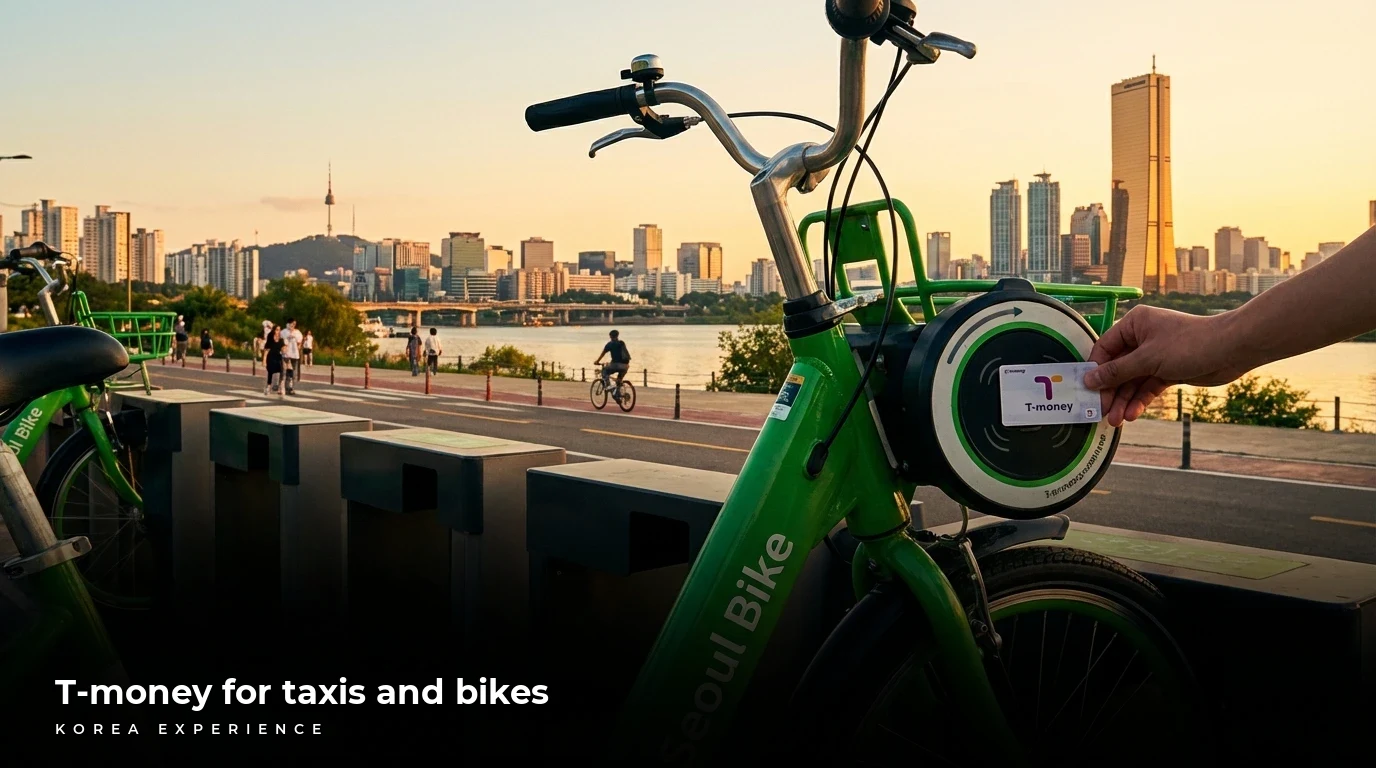
So you've just landed at Incheon Airport and you're staring at two cards at the convenience store: the Climate Card and the T-money card. Which one do you actually need for taxis and those cute green bikes? Don't worry, I've got you covered with the no-nonsense guide to moving around Korea like a local.
While the government is pushing new initiatives like the Climate Card, the reality on the ground for tourists—especially those without an Alien Registration Card (ARC)—is quite specific. This guide cuts through the marketing noise to tell you exactly how to pay for your rides in 2026.
Key Takeaways
- 1The short answer: You absolutely need a T-money card for flexibility (taxis, nationwide travel, vending machines), but the Climate Card is best for heavy subway users in Seoul.
- 21,000 KRW ($0.75 USD): That is all it costs to rent a Seoul Bike (Ttareungyi) for an hour, but setting it up without an ARC requires a specific workaround.
- 3Download Uber (UT) and Kakao T immediately. Use Uber to pay with foreign cards automatically, or Kakao T with the Pay to Driver feature to use T-money.
📋 Quick Facts
The Big Question: T-money, Taxis, and Bikes
So, you are asking the big question: Do I use T-money for taxis and bikes in Seoul?
The short answer is YES for taxis, and KIND OF for bikes.
Here is the deal. The T-money card is your absolute lifeline in Korea. It is the most universally accepted payment method for transportation. You can hop into almost any taxi in the country—whether it's a standard orange cab or a fancy black deluxe one—tap your T-money card on the pad between the front seats, and you are good to go. No fumbling for cash, no language barrier math. It just works.
However, bikes are a different beast. Ttareungyi (Seoul Bike), those ubiquitous green and white bikes you see everywhere, can be unlocked with a T-money card, but the card itself doesn't pay for the ride directly like it does on a bus. You have to buy a voucher in the app first (using a credit card), and then you can register your T-money card to act as the "key" to unlock it.
If you are a tourist without an Alien Registration Card (ARC), you cannot use the new Climate Card for bikes. I repeat: Climate Card bike access requires Korean identity verification. So, stick to the T-money + App Voucher combo. For a deeper comparison on which card suits your specific itinerary, check out our guide on Climate Card vs. T-Money 2026.
A Brief History of Seoul Transit
Let's rewind a bit to understand why Seoul's transit system is the way it is. Back in the early 2000s, Seoul was drowning in paper tickets and cash fares. It was chaotic. In 2004, the city launched T-money, a unified contactless card. It was revolutionary. Suddenly, one card worked for the bus, the subway, and the taxi. It was the "One Ring to Rule Them All" of transit.
Fast forward to 2024 and 2025. The Seoul government realized that while T-money was great, commuting was getting expensive. Enter the Climate Card (Gihu Donghaeng Card). This was designed as an eco-friendly initiative to get people out of cars and onto public transport by offering unlimited rides for a flat monthly fee.
It became a massive hit with locals. In 2026, the system is evolving even further. We are seeing the rollout of "Tagless" payments on buses—technology where you don't even tap your card; Bluetooth sensors just know you boarded. We are also seeing the expansion of the Climate Card to include trips to the airport (but annoyingly, not from the airport back to Seoul... yet).
T-money Launch
Seoul introduces the integrated transportation card system, replacing paper tickets.
Kakao T Launch
The ride-hailing app revolutionizes how Koreans call taxis, reducing street hailing.
Uber becomes UT
Uber re-enters the market properly through a joint venture, allowing foreign cards to work seamlessly.
Climate Card Pilot
Seoul launches the unlimited transit pass to encourage public transport use.
Tagless Pilot
T-money begins piloting Tagless payment on buses and select subway lines.
The Hybrid Era
Full integration of Tagless systems and expanded Apple Pay support for T-money.
Weighing Your Options: Cards vs. Apps
Okay, let's look at your wallet. You have a few choices, and picking the wrong one can mean wasted money or being stranded in Gangnam at 1 AM.
Option A: The T-money Card (The MVP)
This is for everyone. Even if you buy other passes, you need one of these. Why? Because you can't pay for a taxi with a Climate Card. If you plan on taking even one taxi, or buying a drink from a vending machine, or traveling outside Seoul to Busan or Jeonju, you need T-money. It is the best option for flexible travelers and those leaving Seoul.
Option B: The Climate Card (The Specialist)
If you are in Seoul for 3 to 5 days and you are a "power user" of the subway (riding 4+ times a day), get the Tourist Climate Card.
- The Math: A subway ride is about ₩1,400. A 3-day Climate pass is ₩10,000. If you ride the subway 8 times in 3 days, you break even. If you ride 10 times, you're saving money.
- The Catch: It does not work on the Shinbundang line (the red line to Gangnam/Pangyo) because it's privately owned. And remember, no taxis.
Option C: WOWPASS / NAMANE (The Hybrids)
These are debit cards that have a T-money chip inside them. They are great for shopping cashless, but for transport, they function exactly like a standard T-money card. You still have to load the "transport" part of the card with cash at a station. If you are confused about the differences, read our breakdown of Namane vs. Wowpass 2026.
Option D: Uber / Kakao T (The Apps)
You don't need a Korean card for these anymore.
- Uber (UT): Best for total beginners. Auto-pay with your home credit card.
- Kakao T: Best for availability. Use the "Pay to Driver" function and hand them your T-money card.
| Feature | T-money (Standard) | Climate Card (Tourist) | WOWPASS |
|---|---|---|---|
| Cost | ₩3,000 + Loads | ₩5,000 - ₩20,000 | ₩5,000 (Fee) |
| Processing Time | Instant | Instant | 5-10 mins |
| Taxis? | ✅ Yes (Pay driver) | ❌ No | ✅ Yes (As T-money) |
| Bikes (Tourist)? | ⚠️ Complicated | ❌ No (Needs Phone) | ❌ No |
| Nationwide? | ✅ Yes | ❌ No (Seoul Only) | ✅ Yes |
| Best For | Flexibility & Taxis | Heavy Subway Users | Shoppers |
Pros and Cons of T-money
Pros
- ✓Universal Acceptance: Works in taxis, convenience stores, and vending machines nationwide.
- ✓No Expiry: Balance stays forever. Keep it for your next trip in 2028.
- ✓Taxi Compatibility: Accepted by 99.9% of taxis in Korea.
Cons
- ✗Cash-Only Reloads: You generally cannot top up with a credit card; must use cash.
- ✗Refund Hassle: Requires a trip to a convenience store or service center.
- ✗Card Cost: You pay ₩4,000 just for the plastic/design.
The Practical Guide to Hailing and Riding
Let's get practical. Here is exactly how to execute these maneuvers without looking like a lost tourist.
The Taxi Hailing Pro-Move
- Don't Wave: Okay, you can wave, but in 2026, most taxis are busy with app reservations. You'll see them zoom by.
- Open Kakao T: Set your destination. Select "General Request" (Blue Icon).
- Payment Selection: This is the critical step. Swipe the payment method until you see "Pay to the Driver".
- The Ride: Hop in. Say "Hello" (An-nyeong-ha-se-yo). Watch the meter.
- The Payment: When you arrive, the driver presses a button on the meter. You place your T-money card on the pad. Beep. Done.
Warning on Lights: In many countries, a red light means "Stop/Occupied." In Korea, a bright RED LED sign with text (Bincha) in the taxi window means EMPTY (Available). If the light is OFF, it's occupied or off-duty. Don't let the red color scare you away—wave at the red lights!
The Seoul Bike "Hack" for Tourists
The official instructions are confusing. Here is the cheat code:
- Download: Get the "Seoul Public Bike" app.
- Ignore Login: Do not try to log in. Tap "Foreigner" at the bottom.
- Buy Voucher: Tap "Purchase Pass." Choose "24 hours." Select "1 hour" (₩1,000) or "2 hours" (₩2,000). This determines how long you can ride per session before docking.
- Pay: Use your foreign credit card. It works fine.
- Get the Code: The app gives you an 8-digit rental code. Screenshot this.
- Unlock: Go to a bike. Press the button on the screen. Type the first 4 digits. Wait. Type the last 4 digits. The lock opens.
📖 The No-Stress Guide to Taxis & Bikes
Step 1: Get Your T-money Ready
Buy a card at any airport convenience store (CU, GS25). Load ₩50,000 ($35 USD) immediately to cover AREX and initial rides.
Step 2: Hailing a Taxi (The App Way)
Use Uber (UT) for auto-payment with foreign cards. Use Kakao T with "General Request" to pay the driver with T-money.
Step 3: Renting a Seoul Bike
Download the Seoul Public Bike app. Select "Foreigner" mode. Buy a voucher with a credit card.
Step 4: Unlocking the Bike
Enter the 8-digit code from the app into the bike screen. Adjust seat, ring bell, and ride.
Critical Edge Cases & 2026 Updates
There are a few edge cases that trip people up every day. I learned these the hard way so you don't have to.
1. The "Transit Card" vs. "Prepaid Card" Confusion Your T-money card has one balance. Your WOWPASS has two balances. I see this all the time: a tourist loads ₩100,000 onto their WOWPASS thinking they are set for travel. They tap the turnstile and... "Insufficient Balance." Why? Because they loaded the shopping wallet, not the T-money wallet. You must load the T-money chip separately with cash at a machine.
2. The "No-ARC" Wall If you try to use the Climate Card bike benefit, the app will ask for your Resident Registration Number. If you are a tourist, you don't have one. There is currently no workaround for this. Do not buy the more expensive Climate Card (₩65,000) thinking you can hack the system. You can't. Buy the cheaper subway-only card (₩62,000 or the tourist daily passes) and pay for bikes separately. If you are planning to drive elsewhere, like Jeju, check our Jeju Car Rental Guide for similar ARC-free tips.
3. The Apple Pay Situation (2026 Update) For years, iPhones couldn't use T-money because Apple restricts the NFC chip. In late 2025, T-money announced integration with Apple Find My and Wallet is rolling out. However, rollout is slow. If you are reading this in early 2026, do not assume your phone will work. Always, always carry the physical card as a backup. The "Tagless" bus system is cool, but it glitches. Plastic never runs out of battery.
Listen, everyone talks about the Climate Card in 2026, but if you don't have an Alien Registration Card (ARC), just stick to T-money for taxis and the Ttareungyi app's 'foreigner' mode for bikes. I've seen too many tourists cry at kiosks trying to link their passports to bike passes. It rarely works. Pay the 1,000 won for the bike voucher and save your sanity.
The Transfer Hack
You get free transfers between buses and subways within 30 minutes (up to 4 times). BUT, you must tap out when you leave the bus. If you forget to tap out, you get charged double the next time you tap in. T-money users, always tap out!
FAQ
❓ Frequently Asked Questions
Have more questions?Contact us →
Conclusion: Your Action Plan
Alright, you're ready. Here is your first 24-hour plan:
- Land at Incheon. Buy a physical T-money card at the airport CU/GS25. For more arrival tips, read our Incheon Airport Survival Guide.
- Load ₩50,000 cash onto it immediately.
- Take the AREX (Airport Railroad) to Seoul Station. Tap your card.
- Need a taxi to your hotel? Open Uber (UT) and call one. It's the lowest stress option.
- Want to ride a bike along the Han River tomorrow? Download the Ttareungyi app tonight and screenshot that 8-digit code.
Seoul is a fast-moving city ("Ppalli-ppalli" culture means "Hurry, hurry!"). But with your T-money card loaded and your apps ready, you'll be keeping pace with the locals in no time. Enjoy the ride!
Sources
- Visit Korea (Official) - Details on T-money, Climate Card, and transit card types.
- Seoul Metropolitan Government - Official policy on Climate Card usage and tourist passes.
- T-money Official - Information on card types, reloading, and refunds.
- Korea JoongAng Daily - News on 2025/2026 Tagless payment pilots.
- Creatrip - Guide on Taxi colors, signs (Bincha), and hailing etiquette.
About the Author
Korea Experience Team
Written by the Korea Experience editorial team - experts in Korean medical tourism, travel, and culture with years of research and firsthand experience.
Explore more in Travel & Tourism
From Seoul's neon-lit streets to Jeju's volcanic landscapes — discover the best of Korea with insider travel tips, itineraries, and seasonal guides.
Browse All Travel & Tourism ArticlesContinue Reading
Explore more articles you might find interesting
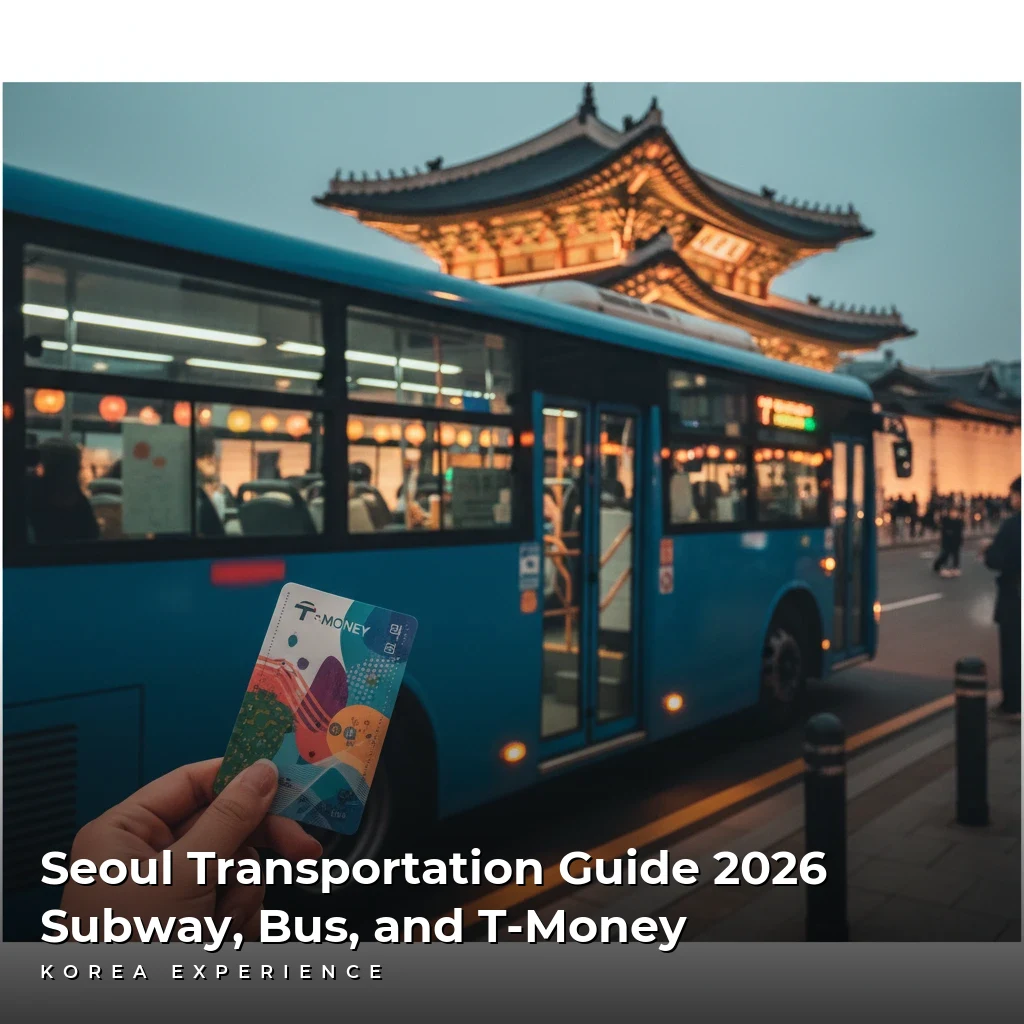
Master Seoul's 2026 transit system. From the Climate Card saving you ₩62,000 to new AREX schedules, here is everything tourists need to navigate like a local.
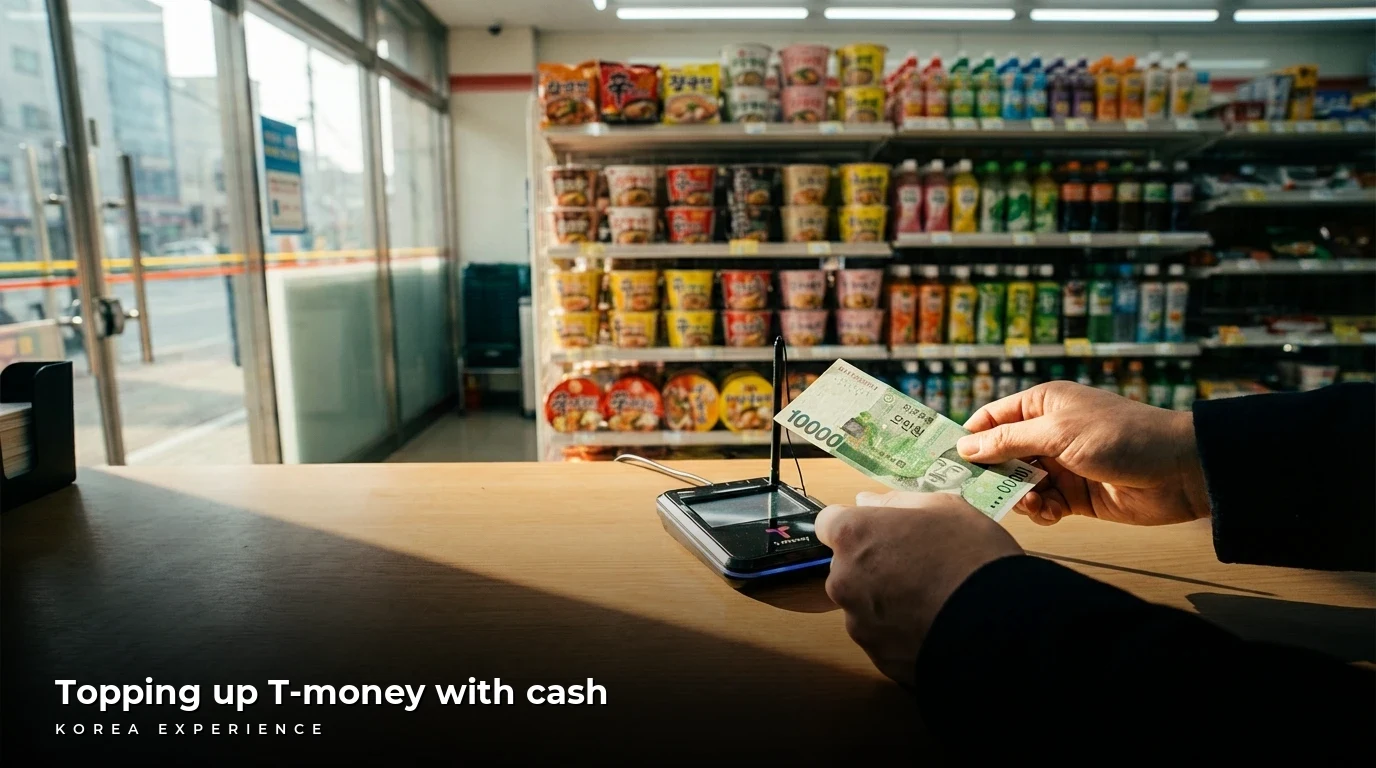
Learn how to top up your T-money card with cash in 2026. A 30,000 KRW reload at any convenience store is the best way to ride Seoul transit without an ARC.

Navigate Seoul in 2026 without an ARC. Learn how k.ride and Taba let tourists hail cabs for just ₩4,800 using foreign phone numbers and credit cards.
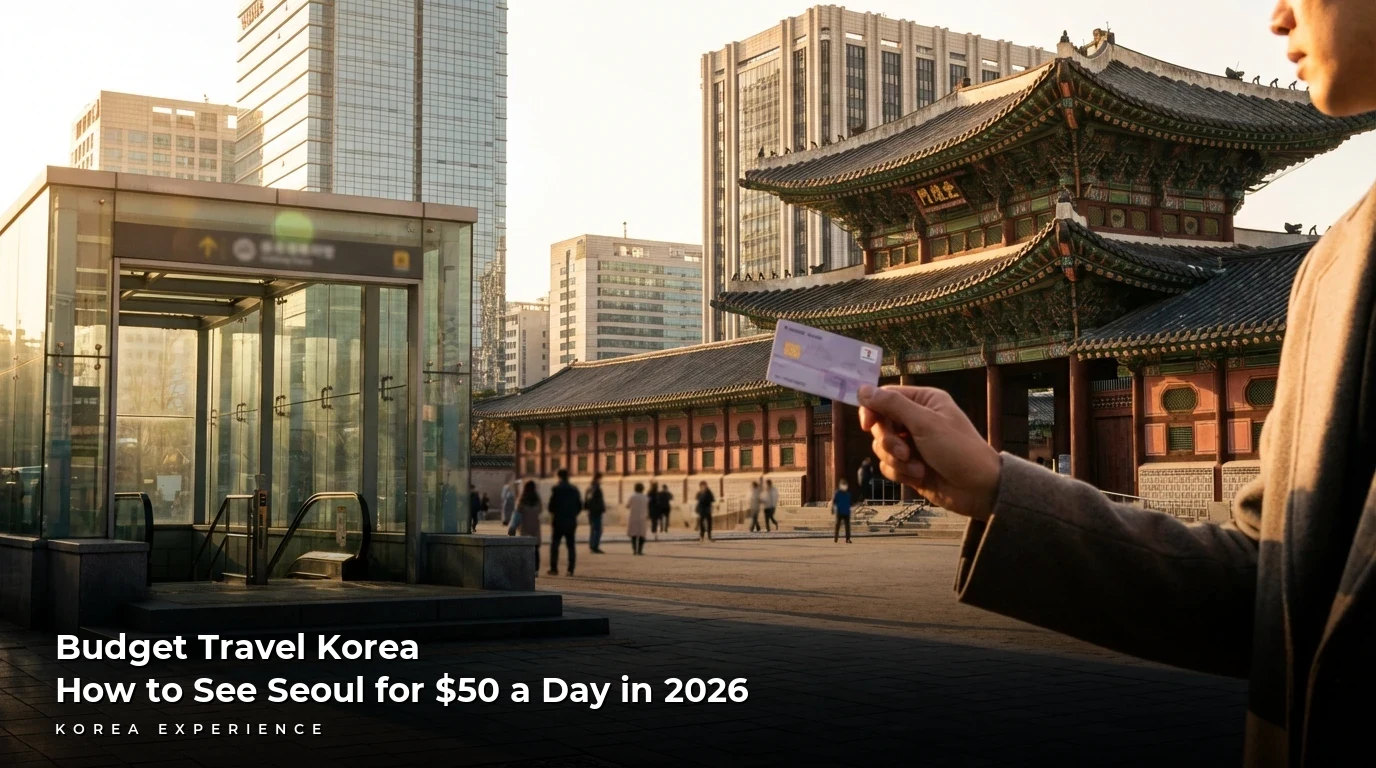
Learn to explore Seoul on a $50 daily budget in 2026. Includes cost breakdowns for hostels, the Climate Card transit pass, and cheap eats under ₩7000.

Compare Wowpass vs. Namane for 2026. Learn why the 1,550 KRW subway fare means you need a Climate Card Tourist Pass to save money in Seoul.
Discover 2026 Seoul transit updates including the 1,550 won base fare and new Climate Card options that save money for travelers taking over 3 rides daily.