Climate Card vs. T-Money 2026: Best Seoul Transit Card Compared
If you're planning to hit more than three spots a day in Seoul, the Climate Card is your absolute best friend.
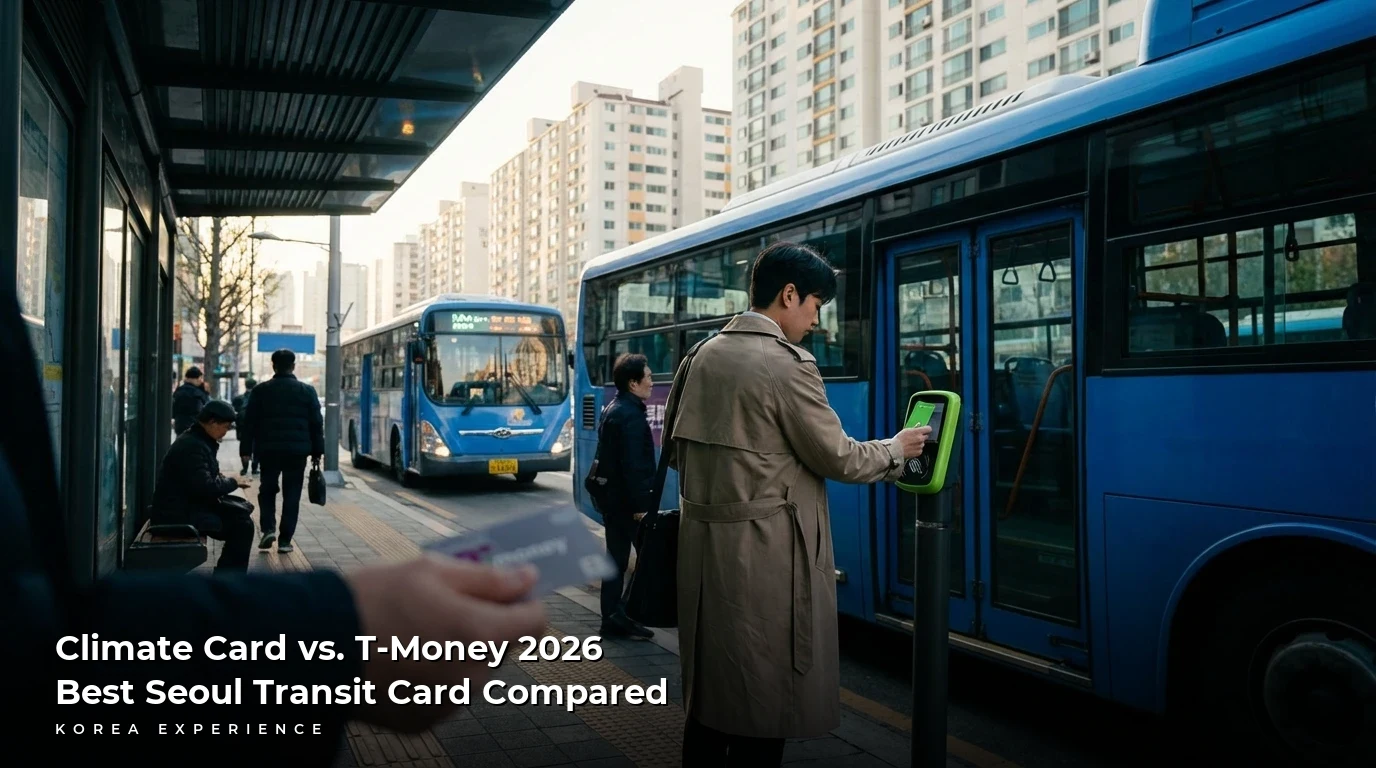
So, you've just stepped off the plane, the neon lights of Seoul are calling, and you're staring at a rack of transit cards wondering which one is actually going to save you some serious won. Look, I've been there, and honestly, the answer depends entirely on how much of a "neighborhood hopper" you are.
Both cards work on airport routes. See our AREX vs airport limousine bus comparison.
The short answer is: if you're planning to hit at least three different spots a day—maybe Gyeongbokgung Palace in the morning, a cafe in Seongsu in the afternoon, and dinner in Gangnam—the Climate Card is going to be your absolute best friend.
Key Takeaways
- 1If you're staying in Seoul for more than a couple of days and plan to hop between neighborhoods like Myeong-dong, Hongdae, and Gangnam, the Climate Card is a total no-brainer. You'll break even after just three or four rides a day, and from there, your travel is essentially free.
- 2A single subway ride is roughly ₩1,400 to ₩1,600, but a 1-day Climate Card is only ₩5,000. That's enough to buy maybe one and a half lattes at a fancy cafe in Seongsu-dong, so the savings add up before you even finish your morning commute.
- 3For the absolute best experience, carry both cards. Use the Climate Card as your 'unlimited pass' for daily city roaming, but keep a T-money card (or a WOWPASS) in your wallet for the Incheon Airport train (AREX), intercity buses, and those late-night taxi rides.
The Math That Makes Climate Card a Winner
Here's the math that makes it a winner: a standard subway ride using a T-money card is about ₩1,400 to ₩1,600 depending on the distance. If you're doing three trips a day, that's about ₩4,500. Now, the 1-day Climate Card costs exactly ₩5,000. By the time you take that fourth ride back to your hotel, you've already started saving money.
Let's look at the bigger picture. If you're here for a week, the 7-day Climate Card is ₩20,000. To spend that much on a regular T-money card, you'd only need to take about 13 or 14 rides in total. Most tourists do that in about three or four days! So, for anyone staying more than a long weekend and planning to actually see the city, the Climate Card is the clear winner for your wallet.
📋 Seoul Transit at a Glance
However, don't just dump your T-money card in the trash. Here's the thing: the Climate Card is a "Seoul-centric" pass. While it has expanded massively by 2026 to include places like Hanam and Gimpo, it still doesn't work for the airport train (AREX) boarding at Incheon, nor does it work if you decide to take a day trip down to Busan or the DMZ. My recommendation? Get the Climate Card for your intensive sightseeing days, but keep a T-money card with ₩10,000 on it as a backup for the airport and those "oops, I'm out of the zone" moments. Trust me, having both is the real pro move.
The History: From T-money to the Climate Crisis
To understand why Seoul even has two different cards, we have to look at how this whole "Climate Card" thing started. Back in early 2024, the Seoul Metropolitan Government (SMG) was facing two big problems: people were complaining about rising transportation costs, and the city was falling behind on its carbon-reduction goals. They looked at what cities like Berlin and Hamburg were doing with their unlimited transit passes and decided to create their own version—the Gihu Donghaeng Kadeu (Climate Companion Card).
Evolution of Seoul Transit Cards
Initial Announcement
The Seoul Metropolitan Government unveils the 'Climate Companion Card' plan to fight inflation and carbon emissions
Pilot Program
A six-month test run begins, recording over 1 million sales in the first 70 days
Official Launch
The card officially rolls out with new short-term 'Tourist Pass' options (1, 2, 3, 5-day)
Regional Expansion
Coverage expands to include Gyeonggi cities like Gimpo, Seongnam, Goyang, and Gwacheon
Water Transit
The Hangang River Bus launches and is integrated into the Climate Card system
Full Connectivity
Climate Card service reaches Hanam (Line 5) and Incheon, covering most of the greater metropolitan area
The pilot program kicked off in January 2024, and it was an instant "million-seller." Within just 70 days, over a million people had signed up. At first, it was mainly for locals—office workers who spent ₩60,000+ a month on commuting. But by July 2024, the city realized that tourists were desperate for an unlimited option too, which led to the 1, 2, 3, and 5-day passes we see today.
By 2025 and 2026, the card evolved from a "Seoul-only" pass into a regional powerhouse. Cities in the Gyeonggi province, like Gimpo and Hanam, realized their residents were commuting into Seoul every day and wanted in on the action. The most exciting update for 2026, though, has been the integration of the Hangang River Bus. Now, your "transit pass" isn't just for smelly subways—it's for high-speed boats zipping past the Lotte World Tower!
Pair your card choice with our complete Seoul transportation guide for tourists.
Breaking Down Your Options in 2026
When you walk into a GS25 or a subway station, the sheer number of cards can be a bit much. Let's break down the main contenders you'll actually use in 2026.
Seoul Transit Cards Comparison (2026)
| Feature | Climate Card (Tourist) | T-money Card | WOWPASS (All-in-One) |
|---|---|---|---|
| Cost | ₩5,000 (1d) to ₩20,000 (7d) | Pay-per-ride (₩1,400+) | Pay-per-ride + ₩5,000 Fee |
| Validity Area | Seoul + Expansion Cities | Nationwide (All Korea) | Nationwide (All Korea) |
| Best For | Intensive Seoul sightseeing | Occasional riders / National travel | Shopping + Transit + Convenience |
| Airport Access | Exit only at ICN (No boarding) | Full access to AREX/Bus | Full access to AREX/Bus |
| Purchase Method | Convenience stores / Stations | Everywhere in Korea | Specialty Kiosks / Apps |
| 2026 Changes | Includes Hangang River Bus | Tap-to-pay via Credit Card* | Widespread kiosk availability |
| Ease of Use | Medium (Charging kiosks) | Simple (Convenience stores) | Complex (Registration required) |
For a tourist-focused comparison, read our T-Money vs Wowpass vs Namane tourist card comparison.
The Climate Card (Tourist Edition): This is your "all-you-can-eat" buffet for transit. You buy the physical card for ₩3,000 and then choose your duration: 1-Day (₩5,000), 3-Day (₩10,000), 5-Day (₩15,000), or 7-Day (₩20,000). It covers almost all subways and buses within Seoul, plus the new River Bus. If you're a heavy user, this is your gold mine.
The T-money Card: The "Old Reliable." You pay ₩3,000–₩5,000 for the card and then load it with as much cash as you want. It works like a debit card—every time you tap, it deducts the fare. The big perk? It works everywhere in Korea. If you're taking a bus in a tiny village in Jeju or a subway in Busan, T-money is your guy.
The WOWPASS: This has become the "tourist darling" of 2025/2026. It's basically a T-money card and a currency exchange machine had a baby. You find a WOWPASS kiosk, feed in your home currency (USD, EUR, etc.), and it gives you a card pre-loaded with Korean Won.
Climate Card Analysis
- ✓Total Mental Freedom: You stop doing 'fare math' every time you want to switch lines or hop on a bus for just two stops. Once you pay the ₩5,000 or ₩10,000 upfront, you can get lost as many times as you want without spending an extra won.
- ✓Fixed Travel Budgeting: For students or budget travelers, knowing exactly how much you'll spend on transport for the week (e.g., ₩20,000 for 7 days) makes planning your other expenses so much easier.
- ✓Eco-Friendly Bragging Rights: You're literally participating in a massive carbon-reduction project that aims to remove 13,000 cars from the road and cut 32,000 tons of greenhouse gases annually.
- ✗The Cash-Only Trap: Even in 2026, you still generally need physical Korean Won bills to recharge the card at station machines. If you only carry plastic, you'll be hunting for an ATM.
- ✗Boundary Confusion: If you accidentally take a train too far into Gyeonggi-do (past the service zone), the gate won't open, and you'll have to find a staff member to manually pay the difference.
- ✗No ICN Boarding: You can use it to get to the airport, but you cannot use it to board the train at Incheon Airport Terminal 1 or 2 when you first arrive. It's a one-way street for the airport line.
How to Get Your Climate Card in Under 5 Minutes
📖 How to Score and Activate Your Climate Card
Step 1: Locate Your Card Source
Head to any convenience store (CU, GS25, 7-Eleven) near a subway station or go to the 'Customer Safety Center' inside Lines 1-8 of the Seoul Metro. Ask for the 'Gihu Donghaeng Kadeu'.
Step 2: Buy the Physical 'Shell'
You'll need to pay ₩3,000 in cash for the actual plastic card. This isn't a deposit—it's yours to keep as a souvenir or for your next trip to Korea.
Step 3: Top Up at the Station Machine
Take your ₩3,000 card to any multi-lingual ticket machine in a subway station. Place it on the reader, select 'English,' and hit the 'Climate Card' button.
Step 4: Choose Your Duration and Go
Select your pass (1, 2, 3, 5, or 7 days). Confirm the price, feed in the cash, and wait for the 'Recharge Complete' message.
The Break-Even Math
The breakeven point for the 2026 traveler is a simple but vital calculation. Given the base subway fare of ₩1,550 and the cost of a 1-day Climate pass of ₩5,000:
Break-even = 5,000 ÷ 1,550 ≈ 3.22 rides
This means the fourth ride in a day makes the card profitable. For the 7-day pass (₩20,000):
Break-even = 20,000 ÷ 1,550 ≈ 12.9 rides
Over a full week, the card pays for itself in less than two rides per day, which is a threshold that nearly every tourist will surpass simply by going to lunch and returning to their hotel.
The biggest mistake tourists make is trying to register for the 'Bike included' pass without a Korean phone. Look, save yourself the headache: just get the standard ₩5,000-₩20,000 pass for trains/buses. If you want a bike, use the 'Foreigner' option on the Seoul Bike app separately. It's much smoother than fighting with the local registration system.
The Stuff Nobody Tells You
The "Incheon Exit" Loophole
One of the weirdest rules is that you can use your Climate Card to exit at Incheon Airport. So, if you're leaving Korea, you can take the train from Seoul Station to the airport using your unlimited pass. But if you're arriving in Korea, you can't use it to board the train at the airport. It feels a bit backwards, but that's just how the regional funding works for now.
The "River Bus" Hidden Fee
If you want to use the Hangang River Bus, your standard 1-day or 5-day tourist pass doesn't automatically cover it for free. You usually have to select the "River Bus Included" option at the machine, which adds about ₩5,000 to the total cost. Still, considering a single river bus ride is ₩3,000, if you use it twice, it's paid for itself.
The 2026 "Credit Card Tap" Revolution
Here's a sneaky update: by 2026, many Seoul city buses now allow you to just tap your overseas Visa or Mastercard directly on the reader without any card at all! However—and this is a big however—it's not yet fully active on all subway lines (that's slated for 2027). So while it's great for a quick bus ride, you still need a dedicated card for a seamless subway experience.
Pro Tip: Tag-Off Habit
Always tag your card when you get off the bus or exit the subway. If you fail to "tag off" twice, your Climate Card will be suspended for 24 hours. Trust me, I learned this the hard way while rushing to a dinner date—getting it unsuspended is a hassle you don't want.
Shinbundang Line Warning
The Climate Card does not work on the Sinbundang Line (the shiny red line). This line is privately owned and charges a premium. If you try to use it there, the gate will just beep at you and stay shut.
No Korean Phone/ARC? Here's What To Do
The short-term Tourist Pass (1-7 days) is your best friend. Unlike the monthly 30-day pass used by locals, the short-term versions do not require a Korean phone number, an Alien Registration Card (ARC), or any online account. You can stay completely anonymous and still enjoy unlimited rides. For digital payments, download the K.Ride app—it's the global version of Kakao T and accepts international credit cards without a local number.
Frequently Asked Questions
❓ Frequently Asked Questions
Have more questions?Contact us →
Your Action Plan
So, what's the final verdict? If you're coming to Seoul for a few days of heavy exploring, here's exactly what you should do in your first 24 hours:
- At the Airport: Buy a T-money card or WOWPASS. Use it to pay for your AREX train into the city.
- At your Hotel: Drop your bags and find the nearest convenience store. Buy the physical Climate Card for ₩3,000.
- At the Subway: Load it up with a 3-day or 5-day pass (cash only!).
- The Roam: Use the Climate Card for everything within the city. If you decide to go to Nami Island or Suwon, use your T-money card for those specific "out of zone" trips.
Seoul's transit system is world-class for a reason—it's clean, fast, and now, incredibly cheap if you use the right card. Don't let the math stress you out. Grab that Climate Card, start tapping, and go see everything this amazing city has to offer. You're going to love it here!
Sources
- Reddit Korea Travel - Details on Climate Card pricing and break-even points
- Klook Travel Blog - Coverage maps, inclusions for Ttareungi, and pickup locations
- Seoul Metropolitan Government - Official launch data and cost savings statistics
- Korea JoongAng Daily - Hangang River Bus integration details
- Creatrip - Comparison between T-money, M-Pass, and Climate Card for international visitors
About the Author
Korea Experience Team
Written by the Korea Experience editorial team - experts in Korean medical tourism, travel, and culture with years of research and firsthand experience.
Explore more in Living in Korea
Everything expats and long-term visitors need to know — from visa requirements and housing to banking, healthcare, and daily life tips.
Browse All Living in Korea ArticlesContinue Reading
Explore more articles you might find interesting
Discover 2026 Seoul transit updates including the 1,550 won base fare and new Climate Card options that save money for travelers taking over 3 rides daily.
Save money in Seoul with the 2026 Climate Card. We analyze if the 62,000 KRW monthly pass beats T-Money for your 30-day stay based on 40 rides.
Master Seoul transit in 2026. Learn why T-money costs 4,000 KRW, how to rent 1,000 KRW bikes without an ARC, and the truth about the Climate Card for tourists.
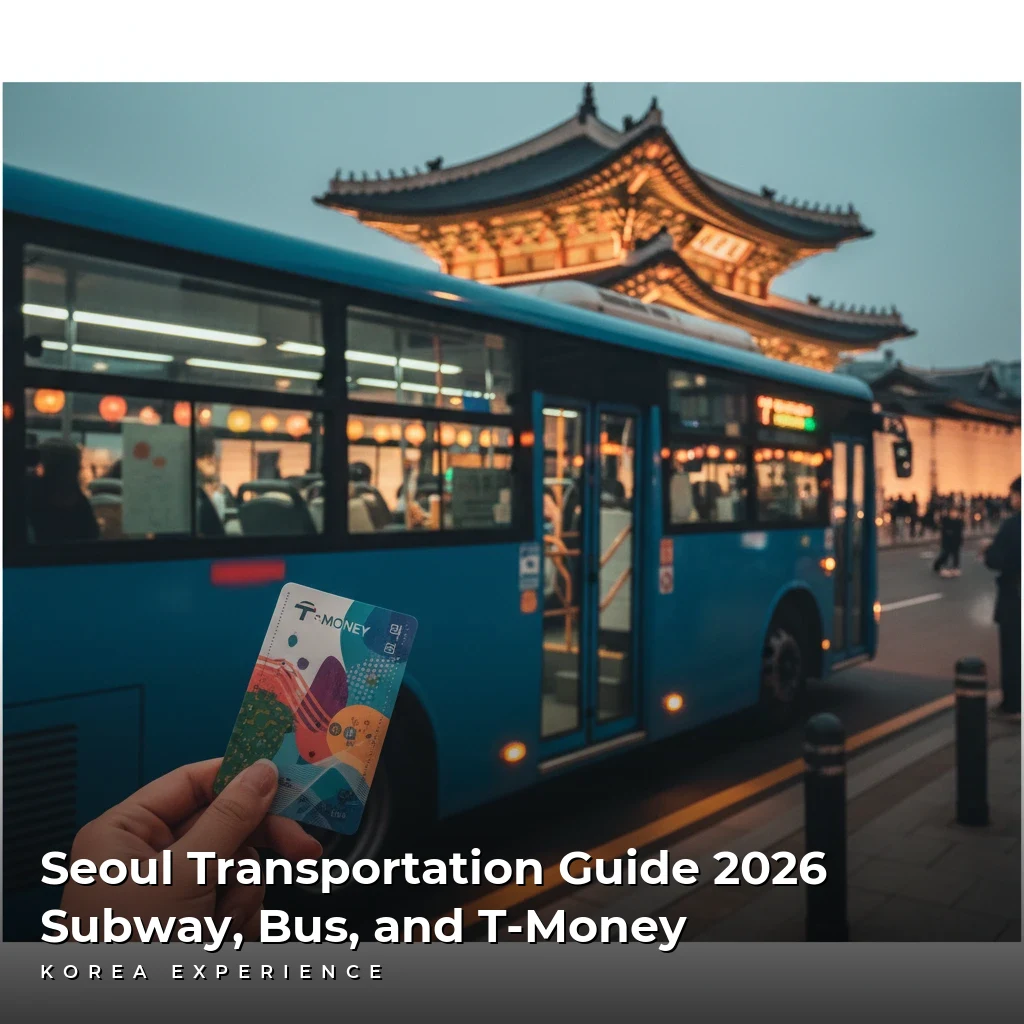
Master Seoul's 2026 transit system. From the Climate Card saving you ₩62,000 to new AREX schedules, here is everything tourists need to navigate like a local.
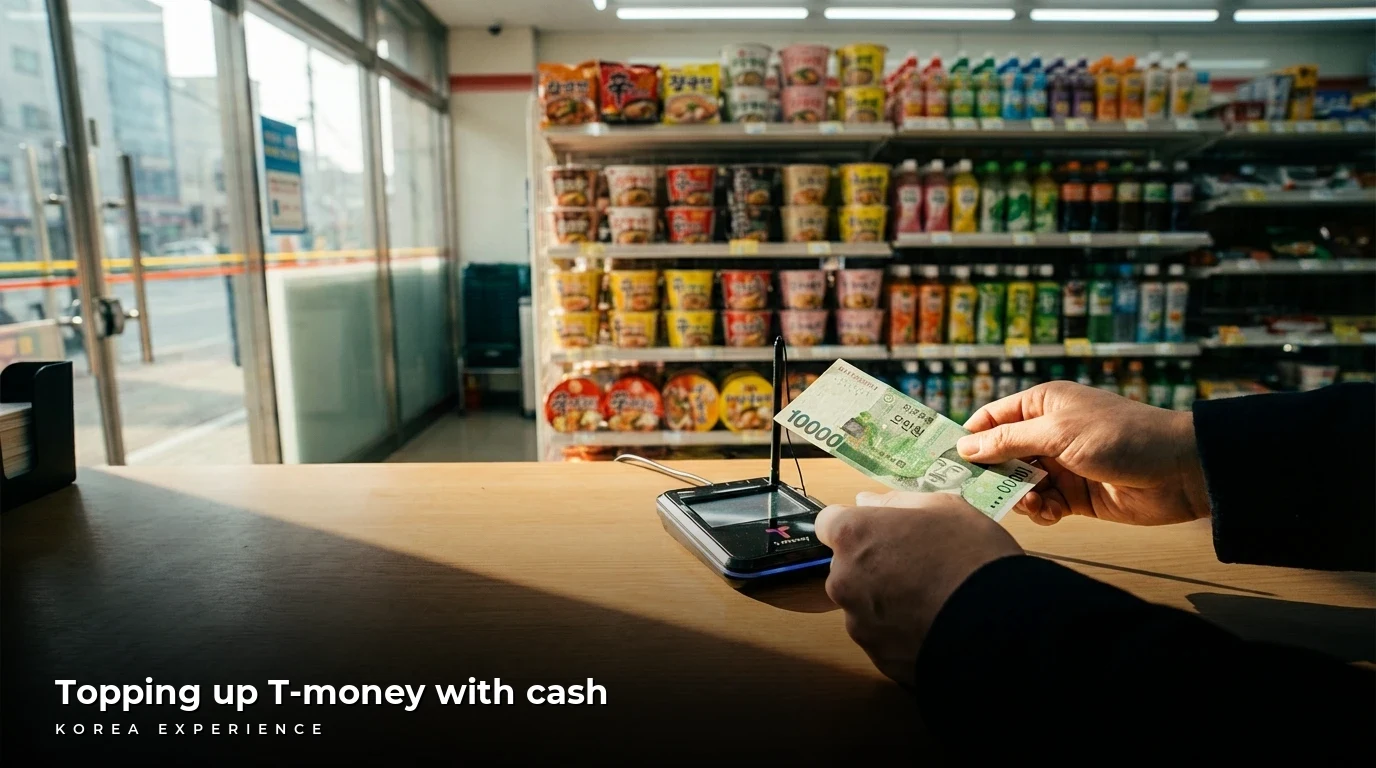
Learn how to top up your T-money card with cash in 2026. A 30,000 KRW reload at any convenience store is the best way to ride Seoul transit without an ARC.

Compare Wowpass vs. Namane for 2026. Learn why the 1,550 KRW subway fare means you need a Climate Card Tourist Pass to save money in Seoul.