Top international hospitals in Seoul where to go for emergencies 2026
The complete 2026 guide to emergency medical care in Seoul. Find the best international hospitals, ER costs, and English-speaking services for travelers.
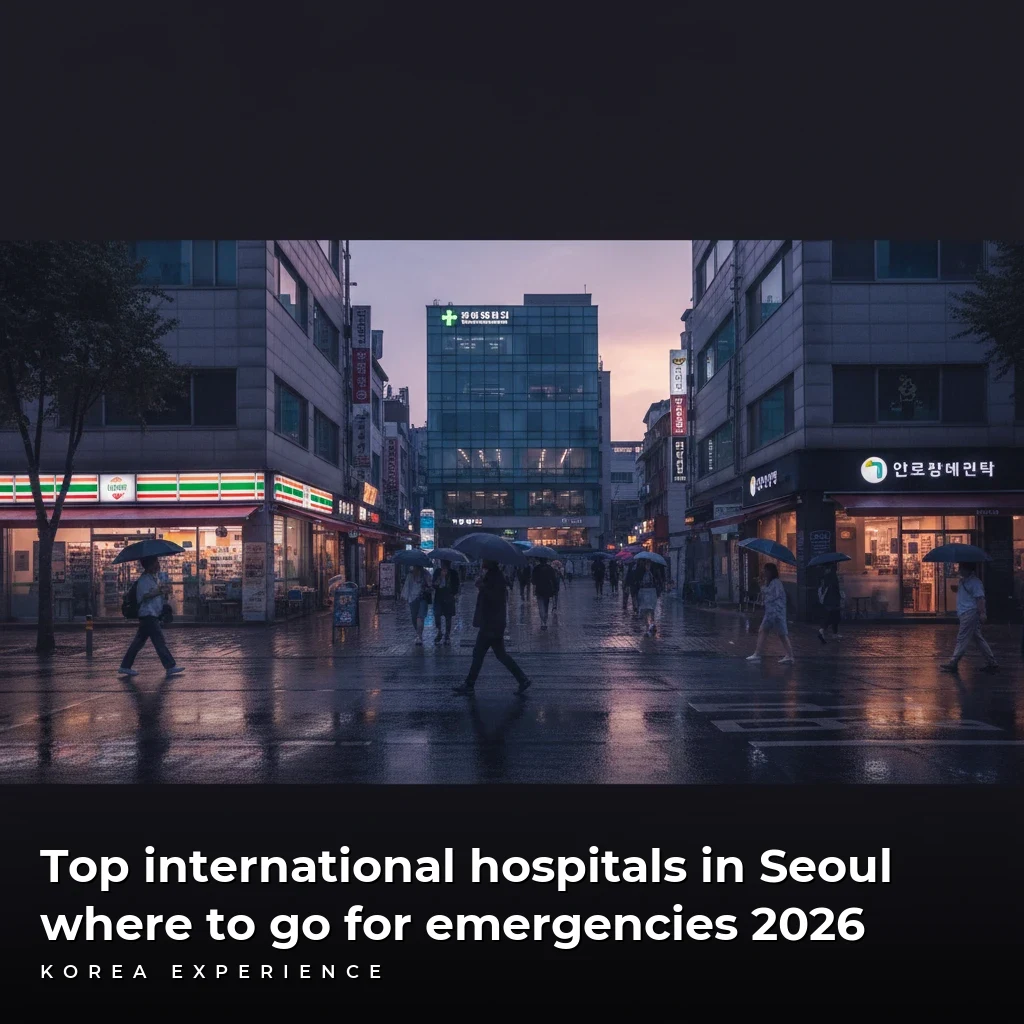
Navigating a medical emergency in a foreign country is a traveler's greatest anxiety. However, if you find yourself needing urgent care in 2026, Seoul is arguably one of the safest places to be. South Korea’s healthcare system consistently ranks among the top 5 globally for efficiency and access, boasting a sophisticated network of university hospitals equipped with dedicated International Healthcare Centers (IHC).
For international travelers and expatriates, the landscape of medical care in Seoul has evolved significantly over the last few years. With the integration of AI-assisted translation services and streamlined digital payment systems introduced in late 2025, the friction of language barriers has been drastically reduced. Whether you are dealing with a sudden injury in Gangnam or a severe illness in Hongdae, knowing exactly where to go can save critical time and money.
You might also enjoy our article about Korean Post Office International Shipping Guide.
Key Takeaways
- 1Dial 119 for medical emergencies; the service is free and includes interpretation
- 2Top-tier ERs require a deposit of approx. 500,000 to ₩1,000,000 for uninsured foreigners
- 3The 'Big 5' hospitals in Seoul all operate dedicated International Healthcare Centers
Understanding the Korean Emergency System
Before identifying specific hospitals, it is vital to understand how the emergency infrastructure works in Seoul. The system is designed for speed. In 2026, the average response time for an ambulance in downtown Seoul is approximately 7 to 9 minutes, significantly faster than the global metropolitan average.
Learn more in our comprehensive guide to Moving Companies in Korea.
Calling for Help: 119
The universal emergency number in Korea is 119. You do not need a SIM card or credit to dial this number.
Learn more in our comprehensive guide to Seoul International Schools Complete Guide for Expat Parents.
- Police: 112
- Medical/Fire: 119
When you call 119, if you cannot speak Korean, a three-way translation service is automatically engaged. This service supports 19 languages, including English, Chinese, Japanese, and Spanish.
Pro Tip: The BBB Korea Service
If you are in a hospital or pharmacy and struggling to communicate, dial 1588-5644. This connects you to BBB Korea, a volunteer service offering free interpretation 24/7. In 2026, their app also offers real-time video interpretation for clearer medical context.
The "Emergency Room" Concept
In Korea, the Emergency Room is called the Eung-geup-sil. It operates differently than in many Western countries. Triage is ruthless but efficient. Unless your condition is life-threatening, you will likely wait between 30 minutes to 2 hours depending on the hospital's volume.
📊 2026 Seoul ER Statistics
The "Big 5": Seoul's Premier International Hospitals
When facing a serious medical emergency, you want to head to one of the "Big 5." These are the tertiary university hospitals renowned for advanced technology, English-speaking staff, and dedicated International Healthcare Centers.
1. Severance Hospital (Yonsei University Health System)
Located in Sinchon, near the student districts of Hongdae and Ewha, Severance is often the first choice for expats. Founded in 1885, it was the first Western-style hospital in Korea. Their International Health Care Center is the oldest and most experienced in handling foreign patients, managing over 35,000 international visits annually.
The ER at Severance acts as a Level 1 Trauma Center. They have a seamless system where your records from the International Clinic are instantly accessible by ER staff.
Severance Hospital(Sinchon Severance)
2. Asan Medical Center (AMC)
Located in Songpa-gu (near Lotte World Tower), Asan Medical Center is frequently ranked as the number one hospital in Korea and top 30 globally. With 2,715 beds and a daily outpatient volume exceeding 12,000, it is a medical city in itself.
For emergencies involving complex surgeries, organ transplants, or cardiac issues, Asan is the gold standard. Their International Healthcare Center provides a "Concierge Service," assigning a coordinator to escort patients through the hospital maze—a crucial service in a facility spanning 4.7 million square feet.
Asan is massive. If you are going to the ER here, enter through the West Building entrance. Do not go to the main lobby, as the walk to the ER from there can take 10 minutes. The ER registration desk has English signage and dedicated staff for foreigners.
3. Samsung Medical Center (SMC)
situated in the affluent Gangnam district, Samsung Medical Center is the preferred choice for business travelers and diplomats. True to its parent company's reputation, SMC is the most technologically advanced hospital in Seoul. By 2026, they have fully implemented paperless admission and AI-diagnostic support in their ER.
SMC is particularly famous for its cancer center and stroke treatment. The facility feels more like a high-end hotel than a hospital, which helps reduce patient stress. The distance from Gangnam Station is roughly 3.5 kilometers, a quick 15-minute taxi ride.
Top 3 Hospitals Comparison
| Feature | Severance (Sinchon) | Asan (Songpa) | Samsung (Gangnam) |
|---|---|---|---|
| Best Location For | Students/Tourists | Families/Residents | Business/Luxury |
| Foreign Patient Volume | High | Very High | Medium |
| Est. ER Base Fee | ₩90,000 | ₩85,000 | ₩100,000 |
4. Seoul National University Hospital (SNUH)
Located in Jongno, near the palaces and historical center, SNUH represents the pinnacle of public healthcare in Korea. It is the teaching hospital for the country's top university. If you are staying in Myeongdong or Insadong, this is your closest top-tier option.
While the facilities are slightly older than Samsung or Asan, the medical expertise is unrivaled. Note that as a public institution, it is perpetually crowded. Non-critical wait times in the ER can exceed 4 hours during weekends.
5. Seoul St. Mary’s Hospital
Located in Banpo (Seocho-gu), near the Express Bus Terminal, this hospital is run by the Catholic University of Korea. It is renowned for having the largest Eye Center in Korea and exceptional hematology departments.
St. Mary's is particularly popular among the European expat community due to its strong English, French, and Russian coordination services. The International Health Care Center here is located on the 1st floor, making it easily accessible for triage before heading to the ER.
The Emergency Room Process: Step-by-Step
Walking into a Korean ER can be chaotic. Here is the standard operating procedure for 2026.
📖 Navigating the ER Visit
Step 1: Arrival & Triage
Take a number at the triage desk. A nurse will assess vitals. Hand over your passport immediately.
Step 2: Registration
You will be asked to sign financial guarantee forms. A deposit is often required for foreigners without Korean National Health Insurance.
Step 3: Examination
You will be assigned a bed or a waiting chair. A resident doctor (intern) will see you first, followed by a specialist.
Step 4: Testing
Blood work and X-rays are standard. Results take 1-2 hours in major hospitals.
Step 5: Payment & Discharge
Go to the discharge counter (Won-mu-gwa). Pay the bill to receive your prescription.
Medical Costs and Insurance
One of the most attractive aspects of Korean healthcare is affordability compared to the US, though it is more expensive than public systems in the UK or Canada. However, pricing works differently for holders of National Health Insurance (NHIS) versus travelers.
As of 2026, if you are a short-term visitor, you are considered a "General Private Patient" and will pay 100% of the medical fees plus an international service surcharge (usually 10-20%).
💵 Estimated ER Costs (Uninsured Foreigner)
MRI, CT Scan, overnight observation. Approx $750-$2,200 USD.
Consultation, basic meds, minor stitching. Approx $110-$190 USD.
Payment Warning
Most Korean hospitals require payment in full before you leave the premises. They accept international credit cards (Visa, Mastercard, Amex). They generally do not bill your insurance company directly unless you are US military or have specific high-end expat insurance (e.g., Cigna Global, Aetna International) with a pre-arranged direct billing agreement.
Deposit Requirements
It is standard practice for large hospitals to ask for a deposit upon admission if you do not have Korean insurance.
- Outpatient/ER: ₩500,000 (approx. $375 USD)
- Inpatient/Hospitalization: 2,000,000 - ₩5,000,000 (approx. $1,500 - $3,750 USD)
This is a hold on your card, settled against the final bill.
Secondary Hospitals and Urgent Care
Not every situation requires a university hospital. For high fevers, food poisoning, or minor fractures, "General Hospitals" (2nd tier) are faster and 30-40% cheaper.
Soon Chun Hyang University Hospital (Itaewon/Hannam) This is the designated hospital for US Military personnel and embassy staff. Located in the heart of the expat district, their English proficiency is arguably the best in the city for a non-tertiary center.
- Best for: Residents of Itaewon, Hannam-dong.
- Wait time: Usually under 1 hour.
Inje University Paik Hospital (Myeongdong) A fantastic central option for tourists staying in Myeongdong hotels. It is smaller but highly efficient for non-surgical emergencies.
Pharmacies and Post-Hospital Care
If your condition isn't critical, a pharmacy (Yak-guk) should be your first stop. Korean pharmacists are highly trained and often speak basic English.
- Signage: Look for the "Yak" sign or a red cross (though red crosses are also used by churches).
- Cost: Over-the-counter medicine is cheap. A pack of painkillers or cold medicine costs about 3,000 - ₩5,000 ($2-$4 USD).
📋 Pharmacy Quick Facts
Convenience Store Medicine
Since 2012, convenience stores (CU, GS25, 7-Eleven) sell basic household medicines 24/7. You can buy Tylenol, children's fever reducers, digestion medicine (Digestive), and medicated patches without a pharmacy visit.
Specialized Services: Dental and Eye Emergencies
Standard ERs can handle trauma, but for specific issues, you might need a specialist.
Dental Emergencies
Most university hospitals have a dental hospital attached, but they close at 5:00 PM. For night-time dental trauma (knocked-out tooth), Severance Dental Hospital runs a 24-hour emergency dental clinic.
- Cost: Emergency dental exams start around ₩100,000.
Eye Emergencies
Seoul St. Mary’s is the leader here. However, for less severe infections (pink eye), local ophthalmology clinics (An-gwa) are ubiquitous and accept walk-ins. They typically open 9:30 AM to 6:30 PM.
Is Korean Healthcare "Foreigner Friendly"?
It is natural to worry about cultural nuances. Korean healthcare is "paternalistic," meaning doctors give instructions and expect compliance, often with less bedside manner (small talk) than Western patients might expect. This is not rudeness; it is a focus on efficiency.
Korean Emergency Care for Foreigners
- ✓World-class medical technology
- ✓Significantly lower costs than US/Europe
- ✓Extremely fast ambulance response
- ✓Integrated hospital systems (records shared instantly)
- ✗Upfront payment required
- ✗Brief doctor consultations (3-5 mins)
- ✗Wait times for non-critical issues
- ✗Family members often expected to help with non-medical care (getting water, meals)
Important Documents to Carry
If you are traveling in Seoul in 2026, keep digital copies of these on your phone:
- Passport ID Page (Photo is usually fine).
- Travel Insurance Policy Number and emergency contact hotline.
- List of Allergies translated into Korean (Papago or Google Translate works well).
- Current Medications (Take photos of the bottles).
Insurance Claim Process
Collect Documents
Ask for 'Medical Certificate' and 'Detailed Receipt' before leaving.
Contact Insurer
Call your travel insurance within 24 hours of treatment.
File Claim
Submit the receipts. Korean receipts are very detailed and rarely rejected.
Conclusion
Seoul in 2026 remains a global leader in medical infrastructure. While the prospect of an emergency is frightening, the reality of care in South Korea is reassuringly high-quality. Whether you choose the luxury efficiency of Samsung Medical Center or the historic expertise of Severance, you are in safe hands.
Remember, for life-threatening issues, dial 119 immediately. For everything else, utilize the International Healthcare Centers during business hours to ensure the smoothest communication and billing experience.
❓ Frequently Asked Questions
Have more questions?Contact us →
About the Author
Korea Experience Team
Written by the Korea Experience editorial team - experts in Korean medical tourism, travel, and culture with years of research and firsthand experience.
Explore more in Living in Korea
Everything expats and long-term visitors need to know — from visa requirements and housing to banking, healthcare, and daily life tips.
Browse All Living in Korea ArticlesContinue Reading
Explore more articles you might find interesting
Discover the best English-speaking clinics in Seoul. From major university hospitals to local care, get costs, locations, and expert tips for 2026.
A complete guide to securing medical second opinions in Seoul's top hospitals. Costs, required documents, and booking steps for 2026 travelers.

Complete guide to pet ownership in Korea covering English-speaking vets, luxury pet hotels, costs, and regulations for expats living in Seoul.
A complete guide to pediatric healthcare in Seoul for international families, covering top clinics, costs, and emergency protocols in 2026.
A complete guide to handling medical emergencies and surgical complications in Korea, including 119 services, translation help, and hospital costs.
A complete guide to finding English-speaking therapy in Seoul. Covers costs, insurance, top clinics, and mental health resources for expats in 2026.