Korea Utilities Setup Internet Gas Electricity Water Guide
Comprehensive guide to setting up utilities in Korea. Master the process for internet, gas, electricity, and water with costs and step-by-step advice.
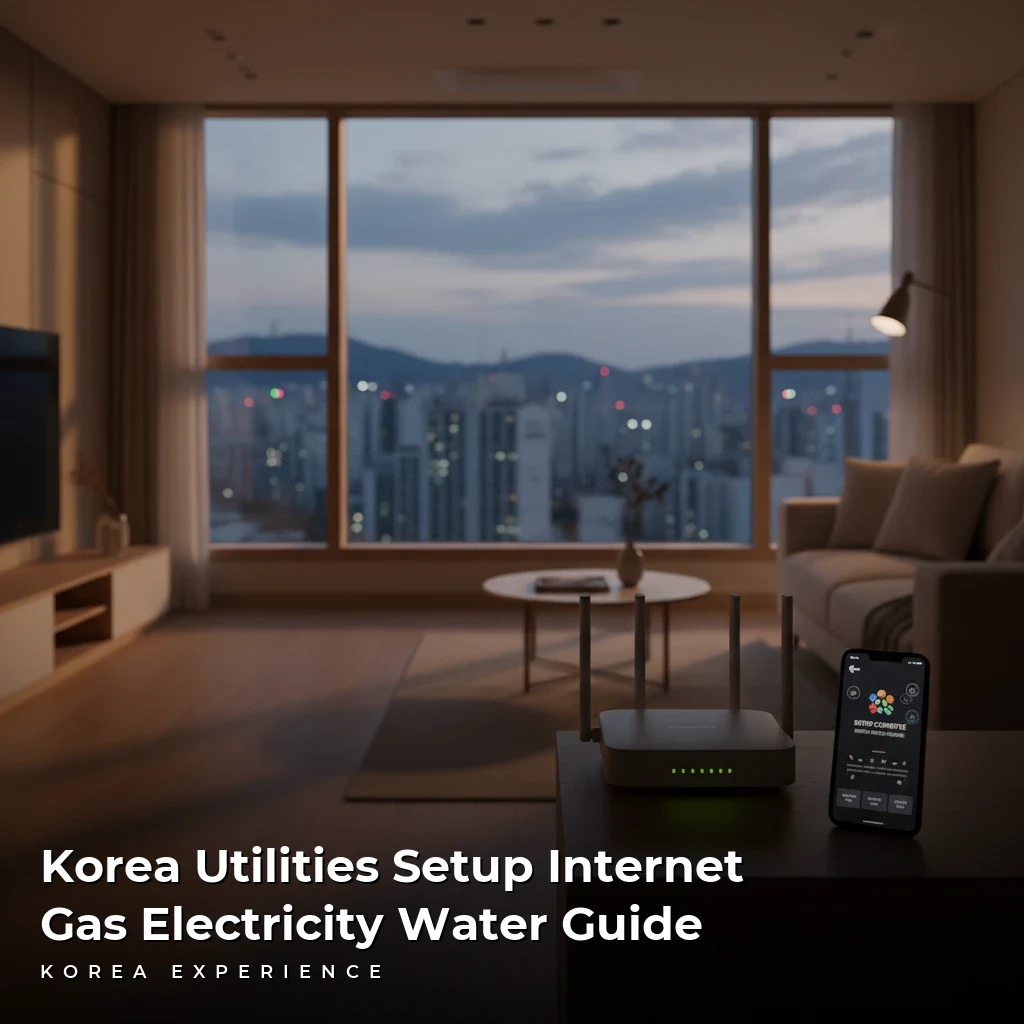
Moving to South Korea offers an exciting blend of ultra-modern convenience and deep-rooted tradition. However, before you can stream your favorite K-dramas at lightning speed or enjoy the cozy warmth of heated floors, you need to navigate the logistics of utilities setup internet gas electricity water. For international residents, this process can initially seem daunting due to language barriers and specific bureaucratic requirements like the Alien Registration Card (ARC).
South Korea boasts some of the world's most efficient infrastructure. Once connected, you will experience internet speeds that average over 100 Mbps for basic packages and highly reliable power grids. This guide provides a detailed roadmap to getting your household running smoothly, ensuring you settle into your new Korean home with minimal friction.
Key Takeaways
- 1You need an ARC (Alien Registration Card) for most post-paid utility contracts
- 2Korean internet contracts are typically 3 years; early termination fees are steep
- 3City gas powers floor heating (Ondol) and costs spike significantly in winter
Understanding the Korean Utility Landscape
In Korea, how you set up and pay for utilities depends heavily on your housing type. If you are living in an Officetel (studio apartment) or a managed apartment complex, many utilities might be bundled into a monthly maintenance fee known as "Gwanlibi." In contrast, if you rent a Villa (low-rise brick building) or a standalone house, you are likely responsible for setting up individual accounts for gas and electricity.
Learn more in our comprehensive guide to Jeju Digital Nomad Guide Best Cafes Internet Speed.
The billing cycle is generally monthly. Bills arrive via post (Giro), text message, or app notifications. Most payments are due near the end of the month, specifically between the 20th and the 25th.
📋 Utility Overview
The "Gwanlibi" (Maintenance Fee)
Before signing a lease, ask specifically about the Gwanlibi. For a standard 25-square-meter officetel in Seoul, this fee averages between ₩100,000 and ₩150,000 per month. This usually covers building cleaning, elevator maintenance, security, and sometimes internet or water. It rarely covers gas or in-unit electricity usage.
Lease Check
Always verify which utilities are included in your maintenance fee. Landlords in university districts like Hongdae or Sinchon may bundle water and internet, saving you approximately ₩50,000 per month in separate bills.
Internet and Mobile: The Digital Lifeline
South Korea is famous for having the fastest average internet speeds in the world, often exceeding 200 Mbps even on standard mobile networks. Getting connected is priority number one for most expats.
The Big Three Providers
The telecommunications market is dominated by three major companies:
- KT (Korea Telecom): The largest provider with the most extensive infrastructure. Best for English support.
- SK Telecom: Known for premium mobile speeds and slight price premiums.
- LG U+: Often offers aggressive bundling deals for smart home devices.
Contract vs. Prepaid
The most critical data point for new arrivals is the 3-year standard contract. To get the best rates (approx. 30,000 - ₩40,000/month for 1Gbps internet), you must sign a 3-year agreement. A 1-year contract is possible but can cost 30% to 50% more monthly.
Internet Service Options
| Feature | 3-Year Contract | 1-Year Contract | Prepaid/Month-to-Month |
|---|---|---|---|
| Monthly Cost | ₩22,000 - ₩40,000 | ₩35,000 - ₩55,000 | ₩50,000+ |
| ARC Required | ✅ | ✅ | ❌ |
| Installation Fee | Waived (Often) | ₩20,000+ | ₩30,000+ |
| Hardware Rental | Included | Extra Fee | Buy Own |
Setting Up Internet: Step-by-Step
If you have your Alien Registration Card (ARC) and a Korean bank account, the process is seamless.
📖 How to Set Up Home Internet
Step 1: Choose a Provider
Visit a Global Store (KT/SKT/LG) or call their English line. KT's English line is 100.
Step 2: Verify Documents
Present your Passport, ARC, and Korean bank book for auto-transfer setup.
Step 3: Schedule Installation
Technicians work fast. Appointments are usually available within 2 to 3 days.
Step 4: Installation Day
The technician will install the modem. Installation takes about 30 minutes. Verify speed before they leave.
If you are only in Korea for 1 year, do NOT sign a 3-year contract to get the free gift or lower rate. The penalty for cancelling early (wi-yak-geum) is massive. It calculates based on the discount you received times the months used. I paid over ₩400,000 to break a contract early. It's better to pay the higher monthly rate for a 1-year flexible plan.
City Gas (Dosigaseu): Heating and Cooking
In Western countries, gas is often a secondary utility. In Korea, it is life. Korean homes utilize Ondol, a floor heating system powered by gas boilers. This system is efficient but can be expensive if mismanaged during the bitter Korean winters where temperatures drop below -10°C (14°F).
Connection and Setup
Unlike electricity, gas is usually turned off when a tenant moves out. You must schedule an appointment to turn it on.
- Provider: Regional monopolies. In Seoul, it is usually Seoul City Gas or Samchully.
- Action: Call the customer center listed on the gas meter or the sticker on your boiler.
- Cost: There may be a connection fee of roughly 10,000 to ₩15,000, payable in cash to the technician.
📊 Winter Heating Costs
Managing Costs
Because gas powers the floor heating, your winter bill will be 5 to 10 times higher than your summer bill. A summer gas bill might be ₩8,000 (cooking and showers only), while a winter bill for the same apartment can easily reach ₩150,000 or more.
Ondol Efficiency
Do not turn your floor heating completely off when you leave the house in winter. Re-heating a cold concrete floor takes immense energy. Instead, use the "Oechul" (Away) mode, which keeps the water minimally warm, preventing frozen pipes and reducing reheating costs.
Electricity: Powering Your Life
Electricity in Korea is supplied by KEPCO (Korea Electric Power Corporation). The standard voltage is 220V at 60Hz, using the two-round-pin Type C or Type F plugs (Schuko). If you are bringing electronics from the US (110V), you will need a step-down transformer, not just a travel adapter, or you risk frying your devices immediately.
Billing and Progressive Tax
Korea uses a progressive tax system for electricity to encourage conservation.
- Tier 1: Low usage (Lowest rate)
- Tier 2: Moderate usage
- Tier 3: High usage (Highest rate)
If you exceed 400kWh in a month (common in summer with AC), your rate per unit increases drastically. The average monthly bill for a single-person household is between ₩20,000 and ₩40,000, but running an old air conditioner all day can push this over ₩100,000.
💵 Electricity Tier Pricing (Estimates)
Lights, fridge, laptop, fan
AC running 10+ hours/day
Setting Up
In most apartment complexes, electricity is not disconnected between tenants. You simply call KEPCO (dial 123) with your address and the meter reading on your move-in day to transfer the name. They have English interpretation services available during business hours (9:00 AM - 6:00 PM).
Water and Waste Management
While waste disposal isn't a utility you "turn on," it is a utility you pay for daily through a specific volume-rate system.
Water
Water is the cheapest utility in Korea. For a typical household, the bill is often bimonthly (every two months) and rarely exceeds ₩15,000 to ₩20,000.
- Tap Water: Known as "Arisu" in Seoul. It is safe to drink, though many locals prefer filtered or boiled water due to concerns about old pipes.
- Billing: Often included in the building maintenance fee. If separate, the bill arrives in your mailbox.
Waste Disposal (Jongnyangje System)
You cannot throw trash in random bags. You must purchase specific district-issued trash bags.
- General Waste: White/Yellow bags.
- Food Waste: Yellow/Orange bags (varies by district).
- Recycling: Free, but must be separated (plastic, vinyl, can, glass, paper).
Convenience Store (CU, GS25, 7-Eleven)(Pyeon-ui-jeom)
A standard 10-liter general waste bag costs approximately ₩250 to ₩300. Food waste bags (2 liters) cost around ₩100. Using non-compliant bags can result in fines up to ₩1,000,000 if you are caught, as bags often have tracking codes or officials check contents.
How to Pay Your Bills
Korea offers incredibly convenient ways to pay. You never need to visit a utility office in person.
1. Bank Auto-Transfer (Recommended)
This is the most common method. When setting up the utility, provide your bank account details. The provider will deduct the amount automatically on the due date. Many banks offer a small discount (often 1% or ₩200) for auto-pay.
2. Giro Payment at ATM/App
Your paper bill comes with a "Giro" number. You can type this number into any Korean ATM or banking app under the "Utility" section to pay directly.
3. Convenience Store
Take your paper bill to any convenience store (GS25, CU, 7-Eleven). The clerk will scan the QR code, and you can pay via cash or card. This is great for your first month before your bank auto-pay is set up.
Move-In Utility Timeline
Move In
Take photos of Gas, Electric, and Water meters immediately.
City Gas
Call provider to schedule connection (must be present).
Internet
Technician visits for installation (appointment needed).
First Bills
Check mail for Giro slips and set up auto-pay.
Troubleshooting and English Support
Navigating utilities setup internet gas electricity water issues without fluency in Korean can be tricky. However, most major providers have dedicated English lines.
Using Concierge Services
- ✓Zero language barrier
- ✓Handles all paperwork
- ✓Saves time during stressful moves
- ✗Service fees apply (approx ₩50k)
- ✗Limited control over specific contract terms
If you struggle with the setup, several "Expat Concierge" services exist in Seoul (like Wonderful or Ask Ajumma) that can call utility companies on your behalf for a fee.
Key Contact Numbers
- Electricity (KEPCO): Dial 123 (Press 9 for English).
- Seoul Global Center: Dial 02-2075-4180 (General life support, can help translate).
- KT Internet: Dial 100 (English option available).
- Dasan Call Center: Dial 120 (General city help, including utility disputes).
Smart Home Integration
Korea is highly advanced in IoT. Many modern apartments have a "Wall Pad" (a tablet on the wall) that controls lights, gas, and entry. Use Google Lens to translate the buttons instantly if the interface is only in Korean.
Conclusion
Setting up utilities in Korea is a rite of passage for every long-term resident. While the strict requirement for an ARC and the unique nature of the Ondol heating system present a learning curve, the reliability and speed of the services are world-class. Remember to budget higher for gas in the winter and electricity in the summer to avoid billing shocks.
By following this guide, you will ensure your home is warm, powered, and connected, allowing you to focus on exploring the vibrant culture and landscapes of Korea.
❓ Frequently Asked Questions
Have more questions?Contact us →
About the Author
Korea Experience Team
Written by the Korea Experience editorial team - experts in Korean medical tourism, travel, and culture with years of research and firsthand experience.
Explore more in Living in Korea
Everything expats and long-term visitors need to know — from visa requirements and housing to banking, healthcare, and daily life tips.
Browse All Living in Korea ArticlesContinue Reading
Explore more articles you might find interesting

Master the famous 10-step K-beauty routine with our comprehensive guide for 2026, including product recommendations, costs, and store locations.
Master the art of the Korean visa run in 2026. Comprehensive guide on routes, costs, immigration risks, and re-entry tips for long-term travelers.
The comprehensive step-by-step guide for moving to South Korea in 2026. Covers visas, housing, banking, and detailed costs for a seamless transition.
A complete step-by-step guide to exchanging your foreign driving license in South Korea, including document requirements, costs, and exam details.
Unlock your dream of teaching English in Korea with our comprehensive E-2 Visa guide. Learn requirements, steps, and insider tips for a smooth process.
The ultimate 2026 guide to remote work in Jeju Island. Discover 500Mbps cafe speeds, top coworking spaces, and living costs for digital nomads.