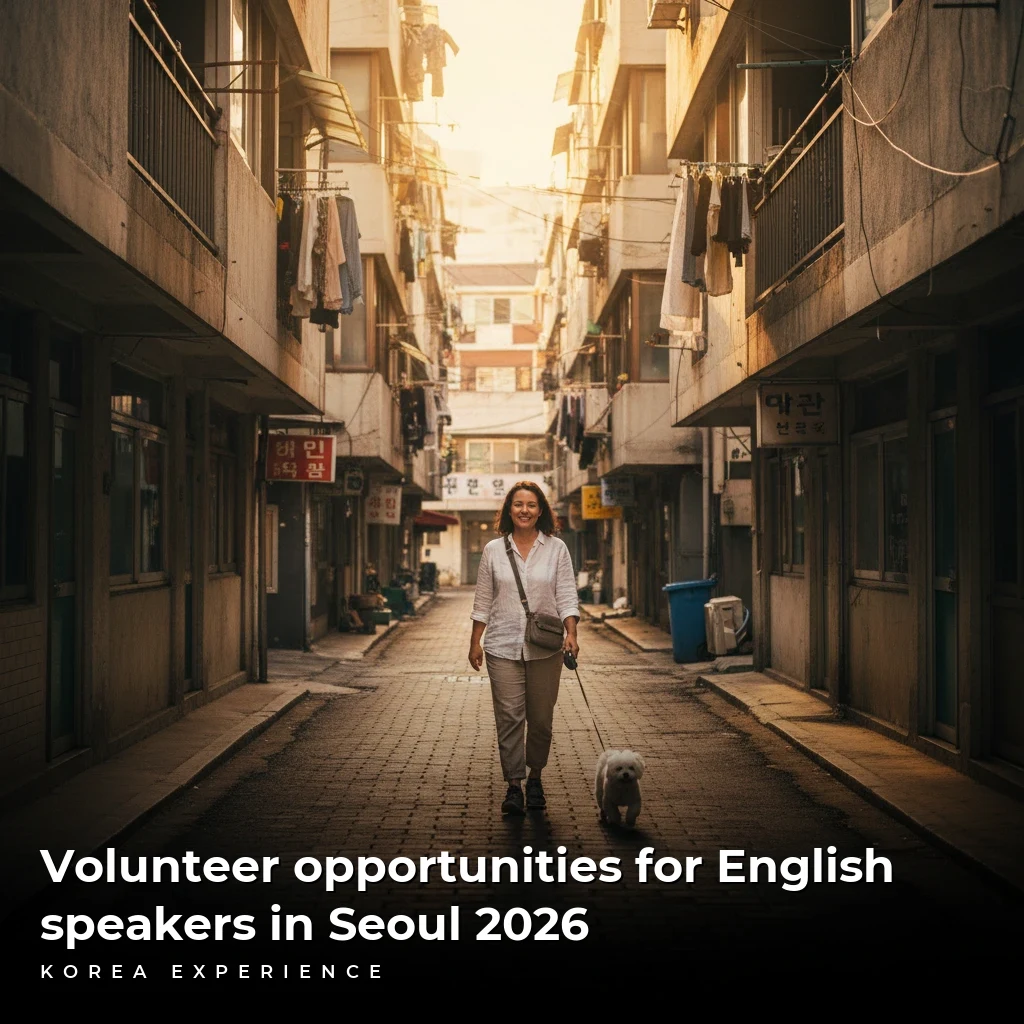
Volunteer in Seoul 2026: English Speaker Guide
Discover diverse volunteer opportunities for English speakers in Seoul in 2026. Make a difference, meet people, and enhance your Korean experience.
Seoul, a vibrant metropolis where ancient traditions blend seamlessly with futuristic innovation, offers an unparalleled experience for international visitors and expatriates alike. Beyond the dazzling lights of Gangnam, the historical charm of Bukchon Hanok Village, and the culinary delights of Gwangjang Market, lies a profound opportunity to connect with the city on a deeper level: through volunteering. For English speakers, navigating the landscape of volunteer opportunities in a foreign country can initially seem daunting, but Seoul in 2026 is brimming with organizations eager for your skills and enthusiasm.
This comprehensive guide will illuminate the diverse "Volunteer Opportunities for English Speakers in Seoul 2026," empowering you to find a meaningful role that aligns with your interests and availability. We'll explore why volunteering is an invaluable addition to your time in Korea, where to look for programs, highlight specific organizations, and provide essential practical tips to ensure a fulfilling experience. Whether you're a student, a temporary resident, or a long-term expat, preparing to make a positive impact and enrich your journey in the dynamic capital of South Korea.
Why Volunteer in Seoul as an English Speaker?
Volunteering transcends simple charity; it's a two-way street that offers immense personal growth while contributing significantly to the local community. For English speakers in Seoul, the benefits are particularly multifaceted.
Cultural Immersion Beyond Tourism
While sightseeing offers a glimpse into Korean culture, volunteering provides an authentic, unfiltered immersion. You'll interact with locals from all walks of life, understand societal nuances, and witness the everyday challenges and triumphs of the community firsthand. This level of engagement goes far beyond what any guidebook can offer, fostering a deeper appreciation and understanding of Korean values, customs, and perspectives. You might find yourself learning about traditional festivals by helping organize one, or gaining insight into the challenges faced by local youth through mentorship programs.
Networking and Community Building
Moving to a new city, especially one where language can be a barrier, can sometimes feel isolating. Volunteering is an excellent way to build a robust local network. You'll meet like-minded individuals – both Korean and international – who share a common goal of giving back. These connections can evolve into lasting friendships, provide professional networking opportunities, and even open doors to new experiences or job prospects in the future. Many volunteer groups also organize social events, further fostering a sense of community.
Skill Development and Resume Enhancement
Regardless of your chosen field, volunteering allows you to hone existing skills and develop new ones. Communication, teamwork, problem-solving, cultural competence, and leadership are all transferable skills highly valued by employers globally. For those looking to work in Korea or internationally, demonstrating a commitment to community service and cross-cultural engagement can significantly enhance your resume. You might gain experience in event planning, digital marketing for a non-profit, or even basic translation, all of which are valuable assets.
Giving Back to the Local Community
At its core, volunteering is about altruism. Seoul, like any major city, faces its share of social and environmental challenges. By dedicating your time and energy, you directly contribute to making a tangible difference in people's lives or improving the urban environment. From supporting vulnerable populations to preserving natural spaces, your efforts, however small they may seem, collectively contribute to a stronger, more compassionate Seoul. This sense of purpose and contribution is incredibly rewarding and leaves a lasting positive impact not just on the community, but also on yourself.
Key Volunteer Sectors for English Speakers in Seoul
Seoul's diverse social fabric presents a wide array of volunteer opportunities across various sectors, many of which actively seek English-speaking volunteers. Understanding these sectors can help you narrow down your search and find a perfect fit.
Education and Language Exchange
This is perhaps the most prominent sector for English speakers. Many local schools, community centers, and even private organizations seek native or fluent English speakers to assist with language education. This could involve teaching conversational English to children or adults, running English clubs, acting as a language exchange partner, or helping with curriculum development.
- Examples: Public schools (through programs like EPIK, though usually paid, sometimes have volunteer extensions), private hagwons (academies) for special projects, university language centers, multicultural family support centers.
- Skills needed: Patience, good communication, ability to simplify complex ideas, a passion for teaching.
- Benefit: Direct interaction with Korean students, deep insight into the education system.
Environmental and Urban Renewal
As a sprawling metropolis, Seoul is increasingly focused on sustainability and green initiatives. Environmental groups and local district offices often require assistance with park cleanups, maintaining community gardens, urban farming projects, and public awareness campaigns about ecological issues. While some tasks may not require extensive English communication, the planning and organizational aspects often benefit from multilingual volunteers.
- Examples: Cheonggyecheon stream cleanups, Han River park maintenance, urban farming initiatives in areas like Gangdong-gu, local environmental non-profits.
- Skills needed: Physical stamina for outdoor work, teamwork, organizational skills, an interest in environmental preservation.
- Benefit: Contributing to Seoul's natural beauty, hands-on experience in urban sustainability.
Social Welfare and Support
This sector focuses on assisting vulnerable populations, including the elderly, disabled individuals, homeless people, and children in orphanages or disadvantaged backgrounds. Roles might include befriending services, meal distribution, event support, or assisting with daily activities. Sensitivity and empathy are paramount in these roles.
- Examples: Anna House (homeless shelter and community center in Seongnam, serving Seoul residents), Korea Foodbank, various local senior welfare centers, orphanages, and centers for disabled individuals.
- Skills needed: Empathy, patience, good listening skills, non-judgmental attitude, often physical assistance.
- Benefit: Directly impacting lives, understanding social challenges in Korea, fostering human connection.
Arts, Culture, and Tourism
Seoul is a hub of cultural activity, hosting numerous festivals, exhibitions, and events throughout the year. English speakers are highly valued in roles that interact with international tourists or promote Korean culture abroad. This could include guiding visitors at museums, helping organize international cultural festivals, or assisting at tourist information centers.
- Examples: Volunteer guides at national museums (e.g., National Museum of Korea), festival support (e.g., Seoul Lantern Festival, Seoul Fashion Week), tourist information kiosks in popular areas like Myeongdong or Insadong.
- Skills needed: Strong communication, knowledge of Korean history/culture (or willingness to learn), outgoing personality, customer service skills.
- Benefit: Promoting Korean culture, meeting people from around the world, access to unique cultural events.
International NGOs and Organizations
Seoul hosts a significant number of international non-governmental organizations (NGOs) and offices of global entities. These organizations often work on issues ranging from human rights to global development, and they almost exclusively operate in English. Volunteer roles could include research, administrative support, event planning, or communications.
- Examples: Offices of UN agencies (e.g., UNESCAP), Amnesty International Korea, Doctors Without Borders Korea, various advocacy groups focusing on global issues.
- Skills needed: Professionalism, strong English writing/research skills, often specialized knowledge related to the NGO's mission, administrative acumen.
- Benefit: Gaining experience in international relations, contributing to global causes, working in a professional English-speaking environment.
Finding Volunteer Opportunities: Where to Look in 2026
Identifying the right volunteer position requires knowing where to search. Seoul offers several reliable avenues for English speakers seeking opportunities.
Government-Run Platforms
The Korean government operates several platforms designed to connect volunteers with organizations. The primary one is the 1365 Volunteer Portal. While predominantly in Korean, it is the central database for most official volunteer postings across the country.
- 1365 Volunteer Portal: Access it via their official website. You might need to use a browser's translation feature or ask a Korean-speaking friend for assistance. Many organizations post opportunities that are implicitly open to English speakers, especially in areas like cultural exchange or tourist support. Look for terms like "외국인" (foreigner) or "영어" (English) in descriptions, or contact the organization directly.
- Seoul Volunteer Center: This is the city-level hub, often linking to specific district (gu) volunteer centers. They sometimes have dedicated sections or events for international volunteers. Check their official website for announcements or contact them via email/phone for English assistance.
University and Expat Community Boards
Universities with large international student populations, and established expat communities, are excellent resources.
- University International Offices: Universities like Seoul National University (SNU), Yonsei University, Korea University, and Ewha Womans University often have international student offices that maintain lists of volunteer opportunities, especially those relevant for students on specific visas. They might also organize their own community service programs.
- Expat Facebook Groups and Online Forums: Groups like "Seoul Expats," "Korea Foreigners," or specific interest-based groups often share volunteer postings. Keep an eye on community announcements boards on websites popular with expats. These are often reliable sources for finding English-friendly opportunities.
NGO and Charity Websites
If you have a particular cause in mind, directly visiting the websites of relevant non-governmental organizations and charities can be effective.
- Direct Search: Search for Korean organizations related to your interests (e.g., "Korea animal welfare," "Seoul elderly care," "Korea environmental groups"). Many larger NGOs will have English versions of their websites and contact information for international inquiries.
- International Branches: Look for the Korean branches of well-known international charities (e.g., Save the Children Korea, Habitat for Humanity Korea). Their websites will almost certainly be in English and specify how to apply as an international volunteer.
Language Institutes and Cultural Centers
Some language schools or cultural centers that cater to foreigners occasionally organize or promote volunteer activities as part of their community engagement or cultural programs.
- Seoul Global Center: While primarily a resource center for foreigners, they often have a community engagement section and may list volunteer opportunities or run their own programs. They are an excellent first stop for any foreigner in Seoul.
- King Sejong Institutes: Though primarily for Korean language learning, some locations might have cultural exchange programs or partnerships that involve volunteering.
Direct Outreach to Organizations
Don't be afraid to reach out directly to an organization you're interested in, even if they haven't explicitly advertised for English-speaking volunteers. A well-crafted email expressing your interest, skills, and availability can sometimes create an opportunity, especially if you offer unique skills like graphic design, social media management, or a specific language proficiency.
Top Organizations & Programs for English Speakers (Examples)
Here are some specific examples of organizations and programs that have historically welcomed or are known to accept English-speaking volunteers in Seoul. Please note that specific programs and needs can change, so always verify current opportunities directly with the organization.
-
Seoul Global Center (SGC):
- Focus: Comprehensive support for foreigners living in Seoul.
- Volunteer Roles: They often need volunteers for their various programs, including cultural events, assisting with information desks, translation services for non-Korean speakers, and supporting community outreach initiatives. They also organize programs to connect foreigners with local volunteer opportunities.
- Contact: Visit their website (seoul.go.kr/global) or call their foreigner helpline (120 - press 9 for English). Their physical location in Jongno-gu is also a great place to visit for information.
-
Anna House (안나의 집):
- Focus: Providing food, shelter, and support services to homeless individuals and disadvantaged youth in Seongnam, which borders Seoul and serves many Seoul residents.
- Volunteer Roles: Distributing meals, assisting with daily operations, befriending residents, organizing clothes donations, and helping with educational programs for youth. While basic Korean helps, many tasks are practical and welcoming to English speakers. Founded by Father Vincenzo Bordo, an Italian priest, the organization has a long history of welcoming international volunteers.
- Contact: Search "Anna House Korea" online for their website and contact details.
-
Korea Foodbank (한국푸드뱅크):
- Focus: Collecting surplus food from businesses and distributing it to welfare facilities and vulnerable individuals across Korea.
- Volunteer Roles: Sorting and packing food, assisting with delivery, administrative tasks, and promoting food donation campaigns. These roles often require teamwork and are suitable for groups or individuals.
- Contact: Visit their national website (foodbank1377.org) to find regional centers or inquire about volunteering.
-
Green Korea United (환경운동연합):
- Focus: Environmental protection, sustainable development, and public awareness campaigns for a greener Korea.
- Volunteer Roles: Participating in clean-up drives (e.g., along the Han River, in national parks), assisting with environmental advocacy campaigns, research, and educational programs. While some activities might involve Korean-only instruction, many hands-on tasks are universal, and international participation is valued for broader advocacy.
- Contact: Look up "Green Korea United" online for their website and contact information.
-
Habitat for Humanity Korea (한국해비타트):
- Focus: Building and renovating homes for low-income families and communities in need.
- Volunteer Roles: "Builds" are the most famous, where volunteers physically construct homes. This is a highly practical and hands-on experience. They also need support for fundraising and administrative tasks. International teams are frequently organized.
- Contact: Visit the Habitat for Humanity Korea website (habitat.or.kr) for project dates and application procedures.
-
Various Elderly Welfare Centers (노인복지관):
- Focus: Providing services, activities, and companionship for senior citizens.
- Volunteer Roles: Assisting with meal services, organizing recreational activities (e.g., games, crafts), offering companionship, and helping with basic administrative tasks. While communication with seniors might require some basic Korean, just being present and offering a friendly face can be invaluable. Some centers specifically look for English speakers for language exchange with seniors interested in learning.
- Contact: Search for "Seoul Elderly Welfare Center" and the name of a specific district (e.g., "Jongno-gu Elderly Welfare Center") to find local facilities. Direct contact via phone or email is often best.
Practical Tips for Volunteering in Seoul
Navigating volunteer work in a foreign country comes with its unique set of considerations. Here are some practical tips to ensure a smooth and rewarding experience in Seoul.
Language Considerations
While this guide focuses on "Volunteer Opportunities for English Speakers in Seoul 2026," the reality is that basic Korean language skills will significantly enhance your experience.
- Where English is sufficient: International NGOs, tourist-facing roles, and some language exchange programs.
- Where basic Korean helps: Most local community centers, social welfare programs, and environmental groups. Even a few phrases like "안녕하세요" (hello), "감사합니다" (thank you), and "죄송합니다" (sorry) can go a long way in showing respect and facilitating interaction.
- Don't let it be a barrier: If a role interests you, inquire even if your Korean isn't strong. Many organizations value enthusiasm and willingness to learn.
Visa and Legal Aspects
It is absolutely crucial to understand your visa status regarding volunteer work.
- Tourist Visas (B-1, B-2): Generally, tourist visas do NOT permit any form of work, including unpaid volunteer work, if it can be perceived as displacing a paid worker or providing a service that would typically be compensated. Stick to strictly observational, cultural exchange, or non-profit, non-competitive activities. Always check with the Korean embassy/consulate in your home country or the local immigration office (1345 hotline) for the most up-to-date regulations.
- Student Visas (D-2, D-4): Often allow limited volunteer activities, especially if it's related to your studies or university-approved.
- Work Visas (E-series, F-series): Generally offer more flexibility, but it's still wise to ensure the volunteer activity falls within acceptable parameters.
- Rule of Thumb: If in doubt, always clarify with Korean Immigration. Misrepresenting your activities can lead to serious consequences.
Commitment and Reliability
Korean professional and social culture places a very high emphasis on commitment, punctuality, and reliability.
- Show Up on Time: Being late is often seen as disrespectful. Plan your commute carefully, especially in Seoul's vast public transport network.
- Follow Through: If you commit to a certain number of hours or a project, stick to it. Last-minute cancellations or no-shows are highly frowned upon.
- Communication: If unforeseen circumstances arise, communicate immediately and clearly with your volunteer coordinator.
Cultural Sensitivity and Etiquette
Understanding basic Korean etiquette will make your volunteering experience much smoother and more enjoyable for everyone involved.
- Respect for Elders: Show deference to those older than you. Use two hands when giving or receiving items, and use appropriate honorifics if you learn Korean.
- Teamwork and Harmony (눈치 - Nunchi): Korean culture often prioritizes group harmony. Be mindful of others, try to understand unspoken cues (nunchi), and offer to help others when possible.
- Modesty: While expressing your skills is good, avoid overly boastful or self-centered behavior.
- Dress Code: Dress modestly and appropriately for the volunteer setting. For most roles, neat casual or smart casual attire is suitable.
Preparing for Your Role
- Research: Learn as much as you can about the organization and your specific role before you start.
- Training: Attend any orientation or training sessions offered. This is not only for learning but also shows your commitment.
- Ask Questions: Don't be afraid to ask for clarification if you're unsure about a task or cultural norm. It's better to ask than to make a mistake.
- Be Open-Minded: Embrace new experiences and approaches. Things might be done differently than you're used to, and that's part of the learning process.
Comparing Volunteer Sectors and Requirements
To help you choose, here's a comparison of different volunteer sectors based on typical requirements and characteristics.
Table 1: Sector vs. Typical Requirements
| Volunteer Sector | Typical English Requirement | Basic Korean Helpfulness | Physical Demand | Emotional Engagement | Time Commitment Flexibility |
|---|---|---|---|---|---|
| Education/Language Exchange | High (Native/Fluent) | Low to Medium | Low | High | Medium (Scheduled Classes) |
| Environmental/Urban Renewal | Low to Medium | Medium | High | Medium | High (Event-Based) |
| Social Welfare/Support | Medium | High | Medium to High | Very High | Medium to High |
| Arts, Culture, Tourism | High | Medium | Medium | High | Medium to High |
| International NGOs/Offices | Very High (Professional) | Low | Low | Medium to High | Low to Medium (Project-Based) |
Table 2: Type of Organization vs. Commitment & Support
| Type of Organization | English-Friendly Scale | Typical Time Commitment | Level of Formal Training | Networking Potential (Int'l) | Networking Potential (Local) |
|---|---|---|---|---|---|
| Seoul Global Center | High | Flexible (Event-based/Regular) | Medium | High | High |
| Local Community Centers | Low to Medium | Regular (Weekly/Bi-weekly) | Low to Medium | Low | Very High |
| International NGOs | Very High | Medium (Project/Office Hours) | High | Very High | Medium |
| National Charities | Medium to High | Flexible (Event-based/Project) | Medium | Medium | High |
| University Programs | High | Medium (Semester-based) | Medium | High | High |
Frequently Asked Questions (FAQ) About Volunteering in Seoul
Here are answers to some common questions English speakers have about volunteering in Seoul.
Q1: Do I need to speak Korean to volunteer?
While not always mandatory, speaking some basic Korean will significantly enhance your volunteering experience, especially in local community settings. Many organizations specifically catering to international volunteers or tourist-facing roles will be English-friendly. Refer to Table 1 above for typical English requirements by sector.
Q2: Can I volunteer on a tourist visa?
Generally, no. Tourist visas in South Korea (B-1, B-2) do not permit any form of work, paid or unpaid. While there might be very specific, informal cultural exchange activities that are permissible, it's crucial to consult the Korean Immigration Office (dial 1345 from Korea) or your local Korean embassy/consulate to clarify what is allowed under your specific visa type. Engaging in activities that could be perceived as work on a tourist visa can lead to serious immigration issues.
Q3: What's the best way to find short-term opportunities?
For short-term or one-off opportunities, focus on event-based volunteering. Check the Seoul Global Center's website, expat community Facebook groups, and the "1365 Volunteer Portal" (using translation tools if needed) for specific clean-up drives, festival support, or special campaigns. Organizations like Habitat for Humanity also offer specific "build" dates that can be short-term commitments.
Q4: Are there age restrictions for volunteering?
Yes, most organizations will have age restrictions, particularly for minors. For adults, generally, there isn't an upper age limit as long as you can perform the required tasks. For individuals under 18, parental consent is usually required, and opportunities might be limited to specific programs designed for youth. Always check with the organization directly.
Q5: Will I get a certificate or reference for my volunteer work?
Many formal volunteer programs, especially those organized through government portals like 1365 or larger NGOs, do provide certificates upon completion of a certain number of hours or a project. These can be valuable for your resume or academic applications. If a certificate or reference is important to you, inquire about it before committing to the role.
Conclusion
Embarking on a volunteer journey in Seoul as an English speaker in 2026 is more than just an act of service; it's an unparalleled opportunity for personal growth, cultural immersion, and meaningful connection. From teaching English to supporting environmental initiatives or caring for the vulnerable, the diverse landscape of "Volunteer Opportunities for English Speakers in Seoul" offers something for everyone.
By leveraging resources like the Seoul Global Center, national volunteer portals, and expat communities, and by approaching your experience with an open mind and cultural sensitivity, you are poised for a deeply rewarding experience. Remember the practical tips – understand your visa, be reliable, and embrace the local culture – and you'll find yourself not just observing Seoul, but actively participating in its vibrant community. So, take the leap, find your cause, and enrich your time in South Korea by giving back. Your adventure in Seoul awaits, and it’s an opportunity to leave a positive footprint while collecting unforgettable memories.
Looking for more insights into living and thriving in Korea? Explore our other guides on "Planning Your Expat Life in Seoul" or "Essential Korean Language Learning Resources" to further enhance your journey.
About the Author
Korea Experience Team
Written by the Korea Experience editorial team - experts in Korean medical tourism, travel, and culture with years of research and firsthand experience.
⚠️ Medical Disclaimer
The information provided on this website is for general informational purposes only and does not constitute medical advice. Always consult with qualified healthcare professionals before making any medical decisions.
Continue Reading
Explore more articles you might find interesting
Secure your Korean home. This guide covers essential expat home insurance in Korea, ensuring your belongings and peace of mind are protected.
Unlock your dream of teaching English in Korea with our comprehensive E-2 Visa guide. Learn requirements, steps, and insider tips for a smooth process.
Explore comprehensive long-term visa pathways for retirees dreaming of living in South Korea, covering D-4, F-2, and crucial practicalities.