Visa extension online vs in person methods in south Korea 2026
Compare Hikorea online applications versus immigration office visits for Korean visa renewals. Find costs, documents, and expert tips for 2026.
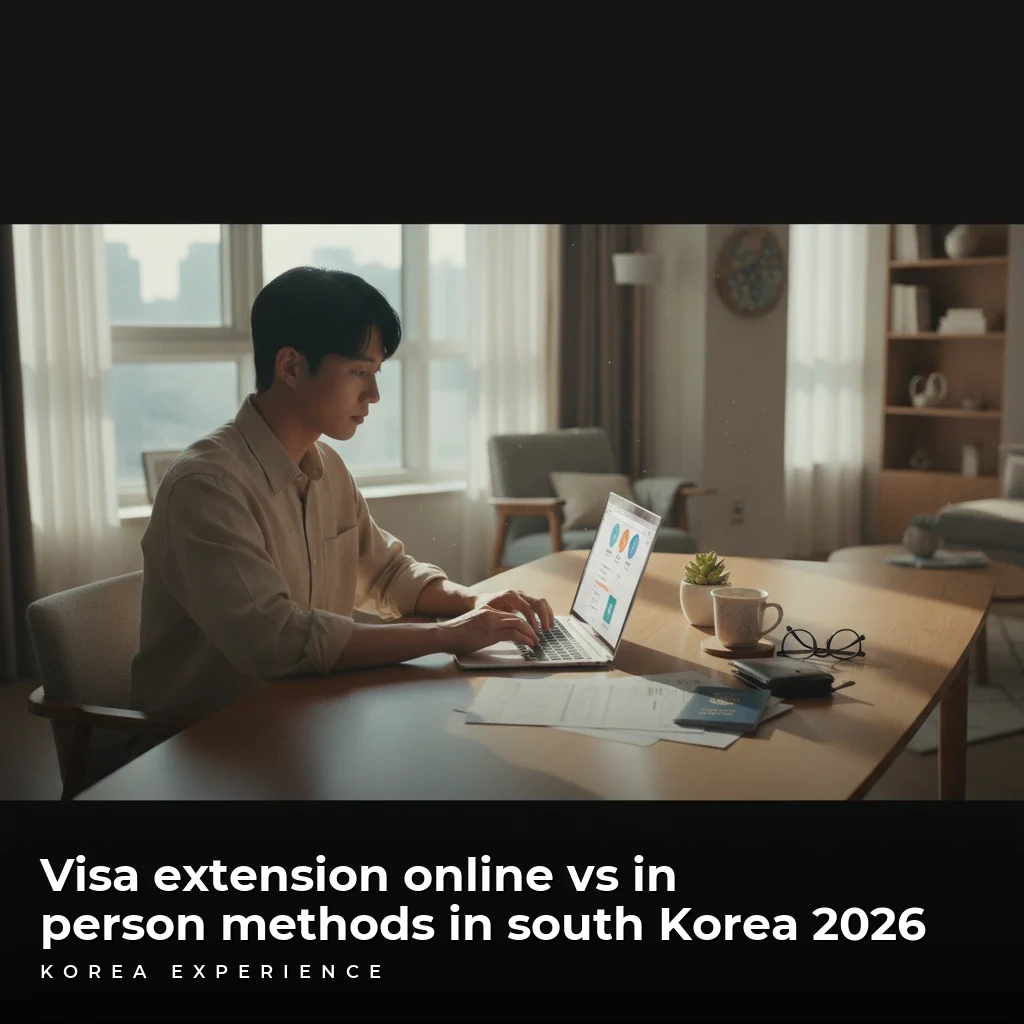
Navigating the bureaucratic landscape of South Korea is a rite of passage for every long-term foreign resident. Whether you are an English teacher on an E-2 visa, a student on a D-2, or a long-term resident on an F-series visa, the expiration date on your Registration Card (formerly ARC) is a deadline you cannot ignore. In 2026, the Korean Ministry of Justice offers two primary pathways for extending your stay: the digital convenience of the Hikorea website or the traditional visit to a local Immigration Office.
Choosing between the Visa Extension Online Vs In Person Methods is not merely a matter of preference; it often depends on your specific visa type, your patience with digital infrastructure, and the urgency of your application. While the government aims to digitize 80% of administrative tasks by 2027, certain nuances make the physical visit necessary for some. This guide breaks down every cost, minute, and document involved to help you decide which path ensures you remain in the Land of the Morning Calm legally and stress-free.
You might also enjoy our article about Visa run strategies leaving and re entering south Korea g....
Key Takeaways
- 1Online applications save approximately 3 to 4 hours of travel and waiting time compared to in-person visits
- 2In-person visits are mandatory for first-time applicants or those changing visa status, costing ₩60,000 plus card fees
- 3Online extensions offer a 10-20% discount on application fees but require strict document formatting under 1-5MB
Understanding the Korean Immigration System in 2026
Before diving into the methods, it is crucial to understand the current state of immigration services. As of early 2026, the registered foreign population in South Korea has surpassed 2.5 million. To manage this volume, the Korea Immigration Service has heavily incentivized online processing.
Learn more in our comprehensive guide to Changing visa status while in Korea guide for expats.
The central hub for all immigration matters is the Hikorea portal. While it was once notorious for requiring Internet Explorer and endless security plugins, the 2026 version is significantly more stable, supporting Chrome, Edge, and Safari. However, the system still operates on strict logic: if your documents do not match the exact specifications, rejection is instantaneous.
For more details, check out our guide on D 10 Job Seeker Visa After Graduation in 2026 Guide.
Conversely, the physical Immigration Offices, located in major districts like Omokgyo (Seoul Southern) or Sejong-ro, operate on a strict reservation-only basis. Walk-ins are virtually non-existent unless you are pregnant, disabled, or picking up a ready-made card.
For more details, check out our guide on D 10 Job Seeker Visa Korea 2026 Complete Application Guide.
📊 2026 Immigration Processing Stats
The Online Method: Hikorea E-Application
For most residents extending an existing visa (E-2, E-7, D-2, D-10), the online method is the gold standard for efficiency. It allows you to apply from the comfort of your home, provided you have a digital certificate or a verified account.
Why Choose Online?
The primary driver is time. A trip to the immigration office involves travel, waiting, and the appointment itself, easily consuming half a day. Online, the process takes about 20 to 30 minutes if your files are prepared. Additionally, the electronic revenue stamp is often slightly cheaper, or at least saves you the 3,000 to ₩5,000 transportation cost.
Browser Compatibility
While Hikorea now supports Chrome, ensure your pop-up blocker is completely disabled. Payment windows often open in new frames that ad-blockers aggressively target.
The Application Process
The online application window is strictly enforced. You can apply starting 4 months before your expiration date up until the expiration date itself. However, applying on the very last day is risky; if the system crashes or your application is returned for corrections, you risk becoming an illegal overstayer, which incurs fines starting at ₩100,000.
📖 How to Apply for Extension Online
Step 1: Log In & Verify
Access Hikorea and log in. You may need to verify your identity using a 'Pass' app or mobile phone authentication.
Step 2: Select Service
Navigate to 'Petition Application' > 'Registered Foreigners' > 'Extension of Stay'.
Step 3: Upload Documents
Upload PDF or JPG files. Critical: File names must not contain special characters and total size usually must be under 5-10MB depending on the specific form.
Step 4: Payment
Pay the 50,000 to ₩60,000 fee via credit card or bank transfer. Note: Foreign cards often fail; use a Korean card.
Technical Limitations and Processing Time
Once submitted, your application enters a "Received" status. In 2026, the average processing time for an online extension is roughly 10 to 14 business days. During peak seasons (February/March and August/September, aligning with school semesters), this can stretch to 21 days.
You do not get a new physical card with an online extension. Instead, you print a "Certificate of Designation of Sojourn Period" from the website. If you want the dates printed on the back of your physical card, you must visit an office or a district office (Gu-庁) later, which is a free walk-in service.
Many expats panic when their application status doesn't change for two weeks. Don't worry. If immigration needs more documents, they will text you (ensure your phone number on Hikorea is current!). You won't be rejected outright without a chance to supplement documents.
The In-Person Method: Visiting the Immigration Office
Despite the digital push, the in-person method remains vital. If you have changed your workplace (common for E-7 or E-2 visa holders changing schools), moved residence to a different jurisdiction simultaneously, or if your case has complexities (e.g., previous fines), you must go in person.
The Reservation System
You cannot simply show up. You must book an appointment via Hikorea weeks in advance. In Seoul, slots fill up roughly 3 to 4 weeks ahead of time. If your visa expires in 10 days and you haven't booked, you are in trouble.
📋 In-Person Visit Facts
The Day of the Visit
The atmosphere at an immigration office is a mix of high tension and bureaucratic efficiency. You must arrive at least 20 minutes before your slot. If you miss your number being called, you may have to re-book, effectively delaying your process by weeks.
Most Seoul residents will visit the Seoul Southern Immigration Office or the Sejong-ro branch. Here is a profile of the Southern office, which handles a massive volume of expats living in Western Seoul.
Seoul Southern Immigration Office(Seoul Nambu Chulipguk Samuso)
Note: The address above reflects the move to Magok which occurred some years ago, replacing the old Omokgyo location which many older blogs still reference. Always verify the current address of your jurisdiction on Hikorea.
The Process Timeline
In-Person Appointment Timeline
Book Appointment
Log on to Hikorea at 9 AM to secure a slot.
Arrival
Arrive early. Fill out the 'Application for Integrated Form'.
Buy Stamps
Purchase ₩60,000 in revenue stamps at the on-site kiosk/bank.
Interview
Submit documents. Fingerprints may be rescanned.
Confirmation
Passport stamped or new card ordered (if applicable).
Detailed Cost Analysis: Online vs. In-Person
Financial planning for your visa extension is essential. It is not just the application fee; it includes transportation, potential postage for card delivery, and opportunity costs (taking time off work).
The standard fee for a visa extension is ₩60,000. If you are issued a new Registration Card (because yours is damaged, lost, or full), there is an additional ₩30,000 fee.
💵 Total Cost Breakdown
Full fee + Transportation + Potential ₩4,000 Card Delivery
Includes discounted fee. No travel cost.
Cash vs. Card
Immigration offices are transitioning to cashless payments, but the Revenue Stamp (Suip-inji) kiosks often still prefer cash or domestic debit cards. Always carry at least ₩70,000 in cash as a backup when visiting in person.
Document Comparison
The core documents required (Passport, current Registration Card, Contract, Housing Contract) are identical. However, the format differs.
Document Submission Differences
| Feature | Online (Hikorea) | In-Person |
|---|---|---|
| File Format | PDF, JPG only | Originals + Copies |
| Application Form | Digital Input | Paper Form #34 |
| Photo | Digital Upload (strict ratio) | Physical Print (3.5x4.5cm) |
| Passport | Scan of ID page | Original Passport Required |
A critical distinction regarding housing: In 2026, strict scrutiny is placed on proof of residence.
- Online: You upload a scan of your lease. If the lease is not in your name (e.g., company housing), you must upload a "Confirmation of Residence/Accommodation" form signed by the leaseholder and a copy of their ID.
- In-Person: You bring the original lease. The officer can verify the authenticity immediately. Online, a blurry scan of a lease can lead to a "Supplement Request," delaying your visa by a week.
Pros and Cons: Making the Decision
To help you finalize your choice, let's weigh the advantages and disadvantages of each method based on the 2026 landscape.
Method Comparison
- ✓Online: Apply 24/7 without taking leave from work
- ✓Online: Usually 10% cheaper on fees
- ✓In-Person: Immediate confirmation of acceptance
- ✓In-Person: Ability to ask questions and clarify complex situations
- ✗Online: Technical glitches can be frustrating
- ✗Online: No physical stamp/update on card immediately
- ✗In-Person: Requires booking weeks in advance
- ✗In-Person: High stress environment, long travel times
Troubleshooting & Expert Tips
Even with the best preparation, things go wrong. Here is how to handle common issues.
The "Name Mismatch" Error
This is the most common error on Hikorea. Your name must be entered exactly as it appears on your Registration Card.
- Spacing: "SMITH JOHN" vs "SMITHJOHN".
- Capitalization: Usually all caps.
- Hyphens: If your name has a hyphen in your passport but not on your ARC, use the ARC version.
1345 Helpline
The Immigration Contact Center (1345) is your lifeline. Available in nearly 20 languages, they operate from 9 AM to 10 PM on weekdays.
- Wait Times: in 2026, the average wait time for an English operator is 7 minutes.
- Tip: Call at 9:00 AM sharp or during lunch hours (12:00-13:00) when many people assume they are closed (they operate on shifts).
If you are moving to a new address and extending your visa at the same time, DO NOT do it online separately. The systems often lag. Visit the office to do both the 'Change of Place of Sojourn' and 'Extension of Stay' simultaneously. It saves you from getting a fine for late address reporting (required within 14 days of moving).
Conclusion
In 2026, the battle of Visa Extension Online Vs In Person Methods generally leans heavily toward the Online method for routine extensions. The convenience of applying from your desk, combined with the stability of the modern Hikorea platform, makes it the superior choice for 80% of expats.
However, the In-Person method remains a necessary evil for complex cases, first-time applicants, or those who simply crave the peace of mind that comes with a physical stamp in a passport. Whichever route you choose, the golden rule remains: Start early. Aim to apply 3 months before expiration to buffer against any bureaucratic surprises.
❓ Frequently Asked Questions
Have more questions?Contact us →
About the Author
Korea Experience Team
Written by the Korea Experience editorial team - experts in Korean medical tourism, travel, and culture with years of research and firsthand experience.
Explore more in Living in Korea
Everything expats and long-term visitors need to know — from visa requirements and housing to banking, healthcare, and daily life tips.
Browse All Living in Korea ArticlesContinue Reading
Explore more articles you might find interesting
Master the art of the Korean visa run in 2026. Comprehensive guide on routes, costs, immigration risks, and re-entry tips for long-term travelers.
Discover the cheapest and fastest ways to transfer money from South Korea to your home country in 2026. Compare Sentbe, WireBarley, and banks.
Master the F-5 visa application in 2026. Detailed guide on income, KIIP, and documents for securing permanent residency in South Korea.
Compare costs, amenities, and lifestyle differences between Goshiwons and Officetels in Korea for 2026. Find your perfect Seoul accommodation.
A comprehensive guide to long-term stay options for retirees in South Korea, including investment visas, costs, and healthcare access.
A complete guide to South Korea's National Health Insurance (NHI) for expats. Covers premiums, enrollment, hospital visits, and 2026 cost updates.