Behind the scenes K-Drama production tours 2026 guide
The ultimate guide to visiting K-drama filming locations and studio sets. Includes prices, transport data, and exclusive tips for fans in 2026.
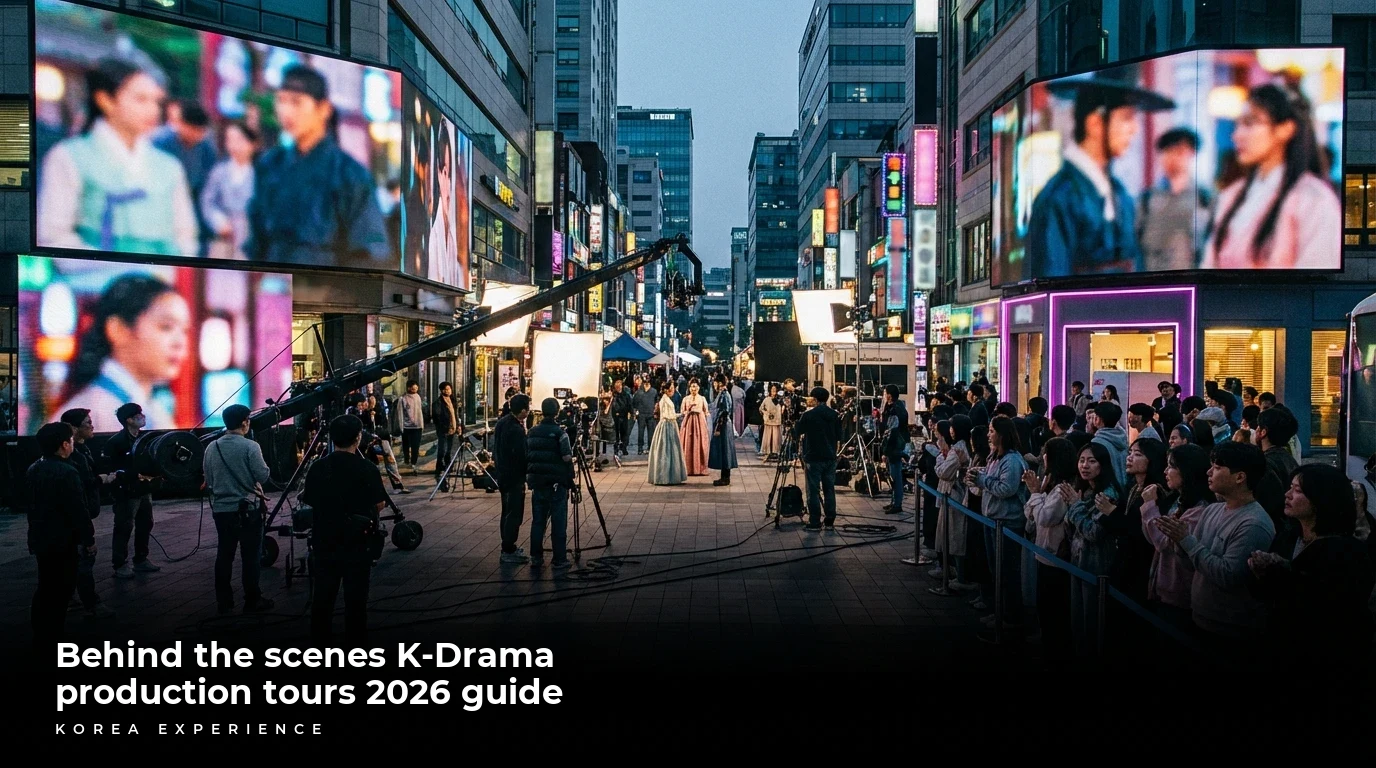
The global phenomenon of Korean dramas has transformed the way international travelers experience South Korea. Moving beyond traditional palaces and shopping districts, a new wave of tourism has emerged: the pilgrimage to the sites where iconic scenes were captured. For the dedicated fan, "Behind The Scenes K Drama Production Tours" offer a bridge between the screen and reality, allowing you to walk in the footsteps of your favorite Hallyu stars.
However, the reality of Korean production is often different from what fans expect. Unlike Hollywood's Universal Studios, the Korean drama industry is decentralized, with filming locations scattered across the peninsula, ranging from high-tech digital cities to remote open sets in the countryside. Navigating this landscape requires precise planning, understanding of geography, and insider knowledge.
For more details, check out our guide on How to attend live K-Drama tapings ticket info guide.
Key Takeaways
- 1MBC Daejanggeum Park is the largest accessible historical set, located 90 minutes from Seoul.
- 2Most active filming schedules are secret; spotting actors requires luck or industry connections.
- 3Combined entrance fees and transport for a self-guided day tour average $45 USD.
The Reality of K-Drama Filming Locations
Before booking your tickets, it is crucial to understand the two distinct types of production tours available in Korea: "Open Sets" and "Broadcast Stations."
You might also enjoy our article about K-Drama Convenience Store Dinner Guide for Travelers in K....
Open Sets are large-scale, permanent outdoor locations built primarily for historical dramas (Sageuk). Because these productions require period-specific architecture without modern skyscrapers in the background, they are often located in provinces like Gyeonggi-do or Chungcheongnam-do.
Broadcast Stations (KBS, MBC, SBS) are located within Seoul, primarily in Yeouido or Sangam-dong. These tours focus on the history of broadcasting, news studios, and variety show sets rather than live drama filming.
📊 Industry Scale 2026
According to 2025 tourism data, over 1.2 million international visitors listed a filming location as a primary destination. However, the geographic spread is vast. A trip to a major coastal filming site like the one used in Hometown Cha-Cha-Cha (Pohang) involves a 270-kilometer journey from Seoul, taking approximately 2.5 hours by KTX train and costing around ₩53,000 ($40 USD) one way. Understanding these distances is key to building a viable itinerary.
For more details, check out our guide on K-Drama actors fan meetings how to attend guide.
MBC Daejanggeum Park: The King of Historical Sets
If you only have time for one behind-the-scenes experience, MBC Daejanggeum Park is the industry standard. Located in Yongin, roughly 45 kilometers south of Seoul, this is the largest historical drama open set in Korea.
For more details, check out our guide on K-Drama Cafe Culture Scene Filming Locations Guide.
Unlike a theme park, this is a functioning production facility. It spans over 2,500,000 square meters. Iconic dramas filmed here include The Moon Embracing the Sun, Empress Ki, and the music video for BTS Suga's Daechwita.
MBC Daejanggeum Park(Yongin Daejanggeum Park)
Logistics and Costs
Accessing the park via public transport is an adventure in itself. You must take the subway to Suwon Station (Line 1), which takes about 60 minutes from Seoul Station. From there, it is a taxi ride or a long bus journey.
- Admission: ₩9,500 for adults (approx. $7.20 USD).
- Taxi from Suwon Station: Approximately ₩45,000 ($34 USD) / 40 minutes.
- Bus 105: ₩1,500 ($1.15 USD) / 90 minutes.
If you see a section of the park roped off with black vans nearby, filming is in progress. Silence is mandatory. Do not take photos of the actors or crew, as security will ask you to delete them immediately.
Sunshine Land: The Immersive Experience
For fans of Mr. Sunshine or Pachinko, Sunshine Land in Nonsan offers a visually stunning experience. This location is unique because it recreates the early 1900s Hanseong (old Seoul), featuring a mix of traditional Korean Hanok and Western colonial architecture.
Located 160 kilometers south of Seoul, this is a full-day commitment. The site was built as a joint venture between the drama production team and the local government, costing over ₩10 billion ($7.5 million USD) to construct.
📋 Sunshine Land Details
The Journey South
To reach Nonsan, you should take the KTX from Yongsan Station to Nonsan Station.
- KTX Cost: ₩28,100 ($21 USD).
- Duration: 1 hour 40 minutes.
- Local Transport: From Nonsan Station, take a taxi for roughly ₩15,000 ($11 USD) to the studio entrance.
The attention to detail here is superior to many other sets. The "Glory Hotel" operates as a real cafe where you can buy coffee for ₩6,000 ($4.50 USD) and sit in the same velvet chairs used by the cast.
Closed on Wednesdays
Sunshine Land is strictly closed every Wednesday. Unlike major palaces in Seoul which close on Tuesdays, this venue follows a different schedule. Plan accordingly to avoid a wasted 300km round trip.
Broadcast Station Tours: Inside the Digital Media City
For those who prefer to stay within Seoul city limits, the Digital Media City (DMC) in Sangam-dong is the heartbeat of modern K-content. This high-tech district houses the headquarters of MBC, SBS, and CJ ENM.
While you won't see historical villages here, you will see the "behind the scenes" of variety shows and news broadcasts. This area is easily accessible via the Airport Railroad Express (AREX) line, just a 15-minute ride from Hongik University Station.
Broadcast Station Experiences
| Feature | MBC World | KBS On (Yeouido) | CJ ENM Center |
|---|---|---|---|
| Entry Cost | ₩18,000 | Free | Event Only |
| VR Experiences | Extensive | Limited | None |
| English Guide | Audio Guide | Pamphlet | No |
| Celebrity Chance | High (Lobby) | Medium (Radio) | High (Lobby) |
MBC World
This is Korea's first hallyu theme park centered around a broadcasting station. The tour takes about 90 minutes.
- Zone M: Hologram concerts (Big Bang, 2NE1, though dated, still popular).
- Zone B: Trick eye photos with drama characters.
- Zone C: Virtual reality sets where you can "act" in a drama.
The cost is ₩18,000 ($13.50 USD), which is reasonable given the interactive technology.
VIP vs. DIY: Budgeting Your Production Tour
Deciding between a guided tour and a Do-It-Yourself (DIY) approach depends on your budget and tolerance for public transportation. Guided tours often include convenient shuttle buses, which is a significant value add when visiting remote sets like Daejanggeum Park or Nami Island.
💵 Cost Breakdown: Day Trip to Yongin
Private car, English guide, lunch included, hotel pickup.
Subway + Bus fares, entry ticket, convenience store lunch.
Guided Tours vs. DIY
- ✓Direct transport saves 2+ hours of travel time.
- ✓Guides often know current filming schedules.
- ✓No language barrier with ticket offices.
- ✗Strict time limits at each location.
- ✗Significantly higher cost (4x-5x).
- ✗Less flexibility to explore hidden corners.
How to Spot Filming in Progress
A common question is: "Can I watch them film?" The answer is generally no, but there are ways to increase your chances. Production trucks usually arrive at locations very early, often between 05:00 AM and 07:00 AM.
📖 How to Identify a Filming Set
Step 1: Look for the Trucks
Filming crews travel in convoys. Look for large white generator trucks and buses with blacked-out windows.
Step 2: Check the Signs
Look for A-frame signs that say '촬영중' (Filming in Progress).
Step 3: Observe Staff Behavior
Staff wearing headsets and holding walkie-talkies at street corners are blocking pedestrians for a take.
Pro Tip: In Seoul, the areas of Ikseon-dong (traditional hanoks) and the banpo Bridge Rainbow Fountain are frequent filming spots on weekday mornings.
The Modern Drama Route: Itaewon and Beyond
For fans of Itaewon Class, the geography of the show is surprisingly accurate to real life. A walking tour of Itaewon offers a high density of filming locations within a 2-kilometer radius.
- Noksapyeong Bridge: The iconic view of Namsan Tower.
- Danbam (Original Location): Located near the entrance of the Unduk-jib tripe restaurant.
- The Stonewall Walk: Near the Grand Hyatt Hotel.
Itaewon Class Walking Route
Noksapyeong Bridge
Start here for the classic Namsan Tower backdrop photo.
Gyeongnidan-gil
Walk up the hill to see the exterior used for the first Danbam pub.
Lunch at The Finest
Rooftop bar/restaurant where Yi-seo and Saeroyi had drinks. Cocktails approx ₩18,000.
This route is completely free aside from food and transport, making it the most budget-friendly production tour option. The total walking distance is about 3.5 kilometers, involving steep hills, so comfortable shoes are mandatory.
Nami Island: The Classic Hallyu Origin
No comprehensive guide is complete without mentioning Nami Island (Namiseom). Famous for Winter Sonata, which essentially started the global Hallyu craze, it remains a staple production site.
Located 63 kilometers from Seoul, the most efficient way to get there is the ITX-Cheongchun train from Yongsan to Gapyeong Station (approx. 60 minutes, ₩9,800). From Gapyeong, you must take a ferry.
- Ferry Ticket (Visa Entry): ₩16,000 ($12 USD) for foreigners (must show passport).
- Zipline Entry: ₩49,900 ($37 USD) - includes entry fee.
While crowded, the Metasequoia Lane is visually spectacular and continues to be used for romantic flashback scenes in modern dramas.
Zipline Arrival
Take the Zipline into Nami Island instead of the ferry. The wait time for the ferry on weekends can exceed 45 minutes. The Zipline takes 90 seconds and offers an incredible view of the Bukhan River.
Etiquette and Legalities
Visiting production sites comes with a responsibility. South Korea has strict privacy laws. Using drones over filming sets without a permit is illegal and can result in fines up to ₩2,000,000 ($1,500 USD).
Furthermore, many "residential" filming locations (like the houses in Parasite or Reply 1988) are actual homes where people live. The Seoul Metropolitan Government has received noise complaints regarding tourists in Ihwa Mural Village and Bukchon Hanok Village.
- Silence: Keep noise to a minimum in residential alleys.
- No Trespassing: Never enter an open gate unless it is clearly a business.
- Faces: Blur the faces of non-celebrity locals if posting photos online.
Conclusion
Behind The Scenes K Drama Production Tours offer a fascinating glimpse into the mechanics of the Hallyu wave. Whether you are trekking to the historical sets of Yongin or walking the trendy streets of Itaewon, the experience grounds the fantasy of the screen into the tangible history and culture of Korea.
For the best experience in 2026, we recommend mixing one major "Open Set" day trip (like Daejanggeum Park) with urban exploration in Seoul (DMC or Itaewon). Budget approximately ₩100,000 ($75 USD) per person for a comfortable day trip including transport, entry fees, and a themed meal.
❓ Frequently Asked Questions
Have more questions?Contact us →
About the Author
Korea Experience Team
Written by the Korea Experience editorial team - experts in Korean medical tourism, travel, and culture with years of research and firsthand experience.
Explore more in K-Culture
K-Pop, K-Drama, traditional arts, and modern culture — dive deep into the cultural phenomena that have captivated the world.
Browse All K-Culture ArticlesContinue Reading
Explore more articles you might find interesting
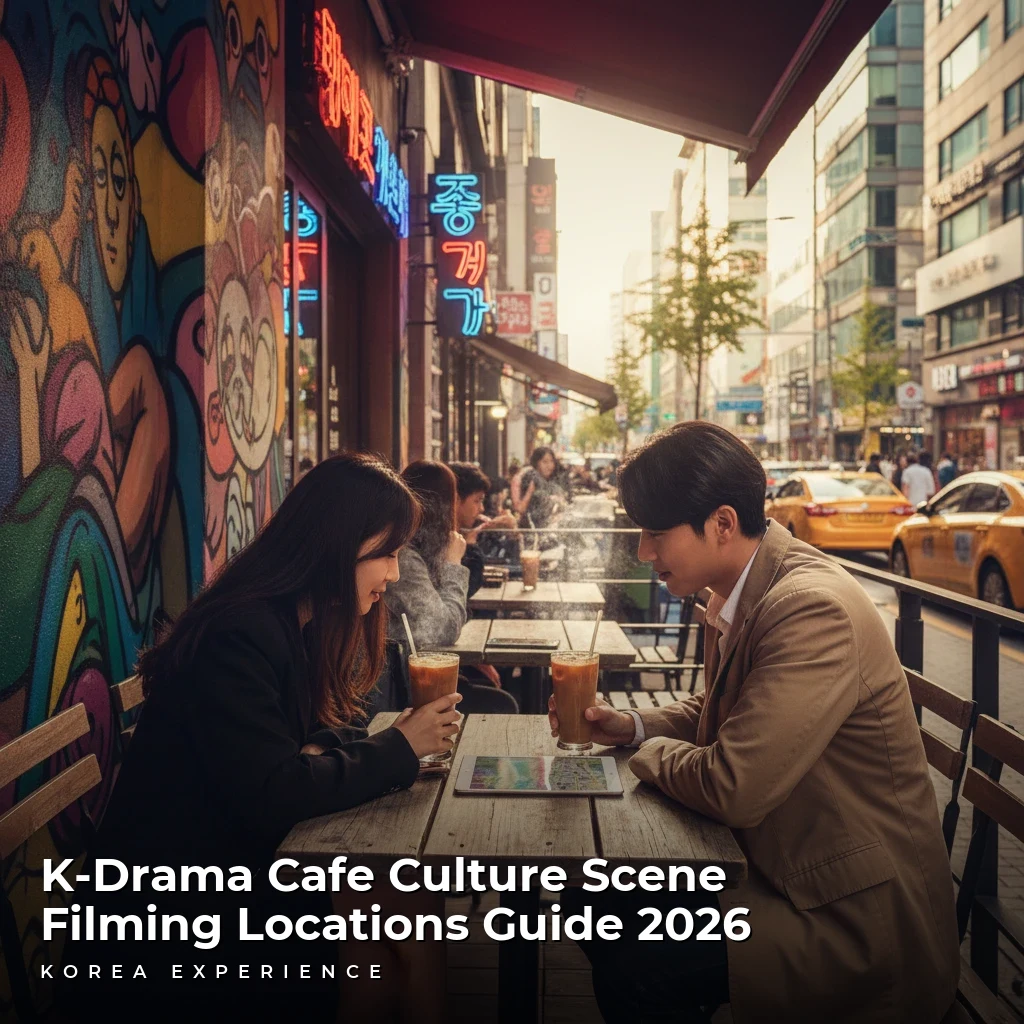
Explore the ultimate guide to K-Drama filming locations and cafe culture in Seoul. Discover iconic spots, prices, and travel tips for fans.
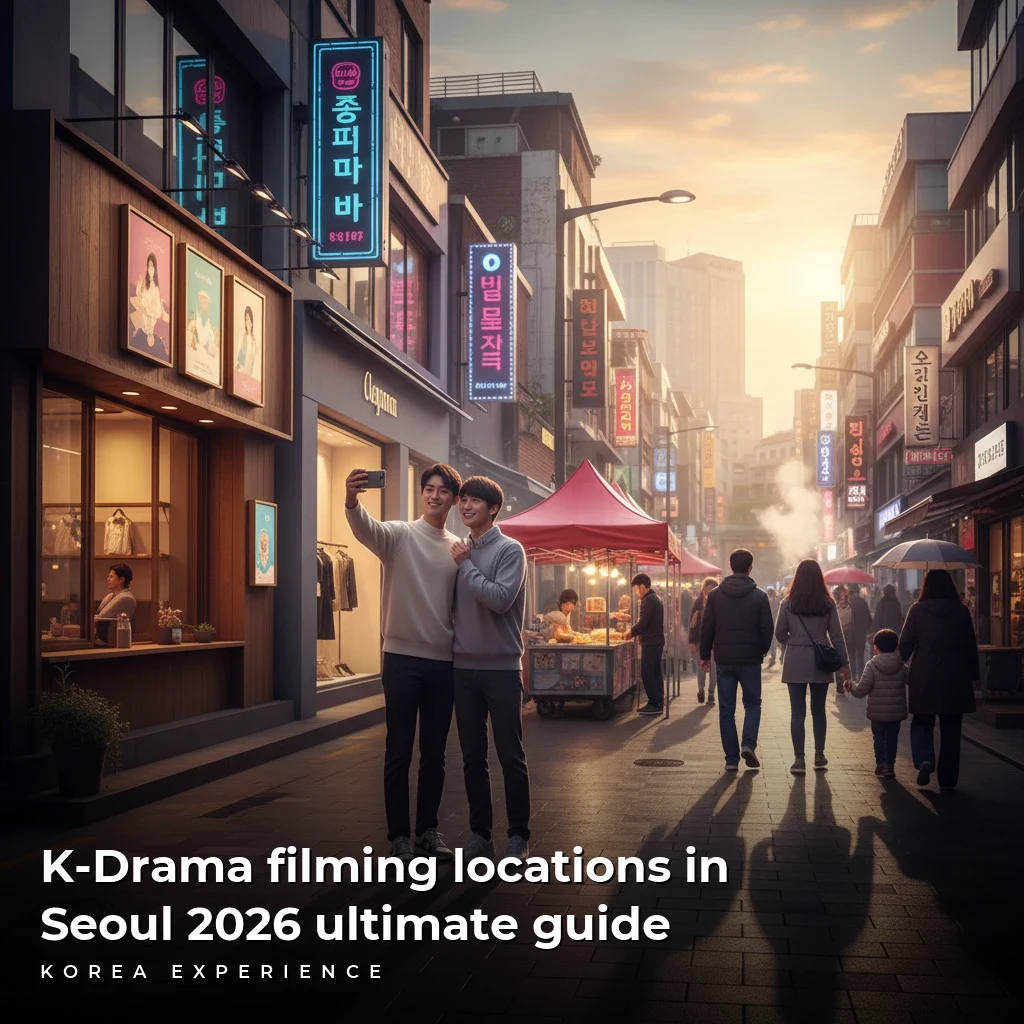
Explore the most iconic K Drama filming locations in Seoul for 2026. From Queen of Tears to Goblin, discover prices, transit tips, and photo spots.
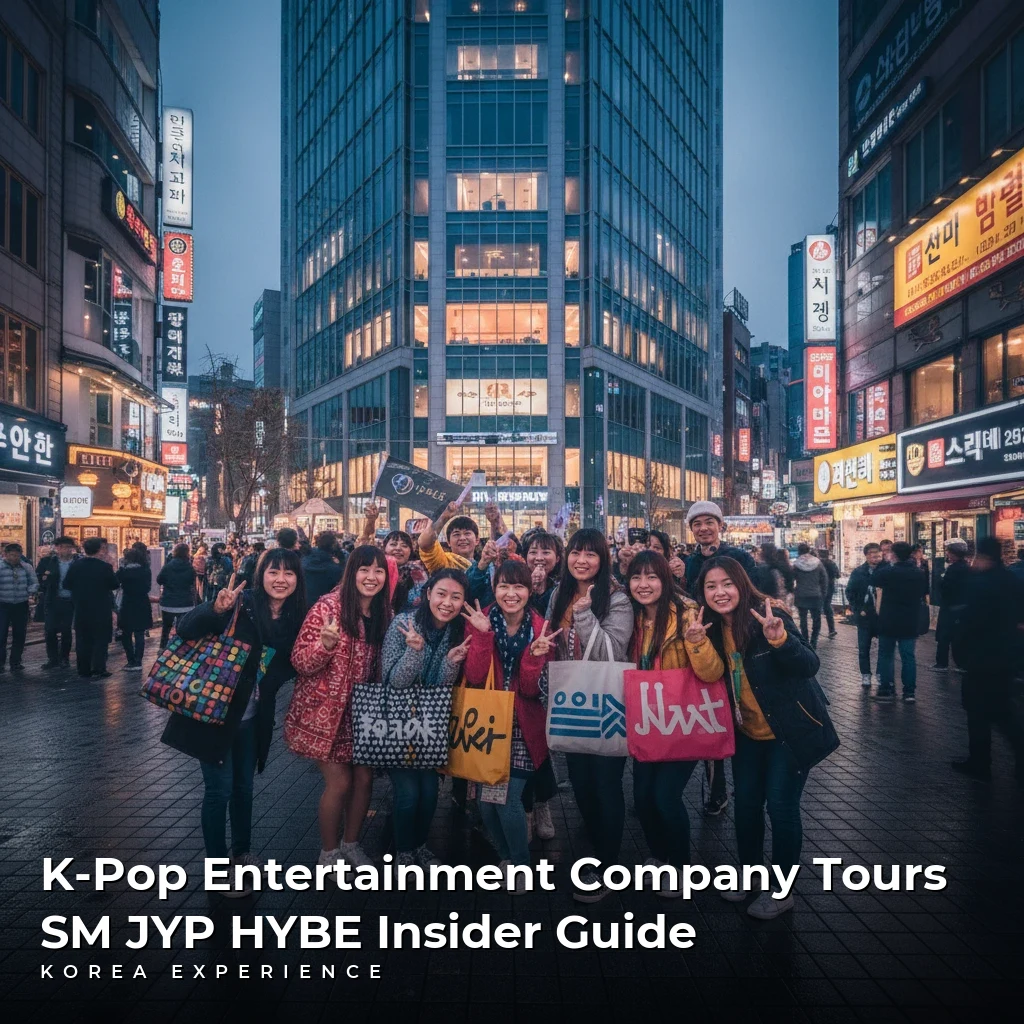
The ultimate 2026 guide to visiting SM, JYP, and HYBE headquarters. Discover locations, cafes, and merchandise tips for the perfect K-Pop pilgrimage.
Discover the top K Pop music video filming locations in Korea with our detailed map, transport tips, and budget advice for the ultimate fan pilgrimage.
Visit the ₩100 million wedding venue and The Hyundai Seoul. This 2026 guide covers 17+ locations from Seoul to Germany with travel tips and cost breakdowns.
Discover the best Korean webtoon cafes and manhwa culture in 2026. Our guide covers locations, prices, and tips for the ultimate comic experience.