Calligraphy classes in Seoul mastering Hangeul art 2026
Discover the best calligraphy classes in Seoul for 2026. Learn Hangeul art, costs, studio reviews, and essential tips for travelers.
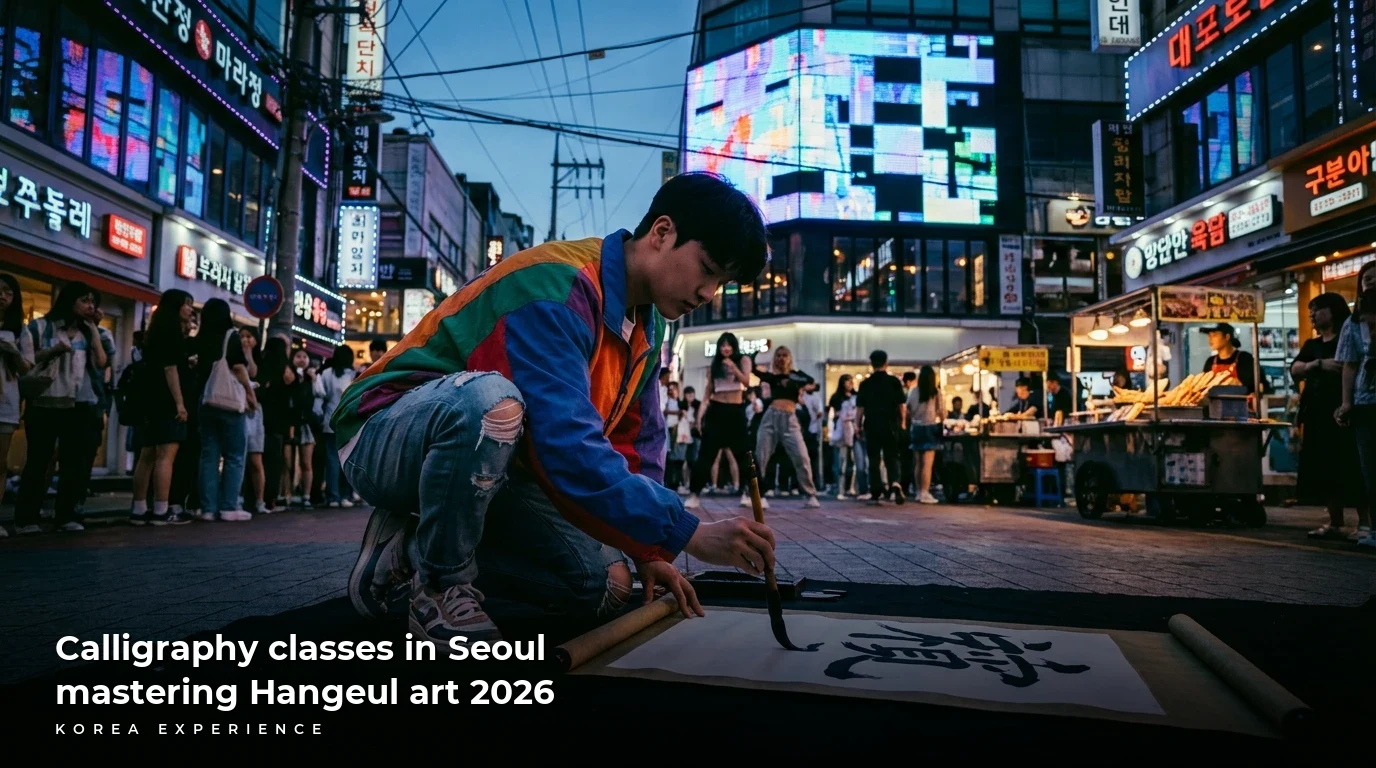
Seoul in 2026 is a mesmerizing blend of hyper-modern technology and deeply rooted tradition. While the neon skyline of Gangnam continues to evolve, the quiet backstreets of Insadong and Bukchon Hanok Village remain the soulful guardians of Korea's past. For international travelers seeking a connection deeper than sightseeing, learning "Seoye"—the art of Korean calligraphy—has become the premier cultural experience of the year.
Mastering the brushstrokes of Hangeul (the Korean alphabet) is not merely about writing; it is an exercise in mindfulness, history, and artistic expression. As the global interest in K-Culture matures beyond pop music into fine arts, enrollment in one-day calligraphy workshops has surged by 40% since 2024. Whether you are a complete beginner or an artist looking to expand your medium, Seoul offers a diverse array of classes that bridge the gap between ancient techniques and modern design.
Related reading: Korean Calligraphy Classes Learning Hangeul Art.
Key Takeaways
- 1Most one-day workshops in 2026 cost between 50,000 and ₩80,000 ($35-$60 USD).
- 2Classes typically last 90 to 120 minutes and include all materials plus a souvenir.
- 3Insadong remains the top district for authentic experiences, hosting over 25 dedicated studios.
The Cultural Significance of Seoye in 2026
Korean calligraphy, or Seoye, is an art form that reflects the writer's character and state of mind. Unlike Western calligraphy, which often focuses on the rigid perfection of the letter, Seoye emphasizes the flow of "Qi" (energy) through the brush. In 2026, this ancient practice has found new relevance as a digital detox tool for travelers escaping the hyper-connectivity of modern life.
For more details, check out our guide on Mastering Korean Paper Art Hanji Crafts Workshops.
Hangeul, invented by King Sejong the Great in 1446, is scientifically renowned for its logic, but artistically, it offers a unique geometric beauty. The vertical and horizontal lines represent the sky, earth, and humanity. When you take a class in Seoul, you are participating in a 580-year-old dialogue about Korean philosophy.
Related reading: Independent cinema guide art house theaters in Seoul.
📊 Calligraphy Tourism Growth
According to recent cultural surveys, 65% of participants report a significant reduction in travel stress after a single 90-minute session. The act of grinding the ink stick (Meok) against the stone (Byeoru) is a meditative preparation that sets the rhythm for the entire experience.
Related reading: Top K-Pop dance classes for beginners cover dance studios....
Best Areas for Calligraphy Classes
Seoul is massive, covering over 605 square kilometers, but the calligraphy scene is concentrated in specific historical districts. Choosing the right location is crucial for your itinerary.
1. Insadong: The Traditional Heart
Insadong has been the center of Korean art for centuries. In 2026, the main street is pedestrian-friendly and lined with art supply stores (Pilbang). Here, you are never more than 100 meters away from a master calligrapher's studio. It is the most accessible area for English speakers.
2. Bukchon Hanok Village: The Atmospheric Choice
Located just 800 meters north of Insadong, Bukchon offers classes inside traditional Hanok homes. These classes tend to be slightly more expensive, averaging ₩70,000, but the ambiance of sitting on the floor with views of a courtyard garden is unmatched.
3. Hongdae: The Modern Twist
For a younger demographic, Hongdae offers "Pop-Calligraphy" classes. These often involve using watercolor brushes or marker pens rather than traditional ink, focusing on designing phrases for social media or tote bags.
Pro Tip
If you are staying in Gangnam, factor in transit time. It takes approximately 45 minutes by subway (Line 3) to reach Anguk Station, the gateway to Insadong and Bukchon.
Top Rated Calligraphy Studios in 2026
We have curated a list of the highest-rated studios offering English-language instruction this year.
The Heritage Experience: Yerin's Art Studio
Located in the winding alleys of Insadong, this studio is run by Master Lee, who has over 30 years of experience. The class focuses on the "Four Treasures of the Study": Paper, Brush, Ink, and Inkstone.
Yerin Art Studio(Yerin Seoye)
The class begins with 20 minutes of ink grinding meditation. Students then practice basic strokes—dots, horizontal lines, and vertical lines—before attempting their name or a favorite word. The studio boasts a 98% satisfaction rate among English-speaking visitors.
The Modern Fusion: K-Calli Cafe
For those intimidated by strict tradition, K-Calli Cafe in Mapo-gu offers a relaxed environment. Here, you learn "Calligraphy Design," which applies Hangeul aesthetics to everyday items like mood lamps and tumblers.
📋 K-Calli Cafe Snapshot
This venue is particularly popular with travelers aged 20-35. In 2025 alone, they hosted over 5,000 international guests. The class includes a complimentary beverage, often traditional tea or a latte, making it a social and educational hybrid experience.
The Premium Private Class: Seochon VIP Session
For serious learners or couples seeking privacy, the Seochon VIP Session offers one-on-one instruction with a prize-winning artist. Located near the Blue House (Cheong Wa Dae), this experience includes a tea ceremony.
💵 Price Comparison: Group vs. Private
Dedicated master, premium materials, tea ceremony included.
Shared instructor, 10-15 students, lively atmosphere.
What to Expect: Step-by-Step Guide
If you have never held a brush before, the prospect can be daunting. However, Korean pedagogy in these one-day classes is designed for absolute beginners. Here is a timeline of a typical 2-hour session.
Your Calligraphy Journey
Introduction & Ink Grinding
Learning the history of Hangeul and meditating while grinding the ink stick.
Basic Strokes
Practicing the fundamental lines. Learning to control brush pressure.
Writing Your Masterpiece
Drafting and finalizing your chosen word or name on Hanji paper.
Sealing & Drying
Stamping your work with a red seal (Nakgwan) and packaging it.
The physical technique involves holding the brush vertically, perpendicular to the paper. Unlike a pen, you use your wrist and elbow to move the brush, not your fingers. Instructors will physically guide your hand to help you feel the "rhythm" of the stroke. Most students use roughly 10 to 15 sheets of practice paper before attempting their final work on high-quality Hanji (mulberry paper).
Do not wear white or expensive clothing. While aprons are provided, the black ink (Meok) is permanent and notoriously difficult to wash out of fabrics. If you do get a stain, do not use hot water; it sets the ink.
Tools of the Trade: Buying Your Own Supplies
After the class, many travelers wish to continue practicing back home. The global market for calligraphy supplies has grown, but buying locally in Seoul saves you approximately 30-50% compared to online imports.
The best place to purchase supplies is the "Pilbang" alley in Insadong. Look for stores like "Gukje Dang." A beginner's set typically includes:
- Brush (But): Made from weasel, goat, or horse hair.
- Ink Stick (Meok): Compressed soot and glue.
- Ink Stone (Byeoru): For grinding the ink.
- Paper (Hanji): Traditional Korean paper.
Starter Kit Options
| Item | Student Grade | Artist Grade | Master Grade |
|---|---|---|---|
| Brush Price | ₩10,000 | ₩45,000 | ₩150,000+ |
| Ink Stone Material | Plastic/Composite | Slate | Rare Stone |
| Paper Quality | Pulp Mix | Mulberry | Hand-pressed |
In 2026, many shops also offer "Water Writing Cloths." This is a special fabric that turns black when touched with a wet brush (water only, no ink) and fades as it dries. It is the perfect souvenir for travelers with limited luggage space, costing around ₩15,000.
Digital Calligraphy: The New Trend of 2026
While traditional ink remains king, Seoul has seen a rise in digital calligraphy classes using iPads and styluses. These classes are held primarily in tech-forward districts like Pangyo and Gangnam. They teach you how to create custom brushes that mimic the texture of real hair brushes and how to export your art for digital prints.
This is an excellent option for digital nomads. The average cost is ₩60,000 for a 2-hour session, and you receive the digital brush files to keep. However, purists argue that you miss the tactile connection and the smell of the ink, which is integral to the Seoye experience.
Traditional vs. Digital Class
- ✓Tactile, sensory experience
- ✓Creates a physical souvenir
- ✓Meditative process
- ✗Messy (ink stains)
- ✗Requires carrying supplies
- ✗Steeper learning curve
Booking and Etiquette Tips
Booking channels in 2026 have become streamlined. Platforms like Trazy, Klook, and Seoul's official tourism website allow for instant confirmation. However, popular studios in Bukchon often require booking 2 weeks in advance during peak seasons (April-May and September-October).
Language Barriers: While the studios listed above speak English, understanding a few Korean terms will impress your instructor.
- Seonsaeng-nim: Teacher.
- Gamsahamnida: Thank you.
- Yeppeuyo: It is pretty.
Punctuality: Korean culture values punctuality immensely. Arriving 10 minutes early allows you to settle in and choose your seat. If you are more than 15 minutes late, your spot may be forfeited, as classes run on a tight schedule to accommodate the next group.
📖 How to Book a Class
Step 1: Choose Your Style
Decide between traditional (Insadong) or modern (Hongdae).
Step 2: Select a Date
Weekdays are 20% cheaper and less crowded than weekends.
Step 3: Reserve Online
Use a major booking platform or DM the studio directly on Instagram.
Practical Information for Travelers
Cost of Living Context: Seoul is a moderately priced city for G7 travelers. A subway ride costs ₩1,500 (base fare in 2026). A standard lunch of Bibimbap near these studios costs roughly ₩12,000. Therefore, a ₩50,000 class is equivalent to the price of a nice dinner, offering excellent value for a hands-on workshop.
Accessibility: Most studios in Insadong are located on the second or third floors of older buildings, many of which do not have elevators. If you have mobility issues, it is essential to email the studio beforehand to check for elevator access. The "K-Calli" style cafes are more likely to be on the ground floor or in modern buildings with accessibility features.
Shipping: If you create a large piece or buy a heavy ink stone, utilize the Korean Post Office (Korea Post). There is usually a branch within 500 meters of major tourist hubs. Sending a 2kg package to the US or Europe costs approximately ₩35,000 and takes about 7-10 days.
❓ Frequently Asked Questions
Have more questions?Contact us →
Mastering the art of Hangeul calligraphy is more than a tourist activity; it is a gateway to understanding the Korean soul. In the fast-paced world of 2026, taking two hours to slow down, breathe, and focus on the tip of a brush offers a rare moment of tranquility. Whether you leave with a masterpiece or a paper full of abstract blots, the experience of connecting with Korea's living history is the true souvenir.
About the Author
Korea Experience Team
Written by the Korea Experience editorial team - experts in Korean medical tourism, travel, and culture with years of research and firsthand experience.
Explore more in K-Culture
K-Pop, K-Drama, traditional arts, and modern culture — dive deep into the cultural phenomena that have captivated the world.
Browse All K-Culture ArticlesContinue Reading
Explore more articles you might find interesting
Discover the best Hanji paper craft workshops in Seoul and Jeonju. Learn pricing, locations, and expert tips for this 1000-year-old art form.
Discover the meditative art of Seoye. This guide covers the best Korean calligraphy classes learning Hangeul art, costs, and cultural insights.
Discover Seoul's underground malls where trendy fashion costs just 10,000 KRW. Our 2026 guide covers 5 top locations, shopping hacks, and essential locker tips.
Discover the top 15+ English-friendly temple stays in Korea. From Seoul to mountains, learn booking tips, costs (₩50k-80k), and schedules for 2026.
Considering plastic surgery in Korea? Learn what to expect, from choosing a clinic to recovery, costs, and essential tips for international visitors.
Discover premier breast reduction surgery in Korea for international patients. Learn about top clinics, costs, recovery tips, and essential travel info for 2026