How to attend live K-Drama tapings ticket info guide
The complete guide to attending K-drama filming, award shows, and press conferences. Essential ticket strategies and location tips for fans.
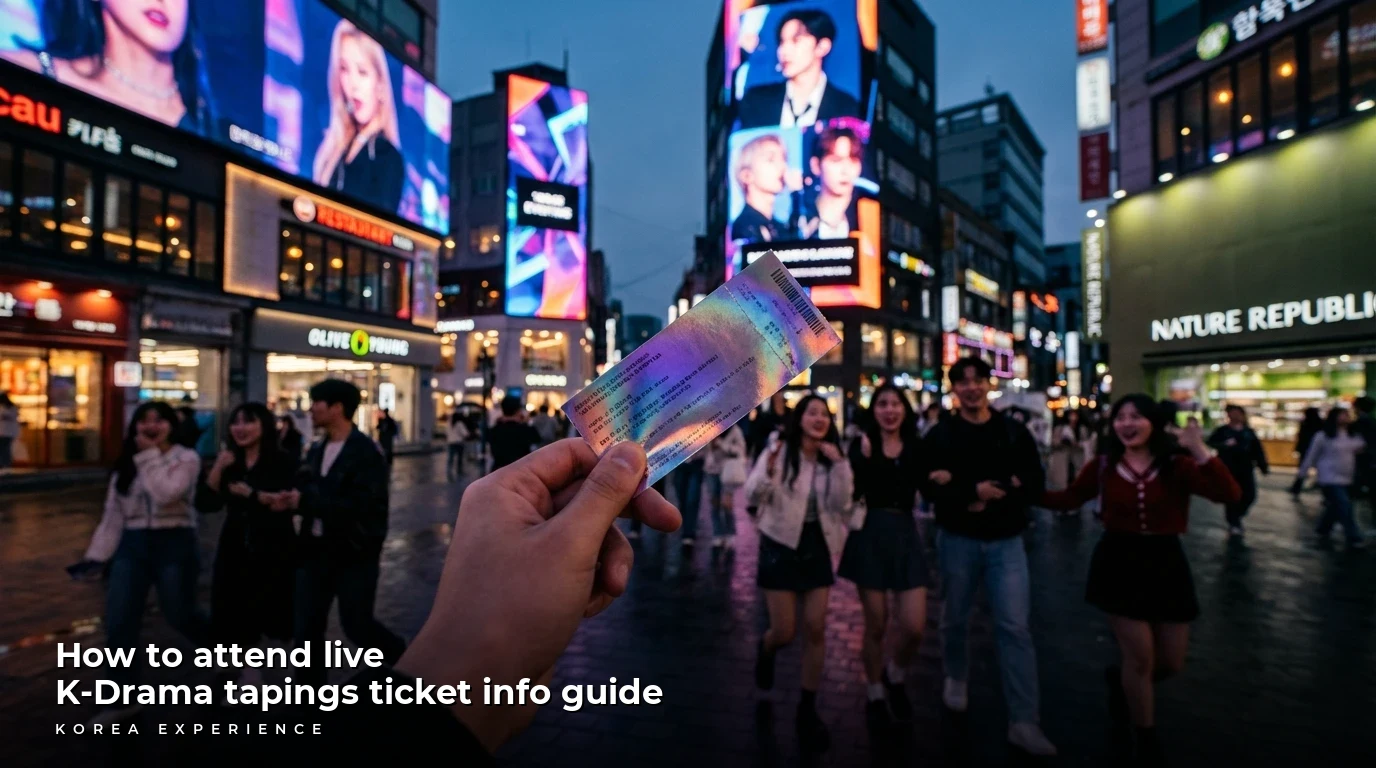
The dream of stumbling upon a bustling film set in the streets of Seoul or sitting in the audience as your favorite Hallyu stars accept a prestigious award is a driving force for many travelers visiting South Korea. With the global explosion of K-content, the demand to witness the magic of K-Dramas in person has skyrocketed. However, unlike K-Pop music shows which have established lottery systems, the world of drama production is notoriously secretive and guarded.
This comprehensive guide demystifies the process of attending live K-Drama related events. From prestigious award ceremonies and press conferences to visiting active open sets and understanding the ticketing ecosystem, we provide the actionable intelligence you need to turn your fangirl or fanboy dreams into reality.
For more details, check out our guide on K-Drama actors fan meetings how to attend guide.
Key Takeaways
- 1Actual drama filming is closed-set; award shows are the most accessible live events
- 2Ticket packages for major awards like Baeksang often start around $150 USD
- 3Active open sets like MBC Dae Jang Geum Park charge roughly ₩9,500 for entry
The Reality of K-Drama Filming vs. K-Pop
Before diving into ticket acquisition, it is crucial to distinguish between the highly structured K-Pop industry and the fluid nature of drama production. K-Pop music shows (like Inkigayo or Music Bank) have weekly live broadcasts with specific audience quotas. K-Dramas, conversely, are largely pre-produced or filmed on closed sets to prevent spoilers and ensure audio quality.
Learn more in our comprehensive guide to Behind the scenes K-Drama production tours 2026 guide.
However, "live tapings" in the context of K-Drama generally refers to three specific categories accessible to the public:
Related reading: Ultimate Guide to K-Pop Music Show Recordings in Seoul.
- Year-End Award Ceremonies: Live broadcasts where actors gather.
- Press Conferences & Showcases: Promotional events before a drama airs.
- Open Sets & Studio Tours: Locations where filming occurs during business hours.
📊 Production Statistics
Strategy 1: The Award Ceremonies (Your Best Shot)
The most reliable way to see a high concentration of A-list actors "live" is attending the major drama awards. These are ticketed events, often with allocations specifically for international tourists.
You might also enjoy our article about K-Drama Convenience Store Dinner Guide for Travelers in K....
Major Ceremonies to Watch
- Baeksang Arts Awards: Usually held in May. This is the "Golden Globes" of Korea, honoring both TV and Film.
- Blue Dragon Series Awards: Focused on streaming platform content (Netflix, Disney+), usually held in July.
- Network Awards (KBS, SBS, MBC): Held annually on December 30th or 31st.
📋 Award Show Logistics
Tickets for these events are rarely sold directly to individuals on Korean sites due to scalping concerns. Instead, they are distributed through official travel partners (like Trazy, Klook, or grandiose tour agencies) as part of "Hallyu Tour Packages."
💵 Award Show Access Comparison
Includes red carpet access + transfer
High fraud risk, no guarantees
ID Verification is Strict
At major award shows like the Baeksang Arts Awards, identity verification is rigorous. If you purchase a ticket from a third-party reseller (scalper) and the name on the ticket does not match your passport, you will be denied entry 100% of the time. Always book through authorized global partners.
Strategy 2: Official Filming Sets (Open Sets)
While you cannot barge into a private studio, Korea has massive "Open Sets"—outdoor studio complexes built for historical dramas (Sageuk). These function as theme parks when not in use, but often remain open to the public during filming. You might be asked to keep quiet or wait at a distance, but you can see the production process live.
Top Location: MBC Dae Jang Geum Park
Located in Yongin, about 60 kilometers south of Seoul, this is the Holy Grail for historical drama fans. Dramas like The Red Sleeve and Agust D's Daechwita music video were filmed here.
MBC Dae Jang Geum Park(Yongin Daejanggeum Park)
The Logistics of Visiting
Getting to these sets requires planning. They are located on the outskirts to avoid the noise of modern Seoul. A typical trip to Yongin takes about 1.5 to 2 hours one way via public transport.
📖 How to Spot Filming at Open Sets
Step 1: Check Schedules
Visit the park's website or fan forums 2-3 days prior. Production schedules are often leaked by fan clubs.
Step 2: Look for Coffee Trucks
If you see large support trucks serving coffee near a specific zone, actors are present.
Step 3: Respect the Staff
If a staff member crosses their arms or directs you away, move immediately. Interfering with audio recording gets you kicked out.
Cost Breakdown
- Entry Fee: ~₩9,500 (Adults)
- Roundtrip Transport: ~₩5,000 (Bus/Subway) or ~₩150,000 (Private Taxi Charter)
- Food/Drink: ~₩15,000 (On-site cafeteria is limited)
Strategy 3: Press Conferences and "Greetings"
Before a drama premieres or a movie is released, the cast holds press conferences and "Stage Greetings" (Mu-dae In-sa). While press conferences are industry-only, Stage Greetings are ticketed movie screenings where the cast visits the theater to say hello.
"Stage Greetings are your best value for money. You pay the price of a standard movie ticket (approx. ₩15,000), but you get to see the entire main cast of a drama/movie standing five meters away from you. The competition is fierce, so you must use Korean apps like CGV or Lotte Cinema the second reservations open."
How to Book Stage Greetings
- Timing: Schedules are released 1-2 weeks before the movie/drama theatrical cut release.
- Platform: CGV, Lotte Cinema, and Megabox apps.
- Speed: Good seats sell out in under 10 seconds.
- Cost: Standard movie ticket price (14,000 - ₩16,000).
Stage Greetings vs. Award Shows
- ✓Extremely affordable (under $15)
- ✓Intimate setting (theater rooms)
- ✓Photos allowed during greeting time
- ✗Requires fast Korean typing/clicking
- ✗Short duration (10-15 mins of cast)
- ✗No English translation provided
Strategy 4: Being an Extra (Background Actor)
For those staying in Korea long-term (students, working holiday visa holders), becoming an extra is the only way to be in the live taping legitimately.
Viewer vs. Extra Experience
| Feature | Regular Viewer | Background Actor |
|---|---|---|
| Access | Distance only | On set |
| Cost/Pay | Pays money | Earns money (~₩9,860/hr) |
| Time Commitment | Flexible | 10-14 hours mandatory |
| Interaction | None | Possible direction from staff |
Requirements:
- Valid Visa (Student D-2, Working Holiday H-1). Tourists (B-2) legally cannot work.
- Basic Korean language proficiency.
- Agencies like "Foreigner Entertainment" or specific casting Facebook groups handle recruitment.
Ticketing Platforms: The "Ticketing War" (Picket-ting)
Whether it's a fan meeting or a rare public recording, you will likely need to use a Korean ticketing platform. This process is known locally as Picket-ting (Blood Ticketing) due to the intense competition.
The Global Ticketing Process
Create Accounts
Register on Interpark Global, Melon Ticket Global, and YES24. Verify email.
Login & Setup
Disable popup blockers. Have your credit card handy. Check server time.
Refresh & Click
Refresh once. Select date. Click 'Next' rapidly. Do not hesitate on seat selection.
Technical Specifications for Success
- Browser: Chrome or Whale (Korean browser) usually work best.
- Clock: Use "Navyism" (a server time clock) to see the exact millisecond the server opens.
- Payment: Global versions of sites accept Visa/Mastercard. Korean versions often require a local bank transfer or domestic card.
The Global Site Trap
Many events are only listed on the Korean language version of ticket sites (e.g., ticket.interpark.com vs. globalinterpark.com). If an event is not on the Global site, you generally need a Korean phone number and ARC (Alien Registration Card) to book it.
Essential Tips for The International Traveler
Attending these events requires cultural nuance and logistical preparation. The average drama shoot day is 16 to 20 hours long. If you are visiting a set or waiting for a red carpet, comfort is key.
Budgeting for the Experience
While street food is cheap (₩4,000 for Tteokbokki), chasing drama events adds up.
- Taxis: After 11 PM, surcharges apply (20-40%). If a filming ends late, public transport stops around 12:30 AM.
- Data: You need high-speed data for maps and translation.
- Portable Fans/Heat Packs: Korea has extreme weather. Waiting outside for a "commute" view (seeing actors enter a venue) requires preparation.
📋 Cost Estimation (3-Day Drama Hunt)
Etiquette and Behavior
K-Culture fans are known for being passionate but respectful.
- Cameras: Generally allowed at Red Carpets. Strictly prohibited on closed sets or during broadcast recordings until authorized.
- Gifts: Do not try to hand gifts directly to actors. Use the fan manager or designated drop-off zones.
- Noise: Silence is mandatory during filming. One cough can ruin a take and turn the staff against you.
Conclusion
While you cannot simply buy a ticket to sit next to the director of Squid Game while they film, the ecosystem of K-Drama offers plenty of avenues for "live" experiences. The most accessible route for the average traveler is a combination of Open Set tourism (like Dae Jang Geum Park) and targeting Movie Stage Greetings. For those with a higher budget, Award Show packages provide the glamour and guaranteed sightings that define the Hallyu experience.
Remember, the key to success is preparation. Download the apps, check the schedules, and respect the production process. The magic of K-Drama is worth the effort.
❓ Frequently Asked Questions
Have more questions?Contact us →
About the Author
Korea Experience Team
Written by the Korea Experience editorial team - experts in Korean medical tourism, travel, and culture with years of research and firsthand experience.
Explore more in K-Culture
K-Pop, K-Drama, traditional arts, and modern culture — dive deep into the cultural phenomena that have captivated the world.
Browse All K-Culture ArticlesContinue Reading
Explore more articles you might find interesting
Complete guide to K-Pop auditions in 2026. Learn about global castings, the Big 4 agencies, and essential tips for international applicants.
Learn how to attend K Pop music shows like M Countdown and Music Bank in 2026. Includes booking tips, venue maps, and insider advice.

The ultimate guide to securing K-Pop concert tickets in Korea. Learn strategies for Interpark, Melon, and Yes24 to beat the sell-out clock.
Explore the fascinating balance between historical facts and creative storytelling in Korean period dramas.
Discover the best art house theaters in Seoul. From Cinecube to KOFA, find indie films with English subtitles and unique cultural experiences.
Discover the best historic Kdrama sets folk villages and palaces. A comprehensive guide to filming locations for Kingdom, Mr. Sunshine, and The Red Sleeve.