K-Drama Convenience Store Dinner Guide for Travelers in Korea
Master the art of Korean convenience store dining. Learn viral recipes, budget tips, and how to eat like a local in Seoul.
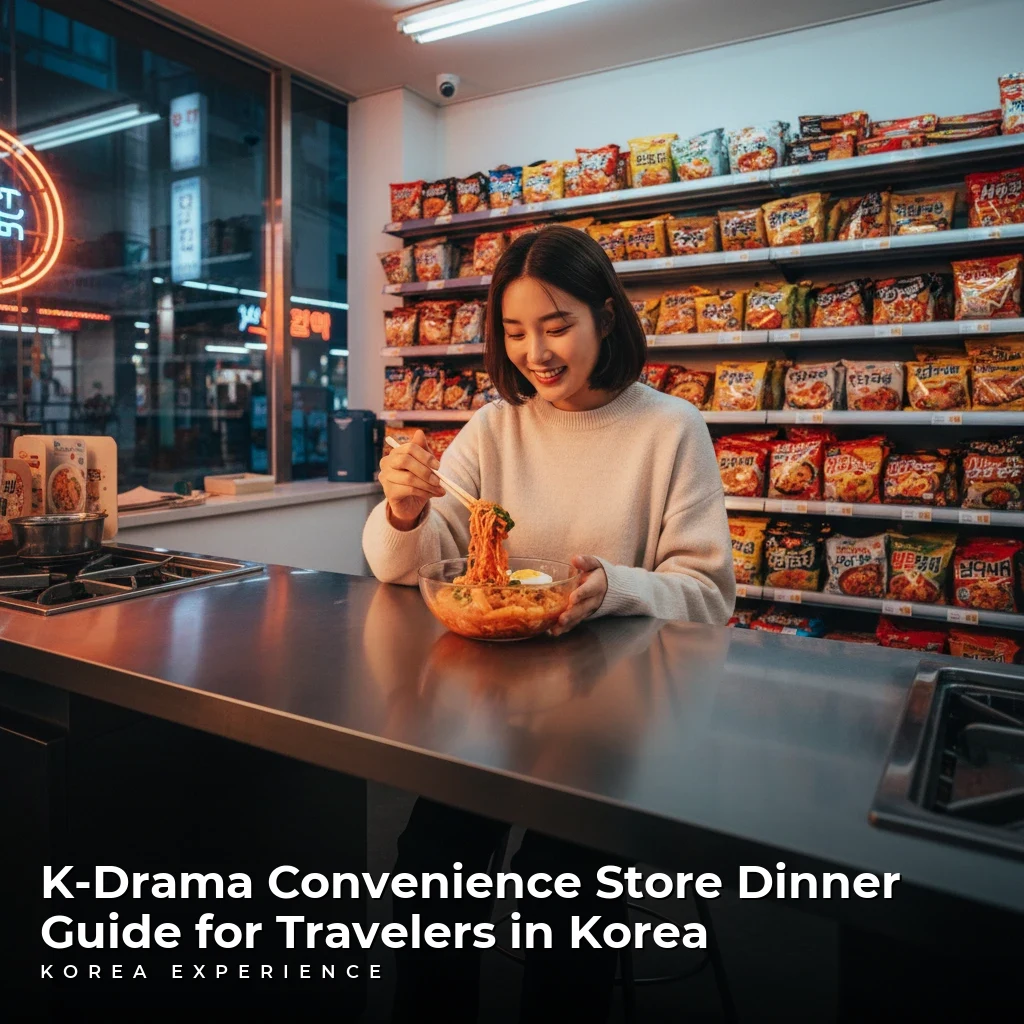
The chime of the door sensor as you walk into a bright, air-conditioned sanctuary at 2:00 AM is a sound synonymous with modern life in Seoul. For fans of K-Dramas, the Korean convenience store—or "pyeon-u-jeom"—is more than just a place to buy water; it is a critical plot device. It is where characters in Crash Landing on You bond over instant noodles, or where the cast of Squid Game shares a meager meal and a bottle of soju.
Recreating these iconic scenes is a top bucket-list item for international visitors. However, navigating the aisles of a GS25, CU, or 7-Eleven can be overwhelming due to the sheer volume of choices and unwritten social rules. This guide transforms you from a confused tourist into a savvy local, capable of crafting the perfect viral dinner combination.
Key Takeaways
- 1Convenience stores in Korea are 24-hour lifestyle hubs, not just shops
- 2A full K-Drama style dinner costs between 5,000 and ₩15,000
- 3You must separate liquid waste from recyclables when cleaning up
The Cultural Phenomenon of 'Pyeon-u-jeom'
In South Korea, convenience stores are ubiquitous. As of early 2026, the country boasts over 57,000 convenience store locations, resulting in one store for approximately every 900 residents. This density is one of the highest globally, meaning you are rarely more than a 3-minute walk (or roughly 200 meters) from the nearest glowing sign.
The culture of eating at these stores is driven by the "Honbap" trend—eating alone. Unlike in many Western countries where dining solo can feel isolating, Korean convenience stores are designed for it. Most locations feature bar-style seating along the window or folding tables outside, equipped with power outlets and high-speed Wi-Fi, making them a legitimate dining destination for students and salarymen alike.
📊 The Big Four Market Share
Why Is It So Popular?
The appeal lies in the "Gaseongbi" (cost-performance ratio). You can purchase a high-quality, filling bento box (Dosirak) for roughly 4,500 to ₩6,000 ($3.50 - $4.50 USD). Compare this to the average sit-down restaurant meal in Seoul, which now averages 12,000 to ₩15,000, and the economic appeal is undeniable.
Pro Tip
Download the 'Pocket CU' or 'Our Neighborhood GS' apps before your trip. These apps often offer 1+1 (Buy One Get One) or 2+1 deals that you can scan directly at the counter, saving you up to 30% on beverages and snacks.
The Viral Menu: Recipes You Must Try
To truly live the K-Content lifestyle, you shouldn't just buy a pre-made sandwich. You need to "cook" using the store's ingredients. The internet and idol culture have birthed specific food combinations that have become legendary.
The "Markt-Jeongsik" (Mark's Meal)
Named after Mark Tuan from the K-pop group GOT7, this recipe went viral in 2016 and remains a staple in 2026. It combines spicy flavors with cheesy richness, perfectly hitting the Korean palate's love for "Sweet and Salty."
📖 How to Make Mark's Meal
Step 1: Gather Ingredients
Buy 1 Cup Spaghetti Ramen (Ottogi), 1 Instant Tteokbokki (Giant Tteokbokki), 1 String Cheese, and 1 Frankfurt Sausage.
Step 2: Prep the Base
Cook the Tteokbokki and Spaghetti noodles separately with hot water. Drain the noodle water but keep the Tteokbokki sauce.
Step 3: Combine
Dump the noodles into the Tteokbokki cup. Add the spaghetti powder sauce and liquid sauce. Mix thoroughly.
Step 4: Add Toppings
Slice the sausage and place on top. Tear the string cheese into strips and cover the mixture.
Step 5: Final Melt
Microwave for 1 minute to melt the cheese. Enjoy immediately.
The "Buldak" Variations
Buldak Bokkeummyeon (Fire Noodles) is the most famous export of Korean instant noodles. However, locals rarely eat it plain due to the intense heat (4,400 Scoville Heat Units for the standard version).
A popular local hack involves buying a "Samgak Gimbap" (Triangle Rice Ball), usually Tuna Mayo flavor (₩1,200). Once you have eaten about 80% of the noodles, you drop the rice ball into the remaining spicy sauce, mash it up with a spoon, and top it with a slice of mozzarella cheese (₩1,500). This creates a spicy risotto that balances the heat with creamy mayonnaise.
📋 Nutritional Reality Check
The Hangang Ramyeon Experience
If there is one specific K-Drama scene to recreate, it is eating instant noodles by the Han River. This is distinct from a standard store visit because of the specialized equipment involved.
Located at 11 major parks along the river, the most popular being Yeouido and Banpo, these convenience stores feature automatic noodle cooking machines. These machines are not microwaves; they are induction cookers that dispense boiling water and boil the noodles for exactly the right amount of time.
Ministop Hangang Yeouido 2(미니스톱 한강여의도2호점)
How to Use the Machine
- Purchase: Buy a packet of "Bag Ramyeon" (not the cup version) and a specific foil or paper container sold at the counter for ₩4,000 (includes the noodles).
- Assemble: Put the noodles and soup powder into the container. Do not add water yet.
- Scan: Place the container on the induction range. Scan the barcode on the container if required (newer machines require this).
- Press Start: Press the button corresponding to your noodle type (usually Button 1 for standard noodles).
- Wait: The machine dispenses water and boils for exactly 3 minutes and 30 seconds.
- Stir: Stir with chopsticks when 1 minute remains for even cooking.
"Many tourists make the mistake of adding a raw egg right at the beginning. Don't do this! The high heat can burn the egg to the bottom of the paper bowl, causing it to leak. Add the egg when there are only 45 seconds left on the timer."
Beverage Culture: The Pouch Drink System
Korean convenience stores have mastered the art of the cheap, refreshing drink. You will see a freezer filled with plastic cups containing solid ice chunks (Ice Cups), usually priced between 700 and ₩900 depending on size (Regular vs. Grande).
Next to the freezer, shelves are lined with plastic pouches containing coffee, ades, and juices.
- Americano: ₩1,200
- Blue Lemonade: ₩1,000
- Hazelnut Coffee: ₩1,500
You simply buy the cup and the pouch, pour the liquid over the ice, and you have a cafe-quality drink for under $2.00 USD. This is a lifesaver during the humid Korean summer, where temperatures often exceed 30°C (86°F) with 80% humidity.
The Soju Factor
For an evening meal, Soju is the standard accompaniment. A standard green bottle (360ml) costs roughly 1,900 to ₩2,100 in a store, compared to ₩5,000 in a restaurant.
- Somaek: The act of mixing Soju and Maekju (Beer). A popular ratio is 3 parts beer to 1 part soju.
- Highballs: In 2025 and 2026, canned Highballs (whiskey and soda) have exploded in popularity, costing roughly ₩4,500 per can.
Public Drinking Laws
While drinking alcohol in public parks is generally legal in Korea, some areas (especially specific zones in Hangang parks) have started enforcing alcohol bans after 12:00 AM to reduce noise. Always check signage.
Etiquette: How Not to Be a 'G 진상' (Nuisance)
The efficiency of Korean convenience stores relies on customer cooperation. The staff are often working solo shifts and stocking shelves, so they expect customers to clean up after themselves.
1. The Microwave Dance
Microwaves are usually self-service.
- Industrial Power: These are usually 1000W microwaves, stronger than home units. If your package says "2 minutes," reduce it to 1 minute 30 seconds.
- Open the Lid: Always peel back the lid of your cup noodle or rice bowl slightly before microwaving to prevent explosion.
2. The Trash Station
This is the most confusing part for foreigners. You will see a station with multiple holes.
- Liquids: There is a specific bucket or funnel for leftover ramen broth or drink liquids. Do not throw a cup full of liquid into the general trash.
- Plastics/Cans: Separate these into the recycling bin.
- General Waste: Dirty tissues and wrappers go here.
- Food Waste: Solid food leftovers often have a separate small bin.
The Cleanup Process
Empty Liquids
Pour leftover soup/drink into the liquid waste bucket.
Separate
Remove cup sleeve and lid. Separate plastic from paper.
Stack
Nest your paper cups to save bin space.
Budget Analysis: High vs. Low
Can you really save money eating at a convenience store? Absolutely. Here is a breakdown of two distinct dining styles you can achieve.
💵 Convenience Store Dining Tiers
Premium Bento + Fried Chicken Leg + 4-Can Beer Bundle + Dessert
Shin Ramyun Cup + Triangle Gimbap + Water
Even the "Luxury" option is significantly cheaper than a standard fried chicken delivery, which starts at ₩22,000 ($16.50) before delivery fees.
Best Times and Locations
While stores are open 24/7, the experience varies by time.
- Morning (08:00 - 09:00): Fresh kimbap and bento boxes arrive. Shelves are fully stocked.
- Lunch (12:00 - 13:00): Extremely crowded with office workers. Lines can take 5-10 minutes.
- Late Night (22:00 - 02:00): The "Yajo" (outdoor table) prime time. The vibe is relaxed.
Convenience Store Dining Analysis
- ✓Open 24/7, available everywhere
- ✓Extremely budget-friendly
- ✓Authentic local cultural experience
- ✓No tipping required
- ✗High sodium content in most meals
- ✗Limited seating during peak hours
- ✗Vegetarian options are limited and hard to identify
- ✗Plastic waste generation
Comparison of Major Chains
Not all stores are created equal. Depending on what you are craving, you should target specific brands.
Major Convenience Store Chains
| Feature | GS25 | CU | 7-Eleven |
|---|---|---|---|
| Best For | Premium Bento & Apps | Desserts & Viral Trends | Global Imports |
| Signature Item | Omori Kimchi Stew Ramen | Yonsei Cream Bread | Dosirak (Bento) |
| Store Count (Est) | 17,500+ | 17,800+ | 14,000+ |
The Emart24 Distinction
Emart24 is unique because many of their locations are "unmanned" at night or require a credit card scan to enter during late hours. They are known for better wine and whiskey selections but fewer hot food options.
Final Thoughts for the Traveler
Eating at a convenience store in Korea is not a sign of desperation; it is a choice of convenience and flavor. Whether you are grabbing a quick "Samgak Gimbap" before a train ride to Busan (2.5 hours) or settling in for a late-night beer on a plastic chair in Gangnam, you are participating in the living, breathing rhythm of the city.
The next time you watch a K-Drama and see the protagonist slurping noodles at a window counter, you won't just be watching—you'll be planning your next meal.
❓ Frequently Asked Questions
Have more questions?Contact us →
About the Author
Korea Experience Team
Written by the Korea Experience editorial team - experts in Korean medical tourism, travel, and culture with years of research and firsthand experience.
Explore more in K-Culture
K-Pop, K-Drama, traditional arts, and modern culture — dive deep into the cultural phenomena that have captivated the world.
Browse All K-Culture ArticlesContinue Reading
Explore more articles you might find interesting
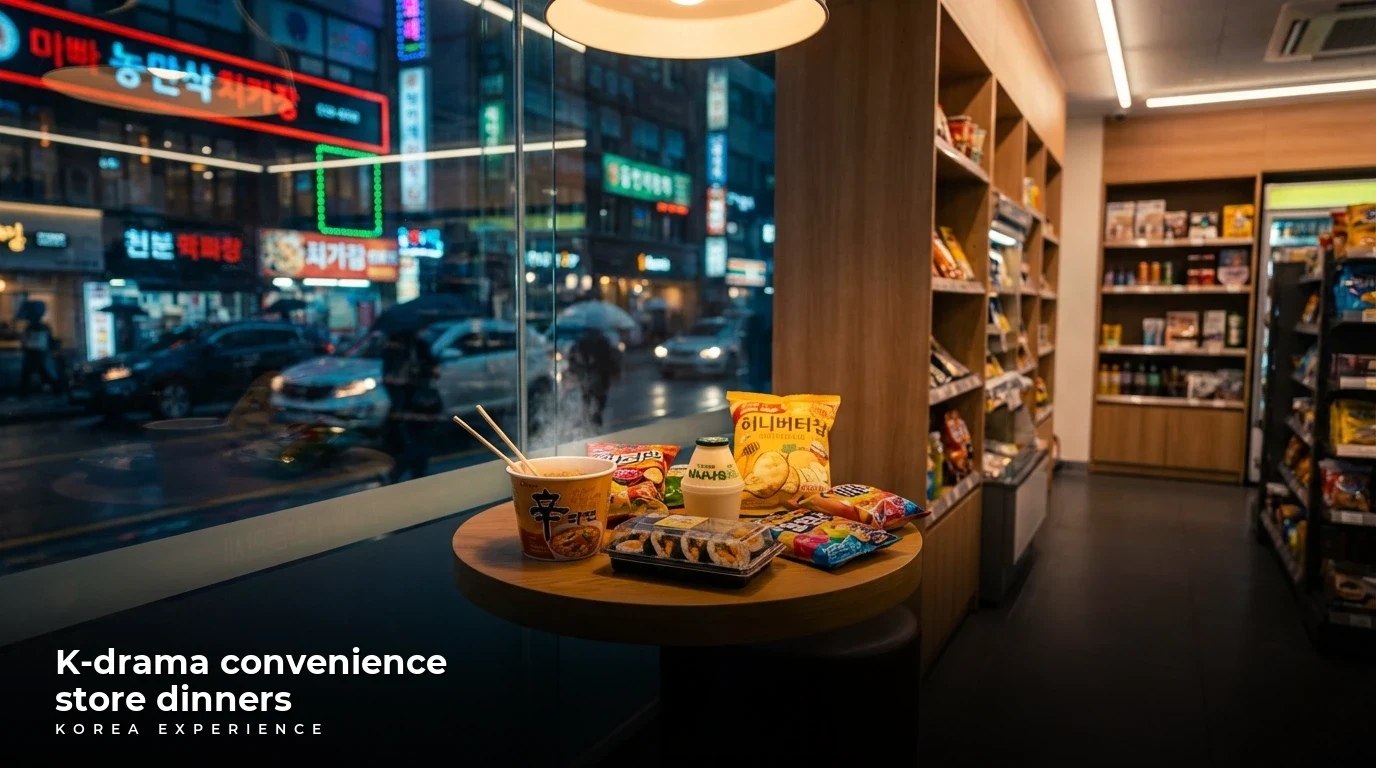
Master the art of eating at 55,000+ Korean convenience stores with our 2026 guide to viral recipes, 5,000 KRW meals, and Han River ramen hacks.
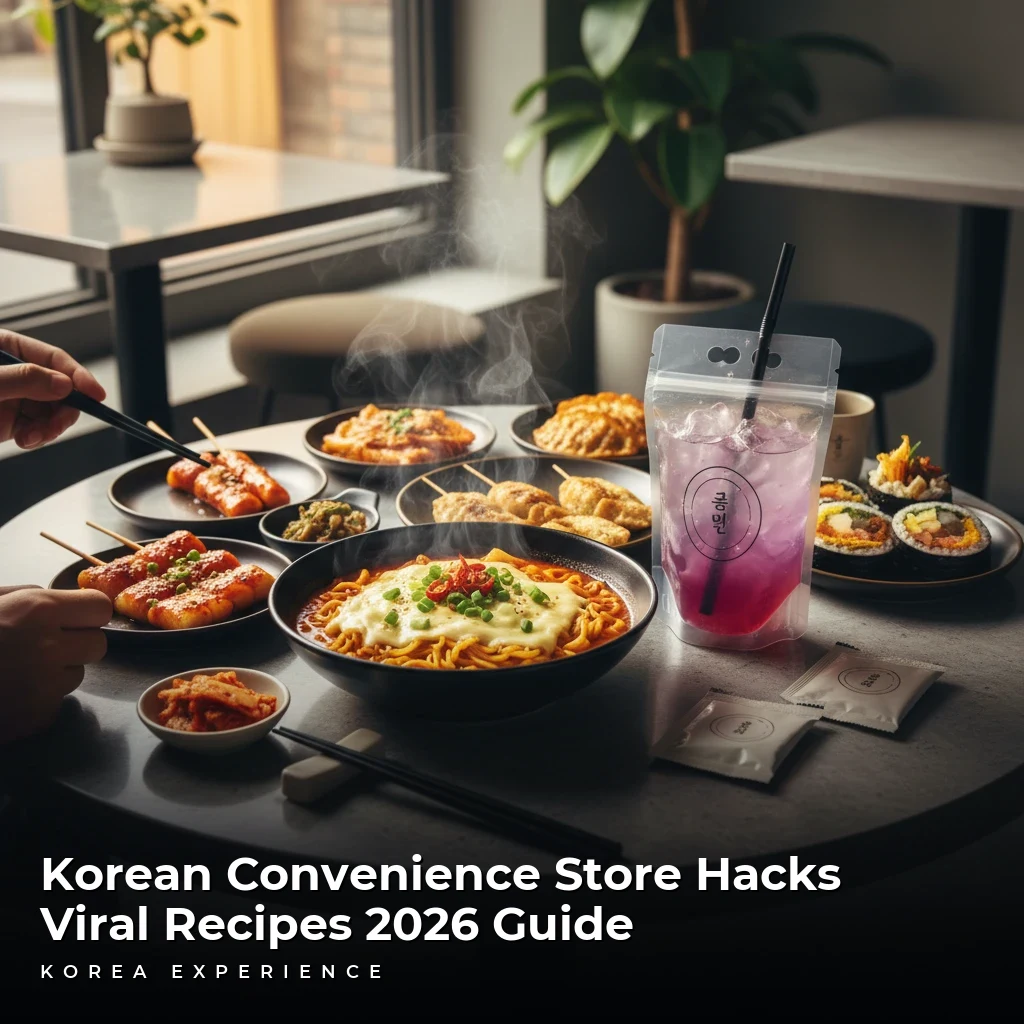
Master the art of Korean convenience store dining with the top viral recipes of 2026. From Buldak upgrades to pouch drink mixology.
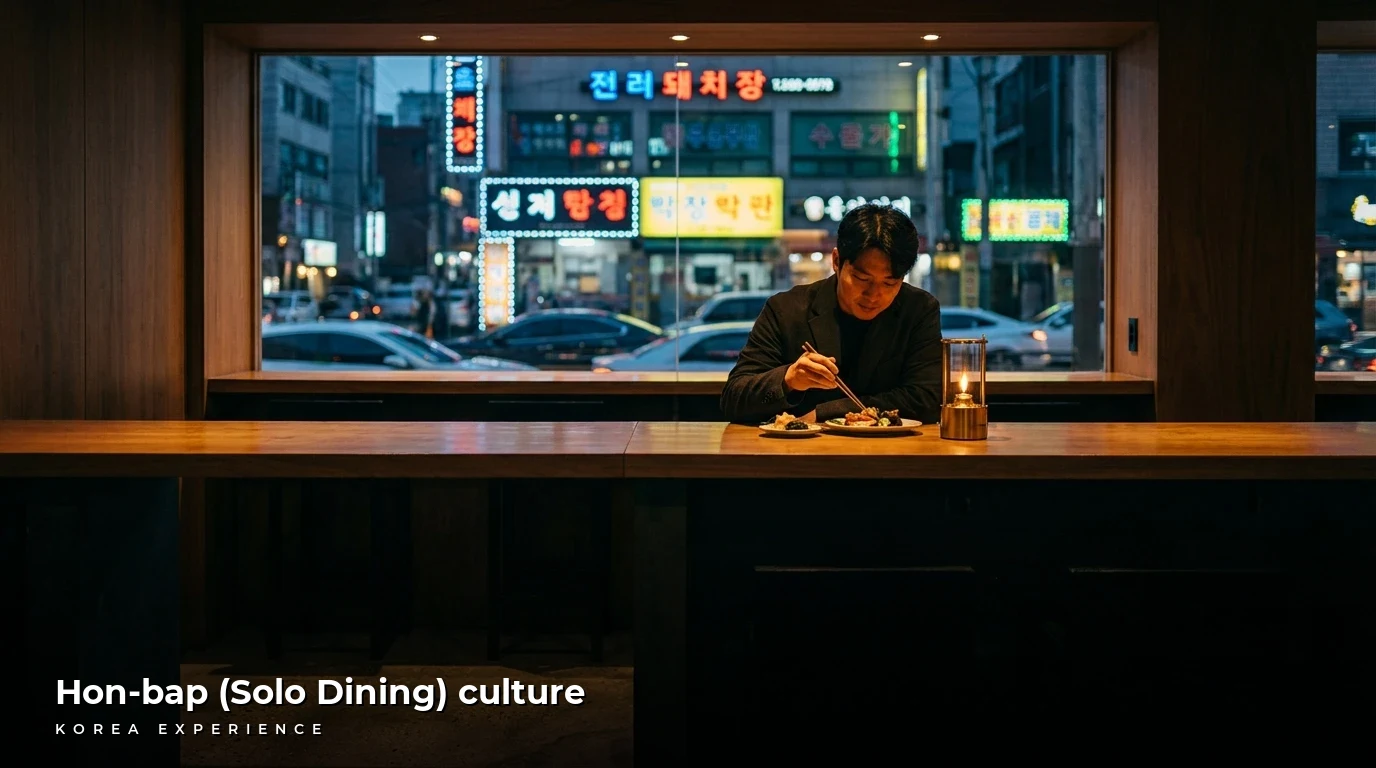
Discover the 2026 solo dining revolution in Seoul where 36.1% of households are single. Learn to navigate BBQ joints and avoid lunchflation prices.
Master the Korean holiday system. Learn which days shops close, how to book transport during Chuseok, and survival tips for Red Days in Seoul.

Master the moves in Seoul. Our ultimate guide covers top studios, booking steps, and tips to learn K-Pop dance from real choreographers in 2026.
Learn how to attend K Pop music shows like M Countdown and Music Bank in 2026. Includes booking tips, venue maps, and insider advice.