Living in Korea

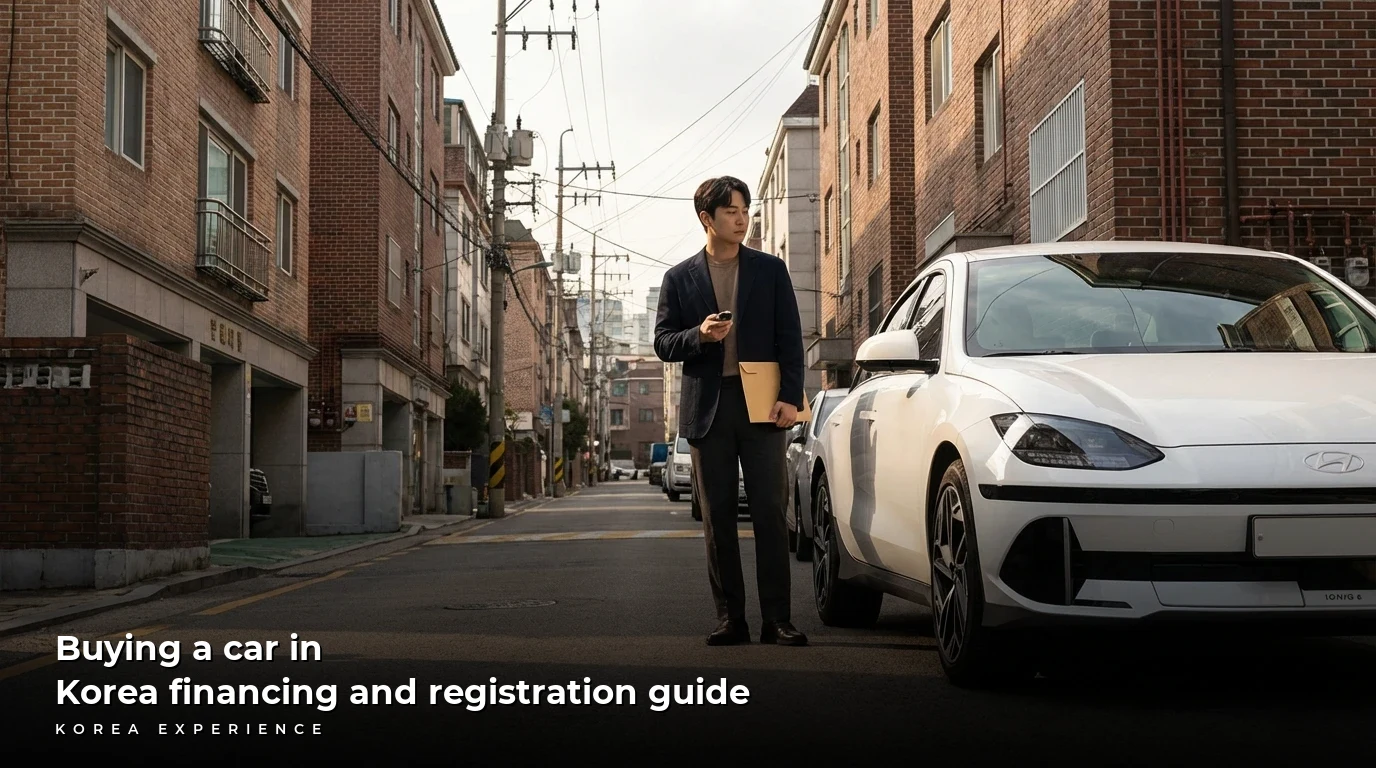
Car Buying in Korea: Financing & Registration Guide

Navigate buying a car in Korea, from understanding financing options to mastering registration, ensuring a smooth journey for expats.

Driving Your Dream: A Comprehensive Guide to Buying a Car in Korea

Stepping off the plane and into the vibrant, dynamic landscape of South Korea, you're immediately struck by the efficiency of its public transportation. Buses crisscross cities with impressive regularity, and the subway systems in major metropolitan areas like Seoul and Busan are world-class marvels of punctuality and convenience. Yet, for many international residents and long-term visitors, the allure of personal freedom on the open road remains strong. Perhaps you dream of weekend getaways to the stunning coastlines of Jeju or Gangwon Province, exploring remote villages, or simply having the convenience of transporting groceries and family without relying on schedules.

While the idea of buying a car in Korea offers unparalleled independence, the process can appear daunting, especially when navigating a new language, unfamiliar bureaucracy, and different financial systems. From understanding the local car market to securing financing and successfully registering your vehicle, each step presents its own set of challenges and nuances for foreigners.

This comprehensive guide is designed to demystify the entire process, providing you with practical, insider knowledge to confidently purchase, finance, and register a car in Korea. We'll break down everything from choosing between new and used vehicles, exploring various financing options available to expats, detailing the essential documentation, walking through the purchase and registration procedures, and even touching upon mandatory insurance requirements. By the end of this article, you'll be well-equipped to turn your Korean driving dreams into a reality, ensuring a smooth, informed, and hassle-free experience.

Understanding the Korean Car Market: New vs. Used Vehicles

When considering buying a car in Korea, your first major decision will likely revolve around purchasing a brand-new vehicle or opting for a pre-owned one. Both options have distinct advantages and disadvantages, particularly for international residents. Korea boasts a robust automotive industry, home to global giants like Hyundai, Kia, and Genesis, alongside strong presences from imported brands.

New Car Purchases: Dealership Experience

Buying a new car in Korea is generally a straightforward process, akin to what you might experience in many Western countries. Dealerships for major Korean brands (Hyundai, Kia, Genesis, SsangYong, Renault Korea, GM Korea) and international brands (Mercedes-Benz, BMW, Audi, Volkswagen, Tesla, etc.) are ubiquitous in cities and even smaller towns.

  • Pros:

    • Latest Models and Technology: Access to the newest features, safety systems, and fuel efficiencies.
    • Full Warranty: Comprehensive manufacturer warranties provide peace of mind for several years or kilometers, covering major repairs.
    • Customization: You can often choose specific colors, interior trims, and optional packages.
    • Smooth Transaction: Dealerships handle much of the paperwork, including initial registration and insurance setup, simplifying the process for you.
    • Resale Value: Korean brand new cars generally hold their value well in the local market for the first few years.
  • Cons:

    • Higher Upfront Cost: Significantly more expensive than used cars, especially for imported luxury brands.
    • Depreciation: New cars experience the steepest depreciation in their first few years.
    • Longer Wait Times: Popular models or specific configurations might require a waiting period, sometimes several months.
    • Financial Scrutiny: Financing a new car might involve more stringent eligibility criteria for foreigners.

When visiting a dealership, be prepared for attentive service. Sales representatives often speak some English, especially in larger city dealerships. Don't hesitate to negotiate on price, though discounts on new cars might be less aggressive than in some other markets, often coming in the form of service packages, accessories, or slight financing rate adjustments.

The used car market in Korea is extensive and offers a wide range of vehicles at various price points. This can be an attractive option for expats on a budget or those not planning a very long stay.

  • Online Platforms:

    • SK Encar (SK Encar.com): This is arguably the most dominant and reputable online used car portal in Korea. It features a vast inventory from both dealerships and individual sellers, often with detailed photos, inspection reports, and transparent pricing. You can filter by make, model, year, mileage, and price.
    • KB Cha Cha Cha (KBchachacha.com): Another major platform backed by KB Kookmin Bank, offering similar services to SK Encar with certified inspections.
    • Naver, Daum Used Car Sections: Korea's primary search engines also host classifieds for used cars.
    • Expat Facebook Groups: Groups like "Seoul Expats," "Korea Used Cars," or city-specific expat groups often have listings from fellow foreigners leaving the country, which can sometimes offer simpler transactions.
  • Offline Used Car Complexes:

    • Major cities have large used car complexes (e.g., Suwon Central Car Market, Gangnam Used Car Market in Seoul, Busan Used Car Complex). These are essentially vast aggregations of small used car dealerships. While offering a massive selection, exercising caution is paramount.
    • Pros:
      • Lower Prices: Significantly more affordable than new cars, allowing for more budget flexibility.
      • Immediate Availability: You can typically drive away with a car within a few days of purchase.
      • Less Depreciation: Much of the initial depreciation has already occurred.
      • Variety: A diverse range of makes, models, and years.
    • Cons:
      • As-Is Condition: Used cars come with wear and tear; thorough inspection is crucial.
      • Limited Warranty: While some certified used cars come with short warranties, most are sold "as is."
      • Potential for Scams: Though less common on reputable platforms like SK Encar, individual sellers or less scrupulous dealers might misrepresent a vehicle's condition. Always use a third-party inspection service if possible.
      • More Paperwork: You might need to handle more of the registration and transfer paperwork yourself compared to a new car dealership.

Tip: When buying a used car, especially from a private seller, always bring a Korean friend or hire a professional third-party inspection service. Check the vehicle's history for accidents (사고 이력 – sago iryeok) and previous ownership using its license plate number or VIN. SK Encar and KB Cha Cha Cha often provide these reports.

Comparison Table: New vs. Used Car Purchase in Korea

FeatureNew Car PurchaseUsed Car Purchase
Upfront CostHigh (e.g., 20-50+ million KRW)Moderate to Low (e.g., 5-25 million KRW)
DepreciationSteep in first 1-3 yearsSlower, much initial depreciation already occurred
WarrantyFull manufacturer's warranty (3-7 years)Limited or none (unless certified used)
Condition/ReliabilityExcellent, no prior wear and tearVaries; requires thorough inspection
AvailabilityPossible wait times for popular modelsImmediate or very quick
PaperworkMostly handled by dealershipMore involvement from buyer for transfer/registration
CustomizationHigh (color, options, trim)Low (buy as is)
Financing OptionsDealerships, banks (potentially easier for new)Banks, sometimes private loans

Financing Your Vehicle Purchase in Korea

Securing financing is a critical step for many when buying a car in Korea. Options range from straightforward cash purchases to various loan and lease programs. For international residents, eligibility and terms can differ from those offered to Korean citizens.

Cash Purchase: Simplicity and Considerations

If you have the funds available, a cash purchase is the simplest method. You avoid interest payments, complex loan applications, and ongoing financial commitments.

  • Pros:
    • No interest payments, saving you money in the long run.
    • No debt obligations.
    • Faster transaction process.
    • Less paperwork and financial scrutiny.
  • Cons:
    • Large upfront outlay of capital, tying up your funds.
    • Might deplete emergency savings.
    • No opportunity to build local credit history through loan repayment.

When paying cash, large sums are typically transferred via bank wire (계좌이체 – gyejwa yiche). Ensure you receive a clear, official receipt (영수증 – yeongsujeung) and contract (계약서 – gyeyakseo) detailing the purchase and payment.

Bank Loans for Expats: Eligibility and Documentation

Obtaining a car loan from a Korean bank (e.g., Woori Bank, Kookmin Bank, Shinhan Bank, Hana Bank) can be challenging but not impossible for expats. Banks typically look for financial stability, a consistent income source, and a longer history of residency in Korea.

  • Eligibility Factors:

    • Arc Card (Alien Registration Card): Essential for identification and residency status.
    • Visa Type: F-series visas (F-2, F-4, F-5, F-6) generally receive more favorable consideration due to their long-term nature. E-series visas might also be eligible but could face more restrictions. Short-term visas are usually not eligible.
    • Length of Stay: Banks prefer expats who have resided in Korea for at least 6 months to 1 year, demonstrating stability.
    • Employment Contract: A stable job with a clear employment contract (고용계약서 – goyong gyeyakseo) and proof of regular income is crucial.
    • Income Verification: Recent bank statements, tax certificates (소득금액증명원 – sodeuk geumaek jeungmyeongwon), or a certificate of employment and income from your company.
    • Credit History: While expats often lack a local credit history, having a good banking relationship with the institution can help. Some banks might consider international credit reports if available, but this is rare.
    • Down Payment: A significant down payment (20-30% or more) can improve your chances and reduce interest rates.
  • Process: Visit the foreign services department of major banks. Be prepared to bring all requested documents and possibly a Korean speaker to assist with complex financial terminology. Loan terms typically range from 3 to 7 years.

Dealership Financing and Lease Options

Many new car dealerships offer their own financing programs, often in partnership with an automotive finance arm (e.g., Hyundai Capital, Kia Capital). These can sometimes be more accessible for expats than direct bank loans, as dealerships are keen to sell cars.

  • Dealership Loans:
    • Often simpler application processes.
    • May have slightly higher interest rates than prime bank loans, but can be competitive.
    • Sometimes tied to promotional offers (e.g., low-interest financing for specific models).
  • Leasing (렌트 – rentu or 리스 – riseu):
    • Long-Term Rental (장기렌트 – janggi rentu): A popular option where you pay a monthly fee for the car's use. The rental company handles registration, taxes, and often maintenance. At the end of the term, you can return the car or purchase it. This is particularly attractive for expats as it minimizes upfront costs and logistical burdens.
    • Financial Lease (금융 리스 – geumnyung riseu): Similar to a loan, but the leasing company technically owns the car, and you pay for its use. At the end, you usually have an option to buy. Often has a residual value component.
    • Pros of Leasing:
      • Lower monthly payments than buying (especially long-term rental).
      • Minimal upfront payment (sometimes just a security deposit).
      • Reduced administrative burden (registration, taxes, insurance sometimes included).
      • Easy to upgrade to a new model at the end of the term.
    • Cons of Leasing:
      • You don't own the car, so no equity.
      • Mileage restrictions often apply, with penalties for exceeding.
      • Charges for excessive wear and tear upon return.
      • Early termination fees can be substantial.

Understanding Interest Rates and Terms

Interest rates for car loans in Korea can vary significantly based on the lender, your creditworthiness, the loan term, and whether the car is new or used. Typically, rates can range from 3% to 8% or higher. Always compare annual percentage rates (APRs) from different providers. Be wary of any "zero percent" financing deals, as they often come with hidden fees or restrict your ability to negotiate the vehicle's price. Ensure you fully understand the repayment schedule, any penalty fees for late payments, and early repayment options.

Comparison Table: Financing Options for Expats

Financing OptionProsConsExpats' Eligibility & Considerations
Cash PurchaseNo interest, no debt, simple processLarge upfront cost, ties up capitalEasiest for expats as no credit check needed; requires readily available funds.
Korean Bank LoanCan offer competitive interest ratesStricter eligibility (visa, residency, income, credit history)Challenging; requires F-series visa or stable E-visa, long-term residency, steady income, often a large down payment.
Dealership LoanPotentially easier approval than banks, convenientMay have slightly higher interest rates, tied to specific brandsMore accessible for expats than bank loans; still requires income/residency proof.
Long-Term RentalLow upfront cost, includes taxes/registrationNo ownership, mileage limits, wear & tear charges, higher long-term costVery popular for expats due to ease, minimal paperwork, no ownership burden; approval based on income/visa.
Financial LeaseLower monthly payments than buyingNo ownership, complex terms, termination feesSimilar to long-term rental regarding eligibility, but less common for short-term expats.

Essential Documents and Eligibility for Foreigners

Preparing the correct documentation is crucial for a smooth car purchase, financing, and registration process in Korea. For foreigners, specific requirements ensure compliance with local regulations.

Required Identification and Residency Proof

  • Alien Registration Card (ARC) - 외국인등록증 (oegugin deungnokjeung): This is your primary identification document as a foreigner in Korea. It's mandatory for almost every official transaction, including buying a car. Ensure it's valid and up-to-date.
  • Passport: Your passport serves as secondary identification and proof of nationality.
  • Certificate of Alien Registration (외국인등록사실증명 - oegugin deungnok sasil jeungmyeong): This document, obtainable from your local immigration office or a community service center (주민센터 - jumin center), confirms your current residency details and address.
  • Proof of Address: A recent utility bill (gas, electricity, phone) in your name, a rental contract (임대차 계약서 - imdaecha gyeyakseo), or a copy of your housing contract (if provided by employer) can serve as proof of your current Korean address.

Income Verification and Creditworthiness

For financing, especially bank loans, demonstrating financial stability is key.

  • Certificate of Employment (재직증명서 - jaejik jeungmyeongseo): Issued by your employer, confirming your position, start date, and salary.
  • Income Certificate (소득금액증명원 - sodeuk geumaek jeungmyeongwon): This official document from the National Tax Service (국세청 - Guksecheong) verifies your annual income. You can obtain it online via the Home Tax website (hometax.go.kr) or in person at a tax office.
  • Bank Statements: Recent statements (usually 3-6 months) showing consistent salary deposits.
  • Employment Contract (고용계약서 - goyong gyeyakseo): A copy of your official employment contract can further support your income claims.

Driver's License Requirements: International vs. Korean License

You cannot register a car in your name if you do not possess a valid Korean driver's license or a recognized International Driving Permit (IDP).

  • International Driving Permit (IDP) - 국제운전면허증 (gukje unjeon myeonheo-jeung):
    • If you have an IDP issued in your home country (must be based on the 1949 Geneva Convention or 1968 Vienna Convention), you can generally drive in Korea for up to one year from your date of entry.
    • However, some Vehicle Registration Offices might require a Korean driver's license for actual registration, or consider an IDP valid only if paired with your home country's original license.
    • It's best to confirm with the specific registration office or dealership.
  • Korean Driver's License - 운전면허 (unjeon myeonheo):
    • For long-term residents, converting your foreign driver's license to a Korean one is highly recommended and often required for smooth car ownership.
    • The process involves submitting your foreign license, passport, ARC, proof of entry and exit, and undergoing a simple medical check at a Driver's License Examination Office (운전면허시험장 - unjeon myeonheo siheomjang).
    • Some countries have agreements with Korea for direct exchange; others require written and/or practical exams. (This could be a separate topic for internal linking: "Read more about converting your driver's license in our dedicated guide.")

Important Tip: Always carry your Alien Registration Card, driver's license (Korean or IDP + original), and vehicle registration certificate (자동차등록증 - jadongcha deungnokjeung) when driving in Korea.

The Car Purchase Process: Step-by-Step

Once you've decided on a car and secured financing, the actual purchase process needs careful navigation.

Vehicle Selection and Inspection

  • New Cars: Test drive the model you're interested in. Review specifications, features, and available colors.
  • Used Cars:
    • Thorough Inspection: Beyond the provided reports, physically inspect the car. Check for rust, fluid leaks, tire wear, and listen for unusual engine noises.
    • Test Drive: Drive the car at various speeds, on different road types, and test all functions (air conditioning, radio, windows, lights, brakes, steering).
    • Third-Party Inspection: For used cars, especially from private sellers or smaller dealerships, hiring an independent mechanic for a pre-purchase inspection is highly advisable. This can uncover hidden issues.

Price Negotiation and Contract Signing

  • Negotiation: Don't be afraid to negotiate the price, especially for used cars. For new cars, you might negotiate for free accessories, service packages, or a better financing rate.
  • Contract (계약서 - gyeyakseo): Read the sales contract thoroughly. Ensure all agreed-upon terms, the final price, included accessories, warranty details, and delivery date are clearly stated.
  • Language Barrier: If you're not fluent in Korean, bring a trusted Korean friend or interpreter to review the contract. Ensure you understand all clauses before signing.
  • Deposit: A deposit (계약금 – gyeyakgeum) is typically required to secure the vehicle. This is usually 10% of the purchase price.

Payment Procedures: Bank Transfers and Other Methods

  • Bank Transfer (계좌이체 - gyejwa yiche): The most common method for large payments. Ensure the recipient's bank account (dealership or individual seller) matches the details on the contract. Keep all transfer receipts.
  • Cashier's Check (수표 - supyo): Less common for full payment but can be used.
  • Credit Card: Usually only accepted for deposits or small accessory purchases, not for the full vehicle price due to high transaction fees.
  • Balance Payment: The remaining balance is typically paid before or upon vehicle delivery.

Temporary Plates and Delivery

  • New Cars: Dealerships will usually arrange for temporary plates (임시번호판 – imsi beonhopan) that allow you to drive the car for a short period (usually 7-10 days) before official registration. They often handle the full registration process for you.
  • Used Cars: If buying from a large used car dealer, they might also offer this service. For private purchases, you'll need to arrange registration yourself quite quickly.
  • Delivery Inspection: Upon delivery, thoroughly check the vehicle again against the contract. Ensure all agreed accessories are installed and there's no damage.

Car Registration and Ownership Transfer

This is a critical administrative step that legally transfers ownership and allows you to drive your car in Korea.

Visiting the Vehicle Registration Office (Charyang Deungnok-so)

The Vehicle Registration Office (차량등록사업소 - Charyang Deungnok-so) is where you will formalize your car's ownership. These offices are located in every major city and district. You will need to bring all required documents and be prepared for potential waiting times, especially during peak hours. Some offices offer foreign language assistance, but it's always safer to bring a Korean speaker.

Required Documents for Registration

Whether you're buying new or used, the core documents for registration (등록 - deungnok) and ownership transfer (소유권 이전 – soyugwon ijeon) for foreigners include:

  • Alien Registration Card (ARC) and Passport.
  • Certificate of Alien Registration (foreigner registration fact certificate).
  • Purchase Contract (매매계약서 - maemae gyeyakseo): The signed sales agreement for the vehicle.
  • Vehicle Transfer Application Form (자동차 이전등록 신청서 - jadongcha ijeondeungnok sincheongseo): Available at the registration office.
  • Seller's Documents:
    • If from an individual: Seller's certificate of seal impression (인감증명서 - in-gam jeungmyeongseo) and seal (인감 - in-gam) or signature (서명 - seo-myung) on the transfer application. Seller's vehicle registration certificate.
    • If from a dealer: Dealer's business registration certificate (사업자등록증 - saeopja deungnokjeung) and corporate seal/signature.
  • Certificate of Insurance Subscription (자동차 보험 가입증명서 - jadongcha boheom gaip jeungmyeongseo): Proof of mandatory car insurance is required before registration.
  • Previous Vehicle Registration Certificate (자동차등록증 - jadongcha deungnokjeung): For used cars, this will be transferred from the previous owner.
  • Temporary License Plates and Temporary Driving Permit: If applicable.
  • Receipts: Proof of payment for taxes and fees.

Key Document Table: Car Registration for Foreigners

DocumentPurposeIssued By / Obtained From
Alien Registration Card (ARC)Primary ID, proof of residencyImmigration Office
PassportSecondary ID, proof of nationalityYour Home Country
Certificate of Alien RegistrationConfirms current address and residency detailsLocal Immigration Office / Community Service Center (Jumin Center)
Vehicle Purchase ContractProof of transaction and ownership termsDealership / Private Seller
Vehicle Transfer Application FormOfficial request for ownership transferVehicle Registration Office (Charyang Deungnok-so)
Seller's In-gam Jeungmyeongseo (Seal Cert.)Verifies seller's seal/signature for transferCommunity Service Center (Jumin Center) for seller
Mandatory Car Insurance CertificateProof of required insurance coverageYour Insurance Provider
Previous Vehicle Registration Cert.Details of the vehicle's prior ownership (for used)Previous Owner

Calculating Registration Taxes and Fees

Several taxes and fees are involved in car registration in Korea:

  • Acquisition Tax (취득세 - chwideukse): A one-time tax on the purchase price of the vehicle. This is usually around 7% of the car's declared value for non-commercial passenger vehicles. For environmentally friendly cars (hybrid, electric), there might be tax reductions.
  • Registration Tax (등록세 - deungnokse): Often combined with the acquisition tax, but technically separate.
  • Bond Purchase (채권매입 - chaegwon maeip): Depending on the engine size and region, you might be required to purchase metropolitan bonds, which can be immediately sold back at a discount (effectively another fee).
  • License Plate Fees: For the physical plates and attachment.
  • Stamp Tax (인지세 - injise): A small fee for the registration documents.
  • Other Administrative Fees: Minor processing fees.

The total amount can be significant, so factor this into your budget. The Vehicle Registration Office staff can help calculate the exact fees during your visit.

Obtaining Your Official License Plates

After successfully submitting all documents and paying the taxes and fees, you will be issued new Korean license plates (번호판 - beonhopan) for your vehicle. You typically install these yourself at the office, or an attendant might assist. Your official Vehicle Registration Certificate (자동차등록증 - jadongcha deungnokjeung) will also be issued, which is proof of your legal ownership.

Mandatory Car Insurance in Korea

Driving a car in Korea without valid insurance is illegal and carries severe penalties. Before you can even register your vehicle, you must have at least the mandatory liability insurance.

Types of Insurance: Compulsory vs. Comprehensive

  • Compulsory Liability Insurance (책임보험 - chaegim boheom):
    • This is the minimum legal requirement.
    • Covers personal injury or death to others, and property damage to others caused by your vehicle.
    • Does not cover damage to your own vehicle or injuries to yourself/passengers.
    • Without this, you cannot register your car.
  • Comprehensive Insurance (종합보험 - jonghap boheom):
    • Highly recommended.
    • Includes the compulsory liability coverage, plus additional protection.
    • Own Damage (자차보험 - jacha boheom): Covers damage to your own vehicle, whether from an accident, theft, or natural disaster.
    • Uninsured/Underinsured Motorist Coverage: Protects you if you're hit by someone without adequate insurance.
    • Personal Accident Coverage: Covers injuries to yourself and your passengers.
    • Towing and Roadside Assistance: Often included.

Choosing an Insurance Provider and Policy

Several major insurance companies operate in Korea, including Samsung Fire & Marine Insurance, DB Insurance, Hyundai Marine & Fire Insurance, KB Insurance, and Meritz Fire & Marine Insurance.

  • Online vs. Agent: You can purchase insurance directly online or through an agent. Online purchases are often slightly cheaper but require more self-service. An agent can provide personalized advice and help navigate the language barrier.
  • Comparison Shopping: Obtain quotes from several providers. Prices can vary significantly based on the car model, your age, driving history, and chosen coverage options.
  • English Services: Some larger insurance companies or agents cater specifically to expats and offer services in English.

Factors Affecting Insurance Premiums

  • Driver's Age and Experience: Younger, less experienced drivers typically pay higher premiums.
  • Accident History: A clean driving record significantly lowers costs.
  • Vehicle Type: More expensive, powerful, or frequently stolen models generally cost more to insure.
  • Coverage Limits and Deductibles: Higher coverage limits and lower deductibles (the amount you pay out-of-pocket before insurance kicks in) result in higher premiums.
  • Policy Term: Typically annual.

Tip: When getting insurance quotes, specify that you are a foreigner. Some companies might have slightly different policies or requirements. If you're married, adding your spouse to the policy might affect rates.

After the Purchase: Maintenance, Inspections, and Selling

Ownership doesn't end with registration. Proper care and understanding future processes are vital.

Regular Maintenance and Inspections

  • Scheduled Maintenance: Follow the manufacturer's recommended service schedule. Most new cars will have free initial services.
  • Authorized Service Centers: For new cars under warranty, use authorized service centers (e.g., Hyundai Bluehands, Kia Auto Q) to ensure your warranty remains valid.
  • Local Garages: For used cars or once your warranty expires, local independent garages (카센터 - ka senteo) can be more cost-effective. Seek recommendations from trusted friends.
  • Vehicle Safety Inspections (정기검사 - jeonggi geonsa): All vehicles in Korea are subject to periodic safety inspections.
    • New cars typically have their first inspection 4 years after initial registration, and then every 2 years thereafter.
    • Used cars usually have their first inspection 2 years after registration, then annually or biannually depending on vehicle age and type.
    • You'll receive a notification letter (usually in Korean) when your inspection is due. Failures require repairs and re-inspection.

The Process of Selling Your Car in Korea

When your time in Korea comes to an end, or you simply wish to upgrade, selling your car is another process you'll need to navigate.

  • Online Platforms: SK Encar, KB Cha Cha Cha, and expat Facebook groups are excellent places to list your car for sale.
  • Used Car Dealerships: You can sell your car directly to a used car dealer, though they will typically offer a lower price than you might get from a private sale. This is often the quickest and most hassle-free option.
  • Documentation for Selling: You'll need your ARC, passport, vehicle registration certificate, and your Korean bank account details. If you have a loan, you'll need to settle it first.
  • Ownership Transfer: The buyer and seller will need to visit the Vehicle Registration Office to formally transfer ownership. This involves similar paperwork to when you bought the car, but roles are reversed.

(Internal Linking Opportunity: "For a more detailed guide on selling your car as an expat, stay tuned for our upcoming article!")

Frequently Asked Questions (FAQ)

1. Can I buy a car in Korea with just an International Driving Permit (IDP)?

While you can drive with an IDP for up to one year from entry, some Vehicle Registration Offices or dealerships might prefer or even require a full Korean driver's license for ownership registration. It is highly recommended to convert your foreign license to a Korean one for long-term residency and smoother transactions.

2. Is it difficult for expats to get a car loan from a Korean bank?

It can be challenging. Banks typically require a stable, long-term visa (like F-series), consistent income, a certain period of residency in Korea (often 6-12 months), and sometimes a significant down payment. Having a strong relationship with a specific bank can also help. Dealership financing or long-term rental options are often more accessible for expats.

3. What are the typical hidden costs when buying a car in Korea?

Beyond the purchase price, expect to pay significant acquisition and registration taxes (around 7% of the car's value), bond purchases, license plate fees, and mandatory insurance premiums. For used cars, factor in potential maintenance costs and inspection fees. Always budget an additional 10-15% of the car's price for these associated costs.

4. How long does the entire car buying and registration process take?

For a new car from a dealership, the purchase and initial registration (handled by the dealer) can take a few days to a week, assuming the car is in stock. For used cars from a private seller, the purchase itself might be quick, but the ownership transfer at the Vehicle Registration Office can take half a day to a full day, depending on queues and preparation. All in all, plan for at least a week to ensure everything is sorted.

5. What should I do if my car needs repairs or breaks down in Korea?

For new cars, utilize authorized service centers under warranty. For used cars or post-warranty, local "ka senteo" (car repair shops) are common. Many insurance policies include roadside assistance (견인 서비스 - gyeonin seobiseu). Keep your insurance company's emergency number handy. For breakdowns on highways, there are emergency call boxes, or you can call 112 (police) or 119 (emergency services) for assistance.

Conclusion: Your Road to Freedom in Korea

Navigating the intricacies of buying a car in Korea, from understanding diverse financing options to mastering the multi-faceted registration process, requires patience and a structured approach. While it may initially seem like a bureaucratic maze, with the right information and preparation, it is an entirely manageable and rewarding endeavor for international residents.

The freedom to explore Korea's breathtaking landscapes, uncover hidden gems beyond the reach of public transport, and simply enjoy the convenience of personal mobility is an experience truly worth pursuing. Whether you opt for the pristine allure of a new vehicle or the practical value of a used one, remember to always prioritize thorough research, meticulous document preparation, and cautious financial planning.

Actionable Takeaways for Your Car Buying Journey:

  • Define Your Needs & Budget: Clearly determine if a new or used car suits your lifestyle and financial situation, factoring in not just the purchase price but also taxes, insurance, and maintenance.
  • Gather Documents Early: Start collecting your ARC, passport, income certificates, and other necessary paperwork well in advance to avoid delays.
  • Understand Your Driver's License Status: Decide if you'll use an IDP (short-term) or convert to a Korean license (recommended for long-term).
  • Explore Financing Options: Compare cash, bank loans, dealership financing, and long-term rental/lease options, paying close attention to expat-specific eligibility.
  • Inspect Thoroughly: For used cars, never skip a professional inspection and test drive.
  • Insure Before Registering: Secure mandatory car insurance, and strongly consider comprehensive coverage for peace of mind.
  • Don't Rush the Registration: Ensure all forms are correctly filled out and all fees are paid at the Vehicle Registration Office.
  • Seek Assistance: If needed, don't hesitate to bring a Korean friend, colleague, or professional translator to assist with language barriers during negotiations, contract signing, or official visits.

With this guide in hand, you are now better equipped to embark on your car ownership journey in Korea. Embrace the process, anticipate the adventure, and soon you'll be hitting the Korean roads, creating unforgettable memories from behind the wheel. Drive safely, and enjoy the ride!

About the Author

Korea Experience Team

Written by the Korea Experience editorial team - experts in Korean medical tourism, travel, and culture with years of research and firsthand experience.

⚠️ Medical Disclaimer

The information provided on this website is for general informational purposes only and does not constitute medical advice. Always consult with qualified healthcare professionals before making any medical decisions.

Continue Reading

Explore more articles you might find interesting