Buying Property in Korea Foreign Ownership Rules Explained
Demystify foreign ownership rules for buying property in Korea. This guide covers eligibility, process, financing, and taxes for international buyers.
Introduction: Unlocking Your Dream of Property Ownership in Korea
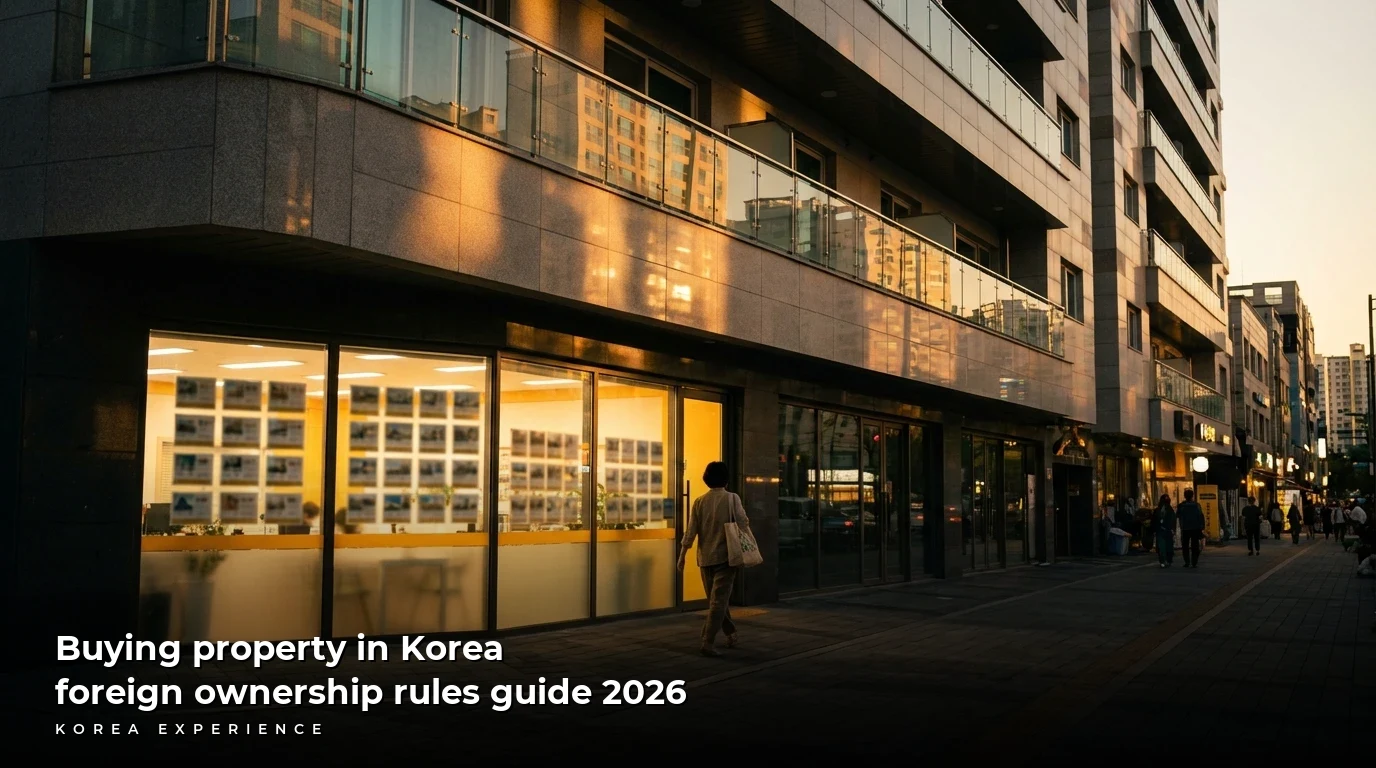
Korea, a vibrant hub of culture, technology, and stunning landscapes, has captured the hearts of countless international travelers and expats. From the bustling streets of Seoul to the serene beaches of Busan and the volcanic beauty of Jeju Island, the allure of making Korea a permanent home is stronger than ever. Many dream of owning a piece of this dynamic nation, perhaps an apartment overlooking the Han River, a cozy villa in a quiet neighborhood, or an investment property in a thriving commercial district. However, the prospect of buying property in Korea foreign ownership rules can seem daunting and complex for those unfamiliar with the local legal landscape.
Navigating foreign ownership regulations, understanding the real estate market, securing financing, and comprehending the tax implications requires expert guidance. This comprehensive guide aims to demystify the entire process, providing international individuals with a clear, professional, and helpful roadmap to becoming a property owner in Korea. We will break down eligibility requirements, walk you through the purchasing steps, explore financing options, shed light on associated costs, and offer invaluable insider tips to ensure a smooth and successful acquisition. By the end of this post, you'll have a solid understanding of what it takes to buy property in Korea as a foreigner, empowering you to turn your Korean real estate aspirations into reality.
Understanding Foreign Ownership Rules for Korean Property
Korea has a relatively open policy regarding foreign ownership of real estate, making it accessible for international buyers compared to some other nations. The primary legislation governing this is the "Foreigner's Land Acquisition Act." Unlike some countries that impose strict limitations based on nationality or residency status, Korea generally allows foreigners to acquire and own land and buildings, albeit with specific reporting requirements.
Key Legal Frameworks and Principles
The core principle is that foreigners generally have the same rights as Korean nationals when it comes to property ownership. However, this parity comes with an obligation to report your acquisition to the relevant authorities. The goal of these reporting requirements is primarily for statistical purposes and national security, not to restrict ownership.
- Foreigner's Land Acquisition Act: This act mandates that foreigners who acquire land in Korea must report the transaction to the head of the district office (Si/Gun/Gu Office) where the property is located within 60 days of the contract signing or within 6 months of obtaining the property through other means (like inheritance or merger). Failure to report can result in fines.
- Types of Property: The law applies to all types of land and buildings, including residential apartments, commercial buildings, undeveloped land, and industrial properties.
- No Citizenship Requirement: Crucially, you do not need to be a Korean citizen to buy property.
- No Residency Requirement (with caveats): While you don't necessarily need to be a resident to purchase property, your residency status (e.g., holding a long-term visa like an F-series visa or permanent residency) will significantly impact your ability to secure a mortgage from Korean banks and can affect tax residency status.
Restrictions and Special Zones
While general ownership is permitted, there are a few exceptions and areas with specific restrictions:
- Military Facilities Protection Areas: Areas designated for military protection often have restrictions or require special approval for land acquisition, regardless of nationality.
- Cultural Properties Protection Areas: Land designated for the preservation of cultural heritage may also have acquisition restrictions.
- Ecological Preservation Areas: Certain environmental protection zones might have limitations on land development and ownership.
- Specific Land Use Categories: While rare for residential buyers, some types of land (e.g., farmland) might have restrictions on who can own them without demonstrating a clear purpose for agricultural use.
It's important to consult with a local real estate agent and legal counsel to verify any specific restrictions pertaining to the property you are interested in, especially if it falls outside major urban residential zones. Understanding these buying property in Korea foreign ownership rules is the first vital step.
Eligibility and Requirements for Foreigners Buying Property in Korea
While Korea’s property market is open to foreigners, certain requirements and documentation are necessary to facilitate the transaction. Your legal status in Korea plays a significant role in the ease of the process, particularly concerning financing.
Who Can Buy Property?
Generally, any foreign individual or foreign-owned company can acquire property in Korea.
- Individuals: This includes expats living in Korea on various visas (e.g., E-series for professionals, D-series for students, F-series for family visas, H-series for working holiday) and even non-residents (those living outside Korea).
- Foreign Corporations: Companies established under foreign laws or Korean companies with more than 50% foreign ownership are also considered foreign entities for property acquisition purposes and must follow the same reporting rules.
Essential Documents and Information
Regardless of your residency status, you will need to provide certain documents. The exact list can vary slightly depending on the specific property, your bank, and the real estate agent, but the core requirements include:
- Passport: For identification purposes.
- Alien Registration Card (ARC) or Domestic Residence Report (DRR): If you are a resident in Korea, this is crucial. The ARC is for most long-term visa holders, while the DRR is for ethnic Koreans with foreign citizenship. This card serves as your primary identification in Korea, similar to a national ID.
- Certificate of Seal Imprint (In-gam Jeungmyeongseo) and Seal (Do-jang): If you have registered a personal seal (dojang) with a Korean government office, its certificate is vital for authenticating major legal documents, including property contracts. Many Koreans use their registered seal instead of a signature for critical transactions. If you don't have one, a notarized signature can often suffice for foreigners, but registering a seal is highly recommended if you plan extended stays or significant transactions.
- Bank Account in Korea: Essential for transferring funds, making payments, and receiving any rental income.
- Source of Funds Documentation: Particularly important if you are planning to get a mortgage or if the transaction amount is substantial, to comply with anti-money laundering regulations.
- Tax Identification Number (TIN): For tax purposes, especially if you will be earning rental income or facing capital gains tax.
Comparison Table: Key Identification & Authentication for Foreigners
| Item | Description | Usage in Property Transaction |
|---|---|---|
| Passport | International travel document, primary ID. | Basic identification for all stages. |
| Alien Registration Card (ARC) | Issued to foreigners residing in Korea for over 90 days. Includes resident registration number. | Crucial for resident foreigners, acts as local ID, required for banking and official forms. |
| Domestic Residence Report (DRR) | For ethnic Koreans with foreign citizenship. | Similar to ARC for specific demographic. |
| Certificate of Seal Imprint (In-gam) | Official certificate verifying your registered personal seal (dojang). | Essential for authenticating property purchase contracts, loan agreements, and other major legal documents. |
| Personal Seal (Do-jang) | Physical stamp registered with a district office. | Used in lieu of a signature for formal agreements. Highly recommended for property buyers. |
| Notarized Signature | If you don't have an In-gam, a signature notarized by a public notary in Korea (or your home country). | Can be an alternative to In-gam for foreigners, especially if residing overseas, but less common for local use. |
Navigating the Korean Real Estate Market: Types of Property and Ownership Structures
Understanding the types of properties available and the common ownership and rental structures in Korea is crucial for any potential buyer. The market is distinct from many Western countries, particularly regarding residential options.
Common Property Types
-
Apartments (아파트 - A-pa-teu):
- Description: The most common form of residential housing in Korea. These are typically high-rise, multi-unit buildings, often part of large complexes (apartment complexes) that include amenities like playgrounds, gyms, and sometimes even supermarkets or daycare centers. They are known for their efficient use of space and modern conveniences.
- Ownership: Individual units are sold as condominiums.
- Location: Predominantly found in urban and suburban areas like Seoul (Gangnam, Jamsil, Mapo), Busan (Haeundae, Centum City), and other major cities.
- Price: Generally the most expensive residential option, especially in desirable areas.
- Pros: Good security, convenient amenities, high liquidity, strong resale value.
- Cons: Less privacy than detached homes, potential for high maintenance fees (gwanli-bi).
-
Officetels (오피스텔 - O-pi-seu-tel):
- Description: A hybrid property type that serves as both an office and a residence. Officetels are typically studio or one-bedroom units in modern high-rise buildings, often located near business districts or subway stations. They are popular among single professionals, young couples, and small businesses.
- Ownership: Individual units are sold.
- Location: Primarily in central business districts and areas with high demand for compact, convenient living spaces (e.g., Gangnam, Hongdae, Yeouido in Seoul).
- Price: More affordable than apartments in comparable locations, though still significant.
- Pros: Excellent location, good amenities (often including basic office services), relatively lower entry price, popular rental options.
- Cons: Generally smaller living spaces, often classified as commercial property, which can have different tax implications (e.g., higher property tax, different VAT rules if rented commercially).
-
Villas (빌라 - Bil-la / 다세대주택 - Da-sae-dae-ju-taek):
- Description: In Korea, "villa" refers not to a large detached house but rather to smaller multi-family residential buildings, typically 3-5 stories high, each floor containing a few units. They offer more space than officetels and sometimes have small gardens or rooftop access. Often found in quieter residential neighborhoods. "Da-sae-dae-ju-taek" is a more precise term for these multi-household dwellings.
- Ownership: Individual units are sold.
- Location: Scattered throughout residential areas, often in older or quieter neighborhoods.
- Price: Generally more affordable than apartments, varying greatly by size, age, and location.
- Pros: More space and privacy than apartments or officetels, potentially lower maintenance fees, more neighborhood feel.
- Cons: Older buildings may lack modern amenities, lower liquidity compared to apartments, less uniform quality across units.
-
Detached Houses (단독주택 - Dan-dok-ju-taek):
- Description: Traditional standalone houses with their own land. While less common in major urban centers due to space constraints, they can be found in suburban areas or outside the major city cores.
- Ownership: Entire property (land and building).
- Location: Suburbs of major cities, rural areas, or in specific traditional neighborhoods within cities (e.g., Bukchon Hanok Village, though these are typically protected).
- Price: Highly variable, from very expensive in prime areas to more affordable in rural settings.
- Pros: Ultimate privacy, potential for custom design, larger living spaces, garden space.
- Cons: Very high maintenance, often older structures requiring renovation, less convenient access to public transport in many locations.
Understanding the Rental Market: Jeonse vs. Wolse
While these are rental contracts, understanding them is crucial as they significantly impact the valuation and investment potential of properties in Korea. Many properties are purchased specifically for rental income using these systems.
- Jeonse (전세): A unique Korean rental system where a tenant pays a large, refundable lump-sum deposit (typically 50-80% of the property's market value) to the landlord. No monthly rent is paid. The landlord invests this deposit and keeps the interest, returning the full deposit to the tenant at the end of the contract.
- Implication for Buyers: A property with a Jeonse tenant can be purchased with less upfront capital if you take over the existing Jeonse contract, as the tenant's deposit effectively reduces the amount you need to pay the seller. However, you must be prepared to return this substantial deposit when the contract ends.
- Wolse (월세): The more internationally recognized system, where a tenant pays a smaller security deposit (refundable) and a monthly rent.
- Implication for Buyers: If you plan to rent out your property, Wolse offers a steady monthly income stream, but typically requires a larger initial down payment for the buyer as there isn't a large tenant deposit offsetting the purchase price.
Comparison Table: Key Property Types in Korea
| Feature | Apartment (A-pa-teu) | Officetel (O-pi-seu-tel) | Villa (Da-sae-dae-ju-taek) |
|---|---|---|---|
| Description | High-rise, multi-unit complexes, amenities. | Hybrid (office/residence), typically studio/1-bed. | Low-rise (3-5 stories), multi-unit, larger than officetel. |
| Typical Size | Diverse, from small to very large. | Compact, primarily studios/1-bed. | Medium to large units. |
| Location | Urban, suburban, major city centers. | Central business districts, transit hubs. | Residential neighborhoods, often quieter. |
| Price Point | Highest residential, strong market value. | Mid-range, more affordable than apartments in central areas. | Generally most affordable residential. |
| Pros | Amenities, security, liquidity, value appreciation. | Prime location, convenience, popular for rentals. | More space, privacy, neighborhood feel. |
| Cons | High cost, high maintenance fees. | Smaller space, commercial property tax implications. | Older buildings, lower liquidity, fewer amenities. |
The Step-by-Step Process of Buying Property in Korea
The process of buying property in Korea foreign ownership rules involves several distinct stages, from initial search to final registration. Adhering to the correct sequence and fulfilling all legal requirements is essential.
1. Research and Financial Planning
- Define Your Needs: Determine your budget, preferred location (e.g., Seoul's Gangnam for luxury, Mapo for expat community, Busan's Haeundae for coastal living), property type, and investment goals.
- Understand Your Budget: Factor in not just the purchase price but also acquisition taxes, legal fees, agent commissions, and potential renovation costs.
- Secure Financing: Before seriously looking, understand your eligibility for a mortgage from a Korean bank or how you will fund the purchase. (More on this below).
2. Finding a Real Estate Agent ( 부동산 중개인 - Bu-dong-san Jung-gae-in)
- Importance: A reliable and experienced real estate agent is indispensable in Korea. They act as intermediaries, help navigate legal complexities, and find suitable properties.
- Choosing an Agent: Look for agents with experience working with foreigners, who can communicate effectively in English, and are licensed (they will have a license displayed in their office). Seek recommendations from other expats.
- Role: The agent will show you properties, advise on market prices, assist with negotiations, and prepare the necessary contracts.
3. Property Search and Viewing
- Online Listings: While online platforms exist (e.g., Naver Real Estate), many listings are in Korean. Your agent will be your primary source.
- On-site Viewings: Visit properties in person. Pay attention to the neighborhood, building condition, maintenance fees, and local amenities.
- Due Diligence: Ask your agent to provide details on the property's history, any outstanding debts, and zoning regulations. Request the official property register (등기부등본 - Deung-gi-bu-deung-bon) to verify ownership and check for encumbrances.
4. Making an Offer and Signing the Contract (매매계약서 - Mae-mae Gye-yak-seo)
- Offer and Negotiation: Your agent will help you make an offer to the seller and negotiate the price and terms.
- Initial Deposit (계약금 - Gye-yak-geum): Once an agreement is reached, you'll typically pay a non-refundable initial deposit (usually 10% of the purchase price) to the seller. This binds both parties. If the buyer backs out, they lose the deposit. If the seller backs out, they must return double the deposit.
- Formal Contract: A formal purchase agreement (매매계약서) is drafted by the agent, outlining all terms, conditions, payment schedules, and property details. This is usually done at the agent's office with both parties present. You and the seller will affix your personal seals (dojang) or notarized signatures.
5. Intermediate Payment (중도금 - Jung-do-geum) - Optional
- Purpose: For larger transactions, an intermediate payment (typically 10-30% of the purchase price) may be made between the initial deposit and the final balance. This further secures the contract.
- Timing: This payment is usually made a few weeks or months after the initial deposit, before the final settlement date.
6. Final Payment and Property Handover (잔금 - Jan-geum)
- Balance Payment: On the agreed-upon closing date, you pay the remaining balance of the purchase price, along with any final adjustments for utilities or taxes.
- Loan Disbursement: If you secured a mortgage, the loan amount will be disbursed to cover part of this balance.
- Handover: Upon receipt of the full payment, the seller hands over the property keys and any relevant documents.
7. Property Registration (소유권이전등기 - So-yu-gwon I-jeon Deung-gi) and Foreigner Reporting
- Legal Scrivener (법무사 - Beop-mu-sa): It is standard practice to hire a legal scrivener (similar to a paralegal or conveyancer) to handle the complex process of transferring ownership and registering the property in your name at the local land registry office. They ensure all documents are correct and taxes are paid. This typically happens on the day of final payment.
- Foreigner Land Acquisition Report: Within 60 days of signing the purchase contract, your legal scrivener or agent will also help you submit the "Foreigner's Land Acquisition Report" to the relevant district office. This fulfills your legal obligation under the Foreigner's Land Acquisition Act.
Throughout this process, clear communication with your agent and legal professional is paramount.
Financing Your Purchase: Mortgages and Banking for Foreigners
Securing financing is often one of the most challenging aspects of buying property in Korea foreign ownership rules. While foreign currency can be brought into Korea, many buyers prefer to take out a local mortgage.
Korean Banks and Mortgage Eligibility
Major Korean commercial banks (e.g., Kookmin Bank, Shinhan Bank, Woori Bank, Hana Bank, Nonghyup Bank) offer mortgages. However, eligibility for foreigners can be stricter than for Korean nationals.
- Residency Status: This is the most critical factor.
- Long-Term Visa Holders / Permanent Residents: If you hold a valid Alien Registration Card (ARC) with a long-term visa (e.g., F-2, F-4, F-5, F-6) or permanent residency, you stand a much better chance of qualifying for a mortgage. Banks look for stable income, a good credit history within Korea, and a consistent employment record.
- Non-Residents / Short-Term Visa Holders: It is exceedingly difficult, if not impossible, for non-residents or those on short-term visas to obtain a mortgage from a Korean bank. In these cases, you would typically need to pay in full from funds brought from abroad.
- Income and Employment: Banks require proof of stable income and employment in Korea. They will typically look for at least 6-12 months of consistent income from a reputable employer.
- Credit History: While a credit history in Korea is less developed for new expats, banks will assess your financial behavior if you have a Korean bank account and credit card. Any past defaults or issues can be detrimental.
- Debt-to-Income (DTI) and Loan-to-Value (LTV) Ratios: Korean banks adhere to strict DTI and LTV regulations set by the government, which limit how much you can borrow relative to your income and the property's appraised value. These ratios can vary based on location (e.g., stricter in 서울 - Seoul, especially in overheated areas like Gangnam) and property type. LTV typically ranges from 30% to 70%.
- Property Type: Banks generally prefer lending for apartments, followed by officetels. Lending for villas or detached houses can be more challenging, especially if the property is old or in a less desirable area.
Required Documents for Mortgage Application
If you are eligible, prepare to provide an extensive list of documents:
- Passport and ARC/DRR
- Income Verification: Employment contract, certificate of employment, income tax withholding statements (원천징수영수증 - Won-cheon-jing-su-yeong-su-jeung), bank statements showing salary deposits.
- Korean Bank Account Statements: Showing consistent financial activity.
- Credit Report: If available, from a Korean credit bureau.
- Property Purchase Contract
- Certificate of Seal Imprint (In-gam) or Notarized Signature
- Family Relation Certificate (가족관계증명서 - Ga-jok-gwan-gye-jeung-myeong-seo): Sometimes requested for family structure verification.
- Foreign Exchange Transaction Reports: If you are bringing a substantial amount of money from overseas, you might need to declare the source of funds to comply with foreign exchange regulations.
Bringing Funds from Overseas
If you are funding your purchase entirely with foreign capital, you must declare the funds when bringing them into Korea, especially for amounts exceeding USD 10,000. Use official banking channels for transfers and ensure you have proper documentation of the source of funds. This declaration is for anti-money laundering purposes and to ensure compliance with foreign exchange laws. Consult with your bank or a financial advisor for specific guidance.
Taxes and Fees Associated with Property Ownership in Korea
Beyond the purchase price, several taxes and fees are levied when buying property in Korea foreign ownership rules, during ownership, and upon sale. These can significantly add to the overall cost, so comprehensive financial planning is essential.
1. Acquisition Taxes (취득세 - Chwi-deuk-se)
- Description: A one-time tax paid when you acquire a property. The rate varies depending on the property's value, size, and whether it's your first home. For foreigners, the rates are generally the same as for Koreans.
- Rates (Approximate and subject to change):
- Residential Properties:
- Below 600 million KRW: 1.1% (including local education tax)
- 600 million - 900 million KRW: 1.1% - 3.3% (graduated scale)
- Above 900 million KRW: 3.3%
- Multiple home ownership (for registered residents): Significantly higher rates (e.g., 8-12% for a second or third home in regulated areas). Note that these higher rates are typically only applied to individuals who are Korean tax residents.
- Officetels (classified as commercial): Typically a flat 4.6% (including local education tax).
- Land/Commercial: Generally around 4.6%.
- Residential Properties:
- Payment: Paid by the legal scrivener during the registration process.
2. Registration Tax (등록면허세 - Deung-nok-myeon-heo-se) and Legal Scrivener Fees
- Description: A tax associated with the legal registration of ownership transfer. This is usually a small percentage of the property value.
- Legal Scrivener Fees: These are fees paid to the legal scrivener (법무사) for their services in handling the transfer of ownership, payment of taxes, and property registration. Fees vary based on the property value and complexity. Expect a few million Korean won for their services.
3. Brokerage Commission (중개수수료 - Jung-gae Su-su-ryo)
- Description: The fee paid to your real estate agent.
- Rates: Regulated by law, typically a percentage of the transaction value, with caps. It usually ranges from 0.3% to 0.9% of the property value, with higher percentages for lower-value properties and decreasing percentages as property value increases. Both buyer and seller typically pay a commission.
4. Property Tax (재산세 - Jae-san-se)
- Description: An annual local tax levied on property owners.
- Rates: Varies based on the official assessed value of the property and its type (residential, commercial, land). It's a progressive tax, with higher value properties paying a higher percentage. Paid twice a year (July and September for residential property).
5. Comprehensive Real Estate Holding Tax (종합부동산세 - Jong-hap Bu-dong-san-se)
- Description: A national tax levied on individuals or corporations owning multiple properties or high-value properties that exceed certain thresholds. This tax is aimed at discouraging real estate speculation.
- Applicability: Most single-property owners, especially for residential units below 600 million KRW (or 900 million KRW for a single homeowner), may not be subject to this tax. However, it's a significant consideration for high-net-worth individuals or those with multiple investment properties.
6. Capital Gains Tax (양도소득세 - Yang-do So-deuk-se)
- Description: Tax levied on the profit made from selling a property.
- Rates: Highly complex and depends on holding period, residency status (tax resident vs. non-resident), number of properties owned, and the amount of capital gain.
- Exemption: A significant exemption exists for a single primary residence that has been held for at least two years and occupied for a certain period (specific rules apply).
- Non-Resident Foreigners: Generally subject to capital gains tax on Korean property sales. Often, a portion of the sales proceeds (e.g., 10%) is withheld at the time of sale as a provisional tax, and a final tax settlement is done later.
- Tax Residency: Your tax residency status (determined by factors like physical presence and ties to Korea) significantly impacts how your capital gains are calculated and taxed. If you are considered a tax resident of Korea, you are generally taxed on worldwide income and gains; if a non-resident, only on Korean-sourced income and gains.
Comparison Table: Key Taxes and Fees
| Tax/Fee | Description | Typical Payer | When Paid |
|---|---|---|---|
| Acquisition Tax | One-time tax on property purchase. Rates depend on value/type/multi-home status. | Buyer | At property registration |
| Registration Tax | Fee for legal transfer of ownership. | Buyer | At property registration |
| Brokerage Commission | Fee for the real estate agent's services. | Buyer & Seller | Upon contract signing and/or final payment |
| Legal Scrivener Fee | For legal services to handle registration. | Buyer | At property registration |
| Property Tax | Annual local tax on property ownership. Progressive rates. | Owner | Annually (usually 2 installments) |
| Comprehensive Real Estate Tax | National tax on high-value/multiple properties. | Owner | Annually (if applicable) |
| Capital Gains Tax | Tax on profit from property sale. Complex rules, depends on residency/holding period. | Seller | Upon sale (withholding for non-residents) |
Practical Considerations and Insider Tips for Expats
Navigating the Korean real estate market as a foreigner requires more than just understanding the buying property in Korea foreign ownership rules; it demands practical insights and careful planning.
1. The Importance of Professional Advisors
- Reliable Real Estate Agent: As mentioned, this is your primary guide. Find one recommended by other expats, fluent in English, and experienced with foreign clients. They can explain nuances of the market (e.g., the local "premium" or "discount" that properties might carry beyond the official market price).
- Legal Counsel: While a legal scrivener handles the registration, for complex situations, investment properties, or if you have specific legal concerns, consider consulting an independent lawyer. They can review contracts from your perspective and provide unbiased advice.
- Tax Accountant: Especially if you plan to rent out the property or have complex financial arrangements, a tax accountant specializing in foreign residents can help optimize your tax strategy and ensure compliance. They can advise on issues like foreign tax credits if your home country taxes worldwide income.
2. Due Diligence Beyond the Surface
- Check the Property Register (Deung-gi-bu-deung-bon): This document is paramount. It shows the property's legal history, current ownership, any mortgages or liens (근저당 - Geun-jeo-dang), and other encumbrances. Your agent or legal scrivener should thoroughly review this with you.
- Building Permit and Zoning: Confirm that the property has the necessary permits and complies with local zoning regulations for your intended use (e.g., residential vs. commercial).
- Maintenance Fees (Gwanli-bi): For apartments and officetels, monthly maintenance fees can be substantial, covering common area upkeep, security, and sometimes utilities. Always inquire about the average monthly cost.
- Neighborhood Amenities: Consider proximity to public transport (subway stations are key in major cities), schools, hospitals, shopping, and expat-friendly services. For example, Itaewon, Hannam-dong, and areas around international schools in Seoul are popular choices for expat families.
3. Understanding Korean Property Culture
- Speed of Transactions: The Korean real estate market can move quickly, especially for desirable properties in prime locations. Be prepared to make decisions efficiently once you find the right property.
- Negotiation: While negotiation is possible, it might not be as extensive as in some Western markets. Prices are often closer to the asking price, especially for popular properties.
- Registered Seal (Do-jang): As mentioned, obtaining and registering a personal seal is highly recommended. It streamlines many official transactions and is culturally significant for formal agreements.
4. Post-Purchase Considerations
- Property Management: If you plan to rent out your property, consider hiring a property management company, especially if you won't be residing in Korea full-time. They can handle tenant issues, maintenance, and rent collection.
- Utilities and Services: After taking ownership, you'll need to transfer utility accounts (electricity, gas, water, internet) into your name.
- Insurance: Obtain property insurance to protect your investment against damage or other unforeseen events.
- Annual Tax Filings: Ensure you understand and comply with annual property tax payments and other tax obligations.
5. Language Barrier
While many real estate agents in major cities might speak English, the broader legal and administrative processes often involve Korean. Having a trusted translator or a bilingual agent/legal professional is invaluable to ensure you fully understand every document you sign. Do not sign anything you do not fully comprehend.
By keeping these practical considerations and insider tips in mind, your journey toward buying property in Korea foreign ownership rules can be a much smoother and more rewarding experience.
Frequently Asked Questions About Foreign Property Ownership in Korea
Here are some common questions international individuals have about buying property in Korea.
1. Can a non-resident foreigner buy property in Korea?
Yes, a non-resident foreigner can legally buy property in Korea. There are no citizenship or strict residency requirements for ownership itself. However, non-residents will find it extremely difficult, if not impossible, to obtain a mortgage from Korean banks and would likely need to pay for the property in full using funds brought from overseas. All foreign acquisitions must be reported to the local district office.
2. Are there any restrictions on the type of property a foreigner can buy?
Generally, no. Foreigners can purchase various types of property, including apartments, officetels, villas, detached houses, and land. However, specific types of land, such as those designated as military protection zones, cultural property protection areas, or certain ecological preservation zones, may have restrictions or require special permits, regardless of nationality.
3. What are the typical annual property taxes like for foreigners?
Annual property taxes (Jae-san-se) in Korea are levied by local governments based on the officially assessed value of the property and its type. The rates are progressive, meaning higher-value properties incur higher percentages. For a typical apartment in a major city, you can expect to pay anywhere from a few hundred thousand Korean won to several million won per year, depending on the property's market value. Additionally, foreigners owning multiple properties or very high-value properties may be subject to the national Comprehensive Real Estate Holding Tax (Jong-hap Bu-dong-san-se).
4. Can I get a mortgage as a foreigner in Korea?
Yes, but it largely depends on your residency status and financial stability. Foreigners with long-term residency visas (e.g., F-2, F-4, F-5, F-6) or permanent residency, stable income, and a good credit history in Korea have a much higher chance of securing a mortgage from Korean commercial banks. Non-residents or those on short-term visas typically cannot obtain a mortgage and must pay cash. Banks also assess strict Debt-to-Income (DTI) and Loan-to-Value (LTV) ratios.
5. Do I need a lawyer or legal scrivener when buying property in Korea?
While not strictly mandated for every step, it is highly recommended to engage a legal scrivener (Beop-mu-sa) to handle the property registration process. They are experts in ensuring all legal documents are correctly filed, taxes are paid, and ownership is properly transferred. For more complex situations, or if you require independent legal advice on contract terms or investment strategies, consulting an attorney (Byeon-ho-sa) is advisable. Your real estate agent will typically recommend a legal scrivener.
Conclusion: Your Path to Property Ownership in the Land of the Morning Calm
Buying property in Korea foreign ownership rules might initially appear complex, but with the right knowledge and professional guidance, it is an entirely achievable goal for international individuals. Korea's welcoming stance towards foreign investment in real estate, coupled with its dynamic economy and appealing lifestyle, makes it an attractive destination for property owners and investors alike.
We've covered the essential legal frameworks, detailed the eligibility criteria, explored the diverse property market, outlined the step-by-step purchasing process, demystified financing options, and clarified the various taxes and fees involved. Key takeaways include:
- Open Ownership: Foreigners generally have the same ownership rights as Koreans, subject to reporting requirements.
- Residency Matters for Financing: While non-residents can buy, long-term residents have significantly better access to mortgages.
- Professional Guidance is Key: A reliable real estate agent, legal scrivener, and potentially a tax accountant are indispensable.
- Due Diligence is Crucial: Thoroughly investigate the property, its history, and associated costs beyond the purchase price.
- Understand Local Nuances: Familiarize yourself with Korean property types, rental systems, and cultural aspects of transactions.
Embarking on this journey requires careful planning, patience, and a willingness to engage with the local system. However, the reward of owning a piece of the vibrant Korean landscape – be it a bustling city apartment or a tranquil suburban home – is immeasurable. As you consider your options, remember that our goal at Korea Experience is to make your life in Korea as smooth and enriching as possible. Stay tuned for more guides on living, working, and thriving in Korea, including topics like "Navigating Korean Visas for Long-Term Stay" or "Understanding the Korean Job Market for Expats."
With this comprehensive guide in hand, you are now better equipped to confidently navigate the Korean real estate market and take a decisive step toward realizing your dream of property ownership in the Land of the Morning Calm.
About the Author
Korea Experience Team
Written by the Korea Experience editorial team - experts in Korean medical tourism, travel, and culture with years of research and firsthand experience.
⚠️ Medical Disclaimer
The information provided on this website is for general informational purposes only and does not constitute medical advice. Always consult with qualified healthcare professionals before making any medical decisions.
Continue Reading
Explore more articles you might find interesting

Understand visa run strategies for Korea: legality, popular destinations, planning, and execution tips for international expats and travelers.
Discover the top methods for sending money from Korea in 2026. Compare banks, online services, fees, and exchange rates for expats and travelers.
Navigating mental health as an expat in Seoul can be challenging. Discover English-speaking therapy options and support networks for 2026 to thrive abroad.