Best weekend getaways for expats to beat city burnout 2026
Discover the top recharge destinations outside Seoul. From calm temples to coastal luxury, here are the best 2026 weekend trips for expats.
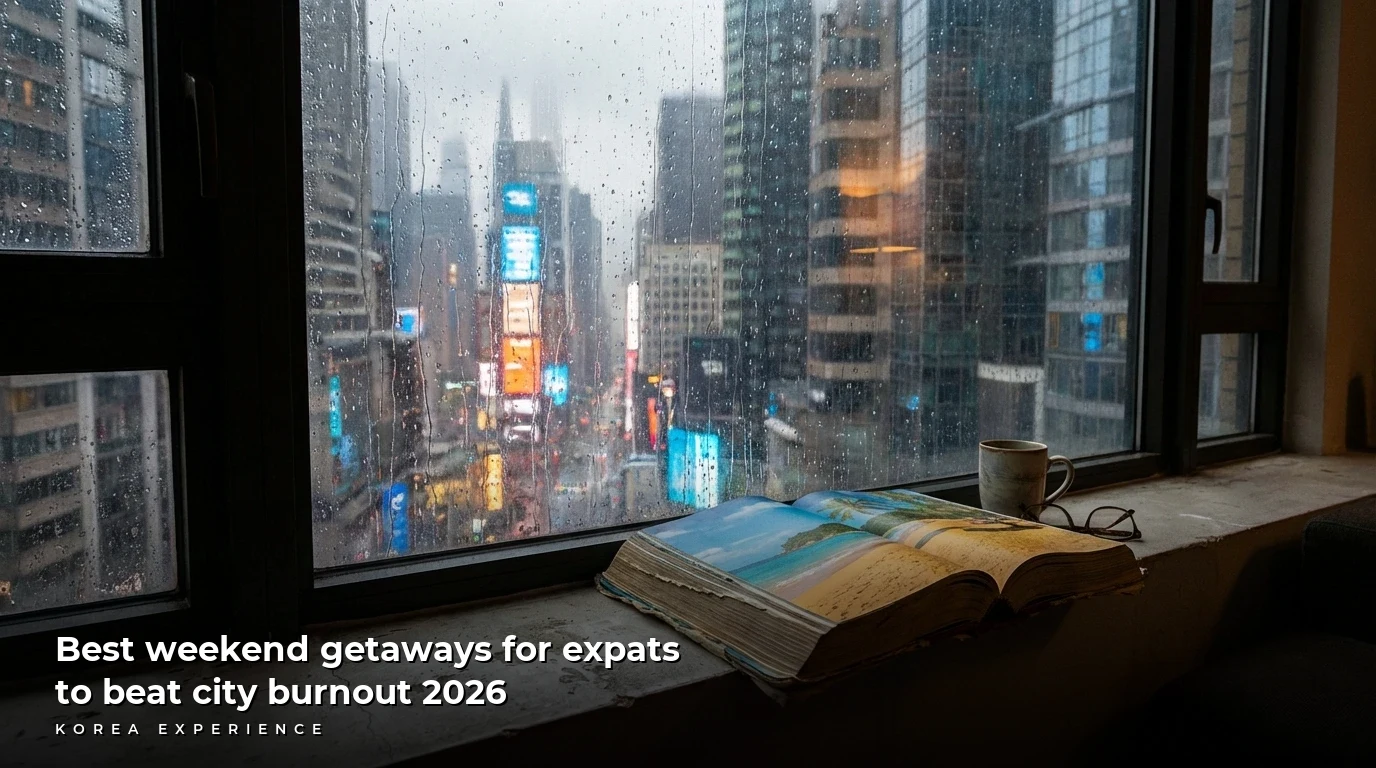
Living in South Korea offers an incredible blend of high-tech convenience and dynamic culture, but the "palli-palli" (hurry-hurry) lifestyle of Seoul or Busan can eventually lead to significant city burnout. For expats navigating the high-pressure work environments of 2026, knowing where to disconnect is just as important as knowing where the best networking events are. With the expansion of the high-speed GTX lines and improved KTX-Eum services, escaping the concrete jungle has never been faster or more necessary.
Key Takeaways
- 1Sokcho and Seoraksan offer the best mountain-ocean combo within 2 hours of Seoul
- 2Gyeongju remains the top cultural detox with walkable historic districts
- 3Jeju's Seogwipo side provides superior relaxation compared to Jeju City
In this comprehensive guide, we have curated the ultimate list of weekend getaways specifically designed to lower cortisol levels and recharge your mental batteries. We analyze travel times, projected 2026 costs, and the specific "vibe" of each location to help you choose the perfect antidote to urban stress.
Related reading: Best neighborhoods for expats in Seoul.
1. Sokcho & Seoraksan: The Nature Cure
For many expats, the ultimate remedy for skyscraper fatigue is the sight of the East Sea horizon meeting the jagged peaks of Seoraksan National Park. As of 2026, the improved connectivity to Gangwon-do makes this the premier choice for nature lovers.
Learn more in our comprehensive guide to Changing visa status while in Korea guide for expats.
Getting There and Logistics
The travel landscape to Sokcho has transformed. The KTX-Eum high-speed train now connects parts of the Gyeongchun line more efficiently. Driving from Seoul typically takes 2 hours and 30 minutes via the Seoul-Yangyang Expressway, covering approximately 158 kilometers. However, weekend traffic can extend this to 3.5 hours if you leave after 9:00 AM on a Saturday.
For more details, check out our guide on Home insurance for expats what to cover in Korea.
📋 Trip Logistics: Seoul to Sokcho
The Burnout Cure: Seoraksan Hiking
Mount Seorak is not just a hike; it is a spiritual reset. The park entrance fee was abolished in recent years, making access easier, though parking remains around ₩6,000 per day. For a low-stress experience, bypass the grueling Daecheongbong Peak climb. Instead, take the cable car (₩15,000 round trip) to Gwongeumseong Fortress. The ride takes only 5 minutes, yet lifts you 700 meters above sea level, offering panoramic views that instantly put city worries into perspective.
For more details, check out our guide on Homeschooling and Alternative Education in Korea 2026 Guide.
Pro Tip
To beat the queues for the Seoraksan Cable Car, arrive by 8:00 AM. Tickets are sold on a first-come, first-served basis, and wait times can exceed 2 hours by noon on weekends.
Culinary Therapy in Sokcho
After descending the mountain, head to the Sokcho Tourist & Fishery Market. Here, you must try the Dakgangjeong (sweet and sour fried chicken). A standard box costs roughly ₩20,000 and easily feeds three people.
Manseok Dakgangjeong(Manseok Dakgangjeong)
2. Gyeongju: The Time-Travel Detox
If your burnout stems from the relentless modernity and digital noise of Seoul, Gyeongju offers a serene step back into the Silla Dynasty. Often called the "museum without walls," the city has a strictly enforced height limit for buildings, meaning you will see the sky—a rare luxury in Seoul.
Connectivity and Costs
Reaching Gyeongju is effortless via KTX from Seoul Station to Singyeongju Station. The journey takes approximately 2 hours and 10 minutes. As of early 2026, a standard economy ticket costs ₩49,300 one way. From the station, a 20-minute bus ride (₩1,700) or a ₩15,000 taxi ride brings you to the historic center.
Quiet Reflection at Bulguksa
While popular, Bulguksa Temple offers pockets of profound silence if visited early. Admission is ₩6,000. The temple grounds cover a significant area, so allow at least 90 minutes to wander. The intricate stone pagodas, Dabotap and Seokgatap, have stood for over 1,200 years—a powerful reminder of endurance that can be comforting when you are feeling overwhelmed by quarterly targets.
Skip the main hotels at Bomun Lake if you want culture. Stay in a traditional Hanok guesthouse in the Hwangnidan-gil area. The floor heating (ondol) is incredibly soothing in winter, and you are walkable to all major tombs.
Hwangnidan-gil: The Hipster History Blend
This neighborhood balances history with modern comforts. It is filled with rooftop cafes overlooking the Daereungwon Tomb Complex. A latte here averages ₩6,000, slightly pricier than Seoul, but you are paying for the view of ancient burial mounds that turn golden at sunset.
📖 How to Rent a Bike in Gyeongju
Step 1: Locate a Rental Shop
Look near the Express Bus Terminal or Daereungwon main gate.
Step 2: Choose Your Vehicle
Standard bikes cost ₩5,000/hour; Electric scooters cost ₩15,000/hour.
Step 3: Deposit ID
You will need to leave a physical ID card or passport as a deposit.
3. Damyang: The Bamboo Forest Escape
Damyang is the ultimate destination for "Forest Bathing" (Shinrin-yoku). Located in Jeollanam-do, it is further away, making it a better option for a long weekend (3 days) rather than a quick overnight trip. The oxygen-rich air here is statistically cleaner than Seoul's, with particulate matter (PM2.5) levels often 40% lower than the capital.
The Journey South
Take the KTX to Gwangju-Songjeong Station (approx. 1 hour 50 minutes, ₩47,000). From there, catch Bus 311 which runs every 15 minutes directly to Damyang. The bus ride takes about 50 minutes and costs ₩2,800.
Juknokwon Bamboo Garden
This represents the core of the Damyang experience. The 310,000 square meter bamboo forest maintains a temperature 4 to 7 degrees Celsius cooler than the outside city, making it a perfect summer retreat. Admission is ₩3,000. The rustling sound of bamboo leaves in the wind is a natural white noise machine that helps lower blood pressure.
📊 Wellness Stats
Meta Provence and Metasequoia Lane
Just 1.5 kilometers from the bamboo forest lies one of Korea's most beautiful walking paths. The Metasequoia Lane stretches for 8.5 kilometers, lined with towering redwood-like trees. Entrance to the main walking section is ₩2,000. It provides a visual symmetry that is incredibly pleasing and calming to the mind.
💵 Damyang Accommodation Options
Private courtyard, traditional breakfast included
Western style, close to Provence village
4. Suncheon: The Ecological Reboot
Suncheon successfully branded itself as the ecological capital of Korea. For expats missing open, flat horizons and wetland biodiversity, this is the place. It is located 320 kilometers south of Seoul.
Transport Details
The KTX ride to Suncheon Station takes roughly 2 hours and 40 minutes and costs ₩44,000. It is a popular route, so booking 2 weeks in advance is highly recommended for 2026 travel.
Suncheon Bay Wetland Reserve
This is home to one of the world's top 5 coastal wetlands. A combined ticket for the Wetland Reserve and the National Garden costs ₩15,000. The highlight is the hike up to the Yongsan Observatory. It is a 20-minute walk up a wooden deck. At sunset, the S-shaped waterway reflects the sun in a view that photographers wait hours for.
Seasonal Alert
In summer (July-August), the wetlands have zero shade. Temperatures can exceed 35°C (95°F). Bring a UV umbrella and at least 2 liters of water if you plan to walk the full reed deck path.
Nagan Eupseong Folk Village
Unlike many "folk villages" that are essentially film sets, Nagan Eupseong is a functioning town where 100 families still live in thatched-roof houses. It is 22 kilometers from downtown Suncheon (40 minutes by Bus 63 or 68). The entry fee is ₩4,000. It offers a rare glimpse into a slower, community-focused way of life that contrasts sharply with the isolation often felt in Seoul officetels.
5. Jeju Island (Seogwipo): The Subtropical Disconnect
Jeju Island is obvious, but for burnout recovery, you must avoid Jeju City. Head straight south to Seogwipo. The pace is slower, the climate is warmer, and the ocean views are dramatic cliffs rather than crowded beaches.
2026 Flight and Rental Data
Domestic flights from Gimpo (GMP) to Jeju (CJU) vary wildly. In 2026, a weekend round-trip ticket averages ₩140,000 if booked 3 weeks out. Car rentals have stabilized; a mid-size sedan (Avante/K3) costs approximately ₩60,000 per day with full insurance.
Transport: Rental Car vs. Bus in Jeju
- ✓Total freedom to visit remote cafes
- ✓AC/Heating control
- ✓Saves 2-3 hours of travel time per day
- ✗Cost is significantly higher (₩150k+ weekend)
- ✗Parking in tourist zones can be tricky
- ✗Designated driver cannot drink
Olle Trails: Route 7
If you only do one walk, make it Olle Trail Route 7 in Seogwipo. It hugs the coastline for 17.6 kilometers, but you can just do the 5-kilometer highlight section near Oedolgae Rock. It is free, requires no booking, and the sound of waves crashing against volcanic rock is scientifically proven to reduce stress.
Terarosa Coffee Seogwipo(Terarosa Coffee)
6. Practical Tips for 2026 Weekend Travel
Traveling in Korea has become incredibly streamlined, but nuances remain. Here is how to navigate the system like a local expert to ensure your getaway does not become a source of stress itself.
The App Ecosystem
Google Maps is improving but still lacks the precision of local apps. For 2026, Naver Map remains the gold standard, now offering even better English interface support.
Navigation App Comparison 2026
| Feature | Naver Map | KakaoMap | Google Maps |
|---|---|---|---|
| Real-time Bus Times | ✅ | ✅ | ❌ |
| English Menu | ✅ | ✅ | ✅ |
| Walking Directions | ✅ | ✅ | ❌ |
| Restaurant Reviews | Local Trust | Local Trust | Tourist Bias |
Train Booking Strategy
KTX tickets for weekends open 30 days in advance at 7:00 AM. For popular routes (Seoul to Busan/Gangneung), prime times (Friday evening/Sunday afternoon) sell out within 48 hours. The "Korail Talk" app is essential. A "Standing/Non-reserved" ticket is 15% cheaper but not recommended if you are already tired; standing for 2.5 hours defeats the purpose of a relaxing getaway.
The Ultimate Friday Exit Strategy
Wrap Up Work
Set your out-of-office message.
Seoul Station Arrival
Arrive 30 mins early to grab a bento box (Dosirak).
Train Departs
Headphones on, city stress off.
Why Disconnecting Matters for Expats
Living abroad amplifies stress. You are navigating a foreign language, different workplace hierarchies, and cultural nuances daily. This cognitive load is heavy. The destinations listed above—Sokcho, Gyeongju, Damyang, Suncheon, and Jeju—are not just tourist spots; they are environments curated to lower that cognitive load.
Whether it is the 100-meter visibility of the air in Gangwon-do or the slow-food philosophy of Jeolla-do, these regions offer a "physiological sigh" for your brain. In 2026, make it a priority to leave the city at least once a month. Your longevity in Korea depends on it.
❓ Frequently Asked Questions
Have more questions?Contact us →
About the Author
Korea Experience Team
Written by the Korea Experience editorial team - experts in Korean medical tourism, travel, and culture with years of research and firsthand experience.
Explore more in Living in Korea
Everything expats and long-term visitors need to know — from visa requirements and housing to banking, healthcare, and daily life tips.
Browse All Living in Korea ArticlesContinue Reading
Explore more articles you might find interesting
Comprehensive guide for expats buying a car in Korea. We cover financing options, registration taxes, insurance costs, and required documentation.
Discover the top districts for living in Seoul in 2026. Detailed rental costs, commute times, and lifestyle analysis for expats moving to Korea.
The ultimate 2026 comparison of K Car and Encar for expats. Navigate the Korean used car market, understand fees, and drive away safely.
Unlock your life in Korea with this complete guide to the Alien Registration Card application process, ensuring a smooth transition and legal stay.
Complete guide to buying property in Korea for foreigners. Covers ownership rules, taxes, visa benefits, and the 2026 market landscape.
A complete guide to changing your visa status within South Korea, covering requirements, HiKorea reservations, and D-10 to E-7 transitions.