Seoul Climate Card 2026: Is the Unlimited Transit Pass Worth It?
Save money in Seoul with the 2026 Climate Card. We analyze if the 62,000 KRW monthly pass beats T-Money for your 30-day stay based on 40 rides.
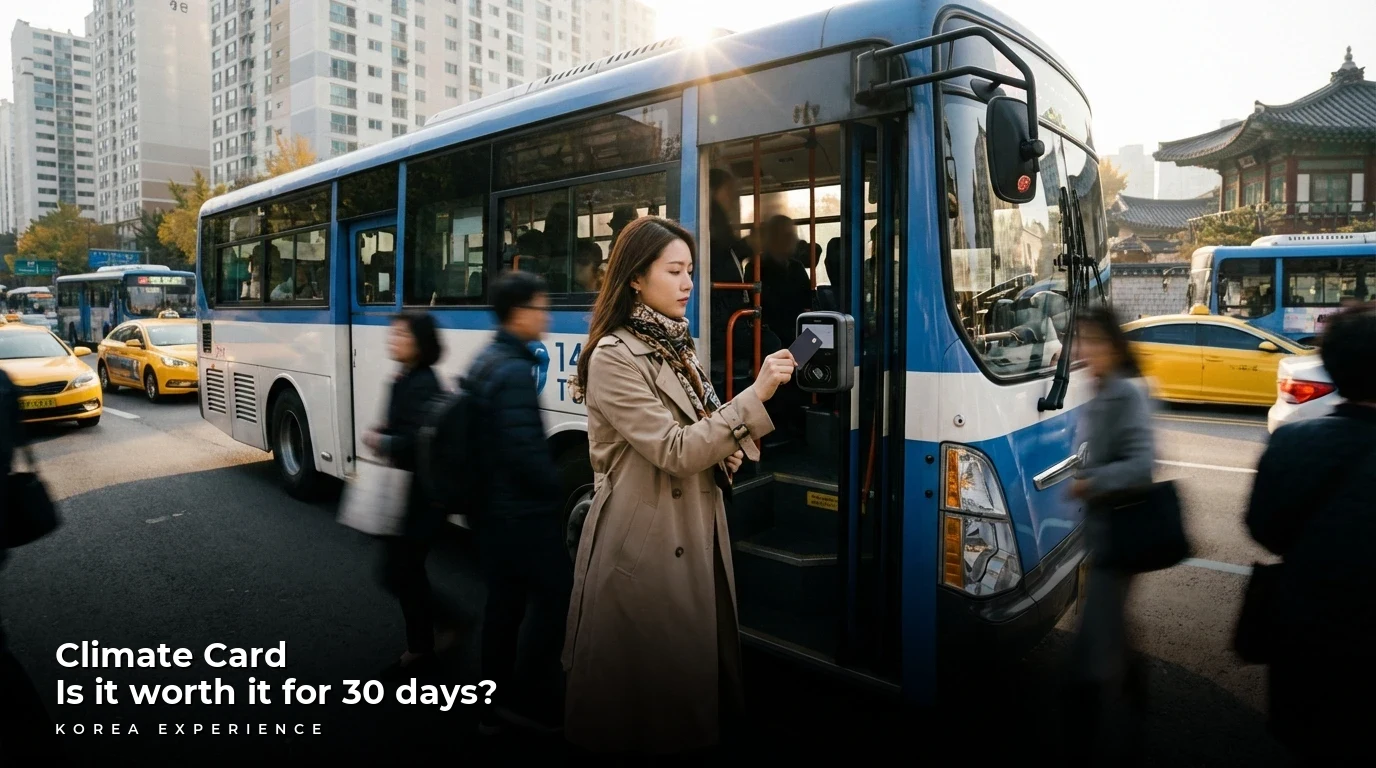
Stop stressing about reload fees and transfer penalties—Seoul's unlimited transit pass might just be your new best friend. Here is the ultimate breakdown of whether the Climate Card saves you money or just headaches during a month-long stay in Korea, especially when compared to standard options like T-Money.
Key Takeaways
- 1The short answer is YES, but with a catch. If you commute or explore actively (2+ rides/day), the 62,000 KRW price is a steal, but it is less useful for travel outside Seoul.
- 2The magic number is 40. You need roughly 40 trips per month to break even. Commuting alone covers this, making weekend travel effectively free.
- 3Buy it the second you land (but not AT the airport). Head to a convenience store or station inside Seoul city limits to grab your physical card.
📋 Quick Facts
So, Is It Actually Worth It?
The short answer: Yes, absolutely—if you are staying in Seoul for at least 5 days or planning to live here for a month.
Look, I’m going to level with you. If you are just here for a weekend and you plan to walk everywhere or take taxis, skip it. But if you are here for 30 days? This card is a no-brainer. The break-even point for the 30-day pass (62,000 KRW) is roughly 40 to 41 rides.
That sounds like a lot, but let’s do the "girl math" (or just regular math). If you go to work/school/sightseeing and come back, that’s 2 rides a day. Over 20 weekdays, that’s 40 rides right there. Any trip you take on a weekend? Free. Going out for dinner after work? Free. Taking the bus one stop because it’s raining and you don’t want to ruin your shoes? Free.
As of 2026, the base fare for a subway ride in Seoul has crept up to around 1,550 KRW. If you tap that card 41 times, you’ve spent about 63,500 KRW. The card costs 62,000 KRW. Boom. You’re saving money. But more importantly, you’re saving mental energy. You stop looking at your T-money balance wondering if you have enough for the ride home.
Key Statistics
| Statistic | Value | Label | Source |
|---|---|---|---|
| Break-Even Point | 41 rides | Rides needed to save money (monthly pass) | Seoul Metro Data |
| User Base | 1 Million+ | Cards sold in first 70 days | Seoul Metropolitan Gov |
| Avg. Savings | ₩30,000 | Average monthly savings per user | Seoul Metropolitan Gov |
The Background Story
So, why does this card even exist? For years, Seoul was ruled by the T-money card. It was (and is) a fantastic system—reloadable, works everywhere, even in taxis. But post-pandemic, inflation hit hard. Transport costs rose. The Seoul Metropolitan Government realized two things: 1) People were feeling the pinch of rising commute costs, and 2) Traffic congestion and carbon emissions were getting worse.
Enter the Climate Card (Gi-hu Dong-haeng Card). Launched as a pilot in January 2024 and fully rolled out by July 2024, it was designed to be the "Netflix of Transportation." Pay one fee, ride all you want. The goal was to get people out of their cars and onto the subway.
It worked. In the first 70 days, they sold over a million cards. It became a massive hit with locals. But tourists were left out initially. Then, in July 2024, they dropped the "Tourist Pass" versions (1, 2, 3, 5, and 7 days), changing the game for short-term visitors too. Now, heading into 2026, the system has expanded to include the Hangang River Bus and parts of the neighboring Gyeonggi province, making it a robust ecosystem rather than just a subway pass.
Pilot Launch
Seoul City introduces the Climate Card pilot to reduce carbon footprint and ease commute costs.
Tourist Pass Launch
Short-term passes (1, 2, 3, 5, 7 days) are introduced for international visitors.
Airport Expansion
AREX line becomes partially compatible (you can exit at Incheon Airport, but not enter).
Hangang River Bus
New water taxi service launches and is integrated into the Climate Card system.
Gyeonggi Integration
Service area expands to include specific commuter towns and lines in Gyeonggi-do and Incheon.
Full Ecosystem
Climate Card is now a mature system covering subways, buses, bikes (Ttareungi), and River Buses with established youth discounts.
Breaking Down Your Options
Okay, you’re standing at the kiosk. What do you buy? Let’s break it down based on your trip type.
The "Digital Nomad" (30 Days)
This is the 62,000 KRW Monthly Pass. This is your bread and butter. It covers almost all Seoul subway lines (Lines 1-9, Sillim, Ui-Sinseol, etc.) and Seoul-licensed buses.
- The Catch: It does NOT cover the Shinbundang Line (the expensive red line that goes to Gangnam/Bundang). If you live in Gangnam and commute to Pangyo, this card won't work for you.
The "Power Sightseer" (1-7 Days)
If you aren't staying a full month, the short-term passes are incredible value.
- 1-Day: 5,000 KRW. (Break even: 3-4 rides).
- 3-Day: 10,000 KRW. (Break even: ~7 rides total).
- 7-Day: 20,000 KRW. (Break even: ~13 rides total).
- Real Scenario: Let's say you're here for a week. You grab the 7-day pass. You visit Gyeongbokgung in the morning, zip over to Seongsu for a cafe, head to Hongdae for dinner, and then back to your hotel. That’s 4 rides (~6,000 KRW). Do that for 3 days, and your card is already paid for. The rest of the week is a bonus.
The "Cyclist" Add-on
For an extra 3,000 KRW (total 65,000 KRW), you get the Ttareungi option. This gives you unlimited 1-hour or 2-hour rentals of Seoul’s public green bikes.
- The Warning: As mentioned earlier, if you don't have a Korean ARC/Phone number, activating the bike app is incredibly difficult. I honestly recommend tourists skip this tier and just rent bikes via the foreigner webpage using a credit card.
Price Table
| Option | Price | Category | Description |
|---|---|---|---|
| 30-Day Climate Card (w/ Bikes) | ₩65,000 | Mid | Unlimited Transit + 1hr Bike rides for 30 days. |
| 30-Day Climate Card (No Bikes) | ₩62,000 | Budget | Unlimited Subway + Bus only. Best for most tourists. |
| 7-Day Tourist Pass | ₩20,000 | Budget | Unlimited rides for exactly 7 days. Break-even at ~3 rides/day. |
| 5-Day Tourist Pass | ₩15,000 | Budget | Unlimited rides for 5 days. |
| 3-Day Tourist Pass | ₩10,000 | Budget | Unlimited rides for 3 days. |
| 1-Day Tourist Pass | ₩5,000 | Budget | 24 hours of unlimited rides. Perfect for a heavy sightseeing day. |
| Discover Seoul Pass (24h) | ₩50,000 | Luxury | Includes transit AND entry to palaces/museums. Expensive if you don't rush. |
| Feature | Climate Card (30-Day) | T-money (Standard) | WOWPASS | Discover Seoul Pass |
|---|---|---|---|---|
| Cost | ₩62,000 flat fee | Pay-per-ride (₩1,500+) | ₩5,000 fee + Pay-per-ride | ₩50,000+ (varies) |
| Processing Time | Instant (buy & load) | Instant (buy & load) | Instant (airport kiosk) | Instant (digital/physical) |
| Duration | 30 Days (Unlimited) | Forever | Forever (Balance 6y) | 24/48/72 Hours |
| Requirements | Cash for top-up | Cash for top-up | Passport + Currency | Passport |
| Best For | Residents / Long-term | Short trips / Nationwide | Tourists who hate cash | Sightseeing junkies |
| Coverage Area | Seoul Only (mostly) | Nationwide | Nationwide | Seoul Only |
Pros and Cons
Pros
- ✓Mental Freedom: You never have to worry about "wasting" a fare or hopping off early.
- ✓Ttareungi Bike Integration: Unlimited access to Seoul’s public bikes for just 3,000 KRW more (if you have an ARC).
- ✓Hangang River Bus: Commute via boat along the Han River without paying premium ticket prices.
Cons
- ✗The Gyeonggi-do Wall: Crossing the border out of Seoul often means the card won't work or you can't tap out.
- ✗Incheon Airport Entrance: You cannot use this card to ride FROM Incheon Airport into the city.
- ✗Cash-Only Top-Up: You are likely stuck refilling this card with physical cash at subway machines every month.
The Complete How-To
Ready to get one? Here is exactly how to do it without looking like a confused tourist.
Where to Buy: Key Locations
Location 1: Seoul Tourism Plaza (Tourist Information Center)
- Address: 85 Cheonggyecheon-ro, Jongno-gu, Seoul
- Nearest Transit: Jonggak Station (Line 1), Exit 4
- Insider Tip: If convenience stores are sold out of cards, this is your fail-safe backup location.
Location 2: T-money Town (Customer Service Center)
- Address: Seoul City Tower 1F, 110 Huam-ro, Jung-gu, Seoul
- Nearest Transit: Seoul Station (Line 1/4), Exit 10
- Insider Tip: Only come here if your card malfunctions or you need a complex refund.
📖 How to Master the Climate Card as a Foreigner
Step 1: Hunting Down the Physical Card
Go to the "Customer Safety Center" in any Seoul subway station (Lines 1-8) or a nearby GS25 or CU convenience store. Ask for the "Gi-hu Dong-haeng Card".
Step 2: Choosing Your Plan
Head to a ticket reloading machine inside the subway station. Look for the machine that says "Climate Card Loading". Place your card on the sensor and select your plan (e.g., 62,000 KRW for Unlimited Subway + Bus).
Step 3: The Cash Drop
Insert your cash. The machines generally do not accept foreign credit cards. Once confirmed, your card is live for 30 days starting that specific day (or set a start date within 5 days).
Step 4: Tapping In (and OUT!)
Tap the card on the turnstile. You will see the expiration date flash on the screen. CRITICAL: You MUST tap out when you leave the station or bus.
Honestly, even if I don't hit the break-even point every single month, I still buy the Climate Card. Why? Because on weekends, I find myself exploring neighborhoods I wouldn't normally go to. I'll hop on a random bus just to see where it goes because it's 'free.' It changes how you experience the city. You stop thinking about the cost of movement.
The Stuff Nobody Tells You
Here are the secrets that only locals know.
The "Airport Trap"
You land at Incheon. You buy the card at the convenience store in the terminal. You load it. You try to enter the AREX train to Seoul. ERROR. Why? Because the Climate Card is not valid for departing Incheon Airport (since the airport is technically outside Seoul). You have to pay for your ride into the city separately. However, when you leave Korea, you can use the Climate Card to ride from Seoul Station to Incheon Airport and exit there. It’s a one-way perk.
The Gyeonggi-do Nightmare
Seoul is surrounded by Gyeonggi province. The subway lines continue seamlessly, but the administrative borders do not. If you board Line 4 in Seoul (Myeongdong) and ride it all the way to Oido (Gyeonggi-do) to see the ocean, you might find that you cannot tap out because the station is not supported.
- What to do: You have to find the station master (press the help button on the gate) and pay the fare difference in cash.
- Exceptions: As of 2025/2026, specific lines like Line 5 (Hanam), Line 7 (Seongnam), and the Gimpo Goldline are included. But always check the latest map on the "T-money GO" app before a long trip.
Refunds are for Residents
Technically, you can get a refund on the remaining days of your pass. Realistically? Don't count on it. You have to go to the T-money Town HQ near Seoul Station, fill out forms, and have a Korean bank account for the deposit in many cases. If you lose the card, the money is gone. Treat it like cash.
The Youth Discount Loophole
If you are under 39, you qualify for the youth discount (55,000 KRW). BUT, this usually requires verifying your age via the T-money website with a Korean Resident Number. If you are a tourist, you likely can't access this discount easily. Just pay the 62,000 KRW and save yourself the headache.
The Red Bus Trap
The Climate Card generally covers "Blue" (Mainline) and "Green" (Branch) buses. It usually does NOT cover "Red" (Wide Area/Intercity) buses that go to places like Suwon or Bundang. If you tap a red bus, it will say "Invalid Card," and you'll have to scramble for cash or a backup T-money card while a line of angry commuters waits behind you.
No Korean Phone/ARC? Here's What To Do
This is critical. If you are a tourist or a digital nomad without an Alien Registration Card (ARC) or a Korean phone number linked to your real identity:
- Buy the Physical Card: Do not try to use the mobile app; it requires identity verification.
- Skip the Bikes: The 65,000 KRW plan includes bikes, but activating the "Ttareungi" app requires a Korean phone verification. Just buy the 62,000 KRW (Transit only) plan. If you want to ride a bike, buy a separate 1-hour pass on the Ttareungi website using a foreign credit card—it's easier.
- Refunds are Hard: Without a Korean bank account, getting a refund on unused days is a bureaucratic nightmare involving visiting the T-money headquarters. Only load what you plan to use.
Pro Tip
Download "T-money GO" or "Subway Korea" apps. While you can't use them to load the card with a foreign credit card easily, they help you map out routes that are Climate Card eligible. Look for the "Seoul City License" icon on bus routes.
FAQ
❓ Frequently Asked Questions
Have more questions?Contact us →
Conclusion: Your Action Plan
So, you’ve landed in Seoul. Here is your game plan for the next 24 hours:
- Don't buy the Climate Card at the airport. Buy a single ticket to Seoul Station or Hongdae.
- Once you drop your bags at your hotel/Airbnb, walk to the nearest GS25 or Subway Station.
- Buy the 3,000 KRW physical card.
- Withdraw 62,000 KRW (plus a little extra for snacks or a visit to a pharmacy for essentials) from an ATM. Note that machines often reject foreign cards, so see our guide on kiosk card rejection if you have issues.
- Load the card for 30 days (or 5/7 days if you're short-term).
- Enjoy the absolute freedom of tapping onto any blue bus or subway without ever counting coins again.
The Climate Card isn't just about saving 10 or 20 bucks. It's about removing the friction from your travel. It invites you to explore Seoul one random stop at a time. And in a city this big, that freedom is worth every Won. Safe travels!
Sources
- Titin Round The World - https://titinroundtheworld.com/t-money-vs-climate-card/
- Seoul Metropolitan Government - https://english.seoul.go.kr/policy/transportation/climate-card/
- Ask A Korean Guide - https://www.askoreanguide.com/best-korea-transit-card-guide/
- Klook Travel Blog - https://www.klook.com/blog/seoul-climate-card/
- Korea JoongAng Daily - https://koreajoongangdaily.joins.com/news/2025-08-19/national/socialAffairs/Hangang-Bus-to-launch-next-month-ushering-new-possibilities-for-commuters-and-tourists/2378873
About the Author
Korea Experience Team
Written by the Korea Experience editorial team - experts in Korean medical tourism, travel, and culture with years of research and firsthand experience.
Explore more in Living in Korea
Everything expats and long-term visitors need to know — from visa requirements and housing to banking, healthcare, and daily life tips.
Browse All Living in Korea ArticlesContinue Reading
Explore more articles you might find interesting
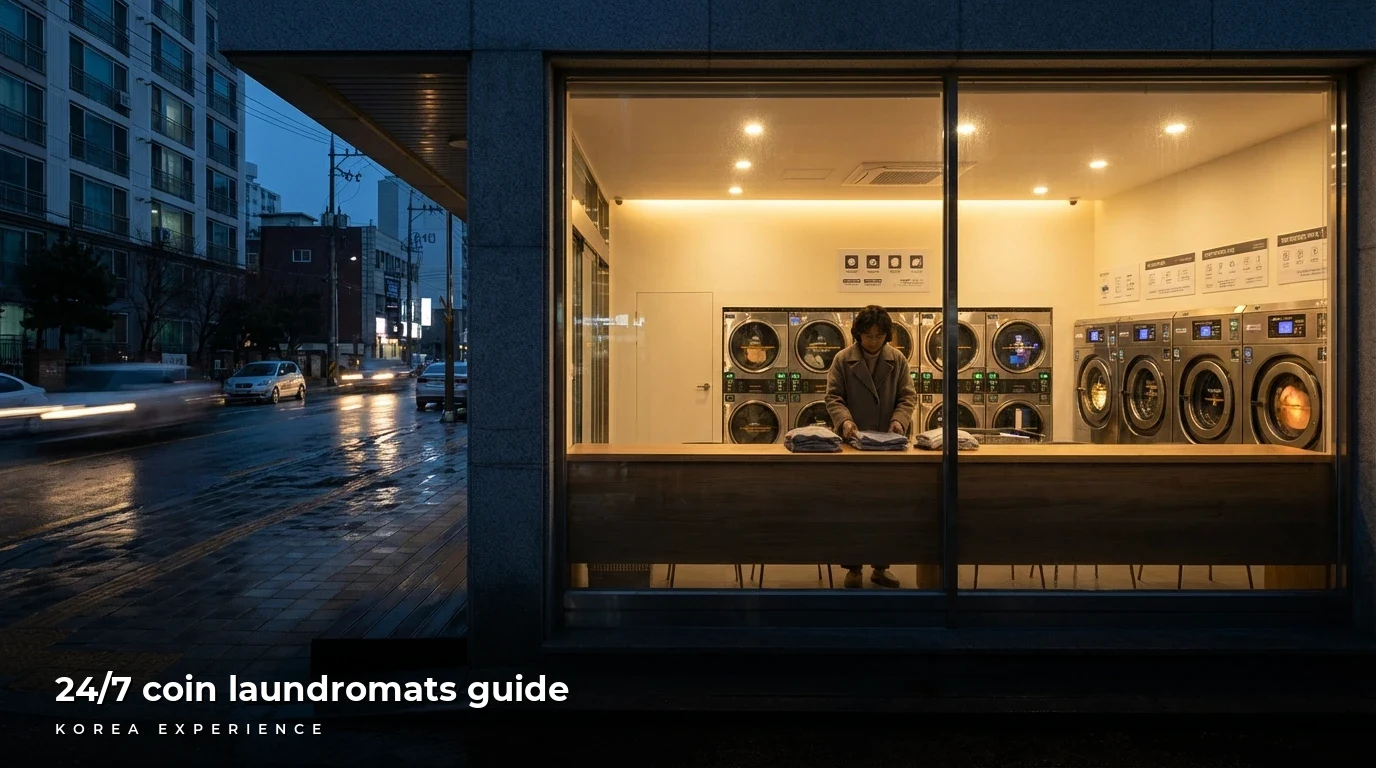
Wash and dry a full load for 10,000 KRW in under 75 minutes. A 2026 guide to using Korean coin laundromats, shoe washers, and cashless kiosks.

So, you are in Seoul, your head is pounding from that 14-hour flight, or maybe you went a little too hard on the spicy tteokbokki—don't worry, I have got you.
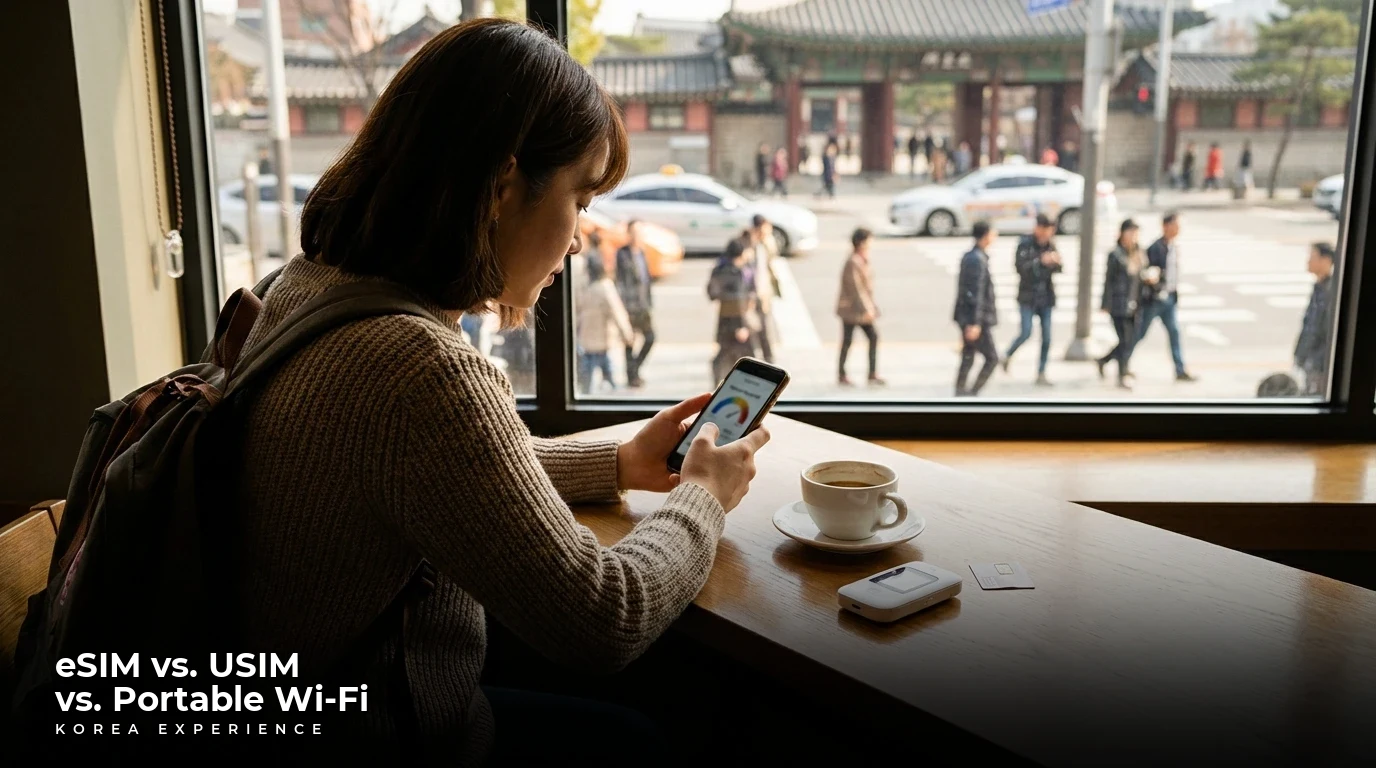
Compare eSIM, USIM, and Pocket Wi-Fi for 2026 travel. Learn why 90% choose eSIMs for $3/day and how to handle the new facial recognition laws.

Avoid the ₩50,000 ancestor ceremony scam. Learn to spot cult recruiters in Hongdae and Sinchon with our 2026 safety guide for expats and students.
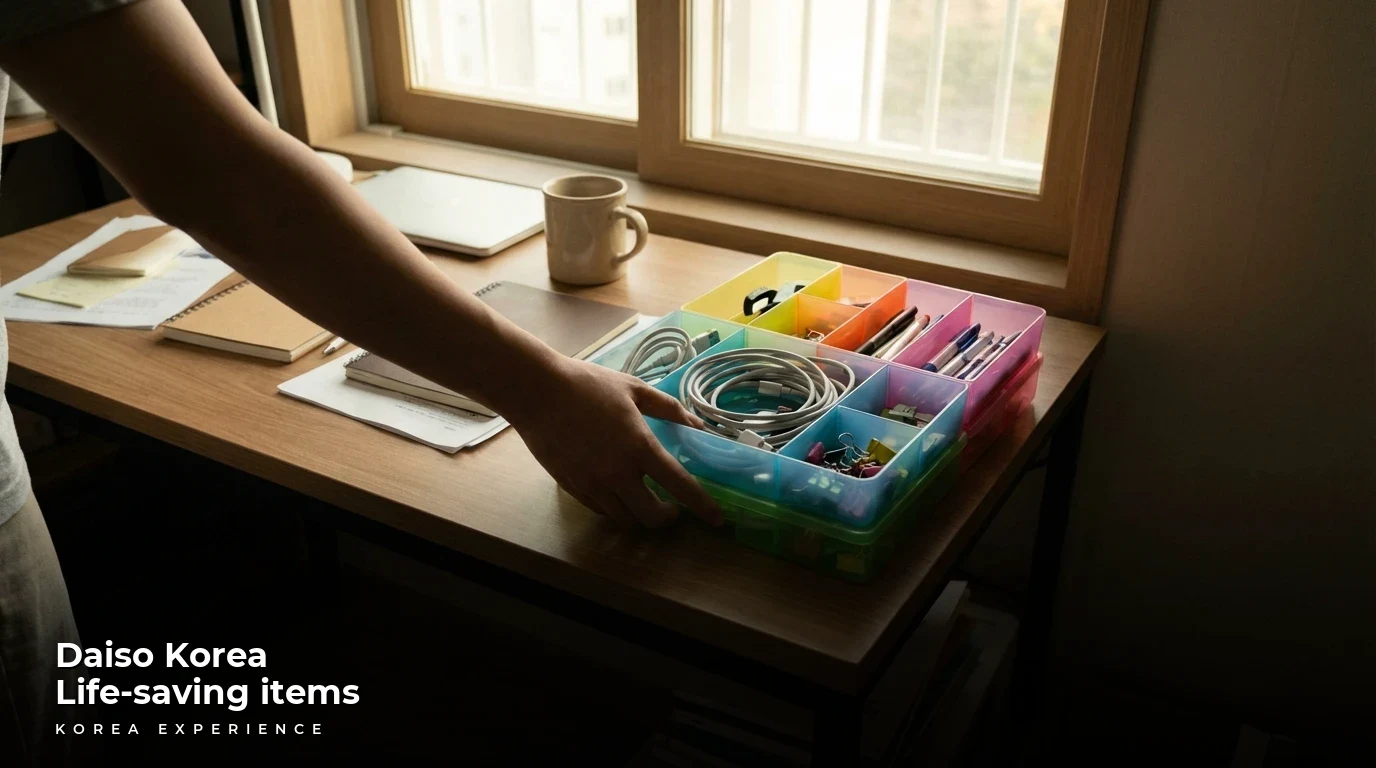
Discover the best 2026 Daiso Korea finds under 5,000 KRW. From viral VT Reedle Shots to travel adapters, here is your ultimate shopping guide.
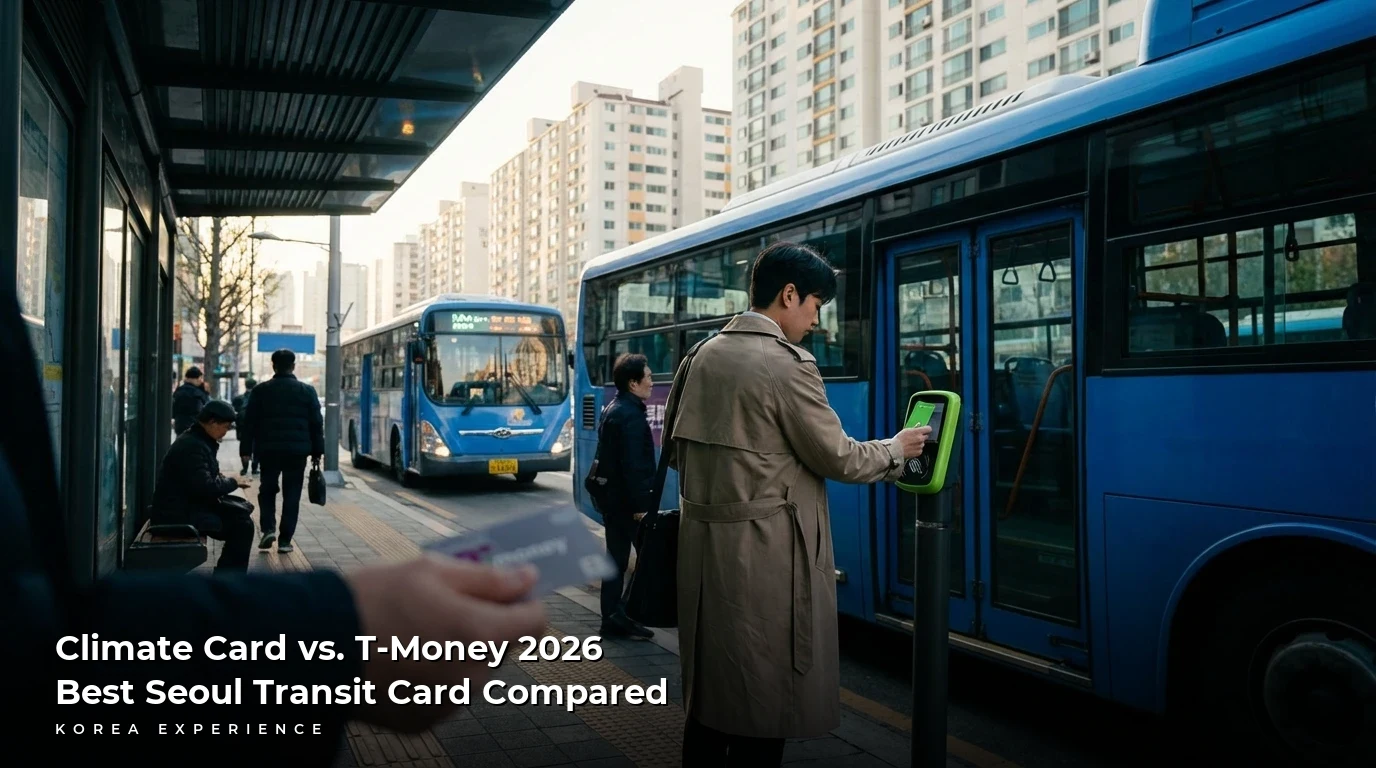
If you're planning to hit more than three spots a day in Seoul, the Climate Card is your absolute best friend.