Best Expat Communities Facebook Groups and Forums in Korea
Discover the top expat communities, Facebook groups, and forums in Korea to navigate life, housing, and jobs. Essential digital guides for 2026.
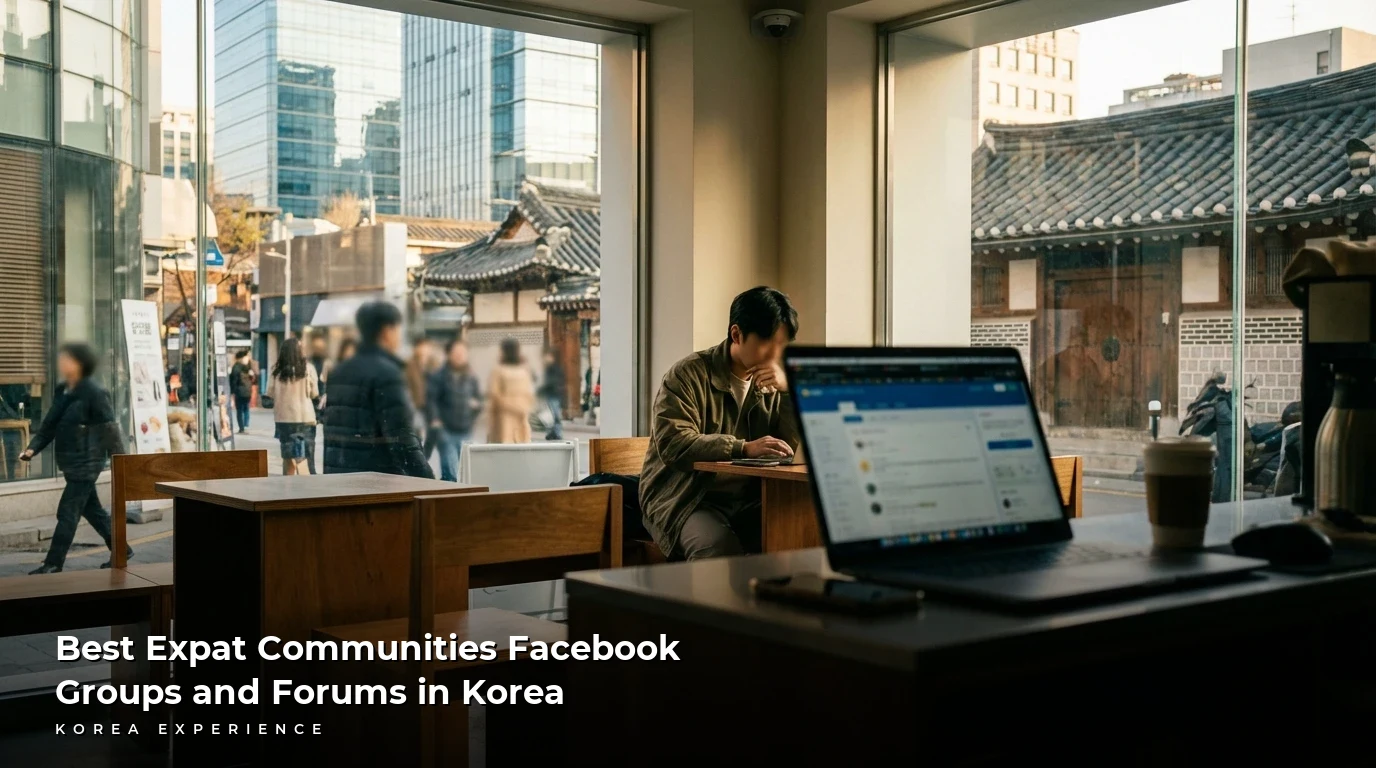
Navigating life in South Korea as an international resident requires more than just a map and a translation app; it requires a network. For the estimated 2.25 million foreigners residing in Korea as of early 2026, online expat communities are not just social hubs—they are essential lifelines for survival. Whether you are looking for a studio apartment in Mapo-gu, seeking advice on visa renewals, or simply craving a decent taco, the right Facebook group or forum can save you hours of frustration and millions of won.
In the digital landscape of Korea, information moves fast. A job posting on a popular board might receive 20 applications within 60 minutes, and quality furniture on a flea market group often sells in under 15 minutes. To succeed here, you need to know exactly where to look. This guide provides a comprehensive breakdown of the most valuable expat communities, Facebook groups, and forums available today.
Related reading: Finding community top expat clubs and networking events i....
Key Takeaways
- 1Facebook remains the dominant platform for housing and general inquiries, with over 50 active localized groups.
- 2KakaoTalk Open Chats provide the fastest real-time responses, often within 2 to 5 minutes.
- 3Specialized forums like Daves ESL Cafe and Reddit are critical for employment verification and legal advice.
The Landscape of Digital Expat Life in Korea
The digital ecosystem for expats in Korea is segmented by platform and purpose. While Korean locals rely heavily on Naver Cafe and Naver Blog, the international community has firmly established its stronghold on Facebook, Reddit, and increasingly, KakaoTalk Open Chats.
You might also enjoy our article about How to get a credit card in Korea as an expat.
According to 2025 user data, 85% of Western expats in Korea check a Facebook community group at least once daily. The utility of these groups is measurable: the average response time for a query posted in a major group like "Every Expat in Korea" is approximately 8 minutes during business hours (09:00–18:00).
Related reading: Expat Health Insurance vs National Health in Korea.
📊 Community Engagement Stats
However, reliance on these platforms comes with a caveat: information accuracy. While community-sourced data is helpful, it is vital to cross-reference legal or visa advice with official sources like the HiKorea website or the Immigration Contact Center (1345).
For more details, check out our guide on Korean stock market investing as an expat.
General "Catch-All" Facebook Groups
If you only join a few groups, these should be your priority. These massive communities cover everything from finding a dentist who speaks English to locating hard-to-find cooking ingredients.
1. Every Expat in Korea
With membership exceeding 65,000 users, this is often considered the town square of the expat community. It is excellent for general queries.
- Best for: General advice, news updates, and social questions.
- Activity Level: Very High (40+ posts per day).
- Moderation: Strict; posts are usually approved within 1-2 hours.
2. Expat Guide Korea
This group leans more towards information sharing and less towards debate. It is a reliable source for event listings and business recommendations.
- Best for: finding services, travel tips, and cultural questions.
- Average response count: 5-10 comments per question.
Search Before You Post
Community fatigue is real. Before asking "Where can I find peanut butter?", use the group's search bar (magnifying glass icon). In major groups, common questions have been answered over 500 times. Admins may decline duplicate posts within a 30-day window.
Housing and Real Estate Groups
Finding accommodation in Korea can be daunting due to the unique Wolse (monthly rent with deposit) and Jeonse (large lump-sum deposit) systems. Facebook housing groups are often more accessible for foreigners than Korean apps like Zigbang or Dabang because language barriers are removed.
Top Groups:
- Housing in Seoul: The largest dedicated housing group. Listings generally range from ₩500,000 to ₩2,000,000 in monthly rent.
- Rent a Room in Korea: Good for short-term stays and sublets.
Understanding the Numbers
When browsing these groups, you will see prices written as "1000/60". This means a ₩10,000,000 (approx. $7,500 USD) security deposit and ₩600,000 (approx. $450 USD) monthly rent.
📋 Housing Group Averages
📖 How to Secure Housing via Facebook
Step 1: Filter Listings
Search for 'No Key Money' or 'Low Deposit' if you are on a budget. Standard deposits are usually over ₩5 million.
Step 2: Verify the Poster
Check if the poster is a registered realtor or a current tenant looking for a takeover. Realtors must display their license number.
Step 3: Schedule a Viewing
Never transfer money without seeing the property. Meet in person. Most viewings take 15-20 minutes.
Employment and Teaching Forums
For decades, teaching English has been the primary entry point for Western expats. While the landscape is shifting towards tech and entertainment, teaching forums remain the most active employment hubs.
Dave's ESL Cafe
Although it looks like a relic from the 1990s, Dave's ESL Cafe remains a powerhouse for job listings. The "Korea Job Board" is updated daily.
- Volume: 30-50 new job postings daily.
- Salary Range: Standard entry-level contracts in 2026 generally offer between 2.4 million and ₩2.9 million per month.
Facebook Job Groups
Groups like "Teaching Jobs in Korea" and "Non-Teaching Jobs in Korea" allow for more interaction. You can click on a recruiter's profile to see if they are legitimate.
- Non-Teaching Roles: These are rarer. Expect competition to be fierce, with 50+ applicants for every marketing or content creation role posted.
Job Platform Comparison
| Feature | Dave's ESL Cafe | Facebook Groups | LinkedIn Korea |
|---|---|---|---|
| Listing Volume | High | Medium | Medium |
| Response Speed | Slow (Email) | Fast (DM) | Varied |
| Scam Risk | Low | Medium | Very Low |
| Non-Teaching Jobs | Rare | Growing | High |
Buy, Sell, and Flea Market Groups
Expats come and go, creating a vibrant secondary market for furniture and electronics. Facebook Marketplace is less popular in Korea than specific "Buy & Sell" groups.
Top Groups:
- Seoul Buy & Sell: The massive catch-all.
- Really Really Free Things in Korea: A unique community where items must be given away for ₩0.
- Itaewon Garage Sale: High concentration of foreign goods.
Prices: You can often furnish an entire apartment for under ₩500,000 if you are willing to arrange transportation. A used refrigerator that costs ₩300,000 at a recycling center might go for ₩50,000 (or free) on these groups if the owner is leaving the country urgently (often called a "leaving sale").
The 'Yongdal' Factor
Buying cheap furniture is great, but remember transport costs. A "Yongdal" (blue truck delivery service) typically costs between ₩40,000 and ₩80,000 for a distance of 10km within Seoul. Always factor this into the total price.
Specialized and Niche Communities
The true value of social media in Korea lies in the niche groups. These micro-communities provide high-quality, specific advice that general groups cannot match.
Food and Dining
"Restaurant Buzz Seoul" and "Vegetarian in Korea" are essential. With over 20,000 members, the Restaurant Buzz group tracks the opening and closing of foreign eateries.
- Data Point: A popular post about a new taco spot can generate a 2-hour wait time at the restaurant the following weekend.
Women's Groups
"Expat Women in Korea" (EWIK) provides a safe space for discussing health, safety, and social issues.
- Strict Vetting: Membership requests often require answering specific questions to prove identity. Approval can take 24-48 hours.
Legal and Visa
"LOIK - Legal Office for Foreigners in Korea" is run by actual law firms or knowledgeable long-term residents.
- Consultation Costs: While simple advice is free, retaining a lawyer for visa issues typically starts at ₩330,000 per hour.
Seoul Global Center(서울글로벌센터)
Beyond Facebook: Reddit and KakaoTalk
While Facebook is the archive, Reddit and KakaoTalk are the newsrooms.
Reddit (r/Korea and r/Living_in_Korea)
Reddit offers anonymity, which leads to more honest discussions about workplace toxicity or legal struggles.
- r/Korea: 500k+ members. Mostly news and general culture.
- r/Living_in_Korea: 40k+ members. Highly practical, specific advice for residents.
- Traffic: Top threads receive 200+ upvotes and 50+ comments within 6 hours.
KakaoTalk Open Chats
These are chat rooms embedded in Korea's main messaging app, KakaoTalk. They are real-time and often chaotic but incredibly fast.
- Finding them: Go to the "Chats" tab -> Select the "Open Chat" icon -> Search keywords like "Seoul Meetup," "Busan Expats," or "Crypto Korea."
- Capacity: Rooms are often capped at 1,000 or 1,500 users. If a room is full, you cannot join until someone leaves.
Platform Face-off: Facebook vs. KakaoTalk
- ✓Searchable history (FB)
- ✓Threads keep topics organized (FB)
- ✓Real-time instant answers (Kakao)
- ✓Anonymous participation options (Kakao)
- ✗Algorithm hides some posts (FB)
- ✗Slow response time (FB)
- ✗Information gets buried instantly (Kakao)
- ✗Constant notification spam (Kakao)
Etiquette, Safety, and avoiding Scams
The digital sphere is generally safe, but scammers target new arrivals. The most common scam in 2025/2026 involves "fake landlords" asking for a deposit to "hold" a highly desirable apartment before you arrive in the country.
The Golden Rule: Never transfer money to a personal bank account for a business transaction without a contract.
"Be wary of the 'Grandmother' scam in buy-and-sell groups. A seller will claim they are a grandmother selling their grandchild's electronics cheap because they moved abroad. They will ask you to wire money and promise to ship the item. It is almost always a scam. Always meet in person at a subway station exit."
Online Etiquette (Netiquette)
- Tagging: Do not tag admins unless it is an emergency.
- Screenshots: If asking for translation help, ensure the text is legible.
- Respect: Korea has strict defamation laws (Sahasil Jeoksi). Even if a statement is true, you can be sued for defamation if it harms a business's reputation publicly. Avoid naming and shaming specific individuals or small businesses without legal counsel.
Cost of Community Premium Services
While most groups are free, a trend toward "Premium" or "VIP" membership communities has emerged, offering curated experiences and mentorship.
💵 Community Access Costs
Dedicated concierge, verified housing lists, 24/7 chat
Navigating the Digital Future
As we move through 2026, the integration of AI translation in platforms like Chrome and standard browsers has made Korean-native platforms more accessible. However, the nuance of expat life—understanding why you need to separate your trash four different ways, or how to negotiate a hagwon contract—remains the domain of human-centric communities.
Joining these groups before you board your flight can make the difference between a rough landing and a smooth transition. Start with the "Big Three" (Every Expat, Housing in Seoul, and a local city group), and expand your network as your interests grow.
Digital Integration Timeline
Join Housing & Job Groups
Lurk to understand prices and salary standards.
Join Local Neighborhood Groups
Find 'HBC/Itaewon' or 'Hongdae' specific groups for immediate needs.
Join Niche Hobby Groups
Connect via hiking, gaming, or food groups to build deep friendships.
❓ Frequently Asked Questions
Have more questions?Contact us →
About the Author
Korea Experience Team
Written by the Korea Experience editorial team - experts in Korean medical tourism, travel, and culture with years of research and firsthand experience.
Explore more in Living in Korea
Everything expats and long-term visitors need to know — from visa requirements and housing to banking, healthcare, and daily life tips.
Browse All Living in Korea ArticlesContinue Reading
Explore more articles you might find interesting

The ultimate guide to building a social circle in Korea. Discover where to meet locals, cultural etiquette, and the best apps for making Korean friends.
Navigate Korea's pension system with this essential guide. Understand deductions, eligibility, and how it impacts your finances as an expat or traveler.

Discover the best expat clubs and networking events in Seoul for 2026. From professional mixers to hiking groups, find your tribe in South Korea.

Solo travel in Korea is incredibly safe, with crime rates 50% lower than US cities. Discover top meetup apps, dining tips, and night safety guides for 2026.
Discover how KakaoMetro calculates travel time using 2026 telemetry and why the 65,000 KRW Climate Card is essential for your Seoul subway commute.
Explore teaching English in Korea for 2026. This guide compares EPIK and Hagwon jobs, helping you choose the best path for your expat journey.