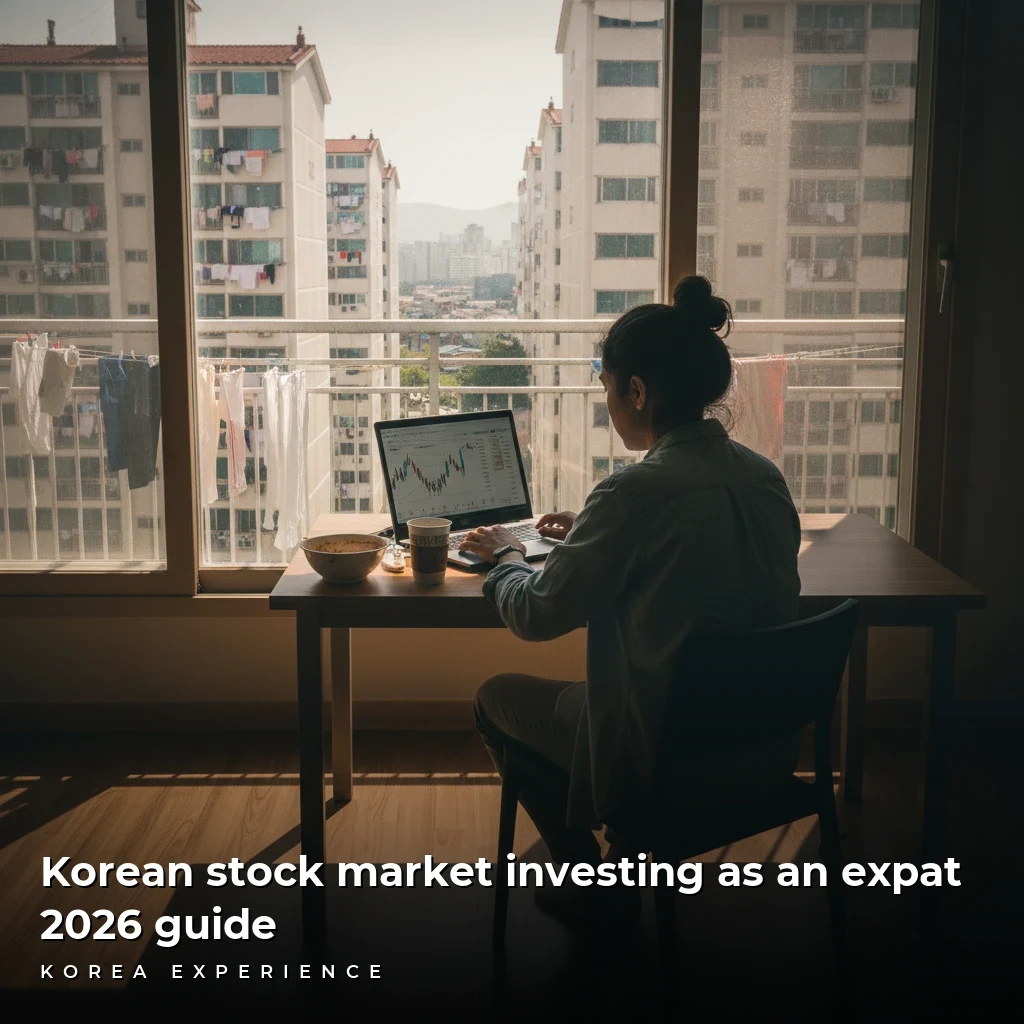
Korean Stock Market Investing as an Expat Guide
Unlock the potential of the Korean stock market. This guide helps expats navigate regulations, open brokerage accounts, and invest successfully in Korea.
Unlocking Opportunities: Korean Stock Market Investing as an Expat
Living as an expat in South Korea presents a wealth of opportunities, not just for cultural immersion and professional growth, but also for financial expansion. While many expats focus on their daily lives, exploring the local investment landscape can be a shrewd move towards long-term financial security and growth. The Korean stock market, home to global giants and innovative startups, offers a dynamic environment that can be both rewarding and challenging to navigate for a foreigner.
This comprehensive guide is designed specifically for international travelers and expats residing in Korea who are considering Korean stock market investing as an expat. We understand the unique hurdles you might face – from understanding local regulations and opening accounts to overcoming language barriers and deciphering tax implications. By the end of this post, you will have a clear roadmap to confidently explore investment opportunities in one of Asia's most exciting economies. We'll break down the market's structure, detail the steps for opening a brokerage account, discuss investment strategies, and highlight crucial tax and regulatory considerations.
Understanding the Korean Stock Market Landscape
South Korea boasts one of the most technologically advanced and globally integrated economies, reflected in its vibrant stock market. For an expat considering Korean stock market investing, a basic understanding of its structure is essential.
Key Exchanges: KOSPI and KOSDAQ
The Korean stock market is primarily composed of two main exchanges:
- KOSPI (Korea Composite Stock Price Index): This is the main board, similar to the Dow Jones or S&P 500 in the US. It lists the largest and most established companies in South Korea. Think global powerhouses like Samsung Electronics, Hyundai Motor Company, and LG Chem. KOSPI is generally seen as more stable, representing mature industries.
- Major Sectors: Technology (semiconductors, displays), Automotive, Chemicals, Financials, Steel, Shipbuilding.
- Key Characteristics: High market capitalization, often more stable growth, dividend-paying stocks.
- KOSDAQ (Korea Securities Dealers Automated Quotations): Modeled after the NASDAQ, KOSDAQ is Korea's growth stock market, focusing on small and medium-sized enterprises (SMEs) with high growth potential, particularly in technology, biotech, and IT. Companies listed here are often more volatile but can offer higher returns.
- Major Sectors: IT, Biotechnology, Entertainment (K-Pop, gaming), Software, Media.
- Key Characteristics: Lower market capitalization, higher growth potential, often more volatile, less dividend payout.
Market Hours and Holidays
The Korean stock market operates on weekdays, Monday through Friday.
- Trading Hours: 9:00 AM to 3:30 PM Korea Standard Time (KST).
- Pre-Market Session: 8:30 AM to 9:00 AM (order submission, no execution).
- After-Hours Session: 3:40 PM to 4:00 PM (closing price orders).
- Holidays: The market closes on public holidays, which follow the Korean calendar and include major observances like Lunar New Year and Chuseok (Korean Thanksgiving). It is advisable to check the Korea Exchange (KRX) website for the official holiday schedule each year.
Challenges for Expat Investors
While the Korean market offers compelling opportunities, expats often face specific challenges:
- Language Barrier: Much of the detailed financial news, company reports, and platform interfaces are primarily in Korean.
- Information Asymmetry: Access to timely, comprehensive English research reports can be limited compared to domestic investors.
- Regulatory Nuances: Understanding local investment and tax laws requires careful attention.
- Cultural Context: Grasping the unique aspects of Korean corporate governance and market sentiment can be crucial.
Eligibility and Requirements for Expat Investors
Before you can dive into Korean stock market investing, you need to ensure you meet the fundamental eligibility criteria as an expat in Korea. The primary document you’ll need is your Alien Registration Card (ARC).
The Essential Alien Registration Card (ARC)
The ARC (외국인등록증, oegugin deungnokjeung) is your most critical identification document as a long-term foreign resident in Korea. It serves as your primary ID for almost all official and financial activities, including opening bank accounts and, crucially, brokerage accounts.
- Requirement: You must possess a valid ARC to open a local bank account and a brokerage account. Short-term visitors or tourists generally cannot open investment accounts.
- Issuance: The ARC is issued by the Korea Immigration Service after you have registered your residency in Korea, typically within 90 days of arrival on a long-term visa.
Setting Up a Local Bank Account
A local Korean bank account is indispensable. It will be linked to your brokerage account for deposits, withdrawals, and dividend payouts.
- Recommended Banks: Major commercial banks in Korea are generally expat-friendly and offer some English services. These include:
- KB Kookmin Bank
- Shinhan Bank
- Woori Bank
- Hana Bank
- Industrial Bank of Korea (IBK)
- Required Documents for Bank Account:
- Passport
- Alien Registration Card (ARC)
- Your current address in Korea
- Contact phone number
- Tips: When opening your bank account, inquire about linking it to a securities company (증권사, jeunggwon-sa) or whether the bank offers its own brokerage services. Some banks have affiliated brokerage firms, simplifying the process.
Tax Identification Number (TIN)
While not strictly required at the very first step of opening a brokerage account, you will need a Tax Identification Number (TIN) or a foreigner's tax registration number for tax reporting purposes, especially concerning capital gains and dividends.
- Acquisition: If you are employed, your employer will likely handle your tax registration. If you are self-employed or need to register independently, you can visit a local tax office (세무서, semuseo) with your ARC and passport.
Opening a Brokerage Account in Korea
This is arguably the most critical step for Korean stock market investing as an expat. While it might seem daunting, many local brokerage firms are becoming increasingly accommodating to foreign residents.
Choosing a Brokerage Firm
Your choice of brokerage firm will significantly impact your investing experience. Consider the following factors:
- English Support: This is paramount. Does the firm offer an English website, trading platform (HTS/MTS), and dedicated English customer service?
- Fees and Commissions: Compare transaction fees, withdrawal fees, and any other associated costs. Fees in Korea are generally competitive.
- Platform Features: Look for user-friendly Home Trading Systems (HTS for desktop) and Mobile Trading Systems (MTS for smartphones) with robust charting tools, real-time data, and research capabilities.
- Product Offerings: Ensure the broker offers access to KOSPI and KOSDAQ stocks, ETFs, and any other instruments you plan to invest in.
- Reputation and Stability: Choose a well-established and reputable firm.
Recommended Korean Brokerage Firms (with potential for English services):
- Samsung Securities: One of the largest firms, often has good English support for international clients.
- Mirae Asset Securities: Another major player, known for its global reach and varied product offerings.
- Kiwoom Securities: Very popular among Korean retail investors due to its low fees, but English support might be more limited.
- NH Investment & Securities: Part of a large financial group, offers comprehensive services.
Step-by-Step Account Opening Process
The process can generally be done either in-person at a branch or, for some, partially online.
- Visit a Branch (Recommended for Expats): For your first brokerage account, visiting a physical branch of your chosen securities firm is often the easiest way to ensure all documents are processed correctly and to clarify any doubts. Bring your ARC, passport, and details of your linked Korean bank account.
- Fill Out Application Forms: You will complete forms for opening a general securities account and potentially a fund transfer account (for linking to your bank).
- Provide Documentation:
- Original Passport
- Original Alien Registration Card (ARC)
- Details of your linked Korean bank account (account number and bank name)
- Your Korean address and contact number
- Identity Verification: The broker will verify your identity using your documents.
- Sign Agreements: You will sign various agreements, including terms of service, risk disclosures, and personal information consent forms.
- Set Up Online/Mobile Trading Access: The branch staff can help you set up your Public Certificate (공인인증서, gongin-injeungseo), which is essential for secure online transactions in Korea, and guide you on downloading and using their HTS/MTS platforms.
- Fund Your Account: Once the account is open, you can transfer funds from your linked Korean bank account to your brokerage account.
Table: Local Korean Brokers vs. International Brokers (for Korean Stocks)
| Feature | Local Korean Brokerage Firms (e.g., Samsung, Mirae Asset) | International Brokers (e.g., Interactive Brokers) |
|---|---|---|
| Account Setup | Requires ARC, local bank account. Often in-person. | Often easier online setup for general investing. Direct KRX access varies. |
| Direct KRX Access | Yes, direct access to KOSPI and KOSDAQ. | Limited direct access to KRX; often uses ETFs or ADRs. |
| Fees/Commissions | Generally competitive for local trading. | Can be higher for accessing foreign markets or currency conversion. |
| English Support | Improving, but can be inconsistent; major firms offer dedicated support. | Usually excellent, global customer service. |
| Research/Info | Localized, sometimes in English. Good for specific Korean companies. | Broader global research; less depth on specific Korean SMEs. |
| Funding | Easy transfer from local KRW bank account. | Requires international wire transfers, currency conversion fees. |
| Tax Implications | Directly handled under Korean tax laws for residents. | More complex; dual taxation treaties, self-reporting might be needed. |
| HTS/MTS | Designed for Korean market, powerful but can have language barriers. | Global platforms, intuitive for English speakers, but may lack KRX specific features. |
Note: While international brokers might offer ETFs that track the Korean market or ADRs (American Depository Receipts) of major Korean companies, direct investment into KOSPI/KOSDAQ listed stocks typically requires an account with a Korean brokerage firm for expats residing in Korea.
Investment Options and Strategies for Expats
With your brokerage account set up, it's time to explore the various avenues for Korean stock market investing. Your strategy should align with your financial goals, risk tolerance, and investment horizon.
Direct Stock Purchase
Investing directly in individual companies allows for high potential returns but also carries higher risk.
- Blue-Chip Stocks: Consider investing in well-known, financially stable companies listed on KOSPI.
- Examples: Samsung Electronics (technology, semiconductors), Hyundai Motor Company (automotive), Kia Corporation (automotive), LG Chem (chemicals, batteries), SK Hynix (semiconductors), Naver (internet, search engine), Kakao (messaging, fintech, entertainment). These companies often have strong fundamentals and are less volatile than smaller firms.
- Growth Stocks: For those with a higher risk appetite, exploring companies on KOSDAQ or smaller KOSPI firms with strong growth narratives can be rewarding. This requires more research and monitoring.
- Examples: Biotechnology firms, gaming companies, content creators, innovative IT startups.
- Dividends: Many established Korean companies pay dividends. Research their dividend history and yield if passive income is part of your strategy.
Exchange Traded Funds (ETFs)
ETFs are an excellent option for diversification, especially for those new to Korean stock market investing. They are funds that hold a basket of stocks and trade like individual stocks on the exchange.
- Broad Market ETFs:
- KOSPI 200 ETFs: These track the performance of the top 200 companies on the KOSPI exchange, offering broad market exposure. Examples include KODEX 200, TIGER 200.
- KOSDAQ 150 ETFs: Tracks the top 150 companies on the KOSDAQ, providing exposure to growth-oriented sectors.
- Sector-Specific ETFs: You can find ETFs focusing on specific industries like semiconductors, batteries, entertainment, or even ESG (Environmental, Social, Governance) themed investments.
- Benefits: Diversification, lower risk compared to individual stocks, often lower management fees than actively managed mutual funds, and ease of trading.
Mutual Funds
For those who prefer a professionally managed approach, Korean mutual funds are an option. These are managed by asset management companies and pool money from multiple investors to invest in a diversified portfolio of stocks, bonds, or other assets.
- Availability: Offered by most major banks and brokerage firms.
- Types: Equity funds, bond funds, balanced funds, sector-specific funds.
- Considerations: Higher management fees compared to ETFs, less liquidity (you buy/sell at the end-of-day Net Asset Value, not real-time).
Table: Direct Stock Investing vs. ETFs
| Feature | Direct Stock Investing | Exchange Traded Funds (ETFs) |
|---|---|---|
| Control | High; you choose specific companies. | Low; you invest in a pre-selected basket of stocks. |
| Diversification | Low; requires buying many individual stocks to achieve. | High; inherently diversified across multiple companies/sectors. |
| Risk Level | Higher; company-specific risk can lead to significant losses. | Lower; diversified nature reduces company-specific risk. |
| Research Required | High; detailed analysis of individual companies. | Lower; focus on the ETF's underlying index or sector. |
| Cost (Fees) | Transaction fees per trade. | Transaction fees per trade + small annual management fee (Expense Ratio). |
| Potential Return | High; potential for outperforming the market with successful picks. | Generally tracks market performance; less potential for outsized returns from individual stock picks. |
| Suitability | Experienced investors, those with time for research, higher risk tolerance. | Beginners, those seeking broad market exposure, lower risk tolerance. |
Developing Your Investment Strategy
- Define Your Goals: What are you saving for? Retirement, a down payment, children's education? Your goals will dictate your time horizon and risk tolerance.
- Risk Tolerance Assessment: How much volatility can you comfortably endure? Are you comfortable with the potential for short-term losses for long-term gains?
- Diversification: Do not put all your eggs in one basket. Spread your investments across different sectors, company sizes, and asset classes (e.g., a mix of KOSPI blue-chips and KOSDAQ growth, or a blend of stocks and ETFs).
- Dollar-Cost Averaging: Consider investing a fixed amount regularly (e.g., monthly). This strategy helps mitigate market timing risk by averaging out your purchase price over time.
- Long-Term Perspective: The stock market rewards patience. Avoid emotional decisions based on short-term fluctuations.
Navigating Taxes and Regulations
Understanding the tax implications is crucial for Korean stock market investing as an expat. South Korea has specific rules, and your tax residency status plays a significant role.
Tax Residency Status
For tax purposes, an expat is generally considered a Korean "resident" if they have their domicile in Korea or reside in Korea for 183 days or more during a tax year. Most expats living and working in Korea on long-term visas will be considered residents.
- Resident Taxpayers: Generally taxed on their worldwide income.
- Non-Resident Taxpayers: Generally taxed only on income sourced in Korea.
This guide primarily focuses on expats who are Korean tax residents. If you are a non-resident, consult a tax professional for specific advice.
Key Taxes on Investments
- Capital Gains Tax (양도소득세, yangdo sodeukse)
- For Residents: Capital gains from the sale of Korean stocks (KOSPI/KOSDAQ) are generally exempt for individual retail investors, with a few significant exceptions.
- Major Shareholder Rule: If you own a certain percentage (e.g., 1% of KOSPI listed company or 2% of KOSDAQ listed company as of certain dates) or a certain value (e.g., 1 billion KRW) of a company's shares, you are considered a "major shareholder" and capital gains are taxable. The rates vary but can be 20% or 25% plus local income tax.
- Frequent Trading: There are rules about frequent trading or high volume that could classify an individual as a "professional trader," triggering capital gains tax.
- Overseas Stocks/Funds: Capital gains from foreign stocks or foreign-domiciled funds are generally taxable for residents.
- For Non-Residents: Capital gains on Korean stocks are generally taxable, but exceptions and tax treaty provisions may apply.
- ETFs: Capital gains from selling ETFs are generally subject to capital gains tax (20% + local income tax) as they are classified as funds for tax purposes.
- For Residents: Capital gains from the sale of Korean stocks (KOSPI/KOSDAQ) are generally exempt for individual retail investors, with a few significant exceptions.
- Dividend Income Tax (배당소득세, baedang sodeukse)
- Dividends received from Korean companies are subject to a 15.4% withholding tax (14% national tax + 1.4% local income tax) at the source.
- This income is usually aggregated with other financial income (interest and dividends) for "global financial income taxation" if the total exceeds 20 million KRW in a year. If it does, the excess amount is subject to progressive income tax rates.
- Transaction Tax (증권거래세, jeunggwon georaese)
- A small tax levied on the seller of stocks, regardless of whether there's a gain or loss.
- The rate is typically around 0.23% (for KOSPI and KOSDAQ, as of recent changes) and is subject to change by the government.
Foreign Exchange (FX) Considerations
When investing in the Korean stock market, your base currency is the Korean Won (KRW).
- Currency Risk: Fluctuations in the KRW/your home currency exchange rate can impact your effective returns when you convert your funds back. For example, if the KRW weakens against your home currency, your investment gains (in KRW) will be worth less when converted.
- Funding: You will need to convert your foreign currency to KRW to fund your brokerage account. Be mindful of exchange rates and transfer fees charged by your bank or remittance service.
Regulatory Bodies
- Financial Services Commission (FSC): The top financial regulator in South Korea, responsible for setting financial policies and supervising the financial markets.
- Financial Supervisory Service (FSS): The enforcement arm of the FSC, responsible for oversight of financial institutions, including brokerage firms, and protecting investors.
Important Tax Tips for Expats
- Keep Meticulous Records: Document all your trades, dividend receipts, and transaction costs.
- Consult a Tax Professional: Korean tax laws can be complex, especially concerning residency status, major shareholder rules, and interactions with your home country's tax system. It is highly recommended to consult a qualified tax accountant specializing in expat taxation in Korea. They can provide personalized advice and help you ensure compliance.
- Double Taxation Treaties: Korea has tax treaties with many countries to prevent double taxation. Understand if a treaty exists with your home country and how it might apply to your investment income.
Risks and Challenges for Expat Investors
While the allure of Korean stock market investing is strong, it's essential to be aware of the inherent risks and specific challenges faced by expats.
Market Volatility
- Geopolitical Risks: South Korea is geographically close to North Korea, and geopolitical tensions can significantly impact market sentiment and stock prices.
- Global Economic Factors: As an export-driven economy, Korea is highly sensitive to global economic trends, trade disputes, and supply chain disruptions.
- Sector Concentration: The KOSPI is heavily weighted towards a few large technology and manufacturing conglomerates. This concentration can lead to higher volatility if these key sectors face headwinds.
Currency Risk
As discussed, fluctuations in the KRW exchange rate can erode your returns, even if your investments perform well in local currency terms. This is particularly relevant when you plan to repatriate your funds.
Information Asymmetry and Language Barrier
- Limited English Resources: While major companies and financial news outlets provide some English content, in-depth research reports, local market sentiment, and news about smaller companies are predominantly in Korean. This can put expats at a disadvantage.
- Platform Usability: Although some brokers offer English trading platforms, they might not be as fully featured or intuitive as their Korean counterparts.
- Customer Support: While major brokers have English hotlines, the quality and depth of support can vary.
Regulatory and Policy Changes
The Korean government and financial regulators (FSC, FSS) can introduce new policies or change existing regulations that might impact foreign investors. Staying updated requires active monitoring.
Exit Strategy and Repatriation
Planning how you will eventually liquidate your investments and transfer funds out of Korea is important.
- Capital Controls: While Korea generally has open capital markets, regulations on large currency transfers can exist.
- Tax Implications on Exit: Understand the tax implications of liquidating your assets when you eventually leave Korea, especially if your tax residency status changes.
Cultural Understanding of Business Practices
Beyond financial metrics, understanding the nuances of Korean corporate culture, governance structures, and business environment can be beneficial for making informed investment decisions. This is often gained through experience and local interaction.
Practical Tips and Resources for Expat Investors
To enhance your experience in Korean stock market investing as an expat, consider these practical tips and leverage available resources.
1. Start Small and Learn
Don't jump in with a large sum. Begin with a modest investment that you are comfortable losing. This allows you to familiarize yourself with the platform, market dynamics, and your own emotional responses to volatility without significant financial risk.
2. Learn Basic Korean Financial Terminology
While you don't need to be fluent, knowing key financial terms in Korean can be incredibly helpful for navigating websites, understanding news headlines, and communicating with customer service when English support isn't available.
- Stock: 주식 (jushik)
- Investment: 투자 (tuja)
- Brokerage firm: 증권사 (jeunggwon-sa)
- Buy: 매수 (maesu)
- Sell: 매도 (maedo)
- Price: 가격 (gagyeok)
- Market: 시장 (sijang)
- Account: 계좌 (gyejwa)
3. Utilize English Customer Support and Online Resources
- Brokerage Hotlines: Major brokerage firms often have dedicated English hotlines or representatives. Don't hesitate to use them for questions about account management, platform issues, or basic trading queries.
- English Financial News: Follow international financial news outlets that cover the Korean market (e.g., Bloomberg, Reuters, Wall Street Journal). Also, look for English sections of Korean news sources (e.g., The Korea Herald, The Korea Times, Yonhap News Agency) for local insights.
- Company Investor Relations (IR): Large Korean companies often have English IR sections on their websites, providing annual reports, earnings call transcripts, and press releases.
4. Join Expat Communities and Forums
Online forums and social media groups for expats in Korea can be a valuable source of practical advice and shared experiences. You might find discussions on specific brokers, tax issues, or general investment strategies relevant to expats. Be cautious, however, and always verify information with official sources or professionals.
5. Seek Professional Financial and Tax Advice
This cannot be stressed enough. Given the complexities of cross-border taxation, currency exchange, and foreign market regulations, consulting with a professional is a wise investment.
- Financial Advisor: An independent financial advisor with experience in international investments can help you craft a suitable portfolio strategy.
- Tax Accountant: A tax accountant specializing in expat taxation in Korea can guide you through the intricacies of Korean tax law and ensure you are compliant with reporting requirements, potentially saving you from costly mistakes.
6. Keep an Eye on Macroeconomic Trends
Pay attention to:
- Interest Rates: Changes by the Bank of Korea can impact market liquidity and corporate borrowing costs.
- Inflation: Affects purchasing power and corporate earnings.
- Government Policies: New policies related to specific industries, trade, or foreign investment can create opportunities or risks.
- Global Events: Geopolitical developments, global trade relations, and major economic shifts worldwide directly influence South Korea's economy.
Frequently Asked Questions (FAQ) about Korean Stock Market Investing as an Expat
1. Can I invest in the Korean stock market without an Alien Registration Card (ARC)?
Generally, no. A valid Alien Registration Card (ARC) is a fundamental requirement for long-term foreign residents to open a local bank account and a brokerage account in South Korea. Short-term visitors or tourists are typically not eligible to open investment accounts.
2. What are the typical fees for a Korean brokerage account?
Fees usually include:
- Transaction Fees: A small percentage of each trade (e.g., 0.015% to 0.5% per trade), which varies by broker and platform (online vs. in-person). Online platforms usually have lower fees.
- Transaction Tax: A government-mandated tax levied on the seller, typically around 0.23% (subject to change).
- Exchange Fees: A very small fee charged by the Korea Exchange, usually negligible.
- Fund Transfer Fees: Your bank may charge a fee for transferring funds to and from your brokerage account, especially if it's an international transfer. It's essential to compare these fees across different brokers.
3. Is English support widely available for Korean brokerage accounts?
Major Korean brokerage firms like Samsung Securities, Mirae Asset Securities, and NH Investment & Securities are increasingly offering English customer support hotlines and, in some cases, English versions of their online trading platforms (HTS/MTS). However, the depth of English content and support can vary. It's always best to inquire directly with your chosen broker.
4. How do I transfer funds to my Korean brokerage account?
You will typically link your Korean bank account (which you opened using your ARC) to your brokerage account. Funds can then be easily transferred between these two accounts via online banking or the brokerage firm's trading platform. For initial funding from outside Korea, you would perform an international wire transfer to your Korean bank account first, then transfer KRW to your brokerage account. Be mindful of currency conversion rates and fees.
5. What are the major risks I should be aware of when investing in the Korean stock market?
Key risks include:
- Market Volatility: The Korean market can be influenced by global economic shifts and regional geopolitical tensions.
- Currency Risk: Fluctuations in the KRW's value against your home currency can impact your effective returns.
- Information Asymmetry: Limited English-language resources can make in-depth research challenging for expats.
- Regulatory Changes: New government policies or financial regulations could affect your investments.
- Liquidity Risk: Some smaller KOSDAQ stocks might have lower trading volumes, making them harder to buy or sell quickly without impacting their price.
Conclusion: Your Journey to Korean Stock Market Investing
Embarking on Korean stock market investing as an expat can be a rewarding journey, offering a unique opportunity to grow your wealth within one of the world's most dynamic economies. While the process may present its specific challenges, with careful planning, thorough research, and a clear understanding of the local landscape, these hurdles are surmountable.
Remember to start by establishing your financial foundation in Korea – securing your ARC, opening a local bank account, and then diligently choosing a brokerage firm that caters to your needs as an international investor. Explore the diverse investment options, from stable KOSPI blue-chips to high-growth KOSDAQ opportunities and diversified ETFs. Crucially, stay informed about tax regulations and don't hesitate to seek professional advice to navigate the complexities of cross-border taxation.
By taking a disciplined approach, leveraging available resources, and maintaining a long-term perspective, you can confidently participate in the Korean stock market and potentially build a robust financial future during your time as an expat in this fascinating country. Happy investing!
For more comprehensive guides on expat life in Korea, including banking, taxes, and daily living, explore our other articles in the Living in Korea category.
About the Author
Korea Experience Team
Written by the Korea Experience editorial team - experts in Korean medical tourism, travel, and culture with years of research and firsthand experience.
⚠️ Medical Disclaimer
The information provided on this website is for general informational purposes only and does not constitute medical advice. Always consult with qualified healthcare professionals before making any medical decisions.
Continue Reading
Explore more articles you might find interesting

Unlock the complexities of Korea's unique Jeonse housing system for foreigners in 2026 with our expert guide to secure your ideal home.
Secure your Korean home. This guide covers essential expat home insurance in Korea, ensuring your belongings and peace of mind are protected.
Unlock Korea's unique rental market. This guide details Jeonse and Wolse systems, offering expat tips and crucial financial insights.