Korea D-Visa Student Visa Your Guide to Study & Work
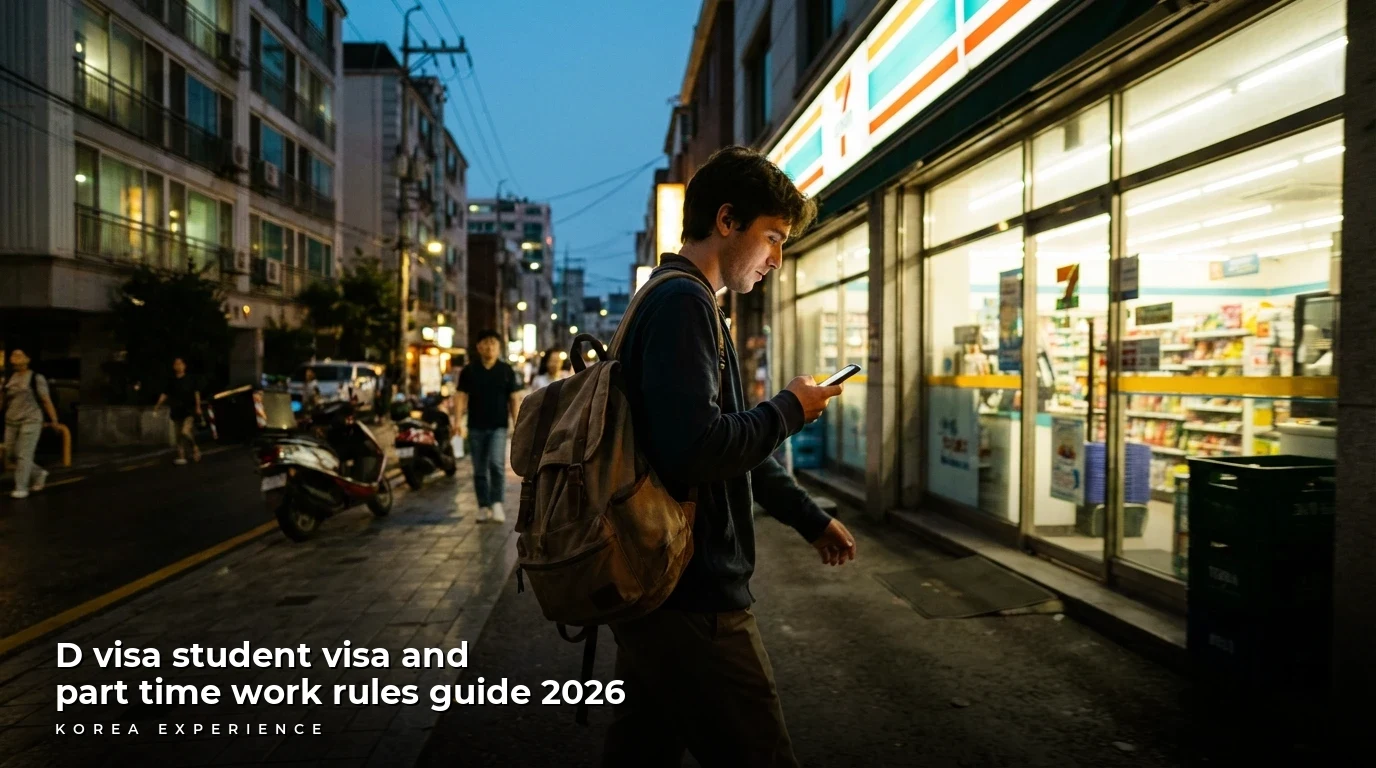
Navigating Korea's D-Visa student visa and part-time work rules can be complex. This guide simplifies the process, helping international students study and work legally in South Korea.
Unlocking Your Dreams: The D-Visa Student Visa and Part-Time Work Rules in Korea
The allure of South Korea – its vibrant culture, cutting-edge technology, and world-class education system – draws thousands of international students each year. From the bustling streets of Seoul to the serene temples tucked away in its mountains, Korea offers an unparalleled experience for those eager to immerse themselves in a new environment. However, the path to studying and working legally in this captivating nation involves understanding specific immigration regulations, particularly concerning the D-Visa Student Visa and Part-Time Work Rules.
For many aspiring international students, the dream isn't just about obtaining a degree; it's also about gaining real-world experience, supporting themselves financially, and fully embracing Korean life through part-time employment. The good news is that the D-Visa student visa allows for part-time work under specific conditions. Yet, misinformation and a lack of clear guidance can often lead to confusion or even visa violations.
This comprehensive guide is meticulously crafted by the Korea Experience Team to demystify the complexities surrounding the D-Visa student visa and part-time work rules for international students in South Korea. We will walk you through everything you need to know, from the different types of D-Visas and the application process to specific regulations for working part-time, job-hunting strategies, and crucial tips for maintaining your legal status. By the end of this post, you'll be equipped with the knowledge and confidence to pursue your academic and professional aspirations in the Land of the Morning Calm.
Understanding the D-2 and D-4 Visas for International Students
Before delving into part-time work, it's crucial to understand the foundation: your student visa. South Korea primarily offers two types of D-Visas for international students, each catering to different educational pursuits.
D-2 (Regular Study Visa)
The D-2 visa is the most common student visa category, designated for international students enrolled in regular degree programs at Korean universities, graduate schools, or research institutions. This includes:
- Undergraduate Programs (Bachelor's Degrees): For students pursuing their first university degree.
- Graduate Programs (Master's and Doctoral Degrees): For those undertaking postgraduate studies.
- Research Programs: For individuals engaging in specific research activities.
- Exchange Student Programs: For students participating in agreements between their home university and a Korean institution.
Holders of a D-2 visa are expected to maintain full-time enrollment in their respective academic programs. The duration of this visa typically aligns with the length of your chosen program, with possibilities for extension as needed.
D-4 (General Trainee Visa - Language Programs)
The D-4 visa, often referred to as the General Trainee visa, is primarily for individuals attending non-degree programs or short-term training courses. The most common use for international students is for Korean language training programs at university-affiliated language institutes.
- Korean Language Institutes: Students enrolled in intensive language courses, usually lasting from three months to two years.
- Vocational Training: Some specific vocational training programs may also fall under the D-4 category.
It's important to note that while D-4 visa holders are studying, their primary focus, in the eyes of immigration, is often language acquisition rather than a full academic degree. The regulations regarding part-time work for D-4 visa holders are generally stricter and come with a waiting period, which we will detail later.
Key Differences and Eligibility
Understanding the nuances between D-2 and D-4 is critical as it impacts your part-time work eligibility and the application process.
Table 1: D-2 vs. D-4 Visa Comparison
| Feature | D-2 (Regular Study Visa) | D-4 (General Trainee Visa - Language) |
|---|---|---|
| Purpose | Degree programs (Bachelor's, Master's, Ph.D.), Research, Exchange | Language training, Non-degree programs, Vocational training |
| Institution Type | Universities, Graduate Schools, Research Institutes | University-affiliated language institutes, Vocational schools |
| Duration | Up to the length of the academic program | Typically 3 months to 2 years, renewable for course duration |
| Part-Time Work | Generally permitted after 6 months | Permitted after 6 months, often with stricter hour limits |
| Required Documents | Higher financial proof, academic transcripts, acceptance letter | Financial proof, enrollment certificate, acceptance letter |
| Academic Focus | Full-time academic studies | Intensive language acquisition or specific vocational skill |
Eligibility for both visas generally includes an acceptance letter from a recognized Korean educational institution, proof of financial capability to cover tuition and living expenses, a clean criminal record, and a valid passport. Specific requirements can vary by nationality and the institution, so always check with your university and the Korean embassy or consulate in your home country.
Applying for Your D-Visa Student Visa
The D-Visa application process requires meticulous attention to detail and thorough preparation. Rushing or submitting incomplete documents can lead to delays or rejection.
The Application Process Overview
Generally, the process unfolds in these stages:
- Secure Admission: Apply and get accepted into a Korean university or language institute. The institution will send you an official Letter of Acceptance or Certificate of Admission.
- Gather Documents: Collect all necessary documents as required by the Korean embassy/consulate.
- Submit Application: Apply for the D-Visa at the Korean embassy or consulate in your home country (or country of legal residence).
- Interview (if required): Some applicants may be called for a visa interview.
- Visa Issuance: If approved, your visa will be stamped in your passport.
- Enter Korea: Travel to Korea with your D-Visa.
- Apply for Alien Registration Card (ARC): Within 90 days of arrival, you must apply for an Alien Registration Card (ARC) at a local Immigration Office. The ARC serves as your primary identification in Korea and is essential for opening bank accounts, getting a phone plan, and applying for part-time work.
Required Documents for D-2 and D-4
While specific requirements can vary, here is a general list of documents you will likely need:
- Visa Application Form: Completed and signed.
- Passport: Original and photocopy, valid for at least six months beyond your intended stay.
- Passport-sized Photos: Recent, color photos meeting specified dimensions.
- Certificate of Admission/Letter of Acceptance: Issued by your Korean educational institution.
- Certificate of Enrollment: (If already in Korea and changing visa status)
- Proof of Financial Capability: This is crucial. You'll need documents demonstrating sufficient funds to cover your tuition and living expenses for at least one year. This could be:
- Bank statement (showing a balance of at least USD 20,000 for D-2, or USD 10,000 for D-4, though this can vary).
- Sponsorship letter and the sponsor's bank statement, along with proof of relationship.
- Scholarship award letter.
- Highest Academic Transcript: Original and photocopy (e.g., high school diploma, university degree).
- Personal Statement/Study Plan: Outlining your motivations, academic goals, and future plans.
- Medical Examination Report: (Sometimes required, depending on nationality or specific programs).
- Birth Certificate: (Sometimes required for identity verification).
- Family Register Document: (For some nationalities, proving family ties).
- Police Clearance Certificate/Criminal Record Check: (Required for certain nationalities or visa types).
- Processing Fee: The cost varies by nationality and visa type.
It is highly recommended to check the official website of the Korean embassy or consulate in your country, as well as your university's international student office, for the most up-to-date and specific document requirements.
Visa Interview Tips
While not all D-Visa applicants will require an interview, be prepared for one. The interview typically aims to confirm your genuine intent to study and your financial stability.
- Be Honest and Confident: Answer all questions truthfully and clearly.
- Know Your Study Plan: Be able to articulate why you chose Korea, your specific program, and your academic goals.
- Demonstrate Financial Preparedness: Be ready to discuss how you will fund your studies and living expenses.
- Show Cultural Awareness: Express genuine interest in Korean culture and language.
- Bring All Documents: Have all your original and photocopied documents organized and ready.
Processing Times and Fees
Visa processing times can vary significantly, from a few days to several weeks, depending on the embassy's workload, your nationality, and the completeness of your application. It's advisable to apply well in advance of your intended departure date, typically at least 2-3 months beforehand. Visa application fees also differ by nationality and can range from USD 30 to USD 100 or more. Always confirm the exact fee with the issuing embassy or consulate.
Part-Time Work Regulations for D-Visa Holders
One of the most anticipated aspects for many international students is the opportunity to work part-time. While it is allowed, there are strict rules and a specific application process that must be followed. Failure to comply can lead to fines, deportation, or future entry bans.
General Eligibility for Part-Time Work
To be eligible for part-time work, D-Visa holders must meet these general conditions:
- Valid D-2 or D-4 Visa: You must hold a legitimate D-2 or D-4 student visa.
- Enrollment Status: You must be officially enrolled as a student at your university or language institute.
- Academic Standing: You should generally maintain good academic standing. Some universities may require a certain GPA or attendance rate for work permit recommendations.
- Waiting Period:
- D-2 Visa Holders: Generally, you can apply for a part-time work permit immediately after obtaining your Alien Registration Card (ARC), provided you are in good academic standing. However, many students prefer to wait until they've settled in, often 1-2 months after arrival.
- D-4 Visa Holders (Language Program): You must have been enrolled in your language program for at least six months (one full semester of a minimum 20 hours per week program) after entering Korea before you can apply for a part-time work permit.
Required Permits and Application Process
You cannot simply start working. You need official permission from the Immigration Office.
- Recommendation from University: First, you must obtain a "Recommendation for Part-time Work for International Students" (외국인 유학생 시간제 취업 추천서 - waegukin yuhaksaeng sigangje chwieop chucheonsu) from your university's international student office or your language institute. This letter certifies your enrollment, academic standing, and approval for part-time work.
- Gather Documents: Prepare the following for your application at the Immigration Office:
- Application form for permission to engage in activities outside the scope of current visa status (체류자격외 활동허가서 - cheryujagyeok-oe hwaldong heogaseo).
- Your Alien Registration Card (ARC).
- Passport.
- Recommendation letter from your university/institute.
- Certificate of enrollment (재학증명서 - jaehak jeungmyeongseo).
- Academic transcript (성적증명서 - seongjeok jeungmyeongseo).
- Contract with employer (근로계약서 - geunro gyeyakseo), detailing work hours, duties, and wages.
- Employer's business registration certificate (사업자등록증 - saeopja deungnokjeung).
- Proof of residence (e.g., rental contract).
- Submit to Immigration Office: Visit your local Immigration Office. It's highly recommended to make an online reservation in advance through the Hi-Korea website (www.hikorea.go.kr) to avoid long waits.
- Approval: If approved, your ARC will be updated, or you will receive a separate permit document. You must not start working until you receive this official permission.
Permissible Work Hours and Restrictions
The number of hours you can work per week is strictly regulated:
- D-2 Visa Holders (Undergraduate/Graduate):
- Undergraduate: Up to 20 hours per week during the semester. Unlimited hours during vacation periods (summer and winter breaks).
- Graduate (Master's/Doctoral): Up to 30 hours per week during the semester. Unlimited hours during vacation periods.
- Language Trainee for D-2: Up to 25 hours per week during the semester. Unlimited during vacation.
- D-4 Visa Holders (Language Program):
- Up to 20 hours per week during the semester. Unlimited hours during vacation periods.
- Remember, the 6-month waiting period applies before you can even apply for this permission.
Important Note: The semester calculation (when unlimited hours are allowed) is usually based on the university's official academic calendar. Working beyond these limits or without proper permission constitutes illegal employment and carries severe penalties.
Types of Jobs Allowed and Prohibited
Generally, part-time jobs for international students should not interfere with their studies or violate public morals.
Allowed Jobs often include:
- Teaching/Tutoring: Especially English or other foreign languages.
- Restaurant/Cafe Work: Server, barista, kitchen assistant.
- Retail: Sales assistant in shops, convenience stores.
- Office Assistant: Simple administrative tasks.
- Translation/Interpretation: For businesses or individuals.
- Factory Work: Simple production line tasks (often during vacations).
- Delivering: Food delivery or parcel services.
Prohibited Jobs typically include:
- Adult Entertainment Industry: Any job involving prostitution, adult shows, or similar activities (e.g., hostess bars, adult clubs).
- Gambling Establishments: Working in casinos (unless specifically approved and related to studies in hospitality, which is rare for students).
- Jobs violating public morals or safety.
- Jobs requiring specific professional licenses not held by the student.
Always confirm with your university's international office and the Immigration Office if you are unsure about a specific job type.
Wage Expectations and Labor Laws
The minimum wage in South Korea is updated annually. As of the time of writing, it is around 9,860 Korean Won (KRW) per hour (this figure is subject to change, always check the current year's minimum wage). Employers are legally obligated to pay at least the minimum wage.
- Contract: Always ensure you have a written contract (근로계약서) detailing your work hours, duties, wage, and payment schedule. This protects both you and your employer.
- Payment: Wages are usually paid monthly.
- Labor Rights: As a part-time worker, you are entitled to basic labor rights, including proper payment, rest breaks, and a safe working environment. If you encounter issues like unpaid wages or unfair treatment, you can seek assistance from the Ministry of Employment and Labor or your university's international student support center.
Finding Part-Time Work in Korea
Finding a part-time job in a new country can be challenging, especially with language barriers. However, with the right approach, many opportunities exist.
Online Job Platforms and Resources
Korea has several popular online platforms where you can search for part-time work:
- Job Korea (잡코리아), Saramin (사람인), Incruit (인크루트): These are major job search portals in Korea. While many listings are in Korean, some may have English descriptions, particularly for teaching or international business roles.
- Albamon (알바몬), Alba Cheonguk (알바천국): These platforms specialize in "alba" (아르바이트 - areubaiteu), which is the Korean term for part-time work. They often list jobs in restaurants, cafes, convenience stores, and teaching positions. Many listings here will be in Korean.
- Facebook Groups: Search for "Seoul International Students," "Expats in Korea Jobs," or similar groups. Many expatriates and businesses post job openings targeting English speakers or international students.
- University-Specific Job Boards: Your university's online portal or career center may have a dedicated job board for students.
University Job Boards and Career Centers
Your university's career services or international student office is an invaluable resource. They often:
- Have direct connections with local businesses looking to hire students.
- Post job openings specifically for international students.
- Offer resume/CV writing workshops and interview preparation advice.
- Can help you understand local labor laws and your rights.
Make it a priority to visit these offices early in your stay.
Networking and Local Opportunities
- Word of Mouth: Many part-time jobs, especially in smaller establishments, are found through personal connections. Let your friends, classmates, and professors know you are looking for work.
- Walk-ins: For roles in cafes, restaurants, or small shops, don't hesitate to visit establishments directly and ask if they are hiring. Prepare a simple Korean resume (이력서 - iyeokseo) if possible, or at least be ready to explain your visa status and availability in basic Korean.
- Language Exchange Meetups: These are great for meeting both Koreans and other international residents, expanding your network, and potentially finding job leads.
- "Guanxi" (Relationships): In Korea, as in many Asian cultures, relationships and personal connections play a significant role. Building a strong network can open doors to opportunities that aren't advertised publicly.
Common Part-Time Jobs for International Students
Table 2: Common Part-Time Jobs & Average Wage Range (Illustrative)
| Job Type | Typical Responsibilities | Average Hourly Wage (KRW) | Language Requirement |
|---|---|---|---|
| English Tutor/Teacher | One-on-one, small groups, conversational practice | 15,000 - 30,000+ | Fluent English (Native preferred) |
| Cafe/Restaurant Staff | Serving, cleaning, basic food prep, cashier | 9,860 - 12,000 | Basic to Intermediate Korean |
| Convenience Store Clerk | Stocking, cashier, customer service | 9,860 - 11,000 | Basic to Intermediate Korean |
| Office Assistant | Data entry, filing, translation, simple tasks | 10,000 - 15,000 | Intermediate Korean, sometimes English |
| Factory Worker (Vacation) | Assembly, packaging, manual labor | 9,860 - 12,000 | Basic Korean (often not required for simple tasks) |
| Delivery Driver | Food or parcel delivery (requires scooter/bike) | 15,000 - 25,000+ (per delivery) | Basic Korean, good navigation skills |
Note: Wages are illustrative and can vary based on location, employer, experience, and the specific duties involved.
Maintaining Your Visa Status and Compliance
Obtaining your D-Visa and part-time work permit is just the beginning. Maintaining your legal status in Korea requires continuous adherence to regulations.
Academic Requirements and Attendance
Your primary purpose in Korea as a D-Visa holder is to study. Therefore, maintaining good academic standing and attending classes regularly is paramount.
- Minimum GPA: Many universities require a minimum GPA (e.g., 2.0 or 2.5 out of 4.5) to maintain student status and be eligible for visa extensions or work recommendations.
- Attendance Rate: For language programs (D-4), a minimum attendance rate (often 80% or 90%) is strictly enforced. Falling below this can jeopardize your visa renewal and ability to work.
- Enrollment: You must remain enrolled as a full-time student. Withdrawing from courses without proper procedures or dropping below full-time status can lead to visa revocation.
Reporting Changes (Address, Work)
It is your responsibility to inform the relevant authorities of any significant changes:
- Change of Residence: If you move, you must report your new address to your local district office (Dong Office) and the Immigration Office within 14 days of moving. This is crucial for updating your Alien Registration Card.
- Change of Workplace: If you change your part-time job, you must report this to the Immigration Office within 14 days. You'll need a new recommendation letter from your university and a new contract from your new employer. Failure to report a change in employment is a serious violation.
- Change of Educational Institution: If you transfer universities or language institutes, you must report this to the Immigration Office and apply for a change of institution approval.
Visa Extension Process
As your visa approaches its expiry date, you will need to apply for an extension if you wish to continue studying in Korea.
- Timing: Apply for a visa extension at least 1-2 months before your current visa expires (the exact window is usually 4 months to 2 months before expiry). Do not wait until the last minute.
- Required Documents:
- Application form.
- Your Alien Registration Card (ARC) and passport.
- Certificate of enrollment and academic transcript from your university.
- Proof of financial capability (updated bank statement).
- Proof of residence (rental contract).
- Processing fee.
- Any other documents requested by the Immigration Office.
- Procedure: Schedule an appointment at the Immigration Office (via Hi-Korea), submit your documents, and attend the appointment.
Potential Pitfalls and Consequences of Non-Compliance
Ignoring visa rules or engaging in illegal activities can have severe consequences:
- Overstaying Your Visa: Staying in Korea past your visa's expiry date without an approved extension is a serious offense, leading to fines, detention, deportation, and potential future entry bans (e.g., 5-10 years).
- Illegal Employment: Working without a valid part-time work permit, working more hours than allowed, or working in prohibited industries will result in fines, deportation, and an entry ban. Both the student and the employer can face penalties.
- False Information: Providing false information or forged documents during your visa application or extension process can lead to immediate visa revocation and severe penalties.
- Poor Academic Performance/Attendance: Consistently low grades or poor attendance can lead to your university revoking its recommendation, which can impact your visa extension or lead to visa cancellation.
Always err on the side of caution and consult with your university's international office or the Immigration Office if you have any doubts. Ignorance of the law is not an excuse.
Practical Tips for International Students in Korea
Beyond visas and work, thriving in Korea involves embracing its unique culture and preparing for daily life.
Financial Planning and Budgeting
Living in Korea, especially in major cities like Seoul, can be expensive.
- Cost of Living: Budget for rent (housing, known as goshiwon, hasukjib, or officetels are common), food, transportation, utilities, health insurance, and personal expenses.
- Initial Funds: Ensure you have sufficient funds for at least the first few months before relying on part-time work income, as it takes time to secure a job and your first paycheck.
- Bank Account: Open a Korean bank account as soon as you receive your Alien Registration Card (ARC). This is essential for receiving wages and managing your finances. Major banks like Kookmin Bank, Shinhan Bank, Woori Bank, and Hana Bank are popular among foreigners.
- Student Discounts: Take advantage of student discounts on public transportation, museums, and entertainment.
Learning Korean Language (Hangul)
While many young Koreans speak English, especially in tourist areas and universities, daily life and part-time work opportunities will be significantly easier with some knowledge of the Korean language.
- Immersion: Try to speak Korean whenever possible.
- Language Exchange: Find Korean language partners for practice.
- Language Classes: Even if you're on a D-2 visa, taking supplementary language classes outside your degree program can be immensely helpful.
- Applications: Utilize language learning apps and resources to build your vocabulary.
Cultural Adjustment and Support Systems
Experiencing culture shock is common. Be prepared for differences in communication styles, social norms, and daily routines.
- University Support: Your university's international student office is your primary support system. They can assist with academic issues, cultural adjustment, and even personal challenges.
- International Student Clubs: Join clubs to meet other international students and local Koreans. These clubs often organize social events and trips.
- Online Communities: Engage with online communities for expats in Korea. They offer a wealth of information and support.
- Open Mind: Approach cultural differences with an open mind and a willingness to learn.
Health Insurance and Emergency Services
- National Health Insurance Service (NHIS): All long-term residents, including international students, are required to subscribe to the National Health Insurance Service (NHIS) after six months of residence. This provides access to affordable healthcare. Some universities may cover the initial period.
- Private Insurance: Consider supplementary private insurance for your initial months before NHIS eligibility, or for comprehensive coverage.
- Emergency Services: Know the emergency numbers: 112 for police, 119 for fire and ambulance. Learn basic Korean phrases for emergencies.
Frequently Asked Questions (FAQ)
Here are answers to some common questions international students have about their D-Visa and part-time work in Korea.
1. Can I work full-time on a D-Visa? No, D-Visa holders are strictly limited to part-time work during the semester (20 or 30 hours per week, depending on visa type and program) and can work unlimited hours only during official university vacation periods. Working full-time outside of these vacation periods is considered illegal employment and can lead to severe penalties.
2. Do I need a Korean bank account for work? Yes, it is highly recommended and practically required. Most employers will only pay wages into a Korean bank account. You can open one once you have your Alien Registration Card (ARC).
3. What happens if I overstay my visa or work illegally? Overstaying your visa or working illegally are serious immigration offenses. Consequences can include heavy fines, detention, deportation, and a ban on re-entering South Korea for several years (e.g., 5 to 10 years). It is crucial to always comply with immigration laws.
4. Can my spouse or family come with me on my D-Visa? The D-Visa itself does not directly allow family members to accompany you. However, a D-2 visa holder (especially for graduate studies) may be able to sponsor a dependent visa (F-3 visa) for their spouse and unmarried minor children. This is a separate application process with its own set of strict requirements, including proof of significant financial stability to support dependents without them working. D-4 visa holders generally cannot sponsor dependents.
5. How long does it take to get a part-time work permit? After submitting your application to the Immigration Office, the processing time for a part-time work permit can vary, but it typically takes anywhere from a few days to two weeks. It's best to apply well in advance of when you wish to start working. Always remember, you must receive official approval before you start working.
Conclusion: Your Journey to Study and Work in Korea Awaits
Navigating the intricacies of the D-Visa Student Visa and Part-Time Work Rules in South Korea might seem daunting at first, but with the right information and diligent preparation, it is an achievable goal. This comprehensive guide has provided you with a clear roadmap, from understanding the different visa categories and the application process to specific regulations for part-time employment, job-hunting strategies, and essential tips for maintaining your legal status.
Remember, your D-Visa is a privilege that comes with responsibilities. Adhering to all immigration laws, maintaining good academic standing, and proactively seeking information from official sources like your university's international office and the Immigration Office will ensure a smooth and rewarding experience.
Studying and working part-time in Korea offers an incredible opportunity to deepen your academic knowledge, gain valuable professional experience, immerse yourself in a unique culture, and build a global network. We hope this guide empowers you to confidently embark on your Korean adventure. The vibrant streets of Seoul, the innovative spirit of its people, and the enriching academic environment are waiting for you.
For more insights into living, studying, and experiencing all that South Korea has to offer, explore our other articles on topics such as "Finding Accommodation in Korea," "Cost of Living in Seoul," and "Essential Apps for Expats in Korea." Share your experiences and questions in the comments below – your journey inspires others!
About the Author
Korea Experience Team
Written by the Korea Experience editorial team - experts in Korean medical tourism, travel, and culture with years of research and firsthand experience.
⚠️ Medical Disclaimer
The information provided on this website is for general informational purposes only and does not constitute medical advice. Always consult with qualified healthcare professionals before making any medical decisions.
Continue Reading
Explore more articles you might find interesting
Master the fast-paced Pali-Pali culture in South Korea's workplaces. Essential guide for expats & international professionals in 2026.
Navigating international money transfers from Korea can be complex. This guide compares traditional bank transfers and Wise, helping expats choose the best option.
Navigate Korea's dynamic work culture in 2026. This guide offers vital insights into hierarchy, long hours, teamwork, and tips for foreigners seeking professional success.