Halal-Certified Dining in Itaewon 2026: A Muslim Visitor's Guide
The short answer? Head to Usadan-ro 10-gil near the Seoul Central Mosque for the highest concentration of KMF-certified halal restaurants.
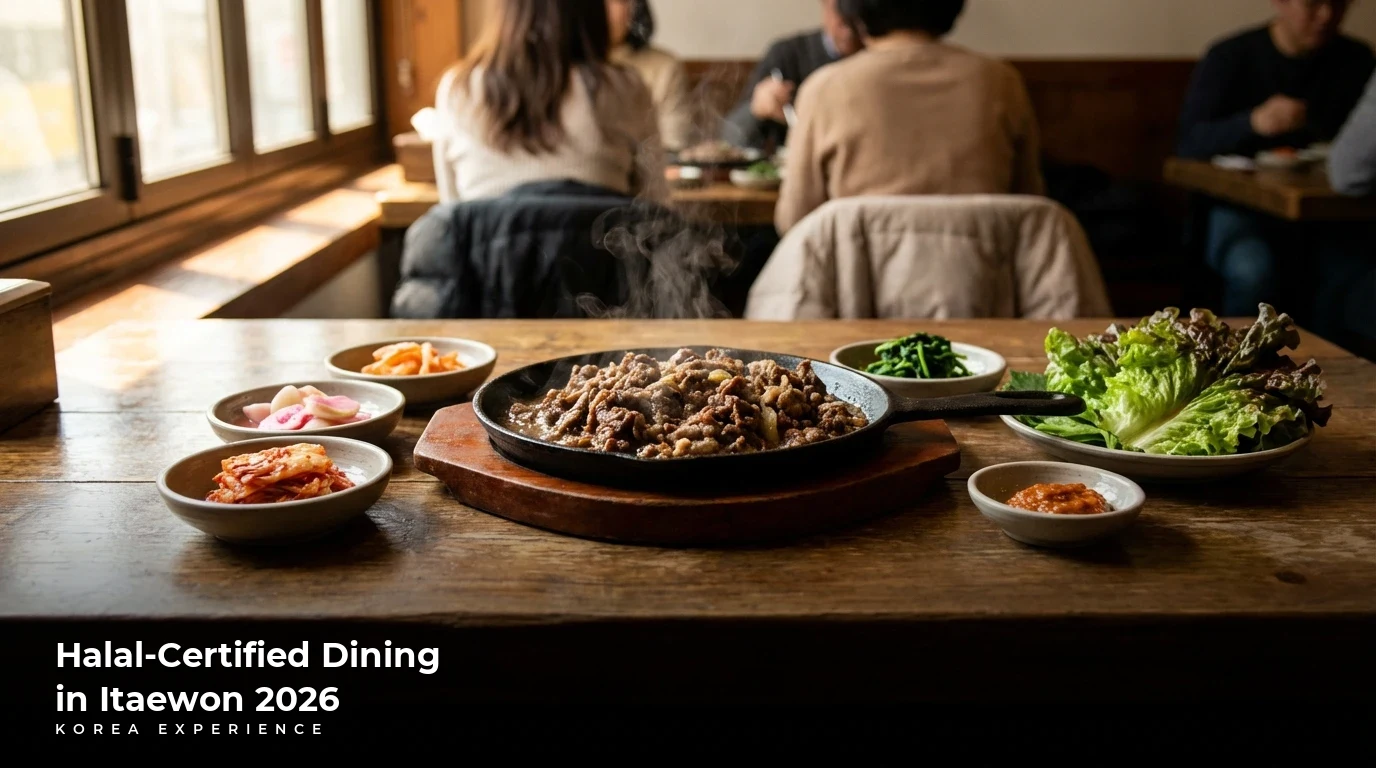
So, you're a Muslim traveler heading to Seoul and wondering if you can actually eat the food here. Look, I get the anxiety—Korea is famous for pork-based cuisine, and navigating a new country's food scene while maintaining halal is genuinely challenging. The short answer is that Itaewon's Usadan-ro corridor, anchored by the Seoul Central Mosque, is your culinary safe zone. This neighborhood has evolved from a simple immigrant services hub into a sophisticated halal dining ecosystem with government-certified restaurants, international options, and even K-food adapted to meet Islamic dietary requirements.
For a nationwide perspective, see our complete guide to halal Korean food and Muslim-friendly restaurants.
Key Takeaways
- 1The short answer is: Look for the 'Halal Certified' pictogram from the Korea Muslim Federation (KMF). This is the gold standard—it means dhabihah-slaughtered meat, no alcohol, and no pork anywhere in the kitchen.
- 2Here's the budget breakdown: A full halal Korean meal (bibimbap, sides, rice) costs ₩12,000 to ₩20,000 at spots like EID or Makan. Street food like kebabs runs ₩8,000 to ₩15,000. That's comparable to non-halal Korean restaurants.
- 3The 2026 game-changer is the MUFKO app. It has an AI scanner that lets you check any Korean product's barcode for haram ingredients like pork-derived emulsifiers or trace alcohol. Download it before you land.
📋 Itaewon Halal Scene Quick Facts
Understanding the Four-Tier Certification System
Here's the thing: not every "halal-friendly" restaurant is created equal. The Korea Tourism Organization (KTO) has developed a four-tier classification system that you need to understand before you start exploring.
KTO Halal Certification Tiers
| Tier | Certification Level | What It Means | Alcohol/Pork Status |
|---|---|---|---|
| Tier 1 | Halal Certified | Certified by KMF; dhabihah meat only | None anywhere |
| Tier 2 | Self-Certified | Muslim owner/chef; all food halal | None served |
| Tier 3 | Muslim Friendly | Some halal options; mixed menu | May be present |
| Tier 4 | Pork Free | No pork; meat not certified | Alcohol may be sold |
Tier 1 (Halal Certified) is what you want for the most peace of mind. These restaurants have been inspected by the Korea Muslim Federation and must employ at least one Muslim cook. The meat is sourced from dhabihah-certified slaughterhouses, and there's zero cross-contamination risk.
Tier 2 (Self-Certified) is still very reliable—these are typically restaurants owned and operated by Muslim families who prepare everything according to Islamic law but haven't gone through the formal KMF certification process.
For strict halal adherence, stick to Tiers 1 and 2. Tiers 3 and 4 are good for mixed groups where some members don't require halal, but observant Muslims should be cautious.
Islam in Korea: A Historical Journey
Koryo Dynasty
Arab merchants arrive via the East Sea route, introducing early Islamic cultural elements.
Turkish Refugees
Muslim Turks fleeing political turmoil settle in Korea, establishing early communities.
Korean War
Turkish military support strengthens diplomatic ties between Korea and Islamic nations.
Seoul Central Mosque
Built with Saudi Arabian funding, becomes the anchor of Itaewon's Muslim community.
Migrant Worker Influx
Industrial trainee program brings workers from Indonesia, Malaysia, and Pakistan.
K-Halal Initiative
Government invests heavily in halal certification for export and tourism.
The Usadan-ro Corridor: Your Dining Home Base
When you exit Itaewon Station, head toward the Seoul Central Mosque. The narrow, hilly street leading up to it—Usadan-ro 10-gil—is the epicenter of halal dining in Korea. Here's what you'll experience:
The visual landscape is unlike anywhere else in Seoul. Hangul signs sit alongside Arabic script. The smell of charcoal-grilled lamb and Middle Eastern spices fills the air. As the sun sets, the mosque's minarets catch the warm light with Namsan Tower visible in the distance.
This isn't just a dining zone—it's a symbolic space of safety. For Korean Muslims (a tiny minority in this country), coming to Itaewon provides a sense of liberation. The mosque stands on the neighborhood's highest hill, and in its shadow, Islamic identity is normalized and celebrated.
Eating in Itaewon vs. Other Seoul Neighborhoods
- ✓Concentration: Within a 10-minute walk, you have 30+ halal options ranging from Korean to Turkish to Pakistani. No other neighborhood comes close.
- ✓Authenticity: The Korean halal restaurants here are run by actual Muslim families who understand both the religious requirements and the cultural nuances of Korean cooking.
- ✓Infrastructure: Nearby prayer rooms, halal grocery stores, and even halal butchers make this a one-stop neighborhood for all your needs.
- ✗Tourist Pricing: Some restaurants near the main street charge 10-20% more than equivalent spots in less touristy areas.
- ✗Weekend Crowds: Friday afternoons (after Jumu'ah prayer) and weekends can get extremely busy. Plan for 30+ minute waits at popular spots.
- ✗Limited Late Night: Many halal restaurants close by 10 PM, unlike the 24/7 culture of mainstream Seoul dining.
Must-Visit Halal Restaurants in 2026
Here's your curated list of the best halal dining options in Itaewon, organized by cuisine type:
Korean Halal
- EID – Halal Korean Food (67 Usadan-ro 10-gil): Run by a Korean Muslim family. Famous for bibimbap, jjimdak (braised chicken), and samgyetang. All sauces made in-house to halal standards. Budget: ₩12,000-₩18,000.
- Makan Halal Restaurant (52 Usadan-ro 10-gil): Great variety including bulgogi, dak-doritang, and dosirak (packed lunch) options. Budget: ₩10,000-₩20,000.
Turkish & Middle Eastern
- Kervan Turkish Restaurant: The flagship halal Turkish spot with KMF certification. Famous for mixed grills and traditional desserts. Has expanded to COEX but Itaewon remains the heart. Budget: ₩20,000-₩35,000.
- Sultan Kebab: The first kebab restaurant in Seoul. Great for quick, authentic wraps. Budget: ₩8,000-₩15,000.
South Asian
- Bombay Grill (11 Usadan-ro 10-gil): Indian and Pakistani cuisine including chicken biryani and various curries. Budget: ₩15,000-₩25,000.
- The Halal Guys: NYC import offering fast-casual halal street food with a Korean fusion edge. Budget: ₩12,000-₩18,000.
📖 How to Find Halal Food Anywhere in Seoul
Step 1: Download MUFKO App
MUFKO (Muslim Friendly Korea) has an AI scanner. Point your camera at any Korean product's barcode or ingredient list, and it identifies potentially haram components like pork gelatin or alcohol.
Step 2: Check the KTO Guide
Visit the official Korea Tourism Organization website and filter restaurants by 'Halal Certified' or 'Muslim Friendly.' They have an updated 2026 database with pictograms.
Step 3: Use Korehalal Trip App
This app is specifically designed for Muslim travelers. It includes halal restaurant maps, mosque locations, and even halal delivery options.
Step 4: Ask at the Mosque
The Seoul Central Mosque has staff who can recommend trusted restaurants. Friday after Jumu'ah is a great time to ask locals for their favorite spots.
The Science of Halal Korean Cuisine
Adapting Korean food to halal requirements is genuinely challenging. Traditional Korean cooking relies heavily on ingredients that are problematic: pork-based broths, alcohol in marinades, and fermented pastes that may contain trace alcohol.
Need halal groceries too? Check our guide to finding halal food in Seoul including supermarkets.
Here's how the best halal Korean restaurants solve these problems:
Halal Adaptations for Korean Dishes
| Dish | Traditional (Haram) Ingredient | Halal Substitution |
|---|---|---|
| Bibimbap | Non-halal beef; alcohol in gochujang | Halal-certified beef; alcohol-free chili paste |
| Tteokbokki | Alcohol preservative in rice cakes | Freshly made rice cakes; halal-certified sauce |
| Sundubu Jjigae | Pork fat for flavor | Seafood broth or vegetable-based umami |
| Samgyetang | Non-halal whole chicken | Dhabihah-certified chicken from KMF suppliers |
| Kimchi | Fish sauce with shellfish; sometimes shrimp paste | Vegetable-based fermentation; halal fish sauce |
The Korean government has invested significantly in "K-Halal" production. Hanwoo beef was the first Korean meat to obtain halal slaughterhouse certification for export to the UAE. This same certified beef is now available at halal BBQ restaurants in Itaewon.
The biggest improvement I've seen in 2026 is the gochujang situation. Major Korean food companies now produce halal-certified gochujang and doenjang specifically for restaurants. Five years ago, chefs had to make everything from scratch. Now there's a supply chain that makes authentic halal Korean food much more accessible.
Navigating Food Delivery Without an ARC
One of the biggest frustrations for Muslim tourists is that Korea's food delivery apps (Baemin, Yogiyo) require Korean phone verification and often an ARC. Here's your workaround:
Pro Tip: The Shuttle Hack
Download Shuttle Delivery. It's designed for foreigners, requires no ARC or Korean phone number, has an English interface, and accepts international credit cards and PayPal. The halal restaurant selection is limited compared to Baemin, but it includes several Itaewon favorites.
Warning: Hidden Ingredients
Even at "Pork Free" restaurants, watch out for: fish cakes (often contain pork), kimchi fried rice (sometimes uses lard), and any soup with a milky broth (could be pork-bone based). When in doubt, use the MUFKO app or ask "Dwaeji gogi isseoyo?" (Does this have pork?).
No Korean Phone/ARC? Here's What To Do
For Delivery: Use Shuttle (English, foreign cards accepted) or Creatrip's delivery service. For Restaurant Bookings: Catchtable Global works with international phone numbers. For Grocery Shopping: Halal grocery stores on Usadan-ro accept cash and most foreign cards. For Navigation: Naver Map shows halal restaurant filters in English mode.
❓ Frequently Asked Questions
Have more questions?Contact us →
Your Itaewon Dining Action Plan
Here's your perfect halal food day in Itaewon:
Morning (10 AM): Start at the Seoul Central Mosque for Dhuhr prayer. The mosque is beautiful and welcoming to visitors.
Lunch (12 PM): Walk down Usadan-ro 10-gil to EID for authentic halal Korean food. Try the bibimbap and samgyetang.
Afternoon Snack (3 PM): Grab a kebab wrap from Sultan Kebab while exploring the neighborhood's halal grocery stores.
Dinner (7 PM): Head to Kervan for a full Turkish experience. Order the mixed grill platter and finish with baklava.
Evening: Walk through Itaewon's main street, pick up some halal snacks from the convenience stores (check labels with MUFKO!), and enjoy the vibrant nightlife atmosphere.
The halal dining scene in Seoul has transformed dramatically over the past decade. What was once a survival infrastructure for migrant workers is now a sophisticated, government-supported ecosystem that welcomes Muslim travelers from around the world. In 2026, you can eat incredibly well while maintaining your dietary requirements—just know where to look and which apps to use. Welcome to Korea, and enjoy the food!
Combining your trip with healthcare? Read about halal medical tourism and Muslim-friendly clinics.
Sources
- Korea Tourism Organization Halal Guide - Official halal restaurant database and certification tiers.
- Korea Muslim Federation - KMF certification standards and approved restaurant list.
- MUFKO App - AI-powered halal ingredient scanner and prayer room locator.
- Visit Seoul Official - Itaewon neighborhood guide and Muslim-friendly accommodations.
- K-Halal Initiative - Government investment in halal food production and certification.
About the Author
Korea Experience Team
Written by the Korea Experience editorial team - experts in Korean medical tourism, travel, and culture with years of research and firsthand experience.
Explore more in Food & Dining
Korean BBQ, street food, Michelin restaurants, and regional specialties — your ultimate guide to eating well in Korea.
Browse All Food & Dining ArticlesContinue Reading
Explore more articles you might find interesting
The ultimate guide to Halal dining in Seoul for 2026. Discover top certified restaurants, Muslim-friendly eateries, and supermarkets.
Discover the best Halal Korean food and Muslim-friendly restaurants in Seoul. From BBQ to street food, explore our 2026 travel guide.
The short answer is that you absolutely do not need a Korean phone number or an ARC to book the country's best meals—you just need the specific 'CatchTable...
The short answer? Gwangjang remains the king of value for traditional eats.
Discover the best all you can eat buffets in Seoul for 2026. From luxury hotels to budget BBQ, find pricing, locations, and expert dining tips.
Discover the most romantic dining spots in Seoul, from Michelin-starred venues to hidden Hanok gems, complete with reservation tips and pricing.