Seoul Street Food Prices 2026: What Everything Costs
The short answer? Gwangjang remains the king of value for traditional eats.
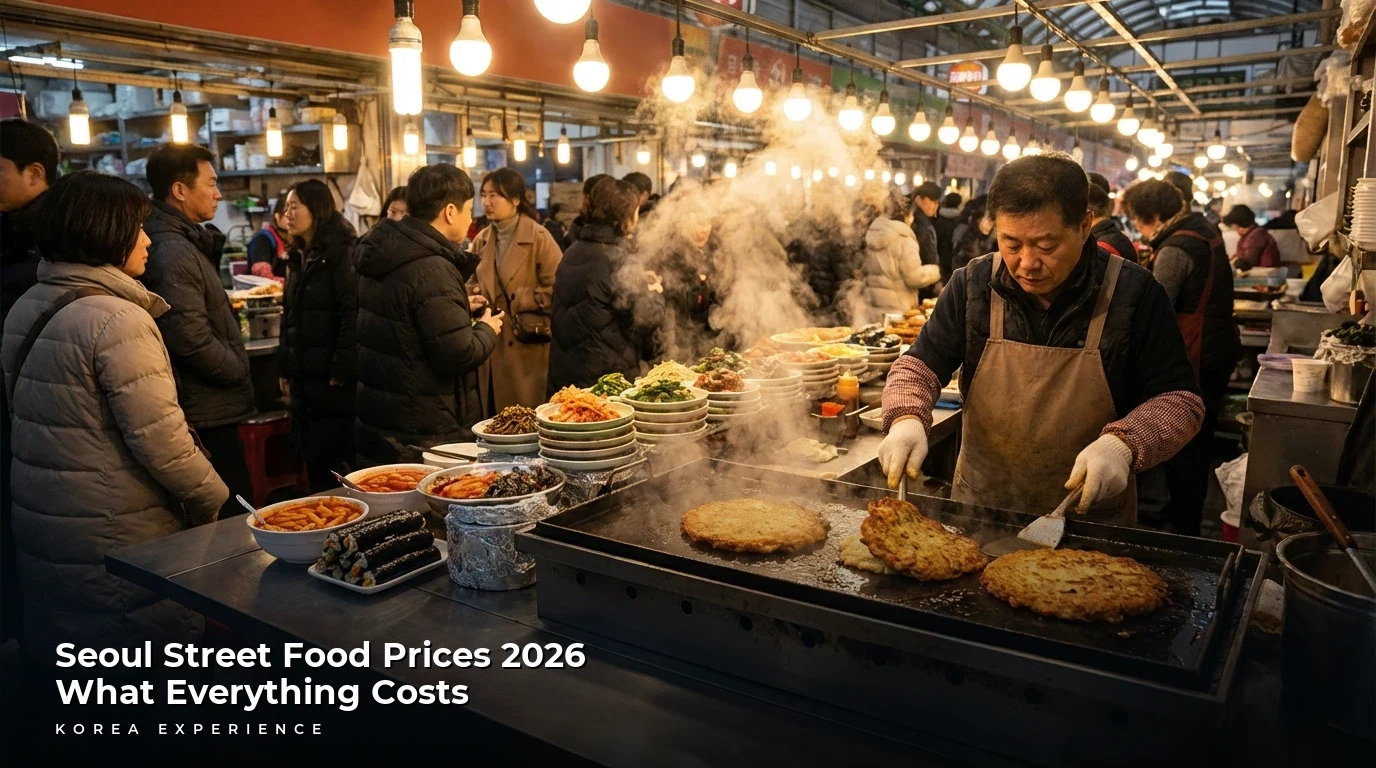
Here's the deal: Myeongdong is roughly 2 to 3 times more expensive than Gwangjang Market for "luxury" items like lobster or steak, but Gwangjang is no longer the dirt-cheap secret it used to be. You'll need at least ₩30,000 ($20 USD) for a satisfying multi-snack run in Myeongdong, whereas ₩15,000 ($10 USD) can still get you a multi-course "feast" at Gwangjang if you stick to the basics like mung bean pancakes and gimbap.
Key Takeaways
- 1Here's the deal: Myeongdong is roughly 2 to 3 times more expensive than Gwangjang Market for 'luxury' items like lobster or steak, but Gwangjang is no longer the dirt-cheap secret it used to be. You'll need at least ₩30,000 ($20 USD) for a satisfying multi-snack run in Myeongdong, whereas ₩15,000 ($10 USD) can still get you a multi-course 'feast' at Gwangjang if you stick to the basics like mung bean pancakes and gimbap.
- 2The '10k Won Rule' has officially arrived in 2026. Because of 'gimbap-flation' and rising import costs, almost any meat or seafood-based street food in Myeongdong now starts at ₩10,000, which is enough to buy nearly three whole rolls of gimbap at a local neighborhood shop.
- 3Don't even bother trying to use KakaoPay or NaverPay without a Korean phone number; instead, grab a WOWPASS card at the airport or major subway stations. It acts like a local debit card and transportation pass in one, and in 2026, it's the only reliable way for tourists to pay at street stalls that have moved away from cash but still can't process foreign credit cards.
📋 Street Food Price Comparison
Seoul Street Food Evolution
Pre-Pandemic Peak
Myeongdong sees 1.46 million monthly visitors with ₩1,000 snacks common.
Price-Marking Zone
Myeongdong designated a mandatory price-marking area to curb tourist overcharging.
Netflix Effect
Gwangjang Market popularity explodes globally, leading to some 'tourist pricing' complaints.
Gimbap-flation
Average cost of basic meals in Seoul rises 5.7% as ingredient costs soar.
Waste Reform
Seoul announces aggressive waste reduction plans affecting street food vendors.
New Regulations
Strict AI-ad labeling and RFID-based food waste tracking fully implemented.
Street Food Market Comparison
| Feature | Myeongdong Night Market | Gwangjang Traditional Market | Convenience Store (GS25/CU) |
|---|---|---|---|
| Average Cost per Item | High (₩8k - ₩20k) | Low-Mid (₩3k - ₩15k) | Lowest (₩1.5k - ₩5k) |
| Best Food Options | Lobster, Wagyu, Dubai Chocolate | Bindaetteok, Mayak Gimbap, Yukhoe | Ramen, Triangular Gimbap |
| Vibe | Neon, Touristy, High Energy | Traditional, Gritty, Bench Seating | Quick, Practical, Solo-friendly |
| Payment Method | Card/WOWPASS preferred | Cash/WOWPASS (Mixed) | All Cards/Mobile Pay |
| Peak Times | 6 PM - 10 PM | 11 AM - 3 PM (Lunch) | 24/7 |
| 2026 Status | Strict Price Labeling enforced | Creeping 'Tourist' Prices | App-based AI stock tracking |
| Hygiene Standard | Inspected Street Stalls | Traditional Market Open Air | High (Packaged) |
Gwangjang Market Experience
- ✓Authentic Value: You can actually get a full meal for under ₩10,000 if you're smart, which is almost impossible in Myeongdong.
- ✓Michelin Quality: Home to Buchon Yukhoe, which has been a Michelin Bib Gourmand pick since 1965—you won't find that on a Myeongdong street corner.
- ✓The Atmosphere: Sitting on a heated communal bench while an ajumma hand-cuts your noodles is a 'real Korea' experience that neon lights can't replicate.
- ✗Crowd Stress: During peak hours, you will be shoulder-to-shoulder with people, and some vendors are known to be a bit 'brisk' (or even rude) if you don't order quickly.
- ✗Cash is Still King: While things are changing in 2026, many of the smaller stalls still grumble if you try to use a card for a ₩3,000 gimbap.
- ✗Hygiene Worries: It's a traditional market—food is often sitting out, and you're eating in a high-traffic area. If you're a germaphobe, this might not be your happy place.
📖 How to Conquer a Seoul Street Food Crawl Without Getting Scammed
Step 1: Load up your WOWPASS
Before hitting the markets, find a WOWPASS machine at a subway station. Insert your home currency (USD, EUR, etc.) and it will spit out a card loaded with KRW at a better rate than most banks.
Step 2: Scout the Prices First
In Myeongdong, check the official price tags now required on every stall. In Gwangjang, look at the menus on the benches before sitting down to avoid 'surprise' tourist pricing.
Step 3: Share Everything
Never buy a whole portion for yourself. Street food is meant for 'sampling.' If you buy one ₩15,000 lobster tail, split it with a friend so you have room (and money) for ₩5,000 scallops.
Step 4: Master the Trash Game
In 2026, Seoul is incredibly strict about trash. Look for the designated waste bins near the ends of the street food alleys—don't just leave your cup on a random ledge.
In 2026, the real 'pro move' isn't choosing between Myeongdong and Gwangjang—it's visiting Namdaemun Market for Hotteok and then walking to Myeongdong just for the photos. Never eat your full dinner in the Myeongdong main alley unless you want to pay a 40% 'tourist tax' on the atmosphere.
For guided market experiences, see our guide to traditional market street food tours.
Pro Tip: 4 PM at Gwangjang
Go to Gwangjang Market around 4 PM. You miss the heavy lunch rush of office workers and beat the evening dinner crowd. You'll actually get a seat at the famous "Netflix Lady's" noodle stall without a 30-minute wait.
Warning: Beware of 'Assorted Plates'
Be careful with "Assorted Plates" in Gwangjang. Some vendors might push a ₩20,000 mixed platter on you when you only wanted a ₩5,000 pancake. Explicitly say "Bindaetteok hana" (One pancake) to stay within budget.
No Korean Phone/ARC? Here's What To Do
If you don't have a Korean ID (ARC) or a local 010 phone number, KakaoPay and NaverPay will not work for you. Period. Your best friends are the WOWPASS card or the NAMANE card. You can buy these at Incheon Airport or major stations like Myeongdong and Seoul Station. They let you tap-to-pay just like a local, and you can top them up using your home country's credit card or cash.
❓ Frequently Asked Questions
Have more questions?Contact us →
The Street Food Showdown
So, you're standing in the middle of Myeongdong, the neon lights are flashing, and you see a guy blowtorching a lobster tail covered in cheese. It looks incredible. Then you see the sign: ₩18,000. You do the quick math in your head—that's about $12 USD. For a single snack. On a stick. You think, "Wait, didn't I read somewhere that Korean street food was supposed to be cheap?"
Not sure what to eat? Start with our list of 30 Korean street foods you must try.
Honestly, here's the reality of 2026: Seoul has become a city of two extremes. The short answer is that Myeongdong is significantly more expensive than Gwangjang Market—sometimes triple the price—but it offers a totally different "Street Food 2.0" experience. In Myeongdong, you're looking at an average price of ₩10,000 to ₩15,000 for popular meat and seafood items. If you head to Gwangjang, that same ₩15,000 isn't just a snack; it's a full meal that includes a massive mung bean pancake (₩5,000), a roll of mayak gimbap (₩3,000), and a bowl of hand-cut noodles (₩5,000) with change to spare.
Prefer a sit-down market meal? Explore our guide to Seoul's food markets from Gwangjang to Noryangjin.
Sources
- Seoul Metropolitan Government (Jung-gu Office) - Myeongdong price-marking zones and regulations
- Korea JoongAng Daily - Gimbap-flation and 2026 food price indices
- Visit Seoul Official - Vendor recommendations and official pricing
- Cushman & Wakefield Retail Report - Myeongdong retail rent impact on pricing
- WOWPASS Official Support - Payment systems for tourists without ARC
About the Author
Korea Experience Team
Written by the Korea Experience editorial team - experts in Korean medical tourism, travel, and culture with years of research and firsthand experience.
Explore more in Food & Dining
Korean BBQ, street food, Michelin restaurants, and regional specialties — your ultimate guide to eating well in Korea.
Browse All Food & Dining ArticlesContinue Reading
Explore more articles you might find interesting
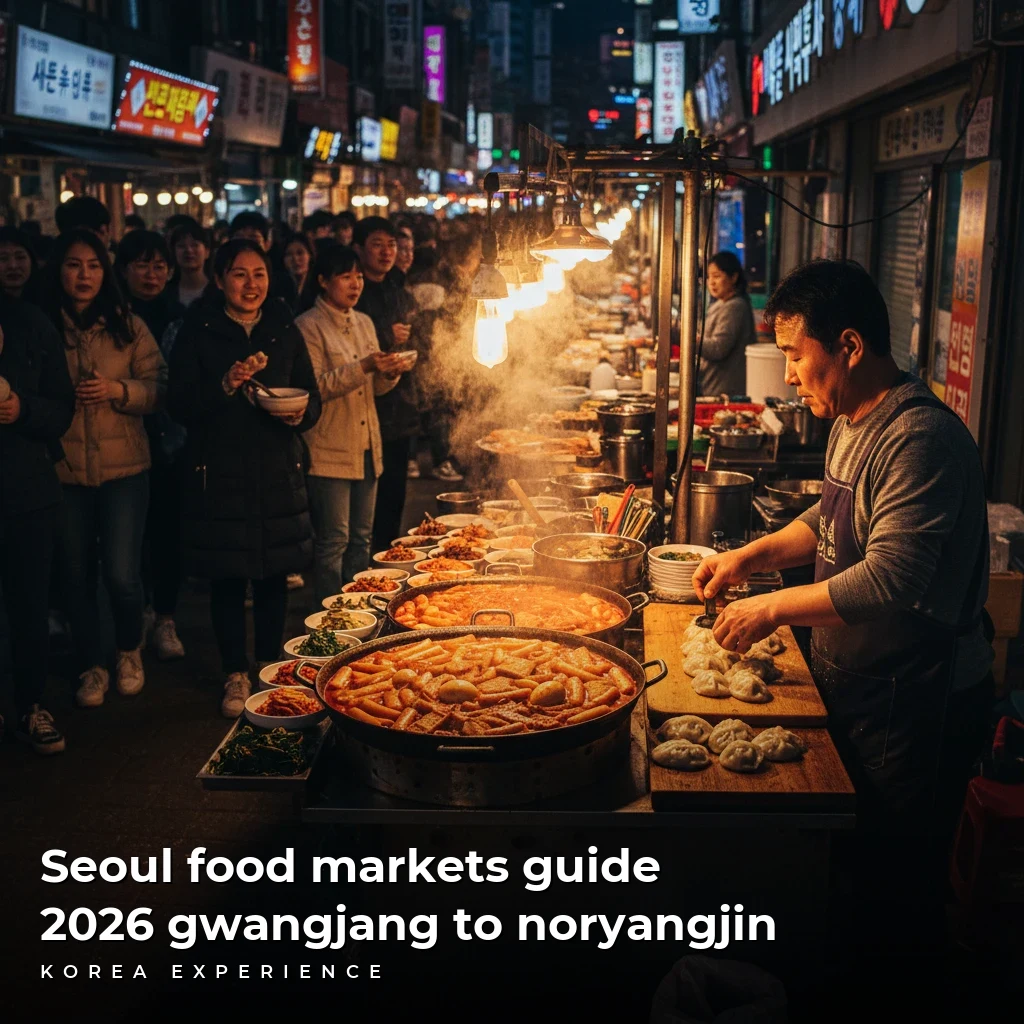
The ultimate 2026 guide to Seoul traditional markets. Discover prices, hidden stalls, and expert tips for Gwangjang, Noryangjin, and local favorites.
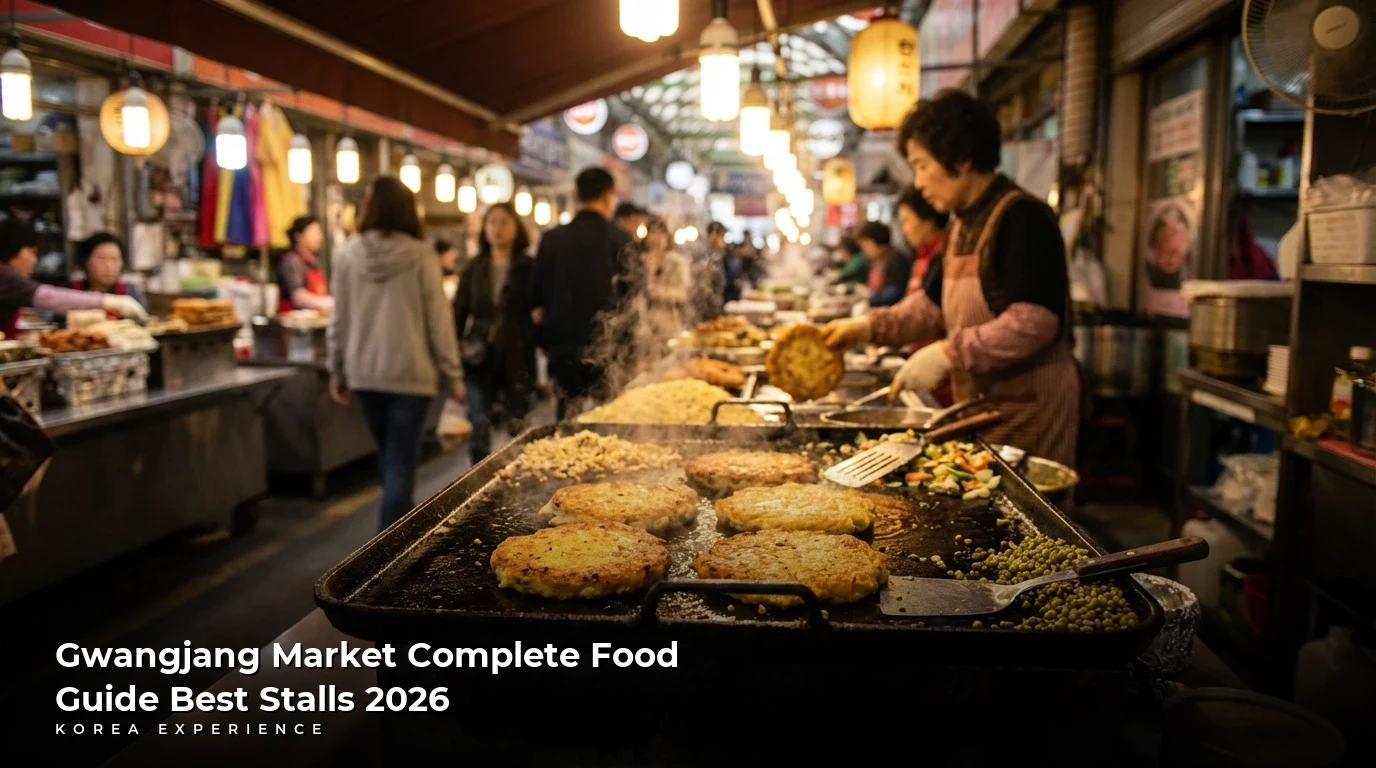
Discover the ultimate Gwangjang Market food guide featuring top stalls, prices, operating hours, and local tips for Seoul's oldest traditional market.
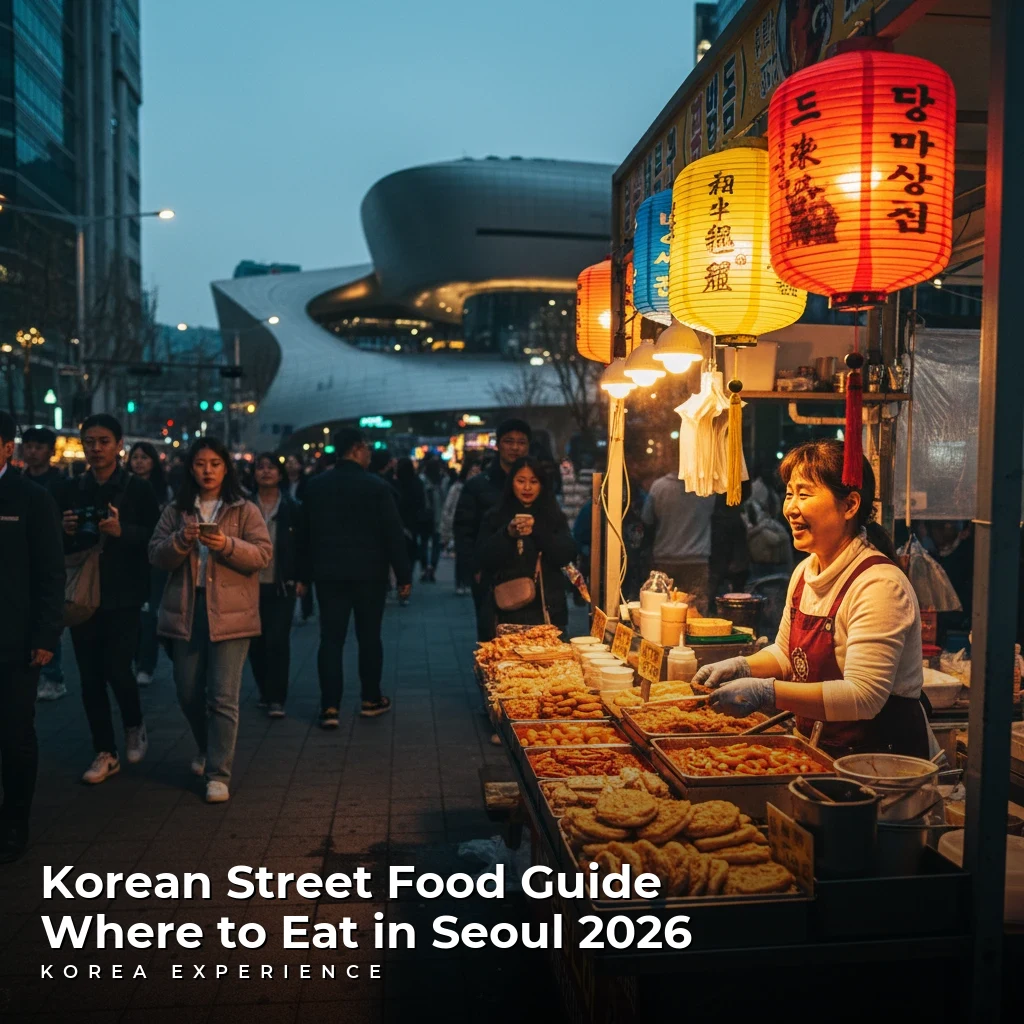
The ultimate guide to street food in Seoul for 2026. Discover prices, best markets like Gwangjang, and must-eat snacks from hotteok to tteokbokki.
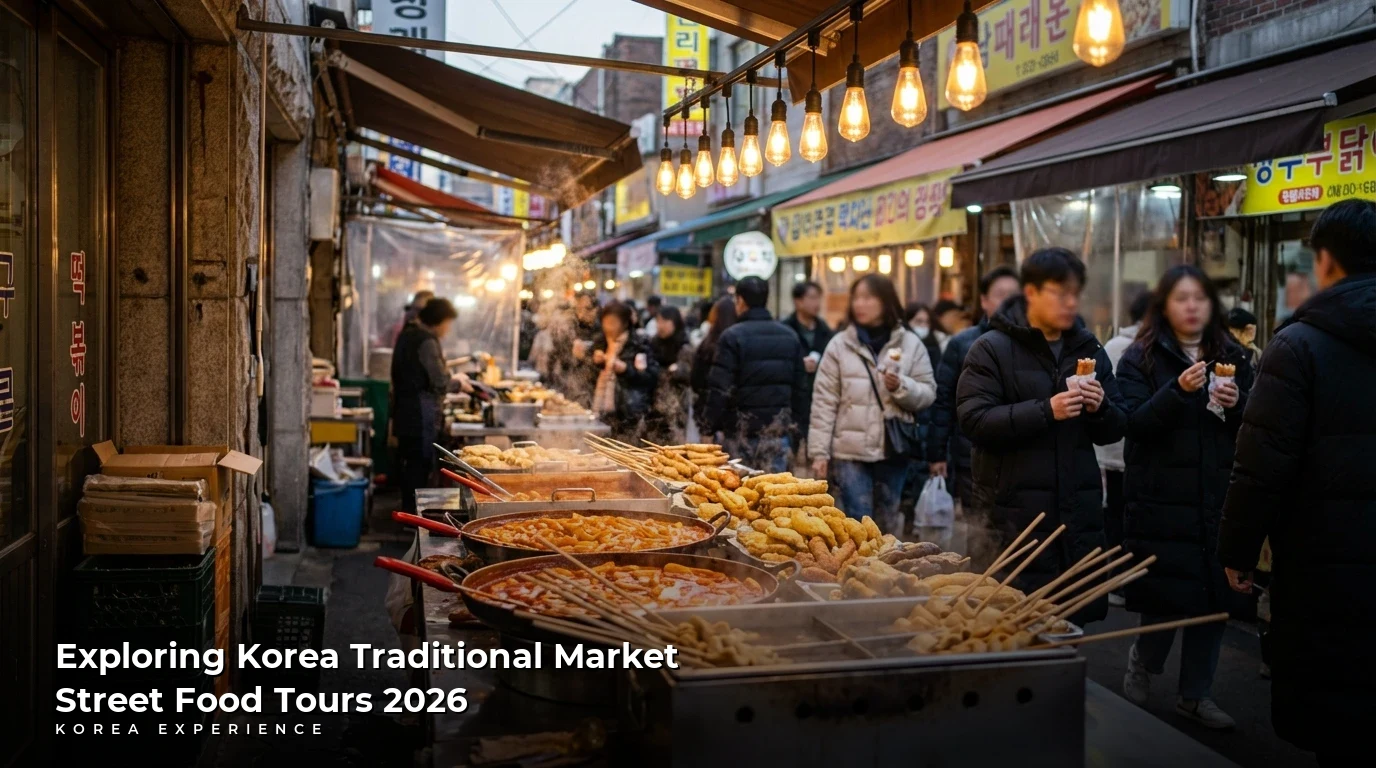
The ultimate guide to Korean street food markets in 2026. Discover prices, best tours, hidden stalls, and essential etiquette for travelers.
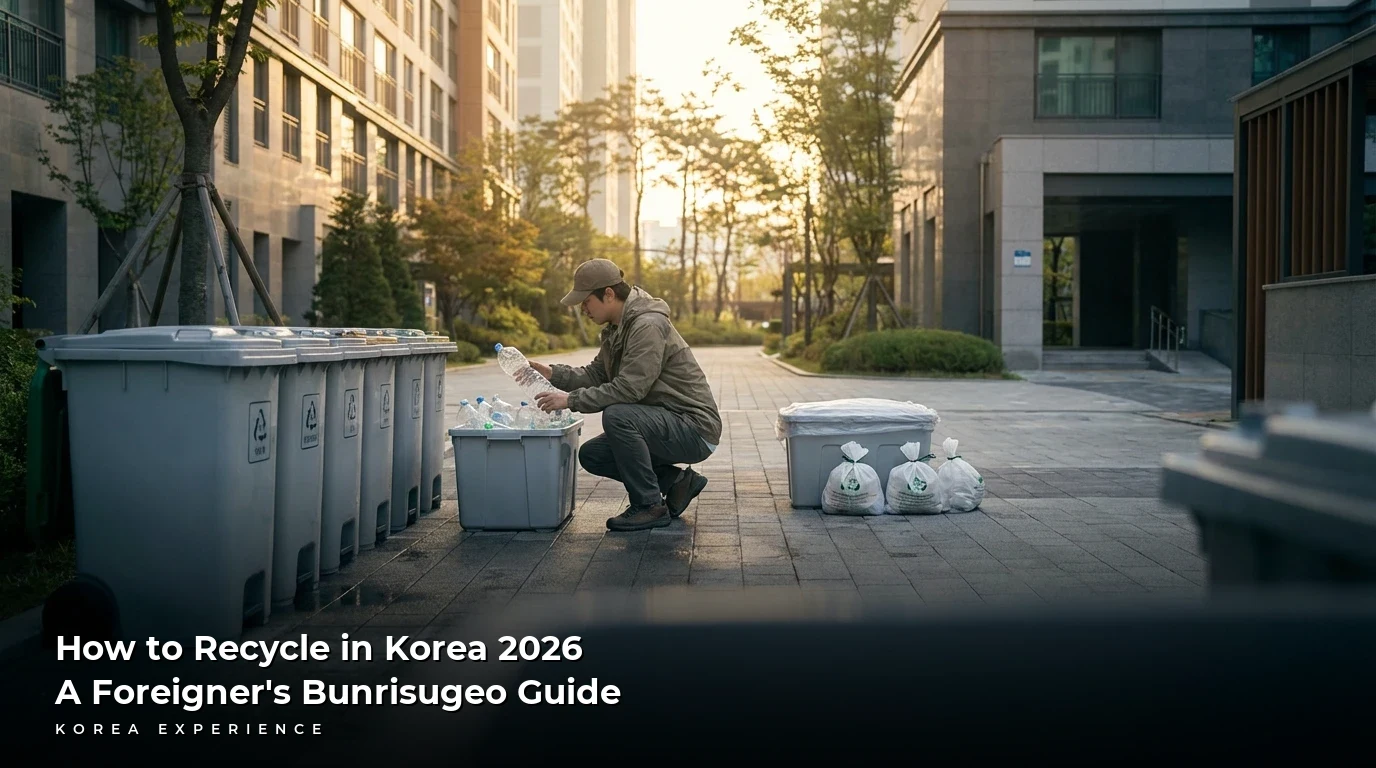
The short answer? Korea's recycling system is incredibly strict—you need to separate everything from food waste to clear PET bottles, and if you mess it up.
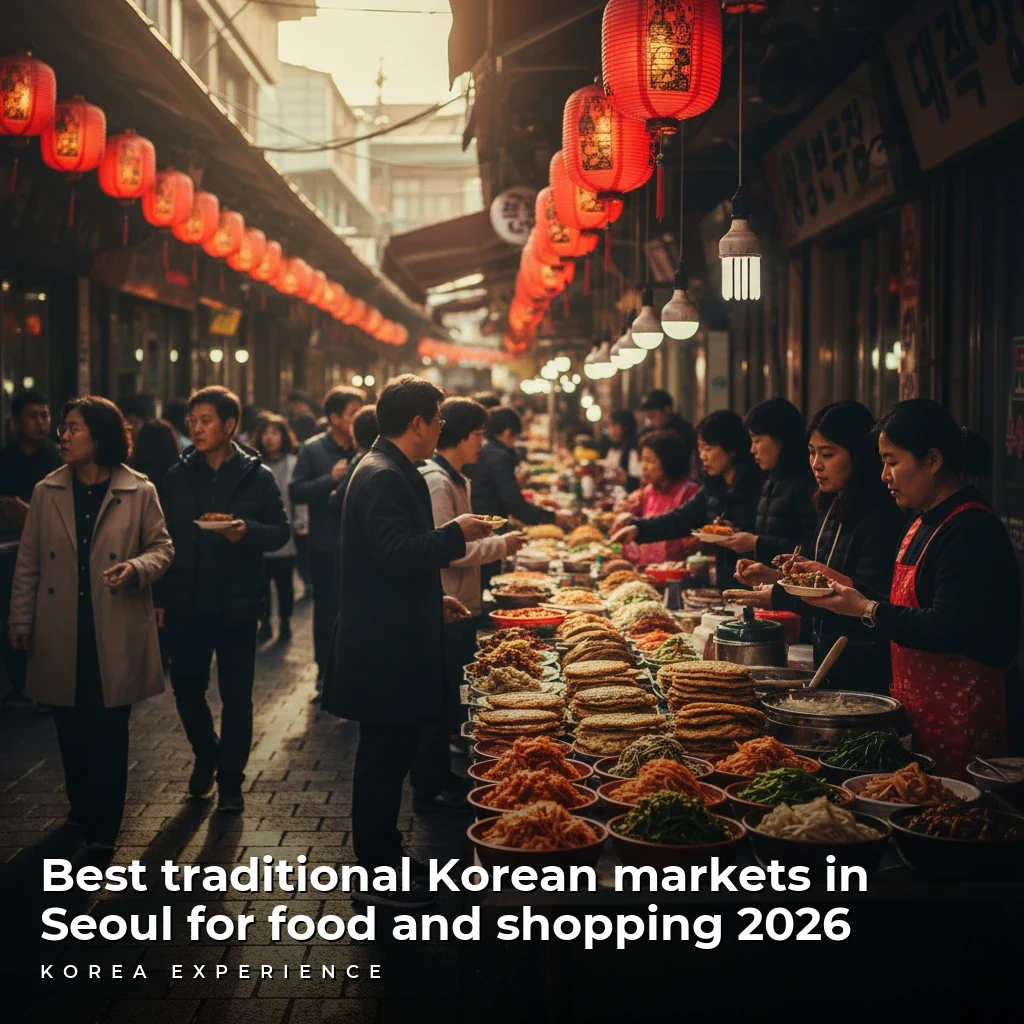
Discover Seoul's top 8 traditional markets. From Gwangjang's ₩5,000 noodles to Namdaemun's 10,000+ shops, get the ultimate 2026 shopping guide.