Zero sugar Soju and healthy drinking trends in Korea 2026
Discover the rise of zero sugar soju in Korea. We explore top brands, calorie counts, and the healthy pleasure drinking culture sweeping Seoul in 2026.
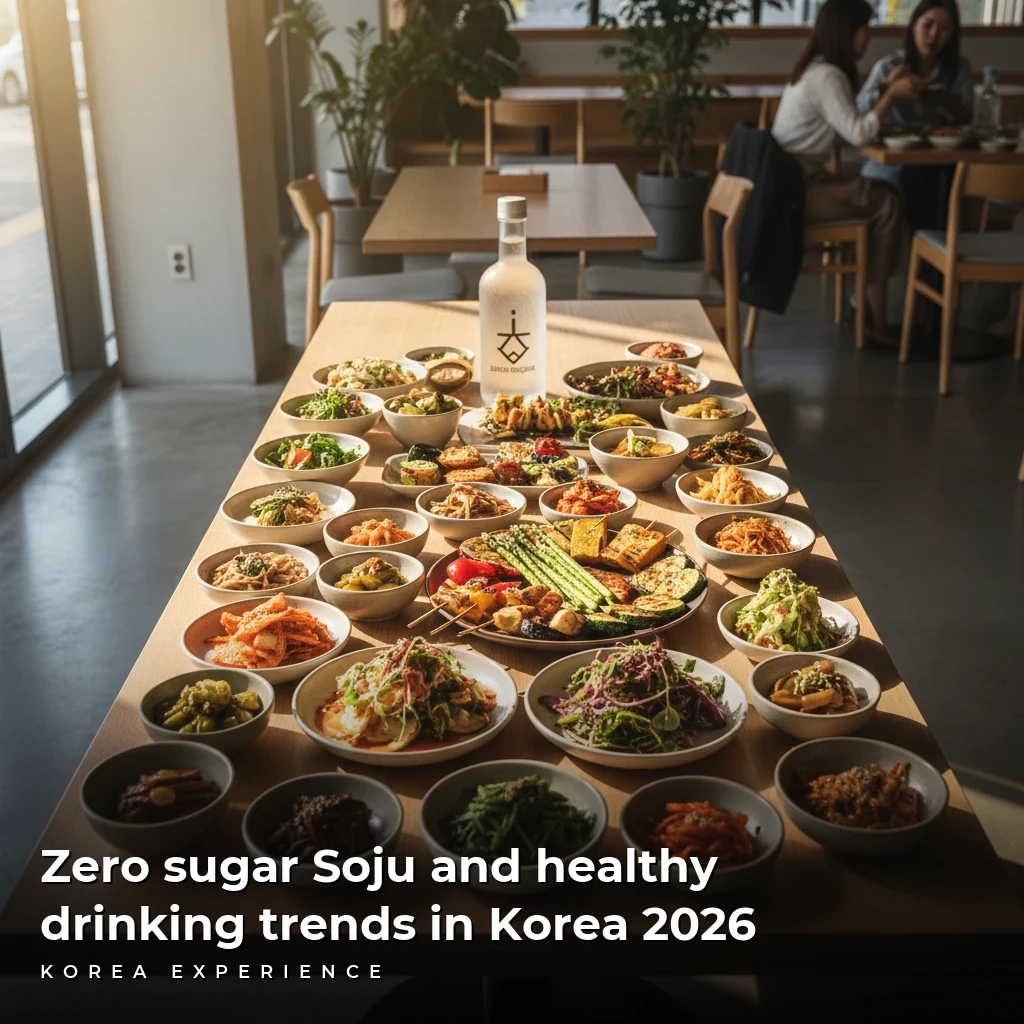
South Korea's drinking culture has undergone a seismic shift over the last few years. Gone are the days when specific green bottles were synonymous only with harsh hangovers and high calorie counts. By 2026, the "Healthy Pleasure" movement has firmly taken root in Seoul's nightlife, transforming how locals and travelers alike experience alcohol. The undisputed king of this revolution is Zero Sugar Soju.
Walking into a convenience store (CU or GS25) in 2026, you will notice that the shelves look different than they did five years ago. The branding is sleeker, the alcohol content is slightly lower, and the "Zero Sugar" label is ubiquitous. This isn't just a passing fad; it is a fundamental change in consumer behavior driven by health-conscious Millennials and Gen Z drinkers who want to enjoy social gatherings without compromising their dietary goals.
Learn more in our comprehensive guide to Korean drinking culture Soju Makgeolli and pocha guide.
Key Takeaways
- 1Zero Sugar Soju uses stevia or erythritol, cutting calories by roughly 20-30% compared to traditional versions.
- 2The standard alcohol by volume (ABV) has dropped to an average of 15.5% to 16% in 2026 for a smoother finish.
- 3Saero by Lotte and Jinro Zero Sugar are the two dominant market leaders you will see everywhere.
For international travelers, understanding this landscape is crucial for navigating modern Korean dining. Whether you are at a BBQ restaurant in Gangnam or a pocha in Euljiro, ordering the right bottle is part of the cultural experience. In this guide, we will break down everything you need to know about the healthy drinking trends dominating Korea in 2026.
Learn more in our comprehensive guide to Korean drinking etiquette pouring and toasting guide.
The Science and Appeal of Zero Sugar Soju
So, what exactly makes these drinks "Zero Sugar"? Traditional soju was often sweetened with fructose or sugar to mask the harsh taste of ethanol. However, the new wave of soju utilizes alternative sweeteners like stevia and erythritol. These compounds provide the necessary sweetness to balance the spirit but are not metabolized by the body in the same way sugar is.
Related reading: Mastering Korean drinking games rules and fun for travelers.
The primary appeal is, of course, the calorie count. A standard bottle of regular soju (360ml) historically contained about 400 to 410 calories. In contrast, the 2026 formulations of Zero Sugar Soju average between 310 and 320 calories per bottle. While this might not sound like a massive difference per bottle, considering the communal nature of Korean drinking where one might consume one or two bottles over a long dinner, the deficit adds up quickly.
Related reading: Korean Drinking Snacks Anju Pairing Guide for Travelers.
📊 2026 Market Impact
Furthermore, the reduction in sugar often accompanies a reduction in Alcohol by Volume (ABV). While classic soju hovered around 17-20% in the past decade, the 2026 standard for zero-sugar variants is a precise 15.5% to 16%. This lower ABV contributes to a smoother throat hit, eliminating the chemical "burn" often associated with cheaper spirits, making it significantly more palatable for first-time visitors.
Major Players: The Battle of the Brands
When you sit down at a restaurant, you will likely be presented with two main options. Understanding the difference between them will help you choose the one that suits your palate.
1. Saero (Lotte Chilsung)
Launched initially in late 2022, Saero (meaning "New") was the pioneer that proved zero sugar could be a massive commercial success. By 2026, it remains a top seller. Packaged in a transparent, elegant bottle rather than the traditional green, it signals a premium, clean image.
- Taste Profile: Extremely crisp, very little aftertaste, and a distinct lack of chemical bitterness.
- Price: Retail price in convenience stores is approximately ₩1,800 ($1.35 USD).
- Best For: Drinkers who usually dislike the taste of alcohol or prefer mixing with tonic.
2. Jinro Zero Sugar (HiteJinro)
The distinctive blue bottle (or the classic toad mascot) marks HiteJinro's response. They reformulated their flagship "Jinro is Back" to a zero-sugar version.
- Taste Profile: Slightly more body than Saero, retaining a hint of the savory character traditional soju drinkers enjoy, but with a clean finish.
- Price: Retail price is slightly lower, averaging ₩1,700 ($1.25 USD).
- Best For: Those who want the "classic" soju vibe but with fewer calories.
Soju Showdown 2026
| Feature | Saero (Zero) | Jinro (Zero) | Classic Soju |
|---|---|---|---|
| Calories (360ml) | 315 kcal | 320 kcal | 408 kcal |
| ABV | 16% | 15.5% | 16.5-17% |
| Sweetener | Stevia/Erythritol | Erythritol/Tomatin | Fructose |
| Bottle Color | Transparent | Blue/Clear | Green |
Ordering Tip
When ordering in a loud restaurant, simply raising two fingers and saying "Saero, please" (Saero-juseyo) works perfectly. Most restaurants stock both major brands.
Beyond the Bottle: The Highball Hype
While Zero Sugar Soju is the staple, the "Healthy Pleasure" trend has also exploded the popularity of Highballs. In 2026, Highballs are no longer just whiskey and soda; they have become a canvas for low-calorie experimentation.
Walk into any trendy bar in Hongdae or Seongsu, and you will find extensive Highball menus. The trend favors Earl Grey Highballs, Yuzu Highballs, and Grapefruit Highballs. These are often made with zero-sugar tonic water, which has become a staple product in Korean supermarkets.
Cost Analysis:
- Restaurant/Bar Price: A highball in a standard Seoul bar costs between ₩8,000 and ₩12,000 ($6 - $9 USD).
- DIY Price: Buying a can of "Highball" from a convenience store costs about ₩4,000 to ₩5,000 ($3 - $3.75 USD).
The convenience store "mixology" culture is massive. Visitors often buy a bag of ice (cup ice), a small bottle of zero sugar soju, and a zero-calorie flavored sparkling water to create their own custom cocktails on the go.
📖 How to Make a 'Pyun-Ui-Jom' (Convenience Store) Highball
Step 1: Buy the Ice Cup
Grab a large 'Big Ice Cup' from the freezer section (approx. ₩1,000).
Step 2: Choose Your Base
Purchase a small 200ml pocket bottle of whisky or a bottle of Saero Soju.
Step 3: Select the Mixer
Grab a Zero Sugar Tonic Water or flavored sparkling water (Peach is popular).
Step 4: Mix and Enjoy
Pour 1 part alcohol to 3 parts mixer directly into the ice cup. Stir with a straw.
Traditional Liquor Goes Premium and Clean
The wellness trend isn't limited to industrial spirits. Makgeolli (rice wine) and Cheongju (clear rice wine) have seen a premium resurgence. In 2026, there is a strong movement against artificial sweeteners like aspartame in traditional liquors.
Artisanal breweries are producing Makgeolli that uses only rice, water, and nuruk (fermentation starter). While these are higher in calories due to the natural rice starch, they are marketed as "clean" drinking because they lack chemical additives and offer probiotics.
Price comparison for Makgeolli:
- Standard Green Bottle (Aspartame included): 1,500 - ₩2,000.
- Premium Additive-Free Makgeolli (e.g., Boksoondoga): 12,000 - ₩18,000 per bottle.
"If you visit a bottle shop, look for the 'Red Monkey' or 'Naroo' makgeolli brands. They are completely free of artificial sweeteners and possess a creamy, yogurt-like texture that is natural to the fermentation process. It is heavier, so drink it slowly like a fine wine."
Where to Drink: The Rise of "Sool-Labs"
The geography of drinking in Seoul has shifted. While Gangnam remains the hub for high-end clubs, the neighborhoods of Seongsu-dong and Euljiro are the centers for the healthy drinking demographic.
In Seongsu, you will find "Sool-Labs" (Liquor Labs) – bars that specialize in traditional Korean liquors and zero-sugar cocktails, often pairing them with lighter, healthier anju (snacks) like steamed beef and vegetables (Seiro-mushi) rather than deep-fried dishes.
Zero Station Seongsu(제로 스테이션 성수)
These venues are roughly 20% to 30% more expensive than a standard pocha, but the atmosphere is smoke-free, aesthetically pleasing, and caters to conversation rather than binge drinking. A typical bill for two people with food and drinks here runs about ₩80,000 to ₩100,000 ($60 - $75 USD).
The Cost of Drinking in 2026
Budgeting for a night out in Seoul is still surprisingly affordable compared to Tokyo or New York, even with inflation. However, the gap between budget and luxury has widened.
Here is a breakdown of what you can expect to pay for alcohol in different settings in 2026. Note that prices in convenience stores are fixed nationwide, but restaurant markups vary by neighborhood (Gangnam will always be higher than Hongdae).
💵 Alcohol Price Comparison (2026)
Local microbreweries
Hotel bars & Lounges
Retail price for take-out
Late Night Taxi Surcharge
Remember that if you stay out past 11:00 PM, taxi demand peaks. The base fare for a taxi in Seoul is now ₩4,800, but late-night surcharges (20-40%) apply between 10:00 PM and 4:00 AM.
Pros and Cons of the Zero Sugar Trend
Is the switch to zero sugar all positive? While health benefits are the main driver, there are nuances to the taste and experience that some purists debate.
Zero Sugar Soju Analysis
- ✓Significantly lower calorie count (approx 90kcal less per bottle)
- ✓No chemical aftertaste or 'rubbing alcohol' burn
- ✓Less likelihood of a sugar-crash hangover
- ✗Lacks the viscous mouthfeel of traditional soju
- ✗Some find the stevia aftertaste slightly artificial
- ✗Easier to over-drink due to smoothness
Smart Recovery: The Hangover Culture
Even with zero sugar, alcohol is still alcohol. Korean culture has an entire industry dedicated to hangovers (sukchwi). In 2026, the "healthy pleasure" trend extends to how people recover.
Before a night out, it is standard practice to visit a pharmacy (Yakguk) or convenience store to buy hangover prevention drinks or jellies.
Popular Products in 2026:
- Condition (Stick Gel format): Easy to carry, tastes like green apple. Price: ₩3,000.
- RU21: Vitamin tablets that prevent the breakdown of acetaldehyde. Price: ₩5,000.
- Ready-Q Chew: Curcumin-based jelly chews (mango flavor). Price: ₩3,500.
The Seoul Night Out Routine
Pre-Game Prep
Buy a 'Condition' jelly stick at CU.
Dinner (1-Cha)
Korean BBQ with Saero Soju.
Second Round (2-Cha)
Move to a quieter bar for Highballs.
The Finish
Visit a coin karaoke (Noraebang) for 30 mins.
📋 Hangover Drink Facts
Practical Tips for International Travelers
Buying alcohol in Korea is straightforward, but there are rules. The legal drinking age is 19 (international age). This means if you were born in 2007 or earlier, you are legal to drink in 2026.
ID Checks: Strictness has increased. Convenience stores now use AI-assisted ID scanners. Foreigners should always carry their physical passport or a government-issued Residence Card (ARC). Digital photos of passports are rarely accepted at nightclubs or bars in Hongdae and Itaewon.
Recycling: Korea is meticulous about recycling. If you drink in your Airbnb or hotel, you must separate the bottles. Glass bottles, plastic caps, and paper labels should ideally be separated. However, most modern soju bottles have labels designed to be washed off easily at recycling centers, so just removing the cap is usually sufficient for household recycling bins.
No ARC? Use Your Passport
If you are a tourist without an Alien Registration Card (ARC), your physical passport is the only ID guaranteed to work. US Driver's Licenses are often rejected at club entrances.
Conclusion
The landscape of Korean drinking in 2026 is a fascinating blend of tradition and modern wellness. The rise of Zero Sugar Soju represents a society that still values the communal bond of sharing a drink but is increasingly mindful of health and longevity.
For the traveler, this means better options. You can enjoy the raucous fun of a Korean night out with slightly less guilt and a much smoother drink. Whether you choose the crisp Saero, the nostalgic Jinro Zero, or a craft highball in Seongsu, you are participating in a living, breathing aspect of Korean culture.
So, when you raise your glass for a toast of Gunbae (Cheers), you can do so knowing you are drinking the smartest, most evolved version of Korea's national spirit to date.
❓ Frequently Asked Questions
Have more questions?Contact us →
About the Author
Korea Experience Team
Written by the Korea Experience editorial team - experts in Korean medical tourism, travel, and culture with years of research and firsthand experience.
Explore more in Food & Dining
Korean BBQ, street food, Michelin restaurants, and regional specialties — your ultimate guide to eating well in Korea.
Browse All Food & Dining ArticlesContinue Reading
Explore more articles you might find interesting
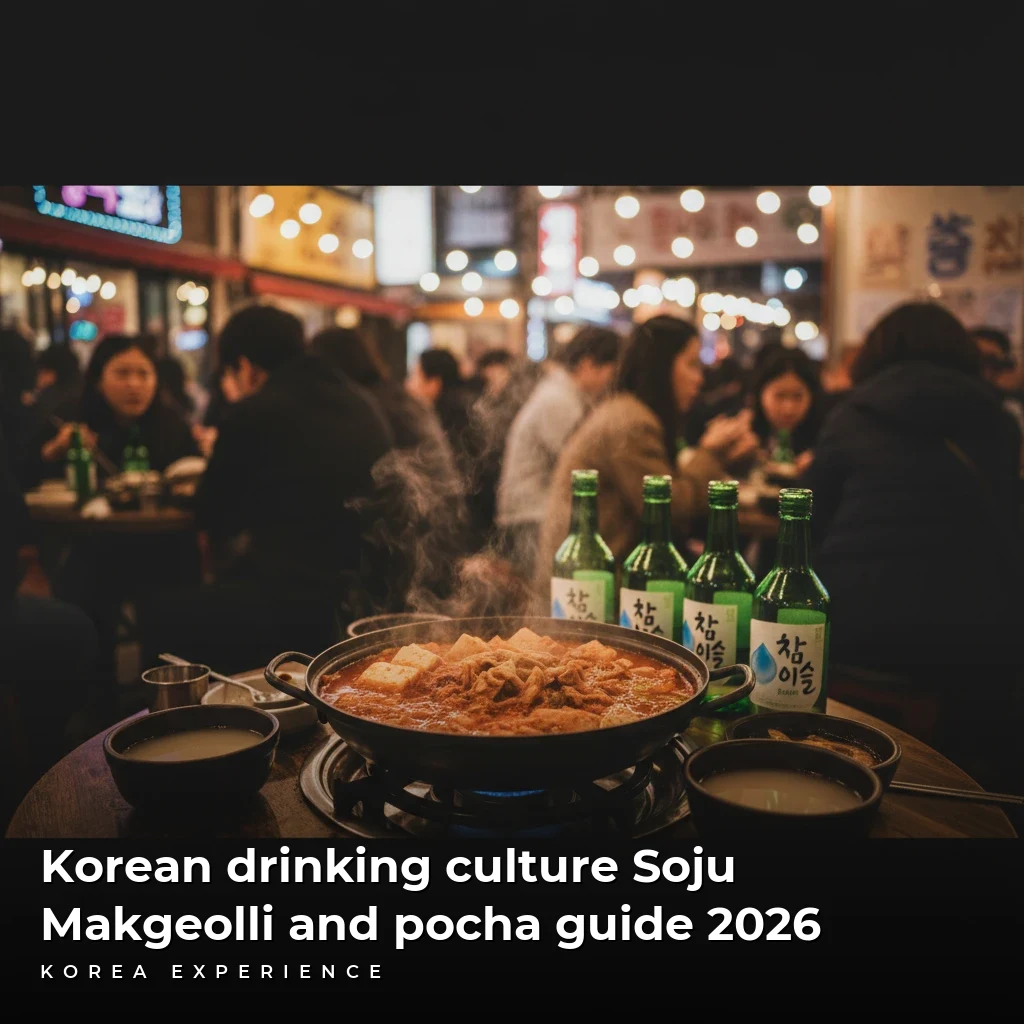
The ultimate 2026 guide to Korean drinking culture. Discover top Soju brands, best Makgeolli bars, and how to navigate Seoul Pocha streets like a local.
Discover the ultimate guide to K Webtoons in Seoul 2026. Explore top manhwa cafes, museums, and pop-up stores defining the new wave of Korean culture.
Explore the 2026 landscape of Korean Fried Chicken. From robot-chef innovations to truffle-infused luxury flavors, discover the top brands and trends.
Master the art of Somaek with our 2026 guide to the perfect Korean beer and soju mix. Discover the golden ratio, best brands, and essential drinking etiquette.
Discover the best Makgeolli bars in Seoul, understand traditional rice wine etiquette, and explore premium craft brews in this ultimate guide.
Discover Seoul's 2026 vinyl culture where 20,000 records meet premium highballs. Explore hidden listening bars with entry fees starting at 10,000 KRW.