Health check up packages in Korea: Comprehensive screening guide 2026
Discover 2026 prices and details for health check up packages in Korea. Full body screenings start at $380 with results in 3-5 days.
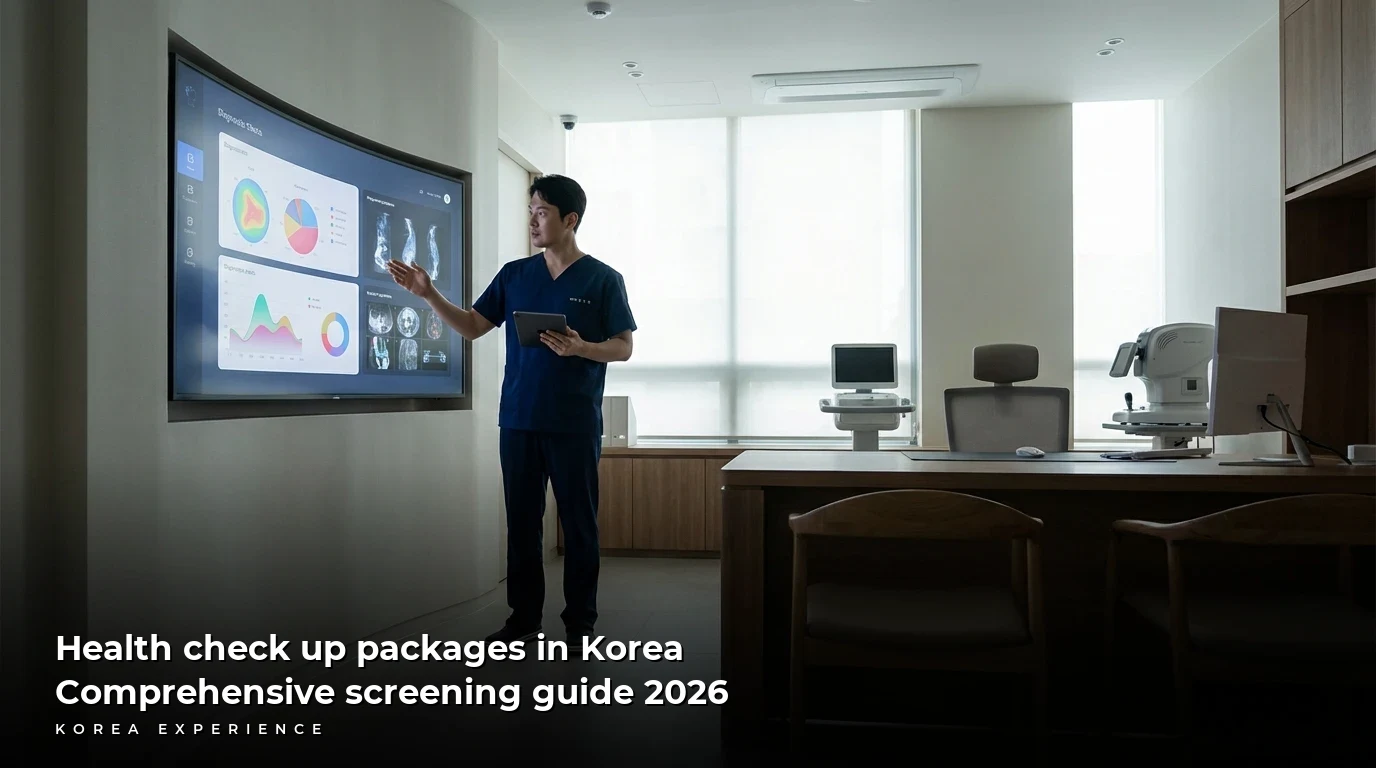
Medical tourism in South Korea has evolved beyond just cosmetic procedures. In 2026, the country stands as a global leader in preventative medicine, offering high-tech, efficient, and surprisingly affordable comprehensive health screenings. For international travelers and expats, navigating the vast array of hospital packages can be overwhelming, but the value proposition is undeniable.
The short answer: Comprehensive health check-up packages in Korea range from ₩500,000 ($380 USD) for basic screening to ₩3,500,000 ($2,650 USD) for VIP premium packages in 2026, with most results delivered in English within 3 to 7 business days.
Key Takeaways
- 1Basic full-body screenings start at approx. ₩500,000 ($380 USD) including ultrasound and basic blood work.
- 2Premium packages with MRI, CT scans, and conscious sedation endoscopy average ₩1,500,000 ($1,130 USD).
- 3Results are typically available in English within 5-7 days, often viewable via secure app or email.
- 4Booking 2-4 weeks in advance is essential for major university hospitals in Seoul.
Medical Disclaimer
The information provided in this guide is for educational and informational purposes only and does not constitute medical advice. Prices are estimates based on 2026 data and subject to change. Always consult with a qualified healthcare provider for your specific medical needs. In case of emergency in Korea, dial 119.
Why choose Korea for health screenings in 2026?
The concept of the "Health Check-up" (Geongang Geomjin) is deeply node-ed in Korean society. It is not just for the sick; it is a biannual or annual ritual for the healthy. This cultural emphasis has created a medical infrastructure optimized for speed, accuracy, and patient comfort.
Unlike in many Western countries where you might visit three different facilities for blood work, an MRI, and a dental exam, Korean health centers operate on a "One-Stop" system. You enter the facility, change into comfortable hospital wear (often provided with a smart RFID bracelet), and move through stations efficiently.
📊 Korean Medical Efficiency
In 2026, the technology has advanced even further. Many top-tier hospitals in Seoul now utilize AI-assisted diagnostic tools that analyze X-rays and MRIs with higher precision than ever before, reducing false positives by approximately 15% compared to 2023 standards.
Understanding the package tiers
Korean hospitals generally categorize their screening programs into three main tiers. Understanding these will help you budget effectively.
1. The Basic Package (Essential Screening)
Best for: Individuals in their 20s and 30s with no major underlying symptoms. Estimated Cost: ₩450,000 - ₩700,000 ($340 - $530 USD). Duration: 1.5 - 2 hours.
This package covers the fundamentals of body function. It typically includes:
- Body Composition: BMI, muscle mass, body fat percentage.
- Ophthalmology: Vision, intraocular pressure, fundus photography.
- Audiometry: Hearing tests.
- Cardiovascular: Blood pressure, EKG (Electrocardiogram).
- Pulmonary: Chest X-ray, pulmonary function test.
- Digestive: Upper gastrointestinal X-ray (Barium swallow) or basic gastroscopy.
- Abdominal: Ultrasound of the upper abdomen (liver, pancreas, kidneys).
- Laboratory: Complete blood count (CBC), liver function, kidney function, lipid profile, diabetes screening, urine analysis, and stool analysis.
2. The Comprehensive Package (Standard Gold)
Best for: Individuals in their 40s and 50s, or those with family history of illness. Estimated Cost: ₩900,000 - ₩1,600,000 ($680 - $1,200 USD). Duration: 3 - 4 hours.
This is the most popular option for medical tourists. It includes everything in the Basic package plus:
- Sedated Endoscopy: Gastroscopy (stomach) and often Colonoscopy (large intestine) performed under conscious sedation. This is a crucial screening for gastric cancers, which are prevalent in East Asia, meaning Korean doctors are world-experts at detecting early signs.
- CT Scans: Usually a choice of Chest CT (lung cancer) or Calcium Scoring CT (heart health).
- Detailed Ultrasound: Thyroid, prostate (men), breast/pelvic (women), and carotid artery.
- Tumor Markers: Extended blood tests specifically looking for cancer markers (AFP, CEA, CA19-9, PSA, etc.).
- Bone Density: DEXA scan for osteoporosis.
If you opt for the sedation endoscopy (highly recommended for comfort), you must not drive for 12 hours afterward. The propofol used clears quickly, but reaction times are slowed. Most clinics require you to sign a waiver stating you will use public transport or a taxi.
3. The Premium/VIP Package
Best for: Executives, retirees, or those seeking total peace of mind. Estimated Cost: ₩2,500,000 - ₩5,000,000+ ($1,900 - $3,800+ USD). Duration: 5 - 7 hours (sometimes includes an overnight stay).
This is the "head-to-toe" assessment utilizing the most expensive machinery.
- MRI & MRA: Brain MRI (structure) and MRA (blood flow/aneurysm check).
- PET-CT: Whole-body scan to detect metabolic activity of cancer cells.
- Genetic Testing: DNA analysis for hereditary disease risks.
- Cardiac Precision: Echocardiogram and treadmill stress test.
- Private Suite: VIP waiting rooms, dedicated 1-on-1 nursing staff, and a premium meal service post-exam.
💵 2026 Screening Cost Comparison
Full body + Endoscopy + CT
Top hospitals for international patients in Seoul
When choosing a facility, stick to the major university hospitals or specialized health screening centers. These locations have dedicated International Healthcare Centers (IHC) with English, Japanese, Chinese, and Russian coordinators.
1. Asan Medical Center (AMC)
Located in Songpa-gu, near the Olympic Park, Asan is consistently ranked as Korea's top hospital. Their Health Screening & Promotion Center is massive, handling over 50,000 patients a year.
- Pros: World-class diagnostics, seamless English interpretation.
- Cons: High demand means booking 2-3 months in advance is often necessary.
Asan Medical Center Health Promotion Center(서울아산병원 건강증진센터)
2. Severance Hospital (Yonsei University)
Located in Sinchon, this is one of the oldest and most prestigious Western-style hospitals in Korea.
- Specialty: Their robotic surgery and cancer centers are globally renowned. If your screening detects an anomaly, their referral system to a specialist is immediate.
- Location: Very central, easy to access from Hongdae or Gwanghwamun.
3. Samsung Medical Center (SMC)
Located in Gangnam, SMC is known for its "Smart Hospital" infrastructure. The entire process is digitally tracked.
- Vibe: Feels more like a hotel than a hospital. Very popular with corporate executives.
4. Specialized Screening Centers (KMI, Chaum)
Apart from university hospitals, dedicated centers like KMI (Korea Medical Institute) or Chaum Life Center focus only on check-ups.
- Chaum: Ultra-luxury. Focuses on anti-aging and bio-hacking alongside standard medical checks. Expect to pay a premium here.
- KMI: More budget-friendly, high volume, very efficient. Good for budget travelers.
If you are staying in the Gangnam area, many of these clinics are close to aesthetic centers. For those interested in combining health checks with skin treatments, check out our guide on best dermatology clinics in Seoul for foreigners.
Step-by-step: The screening journey
What does the day actually look like? Here is a typical timeline for a Comprehensive Package starting at 8:00 AM.
Check-up Day Timeline
Arrival & Registration
Check in at the International Center. Receive RFID bracelet and locker key.
Changing
Change into hospital pajamas and slippers provided in the locker room.
Basics Station
Blood draw, urine sample, height/weight, hearing, and vision tests.
Imaging
Ultrasound (abdomen, thyroid), X-rays, and CT scans.
Endoscopy Prep
IV line insertion for sedation. Consultation with gastroenterologist.
The Procedure
Sedated Gastroscopy/Colonoscopy (you will be asleep). Takes 20-40 mins.
Recovery
Wake up in recovery room. Doctor provides brief immediate summary.
Meal Service
Complimentary pumpkin or abalone porridge (juk) to soothe the stomach.
The "RFID" Bracelet System
One distinct feature of Korean health centers is the smart bracelet. You don't carry a clipboard. When you arrive at the "Eye Exam" room, you tap your bracelet on a scanner. Your name appears on the nurse's screen, and you sit in the waiting area. The screen on the wall shows your name and how many people are ahead of you. It is incredibly efficient and eliminates the "where do I go next?" confusion.
Detailed cost breakdown by procedure
While packages are the norm, understanding individual costs helps if you want to add specific tests (add-ons).
📋 Add-On Procedure Costs (2026 Est.)
Pro Tip: The Dental Add-on
Most health centers have a dentistry department. You can often add a scaling (cleaning) and dental check-up for about $50 USD while you are there. It saves you a separate trip.
How to prepare for your check-up
Preparation is critical for accurate results. Failure to follow these rules, especially regarding fasting, can lead to cancellation of your endoscopy or ultrasound.
📖 Preparation Protocol
Step 1: 3 Days Before
Avoid seeds (sesame, kiwi, strawberry), seaweed, and fibrous vegetables if having a colonoscopy.
Step 2: The Night Before
Begin fasting usually from 8:00 PM or 10:00 PM (minimum 8-12 hours). No water after midnight.
Step 3: Morning Of
Do not take diabetes medication (risk of hypoglycemia). High blood pressure meds can usually be taken with a sip of water (check with doctor).
Step 4: Females Only
Check-ups should generally be scheduled 5-7 days after your period ends for accurate urine and Pap smear results.
For those recovering from the procedure, especially if biopsies were taken, you'll want gentle food. We recommend exploring our guide to best Korean healing foods for surgery recovery for restaurant ideas that serve high-quality porridge (juk) and samgyetang.
Booking your appointment: The logistics
Direct Booking vs. Agencies
You can book directly through the hospital's International Healthcare Center website or email. This avoids agency fees. However, agencies can be helpful if you need assistance with transportation, hotel bookings, or translation beyond the hospital.
When to book:
- Big 5 Hospitals (Asan, Samsung, Severance, Seoul National, St. Mary's): Book 1-2 months in advance.
- Specialized Centers (KMI, Hana): Book 2-3 weeks in advance.
- Walk-ins: Generally not accepted for comprehensive packages, though basic blood work might be possible.
Payment Methods
Major hospitals accept international credit cards (Visa, Mastercard, Amex). Some may offer a slight discount for cash payments, though this is becoming rarer in large institutions.
- Tax Refund: Medical services for cosmetic purposes are eligible for VAT refunds, but general health screenings are typically tax-exempt already or do not qualify for tourist tax refunds as they are preventative, not aesthetic. However, rules change, so always ask the billing department.
Interpreting your results
One of the biggest anxieties for international patients is: "Will I understand the report?"
In 2026, major hospitals provide a comprehensive English Medical Report. This is not just a Google Translate printout. It is a bound book or a secure PDF file containing:
- Summary: A "Traffic Light" system (Green = Normal, Yellow = Watch, Red = Treatment Needed).
- Detailed Data: Your numerical values vs. the reference range.
- Images: Key screenshots from your Ultrasound or Endoscopy.
- Doctor's Note: Recommendations for lifestyle changes or medication.
Consultation: Most packages include a follow-up consultation. If you are leaving Korea quickly, this can often be done via Zoom or phone 3-7 days later when the final pathology results are back.
Combining screenings with your travel itinerary
Since a comprehensive check-up takes only a morning (approx. 4 hours), it fits easily into a travel schedule.
- Day 1: Arrival in Seoul. Light dinner. Fasting begins.
- Day 2: Morning Check-up at Asan or Samsung Hospital. Afternoon recovery (nap or light walk). Evening: Gentle dinner.
- Day 3: Full tourism activities.
For a low-impact itinerary suitable for the day after your check-up, consider visiting flat, easy-walking areas. Check our guide on accessible Seoul best routes for wheelchair and limited mobility which offers great suggestions for gentle exploration.
Conversely, if your results are clear and you're ready to celebrate with a drink, you might be interested in the healthier drinking trends discussed in our article about Zero-sugar soju and healthy drinking trends. Note: Please wait at least 24 hours after sedation before consuming alcohol!
Pros and Cons of Korean Health Screenings
To give you a balanced view, here is a summary of what to expect.
Korea Health Screening Analysis
- ✓Cost is 60-80% lower than US/Europe equivalents
- ✓State-of-the-art equipment (3.0T MRI, AI-assisted CT)
- ✓Extremely efficient (3-4 hours total)
- ✓English reports provided by major hospitals
- ✓Immediate referral to specialists if problems found
- ✗Communication can feel rushed (high volume)
- ✗Privacy is different (locker rooms are shared)
- ✗Follow-up care is difficult once you return home
- ✗Endoscopy preparation liquid is unpleasant to drink
Specialized Focus: Brain and Heart
In 2026, there is a rising trend in "Brain & Heart" focused packages due to the aging global population.
The Brain Check
Using 3.0 Tesla MRI machines, Korean doctors can visualize the brain structure in incredible detail.
- Brain MRI: Checks for tumors, strokes, and structural abnormalities.
- Brain MRA: Checks the blood vessels for aneurysms or stenosis (narrowing).
- Target Audience: People with chronic headaches, family history of stroke, or dementia concerns.
The Heart Check
- Coronary Calcium CT: A 10-minute scan that measures calcium deposits in heart arteries. It is a powerful predictor of future heart attack risk.
- Echocardiogram: Uses sound waves to check how your heart's chambers and valves are pumping.
MRI vs CT: Which do you need?
| Feature | Brain MRI | Brain CT |
|---|---|---|
| Radiation | None (Magnetic) | Yes (X-ray based) |
| Time Taken | 30-45 mins | 5-10 mins |
| Best For | Soft tissue, tumors, aneurysm | Bleeding, fracture, emergency |
| Cost (Korea) | ₩700k-900k | ₩150k-250k |
Practical Tips for Expats Living in Korea
If you are an expat with Korean National Health Insurance (NHIS), you are entitled to a free basic check-up every two years.
- Odd Birth Year: Eligible in odd years (e.g., 2025, 2027).
- Even Birth Year: Eligible in even years (e.g., 2026).
This "General Health Screening" is basic (blood pressure, chest x-ray, blood sugar). However, Pro Tip: You can go to a large hospital, claim your free basic check-up, and pay the difference to "upgrade" to a comprehensive package. This saves you about ₩100,000 - ₩150,000 off the package price.
Check out our guide on best neighborhoods for expats in Seoul to find clinics closest to where you live.
Frequently Asked Questions
❓ Common Questions About Health Screenings
Have more questions?Contact us →
Conclusion
Taking a health check-up in Korea is one of the smartest investments you can make for your well-being while traveling. The combination of high-tech diagnostics, speed, and affordability is unmatched globally. By dedicating just one morning of your 2026 trip to Seoul, you gain peace of mind that could be priceless.
Whether you opt for a basic screening or a VIP full-body scan, the Korean medical system is ready to welcome you with efficiency and care. Just remember: book early, follow the fasting rules, and enjoy the porridge afterward!
About the Author
Korea Experience Team
Written by the Korea Experience editorial team - experts in Korean medical tourism, travel, and culture with years of research and firsthand experience.
⚠️ Medical Disclaimer
The information provided on this website is for general informational purposes only and does not constitute medical advice. Always consult with qualified healthcare professionals before making any medical decisions.
Explore more in Medical Tourism
World-class medical procedures at competitive prices. From plastic surgery and dermatology to dental care and health checkups — your complete guide to medical tourism in Korea.
Browse All Medical Tourism ArticlesContinue Reading
Explore more articles you might find interesting
Compare SNU Gangnam and Severance Seoul Station for your 2026 health check-up. Discover why comprehensive packages starting at $640 USD save you thousands.
Explore the comprehensive guide to full mouth dental implants in Korea for 2026. Compare prices, understand timelines, and discover top clinics and practical tips for your medical journey.

Explore Gangneung Coffee Street in 2026. Discover 30+ ocean-view cafes, average prices of ₩6,000 per latte, and the famous Coffee Festival details.

Discover the best Stand Up Comedy In Seoul English Shows. From open mics in Itaewon to pro gigs in Gangnam, find schedules, prices, and venue details.

Discover the top Korean candle brands and fragrance shops in Seoul. From Granhand to Tamburins, find the perfect scent souvenir. Prices start at ₩15,000.
Discover comprehensive mental health resources in Korea. From English speaking therapists to crisis hotlines, find support for dealing with loneliness.