Historical Accuracy in K-Dramas: Fact vs Fiction
Explore the fascinating balance between historical facts and creative storytelling in Korean period dramas.
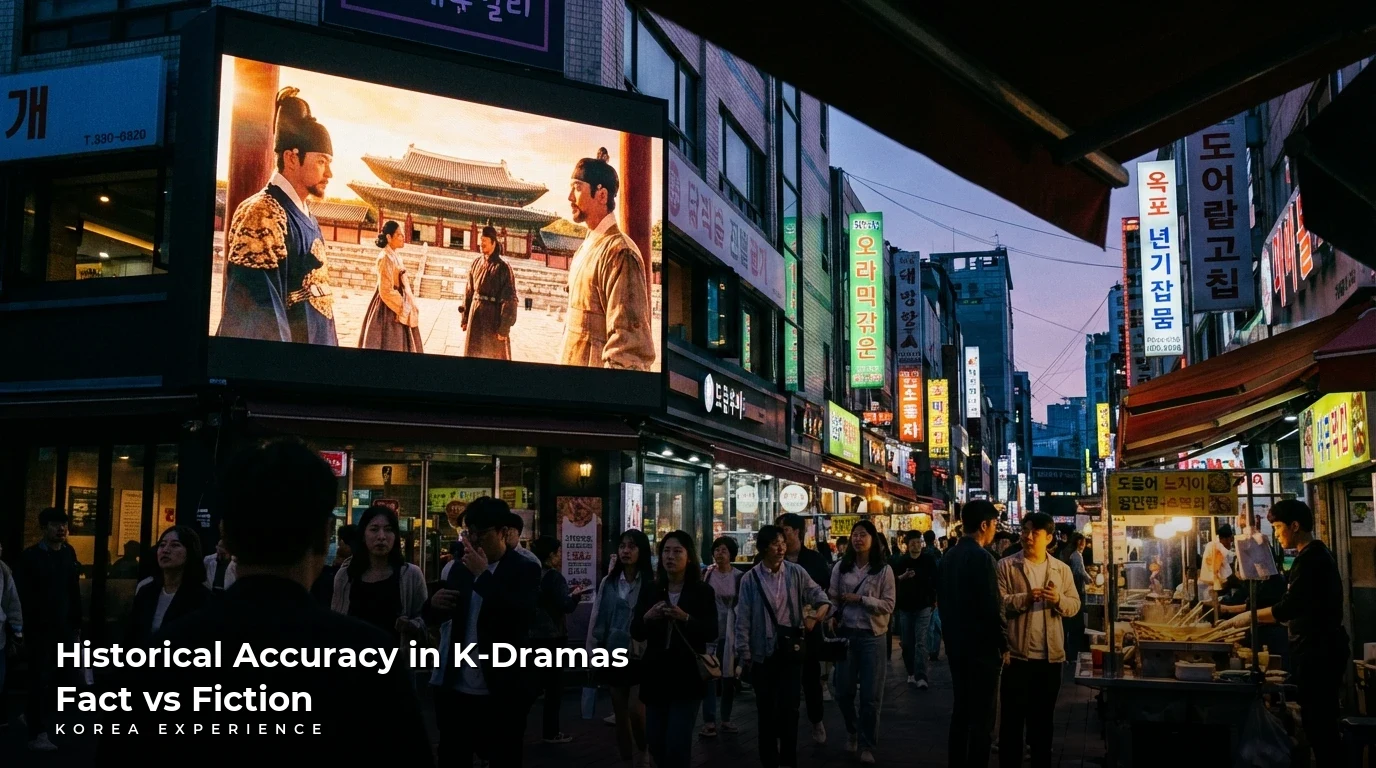
Introduction: The Magnetic Appeal of Korean Historical Dramas
Korean dramas, globally known as K-dramas, have captivated millions with their compelling narratives, stunning visuals, and often, their unique window into Korean history and culture. Among the most beloved genres are the historical dramas, or "sageuk," transporting viewers to ancient kingdoms, epic battles, and the intricate lives of kings, queens, and commoners. From the grandeur of Joseon palaces to the intricate political machinations of Goryeo, these shows offer an immersive experience that often sparks a deeper interest in Korea's rich past.
However, as international audiences delve deeper into these enthralling sagas, a common question arises: just how much of what we see on screen is historically accurate? The truth is, the relationship between historical fact and fictional embellishment in sageuk is a complex dance, a delicate balance between educating and entertaining. This blog post aims to unwrap this fascinating dynamic, guiding you through the spectrum of historical accuracy in K-dramas. We'll explore why creative liberties are taken, how to discern fact from fiction, and ultimately, how to appreciate these dramas not just as entertainment, but as a gateway to understanding Korea's enduring legacy. By the end, you'll be equipped with the knowledge to enjoy your next sageuk with an informed, critical, and even more appreciative eye.
The Allure of Sageuk: Why We Love Korean Historical Dramas
Korean historical dramas hold a special place in the hearts of viewers worldwide. Their global appeal stems from a blend of compelling narratives, exquisite aesthetics, and a unique ability to connect audiences with a distant past. Understanding this allure is key to appreciating why screenwriters and directors sometimes prioritize dramatic effect over strict historical fidelity.
A Gateway to Korean History and Culture
For many international viewers, sageuk serve as their first introduction to Korean history, ancient customs, and social structures. Dramas like "Dae Jang Geum" (Jewel in the Palace) introduced audiences to royal court cuisine and traditional medicine during the Joseon Dynasty. "Six Flying Dragons" offered a gritty, politically charged look at the founding of Joseon. These series don't just tell stories; they immerse viewers in distinct eras, showcasing traditional clothing ("hanbok"), architecture, etiquette, and the values that shaped Korean society for centuries. They make history accessible and engaging, transforming dry historical facts into vibrant, living narratives. This initial exposure often encourages viewers to seek out more accurate historical accounts, bridging the gap between entertainment and education.
Stunning Visuals and Engaging Storytelling
Visually, Korean historical dramas are often masterpieces. Lavish sets, meticulously designed "hanbok," and breathtaking cinematography transport viewers straight into the heart of ancient Korea. Palaces are recreated with grandeur, battle scenes are choreographed with epic scale, and even the smallest details of daily life are presented with aesthetic precision. Beyond the visuals, the storytelling in sageuk is renowned for its depth and emotional resonance. They masterfully weave tales of love, betrayal, loyalty, ambition, and sacrifice, often set against backdrops of political intrigue and societal upheaval. These universal themes, combined with uniquely Korean historical contexts, create narratives that are both exotic and deeply relatable, ensuring their widespread appeal.
Emotional Depth and Universal Themes
While rooted in specific historical periods, sageuk often explore universal human experiences that transcend time and culture. The struggle for justice, the pursuit of power, the complexities of love, the resilience of the human spirit ? these themes resonate with audiences regardless of their background. Whether it's the unwavering loyalty of a subject to their king, the forbidden romance between individuals from different social classes, or the arduous journey of a hero fighting for their people, these narratives tap into fundamental human emotions. This emotional depth is often amplified by the high stakes inherent in historical settings, where decisions can affect the fate of an entire nation, making the dramas incredibly gripping and impactful.
Navigating Historical Accuracy in K-Dramas: The Spectrum
The term "historical drama" in Korea encompasses a broad range of productions, from painstakingly researched biopics to fantastical tales loosely draped in period attire. Understanding this spectrum is crucial for discerning how much historical accuracy to expect.
Strictly Historical: Docu-dramas and Biopics
At one end of the spectrum are dramas that strive for high levels of historical fidelity, often categorized as docu-dramas or biopics. These productions aim to reconstruct historical events and the lives of actual historical figures as accurately as possible, relying heavily on historical records, academic research, and expert consultation. While some dramatic interpretation is inevitable, the core narrative, character motivations, and major plot points generally align with accepted historical consensus.
- Examples: "Six Flying Dragons" (2015-2016), which meticulously portrays the complex political landscape and the six key figures who established the Joseon Dynasty. While character dialogues and some subplots are fictionalized, the overarching historical narrative, political conflicts, and key events are closely based on real records. "The Great King Sejong" (2008) also sought to accurately depict King Sejong's accomplishments, particularly the creation of the Korean alphabet, "hangul," and his scientific advancements, largely adhering to known facts. These dramas are invaluable for those seeking a more direct historical lesson, though their serious tone might be less appealing to viewers looking purely for escapism.
Historically Inspired: Fictional Characters in Real Settings
This category represents the largest portion of popular sageuk. These dramas often feature a mix of real historical figures and entirely fictional characters. They are set in identifiable historical periods, touch upon genuine historical events, and sometimes even incorporate real historical locations or artifacts. However, significant creative liberties are taken with plot lines, character relationships, and the outcomes of events to heighten dramatic tension or appeal to modern sensibilities. The historical backdrop serves more as a canvas for compelling storytelling rather than a strict adherence to facts.
- Examples: "Dae Jang Geum" (2003) is a prime example. While Jang Geum was a real historical figure, the first female royal physician in Joseon, most of the drama's intricate plot involving court intrigue, culinary challenges, and her personal life is fictionalized. The same applies to "Queen Seondeok" (2009). Queen Seondeok was a real ruler of Silla, but her personal life, specific political rivalries, and many characters around her were invented or heavily adapted for dramatic purposes. "Hwarang" (2016) took the concept of the Hwarang warriors of Silla, a real historical institution, and spun a vibrant, youth-oriented story with largely fictional characters and highly stylized elements, bearing only a loose resemblance to the historical reality of the Hwarang.
Fantasy & Fusion Sageuk: Loosely Based or Wholly Invented
At the farthest end of the spectrum are "fusion sageuk" or fantasy historical dramas. These productions use a historical period as a mere aesthetic backdrop, often blending historical elements with supernatural, magical, or anachronistic themes. Historical accuracy is explicitly deprioritized in favor of creative freedom and genre blending. These dramas sometimes include fantastical elements, time travel, or alternative histories, making no claims to strict historical representation.
- Examples: "Moon Lovers: Scarlet Heart Ryeo" (2016) involves a modern woman time-traveling back to the Goryeo Dynasty, interacting with real historical princes whose fates she knows, but her influence and their romantic entanglements are entirely fictional. "Alchemy of Souls" (2022-2023) is a prime example of a pure fantasy historical drama, set in a fictional land called Daeho, drawing aesthetic inspiration from historical Korea but creating an entirely new magical world with no ties to actual history. "Mr. Queen" (2020) involves a modern male chef's soul getting trapped in the body of a Joseon queen. While it features real historical figures, the premise itself and many of the resulting comedic situations are entirely fantastical. These dramas prioritize entertainment and escapism, often explicitly stating their fictional nature.
Common Areas of Artistic License and Fabrication
While the degree varies, most sageuk, even those aiming for historical accuracy, will take some form of artistic license. Understanding these common deviations helps viewers appreciate the storytelling without mistaking it for unadulterated history.
Character Personalities and Relationships
This is arguably the most common area of dramatization. Historical records often provide only sparse details about a person's personality or their exact relationships with others. Screenwriters frequently invent or exaggerate character traits, romanticize historical figures, or create entirely new relationships (like love triangles or intense rivalries) to build a compelling narrative. For instance, a wise king might be portrayed as brooding and complex, or a ruthless politician might be given a tragic backstory to garner viewer sympathy. Actual historical figures who may have never met in real life are often brought together as allies or enemies for plot convenience.
Costumes, Hairstyles, and Makeup
While "hanbok" are beautiful, their on-screen rendition often prioritizes modern aesthetic appeal over strict historical authenticity. For example, the colors might be brighter, the fabrics more luxurious, and the designs more elaborate than what was truly common for the depicted era and social class. Historical "hanbok" were often simpler, more muted, and dictated by strict sumptuary laws. Hairstyles and makeup are also frequently stylized to fit contemporary beauty standards, especially for female leads. Ancient hairstyles could be far more complex, and makeup practices, while present, were different from the often flawless, natural-looking makeup seen on actresses today. Real historical clothing also varied significantly by region, class, and specific dynasty, nuances often simplified for broader appeal.
Plot Devices and Dramatic Embellishments
To maintain viewer engagement, K-dramas often employ classic plot devices that diverge from history. Timelines might be compressed or stretched, historical events might be simplified, or the motivations behind political decisions might be oversimplified into good-vs-evil narratives. Intrigue might be heightened with secret societies, daring escapes, or sudden reversals of fortune that have no basis in historical records. For example, a conflict that lasted years might be resolved in a single dramatic episode, or a complex political negotiation might be boiled down to a personal confrontation between two characters.
Language and Speech Patterns
While sageuk are set in the past, the language spoken by characters is largely modern Korean, albeit with some archaic honorifics and stylistic touches to evoke a sense of the past. Viewers would find it incredibly difficult, if not impossible, to understand if characters spoke in the actual archaic Korean of the Goryeo or Joseon periods. The choice to use modern Korean with historical nuances makes the dialogue accessible while still conveying a sense of period setting.
Social Customs and Etiquette
While dramas often feature scenes of bowing, royal etiquette, and social hierarchy, these are frequently simplified or adapted for easier comprehension by a modern audience. The true complexity and rigidity of historical Korean social customs, protocols, and class distinctions would likely be overwhelming or confusing for contemporary viewers. Certain rituals might be exaggerated, or others completely omitted, to serve the narrative flow or highlight a particular character's defiance or adherence to norms.
When Dramas Get It Right: Praiseworthy Historical Detail
Despite the necessary artistic liberties, many Korean historical dramas are commendable for their efforts to represent certain aspects of history accurately, enriching the viewing experience and providing valuable insights.
Architectural Fidelity
One of the most impressive aspects of sageuk is their often-stunning and historically resonant architecture. While sets are built, many dramas are filmed on location at actual historical palaces and villages, or at meticulously recreated historical sets. This gives viewers a tangible sense of the grandeur and design of past eras.
- Gyeongbokgung Palace (Seoul): The main royal palace of the Joseon Dynasty, often featured as the primary setting for dramas about Joseon kings and queens. Its grand scale and iconic gates like Gwanghwamun are instantly recognizable.
- Practical Info: Open daily except Tuesdays, typically 9 AM - 5 PM (seasonal variations apply). Admission is approximately ₩3,000 for adults.
- Changdeokgung Palace (Seoul): A UNESCO World Heritage site known for its exquisite Secret Garden (Huwon), offering a more natural and serene setting. It was the primary palace for many Joseon kings after Gyeongbokgung.
- Practical Info: Open daily except Mondays, typically 9 AM - 6 PM (seasonal variations apply). Admission is approximately KR3,000 for the palace, and an additional ₩5,000 for a guided tour of the Secret Garden.
- Suwon Hwaseong Fortress (Suwon): Another UNESCO site, this massive fortress surrounds the city of Suwon and was built by King Jeongjo. It's often used for large-scale battle scenes or scenes depicting royal processions outside the capital.
- Practical Info: The fortress walls are largely open 24/7. Specific attractions within the fortress have varying hours (9 AM - 6 PM) and small admission fees (approx. ₩1,000-2,000 per site).
- Bukchon Hanok Village (Seoul): A preserved traditional Korean village nestled between Gyeongbokgung and Changdeokgung, offering a glimpse into the homes of Joseon nobility. While not a palace, it's often used for scenes depicting everyday life in the capital.
- Practical Info: Always open, free to explore. Remember it's a residential area, so be respectful of residents.
- Namsangol Hanok Village (Seoul): A collection of five traditional houses from different social classes and time periods, relocated and restored to showcase various aspects of Joseon life.
- Practical Info: Open daily except Mondays, typically 9 AM - 6 PM. Free admission.
These locations provide an authentic visual backdrop that significantly enhances the "historical accuracy in K-Dramas."
Political Systems and Power Struggles
While specific events and characters' roles might be dramatized, many sageuk do a commendable job of representing the general framework of political systems, the intricate power struggles within the royal court, and the roles of various government ministries during different dynasties. Viewers can learn about the king's absolute (yet often checked) power, the influence of royal in-laws, the rivalry between different political factions (like the Noron and Soron factions in Joseon), and the constant threat of coups or rebellions. Dramas often highlight the rigid social hierarchy and the limited opportunities for upward mobility, reflecting genuine historical conditions.
Cultural Practices and Technologies
Sageuk often showcase historical cultural practices, scientific advancements, and technological innovations. For instance, "The Great King Sejong" meticulously illustrates the invention of "hangul," the Korean alphabet, and the development of scientific instruments. "Dae Jang Geum" highlights traditional Korean medicine and cuisine. Dramas frequently feature traditional crafts, music, dance, and ceremonies, offering a window into the cultural richness of the past. The depiction of agrarian life, the importance of Confucian ideals, and the role of various religious beliefs (like Buddhism or shamanism) can also be historically informed.
The Lives of Commoners and Social Class Structures
While royal dramas often focus on the elite, many sageuk also shed light on the lives of commoners, slaves, and merchants. They depict the struggles faced by the lower classes, the rigid social hierarchy, and the occasional instances of social mobility. Dramas like "Slave Hunters" ("Chuno") offer a grittier portrayal of life outside the palace walls. Even within royal dramas, the interactions between different social strata (e.g., between royals and their court ladies, eunuchs, or guards) can provide insights into the complex class dynamics of historical Korea, even if individual stories are fictionalized for dramatic effect.
How to Spot the Difference: Tips for the Discerning Viewer
For international viewers eager to understand the "historical accuracy in K-Dramas," a discerning approach can significantly enhance the viewing experience. Here's how to become a more informed observer:
Research the Era and Key Figures
Before or during your watch, take a few moments to do some quick research on the historical period and the main figures depicted. A quick search on Wikipedia or a reliable history website can provide crucial context. Learn about the major historical events of the era (e.g., Imjin War, creation of "hangul"), the reign of the monarch, and the known facts about prominent historical figures. This foundational knowledge will immediately help you identify where the drama takes liberties. For example, if a drama shows King Sejong as a young, charismatic warrior, a quick check will reveal he was more known for his scholarly pursuits and administrative prowess.
Pay Attention to the "Disclaimer"
Many historical dramas, especially those that take significant creative liberties, will include a disclaimer at the beginning or end of the first episode. This small text, often flashing briefly on screen, states that the drama is "fiction based on historical events" or "contains elements of creative imagination." Don't ignore these! They are the production team's way of informing you about their approach to historical accuracy. Fusion sageuk or fantasy dramas will often have more explicit disclaimers about their fictional nature.
Cross-Reference with Reputable Sources
If a particular plot point or character detail sparks your curiosity about its authenticity, delve deeper. Consult reputable history books, academic articles, or established historical databases. Many universities and cultural organizations offer English-language resources on Korean history. For example, the National Museum of Korea, the Korean Cultural Center, or university Asian studies departments often have online materials or recommendations for further reading that can provide accurate historical context. Be wary of fan wikis or forums as primary sources, as they may perpetuate inaccuracies.
Visit Historical Sites and Museums
The best way to solidify your understanding of Korean history and truly appreciate the backdrop of these dramas is to visit the real historical sites. Standing in the very places where historical events unfolded can provide an unparalleled sense of connection and context.
Here's a recap of some key locations and their relevance:
| Historical Site | Relevance to K-Dramas | Location | Typical Operating Hours | Approx. Adult Admission |
|---|---|---|---|---|
| Gyeongbokgung Palace | Joseon Dynasty royal palace; often main drama setting | Seoul | 9 AM - 5 PM (seasonal); Closed Tue | ₩3,000 |
| Changdeokgung Palace | Joseon palace with Secret Garden; often for royal intrigue | Seoul | 9 AM - 6 PM (seasonal); Closed Mon | ₩3,000 (palace) + ₩5,000 (garden tour) |
| Suwon Hwaseong Fortress | Joseon fortress built by King Jeongjo; battle/procession scenes | Suwon (near Seoul) | Walls open 24/7; Sites 9 AM - 6 PM | ₩1,000-2,000 per site |
| Bukchon Hanok Village | Traditional noble homes; daily life in Joseon capital | Seoul | Always open | Free |
| Namsangol Hanok Village | Collection of traditional houses; broader Joseon life | Seoul | 9 AM - 6 PM; Closed Mon | Free |
| National Museum of Korea | Extensive collection of historical artifacts & exhibitions | Seoul | 10 AM - 6/9 PM (seasonal); Closed Jan 1, Lunar New Year | Free (special exhibitions may charge) |
Visiting these sites offers a tangible link to the past depicted in the dramas, allowing you to compare the cinematic version with reality. You might notice the scale, the layout, or even small architectural details that were faithfully recreated or cleverly adapted for the screen.
The Value of "Fiction" in Historical Dramas
While the pursuit of "historical accuracy in K-Dramas" is a valid and interesting endeavor, it's equally important to acknowledge and appreciate the value that creative license and outright fiction bring to the genre. These elements aren't always flaws; often, they are necessary components that contribute to the sageuk's enduring popularity and cultural impact.
Sparking Interest in Korean History
Perhaps the most significant contribution of fictionalized sageuk is their ability to act as a powerful gateway to Korean history. For many international viewers, a K-drama is their first introduction to figures like King Sejong, Queen Seondeok, or historical events like the Imjin War. While the drama itself might take liberties, it ignites curiosity. Viewers, compelled by the stories, often feel inspired to research the actual history behind the drama, leading them to discover authentic historical facts they might never have encountered otherwise. In this sense, a compelling, even if slightly inaccurate, story can be a more effective historical educator than a dry textbook.
Promoting Cultural Understanding Globally
Sageuk are not just about historical facts; they are about cultural dissemination. Through these dramas, viewers around the world are exposed to traditional Korean values, aesthetics, customs, and social dynamics. Even if romanticized or simplified, the portrayal of "hanbok," traditional architecture, etiquette, family values, and community spirit helps foster a broader appreciation for Korean culture. This exposure can break down cultural barriers, encourage empathy, and promote a deeper understanding of Korea's heritage and identity on a global scale. The shared emotional experience of watching a sageuk fosters a connection that transcends geographical and cultural divides.
Creative Freedom and Artistic Expression
At its core, a historical drama is a work of art. Limiting screenwriters and directors to absolute historical fidelity would stifle creativity and lead to productions that might be historically correct but dramatically inert. Creative freedom allows for more complex character development, more engaging plot twists, and the exploration of themes that resonate with contemporary audiences. It enables the creation of compelling narratives that might not fit neatly into historical records but are emotionally powerful and thought-provoking. This artistic license is what transforms historical accounts into captivating stories.
Exploring Universal Themes Through a Historical Lens
Fictional elements allow dramas to explore universal human themes?love, loss, ambition, betrayal, justice, and the struggle for power?within a visually rich and culturally distinct historical setting. By creating fictional characters or embellishing historical ones, screenwriters can craft narratives that directly address these themes in a relatable and impactful way. The historical backdrop provides a unique context, adding gravitas and a sense of epic scale to these timeless human experiences. This blend of historical setting and universal themes is a key reason why sageuk connect so deeply with such a diverse global audience, proving that sometimes, fiction can illuminate truths beyond mere facts.
Comparison Table: Fictional vs. Historical Representation in K-Dramas
Let's illustrate some common points of divergence with specific examples.
| Aspect of Drama | Fictional/Dramatized Representation | Historical Reality | Example K-Drama & Dynasty |
|---|---|---|---|
| Character Romance | Major romantic plotlines between historical figures, often love triangles, for dramatic effect. | Historical records rarely detail personal romances; marriages were often political. | "Moon Lovers: Scarlet Heart Ryeo" (Goryeo), "Hwarang" (Silla) |
| Hanbok Design | Vibrant colors, luxurious fabrics, modern cuts, and elaborate hairstyles for aesthetic appeal. | More subdued colors, simpler designs, stricter sumptuary laws, varied by class & era. | Most sageuk |
| Political Intrigue | Simplified good vs. evil narratives, personal rivalries driving major political conflicts. | Complex web of factionalism, economic factors, and shifting alliances. | "Queen Seondeok" (Silla), "Empress Ki" (Goryeo/Yuan) |
| Warrior Prowess | Main characters (even royals) often depicted as master swordsmen or martial artists. | While martial training was present, royal figures were primarily administrators or scholars. | "Moonlight Drawn by Clouds" (Joseon), "Warrior Baek Dong-soo" (Joseon) |
| Social Mobility | Commoners rising to high positions through talent or luck; overcoming strict class barriers. | Extremely rare; strict hereditary class system (e.g., bone-rank in Silla, "yangban" in Joseon). | "Dae Jang Geum" (Joseon), "Dong Yi" (Joseon) |
Comparison Table: Types of Sageuk and Their Accuracy Levels
To further clarify, here's a general guide to different sub-genres of sageuk and their typical approach to historical accuracy.
| Sageuk Type | Primary Goal | Approach to Historical Accuracy | Typical Characteristics | Example K-Dramas |
|---|---|---|---|---|
| Strictly Historical | Education, biographical portrayal | High; adheres closely to historical records | Serious tone, slower pace, focus on known facts. | "Six Flying Dragons," "The Great King Sejong" |
| Historically Inspired | Entertainment with historical backdrop | Moderate; real figures/events with significant fictionalization | Blend of real and invented characters, dramatic plot twists, romance. | "Dae Jang Geum," "Queen Seondeok," "Mr. Sunshine" |
| Fusion Sageuk | Modern appeal, genre blending | Low; historical setting is aesthetic, plot is heavily altered/invented | Modern sensibilities, fantasy elements, time travel, lighthearted. | "Mr. Queen," "Moon Lovers: Scarlet Heart Ryeo," "Rooftop Prince" |
| Fantasy Historical | Pure fantasy, often set in fictional kingdoms | Minimal to None; only aesthetic inspiration | Magic, mythical creatures, entirely new worlds/rules. | "Alchemy of Souls," "Arthdal Chronicles" |
FAQ Section: Common Questions About K-Drama Historical Accuracy
Here are answers to some frequently asked questions about "historical accuracy in K-Dramas" to help you navigate the rich world of sageuk.
1. Are all Korean historical dramas based on real events? No, not all Korean historical dramas are based entirely on real events. While many are set in genuine historical periods and feature real historical figures (like kings, queens, or famous scholars), a significant portion takes considerable creative liberties with plots, character relationships, and specific events. Some, known as "fusion sageuk" or fantasy historical dramas, may even be set in entirely fictional kingdoms or incorporate supernatural elements, using historical Korea only as an aesthetic inspiration. It's crucial to distinguish between dramas that aim for high historical fidelity and those that prioritize entertainment and artistic storytelling.
2. Why do K-dramas change historical facts? K-dramas often change historical facts for several reasons, primarily to enhance dramatic effect and appeal to a broader, modern audience. Firstly, historical records can be sparse, leaving gaps that writers fill with fictional narratives to create a more complete story. Secondly, modern viewers might find strictly accurate historical accounts, language, or social customs too slow or challenging to follow. Dramas therefore simplify complex political situations, introduce relatable romantic plotlines, or give characters contemporary personalities to increase engagement. Ultimately, the goal is often to entertain and tell a compelling story, even if it means bending historical truths.
3. What are some historically accurate K-dramas? While no historical drama can be 100% accurate, some K-dramas are renowned for their high degree of historical fidelity. "Six Flying Dragons" is often cited for its meticulous portrayal of the founding of the Joseon Dynasty and its complex political figures. "The Great King Sejong" also strives for accuracy in depicting King Sejong's accomplishments, particularly the creation of "hangul." Other dramas like "Jeong Do-jeon" are highly praised by historians for their political realism. These dramas often focus on actual historical documents and academic research to build their narratives.
4. Where can I learn more about Korean history? There are many excellent resources to deepen your understanding of Korean history beyond K-dramas.
- Books: Look for academic texts or popular history books by renowned Korean or international historians.
- Museums: The National Museum of Korea in Seoul offers a comprehensive overview of Korean history, while palace museums provide specific dynastic insights.
- Online Resources: Reputable sources include university Asian studies departments, the Korean Cultural Center (KCC) websites, the National Institute of Korean History, and scholarly journals.
- Documentaries: Seek out documentaries specifically focused on Korean history.
- Cultural Tours: Consider guided tours of historical sites in Korea, where knowledgeable guides can provide historical context.
5. Does historical inaccuracy harm cultural understanding? The impact of historical inaccuracy is debatable. While some purists argue that significant deviations can distort public perception of history, many believe that historical dramas, even with inaccuracies, serve as valuable gateways. They spark initial interest in Korean history and culture, making it more accessible and engaging for international audiences. As long as viewers approach these dramas with a critical eye and understand that they are primarily entertainment, the overall positive impact of cultural dissemination and interest generation often outweighs the potential harm of minor historical discrepancies. The key is to distinguish between entertainment and authoritative historical record.
Conclusion: Appreciating the Art and History of Sageuk
Korean historical dramas offer a captivating blend of entertainment, cultural immersion, and historical intrigue. Their global appeal is undeniable, drawing millions into the rich tapestry of Korea's past. However, as we've explored, the "historical accuracy in K-Dramas" exists on a broad spectrum, ranging from meticulously researched docu-dramas to fantastical tales merely dressed in period costumes.
The creative liberties taken by screenwriters and directors are often essential for crafting compelling narratives that resonate with contemporary audiences. They spark interest, promote cultural understanding, and provide a unique canvas for exploring universal human themes. By understanding where and why these artistic choices are made, viewers can develop a more nuanced appreciation for sageuk.
Actionable Takeaways for the Discerning Viewer:
- Watch with Awareness: Enjoy the drama for its storytelling and visual splendor, but maintain a healthy skepticism about everything you see as factual.
- Do Your Research: Use dramas as a springboard for genuine historical inquiry. A quick search can vastly enrich your understanding.
- Visit the Source: Immerse yourself in authentic Korean history by visiting actual palaces, fortresses, and museums in Korea. These experiences offer an unparalleled connection to the past.
- Appreciate the Fusion: Recognize that the blend of fact and fiction is often what makes these dramas so uniquely engaging and powerful.
By embracing this balanced perspective, you can elevate your K-drama viewing experience, transforming it from mere passive consumption into an active journey of cultural and historical discovery. So, the next time you settle in for a sageuk, let yourself be swept away by the drama, but also keep an eye out for those fascinating glimpses of genuine history that shine through.
Want to dive deeper into Korean culture? Explore our other guides on traditional Korean cuisine, understanding modern K-pop trends, or planning your ultimate trip to Korea!
About the Author
Korea Experience Team
Written by the Korea Experience editorial team - experts in Korean medical tourism, travel, and culture with years of research and firsthand experience.
Explore more in K-Culture
K-Pop, K-Drama, traditional arts, and modern culture — dive deep into the cultural phenomena that have captivated the world.
Browse All K-Culture ArticlesContinue Reading
Explore more articles you might find interesting
Explore the chilling history of Seoul through haunted palaces and dark tourism spots. Discover ghost stories and practical visiting tips for 2026.
Explore the fascinating journey of Korean webtoons transforming into global K-drama sensations.
Explore the evolution of Korean parenting from traditional education fever to modern work-life balance in 2026, with costs and expat tips.
Explore the contrast between Seoul's industrial chic Seongsu-dong and the traditional elegance of Samcheong-dong in this ultimate design lover's guide.
Discover essential K-Literature in English to decode modern Korean culture. From Han Kang to healing fiction, explore the best books of 2026.

Explore how Korean webtoons work, from domestic and global reading platforms to AI translation tools and physical pop-up experiences in Seoul.