Hon-bap Guide: How to Eat Alone in Korea Like a Local in 2026
Discover the 2026 solo dining revolution in Seoul where 36.1% of households are single. Learn to navigate BBQ joints and avoid lunchflation prices.
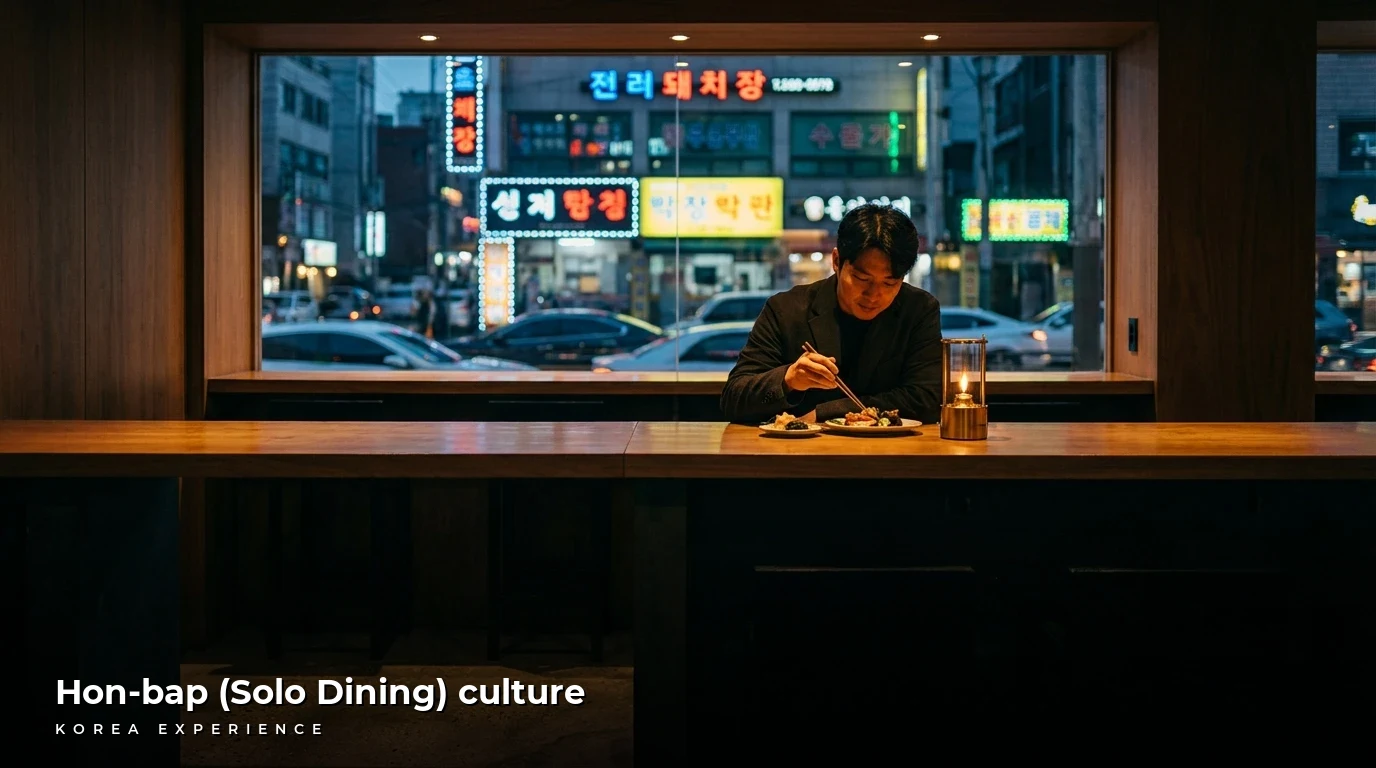
The short answer is: YES. But let me tell you, it wasn't always this simple. If you asked me this question ten years ago, I would have told you to pack plenty of protein bars because you might starve trying to find a restaurant that would welcome a party of one. But we are living in 2026 now, and the game has completely changed.
Worried that eating alone in Seoul will earn you awkward stares? Don't be—Korea’s solo dining scene has exploded into a full-blown cultural revolution. While you might still hear stories about foreigners getting turned away or receiving the dreaded "X" arms from a grumpy owner, today, Hon-bap (the Korean slang for "eating alone") is a massive cultural phenomenon.
Why the shift? Because the numbers don't lie. As of late 2025, over 36% of all households in Korea are single-person households. That is more than 8 million people waking up, going to work, and getting hungry all by themselves. The restaurant industry had to adapt or die. So if you're standing outside a restaurant in Hongdae or Gangnam wondering if you're weird for eating solo, look around. You're statistically in the majority.
Key Takeaways
- 1You absolutely can eat alone in Korea without looking like a loner; it is now trendy and supported by the rise of Hon-bap culture.
- 236.1% is the percentage of single-person households in Korea as of late 2024/2025, forcing the restaurant industry to pivot to solo diners.
- 3Actionable advice: For BBQ, look for the "2in-bun" (2-person portion) rule. You can often dine solo if you order two servings or visit specialized spots like Hongojib.
📋 Quick Facts
The Rise of Hon-bap Culture
To understand Hon-bap, you have to understand the Korean concept of Jeong (connection/affection) and the communal table. For centuries, Korean dining was inherently social. You didn't just order a plate of food for yourself; you ordered a big stew or a pile of meat for the table to share. Side dishes (banchan) were shared. Eating alone was seen as socially suspicious.
But then, modern life happened. The hyper-competitive job market, the rising cost of living, and the grueling work hours created a new tribe: the Hon-jok (the "alone tribe"). These were young people who realized that coordinating schedules with friends for dinner was impossible. This aligns closely with Understanding Pali-Pali Culture, where the fast-paced lifestyle necessitates efficiency over ceremony.
Then COVID-19 hit in 2020, and suddenly, eating alone wasn't just a preference; it was a safety requirement. Fast forward to 2026, and we've reached a tipping point. The government is even getting involved! In preparation for the 2026 World Island Expo, the city of Yeosu explicitly started certifying restaurants as "Solo-Dining Friendly" to ensure tourists wouldn't feel awkward. We've gone from "eating alone is sad" to "eating alone is a recognized demographic that needs government support."
The Term Emerges
The words Hon-bap (eating alone) and Hon-sul (drinking alone) enter the lexicon as single households rise.
Media Recognition
TV shows like Drinking Solo and K-pop stars discussing eating alone normalize the concept.
Pandemic Shift
COVID-19 forces social distancing, accelerating the acceptance of solo dining and delivery apps.
10 Million Mark
Single-person households in Korea officially surpass the 10 million mark for the first time.
The "No Solo" Backlash
A viral controversy erupts as some restaurants explicitly ban solo diners or charge double, sparking debate.
Yeosu Initiative
Yeosu City launches a campaign to certify 100 "Solo-Dining Friendly" restaurants for the World Island Expo.
Where to Eat Solo: The Three Tiers
So, where do you actually go? You basically have three tiers of options, and understanding them will save you a lot of anxiety. For a more detailed look at high-end options, check out our guide on Solo Fine Dining in Seoul.
Level 1: The Convenience Store (Pyeoneui-jeom)
This is the safe zone. Korean convenience stores (CU, GS25, 7-Eleven) are basically mini-restaurants. They have tables, microwaves, and charging ports. You will see businessmen in suits eating ramen next to students eating gimbap. It's totally normal and budget-friendly (approx. ₩7,000 for a combo).
Level 5: The "Solo-Friendly" Specialists
This is where it gets fun. Places like Hongojib (Solo BBQ Specialist) or Ichiran are designed for you. They have partitions between seats, personal grills, and tablet ordering. You don't even have to speak to a human if you don't want to.
- Recommendation: Hongojib (Myeongdong Branch) offers personal grills and English touchscreen ordering.
- Recommendation: Myeongdong Kyoja offers Michelin Bib Gourmand noodles with solo-friendly communal tables and robot servers.
Level 8-9: Traditional Restaurants
This is "Hard Mode." I'm talking about BBQ joints or spicy stew places. These places operate on thin margins and rely on selling alcohol and volume. A solo diner taking up a four-top table and ordering one stew is losing them money. That’s why you face the "2-person minimum" rule here. But don't let that stop you—if you're willing to pay, you can still play.
| Feature | Convenience Store | Solo-Specialty BBQ | Traditional Restaurant |
|---|---|---|---|
| Cost | ₩ (₩5,000 - ₩8,000) | ₩₩ (₩12,000 - ₩20,000) | ₩₩ (₩10,000 - ₩15,000) |
| Processing Time | Instant (Microwave) | Medium (Cook yourself) | Fast to Medium |
| Stare Factor | 0% (Everyone does it) | 0% (Partitions/Private) | 20-50% (Depends on peak hours) |
| Requirements | None | None | Often "2-person minimum" |
| Best For | Quick, budget meals | Cravings for high-quality meat | Stews, Soups, Bibimbap |
| 2026 Changes | More "high-end" meal kits | More kiosks/tablet ordering | Rising prices ("Lunchflation") |
Pros and Cons of Hon-bap in 2026
Pros
- ✓Total Freedom: You eat what you want, when you want. No negotiating on spicy stew vs. fried chicken.
- ✓Speed and Efficiency: With the rise of kiosks, you can order, eat, and leave without flagging down a waiter.
- ✓Cost Control: Eating solo at a budget noodle shop is often 50% cheaper than large communal group meals.
Cons
- ✗The "2-Person Rule": Many traditional BBQ or stew restaurants require a minimum order of two servings (2in-bun).
- ✗The "Peak Hour" Rejection: Busy restaurants may turn you away between 12:00 PM and 1:00 PM to save tables for groups.
- ✗Missing Out on Variety: You cannot try as many shared Banchan (side dishes) as you would with a group splitting everything.
How to Conquer a Solo BBQ Meal
You want that Korean BBQ, and you're by yourself. Here is exactly how you handle it without looking like a confused tourist. This requires some confidence, similar to navigating Unwritten Social Rules in South Korea.
📖 Guide: How to Conquer a Solo BBQ Meal in Seoul
Step 1: Step 1: Scouting the Location
Don't just walk into any random BBQ joint. Look for places with bar seating or individual hoods. If you see long tables packed with large groups, it might be tough.
Step 2: Step 2: The Entry & The Sign
Walk in with confidence. Hold up one finger and say "Han-myeong-i-yo" (One person). Scan the menu for "2인분 이상" (2 portions minimum).
Step 3: Step 3: Mastering the Kiosk
Many solo spots use tablets. Switch language to English. Select your meat set—usually comes with rice, soup, and sides on a single tray.
Step 4: Step 4: Grilling and Eating
Grill your meat! Use scissors to cut meat into bite-sized pieces. Eat at your own pace; nobody is rushing you.
Here's the secret nobody tells tourists: Time is your enemy, not the restaurant owner. If you want to eat at a famous 'communal' place alone, go at 2:30 PM or 3:00 PM. The lunch rush is over, the staff is relaxed, and they will almost never turn away a solo diner during 'break time' hours.
Essential Survival Tips for 2026
Lunchflation is Real
You might have read old blogs saying you can get a meal for 5,000 won ($3.50). Those days are gone. In 2025/2026, the price of a basic roll of Gimbap jumped over 5%. A decent lunch in Seoul is now pushing 10,000 to 12,000 won. Don't be shocked by the sticker price; it's happening everywhere.
The "No Zone" Warning
A disturbing micro-trend in 2025/2026 is the "No Zone." Some trendy cafes or restaurants explicitly ban children, seniors, or solo diners to curate a specific "vibe" or maximize profit. If you see a sign or get a crossed-arm "X" gesture at the door, don't take it personally. Just move to the next spot.
The "Break Time" Trap
Many restaurants in Korea close between 3:00 PM and 5:00 PM to prep for dinner. If you're planning that late lunch to avoid crowds (as per our expert tip), make sure you check their hours on Naver Maps first!
Drinking Alone (Hon-sul)
Can you drink alcohol alone? Yes, but it's considered a higher "level" of solo dining. Drinking a beer with your burger is normal. Sitting alone at a pocha (tent bar) with a bottle of Soju is seen as very dramatic, but people do it. For more on this, read our guide on Korean Drinking Etiquette.
No Korean Phone/ARC? Here's What To Do
If you want to order delivery (the ultimate Hon-bap experience) but can't use Baemin or Yogiyo because you don't have a Korean ID for verification:
- Download "Shuttle Delivery": This is the #1 app for foreigners. It’s fully in English, accepts foreign credit cards, and doesn't require an ARC.
- Use "Creatrip": The Creatrip app allows you to order delivery (like Kyochon Chicken or Jjajangmyeon) using a foreign card. They act as the middleman.
- Concierge Hack: If you are in a hotel, ask the front desk. If you are in an Airbnb/Officetel, check if there is a concierge on the first floor. A polite "Can you help me order chicken?" goes a long way.
FAQ
❓ Frequently Asked Questions
Have more questions?Contact us →
Conclusion: Your Action Plan
So, here is your plan for your first 24 hours in Korea. Land, check in, and for your first meal, don't hide in your hotel room with room service. Go find a Gimbap Cheonguk (look for a bright orange or yellow sign). Walk in, point to the picture of the Donkatsu (pork cutlet) or Gimbap, and sit down. Look around you. You'll see students, taxi drivers, and office workers all eating alone, scrolling on their phones.
You fit right in. Welcome to the Hon-bap life. It’s delicious, it’s efficient, and it’s 100% yours. Now go eat!
Sources
- Ministry of Health and Welfare (via Chosun Ilbo) - Statistics on single-person households reaching 36.1% in 2025.
- Arirang News (YouTube) - Video report on 2024/2025 household statistics.
- Maeil Business Newspaper - Data on single-person household income and employment.
- Korea Herald - Data on "Lunchflation" and rising gimbap prices in 2025.
- Asia News Network - Confirmation of the 10 million single-household milestone.
About the Author
Korea Experience Team
Written by the Korea Experience editorial team - experts in Korean medical tourism, travel, and culture with years of research and firsthand experience.
Explore more in K-Culture
K-Pop, K-Drama, traditional arts, and modern culture — dive deep into the cultural phenomena that have captivated the world.
Browse All K-Culture ArticlesContinue Reading
Explore more articles you might find interesting
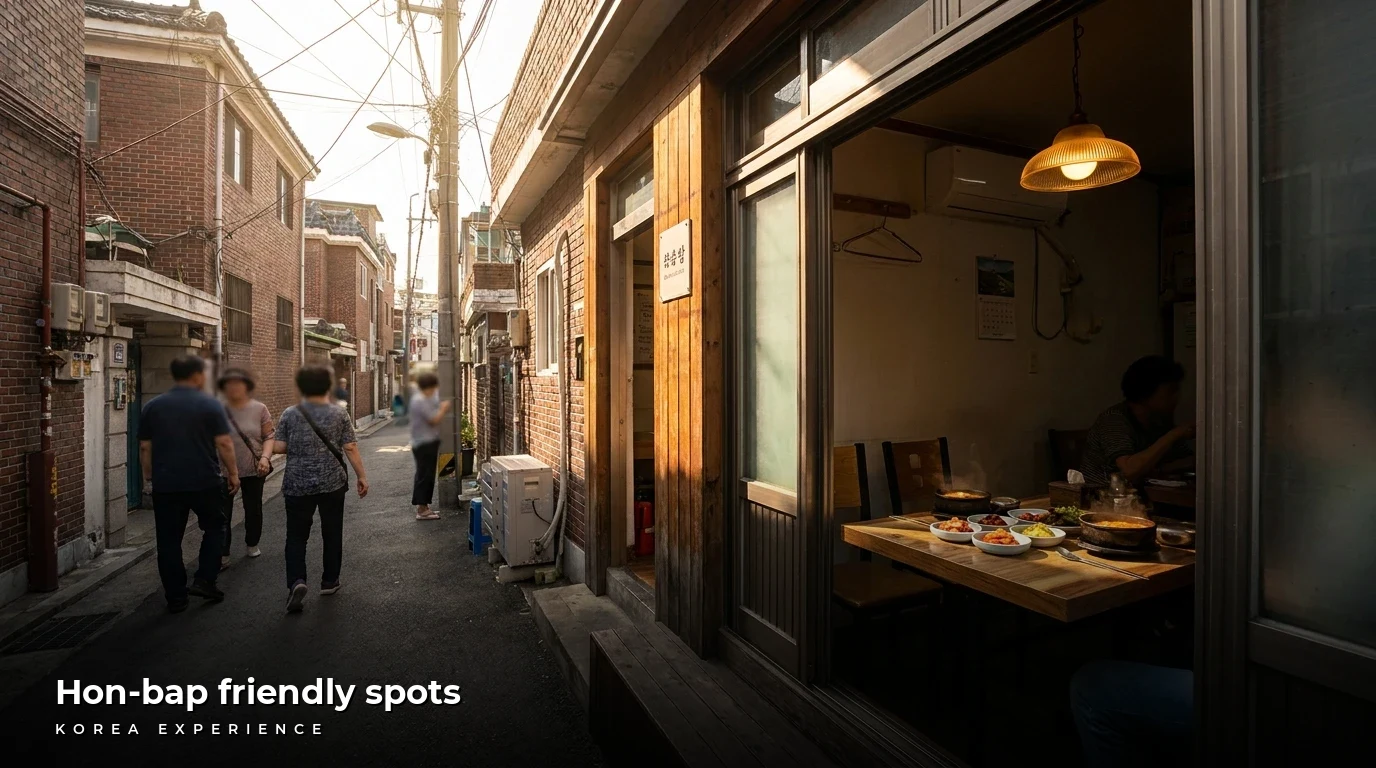
With 36.1 percent of households living alone in 2026 Seoul solo dining is booming. Discover the best spots and apps to enjoy Korean BBQ without a local ID.
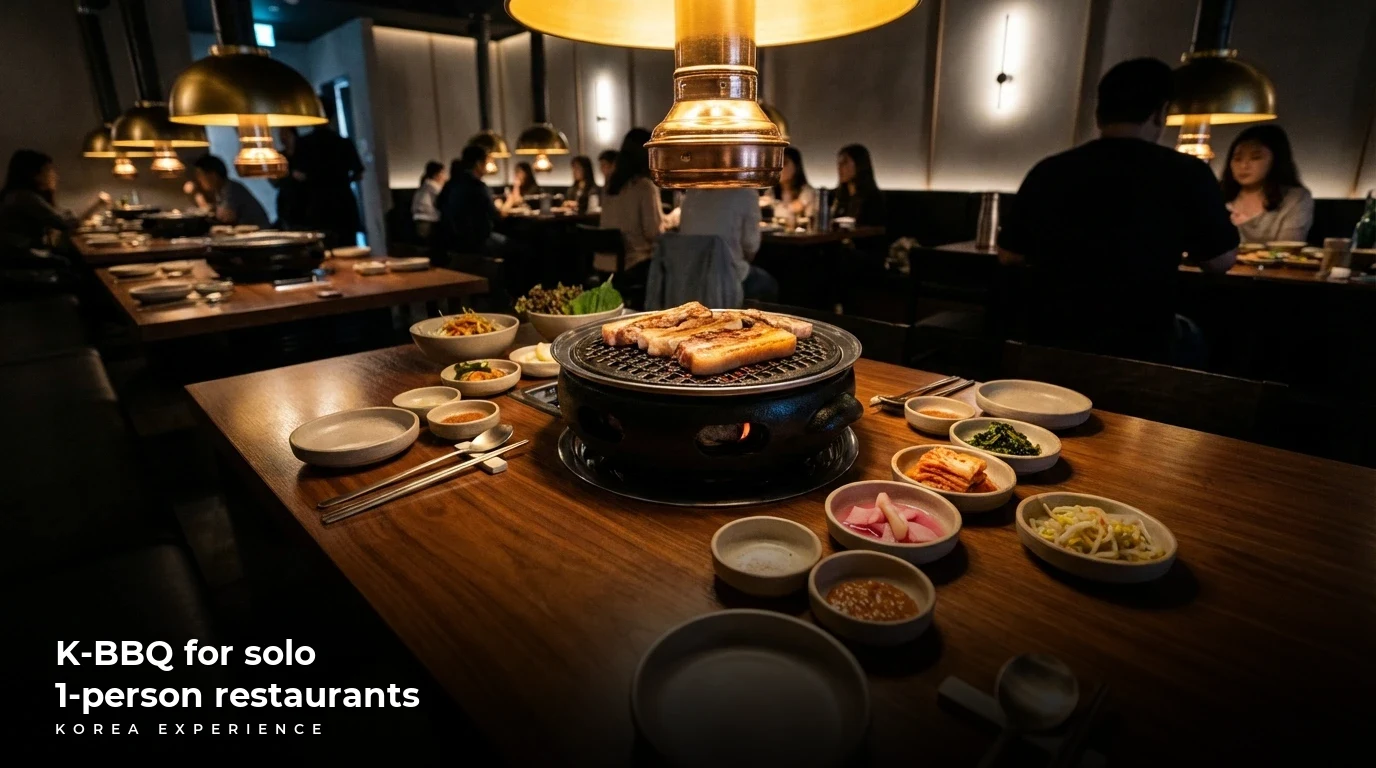
Scared of the X arms? Seoul solo dining scene has exploded with 40% single households. Here is where to find single-serving BBQ spots in 2026.
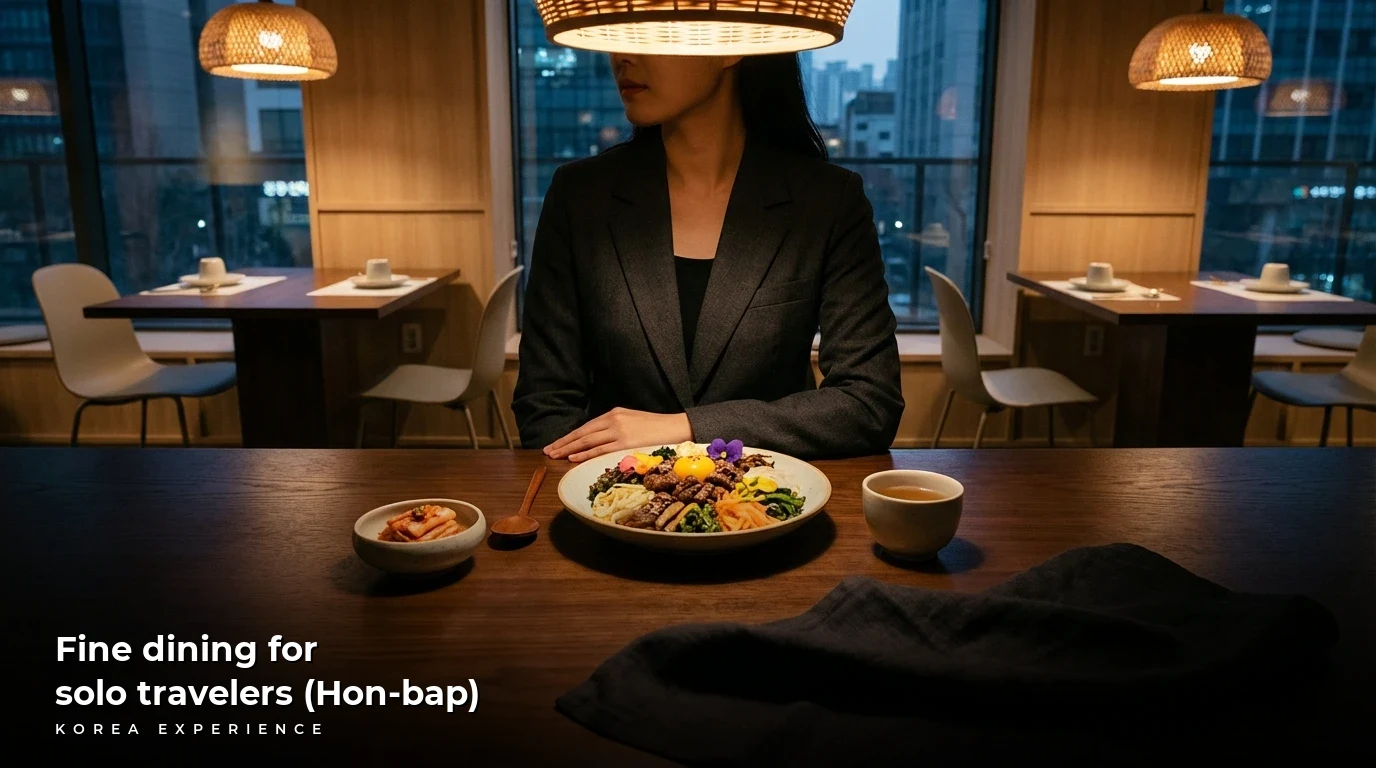
Master Seoul solo dining in 2026 where 36.1% of households are single. Book Michelin spots like Mosu and enjoy Hanwoo beef without feeling awkward.
Compare Kakao T and Uber in Korea for 2026. Discover prices starting at ₩4,800, foreign card tips, and how to navigate Seoul like a local.
Master the art of Korean convenience store dining. Learn viral recipes, budget tips, and how to eat like a local in Seoul.

Discover why Seoul shoppers flock to Musinsa in 2026. Learn to navigate Standard basics and score 70 percent cheaper indie brands like Matin Kim under $100.