Understanding Pali-Pali Culture: Why Korea Can't Slow Down in 2026
Discover why Seoul delivers groceries in 15 minutes and internet speeds hit 10Gbps. A guide to the speed-obsessed culture defining modern Korea.
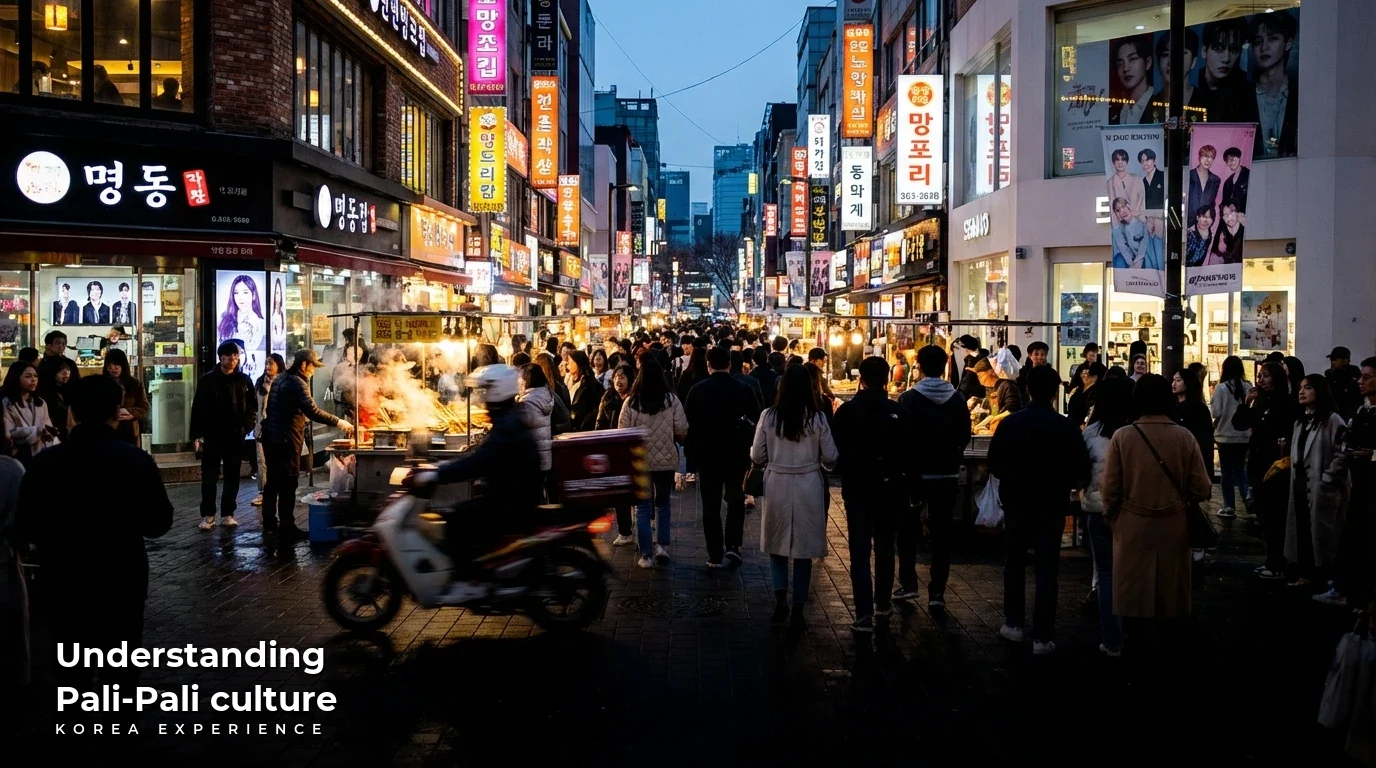
Ever wondered why your elevator has a 'close' button that's worn down to the plastic, or why your food delivery arrives before you’ve even set the table? Welcome to Pali-Pali culture—Korea’s national obsession with speed that defines everything from internet connectivity to your morning coffee.
So, you’ve just landed in Seoul, and you feel like you’ve accidentally stepped onto a moving walkway that’s set to "sprint." People are walking fast, the internet loads before you even click, and delivery scooters are weaving through traffic like they're in an action movie. You’re asking yourself: "Why is everyone in such a rush?"
The short answer is Pali-Pali (literally "Hurry, Hurry"). It isn't just a phrase; it is the operating system of the entire country. It’s the cultural expectation that speed equals efficiency, competence, and consideration. We aren't just talking about walking fast; we're talking about a society where 1 in 4 adults order food delivery every single day, expecting it to arrive in under 30 minutes.
Key Takeaways
- 1Pali-Pali is a survival mechanism turned cultural DNA, transforming South Korea from a war-torn nation to a global powerhouse through extreme efficiency.
- 2Infrastructure is built for speed: Grocery deliveries arrive in under 15 minutes, and mobile internet speeds average 200+ Mbps.
- 3To fit in, do not block the flow. Stand on the right side of escalators and have payment methods ready before reaching the register.
📋 Quick Facts
The Meaning of Pali-Pali
Pali-Pali translates literally to "Hurry, Hurry," but in Korea, it’s not just about moving fast. It is a collective agreement that time is the most valuable currency. Whether you're waiting for an elevator (where the "Close" button is the most used feature) or getting a package delivered at dawn, the underlying message is the same: "I won't waste your time, so don't waste mine."
This mindset influences everything from unwritten social rules to how businesses operate. It’s the engine that turned South Korea from a war-torn nation into a global powerhouse in just a few decades, prioritizing extreme efficiency and speed above almost everything else.
Historical Context: The Need for Speed
To understand why a whole country decided that "fast" was the only speed, you have to look back at history. In 1953, the Korean War had just ended, and the peninsula was in ruins. The economy was non-existent, and the GDP per capita was lower than most sub-Saharan African nations at the time.
This ignited the "Miracle on the Han River." The government and the people adopted a mindset that to survive and catch up to the rest of the world, they couldn't just walk—they had to run. They built factories, highways, and cities in a fraction of the time it took other nations. Speed became synonymous with patriotism and survival.
By the time the internet age hit in the 90s, Korea was already primed to adopt broadband faster than anyone else because the infrastructure of "speed" was already in their cultural DNA. Today, that survival instinct has morphed into a digital convenience culture.
Post-War Rebuilding
The Korean War ends; the nation is in ruins, igniting the desperate need for rapid reconstruction.
Internet Beginnings
Start of the South Korean network development project, laying the foundation for the world's fastest internet.
Delivery App Era
Launch of Baedaltong, revolutionizing food ordering and setting the stage for Baemin and Yogiyo.
Coupang's Cheetah
Coupang Eats introduces "One Order, One Delivery," forcing the industry to speed up to under 20-minute deliveries.
Dubai Chocolate Craze
A viral trend explodes, showing how Pali-Pali applies to trends—copies appear nationwide within weeks.
AI Translation
Baemin integrates LLM AI to translate menus instantly for foreigners, bridging the language gap in real-time.
Navigating Daily Life: Three Lanes of Speed
As a visitor or expat, you basically have three lanes you can travel in regarding Pali-Pali culture.
The Tourist Lane
If you're here for a week, Pali-Pali will mostly manifest as "Wow, the service is fast!" You sit at a restaurant, press the buzzer on the table, and a server appears instantly. You get free Wi-Fi everywhere. However, you might get gently shoved on the subway if you stand in the doorway. The verdict? Enjoy the speed, but don't block the escalator.
The Digital Nomad Lane
You’re here for a month. You want food delivery, but you don't have a Korean ID. This is where you rely on apps like Shuttle Delivery. It’s built for English speakers and accepts foreign Visa cards. You pay a "convenience tax" to bypass the complex Korean identity verification systems, but it saves you hours of headaches.
The Local Lane
This is for residents with an Alien Registration Card (ARC). You use Coupang for everything. You order "Rocket Fresh" groceries at 11 PM, and they are waiting at your door at 7 AM. You use Baemin (Baedal Minjok) to order food. You are living in the future, and you get disappointed when you travel abroad and Amazon takes two days to deliver.
| Feature | Korean Pali-Pali Style | Western / Relaxed Style |
|---|---|---|
| Dining Service | Water/Sides served immediately; buzzer on table | Wait for server eye contact; slow refills |
| Internet Setup | Same-day or Next-day installation | 3-7 Business Days (if lucky) |
| Food Delivery | 20-40 mins; left at door (no contact) | 45-90 mins; handover required |
| Public Transit | To the second; screens show exact location | Schedules are "suggestions" |
| Trend Cycle | Weeks (Viral -> Everywhere -> Dead) | Months or Years |
| Bureaucracy | Digital, instant printing at kiosks | Paperwork, appointments, mailing forms |
Dining and Delivery Etiquette
When dining out, especially during lunch hour (11:30 AM - 1:00 PM) in business districts, speed is key. It is considerate to eat and leave quickly to accommodate the line outside.
- The Buzzer: Use the call button on the table. Don't wave your hand or make eye contact and wait. The button is there for efficiency. Press it and ask for what you need.
- The Bill: You usually pay at the door on your way out, not at the table. Have your card ready.
- Delivery: Huge news for 2026—Baemin has rolled out AI translation for English, Chinese, and Japanese. You can finally read menus without external translation apps. Look for "Cheetah Delivery" or "Baemin 1" for single-order delivery that comes straight to you without stops.
For a deeper understanding of dining rules, check our guide on Korean Table Manners and Korean Drinking Etiquette.
Pros
- ✓Insane Convenience: Order fried chicken at 2 AM or groceries at 11 PM for dawn arrival.
- ✓Efficiency is King: Government documents print instantly at kiosks; lines move fast.
- ✓Rapid Innovation: AI menu translations, robot servers, and 10Gbps home internet are standard.
Cons
- ✗The Stress Factor: Constant pressure to move and work faster; slowness feels like a burden.
- ✗Safety Compromises: Delivery riders may break traffic laws to meet deadlines.
- ✗Lack of Savoring: Meals can feel like refueling pit stops rather than breaks.
The Dark Side of Speed
Pali-Pali has a cost. Delivery drivers are paid per delivery, so they rush. You will see motorcycles driving on sidewalks, running red lights, and weaving through pedestrians. Always look both ways, even on a one-way street or the sidewalk. In 2025 alone, there were nearly 300 workplace fatalities in just one quarter, many in construction and delivery sectors.
Trends also move at light speed. The "Dubai Chocolate" craze of 2024-2025 is a perfect example. It went from a TikTok video to being sold in every major convenience store (CU, GS25) within weeks. By the time you read about a "hot new cafe" in a guidebook, it might already be closed. To stay current, you need to check Instagram or TikTok immediately.
Step-by-Step: Ordering Food Like a Local
📖 How to Order Food Delivery Like a Local
Step 1: Choose Your Fighter (The App)
If you have a foreign card and no ARC, download Shuttle Delivery. If you have an ARC and Korean bank account, download Baemin (Baedal Minjok).
Step 2: Set Your Location EXACTLY
Use the GPS pin. If at a hotel, ask for the "Road Name" address. If at Han River Park, look for designated Delivery Zones.
Step 3: The Menu & Ordering
Look for "Insa-tem" (Popular items). Select your spice level carefully. Watch out for the "Review Event" checkbox—check it for free food only if you promise to leave a photo review.
Step 4: The Handoff
Select "Leave at door." The driver will ring/knock and vanish. Do NOT tip; it is not a custom here.
People think Pali-Pali is just about impatience, but it\'s actually about communal consideration. We rush because we don\'t want to be the bottleneck that holds you up. It\'s an aggressive form of politeness—I move fast so you don\'t have to wait. Once you understand that, the pushing on the subway feels less rude and more like efficient flow management.
Where to Experience the Speed
To truly feel the pulse of Pali-Pali, visit these locations:
Gamnamujib Gisa Sikdang (Persimmon Tree House Driver's Restaurant)
- Address: 25 Yeonnam-ro, Mapo-gu, Seoul
- Why here: This is a "Taxi Driver Restaurant." It caters to drivers who need cheap, delicious food FAST. You sit down, they practically throw a tray of Bulgogi and side dishes at you, you eat, and you leave. It’s the purest form of Korean dining efficiency.
T-Factory (SK Telecom Flagship Store)
- Address: 144 Yanghwa-ro, Mapo-gu, Seoul
- Why here: Visit this tech experience store near Hongik University Station to see just how fast Korean tech actually is. Try the cloud gaming demos to feel the 5G speed and check out the 24-hour unmanned phone purchase kiosks.
No Korean Phone/ARC? Here's What To Do
This is CRITICAL for tourists. Most Korean apps require identity verification via a Korean phone number tied to a Resident ID (ARC). If you are a tourist:
- Use Shuttle Delivery: It accepts foreign credit cards (Visa/Mastercard) and PayPal. No Korean phone number needed.
- Use Uber (UT): For taxis, your global Uber app works here to hail Korean taxis. You don't need Kakao T if you have Uber.
- Concierge Services: Services like Wonderful (GoWonderfully) can order anything for you (concert tickets, food, reservations) for a fee if you don't have the digital credentials.
FAQ
❓ Frequently Asked Questions
Have more questions?Contact us →
Conclusion
So, can you handle the speed? Honestly, once you get used to it, it’s hard to go back to "slow" life.
Here is your plan for your first 24 hours:
- Download Naver Map and Subway Korea immediately.
- Get a T-Money card at the airport convenience store and load it with 20,000 KRW.
- Don't take it personally. If someone bumps you, or the cashier doesn't smile and chat, it's not because they don't like you. They are just being efficient.
Embrace the Pali-Pali energy. Walk a little faster, eat a little quicker, and enjoy the fact that for the next few days, you are living in the most efficient country on the planet. Just remember to look out for the motorcycles on the sidewalk!
Sources
- Speedtest Global Index - Mobile and Broadband Speed Rankings 2025
- Korea Times - Baemin AI Menu Translation Update 2026
- Yonhap News - Delivery frequency statistics 2026
- Chosun Biz - Industrial Accident Statistics 2025
- Shuttle Delivery - Service details for foreigners
- Ministry of Employment and Labor - Workplace safety data
About the Author
Korea Experience Team
Written by the Korea Experience editorial team - experts in Korean medical tourism, travel, and culture with years of research and firsthand experience.
Explore more in K-Culture
K-Pop, K-Drama, traditional arts, and modern culture — dive deep into the cultural phenomena that have captivated the world.
Browse All K-Culture ArticlesContinue Reading
Explore more articles you might find interesting
Discover the ultimate guide to K Webtoons in Seoul 2026. Explore top manhwa cafes, museums, and pop-up stores defining the new wave of Korean culture.
The ultimate 2026 guide to remote work in Jeju Island. Discover 500Mbps cafe speeds, top coworking spaces, and living costs for digital nomads.
Discover how to style modern hanbok in 2026. Learn where to buy stunning pieces for under $150 and get 100 percent free entry to Seoul palaces.
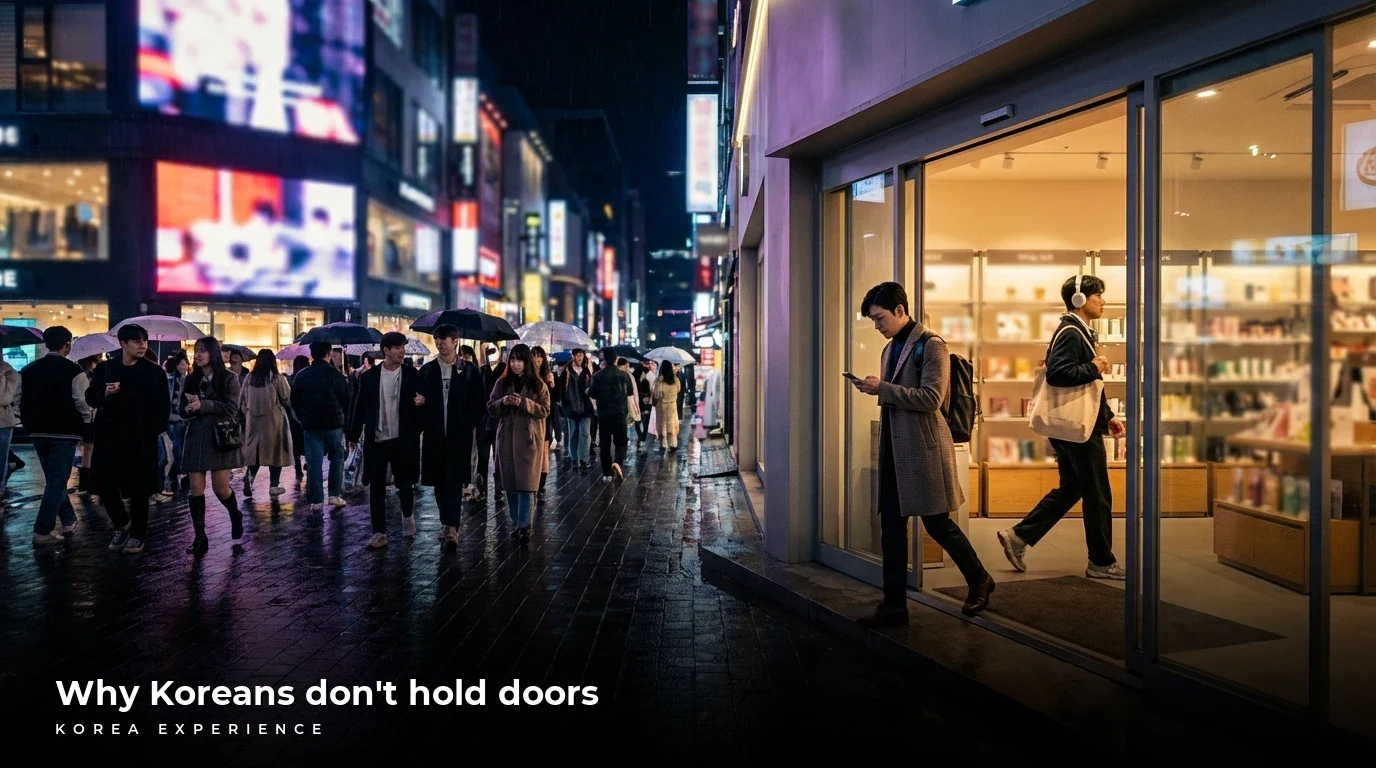
Discover why 90% of Korean doors open outward and how the Pali-Pali culture saves 3 seconds per elevator ride while avoiding nose injuries in 2026.
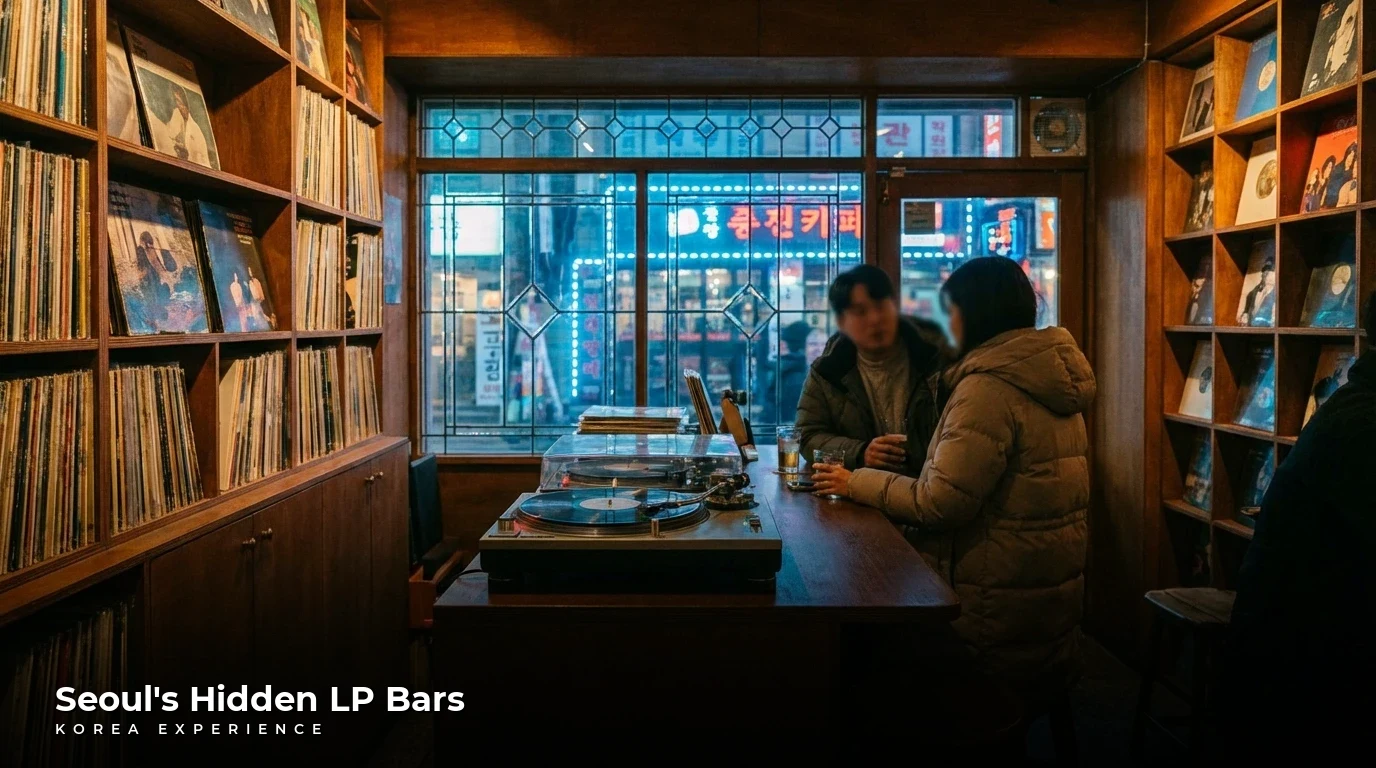
Discover Seoul's 2026 vinyl culture where 20,000 records meet premium highballs. Explore hidden listening bars with entry fees starting at 10,000 KRW.
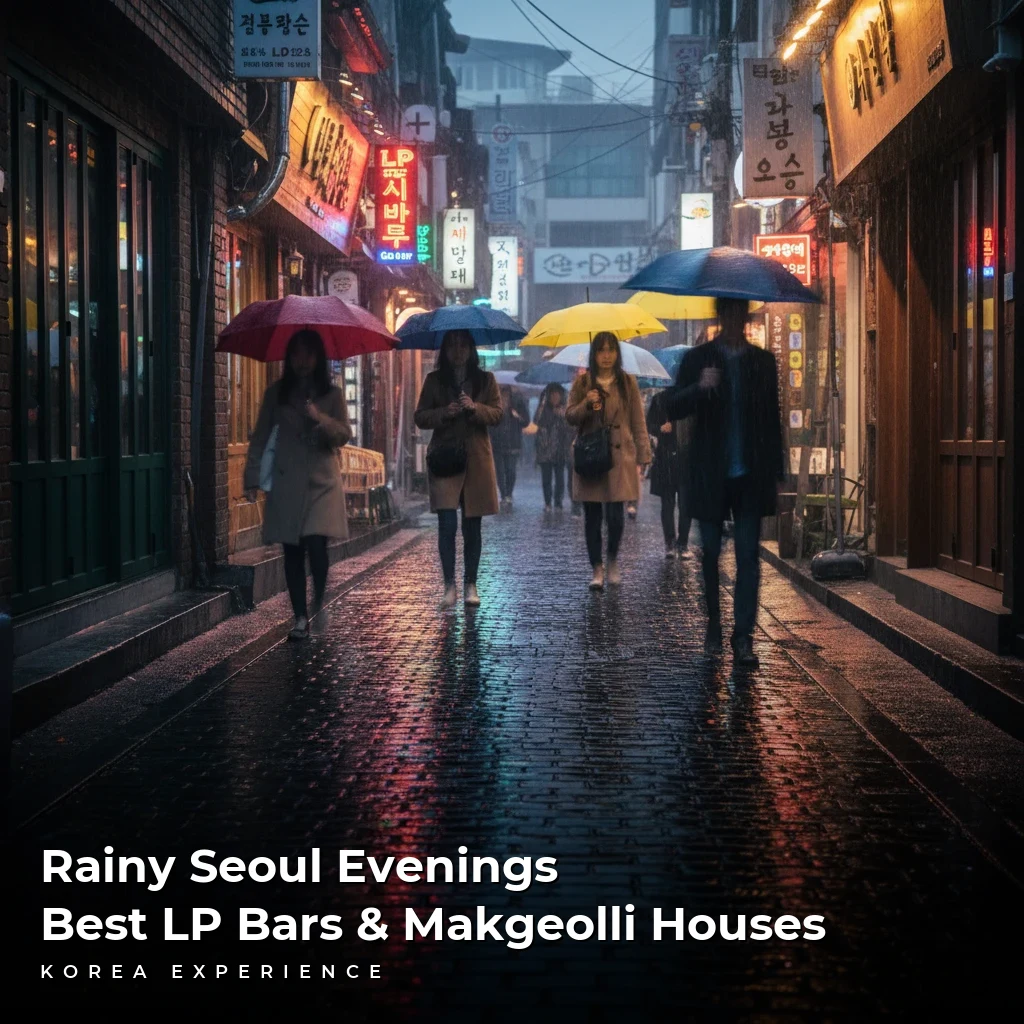
Discover how to best spend a rainy evening in Seoul, exploring cozy LP bars and authentic makgeolli houses. Your guide to comfort and culture.