Korean Drinking Etiquette 2026: Rules Every Visitor Should Know
The short answer? Always use two hands when pouring or receiving a drink and never, ever fill your own glass—it's the fastest way to signal you're a tourist.
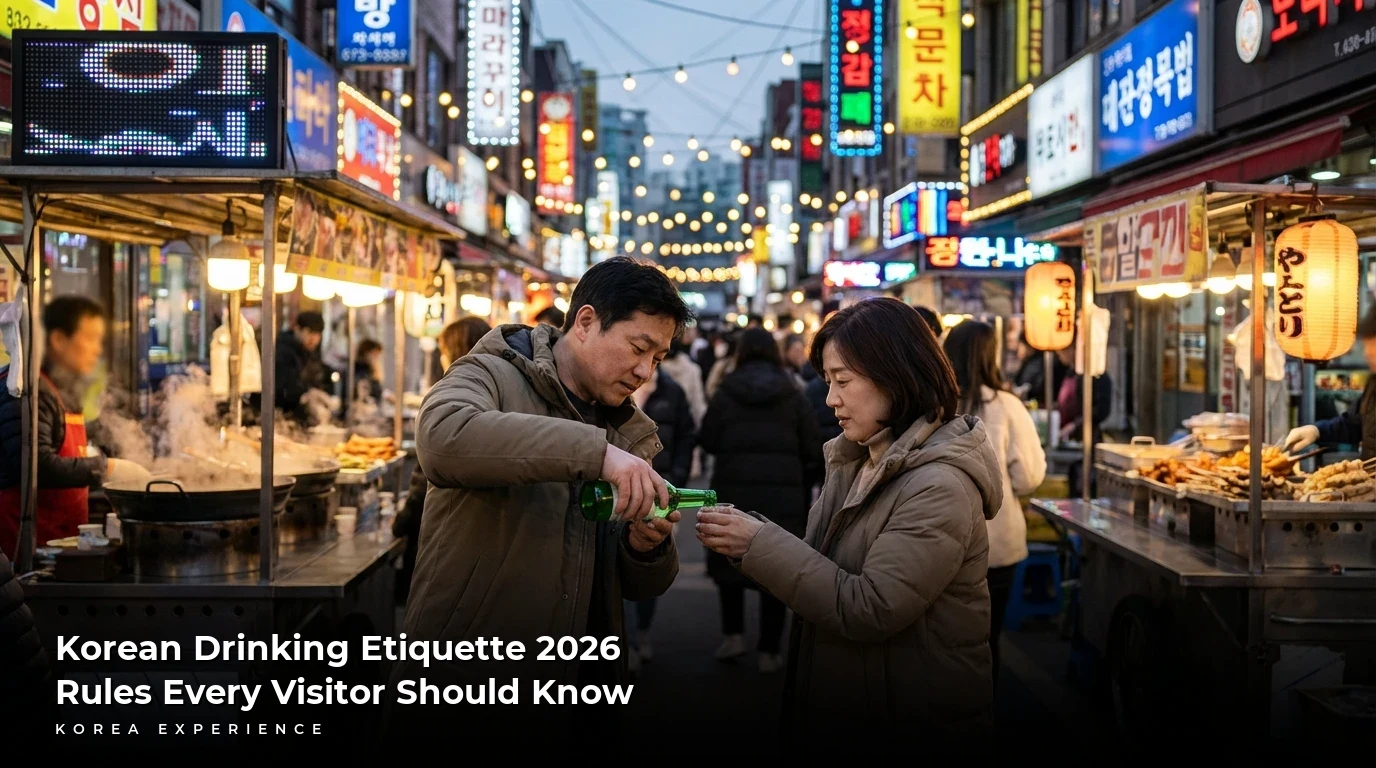
So, you've finally made it to Seoul. You're sitting at a table with some new Korean friends or colleagues, the grill is sizzling with pork belly, and someone reaches for a green bottle of soju. Your heart starts racing—what was that thing you read about two hands? Don't panic. Look, the short answer to mastering Korean drinking etiquette is that it's all about not being the center of attention. In Western culture, we're taught to pour for ourselves and be independent. In Korea, you are part of a collective. If your glass is empty, you're waiting for the group to acknowledge you. If someone else's is empty, it's your job to take care of them.
Drinking and BBQ go hand in hand. Find the best Korean BBQ restaurants in Seoul for the perfect pairing.
Key Takeaways
- 1The short answer is: Respect and hierarchy are everything. Always use two hands for everything involving a bottle or a glass, and if you're drinking with someone older, turn your head away to take a sip. It's all about showing that you know the 'social code.'
- 2Here's the deal with the money: A bottle of soju in a standard Seoul restaurant in 2026 will set you back between ₩5,000 and ₩7,000. That's roughly the price of two fancy lattes, so while it's not as dirt-cheap as it was ten years ago, it's still the most affordable way to get a buzz.
- 3If you want to survive a night out, you've got to master the 'Anju' (food) and 'Hangover' game. Never drink on an empty stomach because most bars actually require you to order food anyway, and always grab a 'Condition' or 'IdH' pear drink at the GS25 or CU convenience store before you hit the hay.
📋 Korean Drinking Culture Quick Facts
The Golden Rules of the Korean Table
Here's the breakdown: always use two hands. Whether you're pouring the drink or receiving it, two hands are the universal sign of "I respect you." If you're pouring, hold the bottle with your right hand and place your left hand on your right wrist or forearm. It's a literal gesture of holding yourself back—a leftover from the days when people wore long, flowing robes and had to keep their sleeves out of the soup.
If you're receiving, hold your glass with both palms. And here is the 2026 reality: even though the younger generation (the MZ generation) is more relaxed, they still notice if you skip this. It's like the "please" and "thank you" of the drinking world.
Also, let's talk numbers because I know you're checking your budget. In 2026, we've seen a weird shift. While everything else is getting more expensive, soju and beer prices in restaurants actually dipped for a few months because people weren't going out as much. Right now, you're looking at about ₩5,000 to ₩6,000 for a bottle of soju in a normal neighborhood like Mapo, and maybe ₩7,000 to ₩8,000 in the fancy parts of Gangnam. If you see a place offering soju for ₩3,000, they're probably doing a special meat-order promotion—jump on it!
How We Got Here (A Story of Rice, Wars, and Sweet Potatoes)
Korean Drinking Culture History
Mongol Invasion
Distillation techniques from Persia arrive in Goryeo, creating the first Korean soju.
Colonial Brewing Ban
Japanese authorities ban home brewing, ending centuries of diverse local family recipes.
Grain Management Act
Government bans rice for alcohol due to shortages; distillers turn to sweet potatoes and tapioca.
Forced Drinking Ban
Seoul High Court rules against companies forcing employees to binge drink at company dinners.
Hangover Cure Regs
New laws require companies to clinically prove that hangover drinks actually work by October.
The Price Paradox
Alcohol prices in restaurants show a rare decline as the MZ generation pivots to non-alcoholic options.
You might wonder why Korean soju tastes like a mix of vodka and sprite, while Japanese sake or traditional rice wine is so much smoother. Honestly, the story is pretty tragic, but it's fascinating. Back in the Goryeo Dynasty, Mongol warriors brought distillation technology from Persia. For centuries, Korea had incredible, diverse alcohols made from rice. Every grandma had her own recipe.
But then the 20th century hit like a freight train. During the Japanese colonial period, they banned home brewing to control tax revenue, effectively killing off thousands of unique spirits. Then came the Korean War, followed by massive rice shortages in the 60s. The government was like, "We can't have people drinking the rice when we need it to eat." So, in 1965, they passed the Grain Management Act, which banned the use of rice for alcohol. Distillers had to get creative, so they started using sweet potatoes, tapioca, and corn. They distilled it into pure ethanol and then watered it down with sweeteners. That's the birth of the "green bottle" soju we see today.
But here's the cool part for 2026: we are in the middle of a massive "Sool Renaissance." Since the late 90s, the rice ban has been gone, and young brewers are now digging up those ancient family recipes. You'll see "Premium Soju" everywhere now—stuff made with real rice and traditional fermentation starters called nuruk. It's more expensive, but man, your head will thank you the next morning.
Where Should You Actually Drink? (The Venue Breakdown)
Korean Drinking Venues Compared
| Feature | Pojangmacha (Tent Bar) | Suljip (Classic Pub) | Hof (Beer Hall) | Izakaya (Japanese Style) |
|---|---|---|---|---|
| Cost | ₩-₩₩ (Cheap to Mid) | ₩₩ (Moderate) | ₩₩ (Moderate) | ₩₩₩ (Expensive) |
| Best For | Late night nostalgia | Large friend groups | Chicken & Beer | Dates/Quiet talks |
| Vibe | Gritty, street-side | High energy, loud | Casual, cozy | Dimly lit, private |
| Must-Order | Udon, Soju | Fruit Soju, Stews | Fried Chicken | Sashimi, Highballs |
| 2026 Trends | Urban revival areas | Neon/Cyberpunk decor | Craft beer focus | Premium craft sake |
| Requirements | Cash/Card (no reservation) | Walk-ins usually fine | Group seating focus | Often needs reservation |
Look, picking the right spot is half the battle. If you're staying for a week, you'll probably see three main types of places.
First, the Suljip or Pocha. These are your standard bars. They range from neon-drenched modern spots to the older, gritty ones. In 2026, many of these have gone "cyberpunk" or "retro," especially in areas like Euljiro (nicknamed 'Hip-jiro').
For a deeper dive into the drinks themselves, see our guide to Korean drinking culture with soju, makgeolli, and pocha.
Then you have the Hof. This is the Korean version of a German beer hall. If you want "Chimaek" (Chicken and Maekju), this is where you go. They serve big pitchers of draft beer, and the vibe is super loud and friendly.
For something a bit more intimate, hit up an Izakaya. These are Japanese-style bars that are incredibly popular with the 20-somethings for dates. They usually have private booths and a much better selection of high-end alcohol like yakju or sake.
And we can't forget the Pojangmacha—the legendary orange tents. Honestly, they're getting harder to find because of city regulations, but if you find one near Jongno 3-ga, grab a stool! It's the ultimate vibe: drinking soju in the cool night air while someone fries up some spicy squid right in front of you.
Following Traditional Drinking Etiquette
- ✓Instant Respect: When you pour for a local using two hands, they immediately see you as someone who respects their culture, which usually leads to them being extra friendly and maybe even buying you a round!
- ✓Built-in Pacing: The rule about not filling your own glass means you have to wait for someone else to notice you're empty. It's a great way to avoid accidentally drinking too much too fast.
- ✓Team Bonding: In a work setting (Hoesik), these rituals are the 'social glue' that turns coworkers into family. Even if you don't speak much Korean, the 'Two-Hand Rule' speaks for you.
- ✗The Pressure: Sometimes elders or bosses can be a bit pushy with the 'One Shot!' (Won-syat) culture, making it hard to say no without feeling like you're being a party pooper.
- ✗Always Ordered Food: You literally can't just go into most Korean bars and order one beer. You must order a plate of food, which can get expensive if you're not actually hungry.
- ✗The Morning After: Soju is notorious for bad hangovers because of the additives in the cheaper green bottles. If you don't follow the 'Hangover Cure' routine, the next day is going to hurt.
The Complete Night-Out Walkthrough (The "Hoesik" Survival Guide)
Alright, let's walk through a real-world scenario. You're invited to a "Hoesik." This isn't just a dinner; it's an extension of the workday. Trust me, I learned this the hard way: you don't just "show up." You wait for the leader.
📖 How to Survive Your First 'Hoesik' (Company Dinner)
Step 1: The Seating Power Move
Wait for the most senior person (the boss or oldest friend) to sit down first. They always get the 'upper seat' (sangseok), which is usually the one furthest from the door or the most comfortable booth.
Step 2: The First Pour Dance
When the boss picks up the bottle, hold your glass with both hands (right hand around the glass, left hand supporting the bottom). Once they pour yours, grab the bottle with two hands and return the favor immediately.
Step 3: The Secret Sip
When it's time to drink, turn your head to the side (away from the oldest person) and cover your mouth and glass with your hand while you swallow. This is a sign of modesty and respect.
Step 4: The Game Phase
As the night goes on, someone will inevitably start a drinking game like Noonchi or 3-6-9. Just follow the rhythm, clap when everyone else claps, and don't be afraid to make a fool of yourself—it's how you bond!
Once everyone is seated, the first round is usually a "Bomb Shot" (Poktanju)—specifically Somaek. Someone (usually the junior or the group's "expert") will mix the soju and beer, often with a theatrical spoon-clink or a napkin-shake. When the toast happens, you'll hear "Geonbae!" This technically means "empty glass," but you don't actually have to finish it in one go unless someone shouts "One Shot!"
If you're drinking with a boss, remember the "Turn Away" rule. You literally turn your torso and head about 45 degrees away from them to take your sip. It feels super dramatic at first, but it's a sign that you aren't "challenging" them with your drinking face.
As the night rolls into the "Second Round" (I-cha), things get more fun. This is when the drinking games start. The games are simple but fast. My favorite is the "Soju Bottle Cap Flick." You twist the metal tail of the cap until it's straight, then everyone takes turns flicking it with their finger. Whoever knocks the tail off makes everyone else drink! It's pure, loud, chaotic fun, and it's the best way to break the ice if you're feeling awkward.
In 2026, the 'Medical Excuse' is your best friend. If you really can't drink but want to stay for the party, just say you're on antibiotics. Koreans take health very seriously, and it's the one excuse that no boss will ever push back on. You can still participate in the toasts with water or soda!
The Stuff Nobody Tells You (The Hacks and the Hangovers)
Here is the "Pro Tip" section that will save your life.
First: The No-ARC Hack. In 2026, everything in Korea is digital. You go to a restaurant and there's a tablet on the table for ordering. You go to a trendy bar and there's a QR code for the waitlist. If you don't have a Korean ID (ARC) or phone number, you're usually stuck.
Second: The Hangover Prevention. Koreans are the world champions of hangover cures. Why? Because the work culture demands you be at your desk at 9 AM even if you were out until 3 AM. Walk into any CU or GS25. Look for a green bottle called Condition or a gold one called Dawn 808. Drink one before you start drinking. Then, before you go to bed, find the "IdH" pear juice (it's a yellow can with the Korean word '배' which looks like 'IdH'). Scientific studies actually show that Korean pears help break down the toxins in alcohol.
Lastly, if you need to escape, do it after the "First Round." In 2026, the MZ generation has made it much more acceptable to leave early. Just say, "먼저 가보겠습니다" (Meonjeo gabogessseumnida - "I'll head out first"), bow to the boss, and make your exit while everyone is distracted by the next round of Somaek.
Pro Tip: The Call Button
Check for a call button on the side of the table! Most Korean restaurants and bars use a "bell" system. Don't shout for the waiter; just press the button and they'll be there in seconds.
Warning: Never Use One Hand
Don't use one hand to pour for someone older than you. It looks incredibly arrogant and is one of the biggest social "sins" in Korea. Even if you're holding a heavy beer pitcher, try to touch your left hand to your right arm to show respect.
No Korean Phone/ARC? Here's What To Do
If you're a tourist in 2026, you'll find that many restaurants now use "Remote Waiting" systems that require a Korean number. HACK: Download Catchtable Global. It's the international version of Korea's biggest booking app. You can sign in with Google or Apple, it accepts foreign credit cards, and you don't need an ARC or a Korean phone number to secure a spot at the trendy bars in Seongsu or Gangnam. For late-night delivery (Baedal), use Shuttle—they accept foreign credit cards and have a full English interface.
❓ Frequently Asked Questions
Have more questions?Contact us →
Your Action Plan
Look, Korean drinking culture can seem intimidating with all its rules and hierarchies, but here's the secret: Koreans love it when you try. If you use two hands and say "Geonbae" with a smile, you've already won.
In your first 24 hours in Korea, I want you to do three things:
- Download Catchtable Global and Naver Maps (Google Maps is basically useless here).
- Go to a local Suljip, order some Kimchi-jeon (pancake) and a bottle of Makgeolli (rice wine).
- Practice the "Two-Hand Pour" with your travel buddy.
Don't overthink it. The goal of these rituals isn't to be perfect; it's to show that you're part of the team. You're going to have an amazing time, eat some incredible food, and probably make some friends you'll never forget. Now get out there and show them you know the code. Geonbae!
Sources
- Visit Korea (Official Tourism) - Info on Catchtable Global and tourist booking systems.
- The Korea Herald - Data on 2025/2026 alcohol price trends in restaurants.
- The Guardian - Research on the hangover cure market and new 2025/2026 regulations.
- Morning Calm (Korean Air) - Historical timeline and craft soju revival details.
- K-Campus - Guide for ordering delivery without an ARC.
About the Author
Korea Experience Team
Written by the Korea Experience editorial team - experts in Korean medical tourism, travel, and culture with years of research and firsthand experience.
Explore more in K-Culture
K-Pop, K-Drama, traditional arts, and modern culture — dive deep into the cultural phenomena that have captivated the world.
Browse All K-Culture ArticlesContinue Reading
Explore more articles you might find interesting
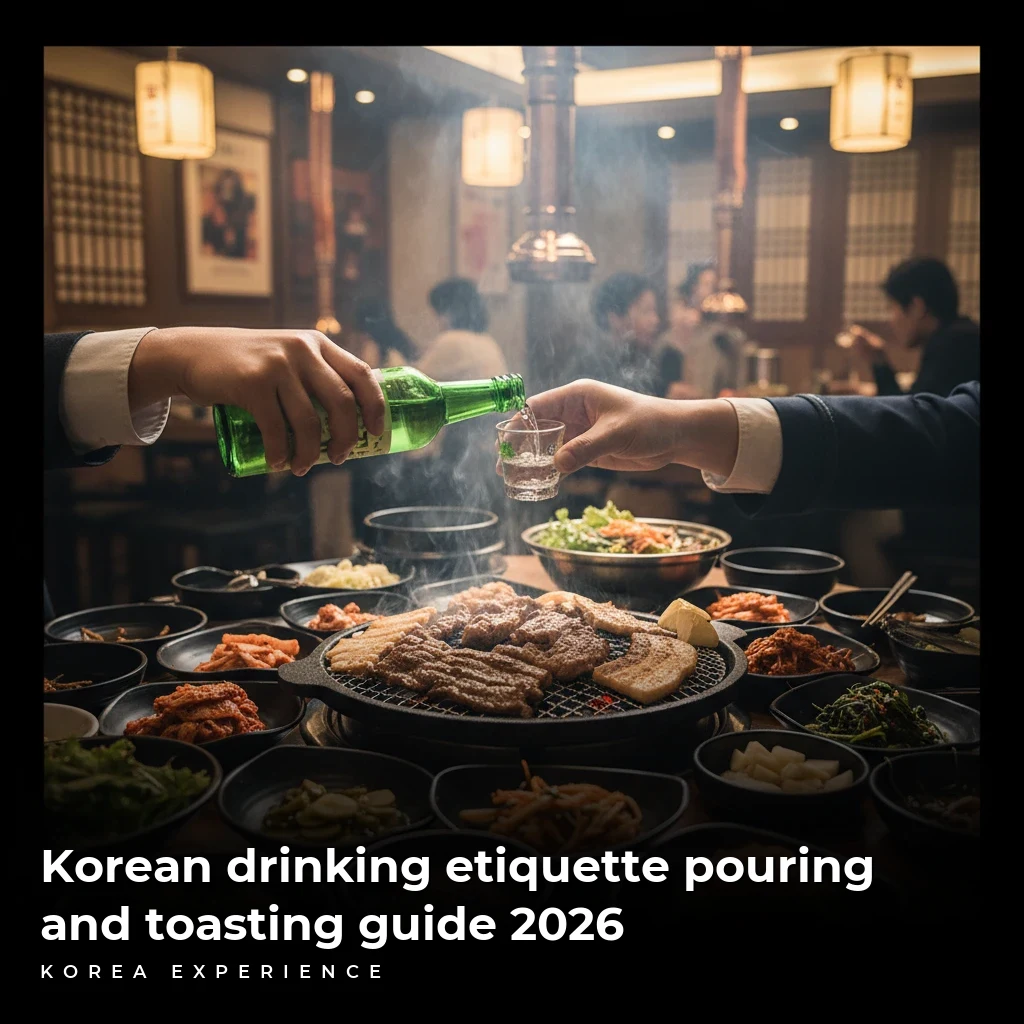
Master Korean drinking etiquette pouring and toasting rules. Learn the essential customs, from the two-hand pour to the senior turn.
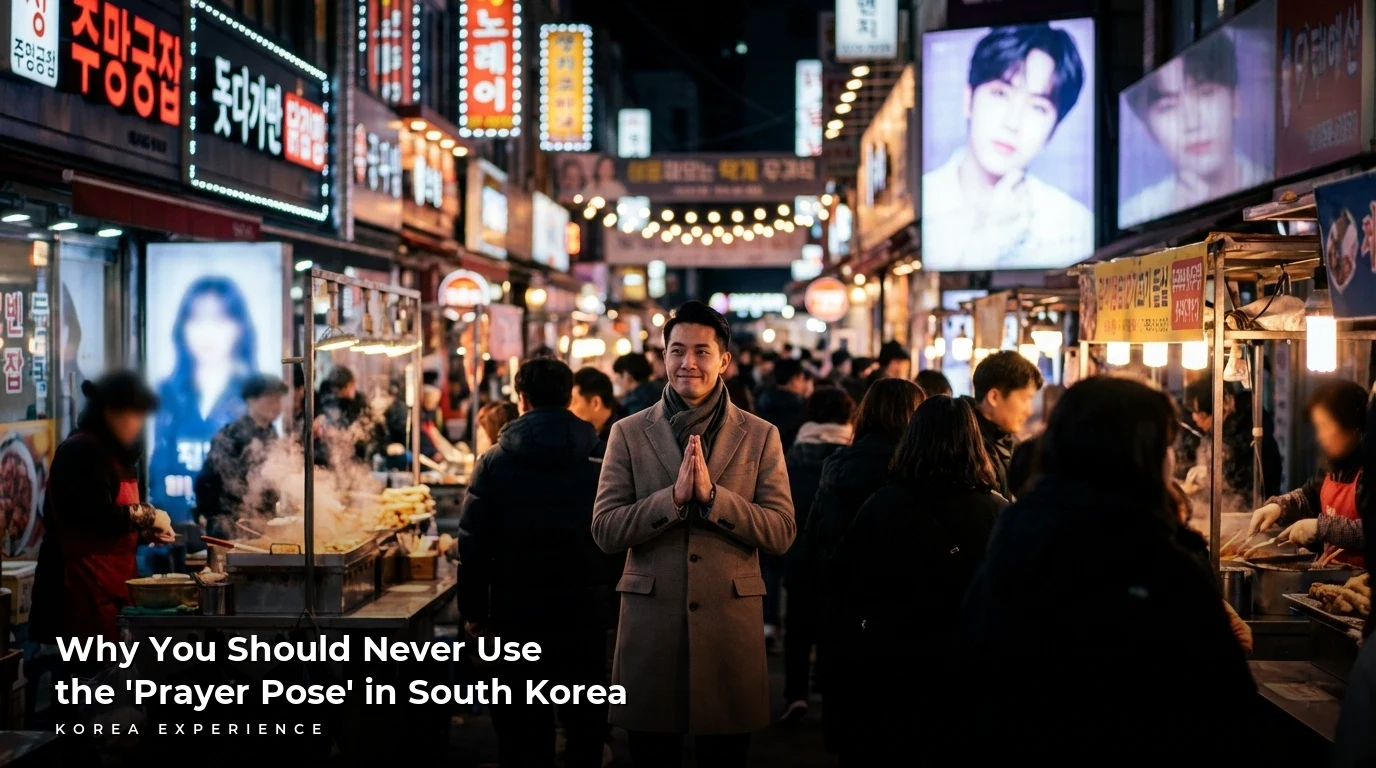
Put your hands down! While it looks polite elsewhere, using the 'prayer pose' in Korea is actually a major cultural blunder that makes you look like you're...
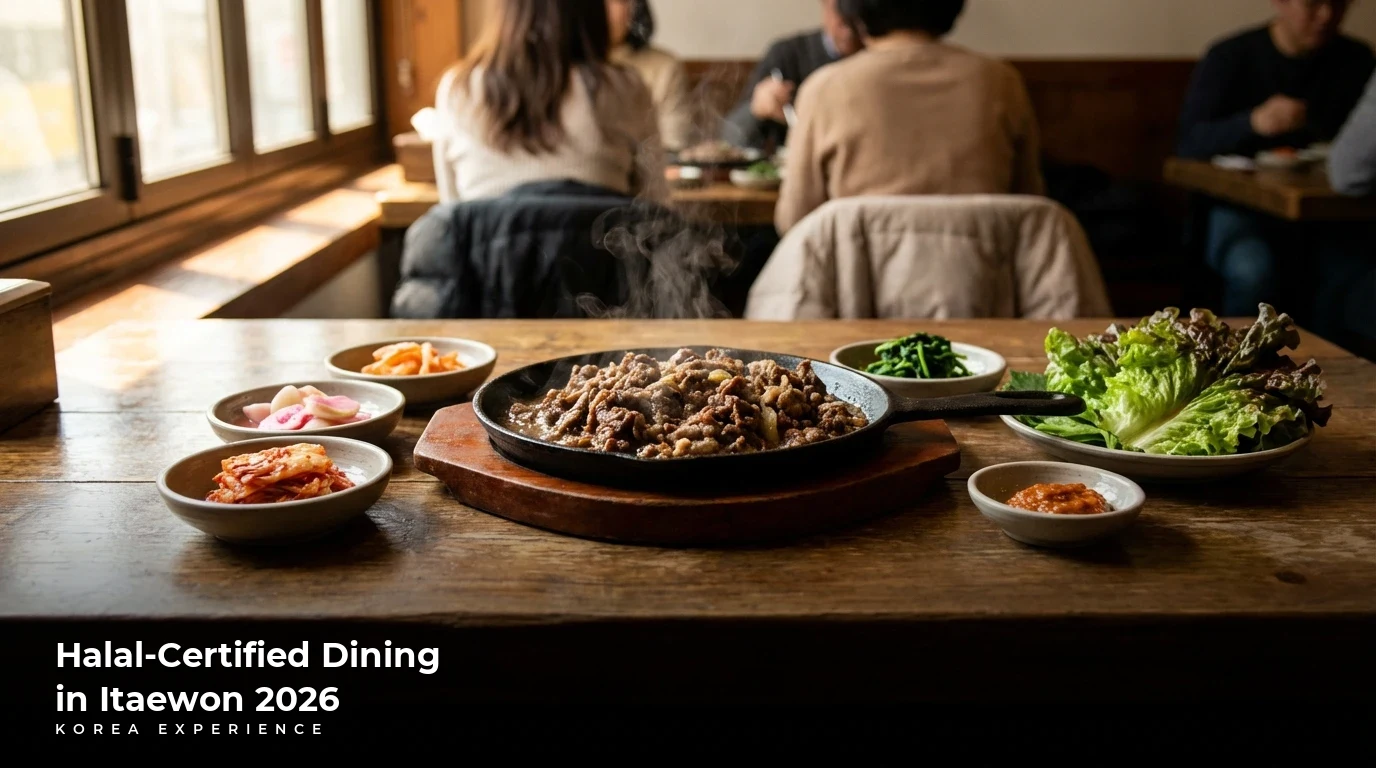
The short answer? Head to Usadan-ro 10-gil near the Seoul Central Mosque for the highest concentration of KMF-certified halal restaurants.
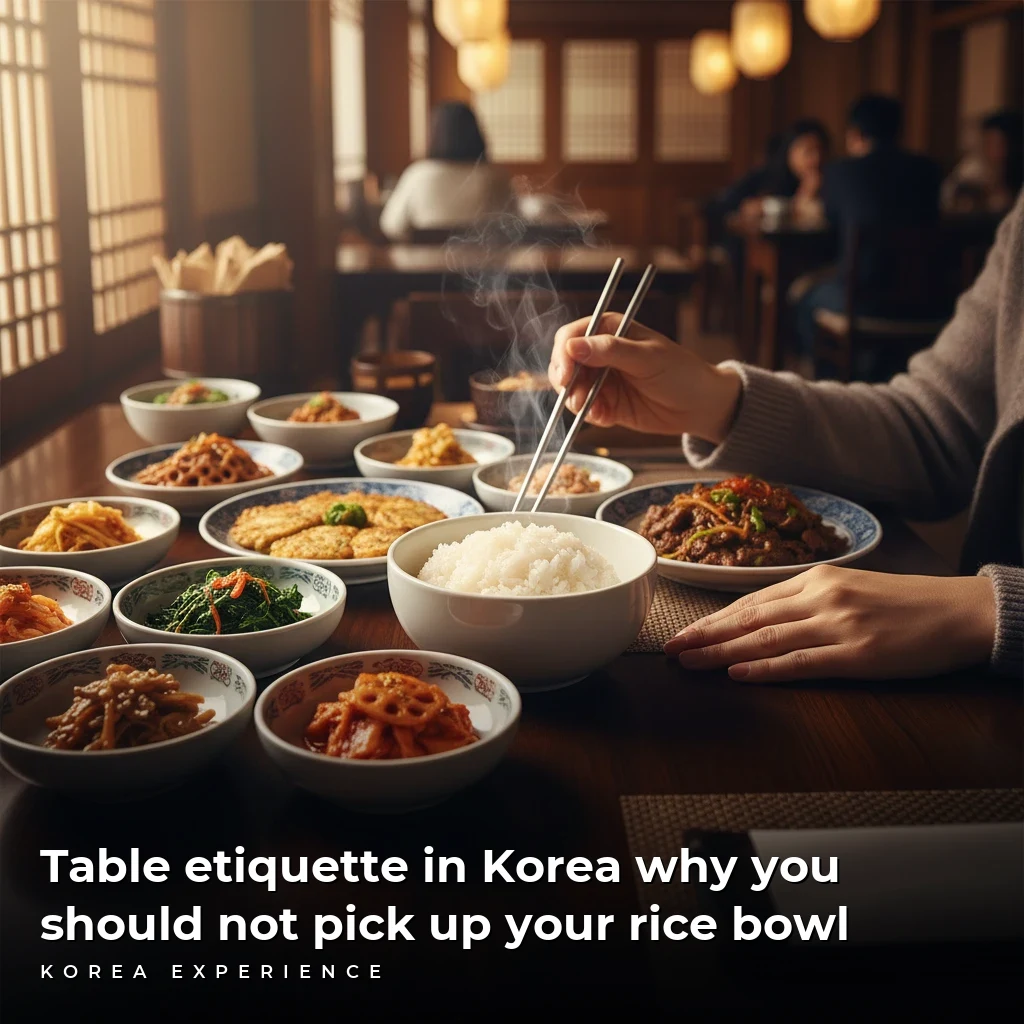
Master Korean dining rules and learn why lifting your rice bowl is a cultural taboo. Essential guide for travelers in 2026.
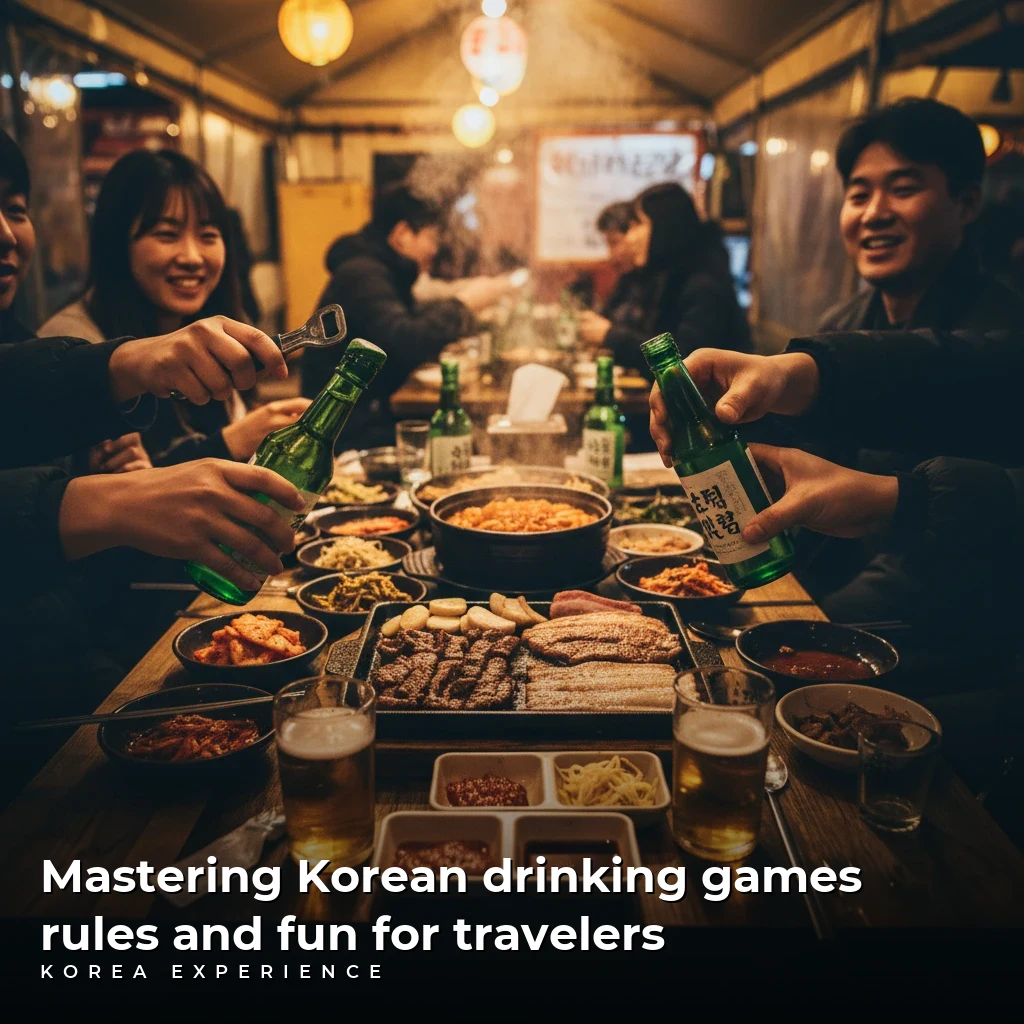
The ultimate guide to Korean drinking games rules, etiquette, and culture. Learn how to play Titanic, Soju Cap, and more like a local expert.
A practical guide to visiting Korean public baths and jjimjilbangs, covering facility layouts, entry procedures, hygiene rules, and health safety.