Why Koreans don't hold doors: The truth about Pali-Pali culture 2026
Discover why 90% of Korean doors open outward and how the Pali-Pali culture saves 3 seconds per elevator ride while avoiding nose injuries in 2026.
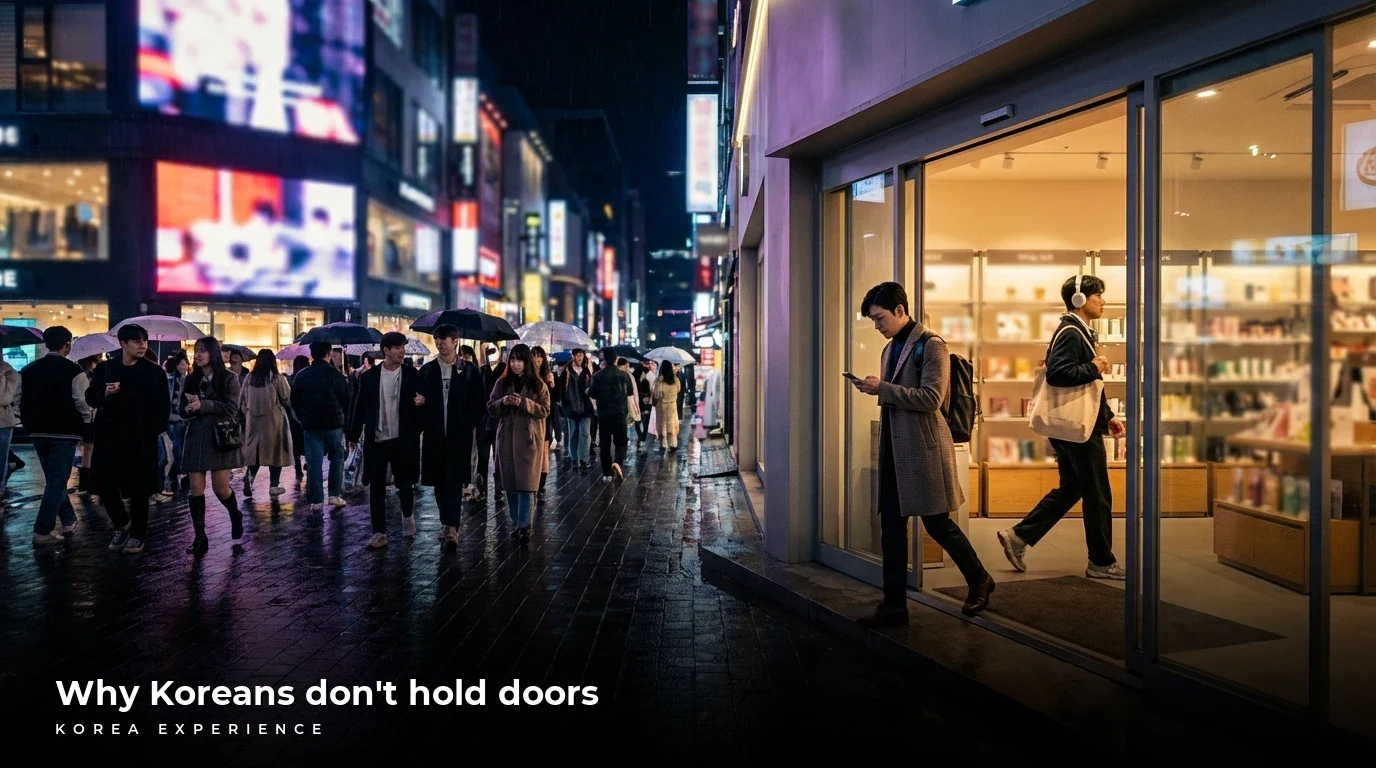
So, you just got hit in the nose by a closing door in Seoul—welcome to the club! It is a rite of passage for almost every visitor. Here is why Korea’s "Pali-Pali" (hurry-hurry) culture and unique architectural quirks make holding doors a rare sighting, and why it’s absolutely not personal.
Key Takeaways
- 1It is not about being rude; it is about efficiency and the 'Pali-Pali' lifestyle where stopping disturbs the traffic flow.
- 2The average Korean elevator 'Close' button is pressed immediately, saving roughly 2 to 3 seconds per ride.
- 3Stop expecting the person ahead to look back—protect your face, use the 'shoulder check,' and have your WOWPASS ready for unmanned stores.
📋 Quick Facts
The Pali-Pali Mindset and Social Rules
Look, I'm going to give it to you straight because I know exactly why you're here. You just had a heavy glass door practically shattered on your nose in Seoul, and you're wondering, "Did that person hate me?" The short answer is: No, they didn't even see you.
Here is the deal: Koreans generally do not hold doors for strangers. It is not because they are rude, malicious, or trying to ruin your day. It is because of a cultural phenomenon called "Pali-Pali" (which translates to "Quick-Quick"). In Korea, speed is the ultimate form of currency. Stopping to hold a door, make eye contact, and exchange pleasantries takes roughly 3 to 5 seconds. In a city of 10 million people moving at light speed, those seconds are viewed as waste.
For a deeper understanding of this national ethos, read our guide on understanding Pali-Pali culture.
Plus, there is a massive social distinction between "people I know" (In-group) and "strangers" (Out-group). If you are a stranger, you are essentially an NPC (non-player character) in their video game. They aren't trying to hurt you; they are just optimizing their pathing. Trust me, once you stop taking it personally, you'll actually start to admire the efficiency of it all.
Why Architecture Forces the Door Shut
So how did we get here? How did a country rooted in Confucianism—which is all about respect and manners—end up with a reputation for slamming doors? It’s a fascinating mix of ancient history and modern survival.
Let's go back to the basics. Confucianism taught Koreans to care deeply for their "In-group" (family, clan, coworkers). You would take a bullet for your boss, but a stranger on the street? They don't have that same social contract. This "In-group/Out-group" dynamic means extreme politeness inside the circle, and indifference outside of it. You can learn more about these nuances in our local guide to social rules.
Finally, look at the architecture. In the West, front doors usually swing IN to the house. In Korea, they almost always swing OUT into the hallway. Why? Because of the Genkan (the little area where you take off your shoes). If the door opened inward, it would sweep all the shoes away! Because the door opens outward, the person entering naturally pushes it away from themselves. To hold it for you, they would have to awkwardly step back out onto the landing or contort their arm behind them. It’s physically inconvenient. So, history, psychology, and architecture all conspired to slam that door in your face.
Joseon Dynasty
Confucian ideals solidify 'In-Group' vs. 'Out-Group' dynamics.
Post-War Era
Birth of 'Pali-Pali' culture as a survival mechanism to rebuild the economy.
Apartment Boom
Mass adoption of high-rise living standardizes outward-opening fire doors.
Tech Explosion
High-speed internet reinforces the cultural demand for instant gratification.
Sewol Ferry Tragedy
Renewed focus on safety regulations reinforces outward-opening doors for egress.
The AI Entry Era
Facial recognition and 'Tagless' entry reduce the need to touch doors at all.
Three Common Door Scenarios in Seoul
Now that you know the why, let's talk about the how. You essentially have three scenarios you're going to face in Seoul, and you need a game plan for each.
Scenario A: The Commercial Building (The Recoil)
This is the most common trap for tourists. You're walking into a Starbucks or an Olive Young. The person in front of you pushes the door. The moment they pass the threshold, they let go. The door, loaded with heavy springs, comes flying back. Your move: Do not walk directly behind people. Offset yourself slightly. Keep a hand up, literally like a boxer blocking a jab. Catch the door, use your momentum to push through. Do not expect them to look back.
Scenario B: The Elevator Battle
This is where Pali-Pali gets intense. You run for the elevator. The person inside sees you. In the US, they hold the "Open" button. In Korea, muscle memory kicks in and they might accidentally hit "Close" because they do it every single time they enter. Your move: Unless you make aggressive eye contact or shout "Jamsimanyo!" (Wait a moment!), assume that door is closing. If you are the person inside, be the hero. But remember: You must HOLD the open button. A quick tap often does nothing on Korean elevators.
Scenario C: The Unmanned Store (2026 Edition)
This is the new frontier. You want to buy ice cream at 2 AM from a "Muin" (unmanned) shop. You pull the door. Locked. Your move: Look for the scanner. You need to verify your identity. If you have a WOWPASS or a credit card, dip it. It’s not charging you; it’s just making sure you aren't a hooligan. No card? You aren't getting in.
| Feature | Western Style | Korean Style | AI Entry (2026) |
|---|---|---|---|
| Primary Goal | Social courtesy | Speed & Efficiency | Hygiene & Convenience |
| Interaction | Eye contact, verbal thanks | No eye contact, fluid | Passive / None |
| Door Type | Heavy manual pull | Push-button / Digital | Biometric / Sensor |
| Wait Time | Variable (delays) | Zero (keep moving) | Minimal (sensor lag) |
| Physicality | Arm strength | Agility / Shoulder check | Hands-free |
Pros and Cons of the "Don't Hold" Style
Pros
- ✓Speed is King: Keeps human traffic flowing like a river without the 'after you' dance.
- ✓Hygiene: Minimizes time spent touching dirty public door handles.
- ✓Energy Efficiency: Keeps doors closed tight to preserve AC or heating.
Cons
- ✗The Nose Job Risk: If you aren't paying attention, you will get hit in the face.
- ✗Accessibility Issues: A nightmare for wheelchairs, crutches, or strollers.
- ✗Feeling Invisible: Can feel isolating and cold to Westerners used to acknowledgement.
Navigating Unmanned Stores and Digital Locks
If you are staying in an Airbnb, you won't get a key. You'll get a code. To activate the keypad, you often have to touch the screen with your entire palm first. Many tourists tap with a finger and nothing happens. Palm touch -> Numbers light up -> Enter Code -> Star (*) or lift the cover.
Pro Tip: If the lock starts beeping frantically, it means the battery is dying. Run to a convenience store, buy a 9-volt battery, and look for the two metal contact points on the outside of the lock. Hold the battery there to give it a jump start.
Regarding unmanned stores, in 2026, many convenience stores (ice cream shops, pet snack shops) are "Unmanned" (Muin). You often cannot just pull the door open. You must scan a credit card or a QR code on a reader next to the door to unlock it. Don't yank on the handle like a confused tourist!
📖 How to Enter Buildings Without Injury
Step 1: Analyze the Door Type
Look for a vertical button or keypad. If residential, it opens OUTWARD. Do not stand too close.
Step 2: The Tactical Follow
Assume the door will recoil. Keep your hand raised at chest level, palm out, ready to catch it.
Step 3: The Shoulder Check
If carrying bags, use your shoulder to catch the closing door, pivot, and slide through.
Step 4: The Elevator Rush
Once inside, hit 'Open' until everyone is in, then immediately smash 'Close' to avoid judgment.
You have to understand the architecture. In Korean apartments, the 'Genkan' (entryway) is where you take off shoes. It's a small, sunken space. If the front door opened INWARD, it would sweep away all the shoes. So, doors must open OUTWARD. This makes holding the door physically awkward—you'd have to step outside onto the stoop to hold it for someone. It’s geometry, not rudeness.
No Korean Phone/ARC? Here's What To Do
If you are a tourist trying to enter an unmanned store, you might hit a wall because scanners ask for Korean verification.
The Solution:
- WOWPASS Card: This prepaid tourist card works as a local debit card. Many unmanned entry terminals accept this chip for identity verification.
- NAMANE Card: Similar to WOWPASS, customizable and works for entry.
- The 'X' Gesture: If stuck, look for a CCTV camera and make a big 'X' with your arms, or wave your foreign credit card at the reader.
FAQ
❓ Frequently Asked Questions
Have more questions?Contact us →
Conclusion
So, you've landed in Korea. Here is your plan for the first 24 hours:
- Drop your expectations. Stop waiting for thank-yous and held doors. It’s liberating once you let it go.
- Get a WOWPASS. You need this for the subway, payments, and unlocking unmanned doors.
- Watch your nose. Seriously, keep your head up and off your phone when walking through doorways.
- Embrace the speed. Walk faster. Eat faster. Enter faster. Once you get into the rhythm of Pali-Pali, the rest of the world will feel agonizingly slow.
Welcome to the fast lane. Just don't let the door hit you on the way in! For more on navigating local customs, check out our guide on Korean bowing etiquette.
Sources
- Medium - Lois Kim - "Slow is better than Pali-Pali"
- Korea Experience - "Understanding Pali-Pali Culture 2026"
- Optilingo - "Korean Etiquette Rules You Should Follow"
- Quora - "Why do the front doors to Korean homes open outwards"
- Reddit - "Living in Korea Community Consensus"
About the Author
Korea Experience Team
Written by the Korea Experience editorial team - experts in Korean medical tourism, travel, and culture with years of research and firsthand experience.
Explore more in K-Culture
K-Pop, K-Drama, traditional arts, and modern culture — dive deep into the cultural phenomena that have captivated the world.
Browse All K-Culture ArticlesContinue Reading
Explore more articles you might find interesting
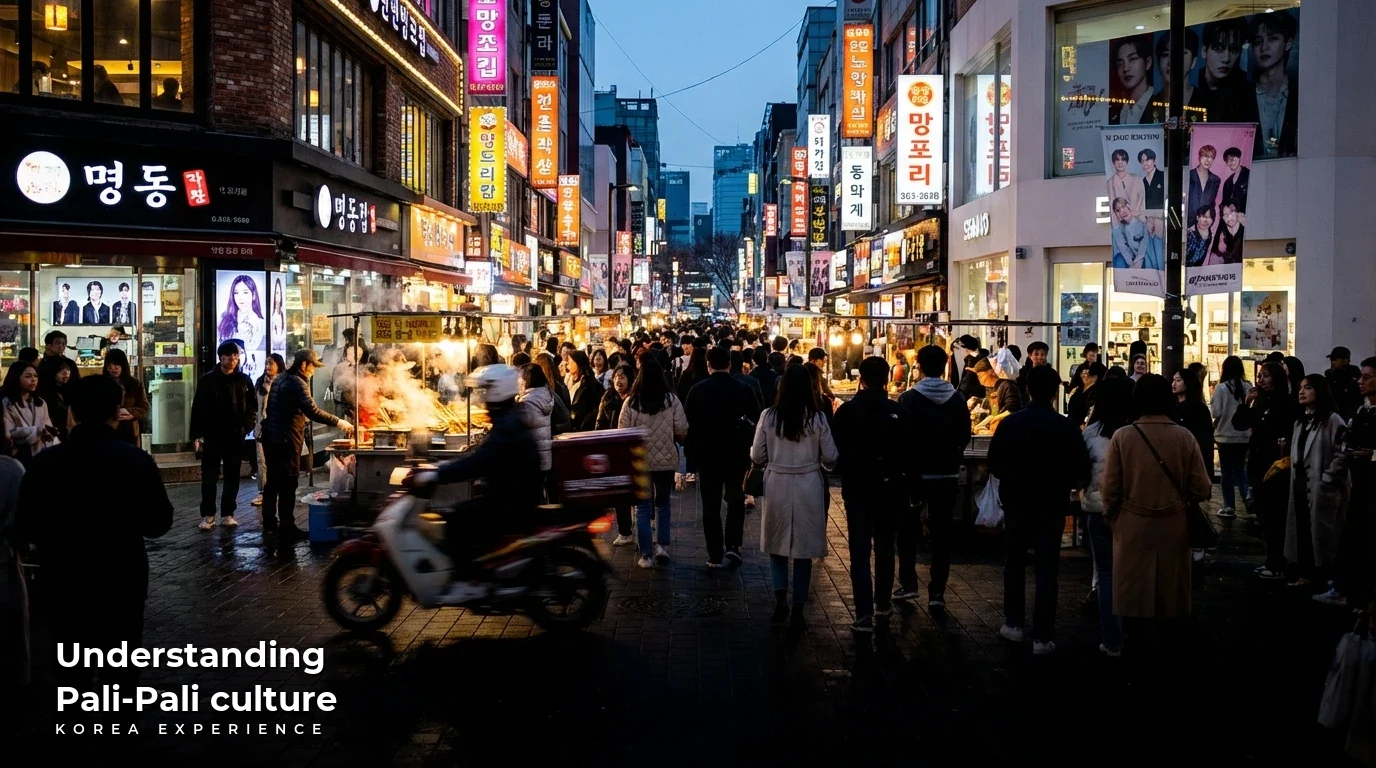
Discover why Seoul delivers groceries in 15 minutes and internet speeds hit 10Gbps. A guide to the speed-obsessed culture defining modern Korea.
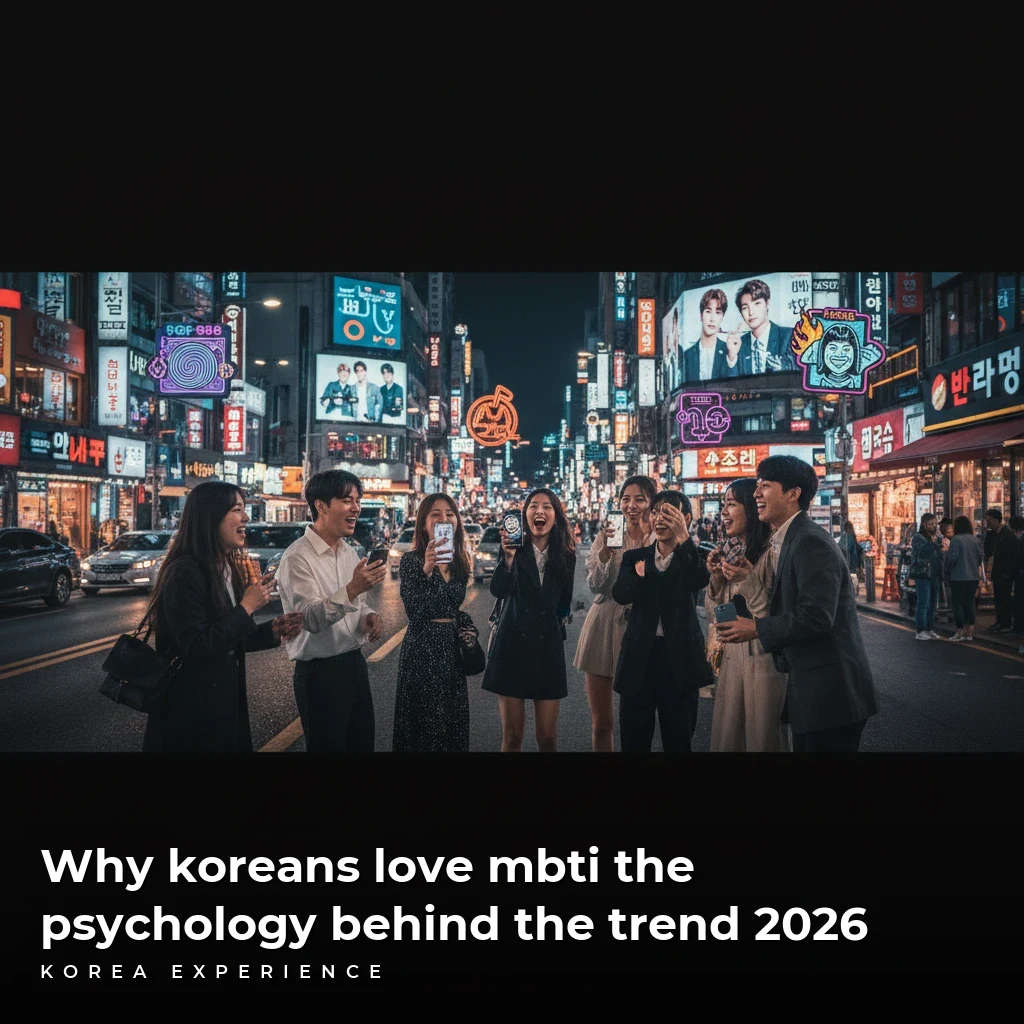
Discover why MBTI dominates Korean culture in 2026. From dating apps to hiring, we explore the psychology behind the 16 personality types trend.
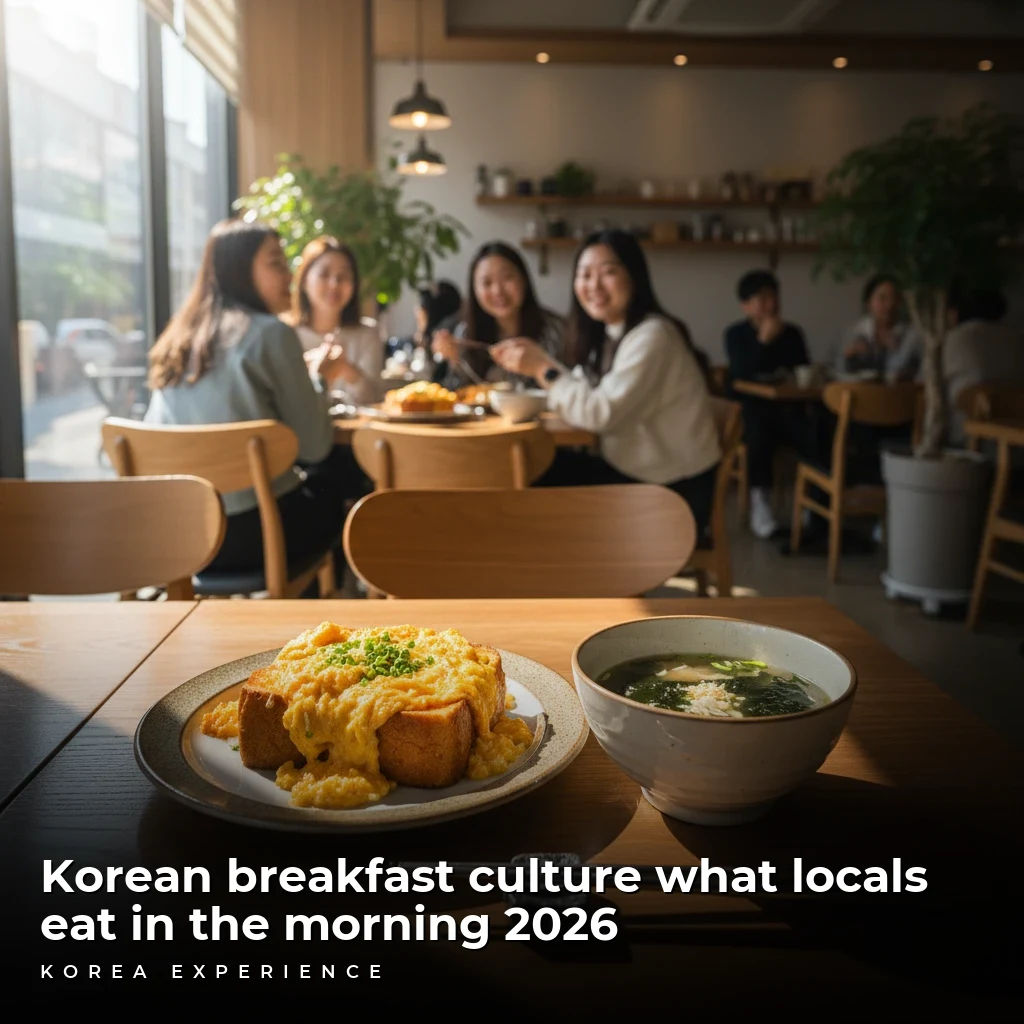
Discover the truth about Korean breakfast in 2026. From traditional soups to trendy toast, find out what locals eat, where to go, and how much it costs.

Discover why market vendors give free food. Learn how to navigate 24000 stalls in 2026 using WOWPASS and experience the 16 percent sales boom firsthand.
Explore Seoul's Big 3 K-pop HQs with subway fares at 1,550 KRW. Find the SM Kwangya store open daily and discover hidden fan cafes near HYBE.
Discover Seoul's 2026 vinyl culture where 20,000 records meet premium highballs. Explore hidden listening bars with entry fees starting at 10,000 KRW.