Why You Must Be Quiet on the Seoul Subway: 2026 Etiquette Guide
Seoul Metro received 2,734 noise complaints in one month. Learn why silence is a survival skill and how to avoid fines up to 100,000 KRW in 2026.

Think the local library is quiet? Wait until you step onto Line 2 during rush hour. In most major cities, the subway is a cacophony of buskers, phone conversations, and announcements. In Seoul, it is a sanctuary of silence.
For first-time visitors, the atmosphere can feel intense, almost clinical. You might wonder if everyone is angry or if you have walked into a funeral procession. But the reality is much more practical. Understanding the unwritten rules of this underground world is crucial for anyone visiting Korea. It is not just about being polite; it is about survival. As you navigate the complexities of unwritten social rules in South Korea, the subway stands out as the ultimate test of your ability to read the room.
Here is why silence isn’t just a suggestion—it is a survival skill in Seoul’s underground world.
Key Takeaways
- 1The Seoul subway is a shared mobile bedroom and sanctuary for exhausted locals, making silence the default setting.
- 2Seoul Metro received 2,734 noise complaints in a single month recently, proving locals actively report violators.
- 3You must use Nunchi (situational awareness) to match the energy of the car, which usually means rejecting phone calls immediately.
📋 Quick Facts
The Short Answer: Why So Serious?
So, you are on the subway in Seoul, excited to tell your friend about that insane BBQ place you just found in Hongdae. You start talking at your normal "brunch volume," and suddenly, the temperature in the car drops ten degrees. You look around, and everyone is staring at you with eyes that could cut glass. What did you do? Did you break a law?
The short answer is: You broke the Golden Rule of Seoul. In Seoul, the subway isn't just a vehicle; it's a shared library, a nap pod, and a sanctuary. Talking loudly here is considered Min-pye (causing a nuisance to others). It is the ultimate social sin in modern Korea.
Here’s the deal: Seoulites work some of the longest hours in the world. The 40-minute commute on Line 2 is often the only downtime a person gets between a screaming boss and a demanding family. When you talk loudly, you aren't just making noise; you are stealing their rest.
Recent stats back this up—Seoul Metro received over 2,734 noise complaints in a single month recently. That is nearly 100 people a day getting reported just for being too loud. While Korean drinking etiquette might allow for loudness in pochas, the subway is strictly a no-fly zone for noise. If you want to survive your trip without becoming a social pariah, you need to learn to zip it.
The Background Story
How did we get here? Why is a city of 10 million people so quiet you can hear a pin drop underground? To understand the silence, you have to understand the pressure cooker that is Seoul society.
Historically, Korea is built on Confucian ideals, which prioritize the group over the individual. Harmony is king. In the West, "public space" often means "a place where I have the right to speak." In Korea, "public space" means "a place where I have the duty not to disturb." This cultural foundation clashed violently with rapid urbanization. As Seoul exploded in size, millions of people were crammed into high-rise apartments and packed subway cars.
To cope with this density without conflict, Seoulites developed an unwritten social contract: Aggressive Ignoring. If we all pretend we aren't here, we can maintain a bubble of privacy even when we are mashed armpit-to-armpit.
Then came the smartphone. In the 2010s, as Korea became the most connected country on earth, the subway transformed. It went from a place of light chatter to a digital withdrawal zone. Earbuds went in, eyes went down, and the standard for "acceptable noise" dropped to near zero.
Backpack Etiquette Campaign
Seoul Metro launches major campaign urging riders to wear backpacks on their front to save space.
Pregnant Womens Day
Campaign launched to protect pink priority seats, reinforcing the idea of the subway as a care-zone.
Take-out Cup Ban
Seoul City bans passengers from bringing disposable take-out cups onto buses (and discouraged on subways).
Ttota App Usage Spike
Use of the Seoul Metro app to anonymously report disorder (including noise) skyrockets among locals.
Fare Increase
Base fares jump to 1,550 KRW, making riders feel even more entitled to a peaceful, high-quality ride.
AI Crowd Monitoring
New pilot programs use AI to detect congestion and potentially noise levels in stations.
Breaking Down Your Options
Okay, so you're on the train. What are your actual options for communication? You need to know the risks involved with different volume levels. This isn't just about politeness; it's about avoiding the "laser glare" or even a report via the KakaoMetro or Seoul Subway apps.
| Feature | Complete Silence | Whispering | Normal Volume |
|---|---|---|---|
| Social Risk | Zero. You are a model citizen. | Low/Medium. You might get a glance. | High. You are the Villain. |
| Nunchi Score | 100/100 (Master Level) | 70/100 (Passable) | 0/100 (Fail) |
| Best For | Rush hour, mornings, late night. | Empty cars, midday weekends. | Never (Go to a cafe). |
| Likelihood of Stares | None. You are invisible. | Maybe one or two curious looks. | The whole car hates you. |
| Complaint Risk | 0% | 5% | 80% (Someone might use the app). |
| 2026 Vibe Check | The absolute standard. | Accepted if very brief. | Culturally obsolete. |
Option A: The Normal Conversation
Say you just keep chatting away. Here is what will happen. First, the person next to you will shift their body away, physically turning their back to you. This is the warning shot. If you keep going, you’ll get the Noon-chong (the glare). An older lady might audibly "tsk" at you. In the worst-case scenario—and this is happening more in 2026—someone will open the Ttota app and report "Disorder/Noise" in Car 4, and a voice announcement will play over the speakers telling everyone to be quiet. It is humiliating. Do not do this.
Option B: The Whisper
This is your "Digital Nomad" or "Travel Couple" safe zone. If you lean in close—I mean, really close—and whisper, you are usually fine. The key is Nunchi (the art of gauging the atmosphere). If the car is dead silent, even a whisper sounds like a scream. If there’s a low hum of machinery, you can get away with a quick exchange. "Hey, do we get off here?" is fine. A 10-minute story about your ex is not.
Option C: The Digital Commute
This is what the locals do. I’ve seen couples stand next to each other holding hands, staring at their phones, texting each other. It seems dystopian to Westerners, but it’s actually respectful. It keeps their intimacy private and the airwaves clear. If you want to blend in and feel like a true Seoulite, switch to KakaoTalk or WhatsApp.
Pros and Cons of the Silent Treatment
Pros
- ✓Invisibility Superpower: By being quiet, you blend into the rhythm of the city and stop being treated like a loud tourist.
- ✓Peace of Mind: There is something genuinely meditative about riding through a 10-million-person city in total silence.
- ✓No Noon-chong (Glare): You avoid the laser eyes of judgment from Korean grandmas (halmonis).
Cons
- ✗Its Awkward with Friends: It feels weird to stand next to your best friend for 40 minutes and not say a word.
- ✗Missed Info: You might feel too intimidated to ask someone for help because you do not want to break the silence.
- ✗The Library Pressure: The pressure to be dead silent can feel suffocating if you are from a loud culture like the US or Italy.
Step-by-Step Survival Guide
Ready to ride like a pro? Here is the practical guide to navigating the silence without losing your mind. Just as you would master Korean bowing etiquette, mastering subway silence is a physical and mental practice.
📖 How to Survive a 45-Minute Commute
Step 1: Read the Room (The Nunchi Scan)
Before you even step on the train, look at the platform. Is everyone lined up silently? When you board, scan the carriage. If 90% of people are on their phones with earbuds in, match that energy immediately.
Step 2: The Backpack Flip
Take your backpack off one shoulder and swing it to your front. This muffles your movements and creates a buffer zone between you and others.
Step 3: Handle the Phone Call
Your phone rings. It is loud. Panic sets in. Do not answer it. Hit the Reject with Message button immediately.
Step 4: The Library Whisper
If you absolutely must speak, lean in until your nose is almost touching their ear. Whisper using your diaphragm, not your throat.
Insider Secrets: The Stuff Nobody Tells You
Here are the insider secrets that guidebooks usually miss.
The "Foreigner Pass" is Expiring
Ten years ago, if you were loud, Koreans would just shrug and say, "Oh, foreigners don't know better." That pass is gone. With Korea becoming a global cultural powerhouse, the expectation is that you should know better. You might not get yelled at, but you will be judged harshly. Don't be the person who reinforces the "rude tourist" stereotype.
The "Ahjumma" Factor
You need to know about the Ahjummas (older married women). They are the guardians of the subway. They will elbow you to get a seat. They will scold you if you are loud. But here is the hack: If you are polite, offer your seat to them, and stay quiet, they will adopt you. I once gave up my seat to an Ahjumma, and she gave me a tangerine. Silence pays off in fruit, my friends.
Avoid the Pink Seats
Even if the train is empty. Even if it's 3 AM. The pink seats are for pregnant women. Sitting there as a non-pregnant person (especially a man) is a great way to get scolded by a local or secretly photographed and shamed online. Just don't do it. This is as critical as avoiding the prayer pose in inappropriate contexts.
It’s not that we are unfriendly. It’s just that the subway is the only time between our crazy boss and our noisy family where we get to do nothing. When you talk loudly, you aren't just making noise; you're stealing our rest. Just text your friend next to you. We all do it.
No Korean Phone/ARC? Here's What To Do
If you are a tourist, you cannot use the "Ttota" app to report complaints because it requires identity verification via a Korean phone number/ARC.
The Solution: If someone is harassing you or there is a safety issue and you can't use the app:
- Text 112: You can text the police in Korea! You can send a text to 112 (no ARC needed) if there is a genuine emergency or threat.
- Use the SOS Button: Every carriage has an SOS button/phone at the end of the car. Use this for emergencies only, not just because someone is loud.
- For Data/Maps: Since you can't get a verified post-paid plan without an ARC, buy a Pre-paid SIM (Chingu Mobile, Trazy, Woori Mobile) at the airport. This gives you data for Naver Maps/KakaoTalk.
Where Can You Be LOUD?
Since you have to be quiet on the subway, you might be wondering where you can actually let loose. Seoul has plenty of places designed specifically for noise.
1. Su Noraebang (Luxury Karaoke)
Located in Hongdae, this is where you go to scream your lungs out.
- Address: 367-15 Seogyo-dong, Mapo-gu, Seoul
- Highlights: Glass windows looking onto the street, unlimited popcorn/ice cream, and high-quality mics.
- Tip: Go in the morning (before 12 PM) for a massive discount on the hourly rate.
2. Jamsil Baseball Stadium
If you want to experience the loudest place in Korea, go to a baseball game. The cheering culture is insane.
- Address: 25 Olympic-ro, Songpa-gu, Seoul
- Highlights: Fried Chicken & Beer (Chimaek) and the Kiss Cam.
- Tip: Buy tickets for the "Cheering Zone" (1st base for the home team) if you want to scream.
3. Seoul Rage Room
Sometimes you just need to break things.
- Location: Hongdae area (Check specific branch)
- Highlights: Smash plates, break electronics, and scream therapy.
- Tip: Wear comfortable clothes; they provide protective gear, but you'll get sweaty smashing things.
If you are looking for more loud entertainment options, check out our guide to visiting K-Pop buildings or try the K-Pop trainee experience.
FAQ
❓ Frequently Asked Questions
Have more questions?Contact us →
Conclusion
So, you’ve landed in Seoul. You’ve got your T-money card and you’re ready to explore. Here is your mission for your first 24 hours: Observe, Mimic, Respect.
When you get on that train, take a deep breath and enjoy the silence. Look at it not as a restriction, but as a rare gift—a moment of peace in a city that never sleeps. Put your headphones on, listen to some K-Pop (quietly!), and watch the Han River roll by. And if you really, really need to scream? Save it for the baseball game at Jamsil. They’ll love you for it there.
Welcome to Seoul. Now, shhh.
Sources
- Seoul Metropolitan Government - Data on public transport etiquette campaigns and "Min-pye" initiatives.
- Korea Herald - Reports on noise pollution complaints and the rise of neighbor/commuter disputes.
- Visit Seoul - Official etiquette guides for tourists regarding backpacks and noise.
- Korea Times - Commentary on the cultural psychology of silence and "endurance" on public transit.
- Seoul Solution - Detailed policy background on noise control measures in the city.
About the Author
Korea Experience Team
Written by the Korea Experience editorial team - experts in Korean medical tourism, travel, and culture with years of research and firsthand experience.
Explore more in K-Culture
K-Pop, K-Drama, traditional arts, and modern culture — dive deep into the cultural phenomena that have captivated the world.
Browse All K-Culture ArticlesContinue Reading
Explore more articles you might find interesting
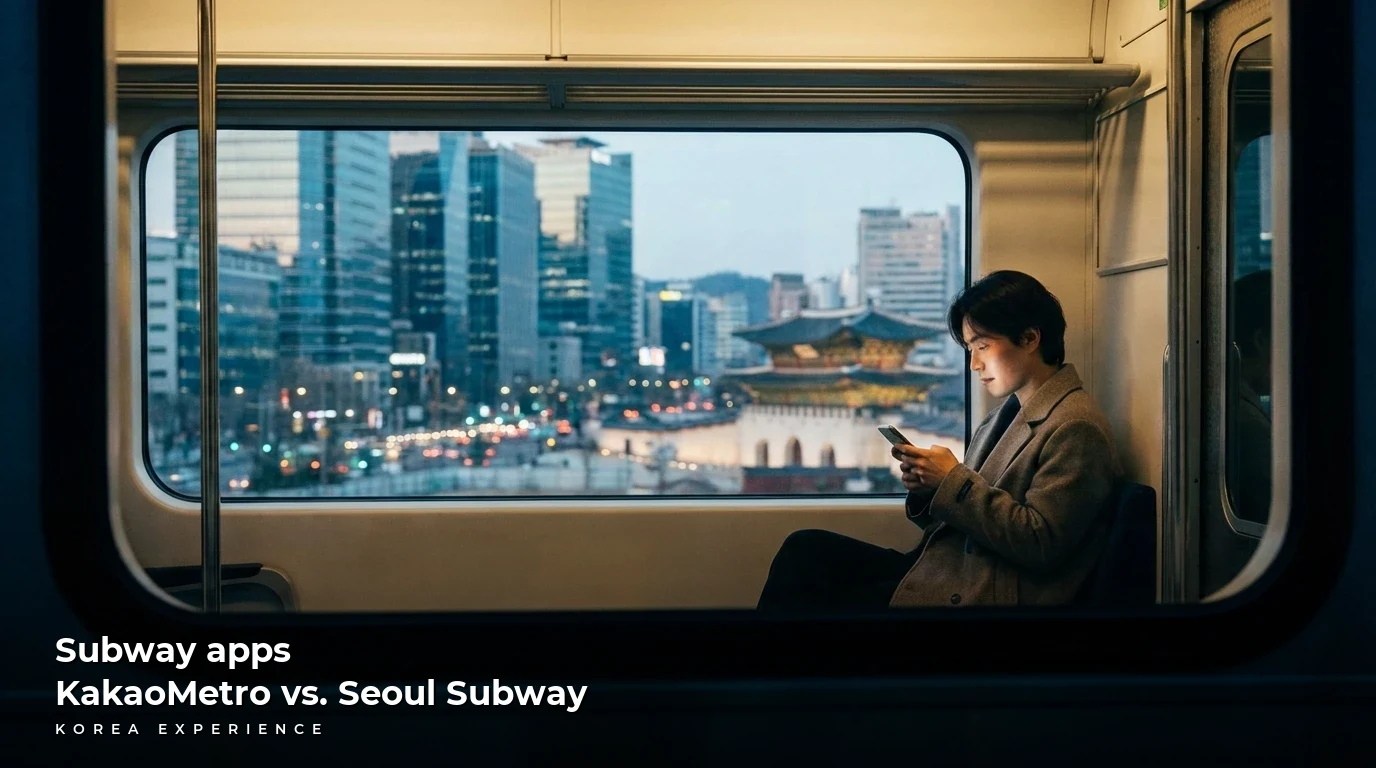
Compare KakaoMetro vs. Seoul Subway apps for 2026. Learn about the 1,550 KRW base fare, Climate Card savings, and why Google Maps fails in Korea.
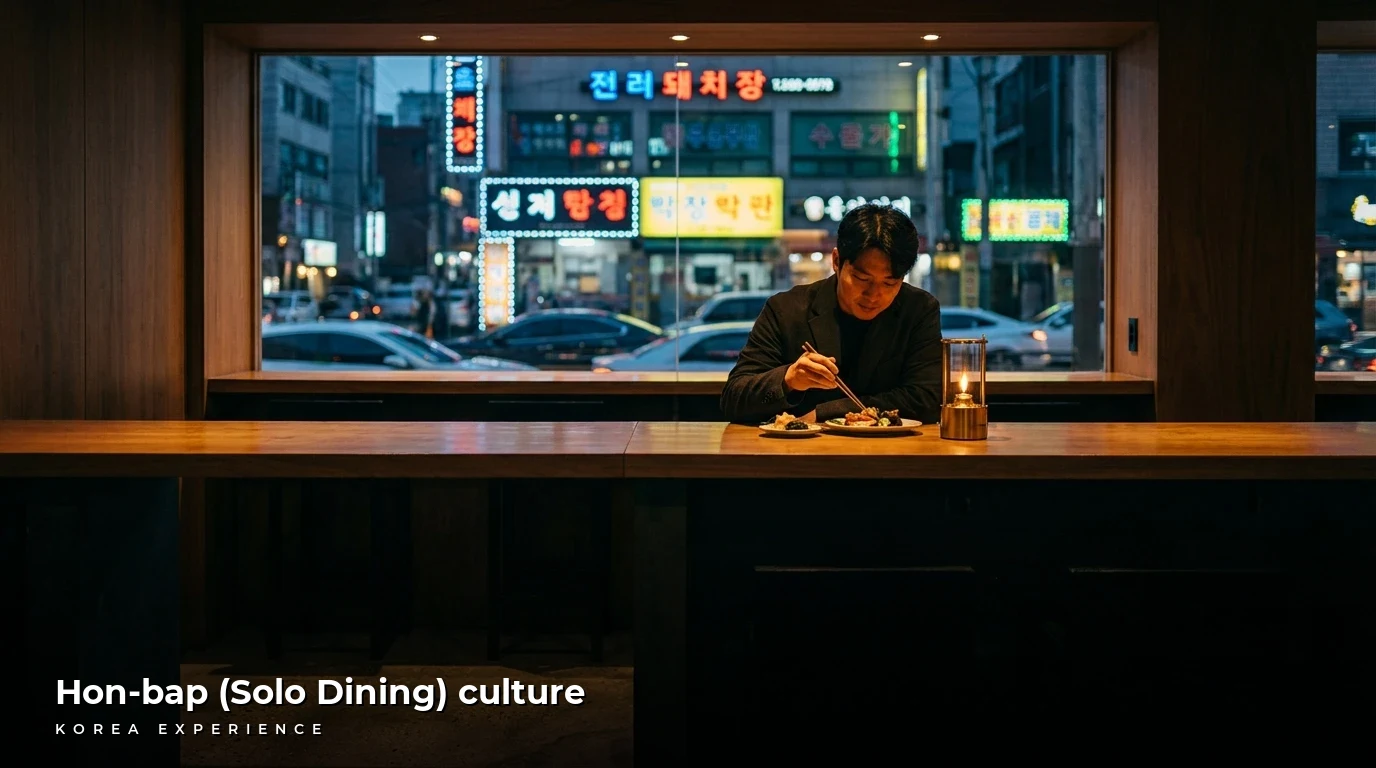
Discover the 2026 solo dining revolution in Seoul where 36.1% of households are single. Learn to navigate BBQ joints and avoid lunchflation prices.

Discover the world of K Pop album unboxing culture. Learn about photocards inclusions buying in Seoul and trading etiquette for international fans.
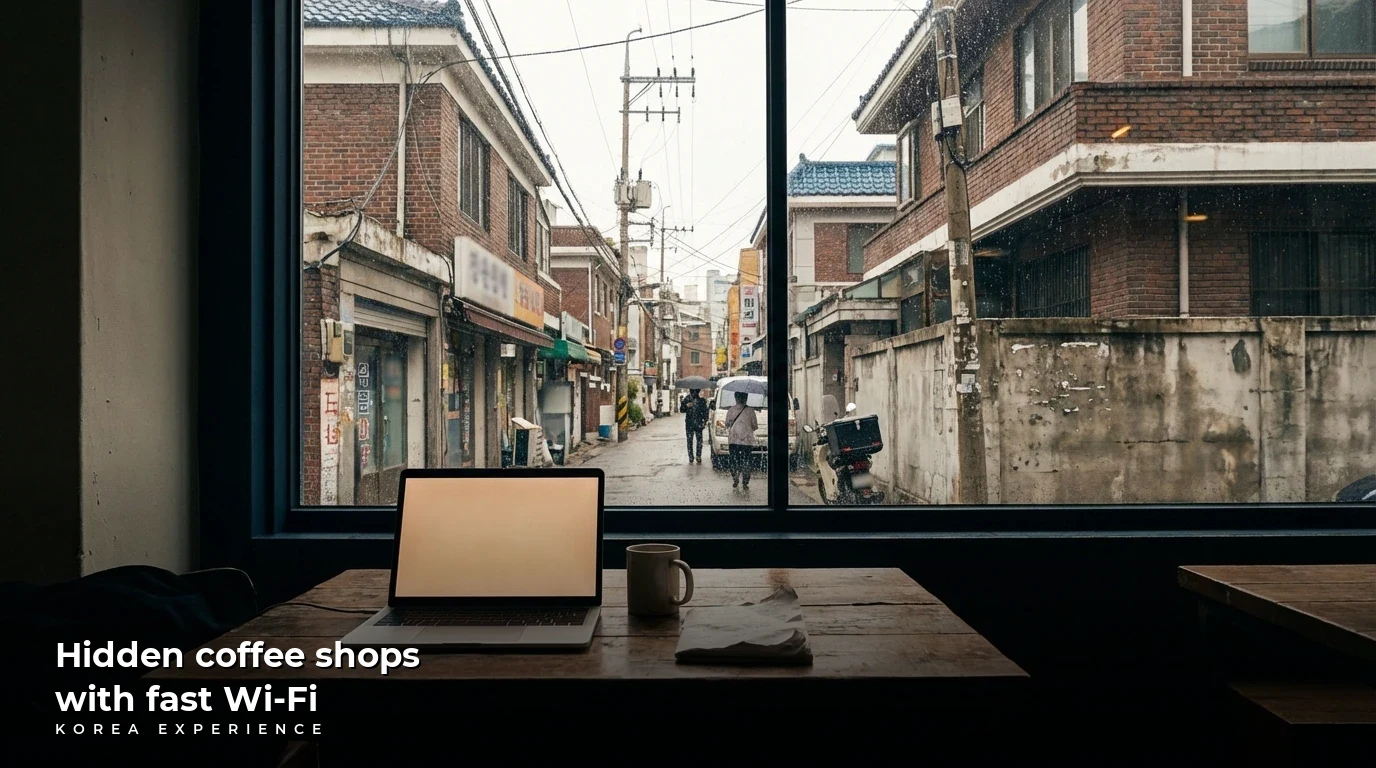
Discover Seoul's best hidden cafes with 85 Mbps Wi-Fi speeds. Learn how to secure laptop-friendly seating and avoid the 2026 2-hour study limits.
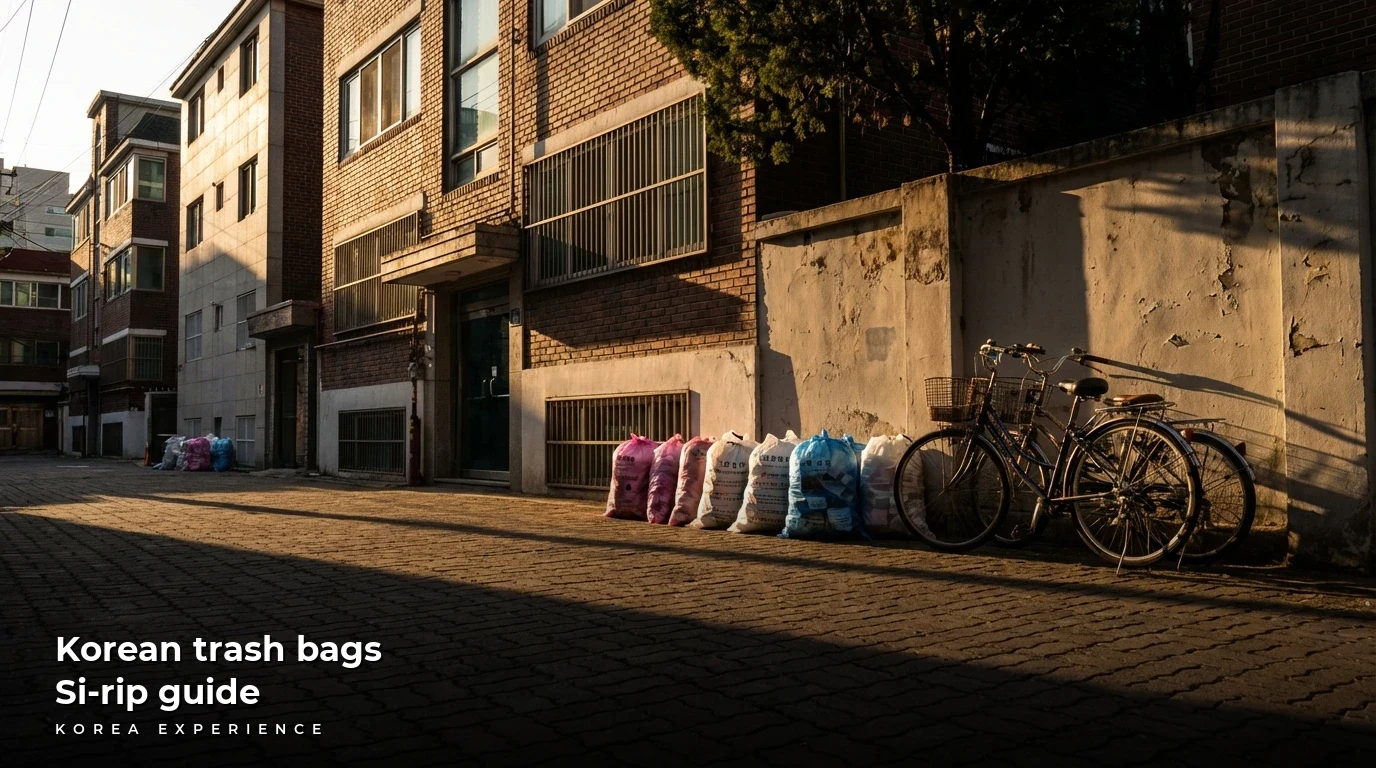
Master the 2026 Korean trash system to avoid 100,000 KRW fines. Learn bag prices, sorting rules, and how to recycle 60% of waste like a local.

Compare Wowpass vs. Namane for 2026. Learn why the 1,550 KRW subway fare means you need a Climate Card Tourist Pass to save money in Seoul.