How to Call a Taxi in Korea Without a Local Phone Number
Discover the best Kakao T alternatives for tourists. Learn how to use Uber, TADA, and street hailing hacks without a Korean SIM card.
Navigating the vibrant streets of Seoul or the coastal roads of Busan can be an exhilarating experience, but the logistics of transportation often present a significant hurdle for international travelers. While the subway system is world-class, there are times—especially with heavy luggage, late-night arrivals, or group travel—when a taxi is indispensable. A common panic point for visitors is realizing that the dominant local app, Kakao T, often requires a Korean phone number for full functionality.
If you are planning a trip to South Korea in 2026 and have decided to stick with a data-only eSIM or your home carrier's roaming plan, you might worry that you are cut off from ride-hailing services. Fortunately, the landscape of Korean transportation has evolved significantly to accommodate global travelers. You do not need a +82 local number to move around the city efficiently.
This comprehensive guide explores the most effective alternatives to Kakao T, practical street-hailing tips, and the specific apps that seamlessly bridge the gap between international phone numbers and Korean drivers.
Key Takeaways
- 1Uber (rebranded as UT) is the most reliable option for tourists, allowing use of your home account and payment methods without a Korean number.
- 2Standard taxi base fares in Seoul start at approximately ₩5,800 ($4.20 USD) for the first 1.6km as of 2026.
- 3TADA offers a premium van service that accepts foreign numbers and cards, ideal for groups of 4-6 travelers.
- 4Street hailing is still viable, but avoid black taxis if budget is a concern, as their rates are 20-30% higher.
The Korean Taxi Landscape: What You Need to Know
Before downloading apps, it is crucial to understand the ecosystem. South Korea boasts a high density of taxis, with over 70,000 registered cabs in Seoul alone. However, supply can fluctuate drastically based on time of day and weather conditions.
Types of Taxis
Understanding the color-coding system helps you avoid unexpected costs when hailing a cab on the street.
- Standard Taxis (Ilban): Typically silver, white, or orange. These are the most common and affordable.
- Deluxe Taxis (Mobeom): Black with a yellow sign on top. These drivers have 10+ years of accident-free driving. They offer more space and better service but cost significantly more.
- Jumbo Taxis: Large vans suitable for 6-9 passengers. Do not confuse these with "Call Vans," which are cargo negotiation services.
- International Taxis: Specifically designated for tourists, with drivers proficient in English, Japanese, or Chinese. These often require pre-booking.
📋 Seoul Taxi Rate Snapshot (2026 Estimates)
The night surcharge is a critical factor for travelers enjoying Seoul's nightlife. The surcharge period runs from 10:00 PM to 4:00 AM. The peak surcharge of 40% applies during the busiest window, typically between 11:00 PM and 2:00 AM.
Option 1: Uber (UT) The Tourist's Best Friend
If you have the Uber app on your phone, you are already prepared for Korea. In a joint venture with T Map Mobility, Uber operates in Korea under the name "UT" (though the app icon often remains Uber for international users). This is the number one solution for travelers without a local phone number.
Why it works: You do not need to download a new app or register a new account. Your existing Uber account, saved credit cards, and home phone number work seamlessly. The app automatically dispatches local Korean taxis.
📖 How to Use Uber in Korea
Step 1: Open the App
Open your standard Uber app upon arrival. You may see a prompt switching you to the UT interface, or it may look standard.
Step 2: Input Destination
Type your destination in English. The app integrates with Korean maps to find hotels and landmarks easily.
Step 3: Select Vehicle
Choose between 'Taxi' (Standard) or 'Black' (Premium). You will see the estimated fare in won (₩).
Step 4: Ride and Pay
The payment is processed automatically through your stored credit card. No cash exchange is needed.
Seamless Integration
When you use Uber/UT in Korea, the driver sees the destination in Korean script (Hangul), eliminating the language barrier. You can also track your ride in real-time, providing a safety layer for solo travelers.
Data Insight: Average wait times for Uber/UT in central districts like Gangnam or Hongdae range from 3 to 7 minutes during non-peak hours. However, during Friday night rush hours (6:00 PM - 8:00 PM), demand often exceeds supply, pushing wait times to 15+ minutes.
Option 2: TADA The Premium Alternative
For travelers prioritizing comfort, carrying heavy luggage, or moving in groups, TADA is an exceptional alternative. TADA primarily operates large vans (Kia Carnivals) and has built a reputation for zero ride refusals—a common annoyance with standard taxis where drivers might ignore requests for short distances.
TADA allows registration with international phone numbers and foreign credit cards. The interface is clean, supports English, and provides a stress-free environment.
TADA Pros and Cons
- ✓Accepts international numbers and cards
- ✓Large vans accommodate 5-6 people + luggage
- ✓Drivers are trained not to chat unnecessarily
- ✓Zero ride refusal policy
- ✗Higher cost (approx. 20-30% more than standard)
- ✗Fewer vehicles available compared to Uber/UT
- ✗Primarily available in Seoul and parts of Gyeonggi-do
Cost Analysis: A trip from Gangnam to Incheon Airport using TADA might cost between ₩110,000 and ₩130,000 (approx. $80-$95 USD), whereas a standard taxi might cost ₩75,000 to ₩90,000. For a group of four, the price per person becomes very competitive.
Option 3: Kakao T (The "Pay to Driver" Method)
While Kakao T is the dominant app, it is notoriously difficult for tourists because the integrated payment system (Kakao Pay) requires a resident registration number. However, you can use it without a local number if you set it up correctly, though functionality is limited.
App Feature Comparison
| Feature | Uber (UT) | TADA | Kakao T (Tourist) |
|---|---|---|---|
| Int'l Number Support | ✅ | ✅ | Limited |
| In-App Payment | ✅ | ✅ | ❌ |
| English Search | Excellent | Good | Moderate |
| Vehicle Supply | High | Medium | Very High |
The Workaround:
- Download Kakao T and register using your email.
- When asked for a phone number, select your country code. Note: verification texts sometimes fail with certain international carriers.
- Crucial Step: When requesting a ride, you cannot select automatic payment. You must swipe to select "General Request" (sometimes labeled "General Taxi") and choose "Pay to Driver".
- You then pay the driver directly with your physical credit card or cash (T-Money) at the end of the ride.
The Kakao Limitation
The "Pay to Driver" feature on Kakao T is becoming harder to find or is restricted during peak hours to prioritize users with registered payment methods. Do not rely on Kakao T as your sole option if you lack a Korean card.
Pre-Booking Airport Transfers
Arriving at Incheon International Airport (ICN) after a 12-hour flight is exhausting. The distance from ICN to downtown Seoul is approximately 60 kilometers (37 miles), taking about 60 to 90 minutes depending on traffic. Trying to figure out an app on airport Wi-Fi can be stressful.
For arrival, pre-booking is often smarter than on-demand hailing. Platforms like Klook and Trip.com allow you to book private transfers weeks in advance using your home currency.
💵 Incheon Airport to Myeongdong (One Way)
Meet & Greet service, no waiting
Data Insight: The Airport Limousine Bus is a strong competitor, costing only 17,000 to ₩18,000 per person. However, it stops operating around 11:00 PM. If your flight lands at midnight, a pre-booked taxi or Uber is your only door-to-door option.
Street Hailing: The Old School Way
If apps fail or your battery dies, you need to know how to hail a cab physically. This is still very common in Korea, especially in busy districts like Itaewon, Hongdae, and Myeongdong.
Identifying an Available Taxi
Look for the LED sign in the passenger side windshield.
- Red LED with Text (Bin-cha): This means "Empty Car." The taxi is available.
- Green LED (Ye-yak): This means "Reserved." The taxi is on its way to pick up an app user.
- Lights Off: The taxi is occupied or off-duty.
"Many tourists make the mistake of waving at taxis with Green lights, thinking green means 'go.' In Korea, Red means available (empty), and Green means taken (reserved). Also, near major subway stations like Gangnam Exit 10, drivers often refuse to stop for street hails because it blocks traffic. Walk 100 meters away from the intersection for better luck."
Payment Methods
99% of taxis in Seoul accept foreign credit cards (Visa, Mastercard, Amex).
- Credit Card: Hand it to the driver. No PIN is usually required for amounts under ₩50,000.
- T-Money Card: The same reloadable card you use for the subway works in taxis. Ensure you have a balance of at least ₩20,000 for short city trips.
- Cash: Drivers carry change, but avoid paying with large bills (₩50,000) for short rides (under ₩10,000).
Addressing the Language Barrier
Not all taxi drivers speak English. In fact, most older drivers in standard taxis speak very little. To ensure you get to the right place without a local number to facilitate communication, preparation is key.
📖 Communicating Without Words
Step 1: Use Naver Map
Download Naver Map (set to English). Search for your destination.
Step 2: Find the Korean Address
Click on the location name to reveal the address in Hangul (Korean characters).
Step 3: Show the Driver
Zoom in on the Hangul address and show your phone screen to the driver. This is universally understood and much safer than trying to pronounce it.
Useful Phrases:
- "Yeogi-ro ga-juseyo" (Please go here) while pointing to the map.
- "Gamsa-hamnida" (Thank you).
Specific Scenario: The "Refusal" Problem
It is illegal for taxi drivers to refuse passengers, but it happens, particularly late at night (11 PM - 1 AM) in party districts. Drivers may fish for long-distance fares.
Strategy: If you are hailing on the street and a driver rolls down the window to ask "Where are you going?" before unlocking the door, they are screening you.
- Hop in first: If the door is unlocked, get in and then state your destination. They are less likely to kick you out.
- Use Uber: App-based rides reduce refusal rates significantly because the dispatch is tracked.
- Look for "Seoul Mom-Taxi": These represent a fleet dedicated to safety and service, though they are harder to distinguish visually without knowing the specific branding stickers.
📊 Nighttime Transport Stats
Recommended Destinations and Taxi Access
Some locations are notoriously difficult for taxis. Here is a quick guide to popular spots.
N Seoul Tower(N서울타워)
Starfield COEX Mall(스타필드 코엑스몰)
Safety and Best Practices
Korea is one of the safest countries in the world, and taxi crimes are rare. However, being informed is your best defense against scams.
- The Meter: Ensure the driver turns on the meter. It should start at roughly ₩5,800 (Standard) or ₩7,000 (Jumbo/Deluxe). If they don't, say "Meter, please."
- The Route: Drivers usually take the fastest route based on GPS. If the route seems long on your phone, show them your map.
- Lost Items: Always ask for a receipt ("Young-su-jeung"). The receipt contains the taxi's license plate number and the company's phone number. If you leave your phone in the car, this receipt is your only hope of retrieving it.
Lost Item Recovery Process
Check Receipt
Locate vehicle number and company contact.
Call Company
Have a Korean speaker (hotel staff) call the taxi company.
Report to Police
If no receipt, provide time/location to police for CCTV check.
Conclusion
Traveling Korea without a local phone number is entirely manageable in 2026. The integration of global apps like Uber (UT) and the foreigner-friendly policies of TADA have bridged the gap that once existed with Kakao T. By preparing your apps before you fly, understanding the color-coded taxi types, and having your destinations written in Hangul, you can navigate the peninsula with confidence.
Remember, while technology is great, the humble street hail—armed with a T-Money card and a polite smile—remains a reliable backup plan. Whether you are rushing to a business meeting in Gangnam or heading back to your hotel after a night out in Hongdae, you now have the tools to ride like a local.
❓ Frequently Asked Questions
Have more questions?Contact us →
About the Author
Korea Experience Team
Written by the Korea Experience editorial team - experts in Korean medical tourism, travel, and culture with years of research and firsthand experience.
Explore more in Travel & Tourism
From Seoul's neon-lit streets to Jeju's volcanic landscapes — discover the best of Korea with insider travel tips, itineraries, and seasonal guides.
Browse All Travel & Tourism ArticlesContinue Reading
Explore more articles you might find interesting
Compare Kakao T and Uber in Korea for 2026. Discover prices starting at ₩4,800, foreign card tips, and how to navigate Seoul like a local.
The short answer is yes, you can absolutely call a taxi without a local number by using apps like K.Ride or Uber (UT).

Discover top makgeolli brewery tastings in Korea for 2026. Learn how to book premium 12 percent ABV craft flights from 30,000 KRW without a local phone number.

Navigate Seoul in 2026 without an ARC. Learn how k.ride and Taba let tourists hail cabs for just ₩4,800 using foreign phone numbers and credit cards.
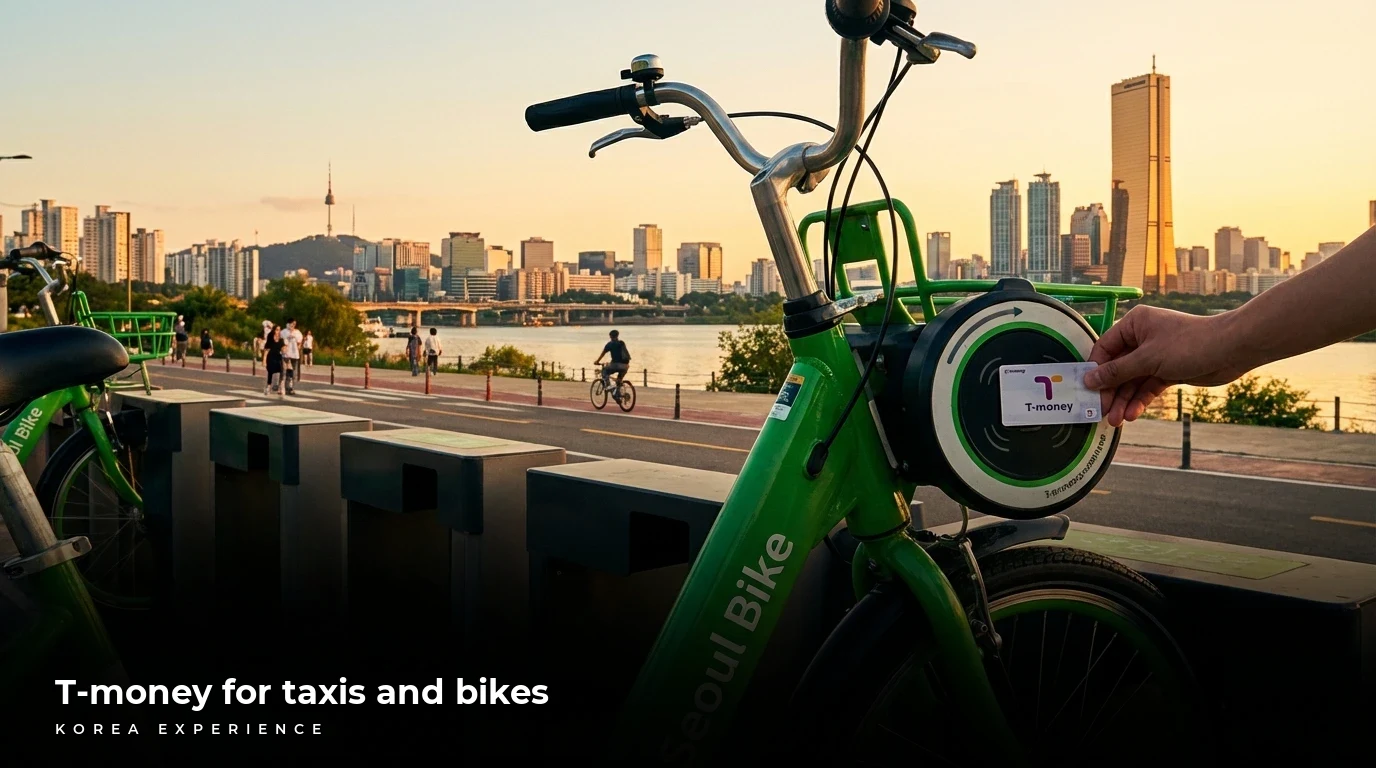
Master Seoul transit in 2026. Learn why T-money costs 4,000 KRW, how to rent 1,000 KRW bikes without an ARC, and the truth about the Climate Card for tourists.
Discover how to book 2,000+ top Korean restaurants using CatchTable Global in 2026. Bypass local phone rules, pay deposits, and avoid the new 40% no-show fee.